Leh’s mountains of plastic

An already fragile climate frontier is at risk of being overrun by more waste than it can handle

How did Ladakh, a mountain desert nestled in between the Himalayas and the Karakoram range, turn into a sea of plastic?

There was a time when this now-ubiquitous material was absent from the capital of Leh. Pollution caused by it was a faraway reality, and people could drink directly from the mountain streams and springs. Today, tourists leave the biggest footprint on the city, with the annual influx measuring twice the very population of the entirety of Leh. The waste generated is much beyond what the city can manage, and it peaks in the summer, averaging at 50 to 60 tonnes. Municipal officer Stanzin Rabgais says that big FMCG brands supply food, snacks and water packaged in single-use plastic to cater to tourists thronging the nearly 1000 hotels in the city. 

Administrators and activists who are pushing back against plastic overuse and improper disposal all underline one concern: Leh is more fragile than lower-lying regions like plains. At higher altitudes, waste can take twice or even thrice as long to decompose because harsh conditions slow down microbial activity. Tourists visit this beautiful landscape to seek peace and wilderness but leave behind a familiar mark of the cities they come from: their trash. 

In response, efforts to tackle the problem have emerged from different quarters. In 2017, the local Rural Development Department launched Project Tsangda, a decentralised solid waste management initiative, while citizen-led organisations such as Navikru Eco Foundation work with children on prevention and sustainability. The Women’s Alliance of Ladakh, meanwhile, advocated for a plastic ban in Leh nearly three decades ago. Together, these efforts point to a larger question: how do we rethink our relationship with plastic—and the consumption patterns that produce so much of it—in landscapes that can absorb so little?

At higher altitudes, waste can take twice or even thrice as long to decompose because harsh conditions slow down microbial activity.
No items found.
No items found.
01
/
12
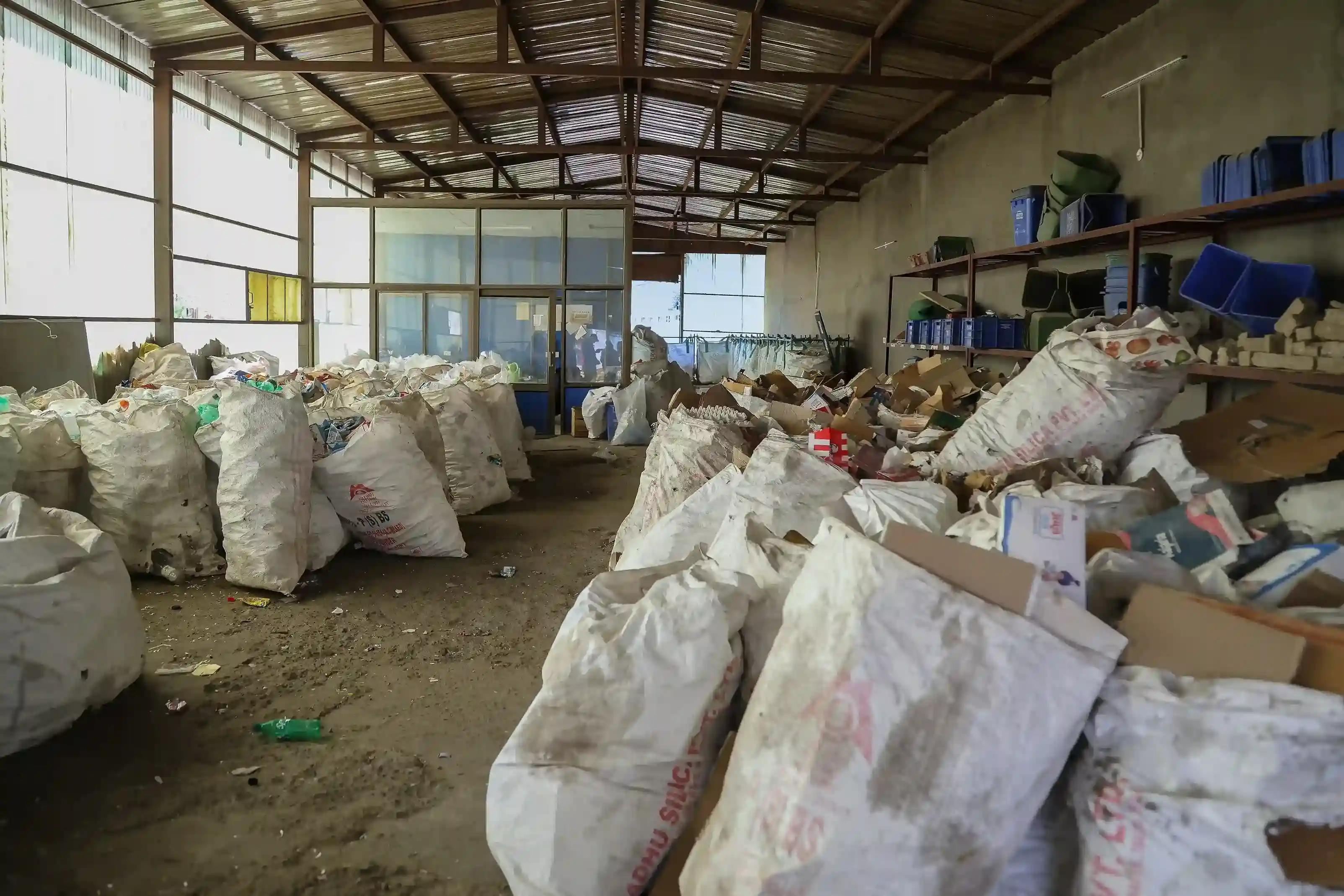
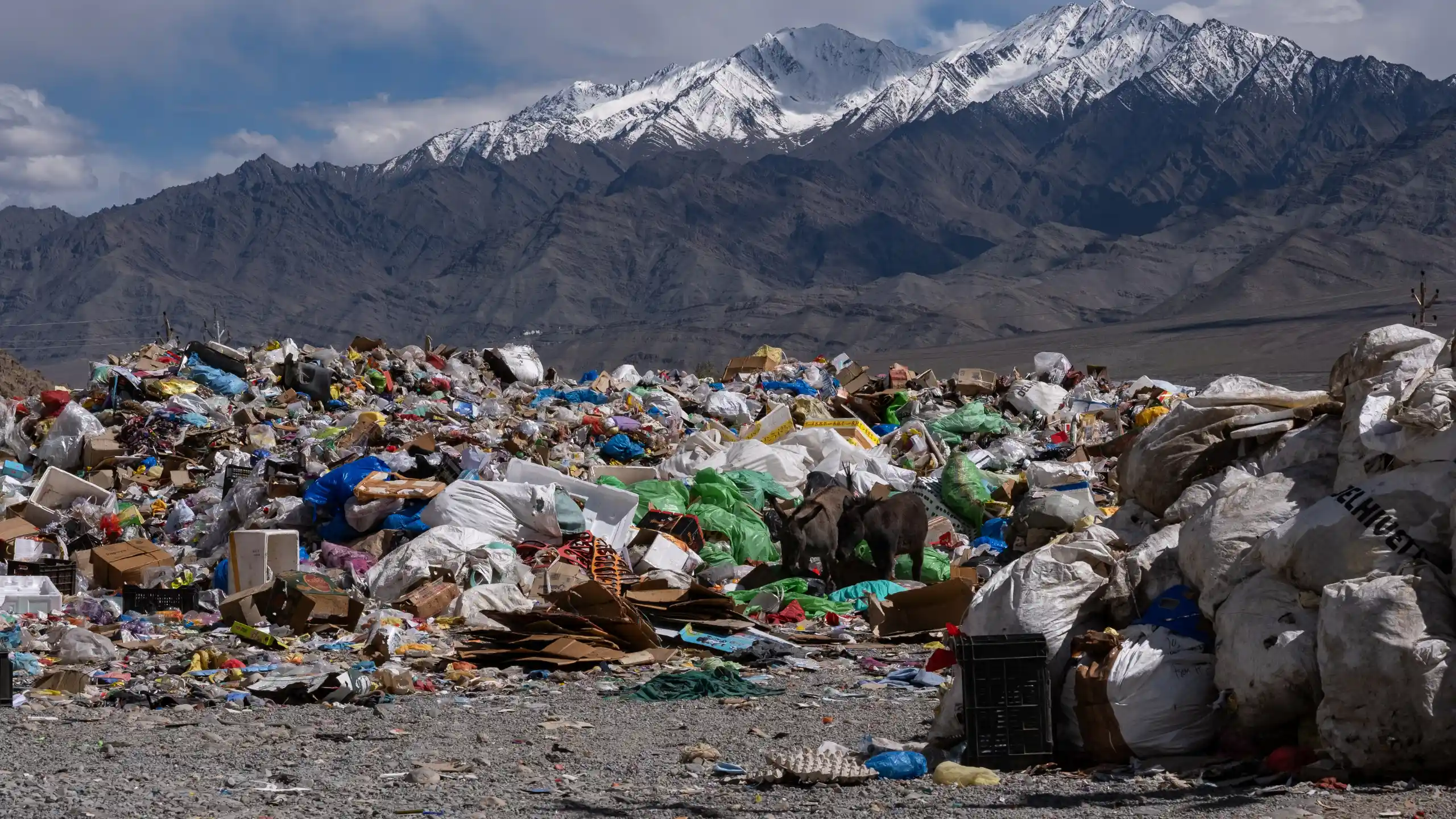
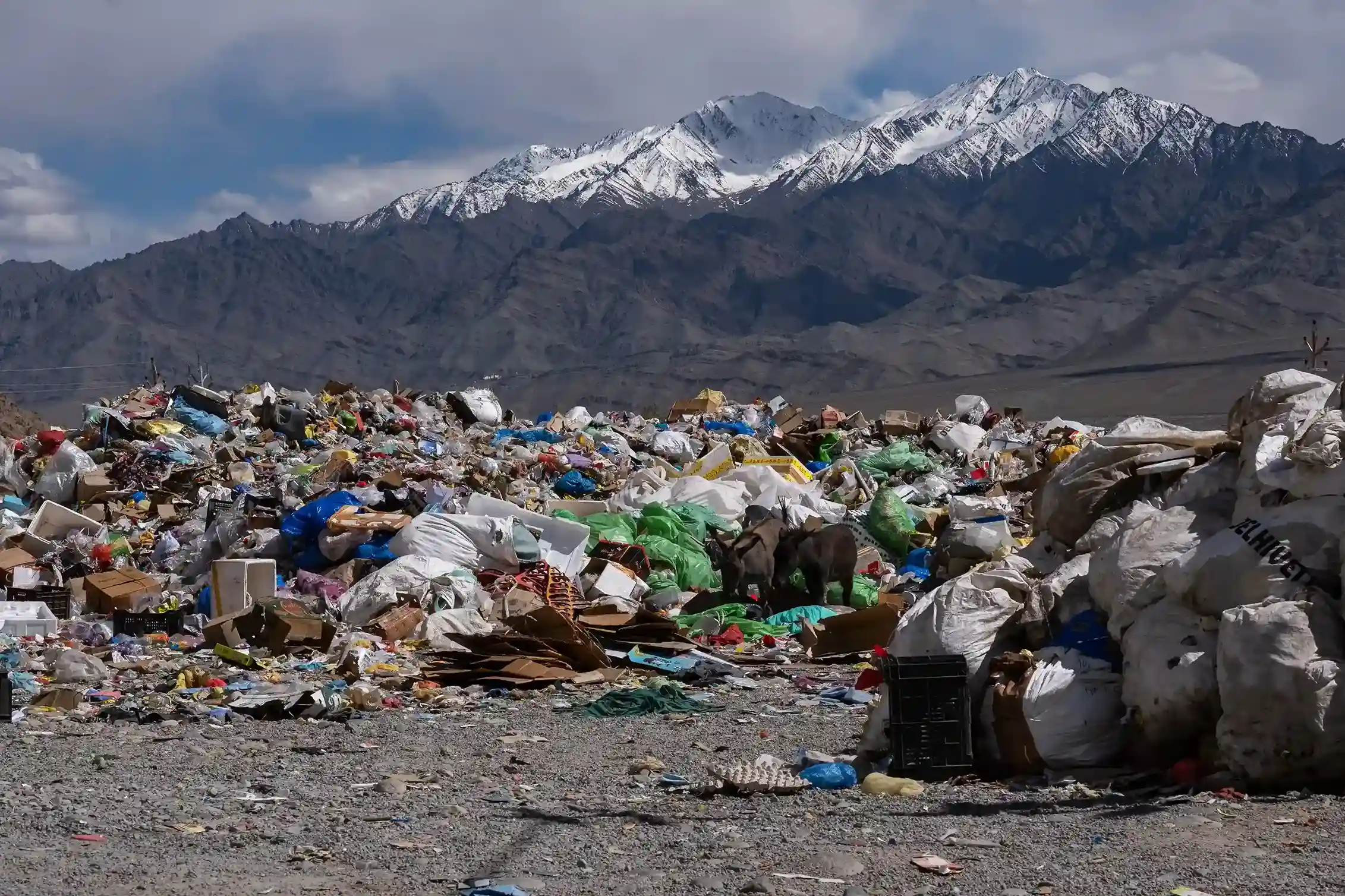
Mounds of waste and plastic pile up high against the snow-capped mountains of Ladakh. The starkness is cold and palpable.
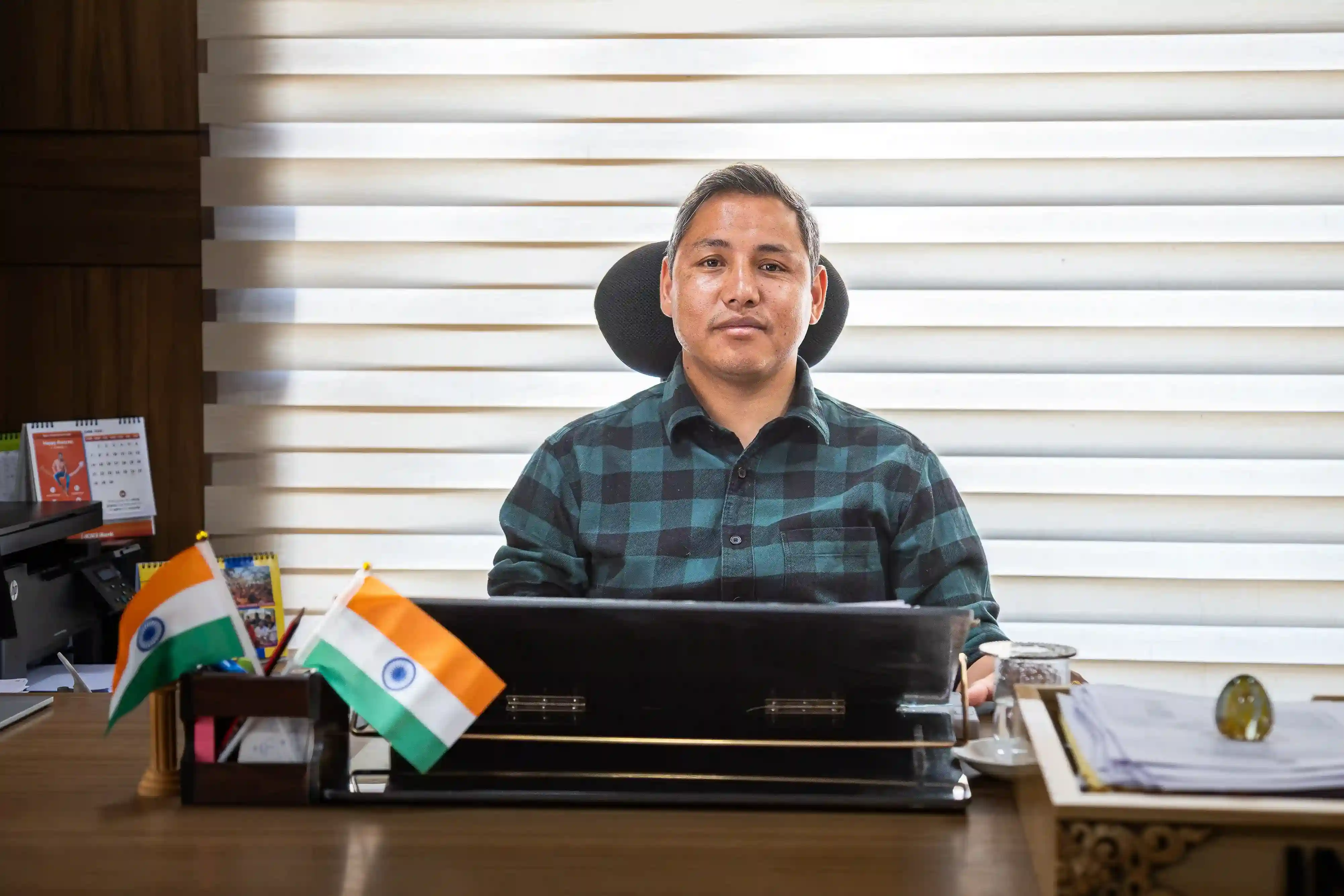
The consumption patterns of Ladakh are changing, mirroring the rapid waste-generating capacities of cities. Project Tsangda was launched to streamline the solid waste management in rural and semi-rural parts of the district. However, Stanzin Rabgais says that the influx of tourists, seasonal migrant workers and other establishments leave behind collateral damage much beyond its carrying capacity of 30 tonnes per day.
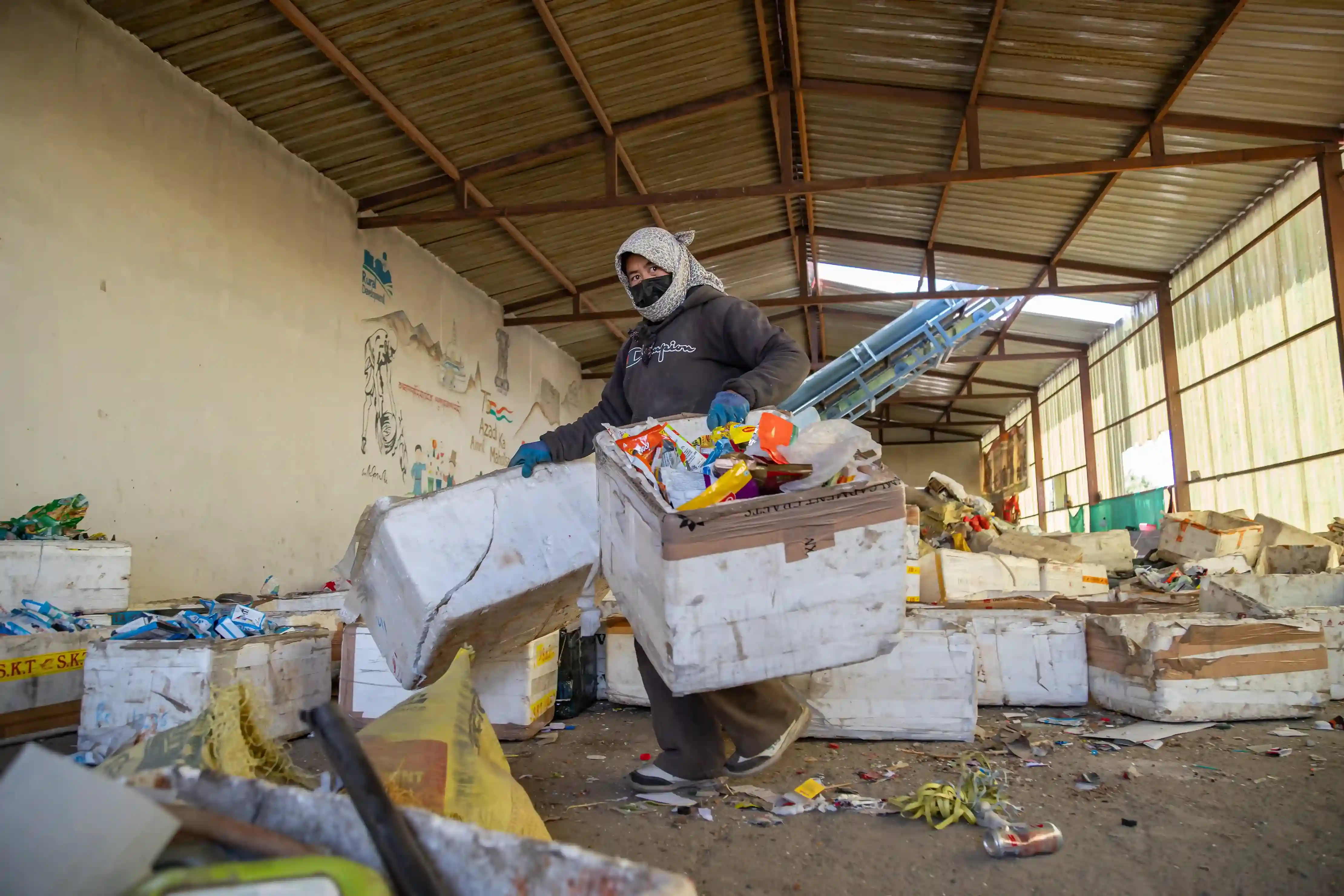
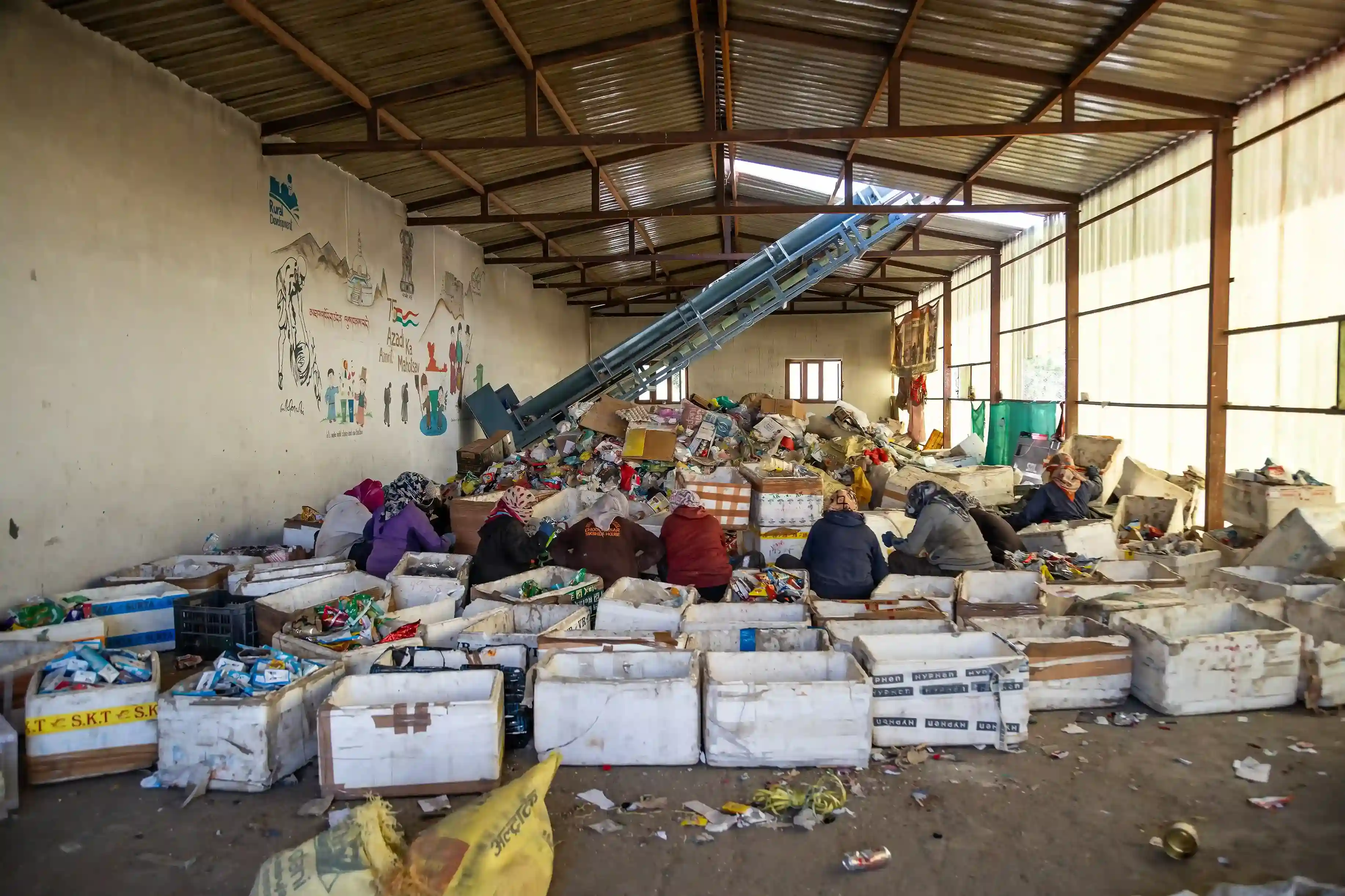
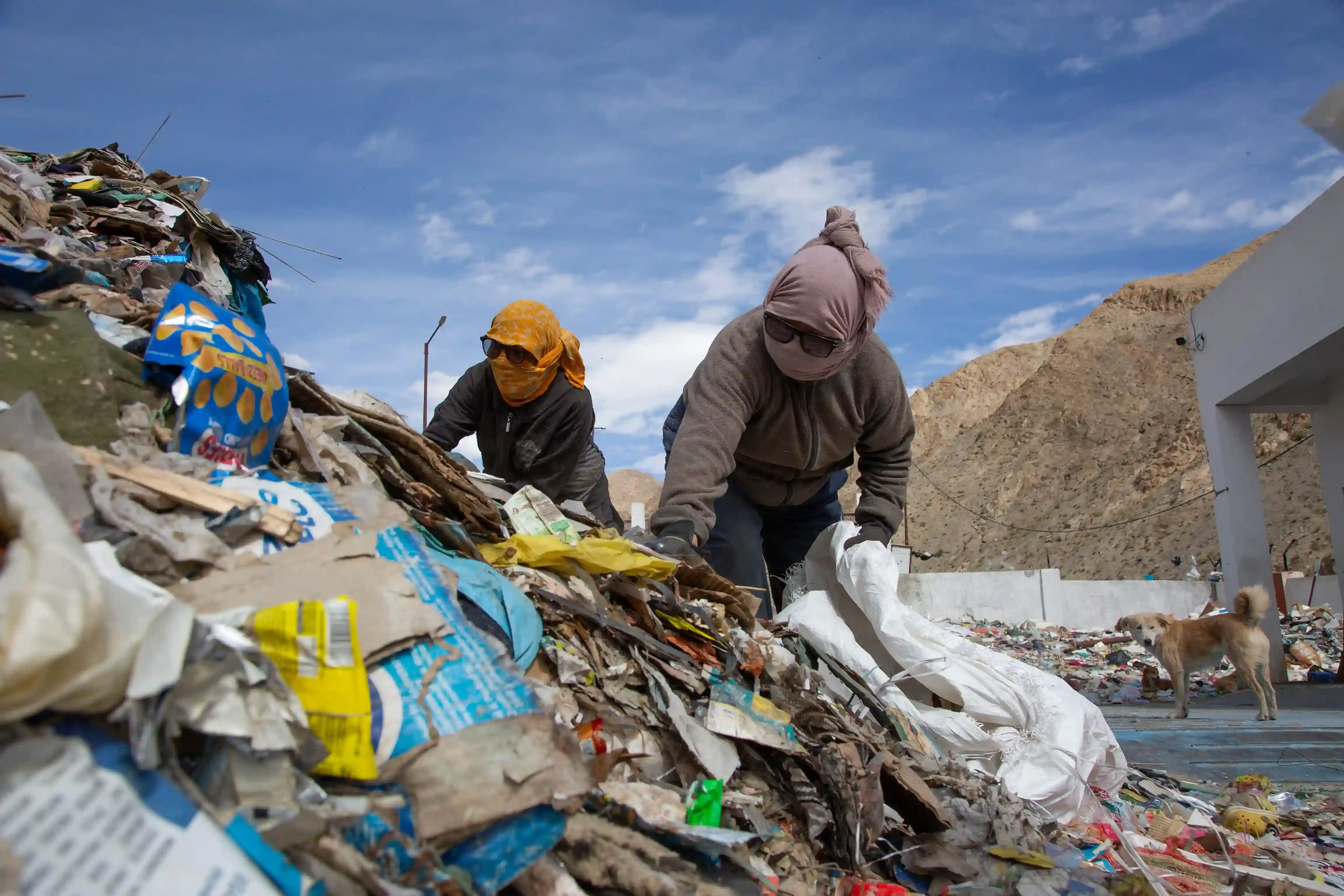
35-year-old Tsering Youndon has been working with the project since 2019. She, along with a team of 12 women workers, segregate the waste that has been collected from residential and commercial areas into nearly 24 categories.
Leh’s small population means fewer hands to manage the waste—the brunt of which is borne by women labourers. “People segregating their waste into just ‘wet’ and ‘dry’ would make our jobs so much easier,” Project Tsangda’s women say. “During peak season, the volume increases by almost five times, which takes a toll on us.”
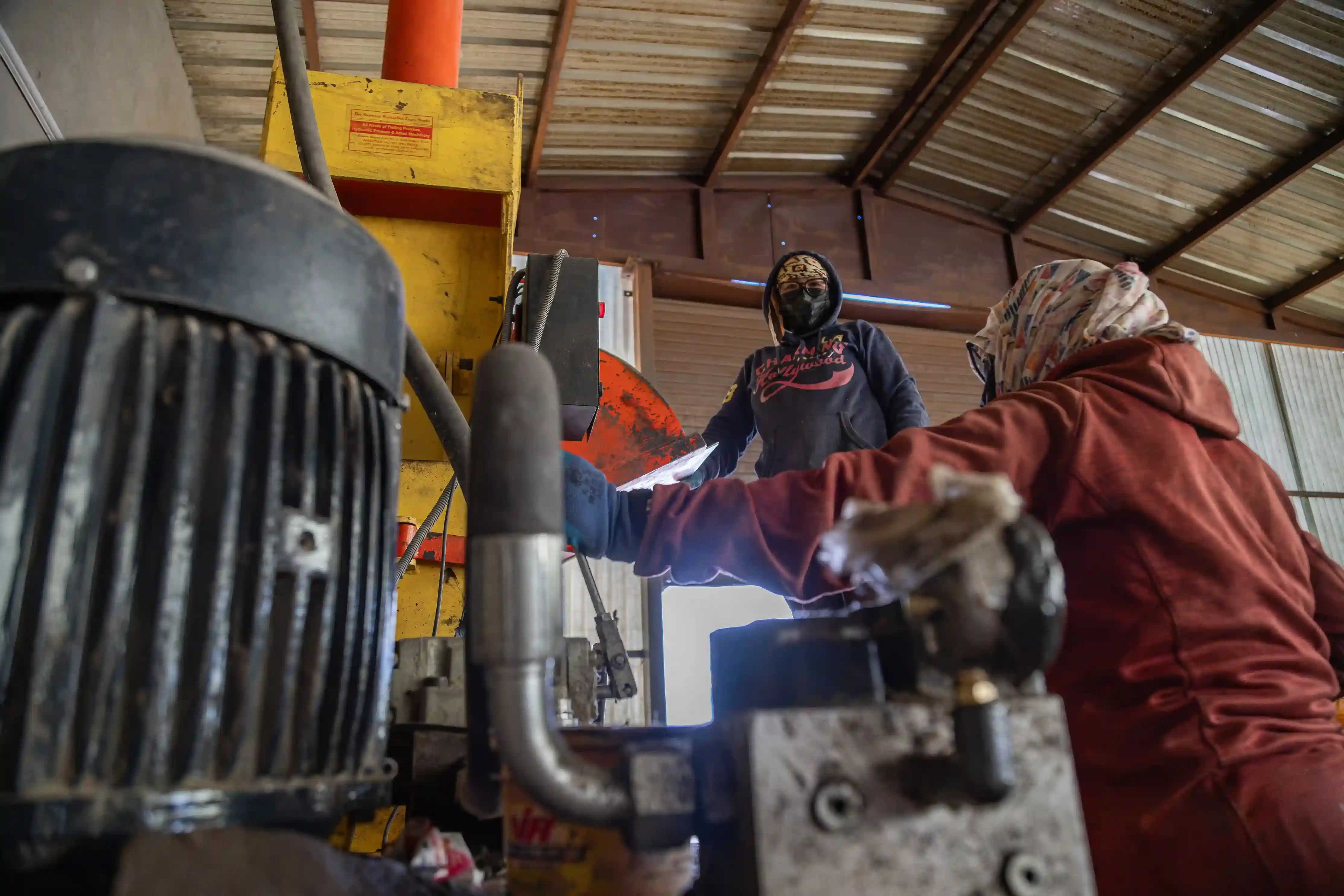
Workers operate a compression machine that compacts plastic waste before it is sent for recycling.
The Women’s Alliance of Ladakh (WAL) has spent decades campaigning village by village to eliminate plastic, beginning only with a handful of women. After years of work, including persuading shopkeepers to stop using plastic bags, WAL, together with the Ladakh Autonomous Hill Development Council, helped bring about a plastic ban in Leh nearly 30 years before India’s 2022 single-use plastic ban.
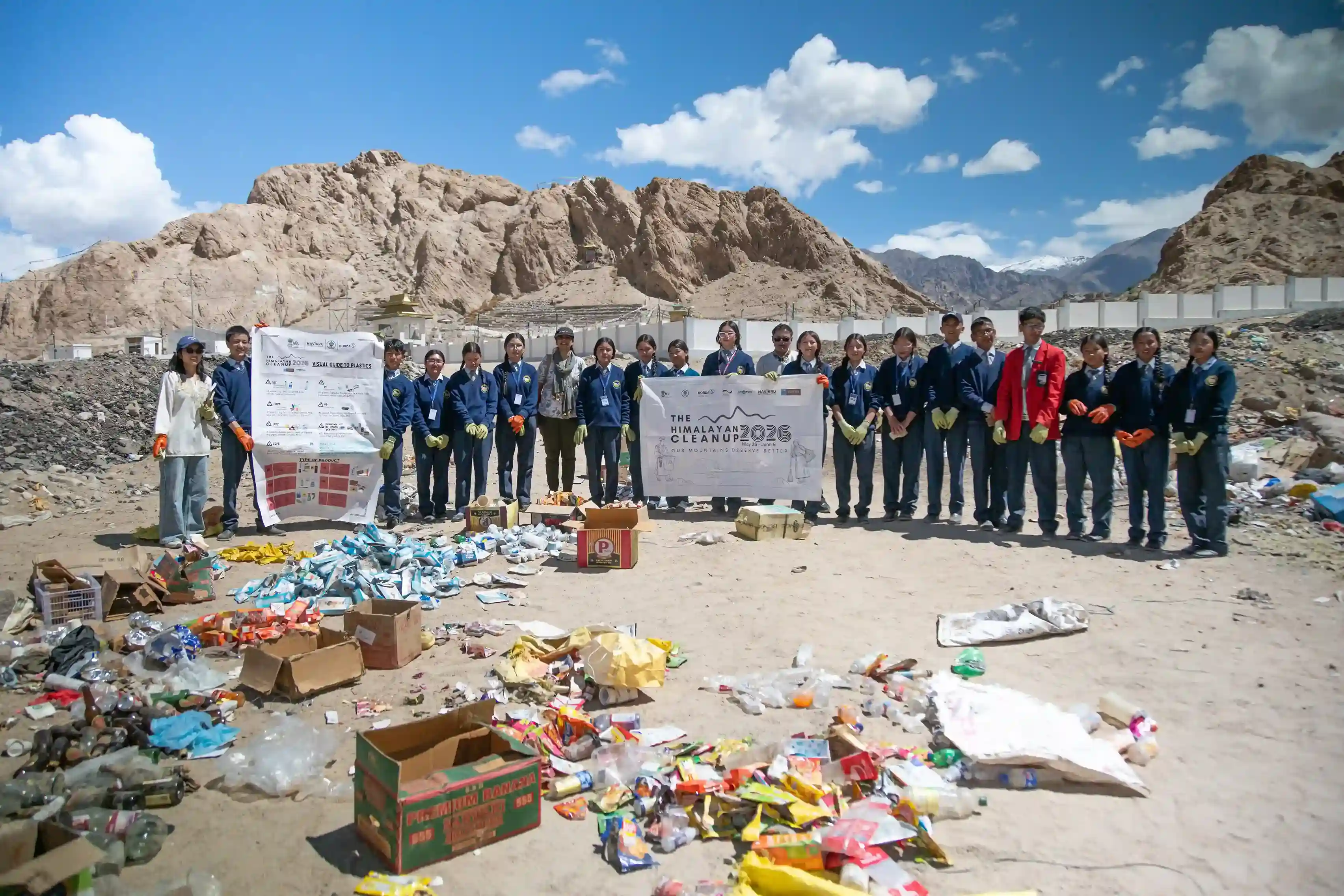
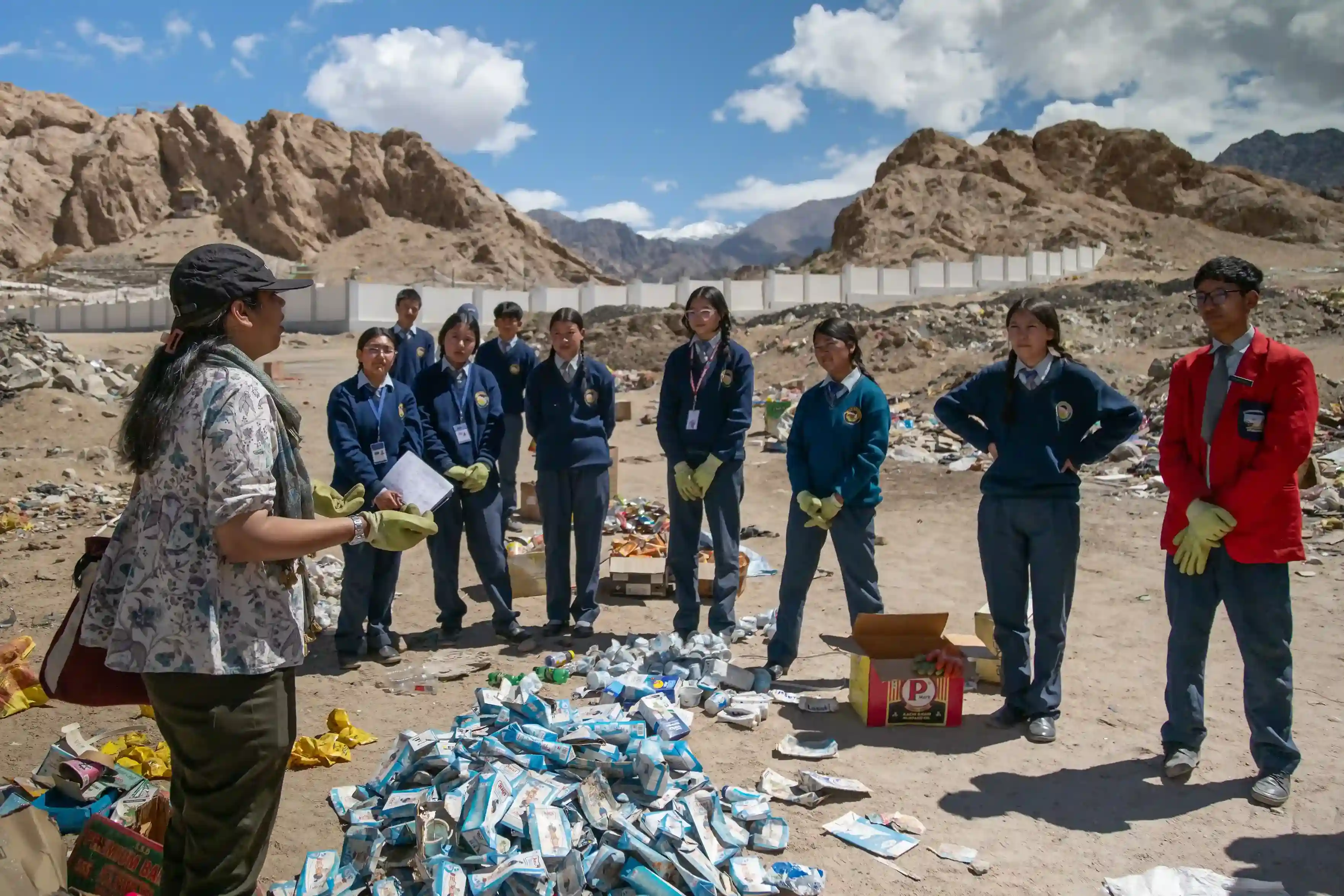
Navikru Eco Foundation, which has been working for the past seven years to tackle issues of waste, believes that one-off ‘clean-up drives’ have limited impact. The bulk of the organisation’s work is with children, where they brainstorm context-specific solutions and understand sustainability together.
Volunteers audit waste according to its material composition and trace it back to its source. “Nearly 76% of the waste collected during last year’s cleanup in Ladakh was not recyclable,” Navriku founder Preeti Chauhan says.
Rather than villanising plastic, it is important to question a culture of consumption that treats materials as disposable. In Ladakh, where waste lingers for years, the consequences are even more grim.

You might also like

See all
Is your food nutritious or only fast?
Are there heavy metals in your vegetables?
Does your food contain Microplastics?
Are your food habits disrupting the ecological balance?
Nibble right, Save the PLANET'S MIGHT!
Is your food nutritious or only fast?
Are there heavy metals in your vegetables?
Does your food contain Microplastics?
Are your food habits disrupting the ecological balance?
Nibble right, Save the PLANET'S MIGHT!