Aisiri Amin
|
March 3, 2026
|
12
min read
Bibijan Halemani dared to dream—of millets, and a better world for women
Halemani’s award-winning self-help group in Karnataka runs a seed bank and instills new confidence in millet cultivation
Read More
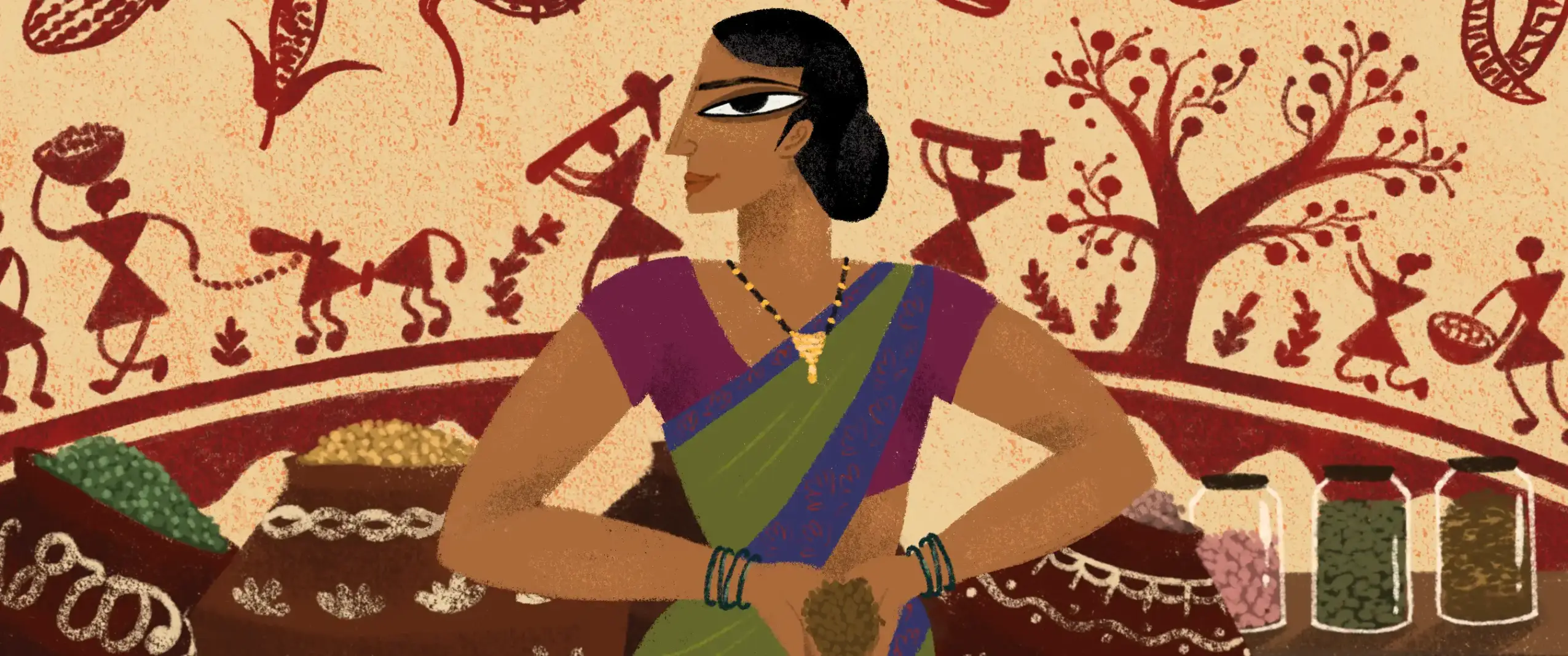
Editor's note: Every farmer who tills the land is an inextricable part of the Indian agriculture story. Some challenge convention, others uplift their less privileged peers, others still courageously pave the way for a more organic, sustainable future. All of them feed the country. In this series, the Good Food Movement highlights the lives and careers of pioneers in Indian agriculture—cultivators, seed preservers, collective organisers and entrepreneurs.
On a Sunday morning in September 2025, in Teertha—a small village about 30 km from Karnataka’s Hubli region—Bibijan Halemani makes her way home. A man sitting near a corner store asks her, “Will you buy mekke beeja (maize seeds) this time?”
Before she can respond, another man has a ready answer: “They have won a prize. She can.” Halemani smiles and continues walking.
“People are talking about the prize now, but until recently, they had little faith in our self-help group (SHG),” she says. The prize she speaks of is the Equator Initiative Award, won by the Bibi Fatima Self-Help Group for community-led biodiversity conservation, meaningful work in food security, and creating jobs for marginalised women.
“Recognitions like these make it difficult to dismiss our [women’s] work,” she says. However, it isn’t the first one. In the last seven years, the SHG has received several recognitions; of these, the one that first changed the way people looked at them was Deccan Herald’s Changemakers Award in 2023.
As the 40-year-old reaches the SHG’s community seed bank, started in 2018, which is next to her house, two sparrows are chirping around in the verandah. “You’ll always find sparrows here. They love seeds.” As she opens the door, the birds rush in, happily flying in circles near the roof.
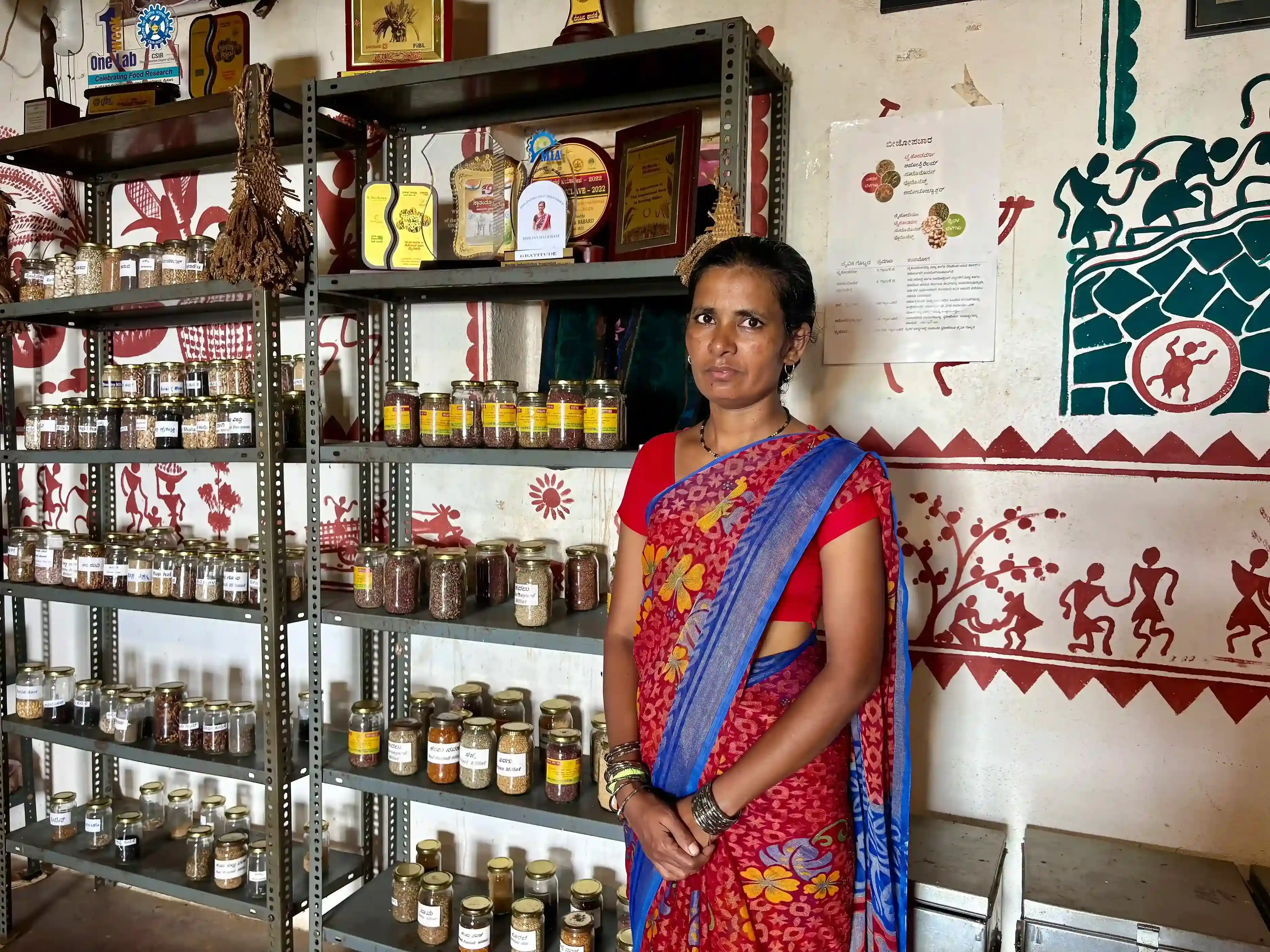
With earthy-red hand-paintings across the white walls and millet husks all around, the seed bank stands out from the line of houses surrounding it. Near the entrance, three rows of baskets full of millets—from the popular kodo and foxtail, to the lesser known browntop–greet us. Next to them, some millet foods such as sevai (vermicelli noodles) and beaten millet rice flakes are displayed on a wooden table where Halemani keeps tea and snacks for visitors. As we enter, the wall opposite the door is lined with various colourful seeds and millets in small glass bottles, along with the awards that the SHG has won.
Within ten minutes of meeting Halemani, three phone calls have already interrupted the conversation. Her busyness is also reflected in her way of talking: fast and to the point. But life wasn’t always like this for her, she recalls.
“About 20 years ago, if someone had told me this is what I will be doing, it would be a little surprising,” she says. For Halemani, ambition came with constant reminders of her gender identity. “The women in my family didn’t really have the option to study a great deal, or work—or even step out of our homes,” she says. Today, her work routinely takes her far away from Teertha, her hometown and address after marriage, to Delhi and Maharashtra.
A ghost ship, carrying dreams of a different life, often makes its presence felt in Halemani’s world. In her late teens, she developed a deep interest in politics and social work. “I just wanted to do something for society,” she says softly. When she completed her degree in Politics, Hindi, and English, her sole focus was on doing a Bachelor’s in Education to fulfil a dream she had stubbornly kept alive. “I always wanted to become a teacher,” she says.
Although acutely aware of the restrictions that had always been imposed on her, she hoped that this could be possible. However, her parents saw no point in further education or work, and got her married off as soon as she turned 20.
For Halemani, ambition came with constant reminders of her gender identity.
In 2004, soon after her wedding, Halemani tried to chase after this dream and applied to become an Anganwadi teacher in her village–despite a lack of any support. “But people in my village were opposed to my application, likely driven by internal politics and a bias against educated women. They made sure the position went to a woman from another village. After that, I gave up on the idea,” she says.
After marriage, her movement and access to public spaces shrunk further. Her days mostly revolved around cooking for many, tending to the cattle, and making manure out of cattle dung. During this time, she observed farming more than ever before—from what people chose to cultivate, to the problems farmers faced. One such observation was the disappearing presence of millets from plates and fields. “After 2007, not many were growing millets. Farmers were switching to maize, cotton, and rice,” she says.
In 2017, when the NGO Sahaja Samrudha came to her village to talk about farming challenges, men and women were both encouraged to come to the meeting; this marked her introduction to sustainable farming. “They noticed that women were more active and vocal during the meeting, and approached us with the idea of a self-help group focused on promoting millet farming,” Halemani explains. Seated next to baskets of millet grains, she adds, “It changed our lives.”
Also read: In Leh’s harsh terrain, farmer Urgain Phuntsog is a true ‘mitti ka aadmi
Halemani and 14 other women from Teertha came together to form the Bibi Fatima Self-Help Group in 2018. This was uncharted territory for them all. “People don’t have much land here. Some women would travel to faraway places to earn money. A few from our SHG used to catch a bus at 6 in the morning on chilly, winter days to wash utensils at a resort for just Rs. 300 and return only in the evening. They would fall sick, but still work,” Halemani says.
For years, Teertha’s women tried to find different sources of income. “We have to work constantly,” she says. In 2004, a few women, including Halemani, started an SHG to put aside a portion of their earnings and save it for a rainy day, but it had limited success, and they had to close it three years later.
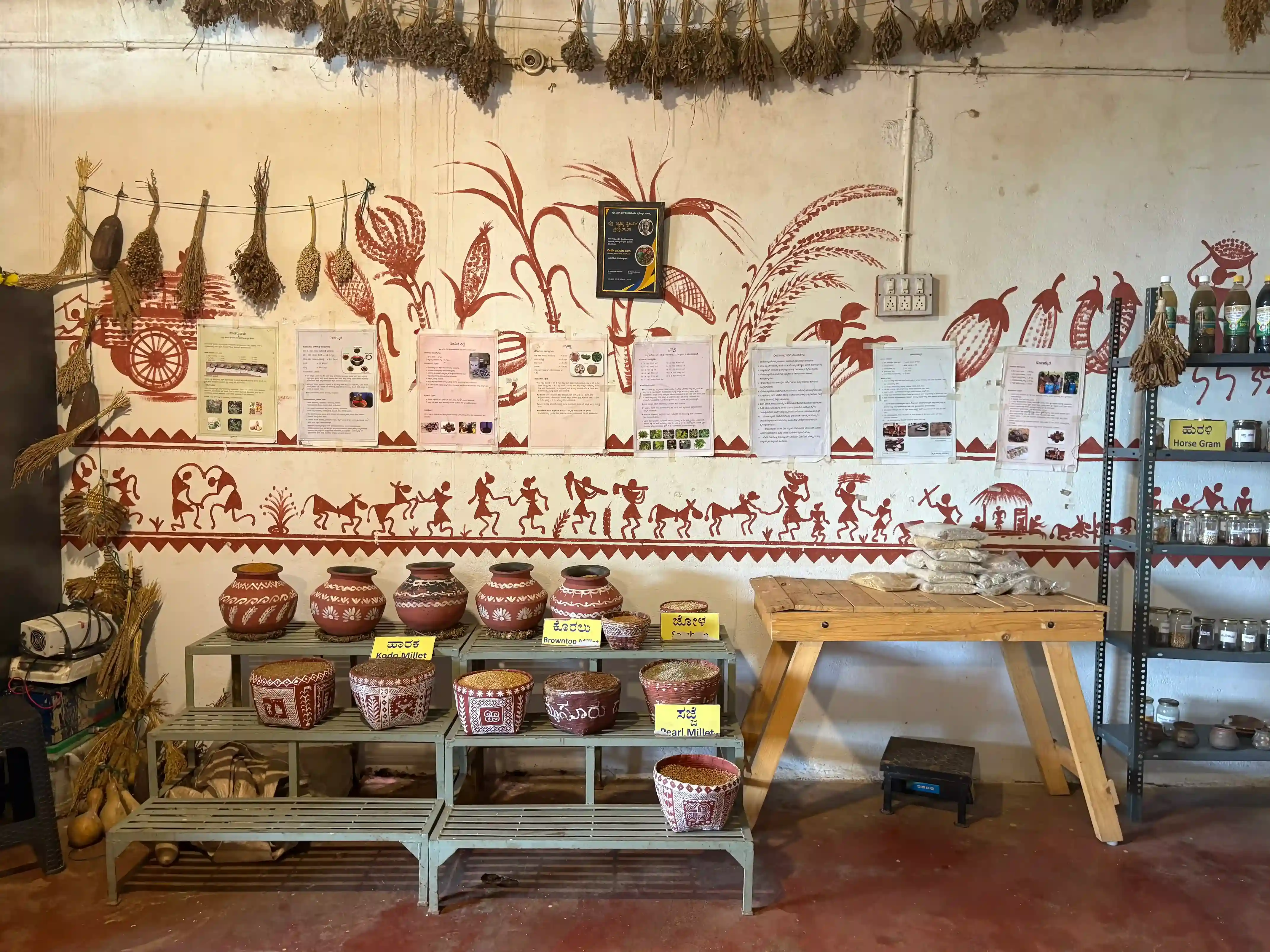
When the Bibi Fatima SHG was formed, for the very first time, the women had guidance and mentorship. They didn’t really know much about biodiversity conservation or food security, but through training programmes organised by Sahaja Samrudha, they started connecting their lived experience and observations with scientific knowledge.
When the Bibi Fatima SHG was formed, for the very first time, the women had guidance and mentorship.
The initial years also brought scepticism and stigma, as members of the SHG were often scoffed at. “If I carried a shoulder bag, some people would mock me, saying that I am ‘showing off’ my work. Now the same people are congratulating us,” Halemani says.
In particular, she remembers how disrespectfully the women were treated at a local bank when Halemani and her peers wanted to apply for a bank account for their undertaking. The manager, peeved at Halemani for taking a phone call, mocked her—an anecdote that resonates with many women, especially those who aren’t educated, and who feel hesitant to enter banks.
Also read: How Rahibai Popere built a seed bank with a mother’s grit and love
“Siridanya (millets) are not new to us. We have been exposed to them even as children, but I didn’t know of their benefits to health or the environment. Now, I am able to talk to others about millets and make them aware, too,” Halemani says with a smile—the first in this conversation.
Most farmers in and around Teertha had long left behind millet cultivation by the time Sahaja Samrudha put forth its idea. “Farmers were not finding it profitable. The process of cleaning millets after harvests was an issue for many,” she says.

The situation in Teertha was a microcosm of what was underway across Karnataka. By 2017, the abandonment of millets became a growing issue spurring state-wide concern. During the All-India Co-ordinated Project on Small Millets in April 2017, H. Shivanna, the Vice-Chancellor of the University of Agricultural Sciences, Bengaluru, said that over the preceding decade, Karnataka had lost nearly 2.5 lakh hectares of millet-growing fields to acacia and neem. He added that 40% of the area that was under millet cultivation had been replaced by horticultural crops, which meant that the state had just about 9.5 lakh hectares dedicated to growing millets.
Where once millets had disappeared from the fields in and surrounding Teertha, in present times, farmers are cultivating them across about 2,000 acres of land.
To address this gradual decrease, and after consecutive droughts between 2013 and 2017, the Karnataka government focused on reviving production. They also organised awareness programs and promotion campaigns in and around Bengaluru. In 2017, the National Organic and Millets Fair was held to bring together stakeholders in millet production and to connect farmers to markets. The government also pushed for 2018 to be declared as the ‘National Year of Millets.’
However, when it came to rural Karnataka, it was SHGs such as Halemani’s that heralded millet production. The Bibi Fatima SHG took flight in 2018. In the first two years, the women went to different taluks around Teertha to visit farms and meet farmers, explaining the cost benefits that come with growing millets and informing them of training and welfare schemes on offer. A particular advantage of growing millets is the crops’ ability to adapt well to different environmental conditions, especially changing monsoon patterns—a change that farmers are taking notice of. “In recent times, it rains heavily during the non-rainy season, and we barely get rain when we are supposed to,” Halemani says.

Yet, farmers remained sceptical. They wouldn’t come to the meetings or show much interest. The SHG then started giving farmers Navdanya kits–free packs provided by Sahaja Samrudha that consisted of nine kinds of millets that can be grown in a one-acre field. Gradually, more farmers showed a willingness to experiment.
As awareness grew and millet cultivation became more lucrative, more farmers joined the group. “We started with 20 to 25 farmers, but now we have a network of 5,000,” she says. This growth has largely been the result of the sharing of personal testimonies and success stories. Where once millets had disappeared from the fields in and surrounding Teertha, in present times, farmers are cultivating them across about 2,000 acres of land.
To address the gap between harvests and processing—the cumbersome cleaning of the grains—the SHG set up a millet processing unit in Teertha in 2022, with the help of Sahaja Samrudha, the Indian Institute of Millets Research (IIMR), Hyderabad, and CROPS4HD–an international project set up to transform food systems. The unit is run completely by the women. The SELCO foundation also provided them with solar power for their unit, which helped them manage their electricity expenses. The Millet Foundation, Bengaluru, trained the women in operating the unit, where they now earn Rs. 500 for each day of work.
Halemani gets up to reach for the millet baskets, holding a few grains of the browntop millet—small and polished, shining soft-golden in the light. “See, it has to be cleaned and properly processed for it to look like this,” she says. Processing is crucial in removing the inedible parts and increasing the bioavailability of nutrients. “Once we collect the seeds from the farmers, germination determines their quality. Those that germinate at least 80% are stored as seeds in the bank, and the rest are processed to make millet rice,” she explains.
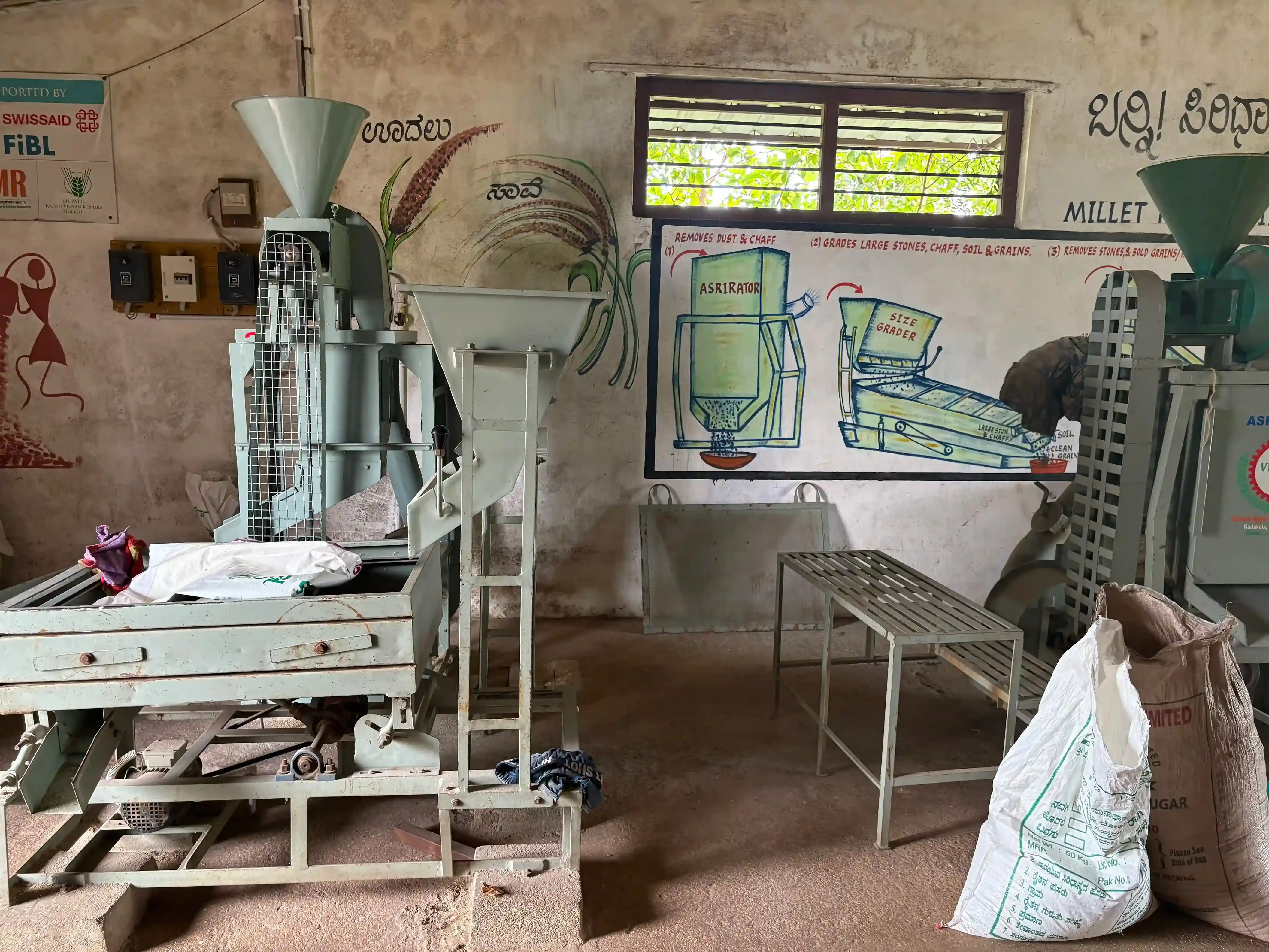
Farmers from about 15 villages get their grains processed at the SHG’s unit, where small quantities are undertaken for farmers’ consumption, as well as purchases in bulk for the market. In 2024, about 50 metric tons of millets were processed. The most palpable impact of this ease of processing is an increase in the household consumption of millets, Halemani says. “When we started, no one in our village was eating millets, but now at least 25% eat millet rice daily,” she adds.
To expand their reach, 53 SHGs came together in 2023 to form Devdanya Farmer Producer Company, a farmers' producer organisation (FPO) which is co-led by Halemani. About 500 individual farmers from the Kundagol and Shiggaon taluks are part of this initiative. In its first year, the FPO registered an annual turnover of Rs 58 lakh. After excluding all expenses and paying taxes, it made a profit of over Rs 1.4 lakh. “In 2024, our annual turnover increased to Rs. 1.5 crore,” Halemani shares.
While Devdanya was set up to promote millet products such as health drinks, sevai, and rice, it was also intended to remove the middlemen between farmers and markets. “The rate for millets is set by middlemen, and if these rates are too low, farmers are disincentivised from growing these crops. Through Devdanya, we buy the millets, help farmers process them, and ensure they have enough for household consumption.”
Also read: Babulal Dahiya makes every grain of rice count
Building a community seed bank has been a core project of the SHG since its very inception. When they were looking for a place to set it up, Halemani offered the space next to her house, which belongs to her family. “After about a year of creating awareness about sustainable farming and distributing Navdanya, we began to receive seeds in return. If we gave 10 kg of seeds, the farmer had to give us 20 kg back. That’s how the community seed bank started,” she says.
Initially, it received only millets, but as the harvests expanded, so did the seed bank. Today, it is home to 350 varieties of millets, oil seeds and pulses. These include 74 varieties of ragi, 10 of foxtail millet, 25 of little millet, two of proso and browntop, one of barnyard and pearl each, as well as 25 varieties of pulses and 80 of vegetables. Currently, the SHG recognises 30 farmers as seed producers.
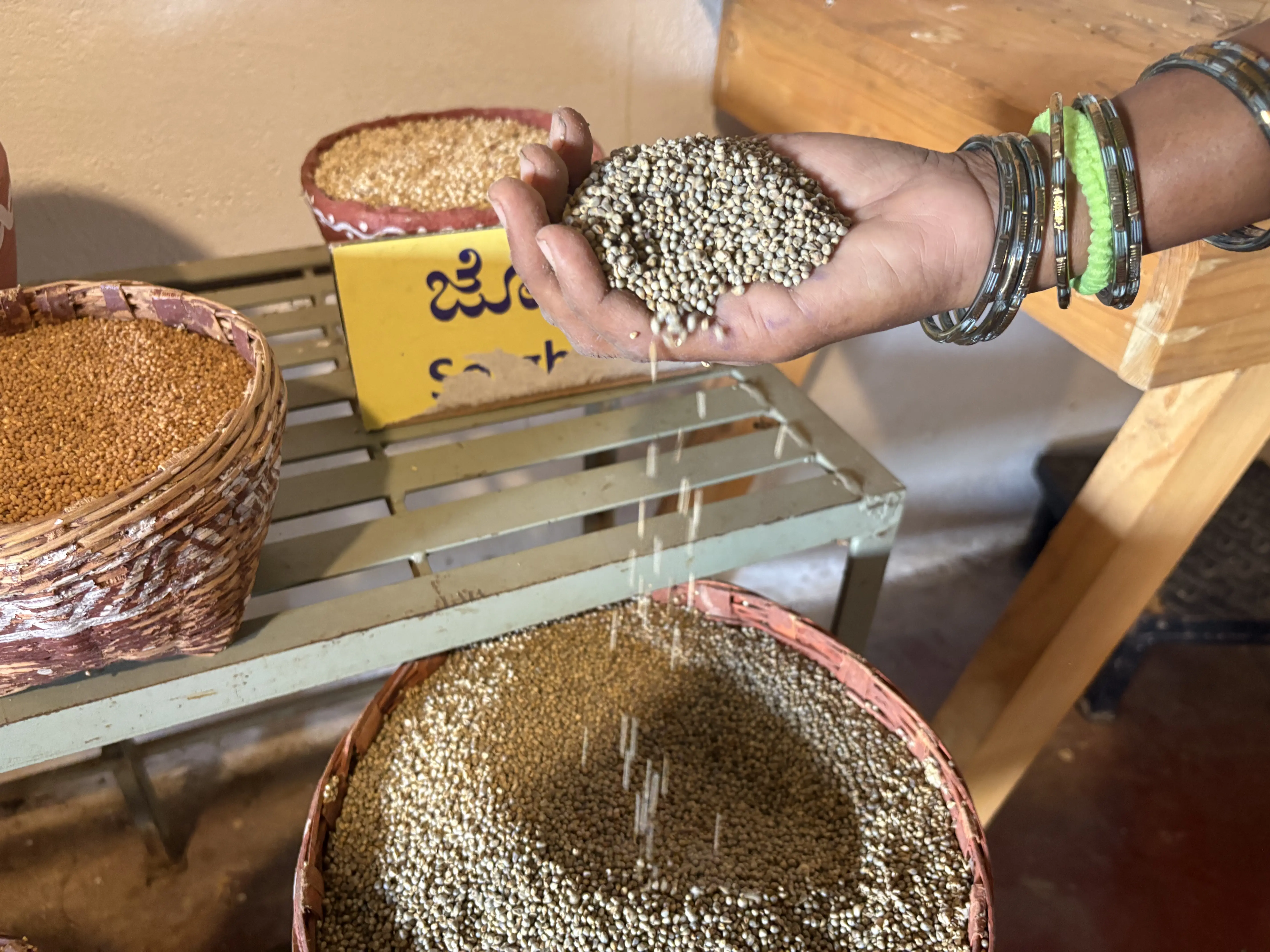
The core idea behind the seed bank, Halemani shares, has been to increase farmers’ access to indigenous varieties and provide them free of cost. They can usually find what they require here, depending on the season. With the climate crisis looming, the group has prioritised seeds which can withstand extreme environmental changes––mainly millets.
However, it hasn’t been an easy path for the SHG. Building a relationship with farmers was an exercise in time and patience. Sometimes, the SHG wouldn’t receive the seeds they had lent, and farmers would return millet seeds that wouldn’t germinate. “There were also times when we didn’t have the seeds that farmers needed, so we used our savings to buy them. There have been challenges, but isn’t that how life is?” says Halemani.
Though this may seem marginal, it is a triumph for a community-oriented seed bank in India, where farmers who run such institutions often rely on their own funds or meagre donations.
The community seed bank has been widely recognised for its focus on indigenous seeds, food security and the promotion of sustainable farming. “In 2024 we made transactions of up to Rs.14 lakhs, but in 2025, we made about Rs.10–11 lakhs because we faced some technical issues with the machines that processed millets ,” Halemani explains. They only make an estimated 10% of profit on their earnings, as they have to bear the cost of labour, rent and other expenses. Though this may seem marginal, it is a triumph for a community-oriented seed bank in India, where farmers who run such institutions often rely on their own funds or meagre donations.
At around 1 PM, Halemani generously extends an invitation to join her family for lunch and refuses to hear anything other than yes. As we sit down, she first brings a plate of millet sevai, with milk and sugar on the side. It’s a simple, wholesome meal, popular in Uttara Kannada. The sugar is sprinkled on the sevai, and milk is poured on top. Then come rice, sambar and sandige (sun-dried fritters). “We eat jolada rotti (rotis made of sorghum), but I didn’t think they’d be familiar to you,” she says. As we dig in, another member of the SHG, who is also Halemani’s relative, joins us. “She was the first to be a part of the group,” Halemani explains, nodding towards Shehanajabi Halemani, 42.
Shehanajabi has made a living from tailoring for a long time, but considers working at the SHG as her first and primary job. “Since the SHG was established, there is some work or other which keeps us busy, so the opportunities to earn have increased.” Shehanajabi adds, “We also help farmers and the environment, so the work feels fulfilling.”
For many women in and around Teertha, dreams have felt like a luxury that they don’t have access to.
When asked if she had a dream for her life while growing up, Shehanajabi shrugs and smiles as she looks into the distance. For many women in and around Teertha, dreams have felt like a luxury that they don’t have access to.
As we make our way back to the seed bank after lunch, we are in the company of another SHG member: Prema Prabhakar Bollina, 28, who is with her two-year-old daughter. Bollina got married when she was a teenager and is now a mother to two children. “I wanted to study. I think I could have become a teacher,” she says, with a big smile that stubbornly stays on throughout the conversation. Before she joined the SHG in 2019 and began working at the seed bank, Bollina was a domestic worker. As one of the few women in the area who is educated, she largely works at the bank, undertaking administrative tasks like registering transactions. “Earning recognition has changed the way people look at us. It has also made us independent,” she says.
Earlier that day, Halemani proudly showed photographs of her children: a 20-year-old son, who is studying law, and an 18-year-old daughter, who is pursuing a paramedical degree. “Ever since they were children, I told them education is vital to make something of their life,” she says. Even as their own dreams may have been made inaccessible, Halemani, Bollina and other women in the SHG are fiercely protecting the aspirations of their children.
Edited by Neerja Deodhar and Anushka Mukherjee
Art by Jishnu Bandyopadhyay
{{quiz}}
Editor's note: Every farmer who tills the land is an inextricable part of the Indian agriculture story. Some challenge convention, others uplift their less privileged peers, others still courageously pave the way for a more organic, sustainable future. All of them feed the country. In this series, the Good Food Movement highlights the lives and careers of pioneers in Indian agriculture—cultivators, seed preservers, collective organisers and entrepreneurs.
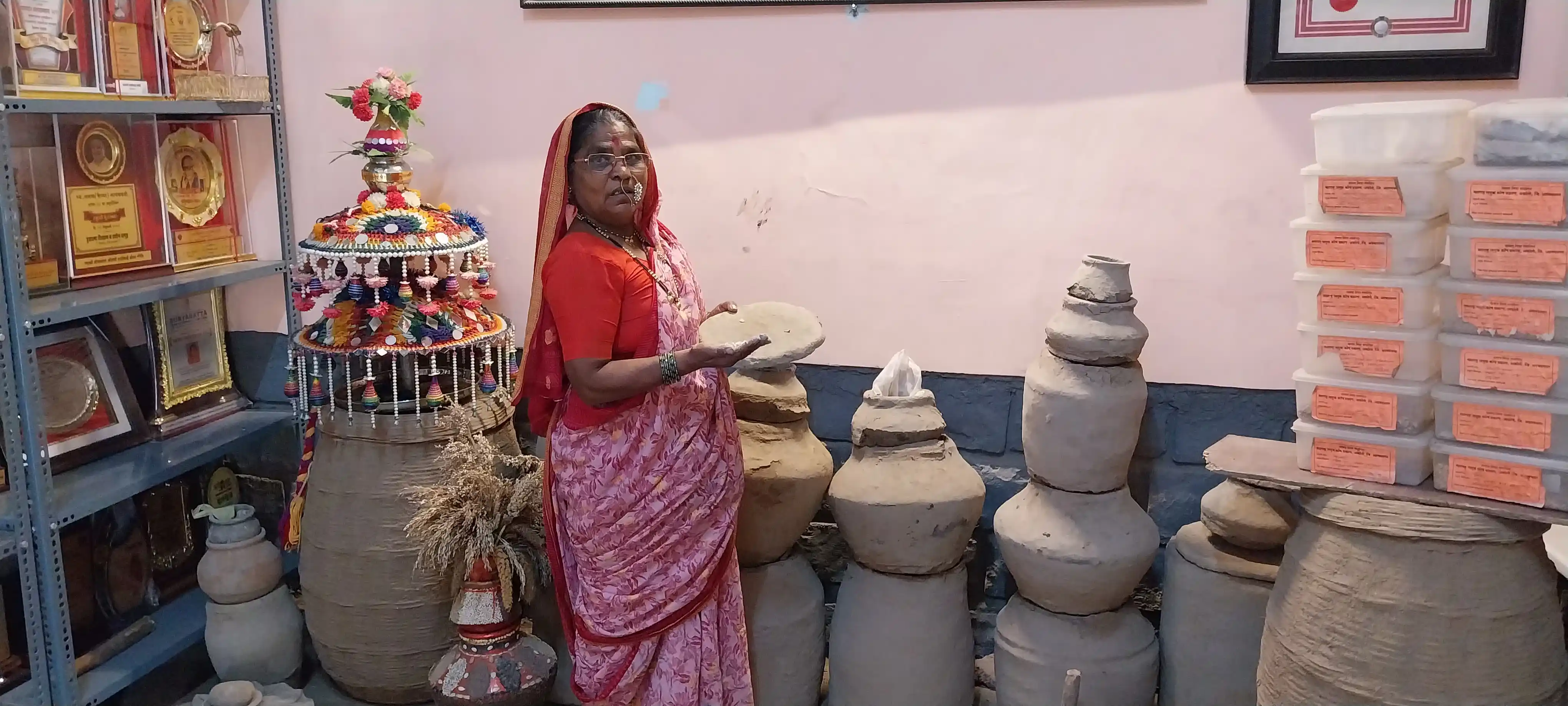
In the heart of the Sahyadri hills, the monsoon paints the landscape in countless shades of green. On the slopes of Kombhalne in Maharashtra’s Ahilyanagar district (formerly known as Ahmednagar), tucked deep in the mountain range, women move in unison through the afternoon. Their hands sink rhythmically into the muddy red earth as they plant tender rice saplings. A short walk away, Rahibai Soma Popere steps into her modest but well-structured seed bank, where rows of clay pots filled with native seeds lie in wait like quiet sentinels—each one a vessel of resilience and memory.
When she opens the bank’s doors, sparrows fly in. This scene is a familiar one for Popere—one marked by mistakes made and lessons learnt. “Pakshyala kalta kay khayach ani kay nahi. Manasala ekta dnyan asun pan tyala he samajlele nahi.” (Birds instinctively know what is good for them, but humans, despite all our knowledge, fail to understand).
She recounts her experience of planting an indigenous variety of bajra or pearl millet. For the first three years, the crop grew well. Birds arrived at the fields and pecked at it, showing some interest in the grain. By the fourth year, however, something remarkable happened: flocks of birds descended onto the field and devoured the entire crop. Strikingly, they left the surrounding bajra fields, sown with modern hybrid grains, untouched. The birds had a clear preference; they didn’t care for bajra that was harder, bitter, and far less nutritious. The produce from the indigenous seeds, on the other hand, was naturally sweet and soft. “We would crush the grain in our palms and eat it fresh,” she recalls.
And yet, deviating from traditional wisdom, farmers in Kombhalne stopped growing this variety over time as they chased profit and yield. Popere’s own access to the indigenous seeds ended with the birds’ feast. As she gently lifts a pot and scoops a handful of val or ghevda (hyacinth) beans preserved in ash at the seed bank, she reflects on the deeper meaning of this loss. “These are not just seeds,” she says. “They are the heritage of generations, safeguarded for those yet to come.”
Now in her early sixties and affectionately known as ‘Beej Mata’ (Seed Mother), Popere has earned global recognition for her remarkable work in conserving indigenous seeds and wild vegetables.
She was born into the Mahadev Koli tribe and inherited farming as part of community traditions. Hers was a childhood marked by hardship: At the age of seven, she lost her mother. The fifth of nine children, she grew up in a household weighed down by poverty, and was forced to shoulder responsibilities early on—caring for siblings, managing household chores, and tending to the family’s cattle. She didn’t have a chance to formally learn how to read or write. At 12, she was married, stepping into an even harsher life. Within the home of her in-laws, she had neither authority nor respect. Made to live in the cattle shed, she even gave birth to all four of her children there.
She preserved them with great care, storing the seeds in earthen pots layered with ash and sealing the pots with cow dung, a traditional method that the Mahadev Kolis have followed for generations.
“After childbirth, we would return to work the very next day. By the seventh day, we were already back in the fields, with our newborns tied to our backs,” she says. In the 1990s, women in her village were nourished not with semolina or dry fruits, but rather with the Dhavul variety of rice and bhagar (barnyard millet), a highly nutritious grain. These dishes alone gave them the strength to recover, she says. But over time, the millet disappeared from people’s diets.
As a child who grew up watching her community in Kombhalne set aside a portion of their harvest to use as seeds the next season, Popere noticed changes taking place in local agriculture. She distinctly remembers how the wave of hybrid seeds spread across her village in the late 1990s and early 2000s, and eventually arrived at her doorstep. Like many Indian farmers, Popere, too, adopted hybrid crops.
The next few years brought frequent illness to her family, prompting the farmer to see the connection between hybrid produce and health: nutrition was being compromised, and a heavy reliance on chemical fertilisers only made matters worse. “That day (in the early 2010s), I decided we would no longer eat hybrid vegetables and grains in our home. I chose to return to our traditional seeds,” she says with resolve.
At first, her family resisted this decision, as they remained sceptical about whether native varieties would match up to the yield and profits delivered by their hybrid counterparts. But Popere convinced them, over and over, until they finally agreed and began supporting her effort.
Practicing rainfed farming, she has been cultivating native vegetables such as bitter gourd, ridge gourd, sponge gourd, native okra (kate bhendi), cluster beans, and leafy greens like spinach, fenugreek, and dill—grown mainly for its seed in the winter. She also grows numerous varieties of rice such as Ambemohar, Kolpi and Raibhog; numerous types of cowpeas; and 18 types of hyacinth.
Thus began Popere’s endeavour to gather indigenous seeds—beginning with her own home, as well as from her relatives’ and fellow villagers’. She preserved them with great care, storing the seeds in earthen pots layered with ash and sealing the pots with cow dung, a traditional method that the Mahadev Kolis have followed for generations. Seeds stored in ash remain viable for sowing for up to three years, and for consumption, they last as long as ten years, she explains with pride.
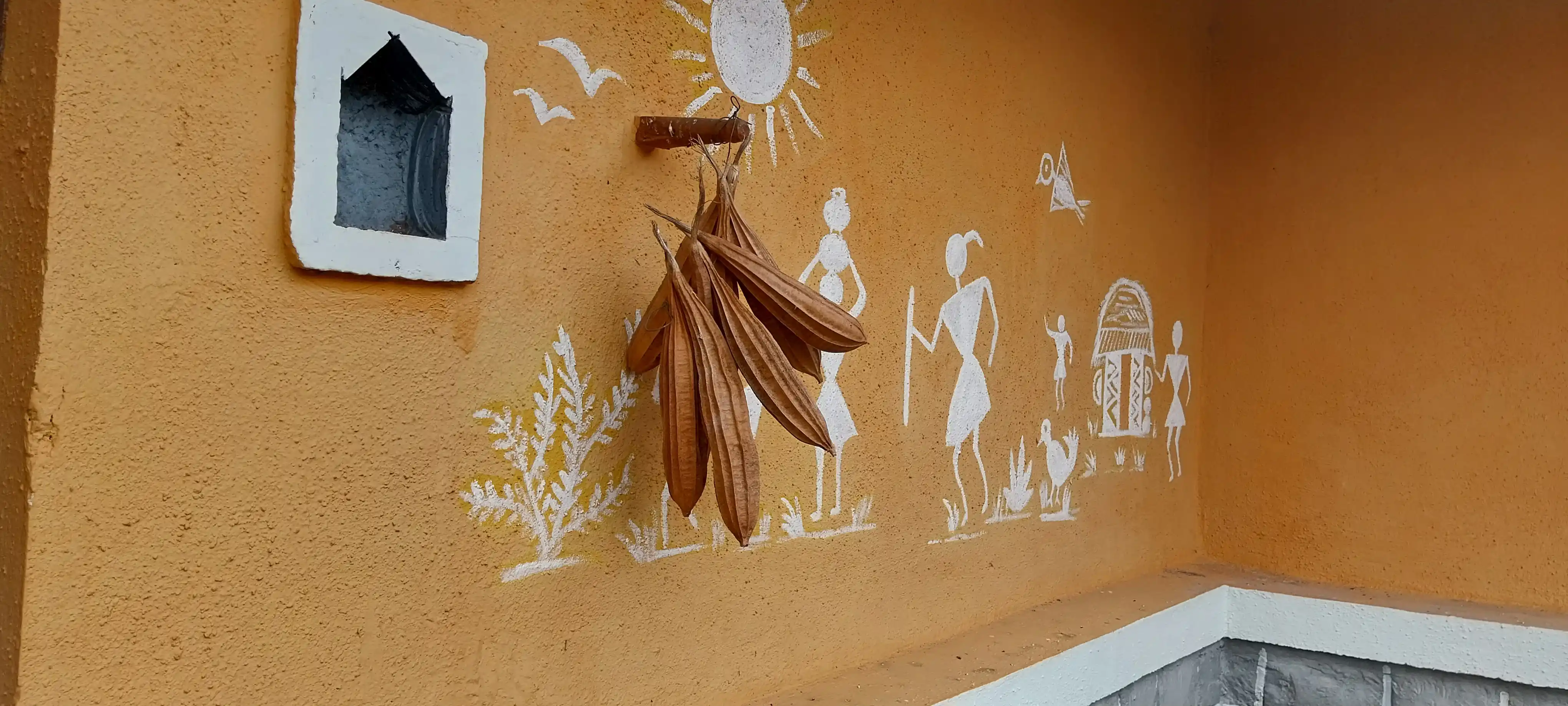
After its conception in the mid-2010s, the bank operated from a small mud room on Popere’s farm, where there was no electricity or water connection, and where no more than ten people could stand inside at once. Pots and glass bottles aside, some local beans were strung on ropes, owing to the paucity of space. The bank has lived many lives over the years, expanding in its scope but never straying from Popere’s vision. To her, the challenge in running this bank, which has caught the eye of NGOs as well as the local government, is not logistical or financial, but rather to do with the seeds themselves and their selection.
Also read: How Jayshree Vencatesan got Chennai to finally care for its wetlands
In their village, farming is entirely reliant on the monsoon. The Nilwande Dam towers nearby, but its water rarely reaches the fields. Wells dry up by summer, and even drinking water becomes scarce. After monsoon, most villagers migrate for work; Popere, whose landholding measures 7 acres, would travel across Ahilyanagar, too, to cut sugarcane.
Yet she continued to nurture dreams: she wanted every home to have at least one fruit tree for its children. To this end, she started raising saplings, of papaya, guava, and custard apple among other fruits at home, handing them out to women’s self-help groups or during village festivals. “Once, I raised a nursery of 3,500 blueberry plants,” she laughs. “Everyone thought I was crazy.” Soon after, Pune-based BAIF Development Research Foundation, a rural development NGO, got in touch with her and purchased the entire lot. “I earned Rs. 10,000 on that day—the first time I’d ever seen so much money,” she says with wonder.
Among millets, Popere’s collection featured 12 varieties of finger millet (nagali), both red and white, and two varieties of little millet (varai)—Garvi and Halvi.
Through BAIF’s Community-led Agrobiodiversity Conservation programme, Popere’s effort to save seeds finally found a larger platform. When the BAIF team visited her home, they were astonished to see 125 varieties carefully stored—many rare, some on the verge of extinction. Among them were 16 rice varieties, including Raibhog, Jirwel, Ambemohar, Warangal, and Kalbhat. Of the 28 types of hyacinth beans known locally, Popere had preserved 18, distinguished by their size and colour—green, white, wine, black, long, or short, sweet, or bitter. These varieties continue bearing fruit for up to three years. She also conserved four types of cowpeas. Among millets, Popere’s collection featured 12 varieties of finger millet (nagali), both red and white, and two varieties of little millet (varai)—Garvi and Halvi.
“Until then, my seed conservation and organic farming work was limited to my home,” Popere says. “But with BAIF’s guidance, I began cultivating different varieties solely for conservation.”

Also read: In Leh’s harsh terrain, farmer Urgain Phuntsog is a true ‘mitti ka aadmi’
Popere’s next challenge was persuading Kombhalne’s women about the dangers of using hybrid seeds and the urgency of her work. Few were willing to listen.
The conservation of native seeds is possible only when communities share traditional knowledge. With this objective, BAIF began setting up community seed banks in Maharashtra’s villages to build this collective effort. In 2017, amid interventions in the tribal block of Akole, BAIF and Popere established one such bank in the courtyard beside her home, under the Kalsubai Parisar Biyane Sanvardhan Samajik Sanstha, a community-led seed savers’ group.

The bank began with a simple rule: borrow one kilo of seed, return two after harvest. Through this system, Popere built a network of over 3,500 farmers, training them in seed selection until they could maintain their own reserves. Over time, as local farmers became self-reliant, they stopped visiting the bank. But cultivators from across Maharashtra continued to seek her out, leading Popere to shift from a barter-based system to selling her seeds. At present, the seed bank has 116 varieties of 54 crops. She has committed to memory the details of each seed, its medicinal properties, uses, and standout characteristics. In a sense, she has become a living encyclopedia of traditional cultivars. Today, her seeds, especially vegetables, are in demand across India, in cities such as Delhi, Jaipur, and Bhopal, and have even earned an audience overseas.
In recent years, she has come to recognise that there is a limit to what can be achieved alone.
She traveled widely—on field visits, farm tours, fairs, and meetings—spreading awareness about the value of indigenous crop varieties. To dispel farmers’ doubts about the yield and profitability of indigenous crops, she experimented on her own farm, cultivating four traditional rice varieties alongside four hybrids under identical conditions. The results were striking: traditional varieties produced complete grains, while the hybrids struggled without chemical fertilisers. This comparison helped farmers see the resilience of local crops, which also withstand droughts and pests better.
Through such demonstrations, she was also able to win over Kombhalne’s women. Around 2,000 of them became associated with the Kalsubai Parisar Biyane Sanvardhan Samajik Sanstha’s seed bank, of whom more than 400 are actively involved in seed production. She has also unified groups of tribal women to work together through the establishment of self-help groups.
In 2020, Popere was awarded the Padma Shri—a turning point in her farming career, amplifying her vision and labour beyond Maharashtra. Six years on, her seed bank is lined with awards and trophies, though she emphasises that they have done little to change her financial reality. “I worked hard before, and I continue to work hard now. If you work, the seeds will come—and only then can you share them with others,” she says.
For Popere, every step forward was accompanied by struggles. In the early years, she endured relentless criticism and violence from her own family. Training trips meant to upskill and empower her often deepened tensions at home; her husband’s anger could be flared by the smallest things. Many nights, exhaustion and despair nearly pushed her to give up. But her father’s words of encouragement echoed in her mind each morning, and she pressed on, drawing strength from them. She knew stopping was never an option for her community and the seeds.
She has committed to memory the details of each seed, its medicinal properties, uses, and standout characteristics.
In recent years, she has come to recognise that there is a limit to what can be achieved alone. Troublingly, there have been times when the native seeds handed over to farmers have not been conserved after harvests. But every disappointment is matched by pleasant surprises. She recalls a meeting with a Satara-based farmer who purchased a small packet of wheat from her bank which cost barely Rs. 30. Instead of rushing into sowing the seeds, he spent months investing in preparing his land the way Popere had recommended, slowly undoing the damage caused by chemicals and reviving the soil’s strength. The resulting harvest astonished him: it yielded 30 kg of grain.
Overjoyed, he told her that he shared 10 kg of seeds with fellow farmers so the variety could spread, and saved another 5 kg to sow again in his own field. “If more farmers did what he did,” Popere says with conviction, “toxin-free, indigenous produce would once again find its way to every plate.”
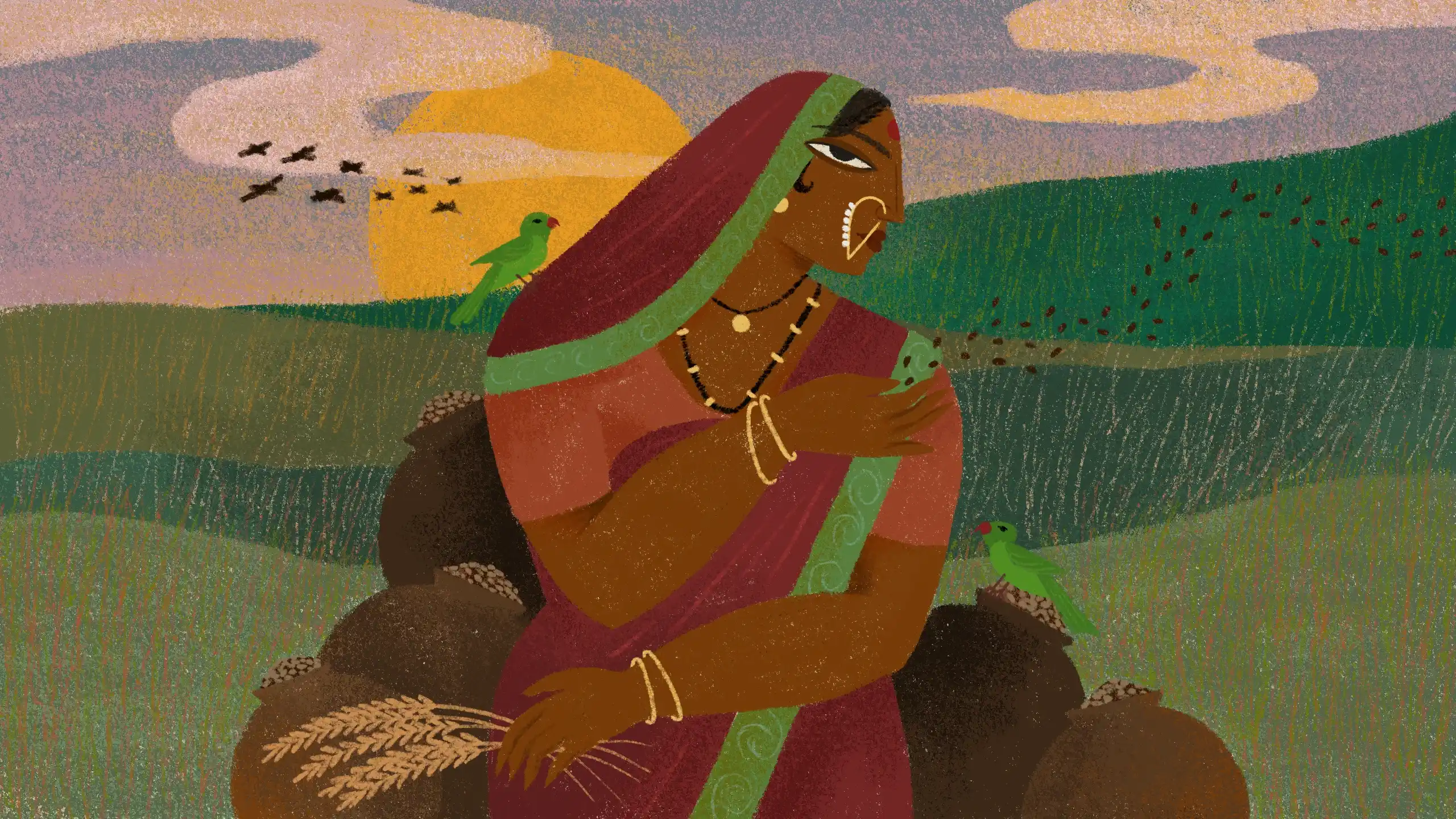
Art by Jishnu Bandyopadhyay
Also read: Babulal Dahiya makes every grain of rice count
{{quiz}}

Editor's note: Every farmer who tills the land is an inextricable part of the Indian agriculture story. Some challenge convention, others uplift their less privileged peers, others still courageously pave the way for a more organic, sustainable future. All of them feed the country. In this series, the Good Food Movement highlights the lives and careers of pioneers in Indian agriculture—cultivators, seed preservers, collective organisers and entrepreneurs.
At approximately 14,000 feet above sea level, surrounded by jagged peaks, gorges carved by rivers, and steep valleys, lies a village etched into the dramatic canvas of Ladakh’s wilderness. Named Gya, its landscape is both stark and sublime. It is located in the Kharu block of Leh district, around 74 km southeast of Leh town along the Leh-Manali highway. With roughly 80 households, it is one of the oldest Ladakhi villages.
This seemingly inhospitable terrain holds a deep geological significance dating back to the collision of continents, offering rare insight into the Earth’s tectonic history. And though its soil is coarse and sandy, it is coaxed to life by the hands of resilient farmers and their indigenous knowledge. The people of Gya have transformed rugged land into a cradle of sustainable, high-altitude agriculture. Once a thriving pastoralist community, this thousand-year-old village gradually began embracing agriculture a few centuries ago.
Among its farmers is Urgain Phuntsog, a 53-year-old whose work has defied the conventional understanding that agriculture is not viable in extreme cold arid zones. Working the fields ever since he was a teenager, he cultivates a mix of traditional and unconventional crops. Even as he battles a short growing season (less than five months), frequent frost events and a dependence on glacial water, Phuntsog demonstrates that food security can be achieved, even in a harsh climate and remote geography—in a manner that is not only possible, but economically viable.
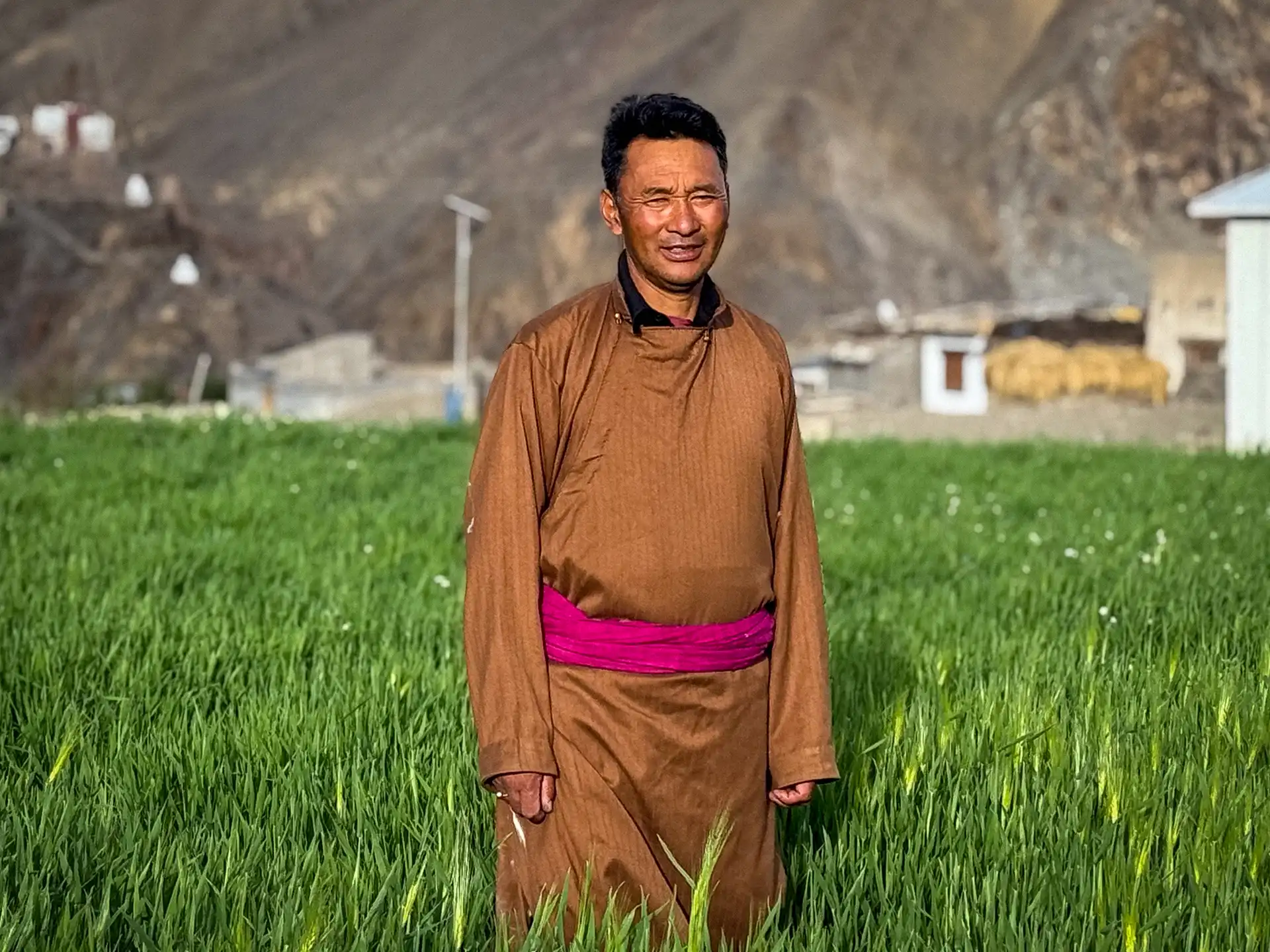
Phuntsog’s relationship to the soil is so profound that the villagers lovingly call him ‘Mitti Ka Aadmi’ (man of the earth). It was his friends who first came up with the name, and soon enough, it caught on with even the researchers from the nearby Krishi Vigyan Kendra (KVK). It’s a well-deserved moniker given how much time Phuntsog spends studying soil and experimenting with it.
He owns 75 karnals of land, including his younger brother's share, and grows more than 35 varieties of crops. Half of his land is sown with barely, a traditional Ladakhi staple. The rest of his fields yield a vibrant mosaic of produce: four types of local spinach, mustard, turnips, radishes, carrots, cucumbers, cabbages, beans, quinoa, broccoli, chamomile, mint, tomatoes, onions, strawberries, potatoes and more.
The only food items he purchases are rice and spices. Everything else comes from his farm. “I can feed my family for the next 10 years with what I grow,” Phuntsog says with quiet pride. “We don’t have to depend on anyone.” Even during punishing winters when temperatures plummet to -20°C and supplies often run dry, his family continues to have access to fresh vegetables.
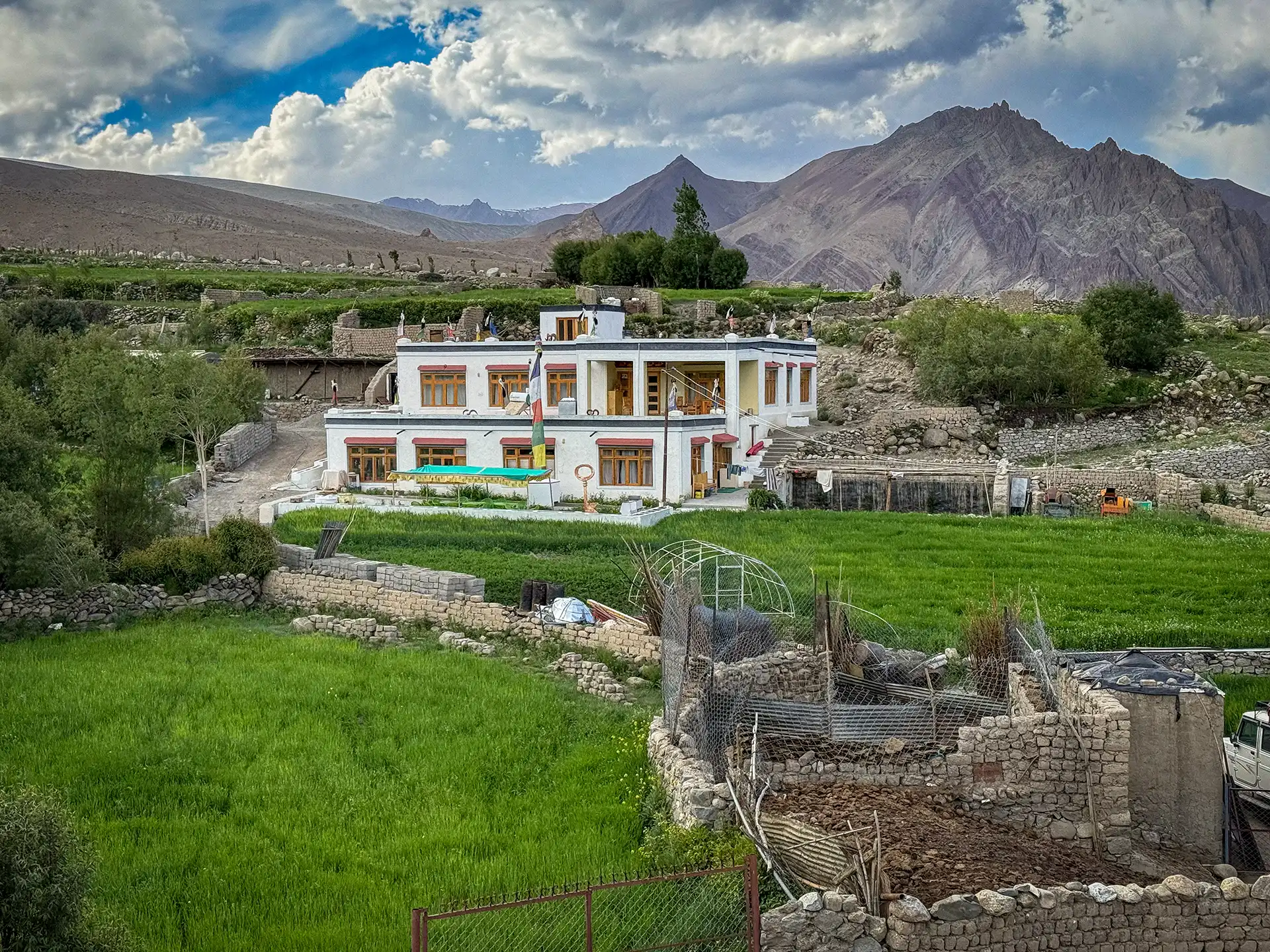
Phuntsog’s journey could have taken a very different path. He completed his early schooling in Gya’s government school and graduated from Class 10 in Leh. He even earned spots in both, the Indian Navy and the Indo-Tibetan Border Police. For many in the region, these opportunities would have meant a ticket to a different life—one that would have promised stability and a reliable salary—but Phuntsog chose differently.
He returned to his roots in Gya, picking the land, soil, and seasons over uniformed service. In doing so, he has honoured not just his family’s legacy, but also a way of life that has sustained communities in this landscape for centuries—farming and livestock rearing. Phuntsog is not alone in this commitment; his sister Tsering Palmo, too, shares this deep bond with the land. She tends the family’s livestock, including their pashmina goats and sheep across different pasturelands, leading a nomadic life amid glaciers. She spends most of the brutal Ladakhi winter moving through the wilderness with her herds, keeping alive an ancient rhythm of life.
Phuntsog’s early years were defined by struggles and uncertainty. Having lost his father as a boy, the responsibility of feeding the family rested on his young shoulders. “I didn’t even know where to begin,” he recalls. “Some days, we had nothing to eat.” It was the villagers who stepped in with lessons on sowing and harvesting barley as well as the traditional dzo-driven (yak-cow hybrid) method of ploughing. In 2010, a 10-day exposure tour organised by the state agriculture and horticulture departments presented an opportunity to learn from experts.
Also read: Babulal Dahiya makes every grain of rice count
Phuntsog has a meditative, almost spiritual perspective to farming. He considers it one of the most noble professions, working the land not out of necessity, but out of choice and joy. “I take great pride in being a farmer,” he says. “When I am in the barley fields, I feel alive. I feel more human.” It’s no surprise then that agriculture represents more than a livelihood to him; it’s a philosophy of balance. He believes in following what he calls “the middle way”—a principle of moderation and respect for nature. “We must revere nature,” he says, “Respect its rhythms, and maintain balance in every part of life.”
His faith in balance also extends to policy and governance around agriculture. Phuntsog has worked closely with government agencies for years, but speaks candidly about the gaps that still exist. “Most government projects don’t align with what farmers actually need. There’s no proper assessment before or after a project is implemented. It amounts to a sheer waste of funds.”
Worse, he adds, is the lack of coordination between concerned departments. “Stakeholders work in silos. Without collaboration, Ladakh’s goal of becoming fully organic in the near future may remain a distant dream.”
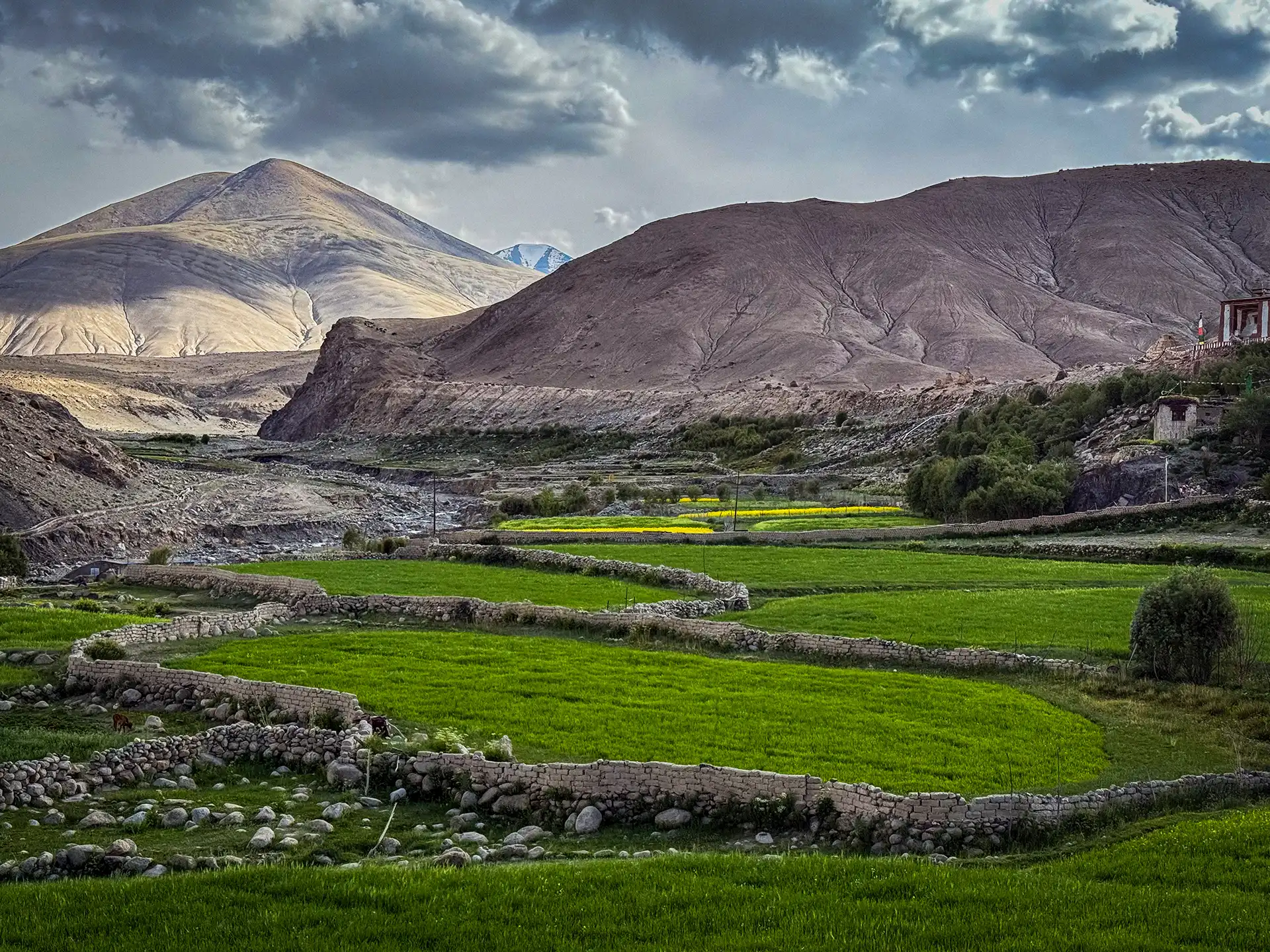
Organic farming is not a trendy buzzword in the union territory; it is how Ladakhi ancestors have always farmed. A sense of regenerative circularity involving outputs like manure always existed on their farms. This changed in the 1990s, with the opening up of roads, a surge in tourism and growing demand for grain from the army. Chemical fertilisers, available at subsidised prices, now had greater acceptance as farmers aspired to quicker harvests and bigger incomes. Ladakh-wide goals to transition fully to chemical-free methods belie the reality in the fields, where people still think being organic merely means cutting down on fertiliser use.
Another looming challenge in Ladakh’s organic agriculture journey is the increasing use of hybrid seeds. Until not too long ago, seeds were a major concern for farmers who would be forced to borrow grains at very high rates of interest, thus getting trapped in debt, Phuntsog recalls. Then hybrid seeds became accessible—available for free from government sources—at the cost of “colonising” farms and displacing indigenous seeds. While hybrid vegetables grow fast and are favoured in markets, they are fragile and have short shelf lives. Their seeds cannot be reused season after season. Indigenous seeds, on the other hand, are more resilient and better suited to Ladakh’s realities.
Phuntsog currently maintains his own personal seed bank with 10–12 native varieties of barley, leafy greens, radish, turnip, and sowa (dill). “For farmers, seeds are life itself,” he says, “Preserving indigenous seeds is not optional, it is essential. Without them, we lose not just crops but our identity.”
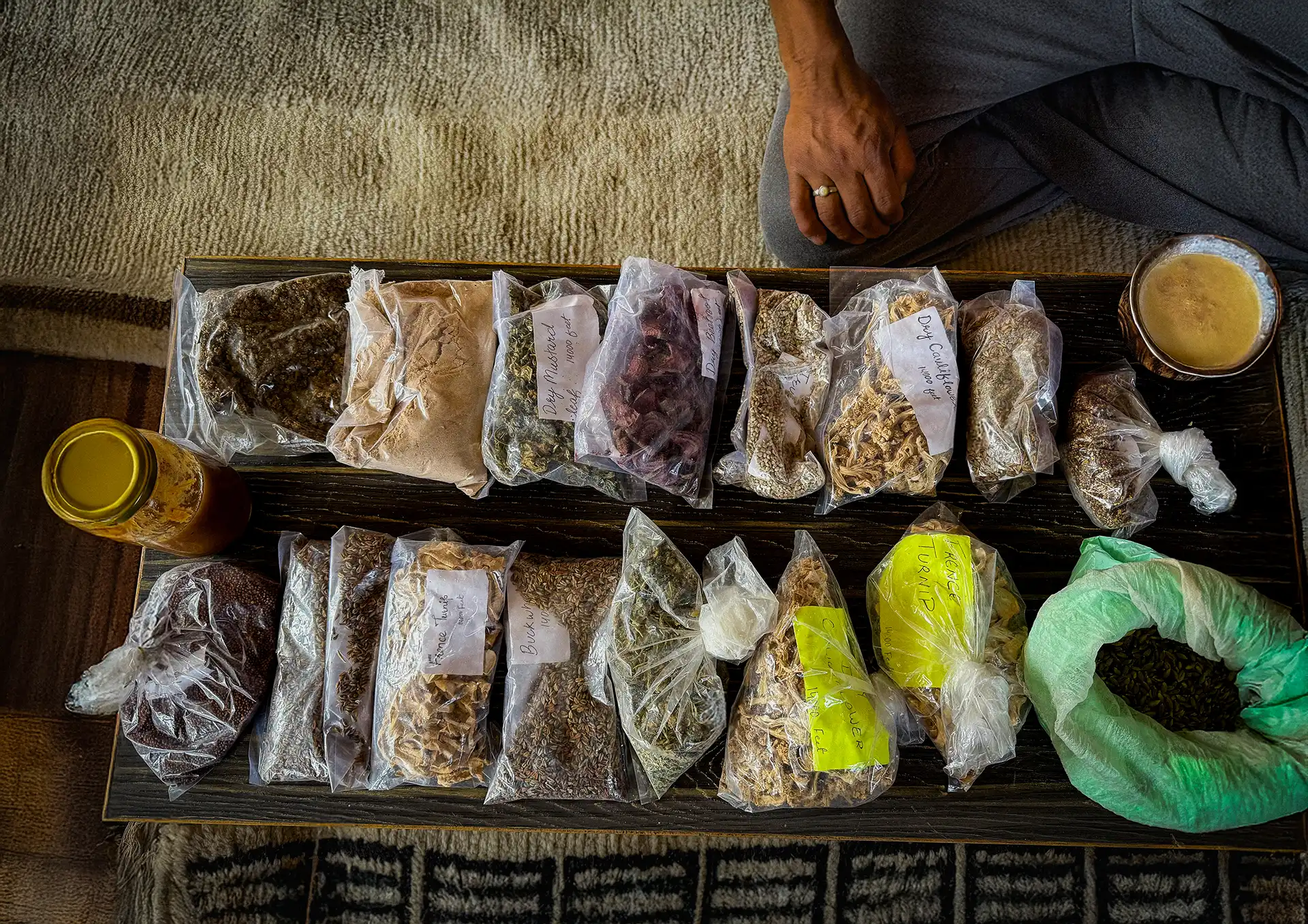
At its very foundation, farming in Gya is changing; it was once a communal activity—a village-wide affair where households would help each other plant, harvest and celebrate the cycle of life. Today, it is looked down upon as fewer young people are interested in tiling the soil, especially against the backdrop of climate change-induced precarity. Careers in tourism and the army, government jobs, gigs as contractors in construction—livelihoods that don’t involve the backbreaking, time-intensive labour of farming are all considered more viable. As opportunities in Leh call out to them, there remains little incentive to stay back in Gya.
Given that local traders aren’t offering a fair price for organic produce, organic farming isn’t yet lucrative or remunerative, which is only shrinking the farming populace further. “Traders buy at low rates and keep most of the profit for themselves. For farmers, these rates barely cover the cost of growing organically… Unfortunately, local traders and many locals, too, don’t see the difference between organic and non-organic produce,” Phuntsog rues. An innovative tactic he has employed to deal with this apathy is offering organic produce to visitors and homestay guests—patrons who he feels value the farm-to-table food chain.
Phuntsog is admirable because he remains undeterred. In agriculture, he sees indispensability as the future turns uncertain. “The importance of farming grows every year… If there are no farmers, food security won’t just be a concern—it will be a crisis.”
What sets Phunstog’s approach to farming apart from that of his peers is not just the variety of crops he grows, but rather the harmony he maintains across the many elements of his farm. Nothing must go to waste; the output from one part of his farm becomes the input for another, creating a self-sustaining loop that reduces costs, enriches the soil and strengthens his yields.
The family's livestock (a herd of 370 goats and sheep, apart from 12 cows and 9 horses) are a vital source of wool: Pashmina from their goats, and fleece from their sheep, which Phuntsog’s wife, Chamba Yangdol, spins into traditional rugs, stoles, and other handcrafted items. Their home in Gya is perhaps the most sought-after homestay in the region, attracting guests from around the world who come not just for the scenic views, but to experience living traditions.
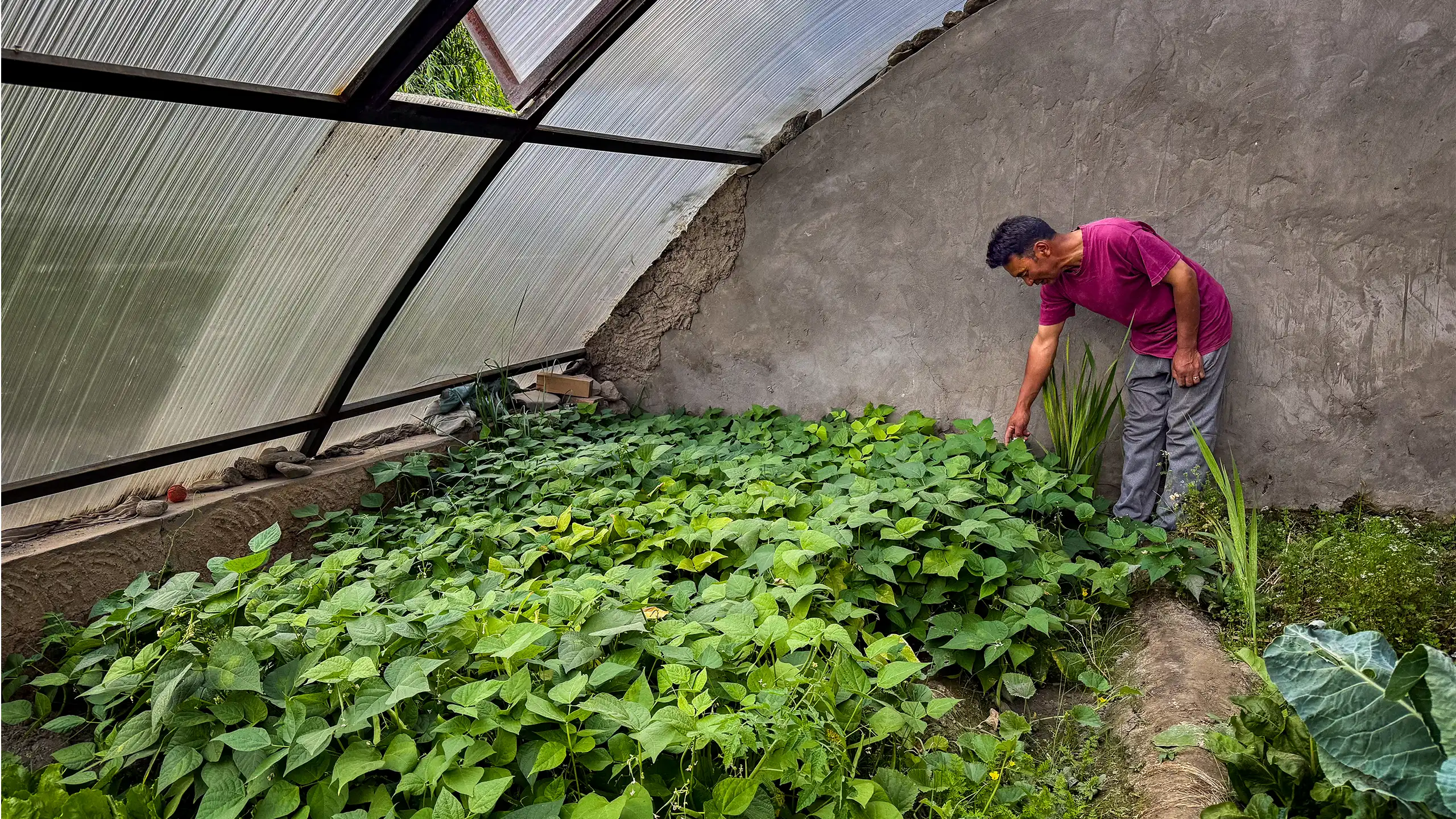
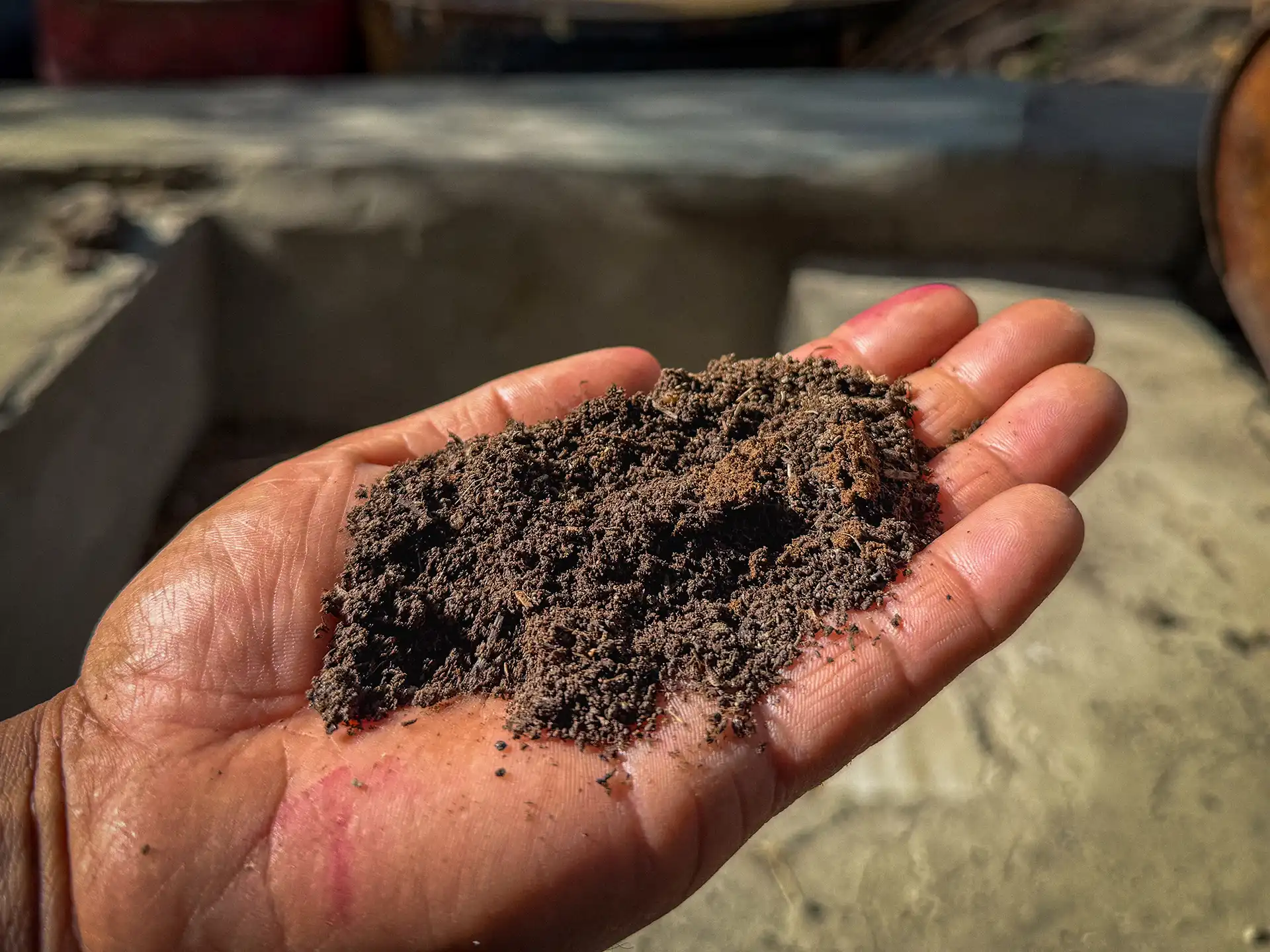
But livestock is not merely a source of wool or dairy. Manure, along with farm waste, is carefully recycled into rich vermicompost. It was the Krishi Vigyan Kendra–Leh that introduced Phuntsog to the idea of vermicomposting around a decade ago. Since then, he has become something of an innovator. Through years of experimentation, he discovered the perfect blend for his compost: 60% horse manure, 30% cow dung, and 10% general livestock waste. This balance, he says, brings out the best in the earthworms, and in turn, the soil. “There isn’t a village in Leh where my vermicompost is not being used to some degree. That’s why I say farming and livestock are not separate—they are indispensable to each other,” he explains.
Phuntsog has constructed two greenhouses on his farm: one is a traditional triangular structure fashioned from mud bricks, while the other is more modern—a half-cylindrical polycarbonate model with a concrete base. While both serve their purposes, the one built using traditional wisdom remains effective even in inclement weather. “In places like Gya, where the extreme impact of climate change is palpably felt, the traditional greenhouse is more adaptable,” he explains, “This spring, we had untimely snowfall. It was easier to redesign or modify the mud-brick structure to suit the changing weather. We could partially open it or wrap it up, depending on the climate.”
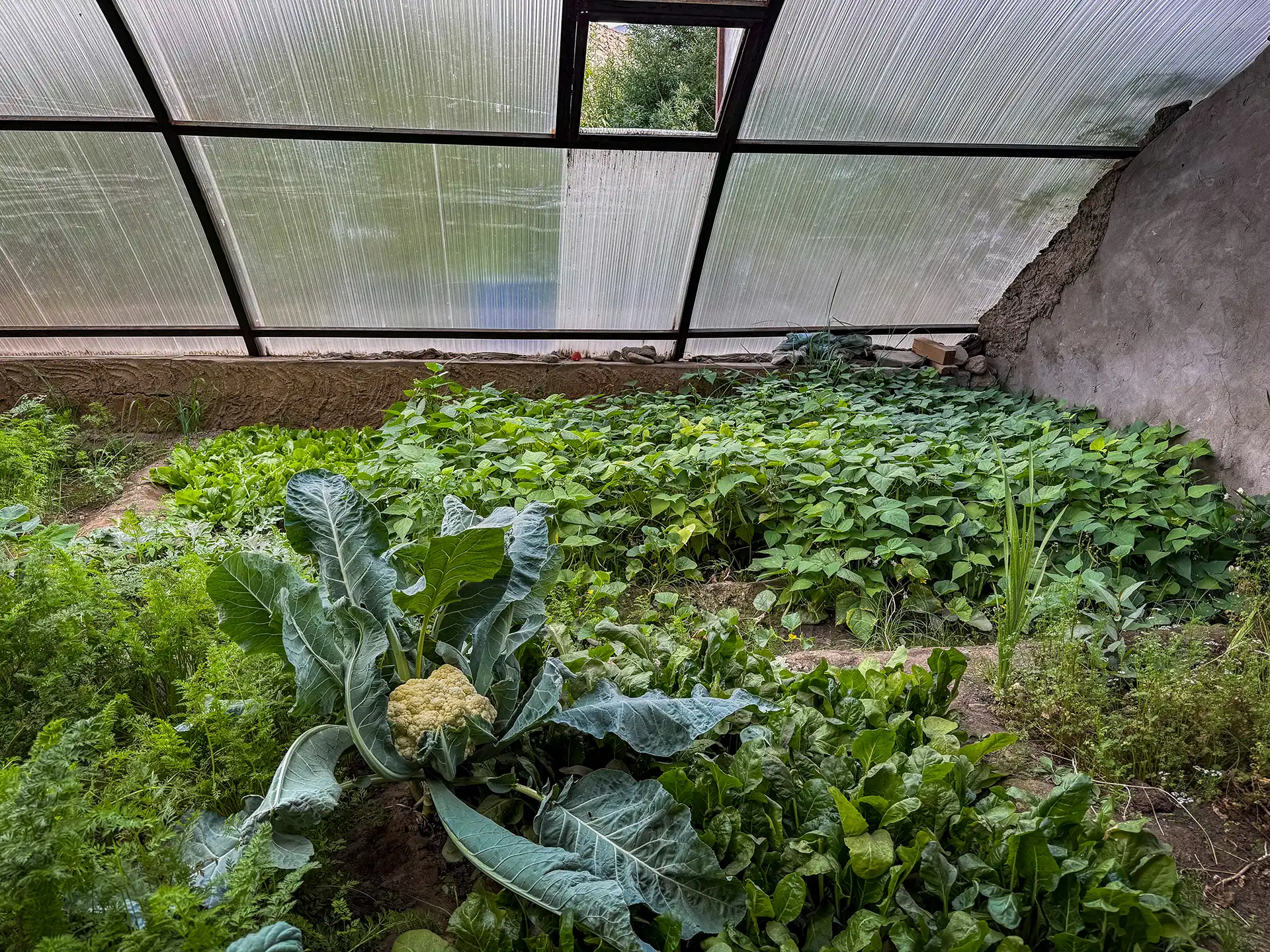
Though sturdy, the polycarbonate greenhouse lacks this flexibility. “It’s harder to move, redesign or repair. But the traditional one can be easily relocated and adjusted. It is simple, smart, and sustainable,” Phuntsog adds. This experience, and others across his farming career, have taught him that the way forward lies in blending ancient knowledge with modern techniques rather than setting one framework aside in favour of the other. “We need to align our indigenous practices with today’s innovations. That’s how we will preserve our culture and progress at the same time” says Phuntsog.
Greenhouse farming is also a constant exercise in trial and error—of learning that water from streams is more effective than groundwater or springwater; of letting in just the right amount of wind during wintry afternoons so that the crops don’t freeze over. “That bit of circulation is important as it keeps the greenhouse balanced and prevents pests. It’s all about timing and patience,” Phuntsog explains.
Also watch: How These Women Grow Vegetables in the Cold Deserts of Ladakh
Over the last decade, the warming summers in Ladakh have enabled farmers to grow a wider variety of vegetables, some of which were once impossible to cultivate in the region’s soil, such as watermelon, zucchini, capsicum, and brinjal. These crops were embraced as cash crops which are easy to grow and harvest during the region’s short growing season. But this supposed convenience has come at a cost.
“They are less laborious, yes, but they are also displacing our native crops,” he laments. Chief among them is nas or barley, a crop deeply rooted in Ladakhi culture and the heart of the local diet. It forms the backbone of breakfasts like tsampa or ngamphe—roasted flour eaten daily with butter tea—as well as celebratory beverages like chhaang (beer). It symbolises abundance and well-being, making it a vital motif in festivals and rituals.
Traditionally, owning a Dhu-kang (a storeroom for barley) was a symbol of prosperity. Phuntsog still owns one and proudly sells his barley across the union territory. “To think that one day barley will no longer be grown in Ladakh, and that we will be forced to buy it from elsewhere, breaks my heart,” he says.
Of the total 22,436 ha area under cultivation in Ladakh, 5,388 ha remains dedicated to barley as per data from a government-affiliated committee in the region. But it is feared that this acreage will reduce over the years owing to climate change. Untimely rain during harvests has compromised yields and seed quality both. Damaged seeds mean weaker crops in the future, putting in place a vicious cycle.
Also read: Barley barely hanging on in Spiti
In recognition of his profound impact, Phunstog has received numerous accolades at both the regional and national levels. In 2022, he was recognised as one of India’s 75 entrepreneurs in the Animal Husbandry and Dairying sectors by the Government of India. He received the State Award in 2020 from the Union Territory of Ladakh for his outstanding contribution to Progressive Farming.
Phuntsog also trains students and young people across India, providing hands-on learning in integrated organic farming. His lessons are comprehensive, covering everything from livestock rearing and compost making to traditional barley processing.
His accolades are a testament not just to his achievements, but to an existence in harmony with the land, driven forward by purpose and devoted to preserving a way of life that continues to nourish soil and soul.
{{quiz}}
Produced by Nevin Thomas and Neerja Deodhar
Illustration by Tarique Aziz
Editor's note: Every farmer who tills the land is an inextricable part of the Indian agriculture story. Some challenge convention, others uplift their less privileged peers, others still courageously pave the way for a more organic, sustainable future. All of them feed the country. In this series, the Good Food Movement highlights the lives and careers of pioneers in Indian agriculture—cultivators, seed preservers, collective organisers and entrepreneurs.
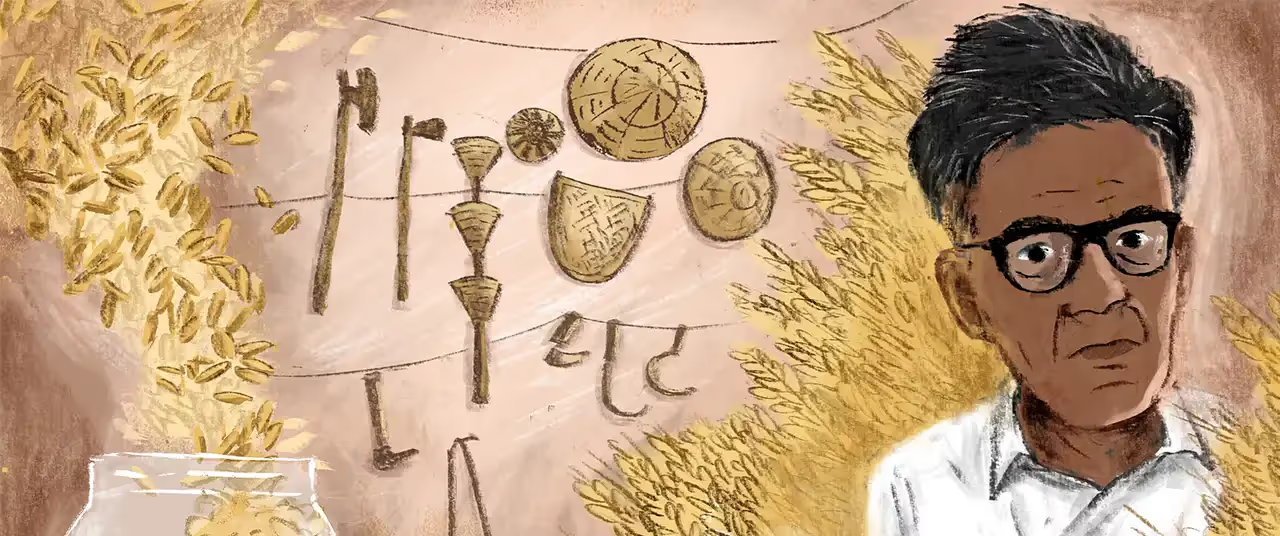
A chameleon rests on the back of a couch; children wander in and out of rooms; and a dog, upon whom tiger stripes have been painted by the children, prances around playfully. At Babulal Dahiya’s home in Madhya Pradesh’s Pithaurabad, which doubles up as a museum of forgotten agricultural tools and traditional cooking utensils, the pace is anything but slow. A crow lands on the porch from time to time, while a few sparrows—a rare sight in India’s cities— chirp away. Outside, cows and their calves peek through the entrance.
An otherwise narrow, quiet lane in the Unchahara tehsil of Satna district turns lively on the early April afternoon when we visit Dahiya. The 83-year-old farmer, poet and retired postmaster is the beating heart of this neighbourhood. He is also a recipient of the Padma Shri (2019), India’s fourth-highest civilian award, for his contributions to agriculture—particularly to organic farming and the conservation of indigenous crop varieties.
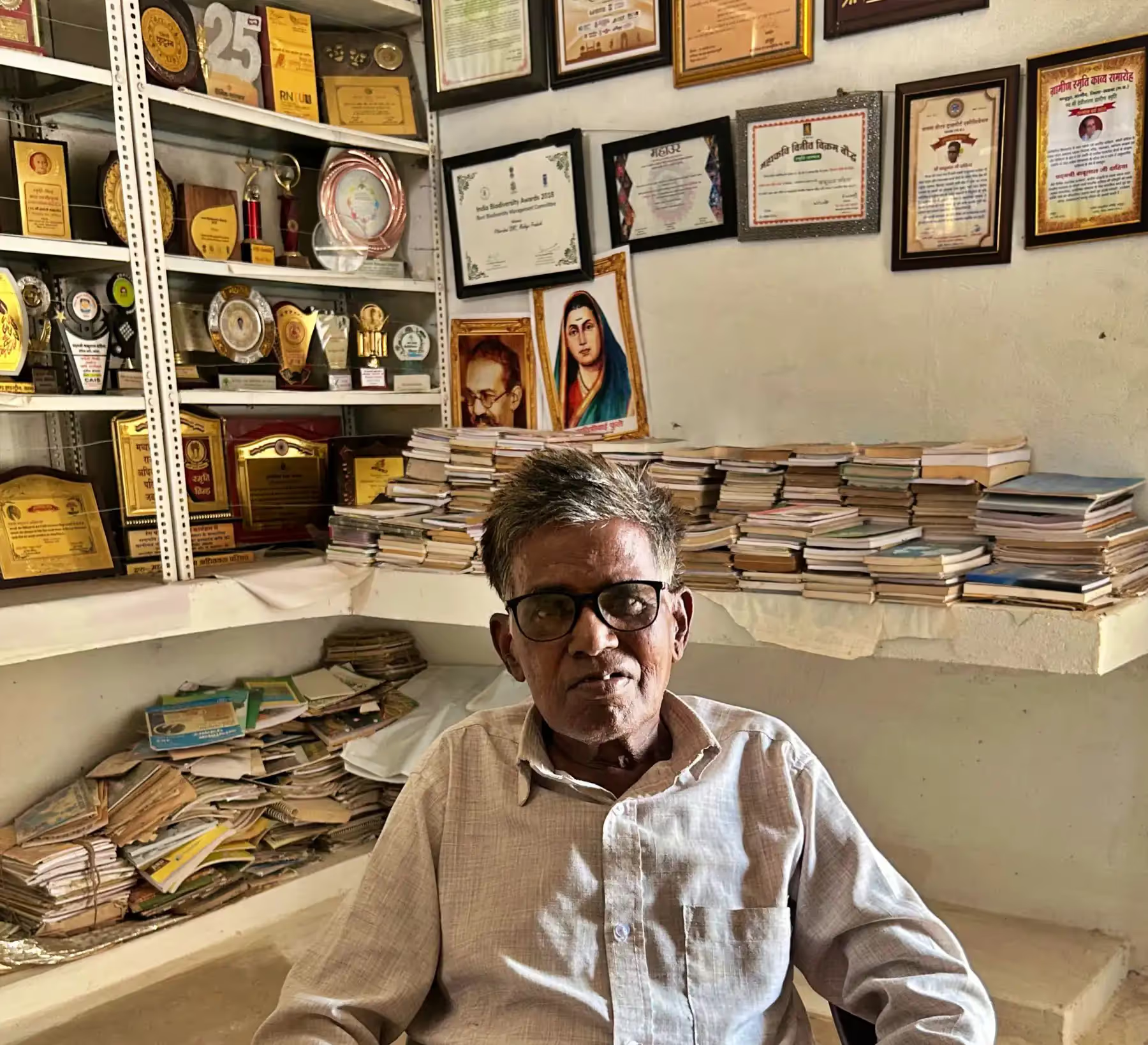
When Dahiya speaks, he blends personal memory with documented and undocumented fact, offering a perspective shaped by decades of working in fields, writing, and collecting grassroots knowledge. His home and life reflect a vision where culture, ecology, and rural identity continue to inform each other. As a writer who nurtured a long association with the Adivasi Lok Kala Academy—an MP state initiative to promote tribal culture—Dahiya has published detailed studies on the Kol and Khairwar communities backed by extensive research.
The octogenarian is frail; he climbs up a flight of stairs to show us the three rooms he has turned into a museum, which leaves him momentarily breathless. He pauses to rest before slowly resuming, carefully walking this writer through the many objects and memories he has preserved over the years.
“I inherited farming,” he says, as we sit down to talk, “We have been farmers for generations. My father practised agriculture, as did my grandfather before him.” As a boy of eight or nine, he was sent to another town to study, returning home only during fasli chutti [harvest holidays]. It was the early years of India’s independence. “Back then, we had harvest holidays from Dussehra to Diwali—nearly 28 days long. I would do everything that children could do to help,” he recalls, "Hum ek mah chidiyon ki takai aur dhan ki gahai karte the aur damri chalate the. [For a month, I used to guard the crops from birds, pound the paddy, and operate the manual threshing device]."
Observing these fields became a form of education for a young Dahiya. He revisits memories of how sorghum was often intercropped with lentils and other staples like green gram, black gram, pigeon pea, sesame, and kenaf. Those early experiences, he believes, taught him more about agriculture than any textbook could—simple yet rarely documented lessons such as which crop attracts which species of bird or animal. Parrots, for instance, were known to go straight for the sorghum.
He says in jest, “Kauwe ka rang kaala hota hai, ye humko padhkar nahi pata chala. Woh humko kauwe ko dekhkar pata chala. [I didn’t learn that a crow’s plumage is black by reading it in a book. I learned it by seeing the crow].”
Also read: A man dreamt of a forest. It became a model for the world
The passage of time made Dahiya witness to the drastic changes and losses the surrounding ecosystem was undergoing. But the loss that felt most personal was of indigenous rice varieties—which faced the highest risk. His family farmed on two plots: one in Pithaurabad, and another in Birpur, three kilometres away. Through his chronicling of folklore, he saw how traditional mixed cropping was being replaced by monocultures. “The farms and fields weren’t as colourful as they used to be,” says Dahiya, recalling the decline of diverse dhan (rice) varieties.
This shift came about a decade after the Green Revolution. It was the introduction of IR-8, a high-yield rice strain developed by the International Rice Research Institute, in 1967—first introduced in Andhra Pradesh, and later across the country—that marked a turning point in India’s farming history.
Dahiya acknowledges the necessity of the Green Revolution in its time. “The country struggled with famine and diseases such as smallpox, malaria, and plague. We needed a stronger food system. I adopted its principles, too. But, as the saying goes, ‘Science is a blessing, but beyond a point, it can become a curse,’” he adds.
No one anticipated the long-term effects of what was deemed a ‘revolution’. “Puri ki puri dhane khatam ho gayee [The entire stock of traditional rice varieties disappeared]. It was a blessing until the 1990s.” By the mid-to-late 1990s, he realised the urgent need to preserve native rice seeds. This marked the beginning of the work he is known and recognised for: beginning with 15 varieties, by the late 2000s, he had collected 110, and now his bank boasts of around 200.

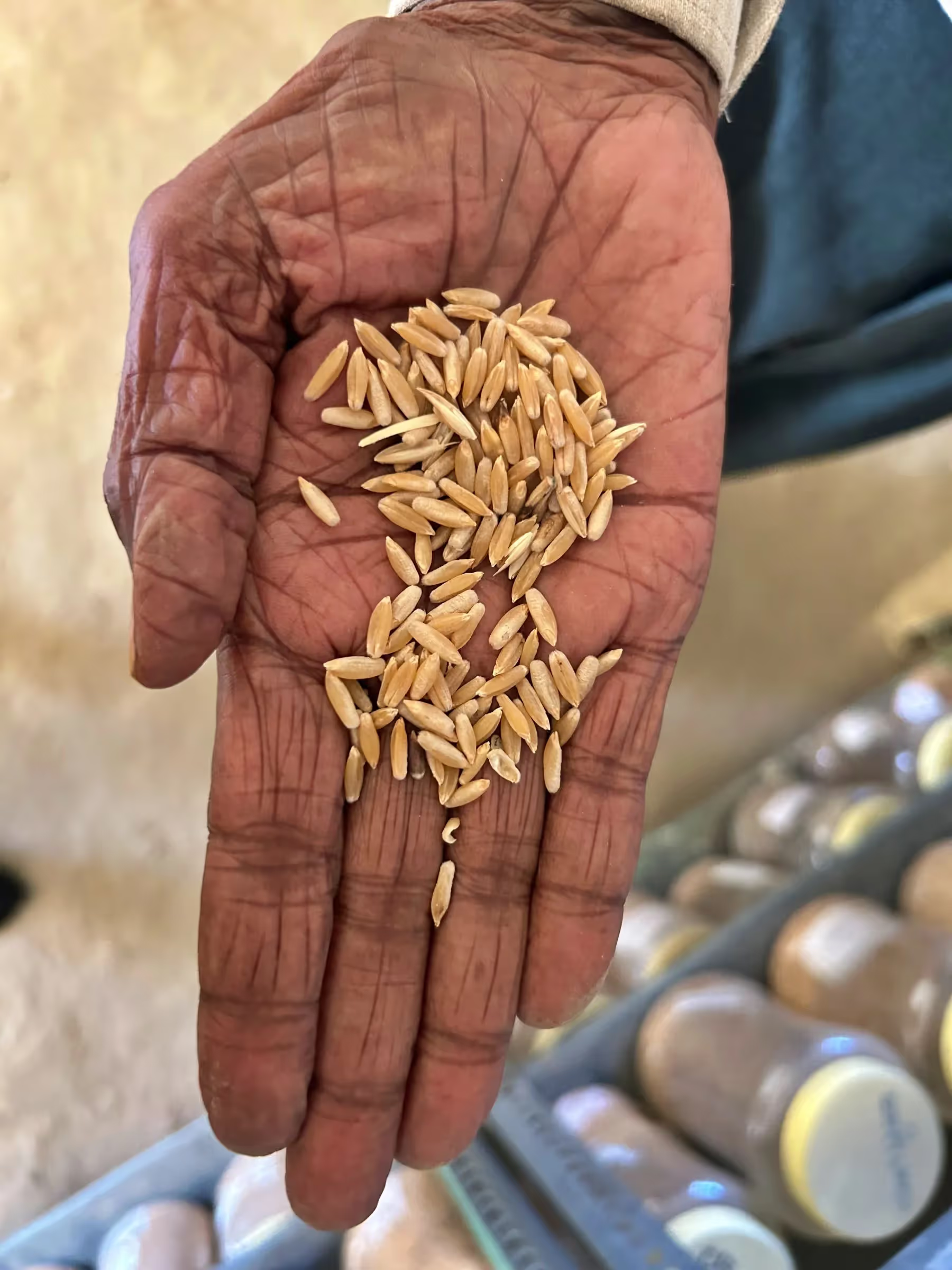
While walking this writer past rows of seed jars, Dahiya pauses at certain varieties, opens a jar and spreads the grains in his creased palm. He explains their traits patiently, peeling back the husk to show the grain inside. He picks Galari, named for its husk that resembles a myna’s eye—rounded, bordered, and striking. Then he reaches out for Kalavati, a black rice with long spikes and a rough husk; inside is a dark brown grain with a lighter tip, akin to a glinting bead. “These are nature’s marvels,” he notes, referring to their diverse qualities and their ability to thrive in different conditions.
In a handmade booklet, he writes: “Like soybean, it’s hard to trace when or where a grain originated... But we can confidently say paddy is the oldest grain in our country... Today, there are many hybrid varieties developed through research. But in ancient times, it wasn’t scientists who discovered them, but farming ancestors who brought them from the forests into fields. The wild ancestors are gone; what remains, survives only with farmers. That’s why saving traditional varieties matters... If even one disappears, so do its traits preserved for thousands of years in tune with this land’s ecology.”
Suresh Dahiya, a journalist and the veteran farmer’s son, talks about a variety called Saathi or Sathiya, known for its short growth cycle. It typically ripens within 60 days of planting—the characteristic that gave it the name. “This makes it ideal for regions with short growing seasons or water scarcity, such as Bundelkhand and parts of Uttar Pradesh. It’s also useful for farmers aiming for multiple harvests a year,” he explains.
“The seed bank is regularly visited by farmers across the country,” Suresh says. “Most come looking for specific seeds—rice or wheat varieties. Some, like the rice variety, Ram Bhog, are both popular and hard to find now. There are about 15 such varieties.” Farmers from faraway villages and towns also write in to request seeds, which are gladly dispatched to them by Dahiya and Suresh, with the courier cost covered by the recipient.
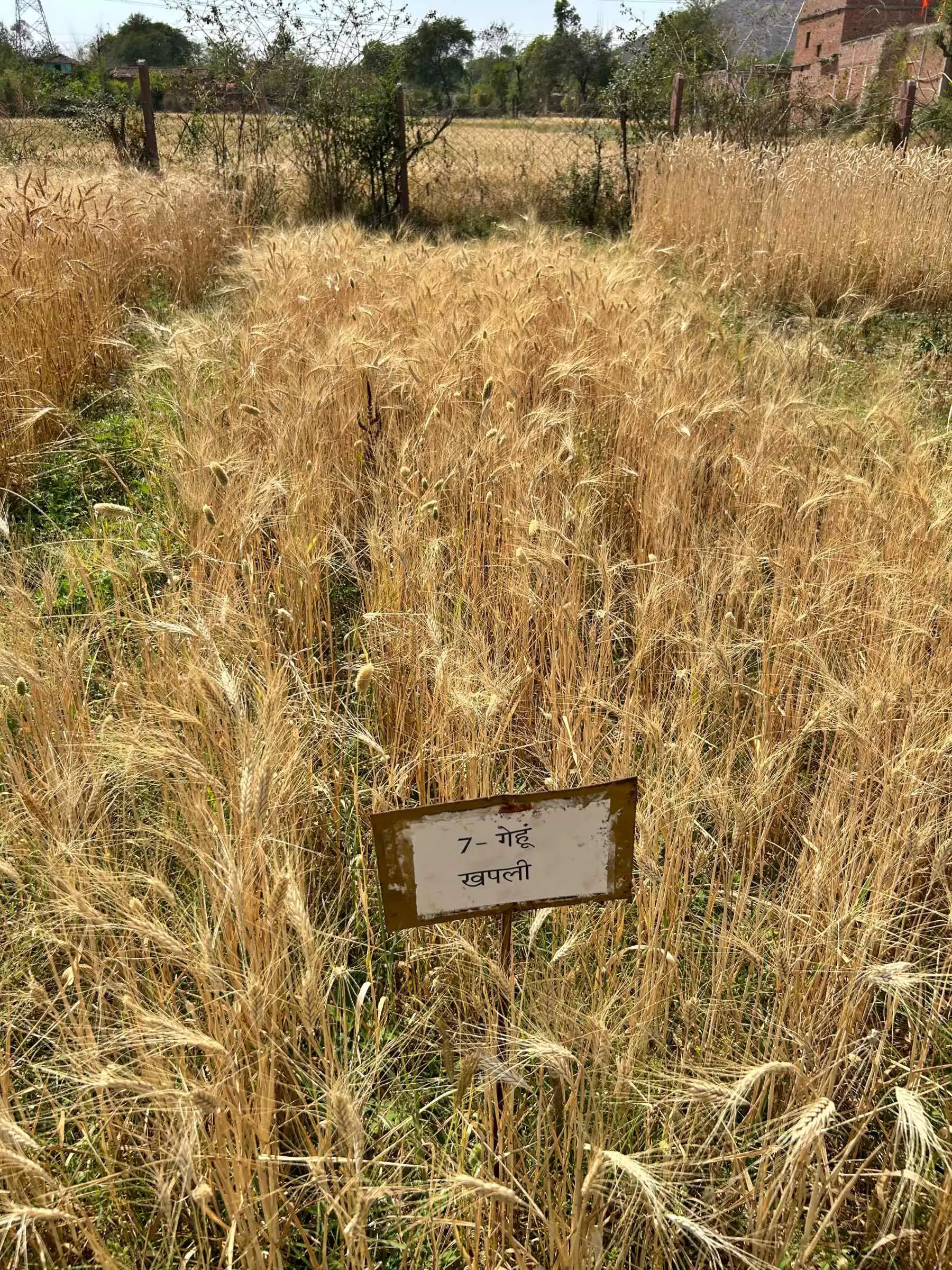
“The work he was doing was important, and he had the support of our whole family,” says Suresh. Over the last three years, the 59-year-old has taken over his father’s seed-saving effort. While two acres of their farmland in Pithaurabad are reserved for seed preservation, the remaining five are leased out on batai basis (sharecropping). “We grow 25 wheat varieties,” Suresh says, pointing to the ripening stalks.
It takes an investment of Rs 5,000–7,000 per season to grow wheat, he notes, but preserving over 200 rice varieties has become a far more expensive project—around Rs 60,000 per season in recent years. This cost is not just due to the larger number of paddy varieties, but also the technical demands of rice cultivation, which calls for more water, labour, and care—especially since each traditional variety has its own distinct sowing and harvesting cycle.
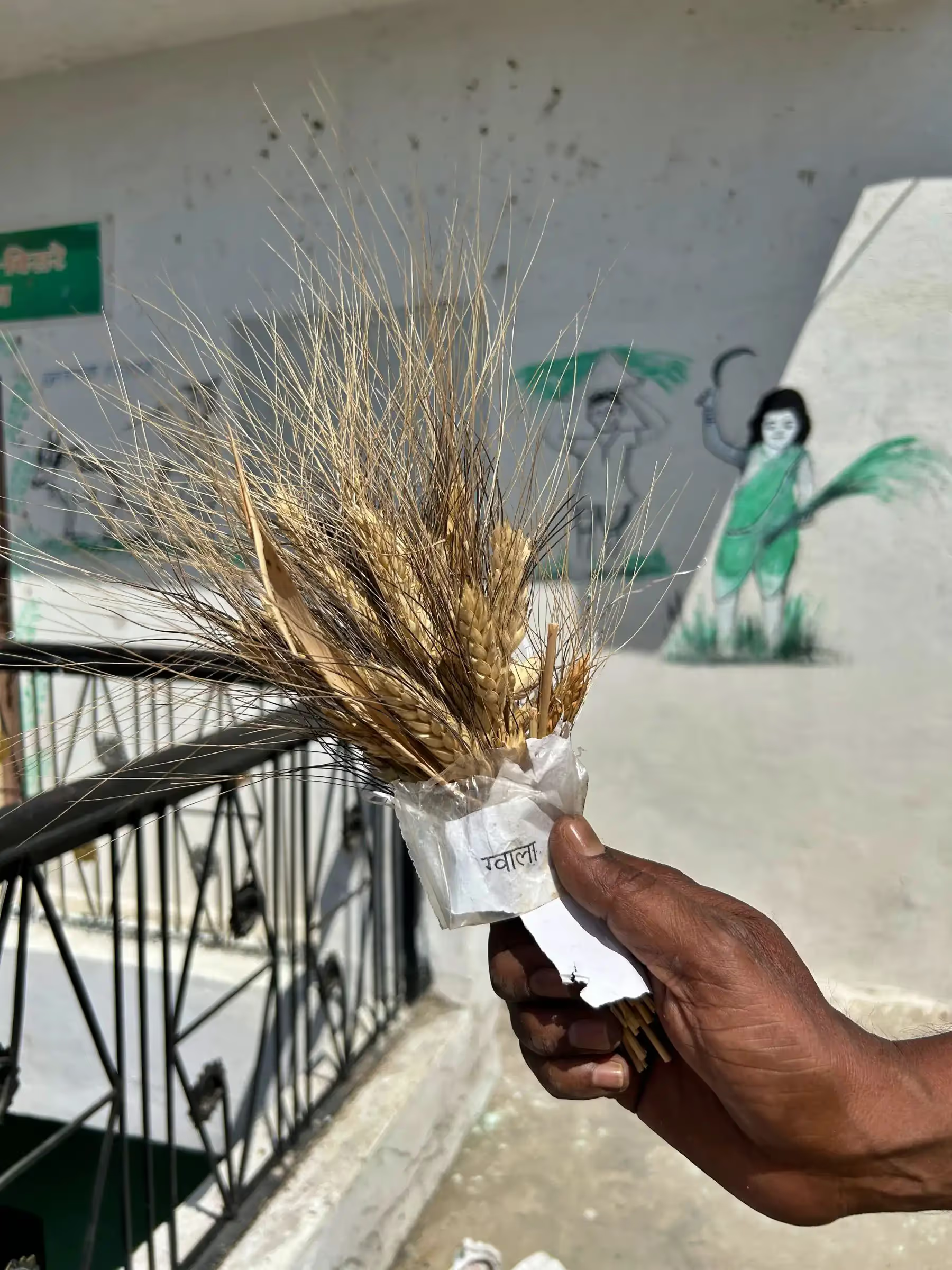
Financial aid for Dahiya’s conservation efforts has been minimal. Around 2010, the Madhya Pradesh Rajya Jaiv Vividhta Board/Madhya Pradesh State Biodiversity Board helped set up the seed bank, but beyond that, state support has been scarce. For over two decades, Dahiya has sustained his work through an NGO, the Srajan Samajik Sanskritik Evam Sahityik Manch.
“We receive some funds, but they barely cover the basics. We often dip into our own pockets,” Suresh admits. Sadly, Dahiya’s Padma Shri honour has not moved the needle on this front. What’s more disheartening, he says, is that despite growing research backing traditional and organic farming, the larger agricultural ecosystem still prioritises high yield over awareness and sustainability.
Also read: How an Alappuzha coir exporter nurtured a one-acre forest
A persistent obsession with higher yields has—and continues to—do more harm than people realise, Dahiya says. He recalls memories of a 2012 exhibition in Delhi where he showcased 110 native rice varieties: a group of scientists, including plant geneticist and agronomist M.S. Swaminathan, visited his stall. One of them asked, “Which variety delivers the highest yield?” Dahiya explained that traditional rice varieties often yield about 80–85% in the first year, drop to 25–30% in the second, and give nearly nothing by the third if seeds are reused. “That’s how it has worked for thousands of years,” he told the group, “They’ve survived (all these years) because they’re strong in other ways—by adapting to the soil, warding off pests and surviving the seasons. If you chase only yield, you’ll kill off these crops in three years.” Some of the scientists were embarrassed by their line of inquiry, while Swaminathan smiled at his comment, Dahiya says.
Unlike modern high-yielding varieties (HYVs) introduced in India during the Green Revolution, which often demand new seed stock each season in order to perform well, traditional landraces (old, local crop types that farmers have saved for eons) are more resilient to local conditions, but may see some natural decline if not carefully selected and saved. The exchange, Dahiya felt, underlined a deeper tension: between sustainable seed saving practices and the push for uniform, industrial-scale production that has steadily eroded biodiversity. The problem has grown multifold since Dahiya’s interaction with the scientists.
“Look at what this race for higher yields has led to. Our water is gone, the trees and plants have dried up, even orchards have withered. We’re living under a curse. The consequences are so far-reaching that our villages have been cut off from the larger economy. Crop prices have crashed,” Dahiya rebukes. It’s not just farmers who have suffered; the livelihoods of agricultural labourers, too, have declined. A plunge in income levels has made them flee to cities, he remarks.
“Agriculture today belongs to the seths [capitalists],” he says. This is in stark contrast to how things were in the past, when a sense of collectivism brought together a village; where grain was shared with the oil presser, cobbler, blacksmith, carpenter—all those who supported the farmer in return. What remained with the farmer was sold or bartered in the town.
Now, Dahiya rues, every step a farmer takes is controlled by a different seth in the system. Seed agents, fuel suppliers, fertiliser sellers, pesticide dealers, harvest contractors, and middlemen at the market. “Like the cow whose milk is sold, and whose calf gets only a measly 20%, the farmer is left with next to nothing.”
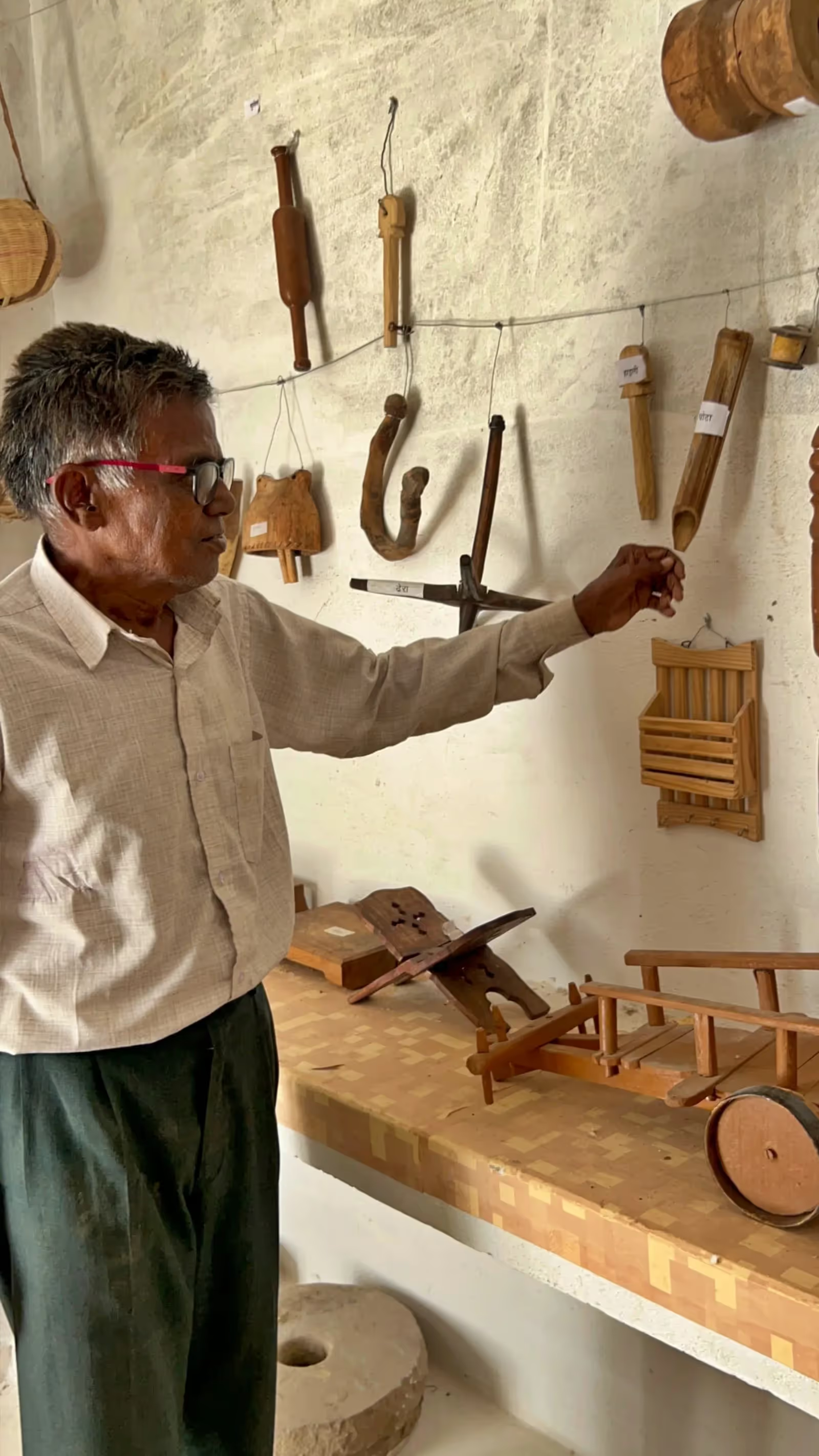
The problem, he says, goes beyond those who work in the fields. With the industrialisation of agriculture, the many professions that once directly supported farming—such as carpenters, blacksmiths, and weavers—have been disappearing, as have the tools they fashioned and used. Carpenters don’t make mogris (pestles) or dedhas (traditional ploughs) anymore. “This is why I began putting together and preserving over 300 farming objects and tools in my museum,” he says.
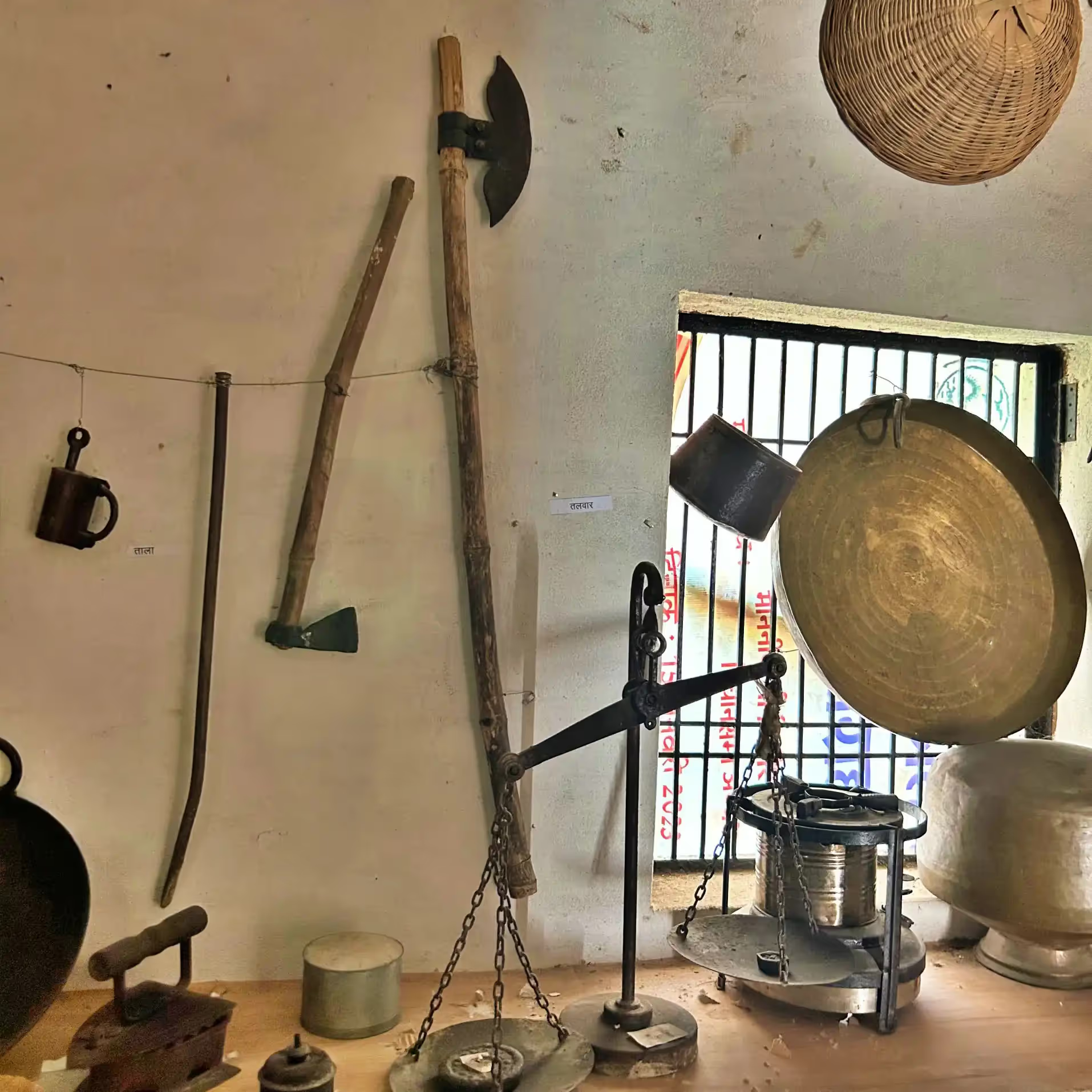
The process of collecting these objects has been long and slow. When people heard about Dahiya’s vision, some came forward with the tools and items now displayed in the museum. Other exhibits had to be specially made. Dahiya had to find workers who possessed the skills to create replicas while knowledge about the tools was still available. “Only about 20 percent of what you see in the museum is still in use,” he says. “Most of the stone tools, especially, have gone out of use entirely.” The one that can still be found in homes is the pichkariya—a small, rounded stone used to lightly crush cooked dal. Dahiya also draws our attention to wooden implements like the khat-khata (tied around the neck of cattle), dhera (used to tie cattle ropes) and ghota (a cylindrical tool used to administer medicine to animals).
In one corner, an old kolhu stands upside down. Dahiya shows it to us with pride and explains how the traditional oil press worked—where the presser stood, where the bull was tied, where the oil dripped from, and how the whole system came together. He has been trying to get a palki made for a few years now. “But the workers who could make one are either too old now, or have passed away. Their children never learned the craft—not even enough to make a sample.”
The museum sees at least one visitor every day. Sometimes, a few school buses show up and suddenly, there are hundreds of children walking around, surprised by things they’ve never seen before. “Some have suggested that I should move the museum out of my house,” he says, “but that would require more space and more funds.”
Literature intrigued Dahiya as he grew up. Writing in the Bagheli dialect across fiction and non-fiction, he has documented traditional ballads and idioms tied to tribal festivals and farming. One saying he often quotes is about kargi, an endangered and traditional variety of rice. “Dhaan boye kargi, suar khaaye na samdhi.” Its black husk is covered in spines, making it unpalatable to wild boars (an ongoing problem in forested farming areas)—and unsuitable for serving to in-laws or guests, who are traditionally offered fine white rice varieties like Vishnu Bhog, as a mark of respect.
More age-old proverbs followed in our conversation. “Teen paak do paani, pak aayin kutuk rani,” he recites, referring to how little millet (kutki) ripens with just two spells of rain in three fortnights. “Sama jetha ann kahaye, sab anaaj se aage aaye,” describes sama (also little millet) as the eldest grain, ready to harvest in just 45 days. “Sagman, sarahi, dahiman, rana…assi baras na hoye purana,” compares kodo millet (rana, the ‘king of grains’) to sturdy timbers like sagwaan (teak), sarahi (Indian Kino) and dahiman (Indian laurel), all said to last 80 years without ageing.
Also watch: How women in this tiny Naga village are safeguarding local seeds
During a seed-saving drive in 2017, Dahiya travelled across 40 districts in Madhya Pradesh. “He would stay overnight with farmers to learn about their lives and problems,” says Suresh. This journey significantly expanded their seed bank. One friend, Ram Lotan Kushwaha, contributed over 32 varieties of lauki (bottle gourd), more than two dozen types of brinjal, and at least 15 tomato varieties from his farm.
Yet, a return to traditional practices remains a steep, uphill task. “We work on a small scale because we’re driven. There’s no policy support, no larger framework to connect these efforts. But it is urgent,” says Suresh. Sourcing and hunting for traditional grains is harder than ever, he adds. “Fifteen or twenty years ago, you could still get your hands on a few. Now, it’s nearly impossible.”
Dahiya finds this development extremely concerning. “India has a growing reliance on merely three grains—rice, wheat, and maize, of which high-yield varieties are preferred.” Not only has the disappearance of coarse grains (mote anaaj) narrowed the scope of people’s diets, but it has also contributed to a rise in lifestyle diseases such as diabetes and obesity. “Previously, people had ‘family doctors’. Now, in order to reclaim their health, they need ‘family farmers’—trusted cultivators who can grow organic, local grains for them,” he says with a chuckle. As Suresh takes forward the work he began, Dahiya remains hopeful—not all will be lost.
Illustration by Tarique Aziz
Produced by Nevin Thomas and Neerja Deodhar
Please try another keyword to match the results