How Rahibai Popere built a seed bank with a mother’s grit and love
The Padma Shri awardee’s success is fuelled by tribal agricultural wisdom and an ability to win over sceptics


Editor's note: Every farmer who tills the land is an inextricable part of the Indian agriculture story. Some challenge convention, others uplift their less privileged peers, others still courageously pave the way for a more organic, sustainable future. All of them feed the country. In this series, the Good Food Movement highlights the lives and careers of pioneers in Indian agriculture—cultivators, seed preservers, collective organisers and entrepreneurs.
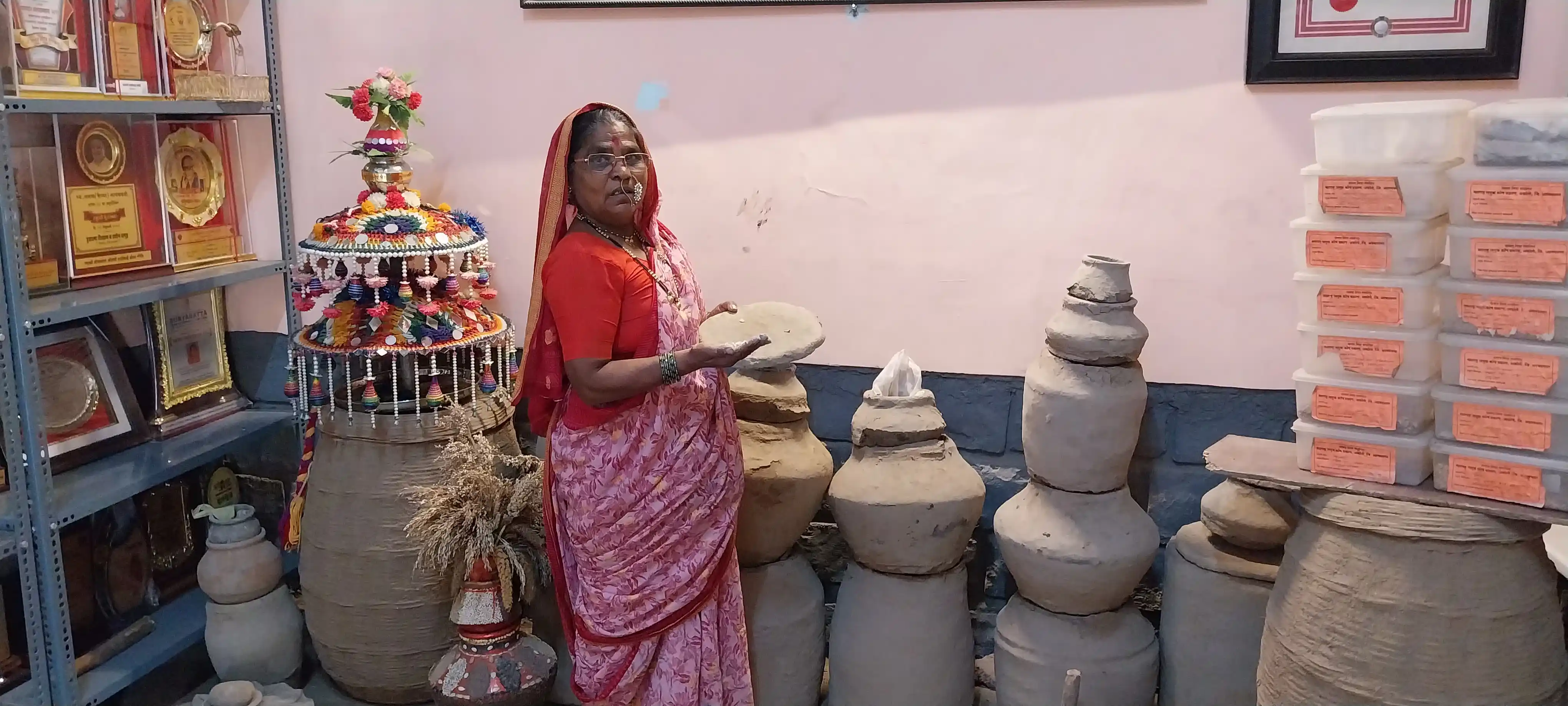
In the heart of the Sahyadri hills, the monsoon paints the landscape in countless shades of green. On the slopes of Kombhalne in Maharashtra’s Ahilyanagar district (formerly known as Ahmednagar), tucked deep in the mountain range, women move in unison through the afternoon. Their hands sink rhythmically into the muddy red earth as they plant tender rice saplings. A short walk away, Rahibai Soma Popere steps into her modest but well-structured seed bank, where rows of clay pots filled with native seeds lie in wait like quiet sentinels—each one a vessel of resilience and memory.
When she opens the bank’s doors, sparrows fly in. This scene is a familiar one for Popere—one marked by mistakes made and lessons learnt. “Pakshyala kalta kay khayach ani kay nahi. Manasala ekta dnyan asun pan tyala he samajlele nahi.” (Birds instinctively know what is good for them, but humans, despite all our knowledge, fail to understand).
She recounts her experience of planting an indigenous variety of bajra or pearl millet. For the first three years, the crop grew well. Birds arrived at the fields and pecked at it, showing some interest in the grain. By the fourth year, however, something remarkable happened: flocks of birds descended onto the field and devoured the entire crop. Strikingly, they left the surrounding bajra fields, sown with modern hybrid grains, untouched. The birds had a clear preference; they didn’t care for bajra that was harder, bitter, and far less nutritious. The produce from the indigenous seeds, on the other hand, was naturally sweet and soft. “We would crush the grain in our palms and eat it fresh,” she recalls.
And yet, deviating from traditional wisdom, farmers in Kombhalne stopped growing this variety over time as they chased profit and yield. Popere’s own access to the indigenous seeds ended with the birds’ feast. As she gently lifts a pot and scoops a handful of val or ghevda (hyacinth) beans preserved in ash at the seed bank, she reflects on the deeper meaning of this loss. “These are not just seeds,” she says. “They are the heritage of generations, safeguarded for those yet to come.”
A sensitive observer of a changing village
Now in her early sixties and affectionately known as ‘Beej Mata’ (Seed Mother), Popere has earned global recognition for her remarkable work in conserving indigenous seeds and wild vegetables.
She was born into the Mahadev Koli tribe and inherited farming as part of community traditions. Hers was a childhood marked by hardship: At the age of seven, she lost her mother. The fifth of nine children, she grew up in a household weighed down by poverty, and was forced to shoulder responsibilities early on—caring for siblings, managing household chores, and tending to the family’s cattle. She didn’t have a chance to formally learn how to read or write. At 12, she was married, stepping into an even harsher life. Within the home of her in-laws, she had neither authority nor respect. Made to live in the cattle shed, she even gave birth to all four of her children there.
She preserved them with great care, storing the seeds in earthen pots layered with ash and sealing the pots with cow dung, a traditional method that the Mahadev Kolis have followed for generations.
“After childbirth, we would return to work the very next day. By the seventh day, we were already back in the fields, with our newborns tied to our backs,” she says. In the 1990s, women in her village were nourished not with semolina or dry fruits, but rather with the Dhavul variety of rice and bhagar (barnyard millet), a highly nutritious grain. These dishes alone gave them the strength to recover, she says. But over time, the millet disappeared from people’s diets.
As a child who grew up watching her community in Kombhalne set aside a portion of their harvest to use as seeds the next season, Popere noticed changes taking place in local agriculture. She distinctly remembers how the wave of hybrid seeds spread across her village in the late 1990s and early 2000s, and eventually arrived at her doorstep. Like many Indian farmers, Popere, too, adopted hybrid crops.
The next few years brought frequent illness to her family, prompting the farmer to see the connection between hybrid produce and health: nutrition was being compromised, and a heavy reliance on chemical fertilisers only made matters worse. “That day (in the early 2010s), I decided we would no longer eat hybrid vegetables and grains in our home. I chose to return to our traditional seeds,” she says with resolve.
At first, her family resisted this decision, as they remained sceptical about whether native varieties would match up to the yield and profits delivered by their hybrid counterparts. But Popere convinced them, over and over, until they finally agreed and began supporting her effort.
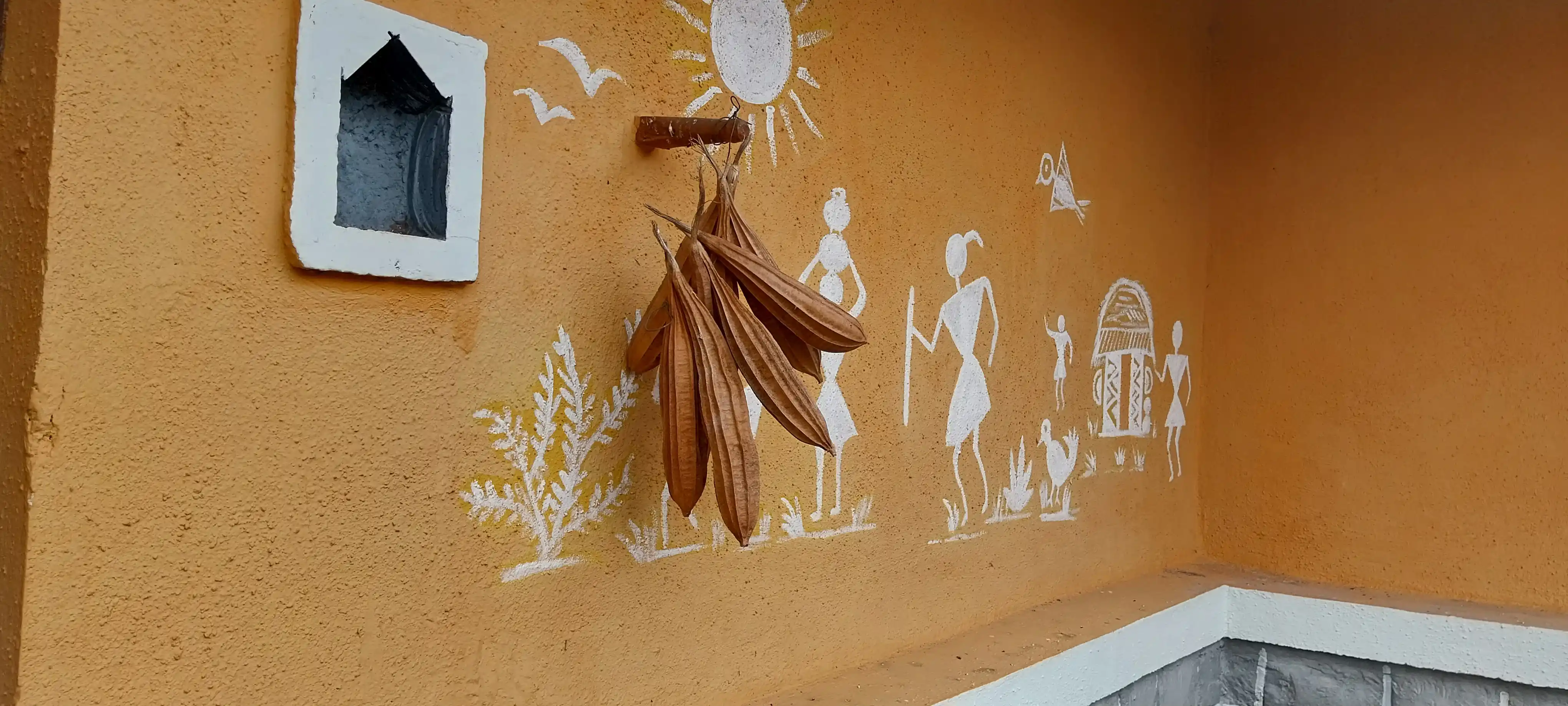
Practicing rainfed farming, she has been cultivating native vegetables such as bitter gourd, ridge gourd, sponge gourd, native okra (kate bhendi), cluster beans, and leafy greens like spinach, fenugreek, and dill—grown mainly for its seed in the winter. She also grows numerous varieties of rice such as Ambemohar, Kolpi and Raibhog; numerous types of cowpeas; and 18 types of hyacinth.
Thus began Popere’s endeavour to gather indigenous seeds—beginning with her own home, as well as from her relatives’ and fellow villagers’. She preserved them with great care, storing the seeds in earthen pots layered with ash and sealing the pots with cow dung, a traditional method that the Mahadev Kolis have followed for generations. Seeds stored in ash remain viable for sowing for up to three years, and for consumption, they last as long as ten years, she explains with pride.
After its conception in the mid-2010s, the bank operated from a small mud room on Popere’s farm, where there was no electricity or water connection, and where no more than ten people could stand inside at once. Pots and glass bottles aside, some local beans were strung on ropes, owing to the paucity of space. The bank has lived many lives over the years, expanding in its scope but never straying from Popere’s vision. To her, the challenge in running this bank, which has caught the eye of NGOs as well as the local government, is not logistical or financial, but rather to do with the seeds themselves and their selection.
Also read: How Jayshree Vencatesan got Chennai to finally care for its wetlands
A woman on a mission
In their village, farming is entirely reliant on the monsoon. The Nilwande Dam towers nearby, but its water rarely reaches the fields. Wells dry up by summer, and even drinking water becomes scarce. After monsoon, most villagers migrate for work; Popere, whose landholding measures 7 acres, would travel across Ahilyanagar, too, to cut sugarcane.
Yet she continued to nurture dreams: she wanted every home to have at least one fruit tree for its children. To this end, she started raising saplings, of papaya, guava, and custard apple among other fruits at home, handing them out to women’s self-help groups or during village festivals. “Once, I raised a nursery of 3,500 blueberry plants,” she laughs. “Everyone thought I was crazy.” Soon after, Pune-based BAIF Development Research Foundation, a rural development NGO, got in touch with her and purchased the entire lot. “I earned Rs. 10,000 on that day—the first time I’d ever seen so much money,” she says with wonder.
Among millets, Popere’s collection featured 12 varieties of finger millet (nagali), both red and white, and two varieties of little millet (varai)—Garvi and Halvi.
Through BAIF’s Community-led Agrobiodiversity Conservation programme, Popere’s effort to save seeds finally found a larger platform. When the BAIF team visited her home, they were astonished to see 125 varieties carefully stored—many rare, some on the verge of extinction. Among them were 16 rice varieties, including Raibhog, Jirwel, Ambemohar, Warangal, and Kalbhat. Of the 28 types of hyacinth beans known locally, Popere had preserved 18, distinguished by their size and colour—green, white, wine, black, long, or short, sweet, or bitter. These varieties continue bearing fruit for up to three years. She also conserved four types of cowpeas. Among millets, Popere’s collection featured 12 varieties of finger millet (nagali), both red and white, and two varieties of little millet (varai)—Garvi and Halvi.
“Until then, my seed conservation and organic farming work was limited to my home,” Popere says. “But with BAIF’s guidance, I began cultivating different varieties solely for conservation.”

Also read: In Leh’s harsh terrain, farmer Urgain Phuntsog is a true ‘mitti ka aadmi’
Building a bank, seed by seed
Popere’s next challenge was persuading Kombhalne’s women about the dangers of using hybrid seeds and the urgency of her work. Few were willing to listen.
The conservation of native seeds is possible only when communities share traditional knowledge. With this objective, BAIF began setting up community seed banks in Maharashtra’s villages to build this collective effort. In 2017, amid interventions in the tribal block of Akole, BAIF and Popere established one such bank in the courtyard beside her home, under the Kalsubai Parisar Biyane Sanvardhan Samajik Sanstha, a community-led seed savers’ group.

The bank began with a simple rule: borrow one kilo of seed, return two after harvest. Through this system, Popere built a network of over 3,500 farmers, training them in seed selection until they could maintain their own reserves. Over time, as local farmers became self-reliant, they stopped visiting the bank. But cultivators from across Maharashtra continued to seek her out, leading Popere to shift from a barter-based system to selling her seeds. At present, the seed bank has 116 varieties of 54 crops. She has committed to memory the details of each seed, its medicinal properties, uses, and standout characteristics. In a sense, she has become a living encyclopedia of traditional cultivars. Today, her seeds, especially vegetables, are in demand across India, in cities such as Delhi, Jaipur, and Bhopal, and have even earned an audience overseas.
In recent years, she has come to recognise that there is a limit to what can be achieved alone.
She traveled widely—on field visits, farm tours, fairs, and meetings—spreading awareness about the value of indigenous crop varieties. To dispel farmers’ doubts about the yield and profitability of indigenous crops, she experimented on her own farm, cultivating four traditional rice varieties alongside four hybrids under identical conditions. The results were striking: traditional varieties produced complete grains, while the hybrids struggled without chemical fertilisers. This comparison helped farmers see the resilience of local crops, which also withstand droughts and pests better.
Through such demonstrations, she was also able to win over Kombhalne’s women. Around 2,000 of them became associated with the Kalsubai Parisar Biyane Sanvardhan Samajik Sanstha’s seed bank, of whom more than 400 are actively involved in seed production. She has also unified groups of tribal women to work together through the establishment of self-help groups.
Hard-won success
In 2020, Popere was awarded the Padma Shri—a turning point in her farming career, amplifying her vision and labour beyond Maharashtra. Six years on, her seed bank is lined with awards and trophies, though she emphasises that they have done little to change her financial reality. “I worked hard before, and I continue to work hard now. If you work, the seeds will come—and only then can you share them with others,” she says.
For Popere, every step forward was accompanied by struggles. In the early years, she endured relentless criticism and violence from her own family. Training trips meant to upskill and empower her often deepened tensions at home; her husband’s anger could be flared by the smallest things. Many nights, exhaustion and despair nearly pushed her to give up. But her father’s words of encouragement echoed in her mind each morning, and she pressed on, drawing strength from them. She knew stopping was never an option for her community and the seeds.
She has committed to memory the details of each seed, its medicinal properties, uses, and standout characteristics.
In recent years, she has come to recognise that there is a limit to what can be achieved alone. Troublingly, there have been times when the native seeds handed over to farmers have not been conserved after harvests. But every disappointment is matched by pleasant surprises. She recalls a meeting with a Satara-based farmer who purchased a small packet of wheat from her bank which cost barely Rs. 30. Instead of rushing into sowing the seeds, he spent months investing in preparing his land the way Popere had recommended, slowly undoing the damage caused by chemicals and reviving the soil’s strength. The resulting harvest astonished him: it yielded 30 kg of grain.
Overjoyed, he told her that he shared 10 kg of seeds with fellow farmers so the variety could spread, and saved another 5 kg to sow again in his own field. “If more farmers did what he did,” Popere says with conviction, “toxin-free, indigenous produce would once again find its way to every plate.”
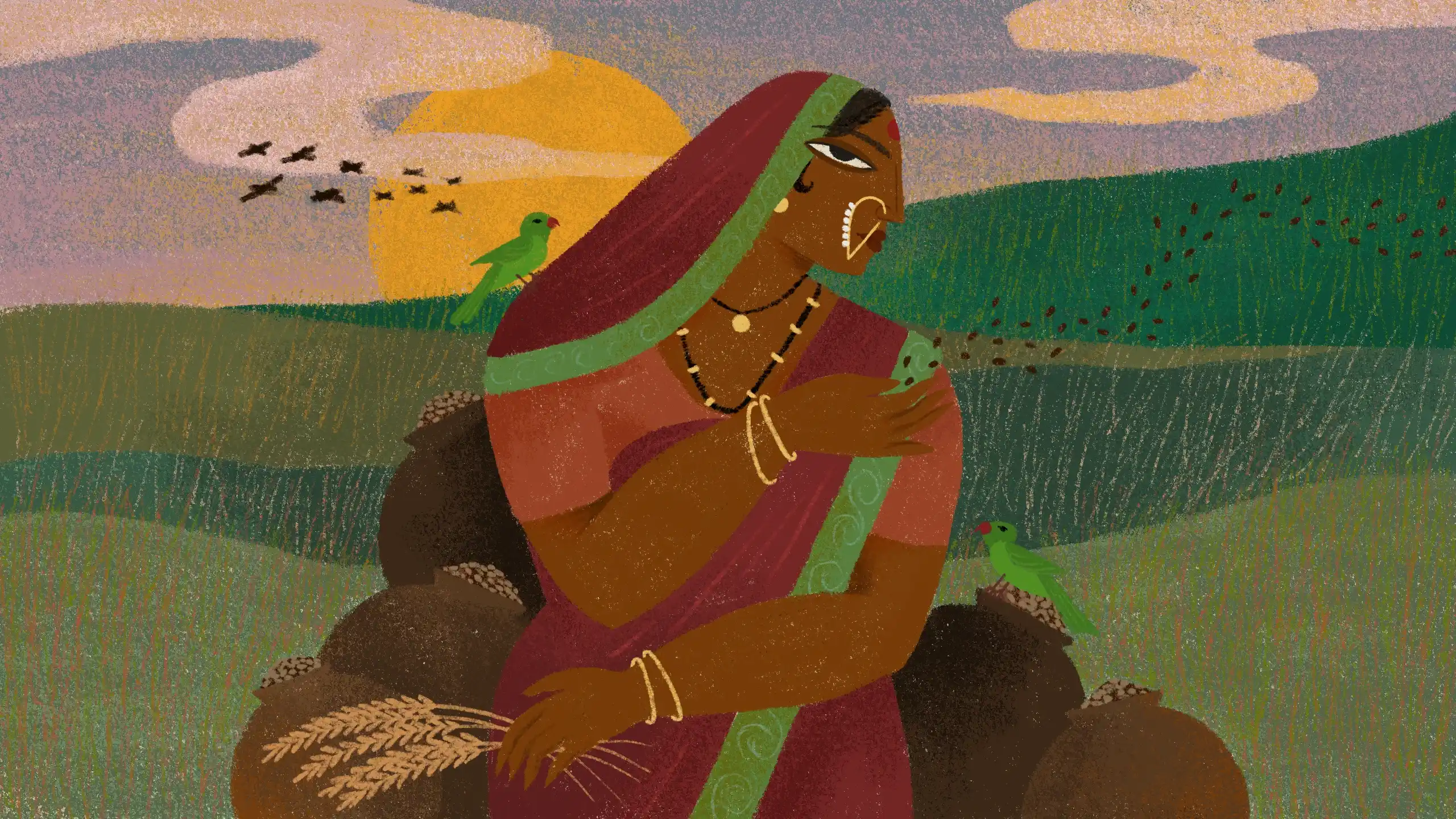
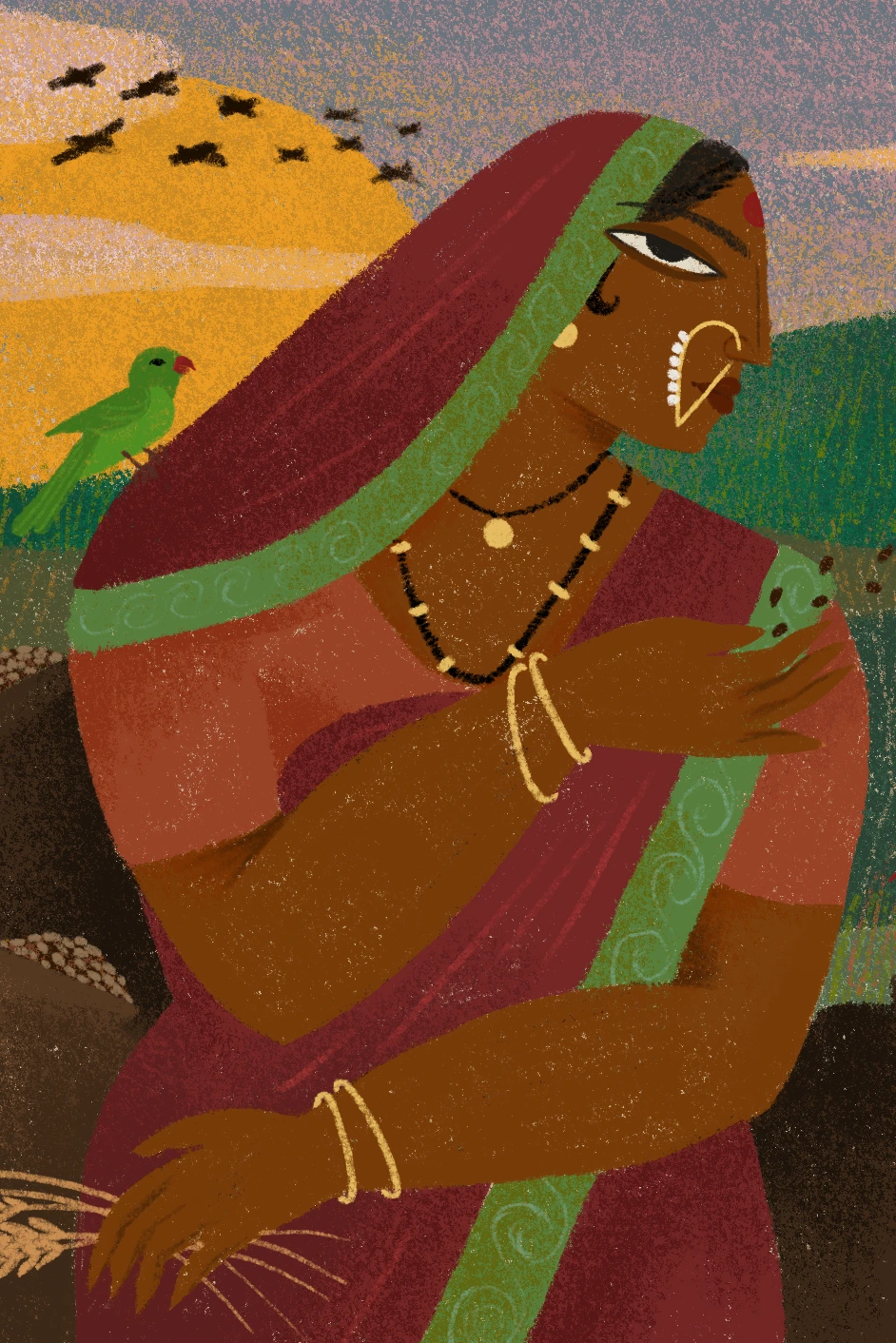
Art by Jishnu Bandyopadhyay
Also read: Babulal Dahiya makes every grain of rice count
{{quiz}}


.avif)
Explore other topics
References