Mumbai’s mill-era ‘khanavals’ fuelled a workforce with affordable, homely meals
Timed to mill shifts and featuring generous proportions, these meals signified sustenance and community


A crucial chapter of Mumbai’s storied history is the era when it was a textile hub—one where mill workers spun the city’s commercial fortune on their spindles and looms. From the mid 1850s, mills sprung up across the then-suburbs, stretching from Byculla to Parel, forming the city’s industrial heartland. This area came to be known as Girangaon, quite literally meaning ‘textile village.’
Every day, for more than a century, mill workers would trudge to their shifts at the crack of dawn. The city’s native population was not enough to fuel the requirements of labour, for there were around 200 textile mills by the early 1900s. These hungry mills called out to migrants from the interiors of Maharashtra—Kolhapur, Satara and Sangli, to name a few districts, as well as along the coast of the Konkan.
Most mill workers lived in chawls, in small one-room tenements known as kholis. Chawls were low-cost buildings meant for communal living, constructed for the working class in a rapidly growing city, and characterised by shared use of amenities like bathrooms. They were cheap accommodation, and sometimes one kholi housed as many as 20 people, who worked in shifts. Even a century ago, Mumbai was an expensive city, and mill workers typically left behind families in their native villages and towns.
Many of these establishments set up in the 19th century and early 20th century were run mainly by women.
But what did these workers do for their everyday nourishment and meals, to fuel hours of back-breaking labour? Since the chawls were cramped, workers could not cook in their rooms. This was the catalyst for the emergence of the khanaval (common kitchen) culture in Mumbai—small establishments that would serve home-styled food to migrants living far away from home. “Most mill workers depended on khanavals for their everyday meals,” says Dr. Mohsina Mukadam, food historian and Associate Professor of History at Mumbai’s Ramnarain Ruia College. “Many of these establishments set up in the 19th century and early 20th century were run mainly by women,” she adds.
Home away from home
Khanavals quickly became popular for their affordability and convenience; they priced their meals keeping in mind the income and socio-economic conditions of their diners. “The prices would typically start at 3 annas, going up to 8 annas for a monthly subscription of services,” Dr. Mukadam says. The prices would also fluctuate depending on what was being served—“for instance, a ‘special’ beverage like buttermilk, or an extra guest would warrant paying extra,” she adds. Time and location were determinants, too. “At one time, khanavals in the Fort area would charge Rs. 35 monthly,” a hefty sum for the time.
Through the memories of mill workers like Suresh Ramchandra Ole, who worked at Victoria Mills in present day Lower Parel, it emerges that khanavals also offered ‘dabba’ services. “We used to get tiffins at 11 am and would finish our meals by 11.30 am sharp,” he says.
Neera Adarkar, an architect and urban researcher, talks about their spatial layout: “These khanavals were run out of rooms in chawls. Women temporarily converted their homes into a space where food could be cooked and served, and where mill workers could come and dine.” Adarkar is the co-author of One Hundred Years, One Hundred Voices with Meena Menon, a book that retells the history of Mumbai’s densely populated textile district area through the testimonies of its inhabitants. At the height of their relevance, there were, “according to one count, about 650 khanavals in Girangaon” Adarkar and Menon write.
The food was basic and served on paatlas (wooden planks). “Bhakri (a flattened bread made of different grains like rice, jowar and bajra), vegetables, rice and a curry of some kind were regular items on the menu. Sweets would be served on special occasions,” says Dr. Mukadam. The appeal of the khanavals was also that they understood regional palettes and catered to their customers accordingly. “People who came from Kolhapur preferred jowar bhakris, while those from the Konkan regions liked their rice and ragi bhakris,” she adds.
A majority of the original migrant population that worked in mills was Konkani, and therefore, many Konkani khanavals sprung up in Girangaon. “A basic Konkani Taat would have a mound of rice, a bowl of sol kadhi (a pink drink made from coconut milk and kokum, with a bit of salt, and chilli-garlic paste) with a piece of fried fish, often a king mackerel (surmai). It also included a small bowl of curry, either prawn or fish, and ‘ghavane’ (rice flour pancakes) or chapatis,” writes TV personality and food writer Kunal Vijayakar.
The appeal of the khanavals was also that they understood regional palettes and catered to their customers accordingly.
Food was served in unlimited quantities, and people could take second helpings, recall the Shirodkar family, who are the current owners of the iconic Shri Datta Boarding House in Lalbaug, originally set up in 1920. In contrast, the portions today are largely fixed. “Earlier, if someone ordered a chicken thali, it came with chapati, bhakri, authentic vade (a kind of poori), a little sol kadhi (a beverage made of coconut milk and kokum), gravy, and rice. Service was different too—if a guest asked for gravy, we would simply bring a mug full and pour it into their bowls,” says Sanil Shirodkar, the newest generation to run the boarding house.
Khanavals recreated the atmosphere of home for mill workers, for whom there was little other space to experience community. They did not just function as a dining space; in One Hundred Years, One Hundred Voices, the khanaval emerges not merely as a place of sustenance, but a space to meet and exchange news. “Those who came to eat would talk about their problems—we would chat. Someone would mention his wife was sick, someone would talk about how he had to build his house, that kind of talk. Those who come to eat … they have been eating here for five to six years so they’ve become family,” Indu Patil says of the khanaval run by her family.
Also read: The spice keepers of Mumbai's Masala Galli
The khanavalwalis, or the women who cooked meals, became informal postmasters and confidantes for proletariat Mumbai. Migrants would sing songs, tell stories, narrate anecdotes and talk about their village and family back home. Marathi folk singer Nivrutti Pawar says that her aunt’s khanaval also served as a discreet meeting spot for revolutionaries living underground in the late 19th and early 20th centuries. Because they were constantly in hiding, her aunt exercised great caution while hosting them. Pawar remembers being asked to sing freedom songs for these guests—a request she readily fulfilled.
A wide clientele
Apart from mill workers, students and shopkeepers also frequented these small, home-run canteens. Chinmay Damle, a food research scientist, says, "Mumbai was the examination centre for students appearing for University exams. These students typically ate in khanavals."
Taking forward the legacy of her mother-in-law Kavita, Manisha Chaudhary runs a khanaval from her home in Kurla West. “Men from mills would come and dine here—four or five at a time,” she says. Today, Chaudhary serves Satara-style chutney, jowar bhakri, rice, and dal. “After the mills shut, business went down, but rickshaw drivers and labourers still came. I now have about ten customers—3 to 4 can sit and eat, others take tiffins.”
Also read: Mumbai's Nagori dairies are a living archive of milk, migration and memory
Intercaste dining
Many early khanavals were run by Brahmin or upper-caste women and offered strictly vegetarian meals, and the names of establishments were often indicators of the proprietor’s caste—becoming a subtle way of filtering out customers. But as the migrant workforce in Girangaon grew, drawing people from the Konkan, Marathwada, Vidarbha, and beyond, khanavals began to diversify. Oral histories showcase how Maharashtrian non-vegetarian staples like fish curry, mutton, or chicken slowly entered some menus, especially in khanavals catering to non-Brahmin communities. They adapted, providing inexpensive meals suited to the religious and regionally specific and diverse migrant population.
In the 1890s, a woman named Sakhubai ran a khanaval in Girgaon. She is remembered as the first woman to do so without enforcing caste boundaries in her mess.
Practices of segregation, however, were rampant, and caste biases often seeped into dietary practices. Caste dictated where one could eat, and who cooked for whom, which made inter-caste dining rare. Khanavals were often not welcoming towards Dalit and Bahujan people. Diners usually chose khanavals run by men or women from their own community, since accepting food from someone of a lower caste was considered ‘polluting.’ Eating at a khanaval run by a proprietor from a higher caste proprietor was tolerated, but people from different castes sat in different pangats and used different utensils. However, there were stalwarts who stood apart.
Sakhubai was one of the few khanaval owners who believed in communal eating. Dr. Mukadam says, “In the 1890s, a woman named Sakhubai ran a khanaval in Girgaon. She is remembered as the first woman to do so without enforcing caste boundaries in her mess. At her table, people from all communities were welcome, and if a Brahmin insisted on observing his rituals, she would rebuke him, saying, ‘If you want to follow your rituals, then you can go to some other khanaval.’ As she put it, if caste hierarchies had to be observed, the pangat—the line where people sat to eat—would stretch from Girgaon all the way to Malabar Hill.”
Also read: The uncertain future of Aarey Forest's tribal agriculture
Then versus now
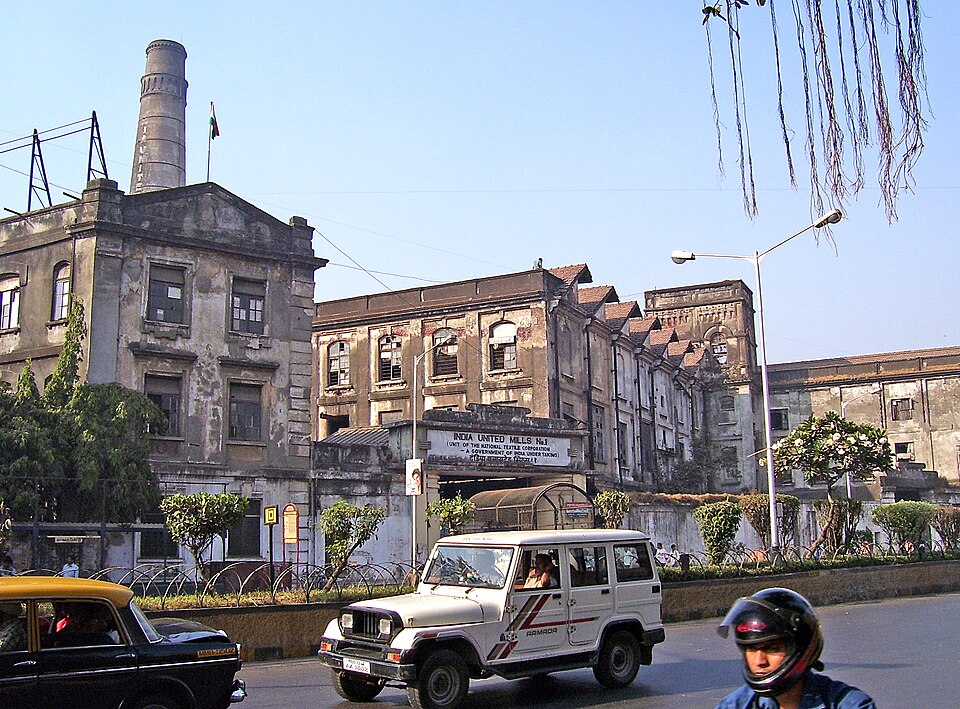
With the closure of Mumbai’s textile mills and the displacement of thousands of workers, the dense network of khanavals that once served Girangaon’s communities began to unravel. The Great Bombay Textile Strike of 1982, which stretched over nearly 18 months, dealt a fatal blow to the industry—dozens of mills shut down, and many workers lost their livelihoods. As mill employment waned, many of those who once lived in central mill districts migrated outward, and were displaced to the far-flung suburbs of Vasai, Virar, Thane and Navi Mumbai. Meanwhile, the lands once held by textile owners were reimagined and re-zoned under new redevelopment rules: high-rises, shopping malls, glass towers, and commercial complexes replaced dense chawls and old factory buildings.
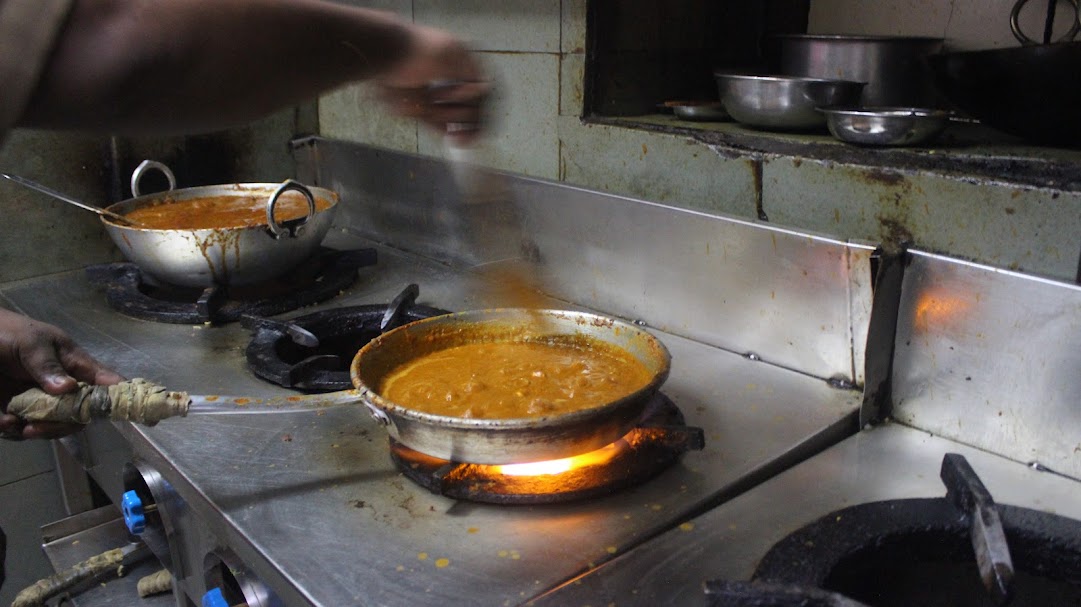
In this gentrification, khanavals lost their principal clientele. Their patrons were dispersed, and the communities that sustained them were dismantled by geography and capital. As a result, several shut down. The few that survive today rarely follow the old boarding-style arrangements; some have reinvented themselves. For example, Pramod Shirodkar bought the Shri Datta Boarding House 42 years ago and turned it into a restaurant.
In the past, mill workers endured long hours of physical labour and welcomed calorie-dense meals to sustain them. Today, with more sedentary lifestyles, eating habits have shifted. People now tend to prefer lighter, less oily food, Shirodkar says.
Just beside Shri Datta Boarding stands Majghar (translating to ‘my home’)—a gleaming, air-conditioned avatar of the older khanaval. Unlike the modest, open dining rooms where mill workers once queued up for hearty, home-cooked meals, here the wait is for a table amid the dinner rush. The food, meanwhile, is curated for contemporary palates, making it less about sustenance, more about experience. In many ways, Majghar embodies how the khanaval has adapted to changing times and a new generation of diners.
In the past, mill workers endured long hours of physical labour and welcomed calorie-dense meals to sustain them.
The khanaval story mirrors Mumbai’s own—a city that once ran on the sweat of mill hands and the solidarity of shared meals, has now been reshaped by gentrification, shifting tastes, and a changed food economy. Where once baithaki rooms rang with gossip, news, and the clatter of steel plates, today air-conditioned restaurants offer curated nostalgia.
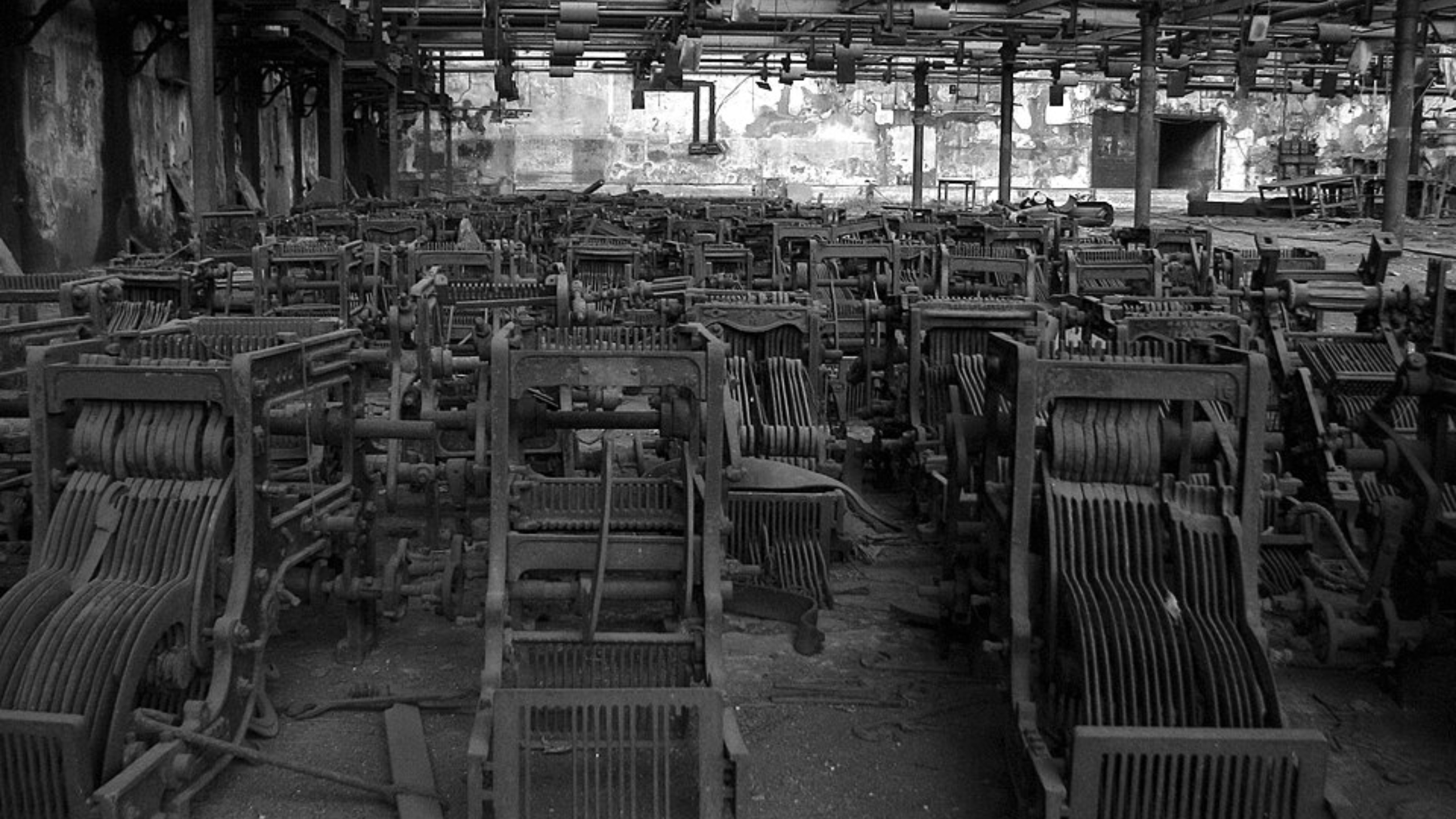
Slider image credit: Wikimedia Commons: Abandoned Madhusudhan Mills in Lower Parel, Mumbai, Kunal Ghevaria
Edited by Harshita Kale and Neerja Deodhar
{{quiz}}

Explore other topics
References