.webp)
In the pursuit of protein-rich diets, are we neglecting our fibre intake?
Fibre is essential for everyday functioning, playing a role in waste expulsion and the production of chemicals like neurotransmitters


We like to think that the human body is self-sufficient—that it single-handedly manages a diverse range of functions reliably, regularly, and (for most of us) flawlessly. In reality, it chooses efficiency over self-sufficiency. When it is too resource-intensive to develop something, it simply outsources that function. For example, instead of struggling to produce short-chain fatty acids, it houses and feeds bacteria that can produce them instead. We’re reliant on this system now; bacterial populations are responsible for crucial functions like immune responses as well as access to essential nutrients.
Most of the human body’s bacterial population resides in the large intestine, especially in the colon. Most of the food we eat first reaches the small intestine, where its constituent nutrients get absorbed. But, there is usually one major component of food that passes through the small intestine and reaches the large intestine undigested: fibre. Our gut bacteria ferment these fibres to produce useful byproducts, including vitamins and short-chain fatty acids.
A study from 2023 revealed that 7 out of 10 Indians are not consuming the Recommended Daily Allowance (RDA) of fibre, which is about 30 gm for adult women, and 40 gm for adult men. Simultaneously, according to a government report from 2025, protein consumption has picked up, and even crossed the RDA. A 2024 American study has directly linked high-protein diets with changes in the population of the gut microbiome (or microbe communities). What does this mean for our health?
According to the 2025 government report, the increase in protein intake has been accompanied by a fall in the total caloric intake, in both rural and urban India. If the total number of calories being consumed is falling, and the total protein consumption is increasing, we can infer that animal proteins like dairy and meat are replacing plant proteins. This is because plant sources are less protein-dense than animal sources like dairy or meat, and one would have to consume more calories to reach the same protein intake.
A study from 2023 revealed that 7 out of 10 Indians are not consuming the Recommended Daily Allowance (RDA) of fibre, which is about 30 gm for adult women, and 40 gm for adult men.
This replacement comes at a cost—the fibre component of the diet (only present in plant foods) gets replaced by excess protein and fat. The gut microbiome is impacted in two ways: the effect of too little fibre, and that of too much protein.
Also read: Do proteins keep us fuller and less hungry than carbs and fats?
A problem of excess
The lack of adequate fibre will naturally prevent the bacteria from fermenting it and releasing helpful byproducts, including short chain fatty acids and neurotransmitters like dopamine. It’s not just the fermentation that is useful, though. Even the unfermentable fibres in the large intestine play a crucial role: smoothening the passage of stools. Emerging science suggests that low-fibre diets could also permanently reduce gut bacterial diversity (never a good sign) and even result in the starved bacteria eating our colonic lining, thus compromising the protective mucosal layer that keeps microbes at a safe distance while allowing nutrients to pass through.
As for protein, the gut microbes are used to dealing with some undigested protein regularly. These amino acids can be fermented into good byproducts like short chain fatty acids or harmful ones like ammonia and hydrogen sulphide. The nature of the byproduct depends on the quantity as well as the type of amino acids that reach the colon.
Also read: The ‘right time’ to eat protein: Little and often, rather than in one meal
How much undigested protein reaches the colon roughly depends on two factors. First, the amount of protein consumed in one go. The body can only digest limited protein in one go and passes ahead excess protein to the large intestine. Second, the protein source: this determines how easily the body can digest it. Animal proteins are easier for the body to digest, so less undigested animal proteins will reach the large intestine.
However, plant proteins have been documented to be gentler on the gut when they do reach the large intestine undigested, possibly because they inherently have more fibre. In fact, across studies, plant proteins are not associated with any negative byproducts of fermentation. But overall, excess protein fermentation in the colon has been associated with intestinal diseases—such as inflammatory bowel disease and colorectal cancer—as well as metabolic diseases.
A high rate of protein fermentation has also been linked to reduced non-digestible carbohydrate (i.e. fibre) availability in the large intestine. This is one of the reasons why high-protein diets change the gut microbiome—undigested protein outcompetes the undigested carbohydrate, and the bacterial population adjusts to include more protein-digesting bacteria. This directly impacts the diversity of gut microbes.
Also read: More isn’t always better: Are you overdosing on protein?
Now, there is considerable variation in the microbial species found in the guts of different individuals, but they still fall within five dominant phyla (phylum being the third broadest categorisation of organisms). The composition of the microbiome also changes with alterations in diet and lifestyle. But roughly, there is an understanding that a healthy gut will have species from the dominant phyla despite the internal differences. Beyond helping with digestion, these microbes form a critical aspect of the body’s immune response, and less microbial diversity makes the body more vulnerable to a slew of health issues. There is historical data strongly suggesting that industrialisation and a shift towards westernised diets decreases gut microbial diversity.
For the gut to flourish, the conversation around nutrition must make some space for fibre, not as a competitor of protein, but as its companion.
The simplest way to ensure gut health, of course, is to actively incorporate fibre in one’s diet. Similarly, incorporate diverse protein sources. Microbial composition changes with the source of protein too—eggs, fish, dairy, and legumes all change the bacterial makeup of the gut. For the gut to flourish, the conversation around nutrition must make some space for fibre, not as a competitor of protein, but as its companion.
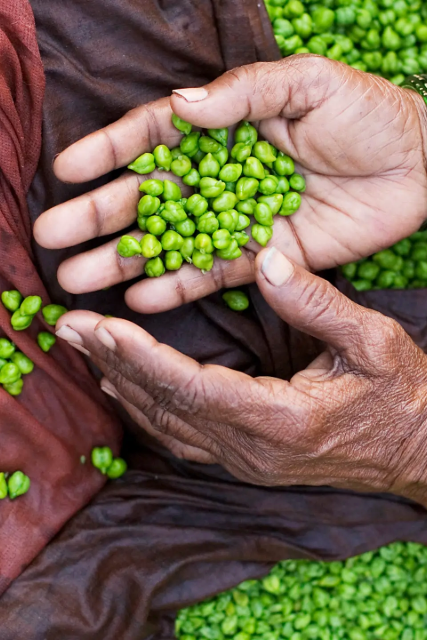
Slider Image: Green chickpeas by Jorge Royan by Wikimedia Commons
{{quiz}}
.avif)

.avif)
References