.webp)
Do proteins keep us fuller and less hungry than carbs and fats?
Protein does promotes fullness, but lasting satiety depends on the food structures of nutrients consumed, as well as a balanced diet


In conversations around nutrition, high-protein diets are often pushed and promoted as a means to suppress appetite. Packaged protein snacks, for example, promise to keep hunger away for hours. Compared to carbohydrates and fats, protein is routinely described as the most satiating macronutrient. This claim is not entirely wrong, but it does not provide the full picture: to understand whether protein is truly more filling, it's important to first understand how the body actually experiences a meal.
Why protein often leads to greater fullness
What does it mean to feel ‘full’? Hunger and appetite are often used interchangeably , but the two are not the same. Hunger is the body’s biological signal to top up energy—driven by falling blood glucose, rising ghrelin levels, and basic fuel needs. Appetite, on the other hand, is the desire to eat, shaped by sensory cues, pleasure, habits, and food environment. Satiety sits at the intersection of the two: it is the feeling of fullness that follows eating, suppressing hunger and dampening appetite for a period of time.
Protein consistently ranks high on satiety scales in controlled feeding studies. One reason for this is digestion. Protein takes longer to break down than refined carbohydrates, which means it stays in the stomach and small intestine longer. This slower digestion stimulates the release of satiety hormones such as peptide YY (PYY), GLP-1, and cholecystokinin (CCK), all of which signal fullness to the brain. Protein also suppresses ghrelin, the hormone associated with hunger, more effectively than carbohydrates or fats.
Satiety sits at the intersection of hunger and appetite: it is the feeling of fullness that follows eating, suppressing hunger and dampening appetite for a period of time.
Digesting protein also requires more metabolic work—a process known as the thermic effect of food, which contributes roughly 8–10% of daily energy expenditure overall (and a larger share when protein intake is higher). This does not directly create fullness, but reflects protein’s slower digestion, prolonged processing in the gut and delayed gastric emptying. Together, these effects help sustain satiety signals, —and more simply, explain why higher-protein meals are often linked to reduced snacking later in the day.
Protein is often singled out for its ability to stimulate satiety hormones. But emerging research suggests it is not acting alone. Certain carbohydrates and polyunsaturated fats also contribute to the release of these hormones, especially when consumed as part of intact foods. In average balanced meals, satiety is rarely the result of one macronutrient; it emerges from the combined effect of protein, fibre and fats working together within a whole-food matrix.
Also read: Is there an 'ideal' amount of protein that must be consumed?
Where carbohydrates and fats fit into satiety
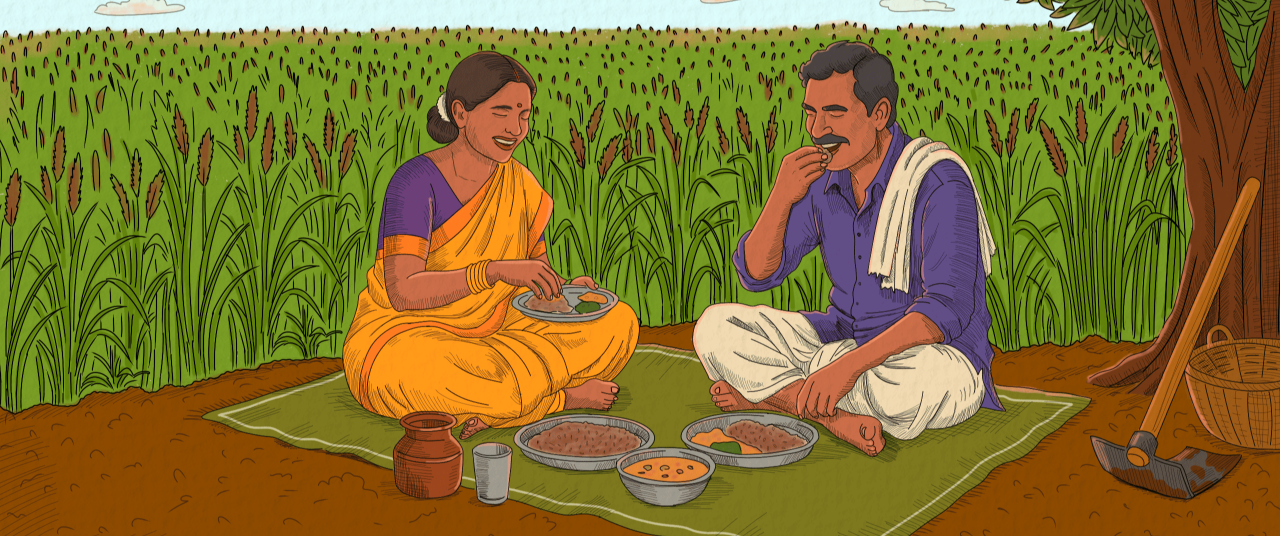
Carbohydrates and fats are often treated as the ‘less filling’ counterparts to protein, but their effect on satiety depends far more on the form and structure of the foods consumed than on the nutrient itself. Refined carbohydrates such as white bread, sugary drinks or biscuits digest quickly, leading to rapid blood sugar rises followed by declines that can activate hunger signals soon after eating. But carbohydrates eaten within intact whole foods—where fibre, water and cellular structure slow digestion—behave very differently. Whole grains, pulses, vegetables and fruits slow digestion and release energy gradually, both of which support fullness. This is why meals built around foods like rice and dal, millets with vegetables, or legumes with whole grains tend to be deeply satisfying despite being carbohydrate-rich.
Fats, too, are often misunderstood. Once again, fats that are eaten as part of refined foods—such as those encased in fried coatings or creamy fillings in ultra-processed foods—require little chewing, are easy to consume quickly, and do not strongly trigger satiety on their own. In contrast, fats that are embedded within whole foods—such as nuts, seeds, dairy, eggs or fish—are released more gradually during digestion because they are bound within a natural food matrix of fibre, protein and water.
Also read: The science behind high-protein milk: How it differs from whey powder
Why food structure matters more
Carbohydrates and fats are not inherently less filling than protein. When eaten in intact, minimally processed foods, they work alongside protein to sustain fullness. The problem is not carbs or fats themselves, but foods where these nutrients are stripped of structure and designed for rapid consumption.
Satiety depends not only on macronutrient ratios, but on food structure. Foods that require chewing, digest slowly and contain fibre tend to keep hunger at bay, whether they are rich in protein, carbs or fats. Research on ultra-processed foods shows that even high-protein ultra-processed products can be less satiating when nutrients are stripped of their natural structure. This encourages faster eating and overconsumption.
In average balanced meals, satiety is rarely the result of one macronutrient; it emerges from the combined effect of protein, fibre and fats working together within a whole-food matrix.
What differentiates nutrients then, is not a single hormone trigger, but how they are delivered in real food: intact food matrices rich in protein, fibre and healthy fats sustain satiety more effectively than isolated nutrients and powders. Protein is generally more reliably satiating than refined carbs or isolated fats, but it works best within whole foods and balanced meals.
Also read: The protein divide: Should you pick whole-food sources or isolates?
{{quiz}}


.avif)
References