In Odisha’s insect eating traditions, a blueprint for a food-secure future
Adivasi communities in the state have perfected the approach to harvesting sustainably, safely and in a manner that optimises nutrition


Smoke drifts through the morning air. Ganesh Wadaka, 47, stands beneath a mango tree, eyes fixed on the nest of a Yellow Paper Wasp clinging to a high branch. He lifts a small bundle of smouldering ebony leaves. A gentle blow. The tekor, as the wasp is locally known, begins to settle.
“One needs to be careful while collecting tekor. Their sting is very painful. The smoke calms them,” Wadaka explains. “We collect only their larvae, roasting them over fire before they are served.” This wasp species has much to offer the Adivasi Dongria Kondh community to which Wadaka belongs: its wax is traditionally used to treat cracked feet, while controlled stings are believed to help relieve edema, coughs, colds, and stomach pain.
The farm around this mango tree in southern Odisha’s Khajuri village lies along the slopes of the Niyamgiri Hills. It remains a landscape that the Dongria Kondhs, one of India’s Particularly Vulnerable Tribal Groups (PVTG), revere and protect as the home of ‘Niyam Raja’, their supreme deity.
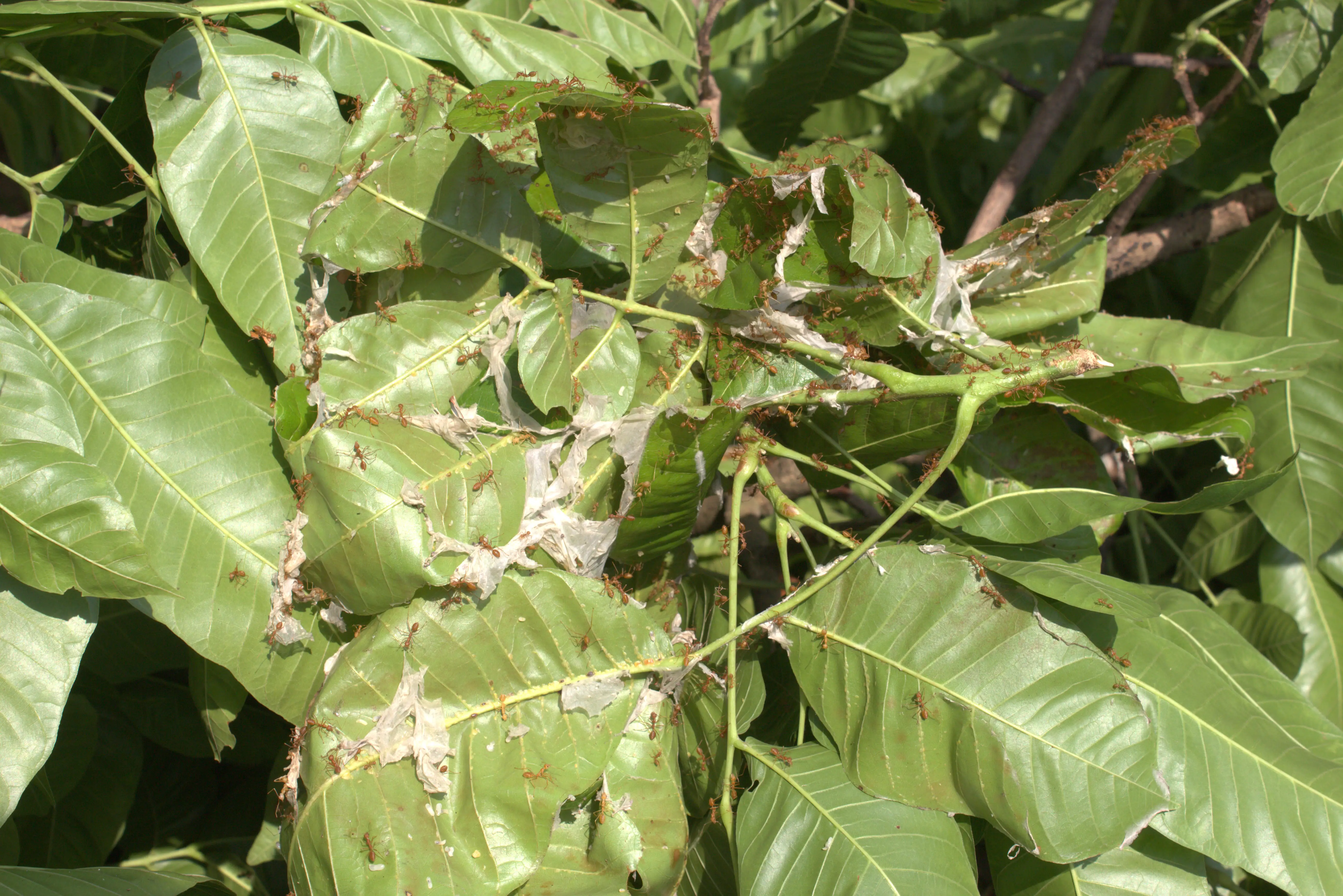
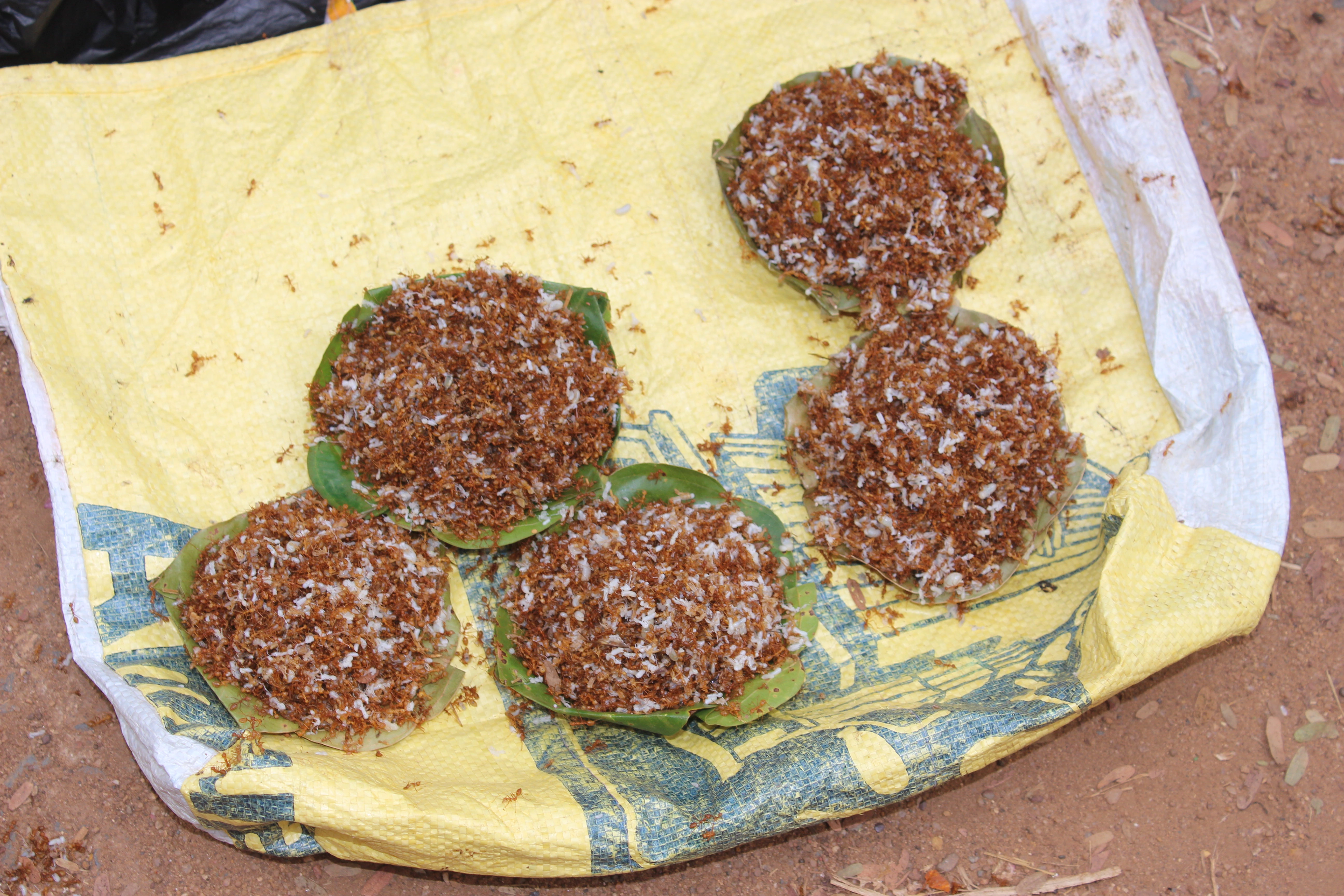
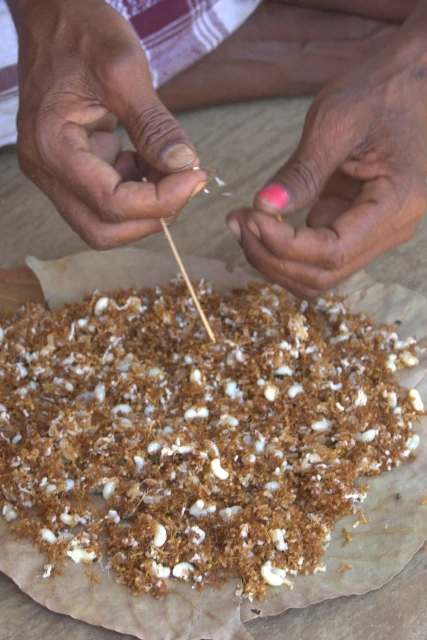
Much like the Yellow Paper Wasp, Red Weaver Ants, too, are a beloved ingredient—one that has travelled beyond Adivasi villages. In the Mayurbhanj district, Santals prepare kai chutney (the local name for the ant species) using its larvae (a recipe for the chutney can be found at the end of this article). This savoury, tangy relish received a GI tag in 2024 for its distinct flavour and nutritional value.
{{marquee}}
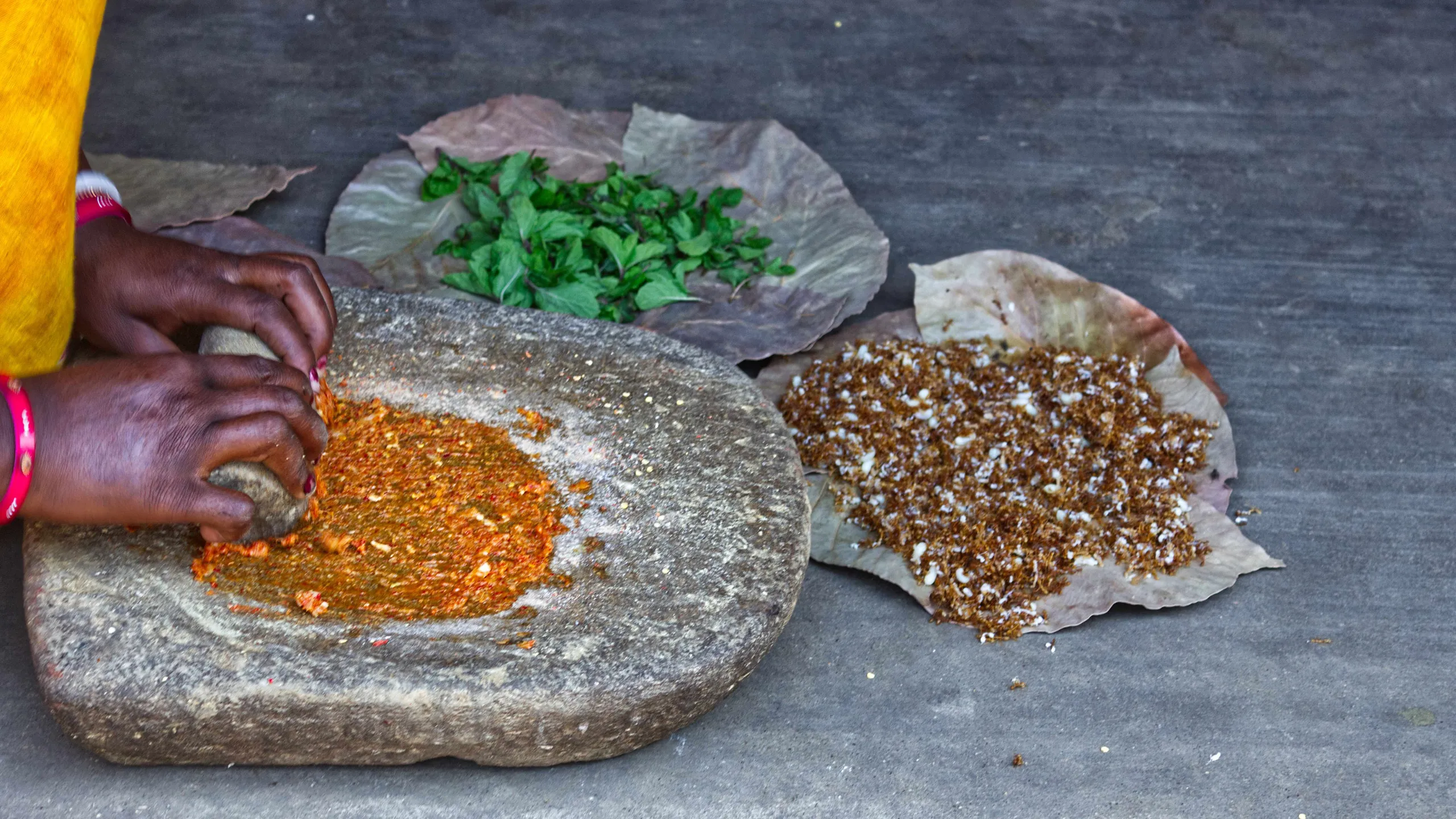
Red weaver ants build brood-pouch nests by wrapping sal or mango leaves together. The Santals’ consumption of the insect is neither mindless nor clued out of the species’ habits and survival. “We don’t consume the adult ants, we only collect their eggs and the juveniles. We crush them with red chilli, mint and salt to make the chutney, which is usually eaten with pokhal, a traditional fermented rice,” explains Sarita Hansda, who resides in Mayurbhanj’s Gopinathpur village.
Freshly foraged kai is also sold by Santal women in weekly village markets, earning an additional source of income for their households. Santal healers believe that kai helps treat a range of ailments, including jaundice, arthritis, nervous disorders, and memory loss. Healers in the community infuse oil with kai for a month, and then apply it to infants. The medicinal oil is also believed to ease rheumatism, ringworm, and other skin conditions. At other times, kai is used in a nutritious soup that helps cure ailments, dysentery, cold, and fever.
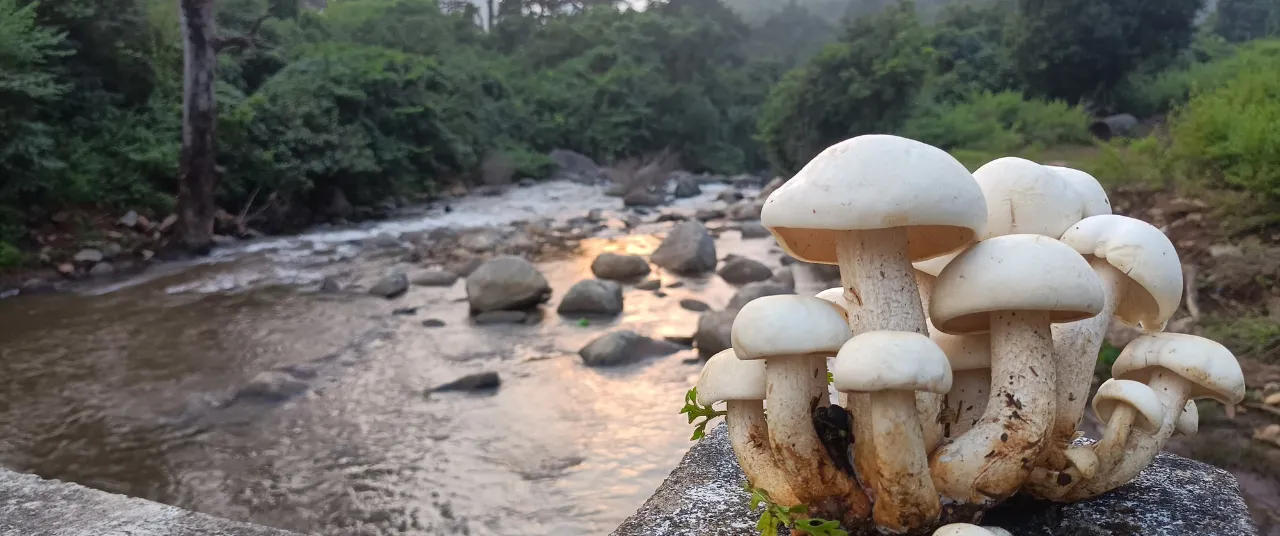
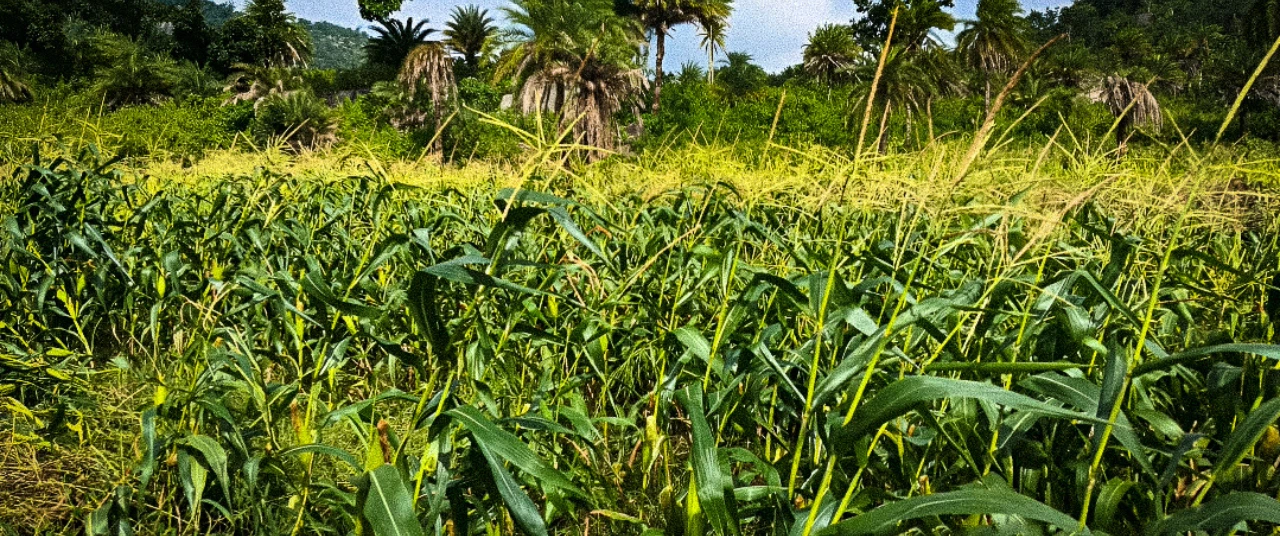
Across Odisha’s rainfed regions, produce obtained from farming is only one aspect of the diet of Adivasi communities, who cultivate millets, paddy, pulses, cereals, oilseeds, and tubers through mixed, diversified practices. They also forage wild roots, tubers, leafy greens, mushrooms, and fruits that sustain households year-round. Among their diverse diet, edible insects are a crucial part, supplying protein and micronutrients that have nourished generations.
Insects as a medium for nutrition and education
“We grew up eating what the forest gave us. Insects were always part of our meals—a heritage of our ancestors,” says Abhiram Jhodia, 51; he belongs to the Paroja Adivasi community in the Siriguda village. “From childhood, we learned to read the seasons through ants, wasps, and caterpillars. This traditional knowledge, passed down through stories, helped our ancestors survive. We take only what we need and leave enough for the insect colony.”

Sujata Giri, a 46-year-old Santal woman from the Tamalbandha village, recalls venturing into the local forest with her mother, on the lookout for wild edibles. “Watching her closely, I learned how to spot the nests of insects that are safe to eat, and the right season during which they can be collected.” Muni Kalundia, another Santal woman from the Saruda village, shares similar memories of familial warmth and household nutrition. For her community, these insects were not just cultural foods, but everyday sustenance during lean months, when grains were scarce.
Among their diverse diet, edible insects are a crucial part, supplying protein and micronutrients that have nourished generations.
The range and diversity of insects consumed by Odisha’s Adivasis include winged termites, silkworm pupae and spotted crickets. Sindhe Wadaka, a 53-year-old community leader from Khajuri, speaks of caterpillars found in bamboo stems, locally known as baunsa poko, which enjoy great value in maternal diets and care. Roasted baunsa poko are given to pregnant women, as they are believed to help improve blood supply and provide nourishment.
Also read: Black Soldier Fly: A hero of insect farming and waste management
The toll of a changing climate and chemical-led farming
Climate change and habitat degradation are impacting the populations of edible insects across Odisha. Erratic rainfall, in particular, has had an adverse effect on palm worms, bamboo caterpillars and winged termites, says Debabrata Panda, Assistant Professor at the Central University of Odisha, Koraput. “Since these species are largely foraged during the monsoon, shifting rainfall patterns are disrupting their availability,” he explains, adding that the growing use of agricultural chemicals is also wiping out insects once commonly found around farms.
“Sindhi kida was once abundantly found around the roots of palm shrubs. Now, locating them is tough,” says Dibakar Sabar, 58, from the Goiguda village in Rayagada. These sindhi kida–also called Sago worms–are among the most sought-after edible insects foraged by the Paroja, Kondh, Bonda (PVTG), Saora and Santal communities. They can be eaten raw, roasted or fried, and are known for their chewy, juicy texture and flavour, often compared to boiled chicken.
The range and diversity of insects consumed by Odisha’s Adivasis include winged termites, silkworm pupae and spotted crickets.
Similarly, snails–once abundantly found in paddy fields, ponds and rivers–have declined sharply. For Adivasi communities, snails are a cherished delicacy, often cooked into flavourful curries or fried dishes like the Santal Gongha Uttu. Known as gongha in the Santali language, snails are widely believed to offer multiple health benefits, improving eyesight, easing asthma and joint pain, supporting kidney health, boosting immunity and strength, and preventing anemia.
“In our community, we have always fed snails to pregnant women and young children,” says Saibeni Murmu, 60, a Santal woman from Bhagabandi village. “Our elders taught us that snails help new mothers regain energy, and children grow healthier. Ancestors believed that the strength of the forest lives within these creatures, and that eating them builds immunity, and keeps sickness away. But now, we are seeing less and less of them.”

Also read: Bugging out: Why declining insect populations in India spell doom for agriculture
Shifting dietary choices
The traditional knowledge on entomophagy–the practice of eating insects–is slowly slipping away. “Entomophagy is more common among the older generation, especially those above 50,” says Abhishek Pradhan, agricultural expert with the Watershed Support Services and Activities Network in Bhubaneswar. Over the past few years, Pradhan has worked closely with Adivasi communities, facilitating community-led documentation of forgotten and wild food cultures in more than 40 villages across the Malkangiri and Nuapada districts.
He observes a clear shift in the younger generation: those between 18 and 30 increasingly gravitate toward cereal-based diets influenced by market availability as well as changing lifestyles and aspirations. At the same time, a lingering stigma surrounds many wild foods, often labelled as ‘Adivasi food’—a term that distances young people from the very culinary traditions that sustained their ancestors for generations. “This disconnect is worrying,” Pradhan explains. “As these food practices fade, the deep ecological knowledge and local traditions tied to them also risks being lost.”
For Padma Jani, 62, from Malkangiri’s Mutluguda village, the changing food habits of the younger generation feel like a gradual but palpable loss. “Young people rarely enter the forest or wake up early to forage like we did. When they migrate to work, they drift further from traditional foods and feel embarrassed by our insect-eating customs. Slowly, they are distancing themselves from our forests, culture, and nature.”
“My grandfather always asserted that insects are nutritious. But after I joined a college in Bhubaneswar, I realised people see them as ‘food of the poor’. I didn’t want to be seen in this light, so I stopped eating insects,” says Sabita Majhi, a Paroja girl from Rayagada district. “I am more excited about trying new foods I see online. I want to explore other flavours.”
Young people rarely enter the forest or wake up early to forage like we did. When they migrate to work, they drift further from traditional foods and feel embarrassed by our insect-eating customs.
Srinibas Das, Livelihood Coordinator at the Odisha Livelihood Mission in Mayurbhanj, has worked with Adivasi communities on health and nutrition for more than a decade. He observes that while the older generations still consume diets rich in forest produce and remain healthy, the younger generation’s drift away from traditional dishes is leading to poorer health outcomes. In fact, researchers who surveyed tribal populations in the Mayurbhanj district in 2025 on their traditional food habits—specifically, consuming edible insects as part of their diet—noticed that community elders seemed particularly healthy compared to their counterparts in urban areas. They attribute this to the dense delivery of nutrients like amino-acids, carbohydrates, fatty acids, minerals, vitamins, trace-elements and fibers from insects.
In the same district of Mayurbhanj, where over 58% of the population belongs to Adivasi communities, malnutrition remains a serious concern. According to the 2022 Poshan District Report released by the NITI Aayog, 37% of children under five are stunted, 46% are underweight, and 72% are anemic. In fact, tribal communities across Odisha continue to suffer from alarming health deficits, particularly under-nutrition and anemia. According to the Odisha Tribal Family Health Survey (July 2022–July 2023) report, 71% of children aged 6–59 months are anaemic. The condition affects 76% of adolescent girls, 56% of adolescent boys, and an alarming 77% of adult women. The survey also highlights that over 40% of children under five are either stunted or underweight, significantly higher than the state’s general population.
While the older generations still consume diets rich in forest produce and remain healthy, the younger generation’s drift away from traditional dishes is leading to poorer health outcomes
As Odisha grapples with rising under-nutrition and shrinking dietary diversity, experts argue that future foods must nourish people without burdening the environment. Reviving traditional food cultures, they say, offers a promising path that can improve food security, restore dietary balance, and protect fragile ecosystems by drawing on resilient, locally adapted foods that Adivasi communities have relied on for generations.
Entomophagy: the past and future of food
As global populations continue to rise, projected to reach approximately 9 billion by 2050, the need for sustainable and nutrient-rich food sources is more urgent than ever. The Food and Agriculture Organization (FAO) highlights edible insects as an ‘underutilised resource’ that can help meet this growing demand. More than 1900 species of edible insects are consumed throughout the world. The global edible insects market is projected to reach $4.38 billion by 2030.
Insects are exceptionally nutritious, rich in energy, high-quality protein, healthy fats and fibre, and packed with essential micronutrients such as zinc, calcium and iron. On a dry-weight basis, insects typically contain 40–75% protein, compared to 23–35% in beef, 20–31% in chicken, and 20–30% in fish. Several species also provide substantially higher micronutrients. For example, crickets and mealworms contain up to 2–3 times more iron than beef and significantly higher levels of calcium, zinc and manganese. These differences position edible insects as one of the most nutrient-dense and efficient animal-protein sources.
Insects are exceptionally nutritious, rich in energy, high-quality protein, healthy fats and fibre, and packed with essential micronutrients such as zinc, calcium and iron.
According to various studies, insect farming has a much lighter environmental footprint than conventional livestock. Research from the Wageningen University, Netherlands, found that insects such as mealworms and crickets emit lower greenhouse gases than cattle and pigs, while the FAO reports that they require far less land, water and feed due to their high feed-conversion efficiency.
A 2024 review further confirms that vertically farmed insects (reared in indoor, controlled environments for food or feed) use only a fraction of the resources needed for meat production, underscoring their potential as a more sustainable protein source. With proper training and minimal investment, insect farming can also offer inclusive livelihood opportunities, particularly for communities with limited access to land.
Also read: Friends of the soil: A farmer’s key allies hide backstage and underground
Challenges ahead
“The economic and nutritional potential of edible insects in India remains largely untapped,” says Prof. Panda. He notes that Adivasi knowledge of entomophagy and its therapeutic uses is still poorly documented. “Research on insects as dietary supplements for malnutrition or immune support is very limited,” he adds.
Indigenous knowledge teaches us how to harvest and consume insects without harming biodiversity. Respecting this wisdom is crucial, especially when insect-based foods are still far from socially accepted in many parts of India
Unregulated promotion of insect consumption also carries risks, particularly the overharvesting of wild species that play essential roles in local ecosystems. “Entomophagy must be promoted with balance. Indigenous knowledge teaches us how to harvest and consume insects without harming biodiversity. Respecting this wisdom is crucial, especially when insect-based foods are still far from socially accepted in many parts of India,” Prof. Panda emphasises.
The global plant-based food movement took decades to gain momentum. If insect-based foods can follow a similar trajectory, rooted in sustainability, ethics, and cultural respect, it would mark a significant step forward for future food systems, especially for those at the margins of society.
Kai Chutney Recipe:
Odisha’s Adivasi communities have mastered their approach to picking, foraging and cooking insect produce safely over generations. We recommend that you prioritise your own safety (and leave the cooking to the experts!) if you are not already in the habit of eating red ants.
Key ingredients:
- Red Weaver Ants and their larvae
- Red chillies
- Mint leaves
- Garlic
- Salt
- Mustard oil
Traditionally, women prepare the chutney using a handmade stone grinder. Garlic, salt and mint leaves are ground first to form a coarse paste, after which the red weaver ants and their larvae are added and crushed thoroughly, allowing their sharp, tangy flavour to blend with the spices.
Edited by Anushka Mukherjee and Neerja Deodhar
{{quiz}}


Explore other topics
References

How much protein do insects have on a dry-weight basis?