
What the past, present and future of agriculture owes to women
Women’s work across agriculture, whether diminished or acknowledged, shapes the very food we eat


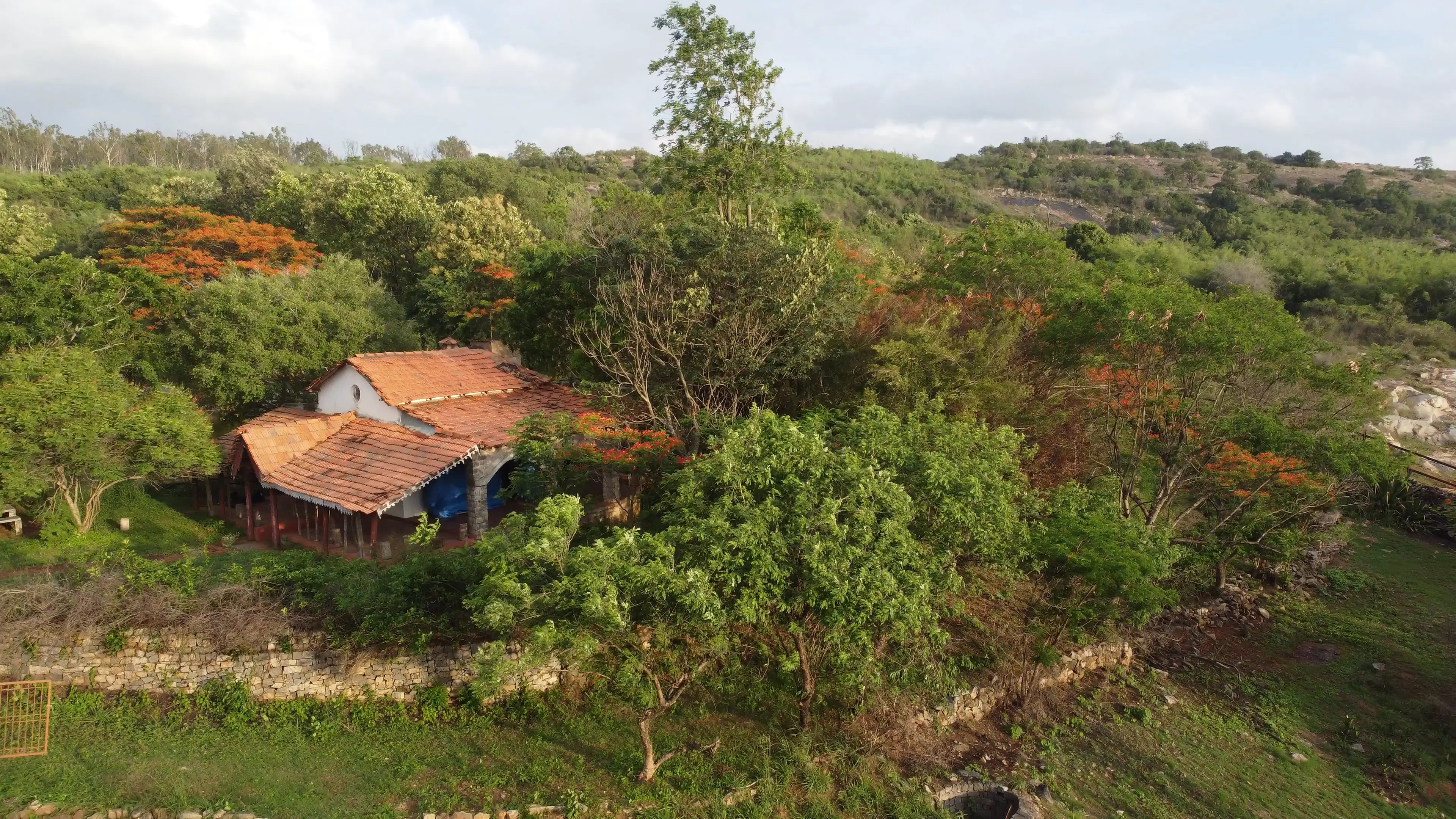
Editor’s note: To know Rama Ranee is to learn about the power of regenerative practices. The yoga therapist, author and biodynamic farmer spent three decades restoring land in Karnataka, envisioning it as a forest farm in harmony with nature. In ‘The Anemane Dispatch’, a monthly column, she shares tales from the fields, reflections on the realities of farming in an unusual terrain, and stories about local ecology gathered through observation, bird watching—and being.
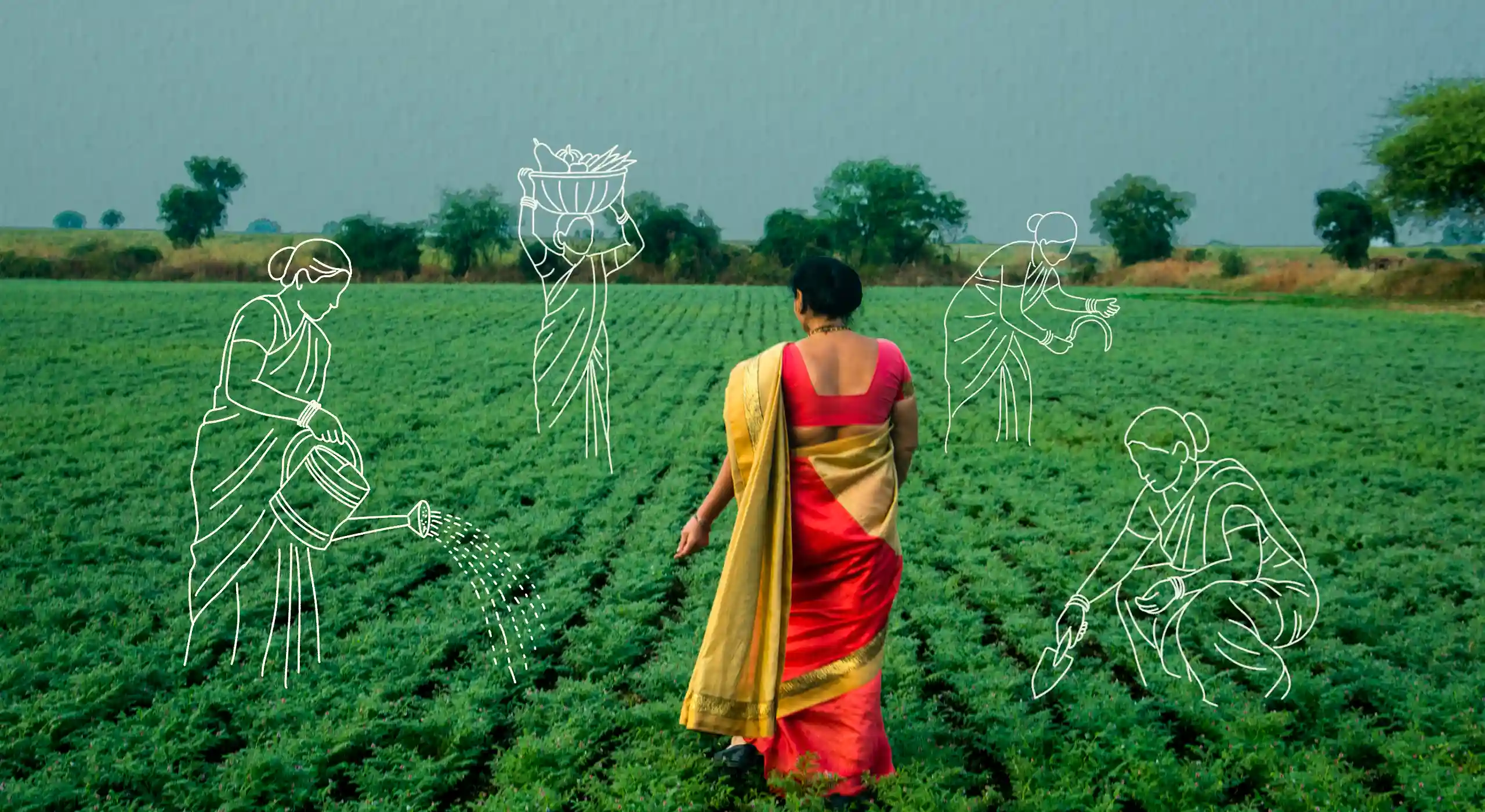
Agriculture is commonly considered to be the domain of men. The role of women farmers, on the other hand, is perceived to be peripheral or supportive. Contrary to this belief, on-ground realities tell us that it is women who hold the key to sustainable agriculture and the conservation of agrobiodiversity and sustenance in these times of climate change, which pose a serious threat to food security.
Anthropological findings show that prehistoric women catalysed the transition of agriculture from hunter-gatherer-led subsistence to settled farming communities when they became seed gatherers. They learnt how to domesticate the plant species whose seeds they procured. They were the first researchers—‘ethnobotanists’ who developed the knowledge to identify native flora for food, medicine and fodder.
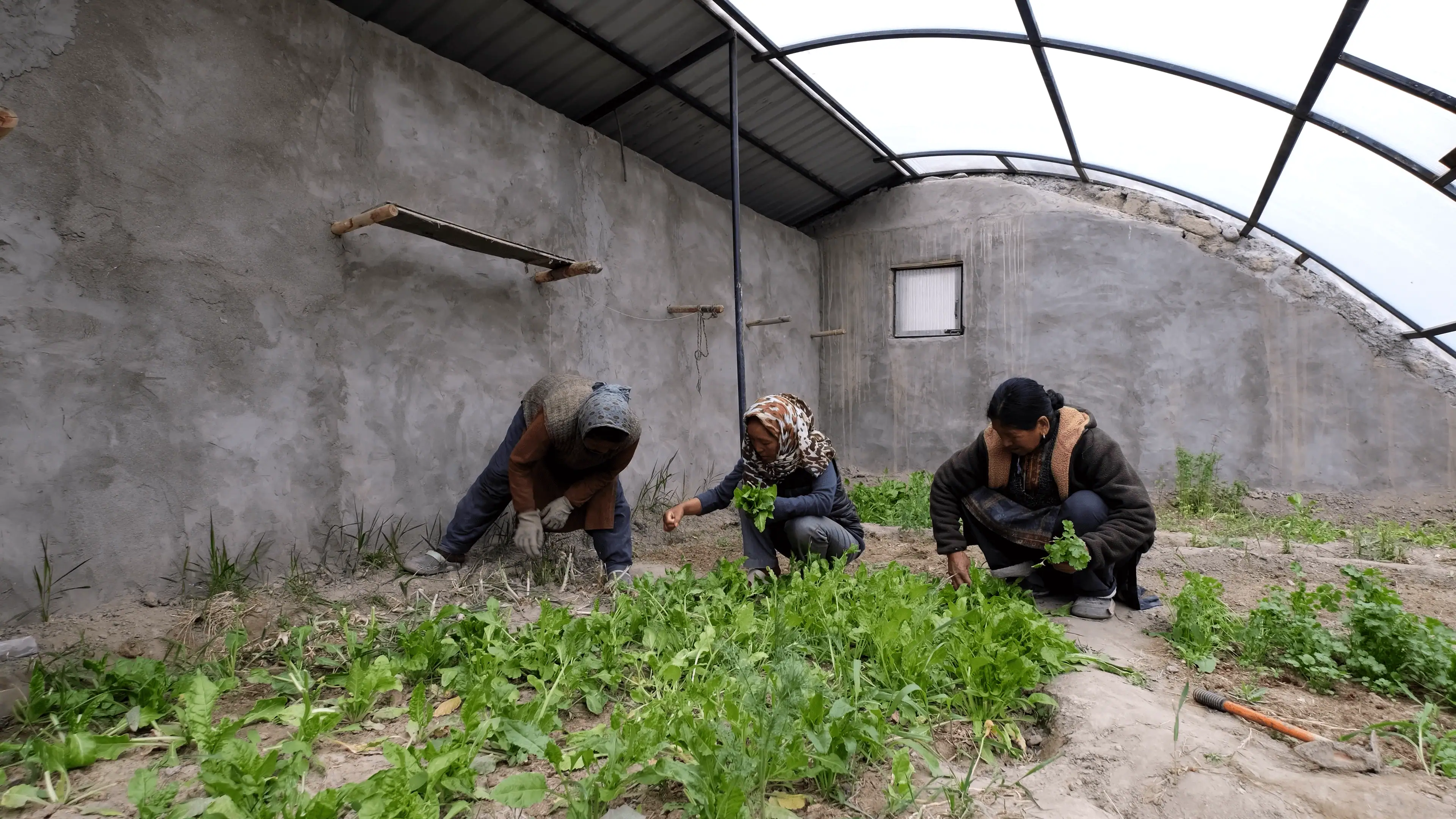
In 10,000 B.C., prehistoric women were probably involved in tilling, planting, and harvesting crops with hoes, flint sickles, and digging sticks, as well as grinding harvested grain, a study of their skeletal remains reveals. The practices prevalent among women in some of India’s own remote rural communities today are reminiscent of this study pertaining to the early Neolithic era in Central Europe. By the Iron ages, the hoe had given way to the plough, marking a technological shift facilitating large-scale cultivation.
In contrast to the catapulting of agriculture into an industry characterised by mechanisation, monocropping, hybrid seeds and the use of chemicals, cultivation was not merely an economic activity for early agriculturalists. The fecund earth receiving the potent seed and bringing it to life was viewed with awe as a spiritual phenomenon. Planting was an act of worship. Veneration of the Earth Mother—Ila, Gaia, the source of all life—was deeply embedded in early religious expressions and art, as the figurines of the Indus Valley civilisation indicate.
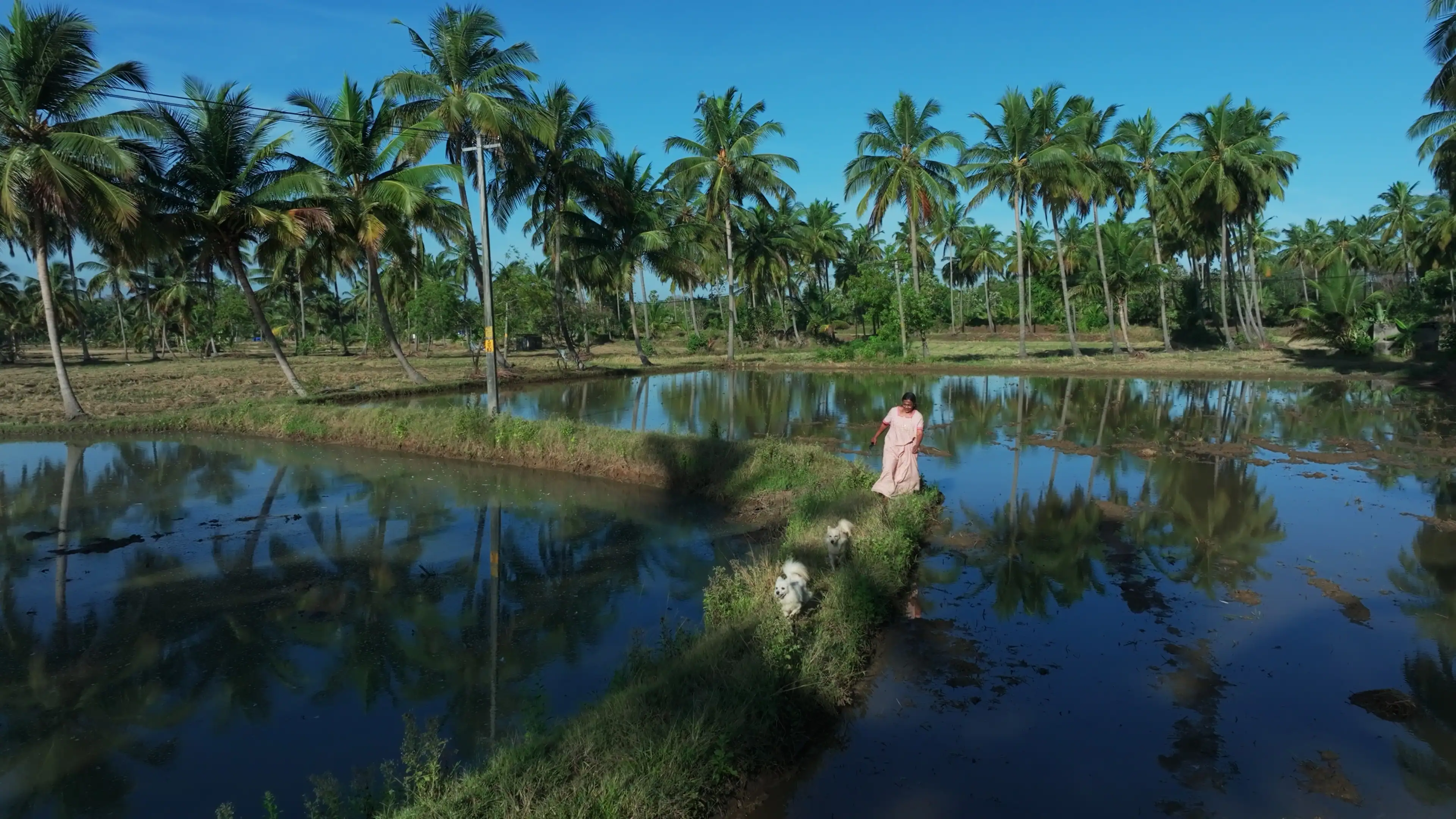
Echoes of these beliefs are evident in rituals associated with agriculture in our traditional societies. In matrilineal or matriarchal societies, women are not just caretakers of land, they embody the spirit of the Earth Mother as nurturers. For example, Mother Goddess Mei-Ramew and her lore endure among the Khasis of Meghalaya.
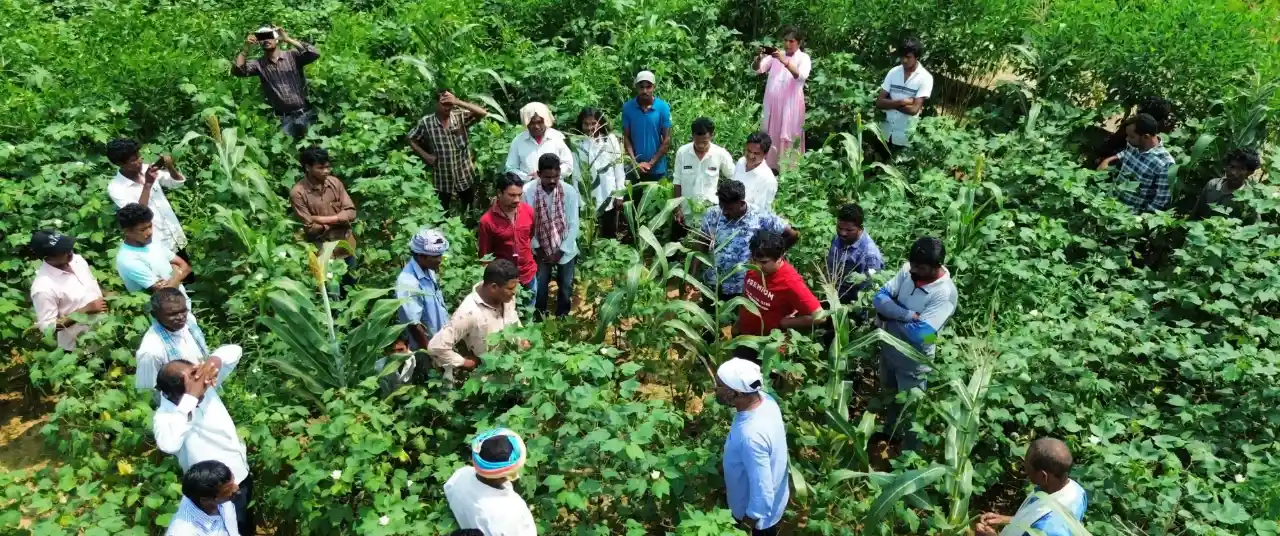
The success of a farm rests on the wide range of tasks performed by women. A study by Oxfam suggests 80% of all economically active women in India are farmers, of whom 33% constitute the agricultural labour force and 48% are self-employed. They complement and support the efforts of men at different stages of the growth cycle of crops; herd and care for livestock; and significantly, keep alive landraces of grains, thus preserving agrobiodiversity. These landraces are the dynamic repositories of gene pools, most critical for food security and nutritional adequacy.
In observing women in the communities surrounding Anemane—at work in fields and in their homes—I saw their contributions beyond what data and studies can reveal.
{{marquee}}
Madamma’s endless to-do list
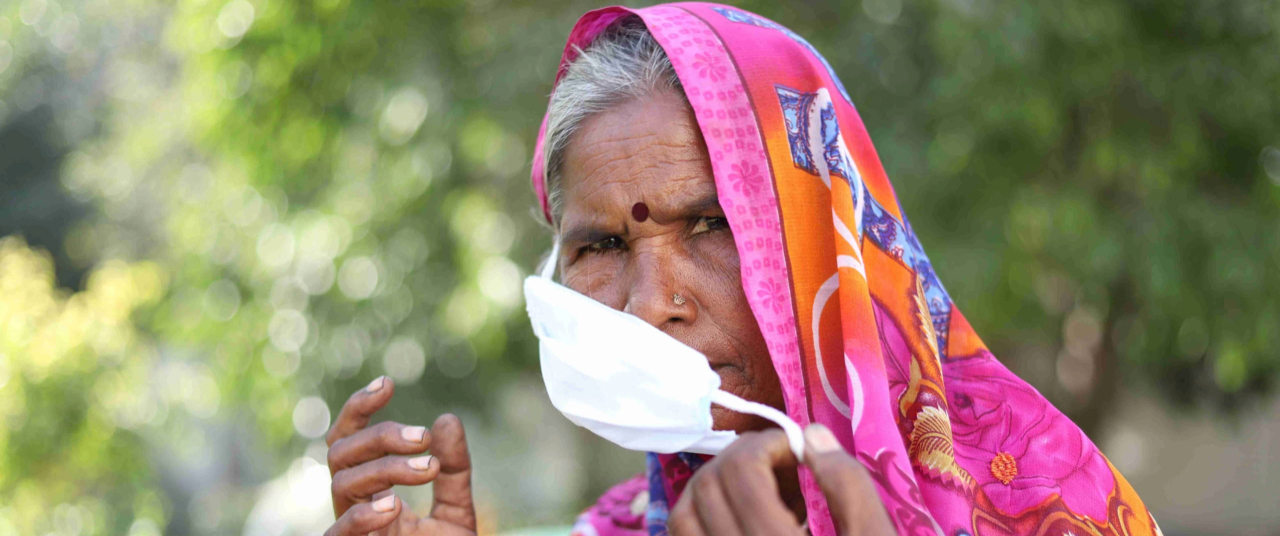
Madamma drives her cattle over the hills to graze them in the Kalkere Forest of Karnataka’s Bannerghatta, adjoining her family’s one-and-a-half-acre farm, as she has done for the last 42 years since she was 28. Her day begins at the crack of dawn, milking cows, cleaning the cowshed along with her husband, cooking the morning meal, and ends at sundown, after housing the cattle, milking the cows again, and preparing the evening meal.
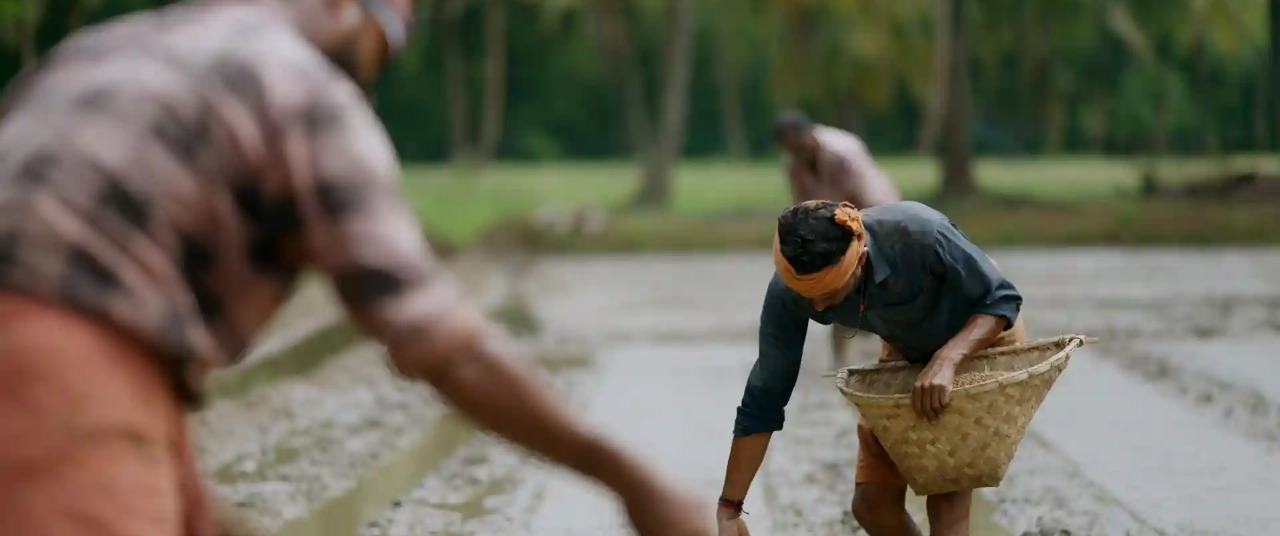
Tilling was the man’s job; everything else—applying compost, de-weeding, transplanting paddy, harvesting, threshing, and winnowing—were chiefly her tasks.
Herding is her passion and what she knows best. Growing up in Gummalapura, a village 40 km away from the Tamil Nadu border, 6-year-old Madamma was sent to the forest to herd the family’s buffaloes and cows until she turned 15, when she was married off. In her spare time, she slit bamboo for incense—a cottage industry that flourished in the area, contributing to the family income.
In Bannerghatta, her husband’s rain-fed field supported ragi intercropped with legumes, and marigold during the rainy months. A strip of wetland was taken on lease for paddy cultivation. Tilling was the man’s job; everything else—applying compost, de-weeding, transplanting paddy, harvesting, threshing, and winnowing—were chiefly her tasks.
.webp)
A commitment to the land
The produce barely sustained the family, and cash was scarce. Summer offered opportunities to earn. Madamma took on work like dredging soil at sites where wells were being dug for a sum of Rs. 8 per day, and signing up to be day labour at a nearby vegetable farm for Rs. 7 a day; the latter gig was possible only after her children had grown old enough to be on their own. After 13 years, with their meagre savings, the couple bought a few cows, a buffalo, and a bullock cart. Thus resumed her task of herding. The milk was sold and the herd grew. After a few more years, a cottage with a sheet roof was added to the original thatched hut. At present she has 15 cows.
A study by Oxfam suggests 80% of all economically active women in India are farmers, of whom 33% constitute the agricultural labour force and 48% are self-employed
At 74, Madamma still wakes up at 4.30 am, cleans the cattle shed, milks cows, and dispatches it to regular customers without fail, every single day: 25 litres in the morning, and 20 litres in the evening. Before the sons were married, the household chores and cooking were entirely her responsibility. Now, she has the support of one of her daughters-in-law and son, and occasionally her grandchildren too, to bathe the cows once a week.
After years of drudgery, abuse at the hands of her husband, and upheavals within the family, Madamma’s bones are giving way. Her legs ache constantly, yet she stays strong and committed to her home and land.
Also read: Friends of the soil: A farmer’s key allies hide backstage and underground
Three women, three generations
Rangamma Sr. decided to shift, lock, stock, and barrel, from her village in Tamil Nadu’s Dharmapuri district along with her daughter and brother, to whom the daughter was married, and set up home in Karnataka’s Kasaraguppe. Her expertise was wild edible greens. Even at 80 years of age, she foraged, walking a 2 km stretch from her village to the next, and at times to various tanks in the vicinity in search of tubers like Gotti Gedde or Lesser yam (Dioscorea esculenta). She would return with her basket overflowing with more than 30 varieties of greens, enough to make her trademark Berike soppina saaru, a spicy extract of wild greens and legumes, for her own household as well as seven neighbouring ones. Rajappa, our senior staff at Anemane and an expert forager himself, was inducted into the art by Rangamma, his grandmother, at a very young age.
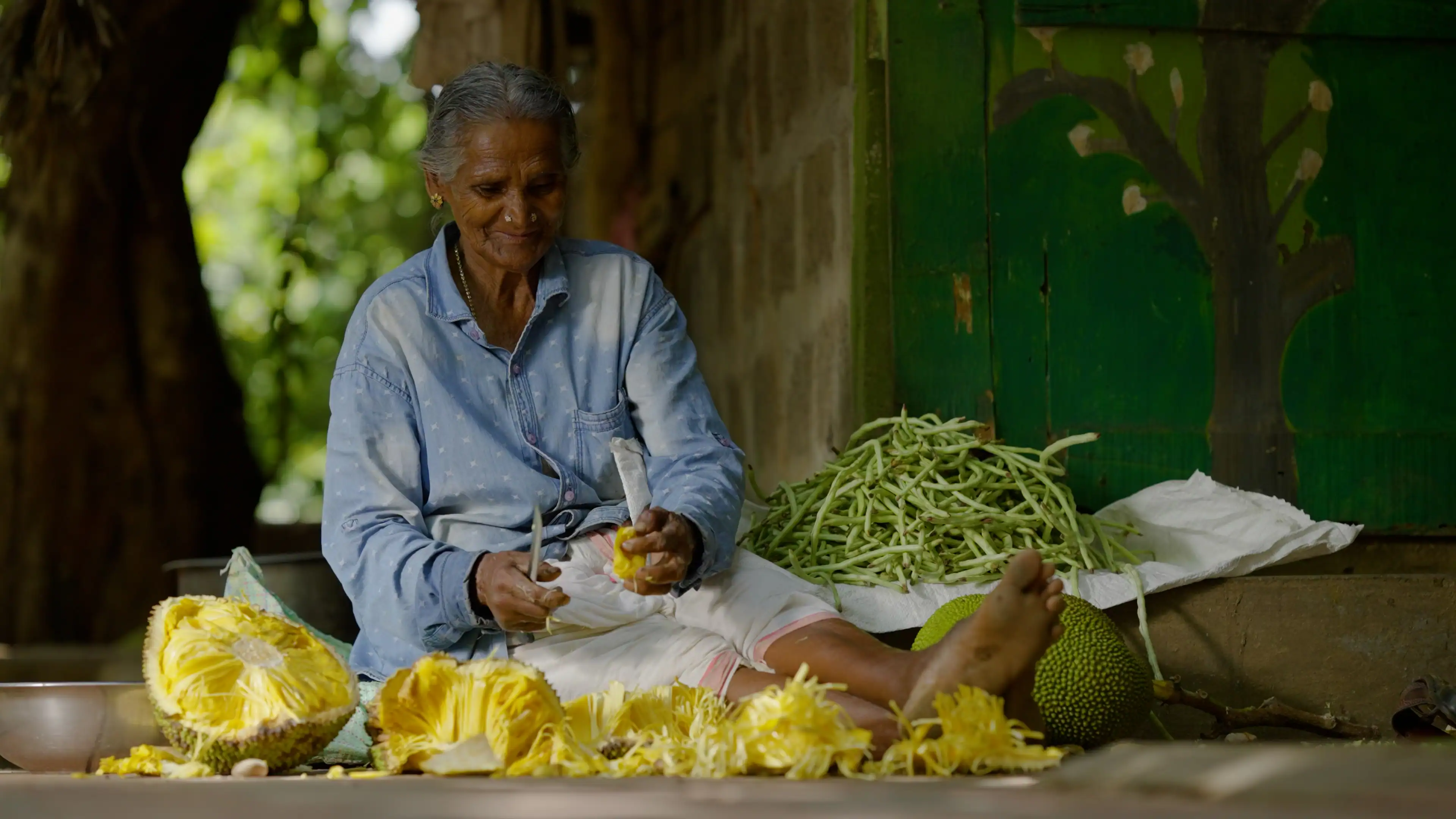
Her daughter, also known as Rangamma, was 36 when they moved. Her physical abilities and skills are legendary in the local community: the land was unkempt and overgrown with bamboo thickets which she cleared and terraced, bunding it with rubble, on par with men—her neighbours. The husband tilled the ragi field and left the rest to his wife, devoting himself to religious pursuits. His only requirement: a spotlessly clean dhoti and garments!
Rangamma Jr. had brought with her Sanna kaddi ragi and Dodda kaddi ragi, two local landraces from their village which were drought-resistant crops that matured in six months and thrived in dry land. That is what she cultivated along with same (little millet) and navane (fox millet), four kinds of legumes, hucchellu (Niger) and a handful of vegetables. The millets and legumes were intercropped for optimum yield.
Her legs ache constantly, yet she stays strong and committed to her home and land.
The women’s day would begin with the first cock’s crow at 3 am; grinding ragi on the chakki and cooking lunch by 6 am; and then onwards to the field. Ten cows had to be milked and calves tended to, besides the bullocks that were used for tilling. Cutting and fetching 10 headloads of grass from the valley below was a daily chore. The older son and three younger children, Rajappa and his sisters, shared these duties. While the older siblings grazed the cattle in the forest, Rajappa, caring for 50 chickens at home, was tasked with cooking for the evening—a skill that Rangamma insisted that boys should learn. Later she taught her grandson Ananda, too, but exempted his sister from household duties!
Her method of saving seeds was to rub chili powder and castor oil on them, place them in paddy straw baskets, and bury them in the rick, placing them strategically at a level that would be accessible when it was time to sow. Sticks were stuck as markers for the seed baskets. They were well preserved with no pest infestation.
Rangamma Jr. continued to work well into her 80s, initially as a daily wage earner after the sons sold the land, and in her own home garden when they shifted to Bannerghatta, dying peacefully at 95.
Parvathamma was an able assistant to her aunt and mother-in-law to be. As a girl of 10 she would draw water from the well, help with the cattle and fetch headloads of ragi bundles and grass, finally inducted into the more challenging and multifarious tasks of raising crops after her marriage to Rajappa at 15.
Also read: Raised by nature: Bonds with farms, forests help children grow holistically
Women who hold up the Earth
Pregnancy was hardly a time of rest and respite in those days. When she was nine months pregnant, Parvathamma remain engaged the whole day, applying headloads of compost to the fields. Then she came back home to deliver her child with the neighbour’s assistance.
The self-possession and insights with which these women managed the health and well-being of family and community with available resources is a lesson unto itself.
The self-possession and insights with which these women managed the health and well-being of family and community with available resources is a lesson unto itself. It speaks of a life of harmony and integration. There are many learnings embedded in their lives: the grit and determination of Madamma under very difficult and trying circumstances, to protect her land and dignity; the knowledge of local ecology and agrobiodiversity of Rangamma Sr.; the immense power and energy Rangamma Jr. brought to create what we may now recognise as an integrated, zero-waste, circular farming system while conserving heritage seeds, mentoring at least two generations and breaking gender stereotypes through personal example.
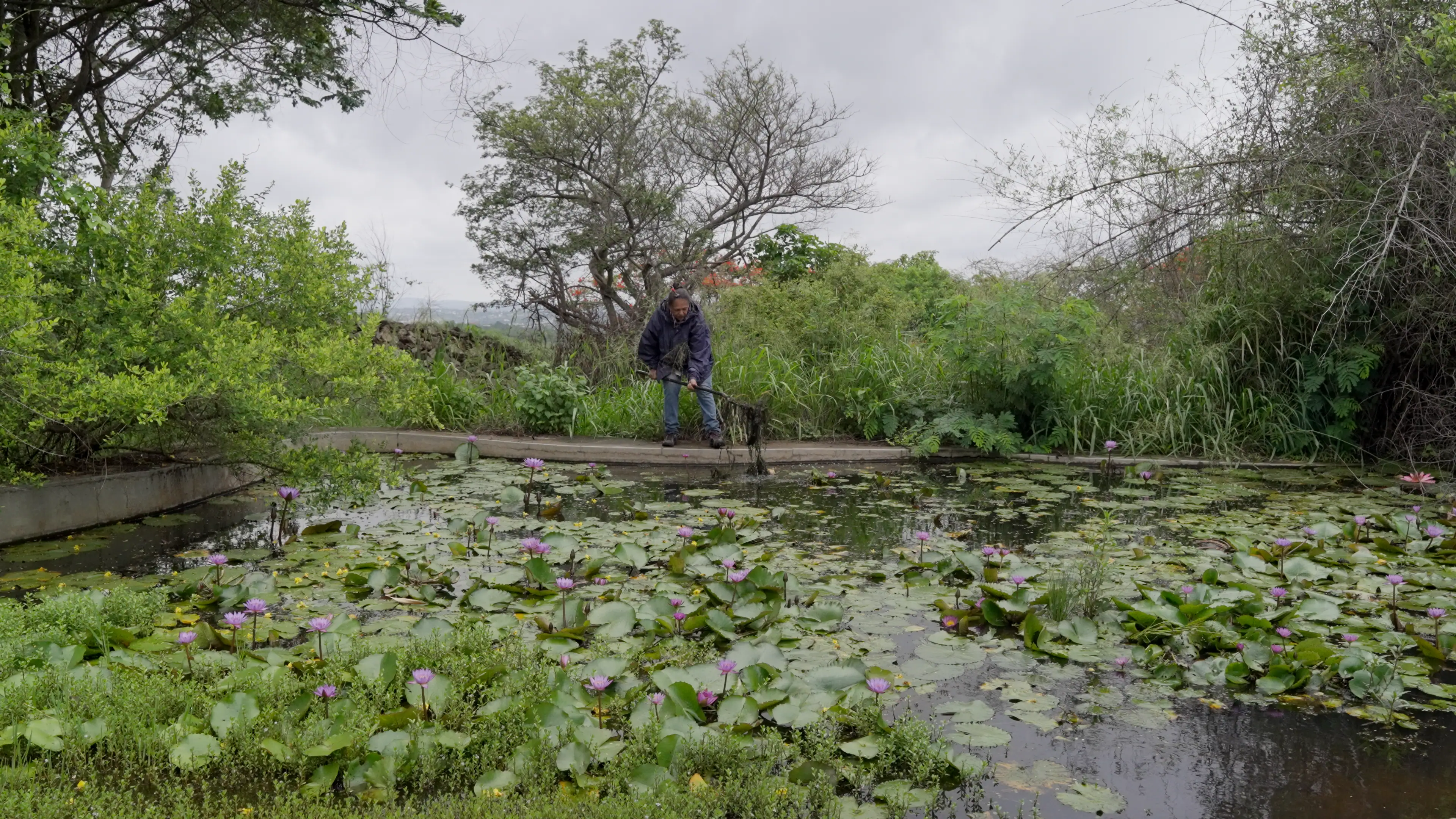
Their legacy is inspiring for me, as an urban woman who embraced regenerative farming. The role of women farmers is diverse and multi-dimensional—at the bedrock of sustainable agriculture and the health of the planet.
Also read: In forest bathing, an invitation to heal by being one with nature
Artwork by Khyati K
{{quiz}}
.jpg)

.avif)
Explore other topics
References

What percent of economically active women are farmers?