Lessons from farmers’ diets: Eat local, grow seasonal, cook simply
Before the arrival of rice and wheat as dietary staples, farmers remained well-fed by incorporating millets and pulses into their meals


Editor’s note: To know Rama Ranee is to learn about the power of regenerative practices. The yoga therapist, author and biodynamic farmer spent three decades restoring land in Karnataka, envisioning it as a forest farm in harmony with nature. In ‘The Anemane Dispatch’, a monthly column, she shares tales from the fields, reflections on the realities of farming in an unusual terrain, and stories about local ecology gathered through observation, bird watching—and being.
Until half a century ago, this could be said with some certainty: farmers in India grew what they ate. Their choice of crops was determined by their dietary habits, which were in turn shaped by the flora supported by the local climate and other conditions, such as soil, water and access to seeds. In Karnataka, in and around our village Kasaraguppe, commonly grown produce included hardy vegetables and drought-resistant varieties of millets, pulses, groundnut and other oilseeds. Consider, for example, the typical breakfast of ragi rotti served with a nutty chutney made of Niger seeds—a simple meal that kept farmers full in the early morning as they worked in the fields.
They indicated how communities optimised the fruits of the land, and, as some of the elders in Kasaraguppe admit, led a life of fulfillment.
Here, traditional integrated farming systems took into account crops, livestock, poultry and agroforestry. These systems built resilience against changes in weather, like droughts, by reducing and recycling waste, sustaining soil fertility, and managing water. They were sustainable and circular, offering farmers a level of self-sufficiency. Indigenous diets and cuisines in the region reflected this agricultural skill and culinary acumen. They indicated how communities optimised the fruits of the land, and, as some of the elders in Kasaraguppe admit, led a life of fulfillment.
Then came the Green Revolution, which transformed agriculture with its four-pronged strategy of chemical fertilisers, pesticides and herbicides, hybridised, high-yielding variety (HYV) seeds, and irrigation. By the 1970s, the production of rice and wheat in India increased manifold within a short span of time, achieving food security to feed a burgeoning population, and reducing the risk of famine and hunger. The greater availability of staples like rice and wheat impacted indigenous dietary habits.
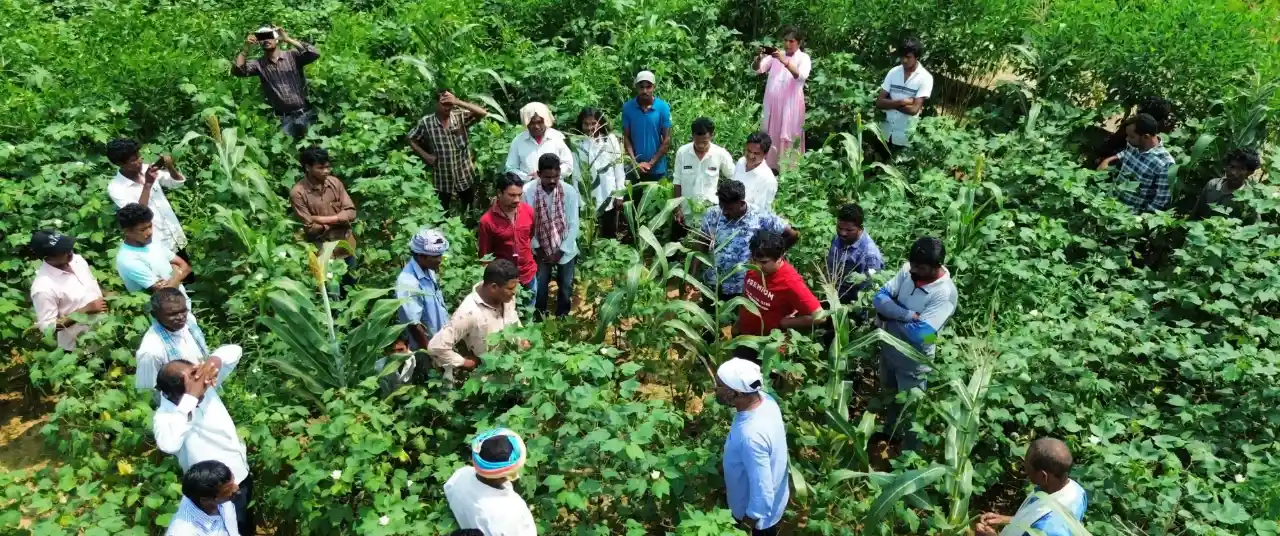
Conversations with farmers in Kasaraguppe and the Bannerghatta area reveal how the transition from a varied diet to a more homogenous one—consistent with the conversion to chemical input-based agriculture—occurred. While access to the Public Distribution System (PDS) ensured a steady supply of food for families, it further sped up the shift to a more rice- and wheat-based diet, rich in carbohydrates. The integrated, multi-cropping systems and millet-based diets, suited to the region, have declined considerably. Some direct consequences include declining agrobiodiversity and a rise in health issues such as cardiometabolic diseases due to nutritional imbalance.

The lay of the land
A considerable proportion of Karnataka’s land area, nearly 77%, is arid or semi-arid. The Eastern Dry Zone of the state, including the Kolar and Bengaluru districts, and the North Western Zone of Tamil Nadu, including the Krishnagiri and Dharmapuri districts adjoining south Bengaluru, are classified as drylands. These areas are characterised by red soil, red loam or lateritic soil in pockets, and high variability in rainfall. The Eastern dry zone has an annual average of 680 to 890 mm of rain, and the North Western Zone of Tamil Nadu an annual average of 811 mm.
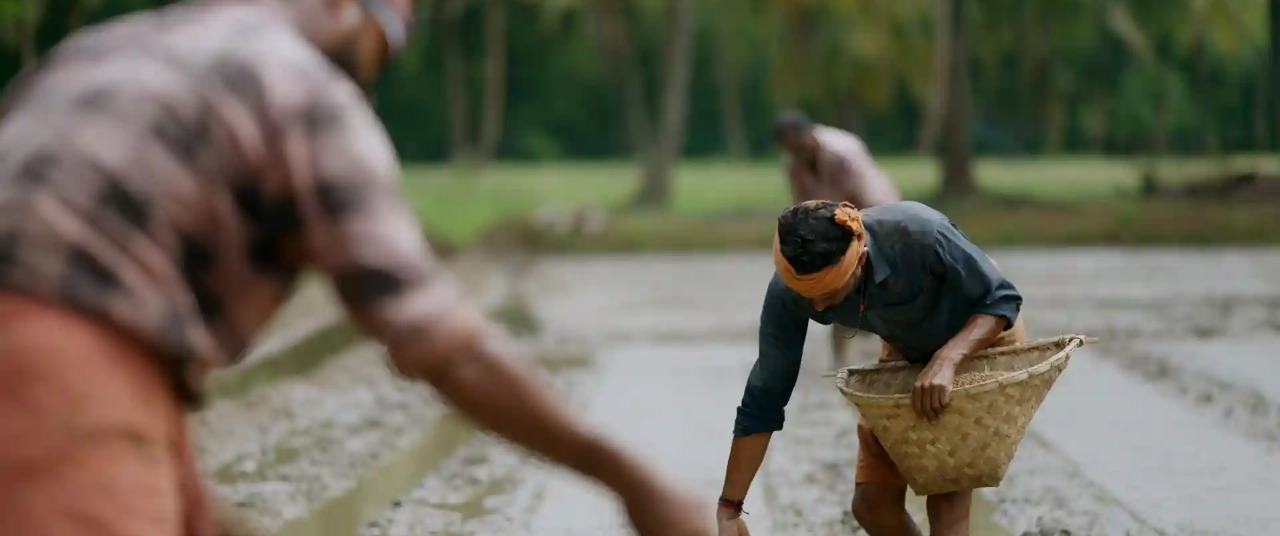
In these drought-prone drylands, farms are typically small and marginal, less than two acres in size, rain-fed, without any perennial water sources like rivers. Largely, they were managed as subsistence agriculture. After providing for the family, the excess of crops like ragi, sorghum, and maize were sold locally for cash to purchase other food items and meet living expenses.
In these circumstances, nothing is wasted—not even the water in which pulses such as Bengal gram are cooked.
Terracotta storage bins and stone-and-mortar granaries were a part of the farm architecture, built into living spaces. Some were large enough to hold four years’ worth of grain, ensuring kitchen fires remained lit through drought years or other contingencies.
In these circumstances, nothing is wasted—not even the water in which pulses such as Bengal gram are cooked, which is the base for ‘Uppu-saaru’. This thin soup-like dish, made of pulse stock, is spiced with black pepper, garlic and chili.
Also read: Friends of the soil: A farmer’s key allies hide backstage and underground
Looking up to the stars for direction
The cultivation of sweet pumpkins and bottle gourds directly on compost heaps was once a common sight. Ridge gourds, on the other hand, were grown on the borders of fields along the hedges, and snake and bitter gourds in the gardens attached to homes. Wild edibles like tubers, berries, greens, and mushrooms added variety and nutritional value to regular fare.
There was one main cropping cycle in a year: the Southwest monsoon season, called Mungaru or Mungari. The lunar calendar was a useful tool, indicating potential rainy days which coincided with specific stellar constellations. Each of these was conducive for certain crops. Preparation of the land and ploughing began in the middle or end of April, after the Ashvini showers. Sowing or transplanting ended in September. Between December and January, the grains were harvested, threshed, winnowed, and stored.
With Bharani in late April, the planting season began with Yellu (sesame), intercropped with a larger variety of Doddatagari (pigeon pea), also called Totada tagari. In late May, after the Rohini showers, Muskina Jola (maize) and Billi Jola (sorghum) were sown. Paddy sowing required regular showers, starting with the onset of monsoon in June, in the constellation of Mrigashira. A hardy dryland variety Doddabairnellu was the natural choice. This was the ideal time for sowing groundnut and raising seedlings of brinjals and chili, too.
The planting season in and around Kasaraguppe peaked between June and early August, showcasing the diversity of produce once cultivated. Castor, an important oilseed, Avare (hyacinth bean) and ragi were sown in mid-August during the Magha rains. By late August, towards the end of the south-west monsoon in Purva Phalguni, Hurli (legumes), Hesaru (green gram), and Uddu (black gram) were sown.
The coming-together of millets and pulses
Ragi mudde, or steam-cooked ragi flour shaped into balls, with saaru, a spiced soup-like dish made with lentils—usually pigeon pea or green gram, with or without vegetables—or uppu-saaru constituted the mid-day meal or lunch.
Other lunch options included bas-saaru—an extract of greens and lentils cooked with spices—rice and palya, a dry vegetable side dish. Recently, I sampled a traditional palya courtesy of one of the villagers. It was made of raw jackfruit, whole hyacinth bean, Bengal gram and horse gram, cooked together with a tempering of mustard seeds, onion, chili, a little garlic, and curry leaves—dense, flavourful, and surprisingly easy on the gut.
Usually, one of the women of the family carried the lunch meal to the fields. At night, ragi mudde were served again with saaru. But finger millet wasn’t the only staple; others like foxtail millet or little millet were major components of the diet, served like rice.

Alongside millets, pulses were the essentials of local cuisine, supplemented by dairy, meat, vegetables and greens—cultivated and wild, native, and therefore adapted to the region, its soil and climate. The cuisine was a combination of complex carbohydrates (gluten-free choices, with low-glycemic index), high in fibre, rich in minerals like iron and magnesium, vitamins like B12, and protein, micro-nutrients, as well as antioxidants.
The cuisine was a combination of complex carbohydrates (gluten-free choices, with low-glycemic index), high in fibre, rich in minerals like iron and magnesium, vitamins like B12, and protein.
Also read: In forest bathing, an invitation to heal by being one with nature
Healthy snacking, rooted in tradition
Usuli or steamed whole pulses, either horse gram, black-eyed peas or green gram, was a protein-rich snack washed down with buttermilk. Black gram was one of the main ingredients in Dose, and the only one in Vade, other than salt and chilies. Vade is a popular snack to this day, but what made the old variant so distinct was the oil used for frying: Niger oil or Hucchellenne, which served most of their needs. All edible oils were extracted in a cold press called ghana, or wooden press—a slow-turning pestle operated by oxen. This ensured that the oil retained most of the seed’s nutritional elements.
All edible oils were extracted in a cold press called ghana, or wooden press—a slow-turning pestle operated by oxen.
Unde or laddoos for children were prepared from either foxtail millet, little millet, or sesame, dry roasted till the grains popped, with a sprinkling of roasted groundnuts and fried gram, sweetened with jaggery syrup.
Livestock, chiefly cows, sheep, and goats, were integrated into the system. Most households in our village reared cows of the indigenous Hallikar breed, whose milk was valued for its flavour and nutritional benefits. Today we know that it contains the A2 beta-casein protein, is rich in omega-3 fatty acids and vitamins A, D, E, K, and is excellent for gut health and immunity.
Meat, chiefly chicken, was consumed once a week or on special occasions, especially when guests were entertained. Though there were coops to protect them from mongoose and other predators, chicken ranged freely in the home yard during the day, scouring the ground for insects and seeds—an effective pest control measure that could keep termites and even smaller snakes in check.
Staples, now out of bounds
Indigenous food sources are said to be better suited to meet the nutritional needs of local populations due to higher nutrient density, higher-quality protein, and nutrients which are more easily absorbable by the body, like minerals. The antioxidant, anti-inflammatory properties of wild greens and tubers were immensely valuable as complementary sources of nutrition. Manual processing, such as the case of Niger oil using wooden presses, and simple cooking methods ensured the nutrients in produce were preserved. All foods grown by the farmer were, by default, organic and natural without the risk of chemical contamination. Whatever was healthy for the farmer and the farm and its animals, was healthy for the planet too!
The small farmer for whom minor millets (kodo and little millet) were staples, now finds them out of reach.
Today, organic food is available at a premium on store shelves. Millets are processed and packaged as high-value health food items. Their consumption is mainly in urban areas, driven by health concerns. The small farmer for whom minor millets (kodo and little millet) were staples, now finds them out of reach. He can neither afford to grow them without incurring losses, nor afford to buy them regularly, limiting their use to festivals and special occasions. Tragically, their cultivation and consumption by farming communities has declined.
In Karnataka, 80% of total farm holdings belong to small and marginal farmers. This group is adversely affected by the shift towards a market-driven economy, making survival a battle. The growth of cities, often unregulated, has increased the pressure on agriculture in the rural outskirts. The demand on land for non-agricultural purposes; escalation in input costs and labour; the perception that farming is an unattractive profession among younger, especially educated members of families; the aspiration for alternate livelihoods without access to appropriate skillsets and training; the fragmentation of communities and loss of their knowledge bases is making traditional subsistence farming unviable. The promotion of monocropping systems and mechanised, resource-intensive agriculture is further displacing small farmers.
Concerns surrounding subsistence farming, therefore, must be addressed because it is deeply connected to the social fabric and cultural life of communities. It has been the substratum upon which agriculture has sustained. The integrated system of farming which was the backbone of sustainable agriculture and stable, healthy communities, must be protected, or re-invented, and given a new lease of life. In these times of climate change and declining agrobiodiversity, it might provide viable solutions for food security.
Also read: What the past, present and future of agriculture owes to women
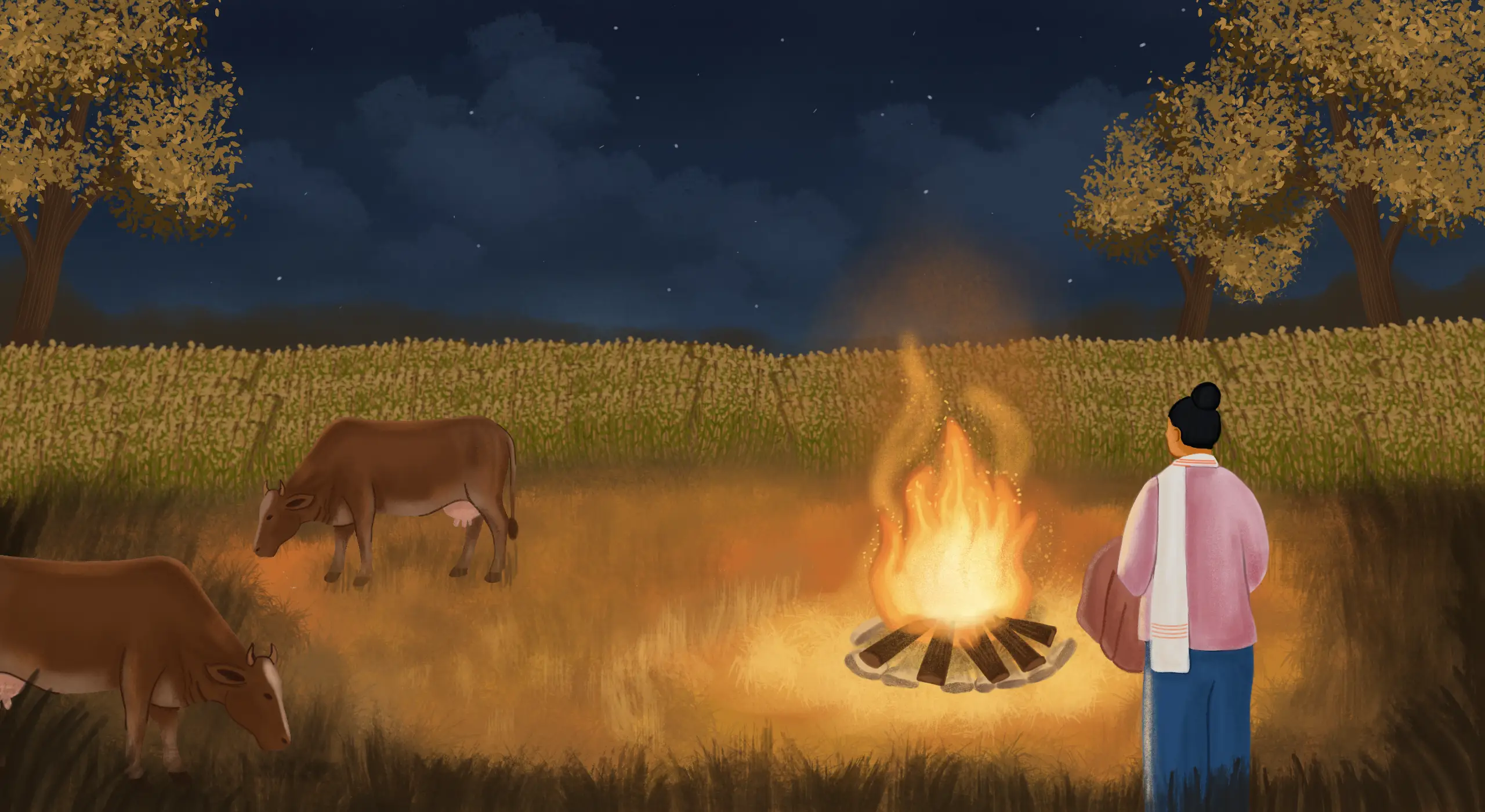
Cover Art by Khyati K
{{quiz}}
.jpg)

.avif)
Explore other topics
References