
From traditional medicine to global markets, a storm in the humble butterfly pea teacup
Redefined through the lens of yield and money, the plant becomes a functional ingredient whose value is measured by the quality and quantity of its parts and extracts


Editor's Note: The planet we inherited as children is not the planet we will someday bid goodbye to. The orchestral call of cicadas in the evenings, the coinciding arrival of the monsoon with the start of the school year, and the predictability of natural cycles—things we thought to be unchanging are now at risk. An altered climate, declining biodiversity and warming oceans aren’t distant realities presented in news headlines; they affect us all in seen and unseen ways. In ‘Converging Currents’, marine conservationist and science communicator Phalguni Ranjan explores how the fine threads connecting people and nature are transforming with a changing planet.
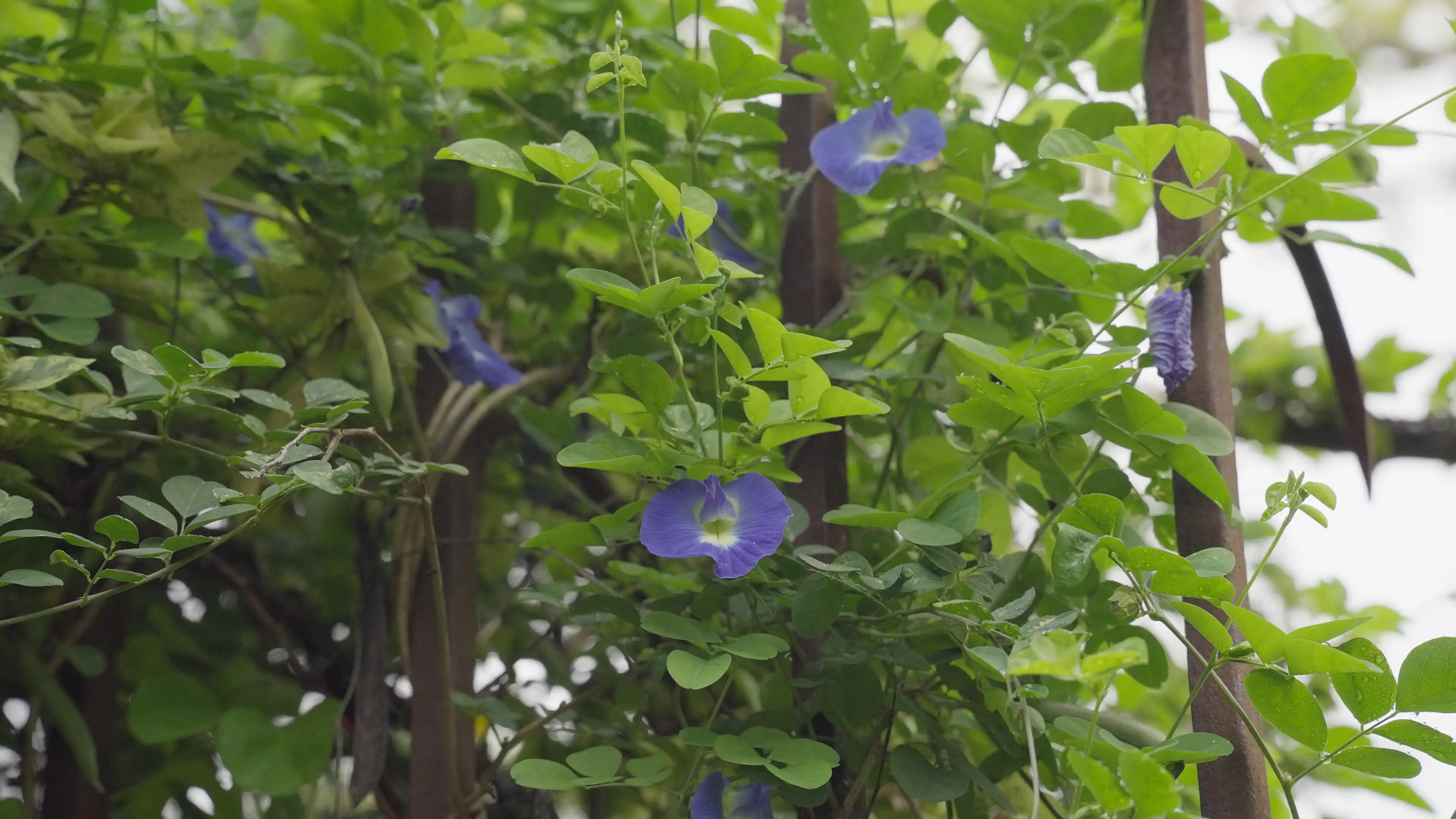
In many parts of India, the butterfly pea plant (or aparajita) has long been an unassuming presence. It climbs along fences, edges along kitchen gardens, and blooms quietly; mostly blue, but sometimes white. For generations, it was not cultivated so much as it was lived with: plucked occasionally for rituals, brewed into home remedies, or simply left to weave into the local ecology.
Today, that same flower grows in an altered landscape. The butterfly pea plant has been brought under a spotlight—one shaped by global demand, wellness markets, and supply chains.
A flower finds a market
Believed to be native to parts of Africa and equatorial South and Southeast Asia, the butterfly pea is now widespread, notably cultivated in South America and even Australia.
Also called ‘blue pea’, the flower has been used in traditional medicine across cultures for centuries, where it has been associated with several health benefits. Today, the same benefits have made it attractive to the rapidly growing herbal tea market. Once largely confined to traditional uses, it is now being positioned as a caffeine-free, functional beverage, marketed globally.
Valued at $331 million in 2025, it is projected to touch $986 million by 2034, with India, Thailand, and Indonesia leading in its growth.
The vivid blue pigment of the Clitoria ternatea comes from bioactive chemical compounds (phytochemicals) called anthocyanins: pigments that appear blue, red, or purple depending on the pH, and have been found to have pharmacological properties. At a time when global food systems are under pressure to move away from synthetic towards natural, such plant-derived colours are gaining commercial appeal in the preparation of a wide variety of foods and confectionary. There’s also the added layer of visual appeal to the butterfly petals, when brewed into a tea: the vivid blue turns purple when a few drops of lemon are added to it, making it attractive in desserts and cocktails.
The global demand for butterfly pea, as a tea ingredient and source of natural dye for food, is increasing. Valued at $331 million in 2025, it is projected to touch $986 million by 2034, with India, Thailand, and Indonesia leading in its growth.
The herbal tea boom
Butterfly pea tea’s multifaceted appeal has transformed a simple plant into an ‘attractive’ commodity. But this story isn’t new: we’re all familiar with calming chamomile, invigorating hibiscus, digestive peppermint, and immunity-boosting turmeric. The surge in herbal teas is part of a broader global shift in consumer behaviour. Across markets, there is increasing demand for products perceived as natural, with health benefits that justify their consumption. Their fresh aroma and flavour profiles and tags like ‘caffeine-free’, ‘antioxidant-rich’, and ‘metabolism-boosting’–all sell very well to a health-conscious customer base that is seeking alternatives to caffeine- and sugar-rich beverages. What is also playing a part, albeit in smaller ways, is the social-media-worthy vibrance of this tea.
Also read: In an age of food abundance, why does ‘hidden hunger’ hold India back?
A multi-purpose plant
Butterfly pea extracts and parts of the plant have been used in traditional medicine systems like Ayurveda for their antidiabetic, antimicrobial, antipyretic, analgesic, anti-inflammatory, antidepressant, and neurological benefits. A paste of the flowers is used to treat skin ailments in Thai and Indonesian traditional medicine. In Cuba, a decoction of the roots is used to manage menstrual health and irregularities.
Their fresh aroma and flavour profiles and tags like ‘caffeine-free’, ‘antioxidant-rich’, and ‘metabolism-boosting’–all sell very well to a health-conscious customer base that is seeking alternatives to caffeine
Studies have found that the anthocyanins in butterfly pea extract can help improve liver health, manage blood glucose levels, enhance insulin levels, reduce inflammation, improve cardiac health, and help manage cholesterol and weight. Data from other studies suggest that the flower’s extract may support overall metabolism, fight oxidative stress, and help maintain a healthy gut. However, it is worth noting that most studies were conducted on mice, with relatively few human observations.
The plant, due to its colour-changing anthocyanins, is commonly used as a source of natural and safer colouring for cosmetics and a variety of foods globally, from beverages, desserts, candies, to rice and dumplings. The flowers are also eaten or used in beverages in some regions.
The plant also finds use as a natural insecticide and fodder. Because of its nitrogen-fixing abilities in agriculture, it is used as a cover crop and green manure. On the other hand, the pH-sensitive pigments are used in chemical reactions to indicate endpoints.

The dose makes the poison
Any substance can be harmful in high doses, while even toxins can be therapeutic in tiny amounts.
As with most foods, the effects of a plant’s phytocompounds depend on the concentration and dosage. For butterfly pea, specifically, the same beneficial compounds can have adverse effects at high concentrations, and experiments link heavy consumption to impaired liver and kidney function. This is true for other herbal teas as well where overdoses can cause complications.
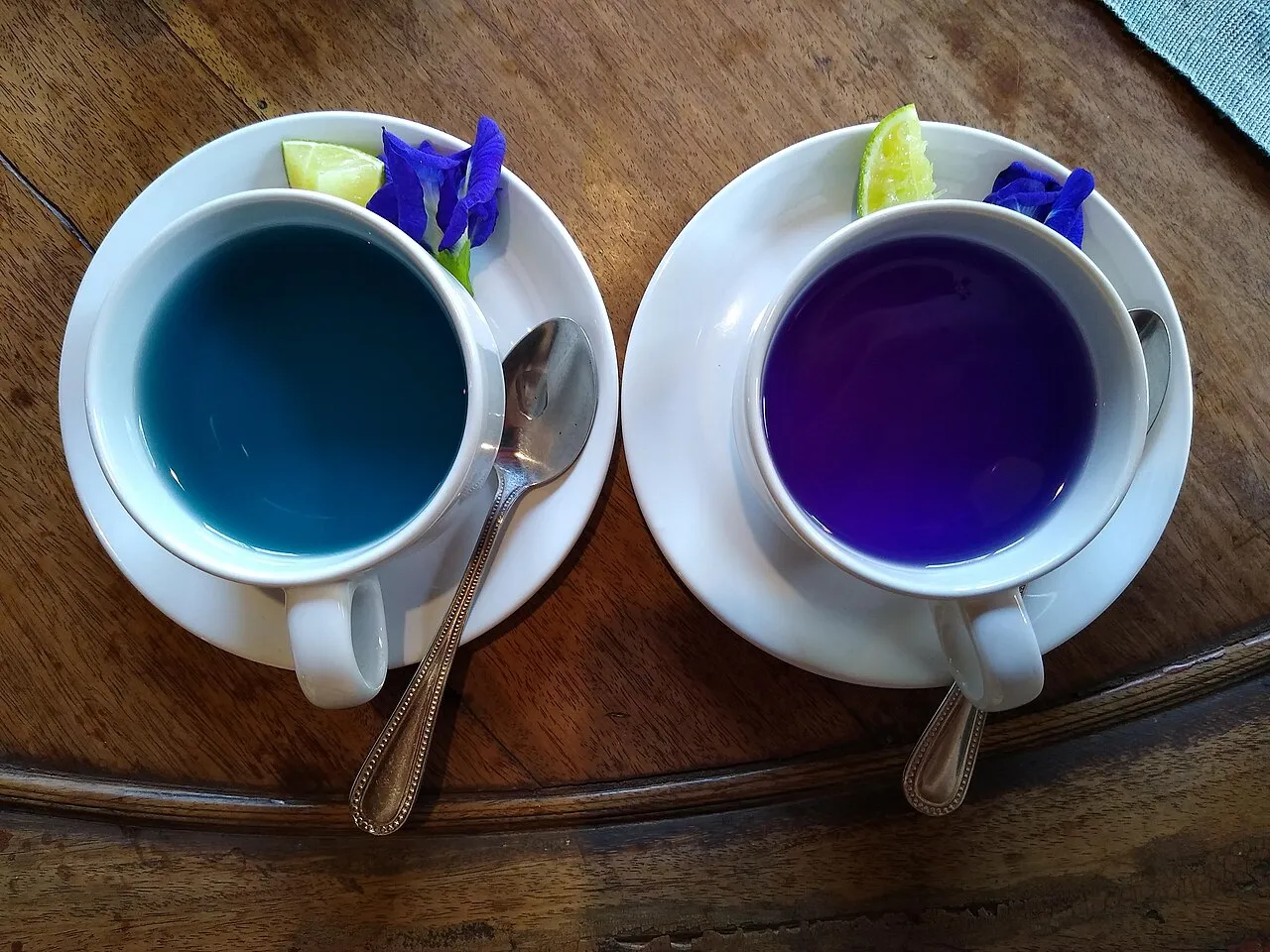
Traditional therapy used to determine consumption in guideline-mandated, titrated and controlled concentrations. Now, flavour, colour, aroma, and trends drive unmeasured recreational consumption. Herbal teas, including blue pea tea, have gone from being ‘medicines’ to ‘drinks’. Interestingly, a significant boost in home-based herbal remedies including teas and an increased reliance on traditional medicine came after the COVID-19 pandemic.
It is worth remembering that “herbal” does not mean “safe”. Some herbal teas have been found to carry heavy metal contaminants and pathogens, and many can cause gastrointestinal, hepatic, hematologic, and nervous system complications, with a very small number of fatalities also reported.
Unfortunately, literature on these toxic aspects is severely limited, as is the information or disclaimers provided by brands marketing these teas.
Also read: What's lurking in our food?
From commons to commodity
The shift from local use to global demand changes more than just markets and income; it changes relationships with the plant itself. Traditionally, the butterfly pea functioned as a multi-purpose species. But with growing demand, it is now being redefined through the lens of yield and money. In this sense, the plant becomes a functional ingredient, and its value is measured by the quality of its powders, parts, and extracts. Reports suggest the Indian butterfly pea market has been developing since 2018, with the establishment of domestic companies.
Studies find that cultivating and harvesting medicinal plants, in general, can improve rural earnings. Indeed, increased income through harvesting and selling dried butterfly pea flowers has been empowering for women in parts of India. Even farmers who failed to turn profits with traditional crops have shifted to profitably growing these plants.
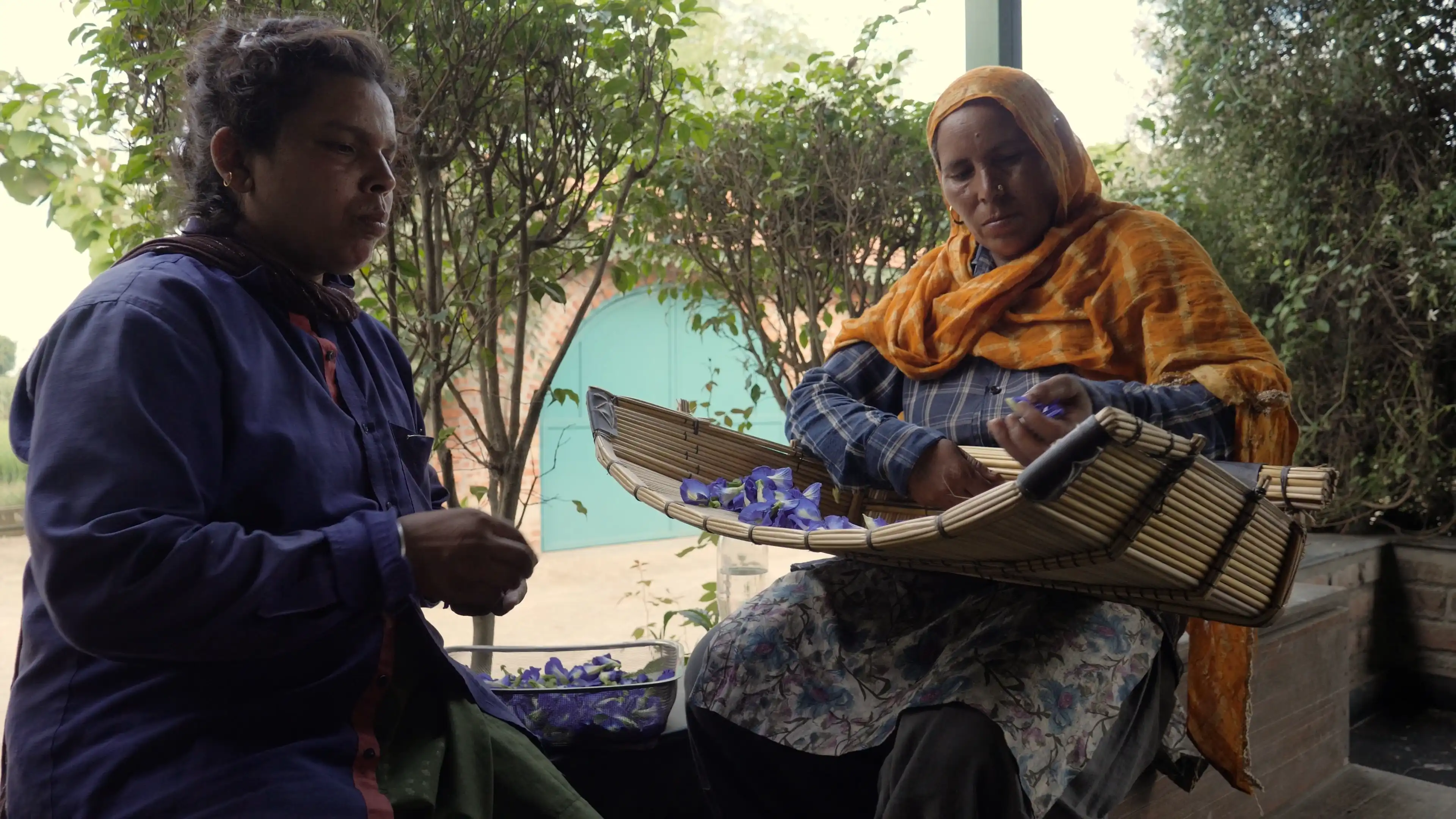
However, one general challenge persists: practices that once regulated the use of many medicinal plants, to allow regeneration and replenishment, are replaced by incentives to extract more, and faster. The concept of sustainability here is quite hollow.
As demand grows, harvesting intensifies, often leading to over-extraction, declining resource bases, and pressure on ecosystems that were once sustainably used. Add to this climate change-induced pressures like extreme weather events and high temperatures, and the high possibility of monocultures taking over, and we have a standard framework of the problems agriculture faces today.
Markets for such products are unstable, often fad-driven, determined by visual novelty and perceived health benefits.
At the same time, the benefits of trade rarely flow evenly. Markets for such products are unstable, often fad-driven, determined by visual novelty and perceived health benefits. Small producers lack capital, market access, or bargaining power, and are eventually outcompeted by bigger actors, while traders capture profits and determine sourcing across regions. Many of these medicinal plants, often originally non-timber forest products (NTFP) and once a shared safety net, can become overharvested, privatised in cultivation, and thus, less accessible to the local communities that have coexisted with them for centuries.
Also read: Climate change in my cup: Why India’s cocoa and coffee production is at risk
Ownership and rights
Across the world, plants (and practices) are constantly being rediscovered, repackaged, and redistributed.
Some may call it misappropriation, biopiracy, and exploitation.
Take the example of rooibos (Aspalathus linearis), a shrub native to South Africa, long used indigenously to make an herbal infusion. As global demand grew, rooibos faced intellectual property disputes, including attempts by U.S.-based Burke International, and then by France, to trademark its name and control its commercial use. Eventually, pushback defeated these attempts, with rooibos receiving a GI tag in 2014.
Controversial attempts by U.S.-based entities to patent or claim intellectual property rights over basmati rice varieties, turmeric, and neem remain significant examples of the misappropriation of traditional knowledge.
It is worth remembering that “herbal” does not mean “safe”.
After successful pushback, India also created the Traditional Knowledge Digital Library (TKDL) to document existing practices and prevent future inappropriate patenting. Many attempts were blocked or revoked, but the attempts continue. The TKDL lists 375 such attempts from across the world since 2009 which have been amended or rejected, and most of these are from the UK and US.
Who owns biodiversity, and who gets to decide that? And why?
The butterfly pea is currently still in transition, and it may or may not face a similar fate. At the end of the day, its story is about more than just the alchemical magic of a medicinal tea changing from blue to purple.
It is about exploitative systems, and the ecological and ethical impacts thereof.
It is about how a living plant, once part of a landscape, becomes part of a commodity market.
And whether, in that process, it can remain rooted in its ecosystem, local knowledge, and remain accessible to the very people it came from, even as others attempt to claim and profit off its identity.
Cover art by Pratik Bhide
{{quiz}}
.jpg)

.avif)
Explore other topics
References