Tomato truths: What this novice farmer learnt and unlearnt about the fruit
To grow the tomato organically, using heirloom seeds, is to embrace the imperfections and inconveniences wiped out by genetic modification and hybridisation


Editor’s note: Urban farmer Simran Moorjani is the founder of Simbiosis, a regenerative farm on the outskirts of Mumbai, where she grows tomatoes and salad leaves while maintaining a symbiotic relationship with the land. In this column, she reflects on the realities of farming—sometimes with humour, sometimes with candour, always with curiosity.
January is, without a doubt, my most favourite month of the year. Not because of the fantastic-yet-fleeting weather in Mumbai, not because it’s my birthday month, not even because we finally get some respite from the indulgent festive months that come before it. It’s because tomatoes begin to ripen almost as soon as the new year is brought in. As the month slowly progresses, these lush red fruits are ripe for the taking, and I—having waited for nine months—can finally savour them again.
My favourite thing to make with this fresh produce is tomato toast, whose beauty lies in its simplicity. A good slice of sourdough, buttered end to end, toasted on a pan to a golden crisp, on top of which sits a thinly sliced and stacked tomato—a Marinda one, if I have it. A drizzle of chili oil, maybe some shaved cheese, some basil sometimes. One bite, and I am transported to a place far better than wherever I was before.
This hasn’t always been my favourite month, or my favourite breakfast. Tomatoes haven’t always been my favourite fruit. Life hasn’t always revolved around its seasonal rhythms. But now it does, and I’m so much happier because of it.
Farming in ‘simbiosis’ with the land
Much of this pleasure is derived from the fact that the tomatoes come from my own farm, a three-year-old, half-an-acre undertaking on the outskirts of the Lonavala hill station near Mumbai. It’s called ‘The Simbiosis Farm’ because it’s my attempt to have a symbiotic, mutually beneficial relationship with this parcel of land through the work I do, the food we grow here, and the life I hope to one day live. (The retrospectively embarrassing spelling is a result of naming the farm at 24.)
Our main crop, as you may have guessed by now, are tomatoes. The intent behind their cultivation is to produce them the way Nature intended them to be—sweet, juicy, tart and umami all at once. In the three years since we began, farmhand Baban and I have grown over 25 varieties, some similar to each other, some delightfully unique. They’ve been nurtured from seeds saved from tomatoes I tried in the past, brought back during my travels, purchased from other growers, or bullied friends into smuggling back from their holidays. Some are red and round, as tomatoes often are, but some are tiny, or long, or yellow, or pink, or even indigo! None taste like the fare available in most public markets.
The more I grow, the more I want to grow, and the deeper my love for these fruits grows as well.
{{marquee}}
Trial, error, instant gratification
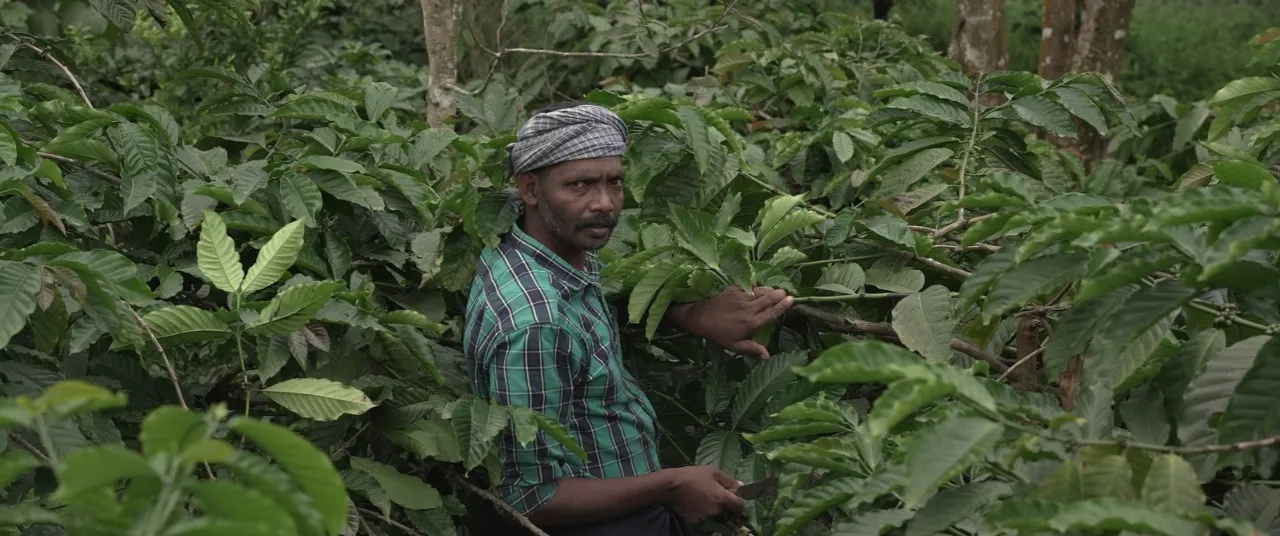
I first tried my hand at growing tomatoes in April 2020, but did not succeed owing to issues in germination. In January 2021, as I fell down the slippery slope that is a passion for growing one’s own food, I went to live and work at the two decade-old Vrindavan Farm in nearby Palghar. There I saw still-unripe tomatoes grow between rows of marigolds and other crops. I finally tasted them when I tested positive for COVID-19 in the summer of the same year, when I was holed up in my room.
The chances of you successfully harvesting some fruit with even a little attention paid to a plant are fairly high.
The tomatoes, a few different kinds, arrived packed inside a hollow bamboo stem. Grateful that I still had my sense of taste, I popped tomato after tomato in my mouth, my mind blown and reality shaken, scrambling to save the seeds because I knew that I just had to grow them myself. It started out small, like most things do: in the winter, with a couple of pots on the rooftop of my apartment building in Mumbai, seeds from a glass jar labelled ‘VF Tomatoes 2021’, and assistance from plenty of YouTube videos.

Tomatoes are not the toughest thing in the world to grow. The chances of you successfully harvesting some fruit with even a little attention paid to a plant are fairly high. I, for one, am an instant-gratification girl, and a successful first season followed by another made me think “Hey, how hard can it be?!”
A fruit taken for granted
I could probably tell you about my farming philosophy, what we add to our soil, how we are a regenerative farm, and how it’s all rainbows and sunshine (not)—but let’s save that for another column. What I do want to talk about is the tomato. I like to think of myself as its unpaid yet enthusiastic ambassador and want to try and fix its reputation. I also love when people refer to me as the ‘Tomato Girl’; I don’t think there’s a better compliment.
It’s a staple in all our homes, a universally loved and cherished fruit—though we tend to give it the treatment of a vegetable in most curries across the country. When was the last time you enjoyed it raw? Sure, it’s part of salad platters at home and at cafes, and we wouldn’t know most fast food burgers without a signature limp slice. The mainstream market tomato is adept at carrying the flavour of other ingredients and spices; on its own, is it really bringing anything to the table?
.webp)
What has stayed with me about organically, naturally grown tomatoes is their generosity of flavour. Had I been eating the wrong kind for all these years? Why were these variants not more popular? And why did these superior tomatoes have to be sourced from farms outside city limits?
The mainstream market tomato is adept at carrying the flavour of other ingredients and spices; on its own, is it really bringing anything to the table?
Today, the tomato is taken for granted because of its abundance; it’s tough to fathom a kitchen pantry without it. The world produces approximately 190 million tonnes of it, with India being the second largest producer. But its origins can be traced back to the Andes in South America—think modern-day Peru, Ecuador, and Chile, where it grew wild and tiny. From there it travelled to Mexico, where it was domesticated and grown in abundance. Spanish explorers conquered Mexico in the early 16th century and took it to Europe for the first time ever. From there, it spread through the continent and arrived on our shores with the Portuguese in the 17th century, finding greater acceptance in the 18th century.
This historical world tour led to the rise of many hyperlocal varieties, and in the centuries that followed, the tomato had reached almost everywhere. Every type of soil, climate, water and farmer birthed a different kind, which would go on to define—even become synonymous—with the region that embraced it. Think of the cold Gazpacho soup in Spain, or the Marinara and Pomodoro sauces of Italy. Variations emerged in sugar content, acidity, growing cycles and seasons.
A theft of taste
Historically, heirloom tomatoes—non-hybrid, naturally pollinated varieties—have been rather delicate. (That’s just me being nice; they’re complete brats.) They let you know when they’re not happy with the weather, the water, or the soil. The ideal daytime temperature to grow them is 21–27° C, and ideal night-time temperature of 15–20° C, which means that at our farm, the best time is the Indian winter months, i.e. October to March.
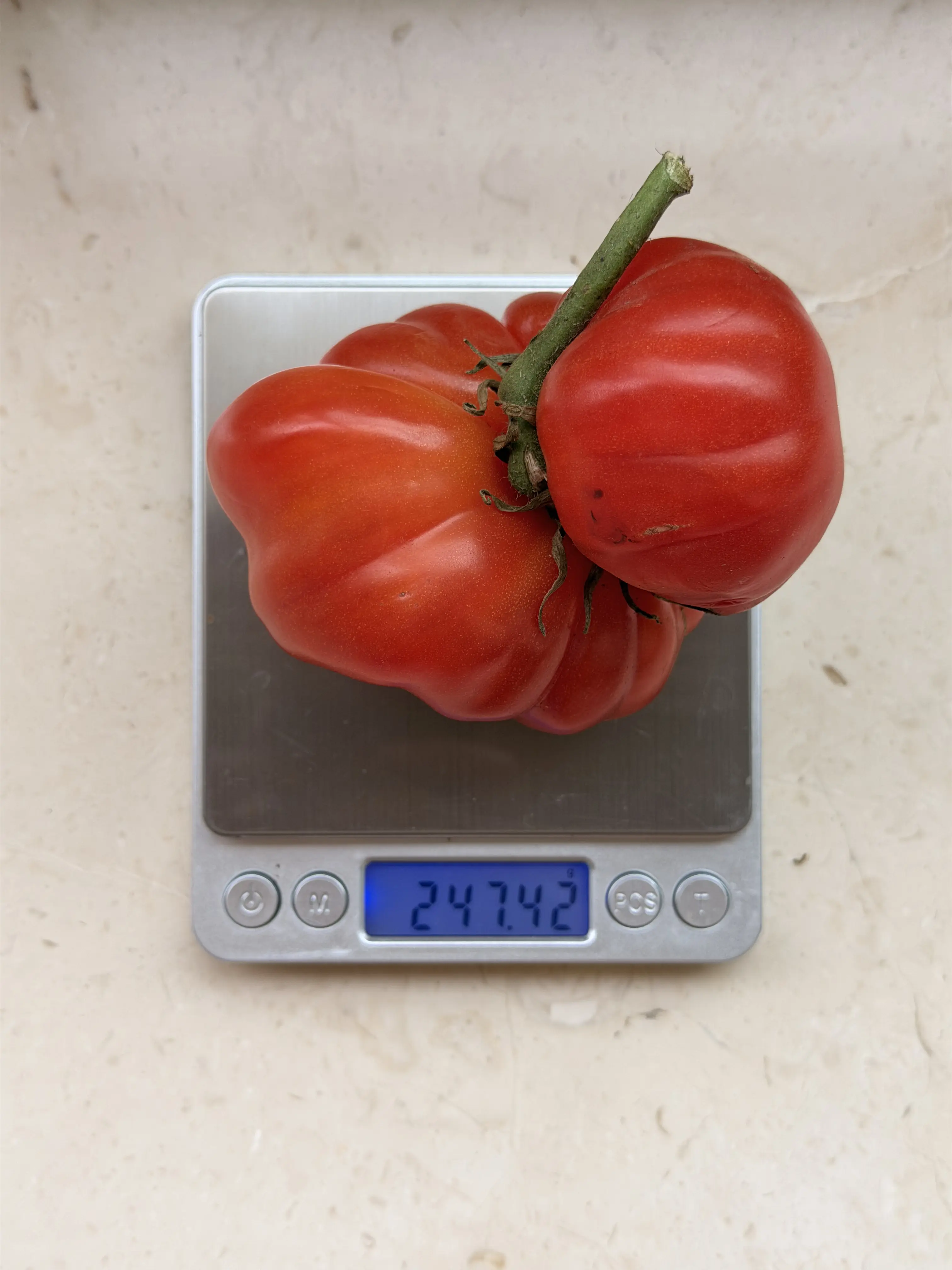
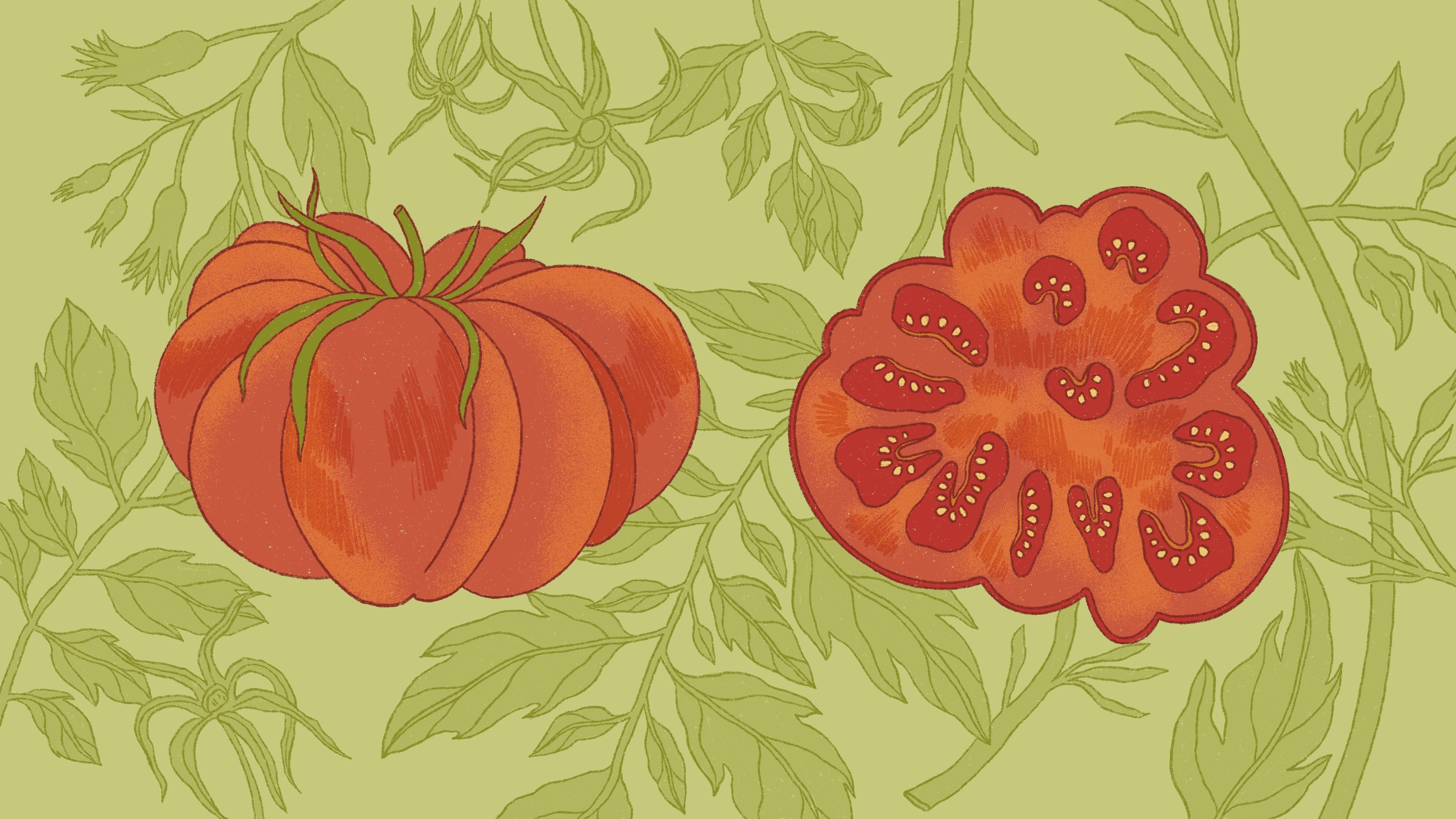
Heirloom tomatoes almost inevitably develop superficial scars and unique undulations. Catfacing (irregular lobes, crevices, and brown cork-like scars) and zippering (long, vertical scars) are two such examples of these imperfections. While they are 100% safe to eat even with scars, they didn’t fit the definition of “perfect” expected of agricultural produce. To add to the list of "inconveniences," they also ripen unevenly, taking their own sweet time, and don’t last very long after harvest. If you were wondering, they don’t travel too well either—the audacity!
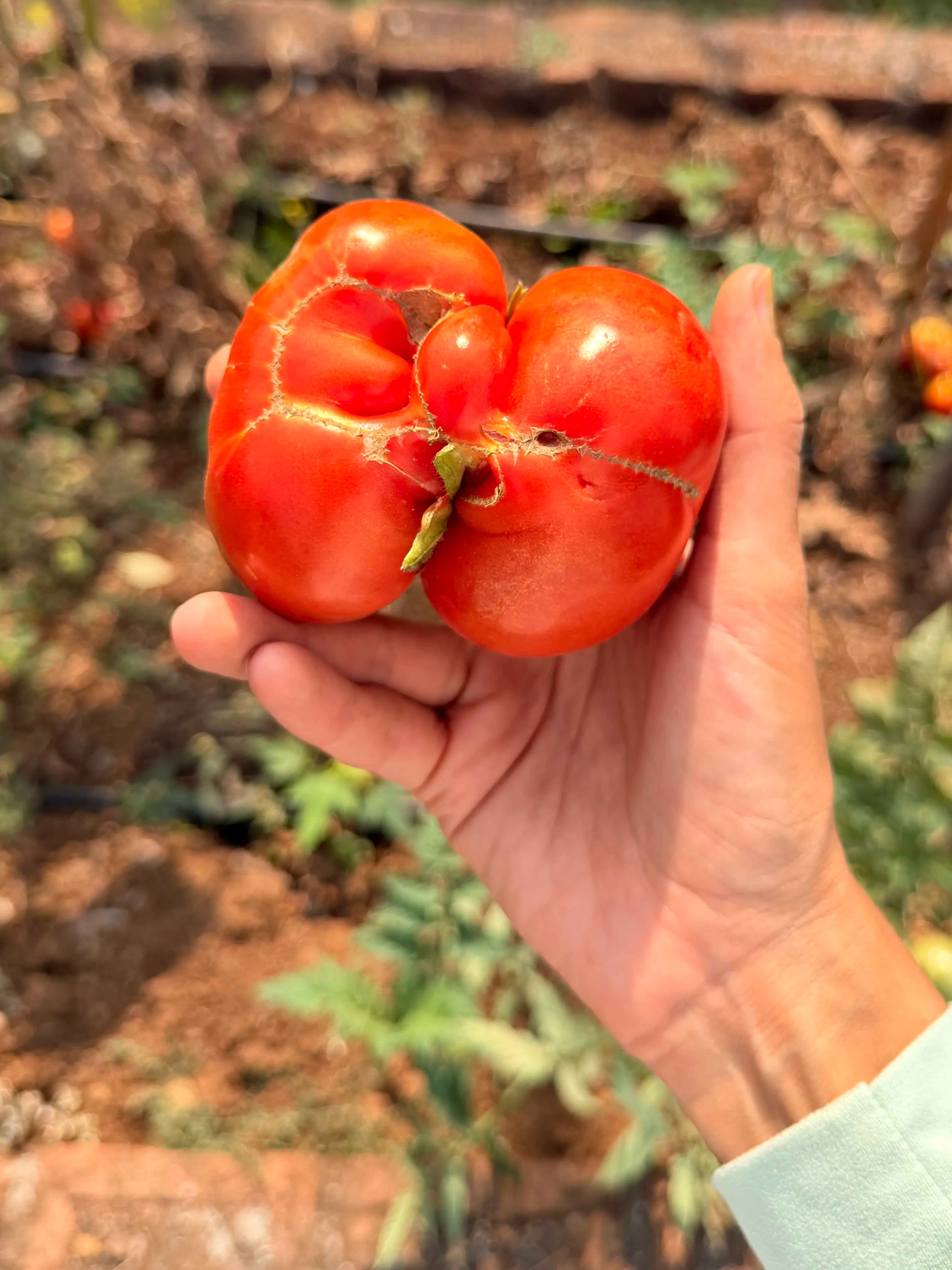
Big Ag turned to petri dishes, test tubes and genetic modification to rid tomatoes of all these "inconveniences," undoing centuries of evolution in the matter of a few decades. The result? The tomatoes we commonly find and purchase without question all look identical: perfectly round, the exact same shade of crimson. They deliver high yields to their growers, last much longer, and travel efficiently from farms to aggregators to bazaars to our homes (with a few more steps in between).
In the ticking of desirable traits in this checklist, the most important one was lost—flavour. The largest contributor to this grave loss is directly connected to the SlGLK2 gene in the fruit. Naturally grown tomatoes ripen unevenly, showing darker green patches when unripe, and slowly turning different shades of red when ripe. The gene in question is responsible for the accumulation and distribution of chloroplast (the agent responsible for photosynthesis) in developing fruit and the green colour in raw fruit. The glucose produced as a result of photosynthesis, as well as fructose, imbue tomatoes with their sweetness. The acidity, on the other hand, comes from citric acid and malic acid, along with other flavonoids (natural compounds which have antioxidant properties) in the fruit’s skin. Umami, the elusive fifth flavour, comes from the high quantities of glutamic acid that increase as the fruit ripens, offering a savoury and meaty aftertaste.
In the ticking of desirable traits in this checklist, the most important one was lost—flavour.
Somewhere along the way, in an attempt to cause even ripening, breeders removed or turned dormant the gene responsible for flavour. Decades of genetic engineering coupled with the use of chemicals have left us with a fruit that is low on sugar, acidity and umami.
Harsh truths
As a farmer, I’ll stare directly at the sun but never in the mirror. Which is why I attribute this past season’s yields—less than optimal, to put it kindly—to the tomato’s very nature.
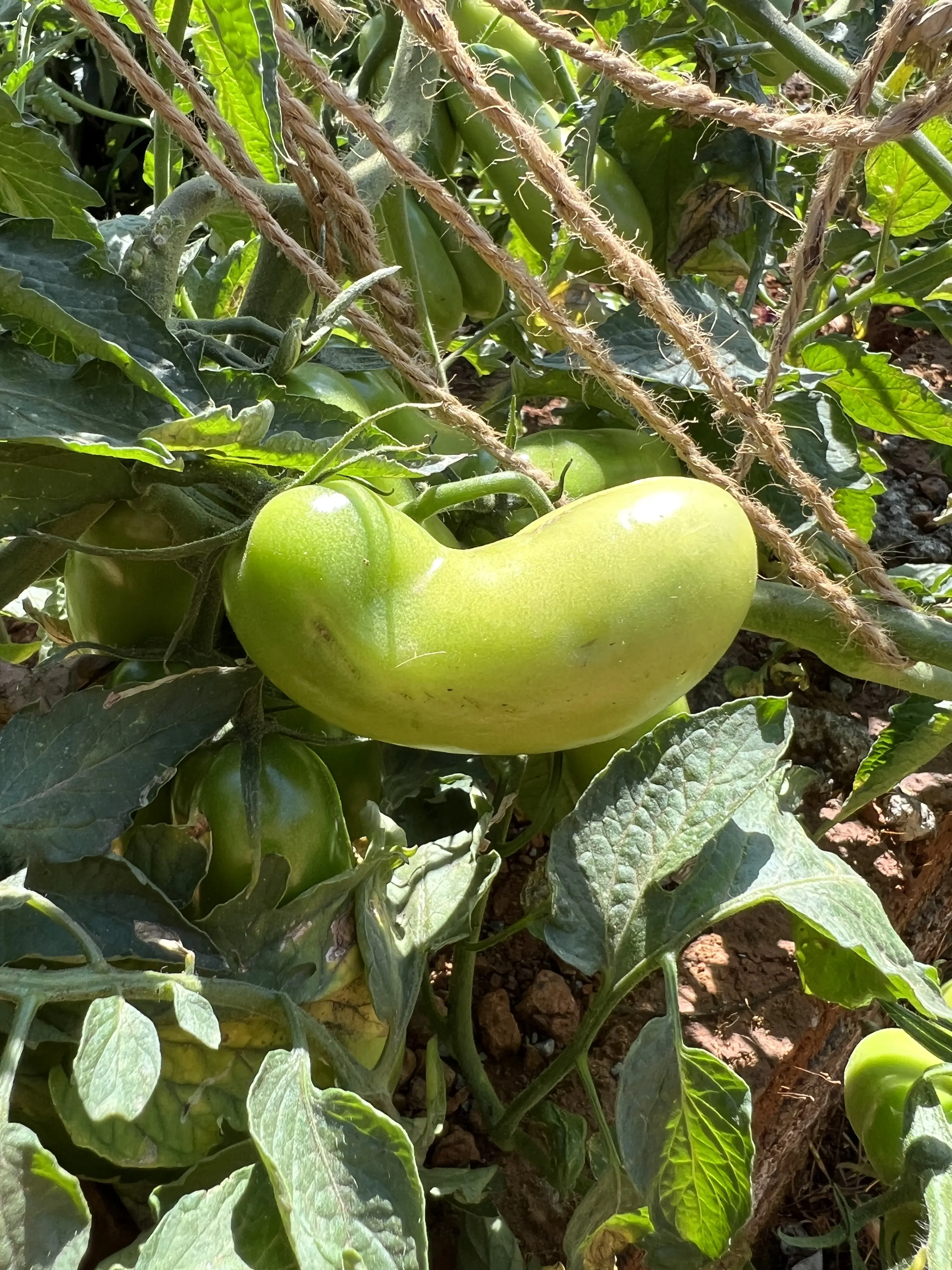
For context: The plants at Simbiosis were dying in the middle of their growth cycle, with no apparent reason. Some fruits were very, very small, and others grew a little warped. Plants were giving far lower yields than I’ve seen them give last year. We did our best with what we had, and took the loss on the chin.
The plant itself is a heavy feeder. It mines the soil for nitrogen, calcium and potassium.
Tomatoes cannot be planted in the same plot for consecutive years. They’re highly susceptible to fungi and bacteria that live in the soil. If your previous crop had even a tiny bit of Early Blight, Fusarium Wilt, or Bacterial Wilt—all of which are very common in India—those pathogens will remain alive but dormant in the soil and attack new, young plants the next season. Populations of Root-Knot Nematodes, microscopic worms that love the plant’s roots, explode if tomatoes are planted consecutively.
The plant itself is a heavy feeder. It mines the soil for nitrogen, calcium and potassium, leaving it exhausted and in dire need of recuperation before it can be subjected to extraction again. All this to say, crop rotation needs to be planned on a farm growing tomatoes.
The mass-produced tomato can be cultivated en masse and is available throughout the year only because it has been hybridised. Big Ag is heavily dependent on chemicals to restore or, at the very least, compensate the soil for nutrient loss and killing pathogens in soil. Industrial production and trade networks are meant to stitch global harvests together seamlessly. More recently, hydroponic methods have gained popularity among tomato cultivators. By cutting out the dependence on soil altogether, growers now have precise control over the nutrients in the growing substrate. No “soil-exhaustion” when there is no soil to worry about, huh?
To farm it organically, and in a manner that is not extractive, remains a conscious choice. Each season, we feed the soil well, give all the nutrition we can to the crop, and pray the weather and rain gods are kind. This journey, although very nascent, has been the deepest learning curve of my life. And the bitter-sweet aftertaste of a bad harvest is no match for an honestly grown tomato—sliced thin, savoured as it is, after months of being patient.
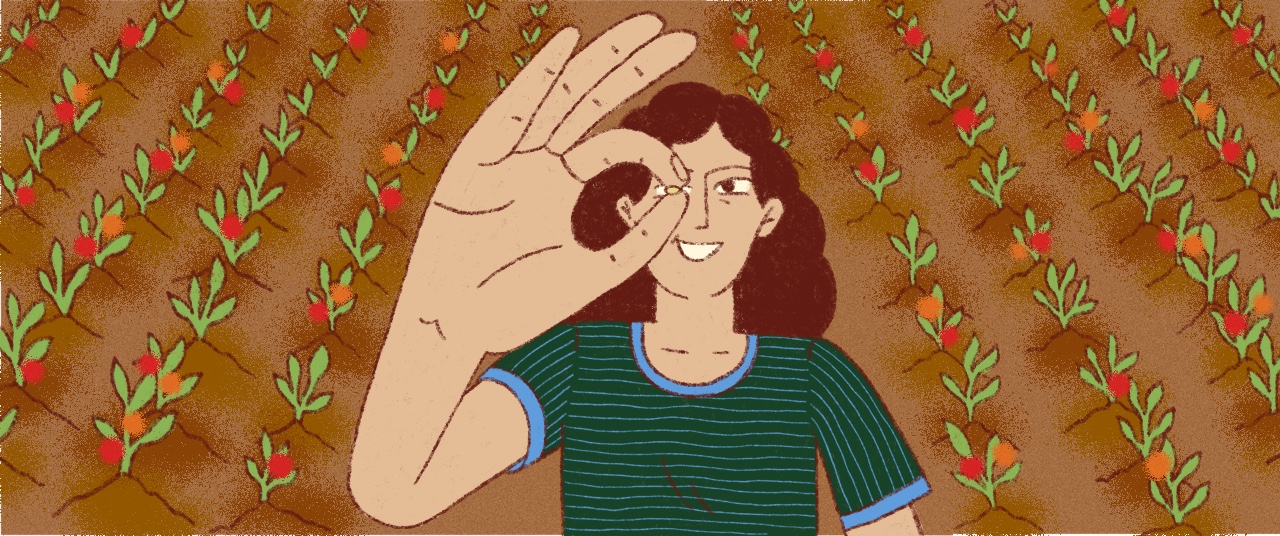
Cover Art by Pearl D'Souza
Carousel Photos by Simran Moorjani
{{quiz}}


.avif)
Explore other topics
References

Which gene is responsible for distributing chloroplast in raw fruit?