How the ice apple found an unlikely saviour—in a reverend
Moved by the disappearance of a once-familiar tree, Reverend Godson Samuel is documenting its footprint and planting it in droves, too


Editor's Note: This article is part of the Good Food Movement's series to spotlight India's summer fruits. Here, we analyse both the ways in which their cultivation expands a farmer's horizons, and the challenges of growing them in a changing climate.
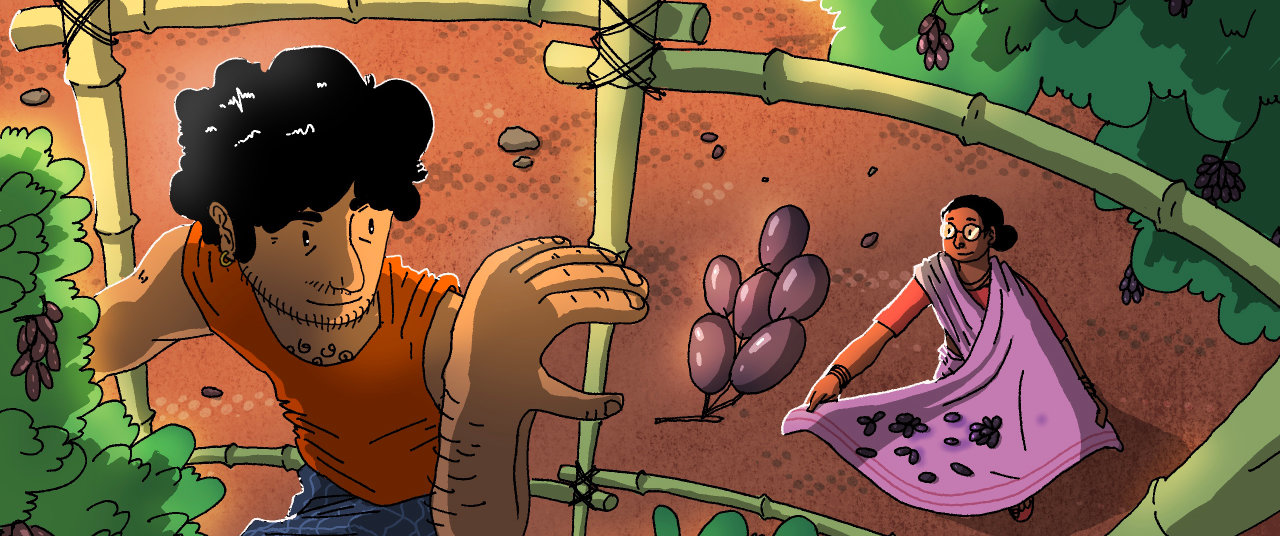
If you're not prepared, it'll slip right through your fingers. That is just the reality of peeling off the brown skin that envelopes the jelly-like, sweet flesh of the ice apple. Every summer, when the palmyra tree's fruit is still blackish green, it is harvested in bunches. The unripe fruit is skillfully hacked at till its 3 seeds reveal themselves. These, we treasure, as nungu (in Tamil), tadgola (in Marathi), or the myriad other names assigned to the ice apple in coastal India. Its flesh resembles the litchi or rambutan or coconut malai, but its mildly sweet, watery taste is uniquely its own.
In more ways than one, it is a miracle tree.
The palmyra palm (Borassus flabellifer) is native to the Indian subcontinent and Southeast Asia. In more ways than one, it is a miracle tree: it requires neither watering nor tending to, withstands droughts and cyclones, and provides nourishment and livelihoods. Its ability to grow in saline water, where not much else grows, has enabled it to line India's coasts. As a result, its various parts—most notably the ice apple—find a place in Indian cuisine and culture.
This influence manifests in the generational occupations tied to the tree (like climbers), and the unique dishes prepared from this tender seed (like puddings and payasams!). Once widespread across states like Tamil Nadu, Maharashtra, West Bengal, and Andhra Pradesh, these trees have faded from memory in recent times, owing to a shift towards urbanisation and monocropped plantations. The tree’s fall from favour is also attributed to the 10-15 years it takes to bear fruits, though it can live for over 120 years once established.
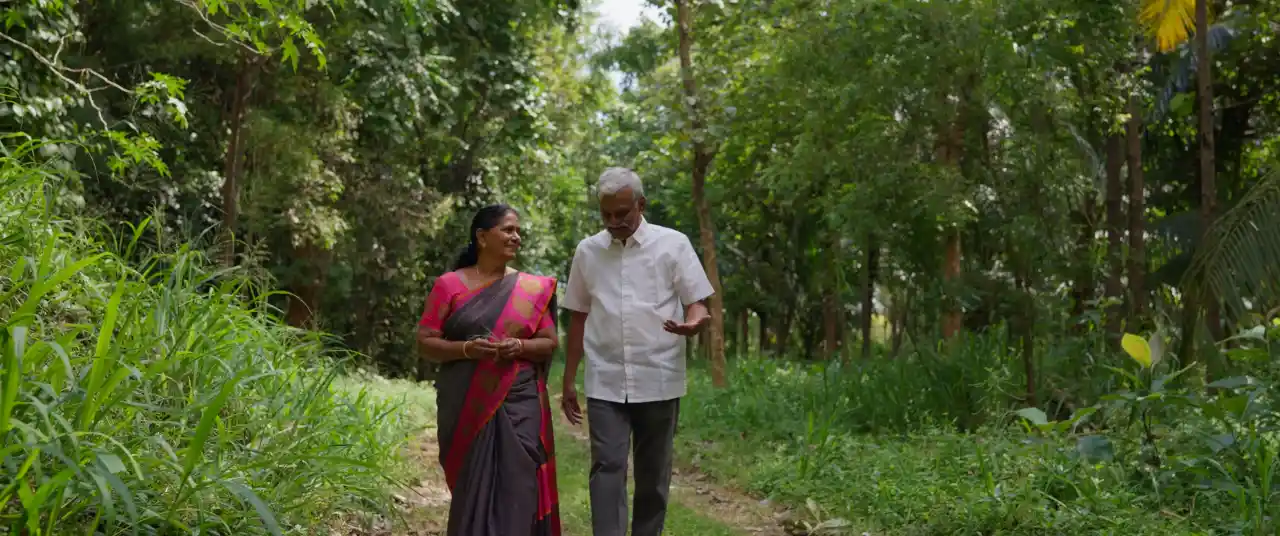
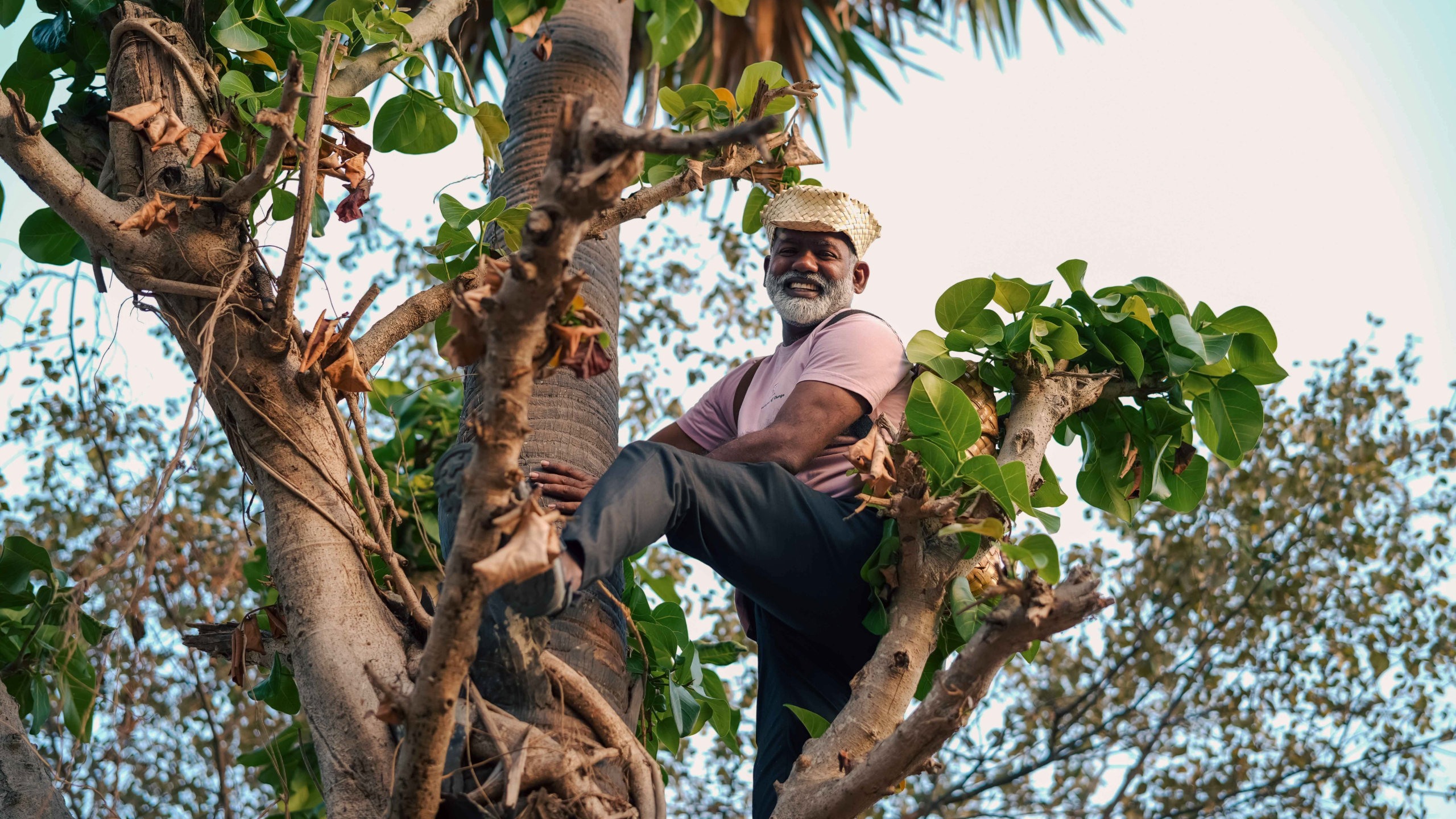
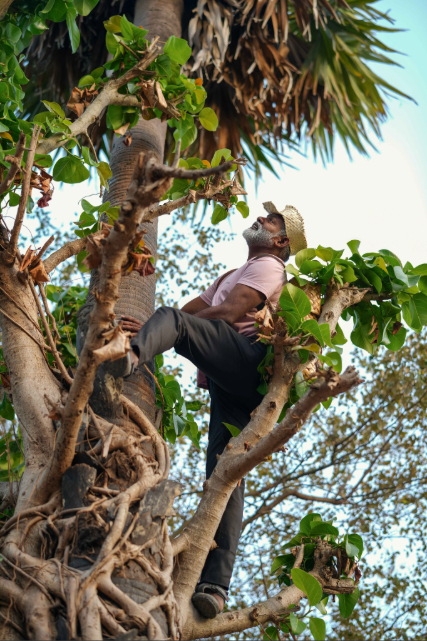
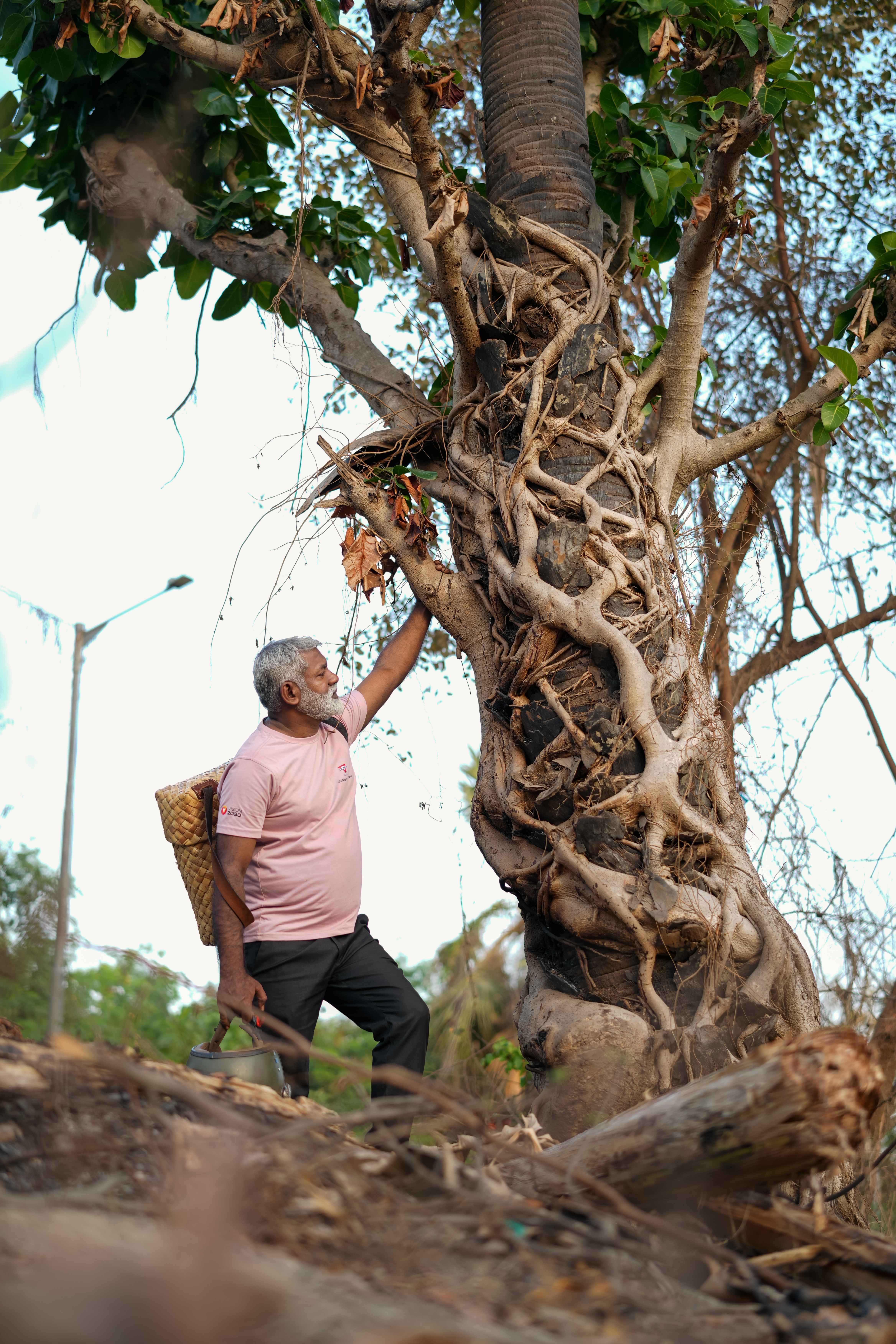
Reverend Godson Samuel of the St. Paul Methodist Tamil Church of Aarey in Mumbai witnessed this disappearance as his childhood unfolded in Kanyakumari. He recalls that in 1981, when he was 5, he could see dozens of palmyra palm trees from his home; by his teenage years, he would have to go to the roof to spot any. When he looks back, he realises that the tree has been a recurring theme in his life, from crafting booklets out of its leaves as a young boy, to pursuing his graduate thesis on its ritualistic significance, and travelling extensively across the country to document and champion the tree.
The most memorable of these efforts was his 18-day long motorcycle journey across Maharashtra, Karnataka, Telangana, Andhra Pradesh, and Tamil Nadu to document the distribution of the tree, and how it weaves itself into the lives of different communities. As May 16 marks the tenth anniversary of this journey, the Reverend reflects on how the tree's status and utility have changed since his expedition.

A storied history
Though Godson’s interest largely lay in the lives of those associated with the palmyra, his journey became a documentation of the tree's distribution in India—something that has only been frugally studied so far. Seed dispersal in palmyras being poorly understood also makes it harder to trace how the tree was distributed across geographies, though humans and elephants are both known to be agents of this process.
Nonetheless, there is a common understanding that the palmyra is largely found in coastal regions, and particularly in Tamil Nadu. Godson acknowledges that two things are true at once: the tree remains more culturally relevant in Tamil Nadu, Andhra Pradesh, West Bengal and Maharashtra, but its historical footprint once extended much further. He recalls, from his own motorcycle journey, not spotting the tree across large tracts of inland Maharashtra and Karnataka, and then almost constantly once he crossed Hyderabad. This variance could partly be a result of different topography, he acknowledges, but he attributes it to cultural and economic shifts as well.
For instance, he points out that Kerala, the state now associated with the coconut tree, featured the humble palmyra on the cover of I. H. Hacker's 1912 book Kerala: Land of Palms. He theorises that a shift towards areca nut, coconut, and cashew plantations in Kerala and Karnataka could have replaced palmyra. Similarly, he speculates that because the Portuguese introduced coconut-based dishes into Goan cuisine, and because feni (made from cashew) was easier to prepare than palmyra toddy, the tree could have lost its relevance there. The Reverend confirms seeing the tree, though in scattered numbers, in Mangaluru and Goa, and even inland in Bihar, Aligarh, and Gadchiroli.
Until just three decades ago, palmyra wood, being salt-resistant, would be used to go across salt pans, and its leaves would be converted into baskets to carry the salt.
Godson explains that the tree's coastal presence held strategic importance in earlier times. Until just three decades ago, palmyra wood, being salt-resistant, would be used to go across salt pans, and its leaves would be converted into baskets to carry the salt. These leaves also proved particularly useful in maritime trade, making for light, accessible packing material. Given that coastal areas are also humid, the ice apple and toddy provided relief from the heat to those involved in manual labour. Godson shares that, in Kanyakumari, the tree was important enough that fishermen would barter their catch in exchange for palm fruit until half a century ago.
This historical importance contrasts sharply with the tree's status today, where the lack of economic incentives and hostile governance has allowed for unchecked felling. Though this erasure has not been quantified in official statistics, experts and eyewitnesses both testify to a sharp decline.
Also read: Maharashtra’s jamun capital won a GI tag. Its legacy remains a work-in-progress
Changing fortunes
With the environment surrounding the tree changing, the way it is utilised has changed too.
Traditionally, the sap is the most valued economically: it can be consumed as a refreshing drink, fermented to make toddy, or boiled to prepare palm jaggery. The hydrating seed was predominantly consumed by those living near the tree, rather than being harvested for commercial gain.
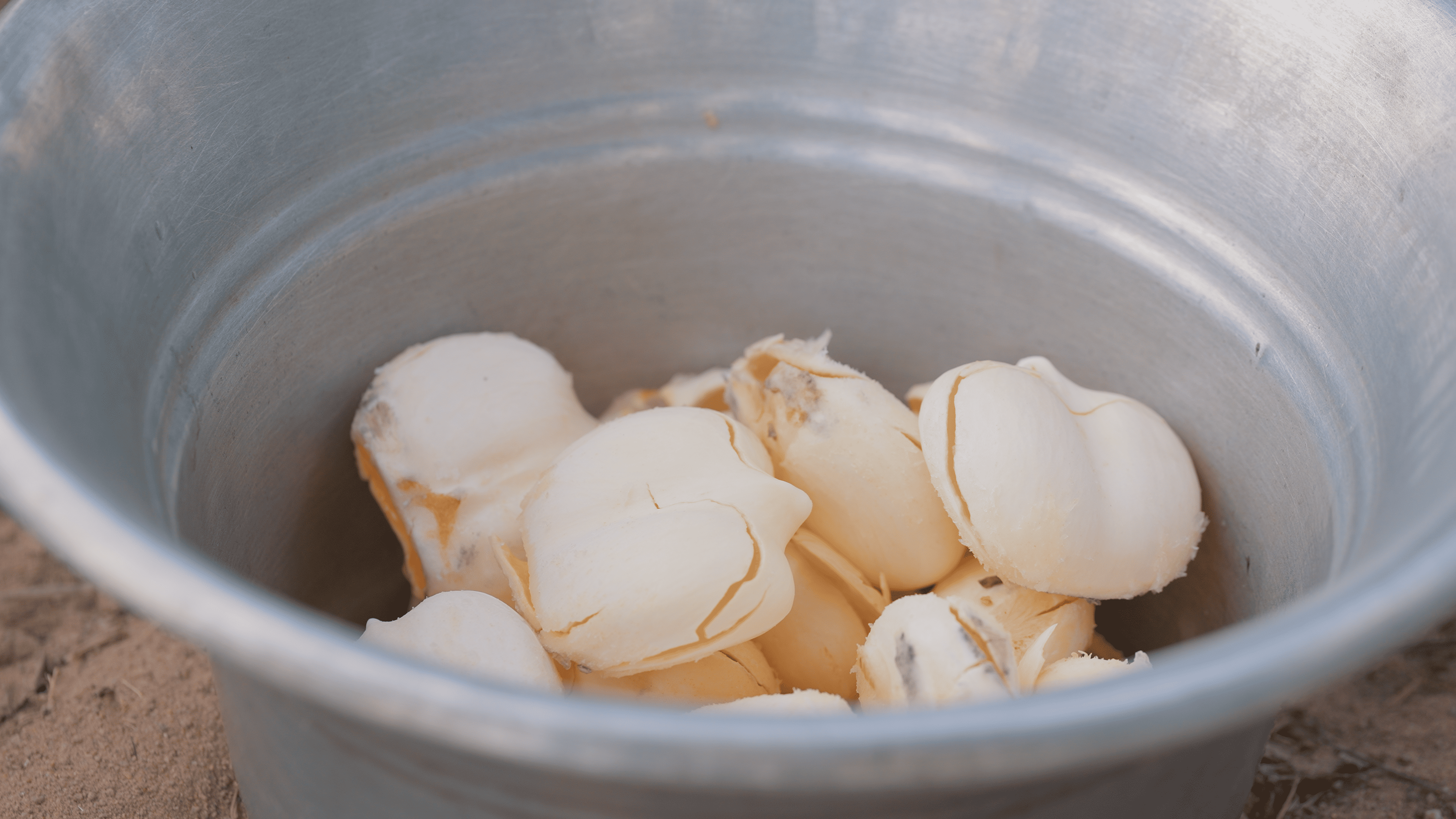
This reality has changed over the past decade, says Godson; the tadgola has now transformed into a consumeristic product, costing anywhere between Rs. 120 to Rs. 200 per dozen. "It used to be an accessible food for poor people, especially during summers. The scenario has changed now. Now the poor cannot afford it," he says.
Despite championing the need to propagate the tree and make it more visible, the rising popularity of the ice apple worries the priest.
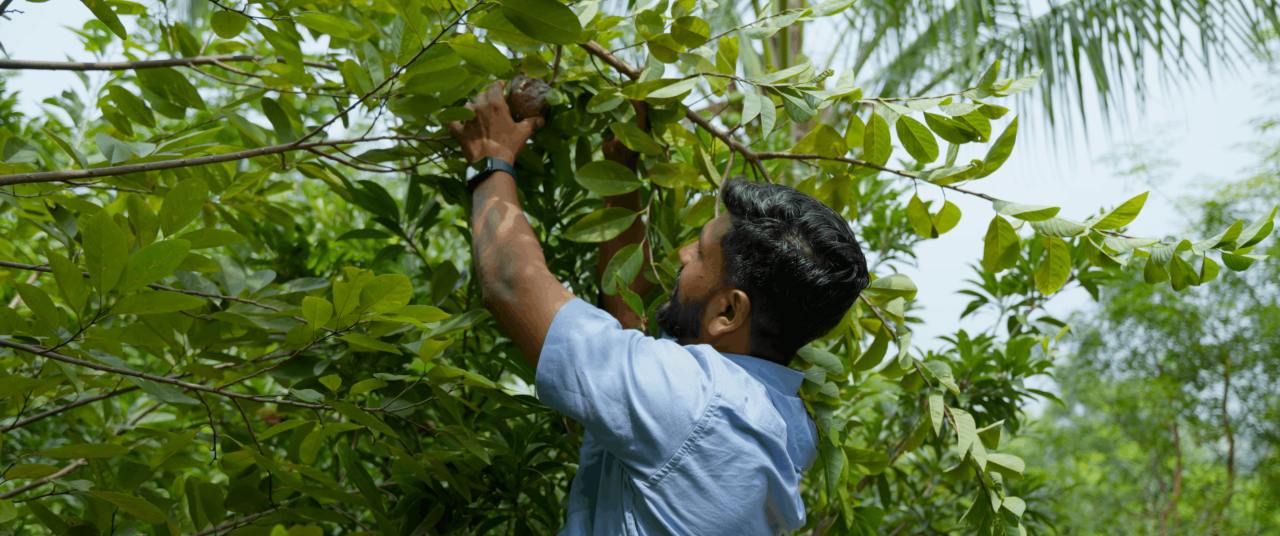
Godson attributes this change to developments in both demand and supply. Intensifying summers have led to an increased demand for the hydrating seed. Simultaneously, palmyra climbers are moving away from relying on the tree as the sole source of their livelihood. Godson explains that if they want to utilise the sap, they need to climb the tree every day. With the tender fruit, however, they can harvest it once a week, allowing the tree to supplement their income.
Despite championing the need to propagate the tree and make it more visible, the rising popularity of the ice apple worries the priest. His concerns are twofold: one is that the incessant focus on the seed is erasing the traditionally multifaceted utility of the tree. Second, because what we are eating is a premature seed, we are left with nothing to plant.
He uses an illustrative analogy to express this: "You get both raw mango and ripe mango in the market. The fruit constitutes the major part of what is sold, and raw mango is sold in far fewer quantities. You have enough seeds left for propagation because the fruit outnumbers the kaccha mango."
With the ice apple, however, the reverse is true. The tender seed floods the markets, while the ripe fruits are never seen. This imbalance means that we are not allowing enough fruits to mature, and risking sustainable propagation of the tree.
The mango analogy makes the solution evident: it lies not in abandoning the beloved seed but in diversifying how the fruit is consumed. The fruit usually matures when it rains, meaning that it matures between June and August for areas receiving the Southwest monsoons, and between September and November where the Northeast monsoons occur. By the time it has matured, the fruit becomes largely black from the outside, with hints of orange underneath. On the inside, it houses orange pulp and one to three hardened seeds. Unlike many other ripe fruits, this one can cause some gastric discomfort if eaten raw, and is traditionally either boiled or fried.
What Godson advocates, ultimately, is a more conscious and varied relationship with the palmyra—one that allows both consumption and regeneration to coexist.
The reverend reflects on how the ripe fruit used to be a part of his childhood diet, "We used to have it as breakfast or as an evening snack as children." Contrasting it with the Malayalam saying, 'Andikkadukkumbol maanga pulikum' (As you go closer to the seed, the mango starts souring), he claims that this is the only fruit that grows sweeter as you go closer to the seed.
Popularising recipes that incorporate the ripe fruit, he believes, can help with wider adoption, and bring it to our local fruit markets just like its tender seeds are brought. "We can learn from our Bengali friends," says Godson, referring to the way Bengalis add the juice of the fruit into flour to prepare a number of fried dishes.
The ripe fruit provides utility beyond the pulp. The mature seed, if planted, can either become a tree, or can be harvested in three months' time to yield a tuber that is in great demand during Pongal. The hard shell of the fruit (quite similar to a coconut’s) can be burnt for charcoal, or repurposed into household utensils like a ladle.
What Godson advocates, ultimately, is a more conscious and varied relationship with the palmyra—one that allows both consumption and regeneration to coexist.
Also read: How a shared love of the humble jackfruit transformed into a movement in Kerala
The way forward
Godson’s approach to studying the palmyra, by his own admission, has been cultural rather than economic or scientific. What fascinates him the most, is the way each culture makes the palmyra its own—palm leaf pattachitra art in Odisha, canoes hollowed from palm trunks in Andhra Pradesh, the musical instrument tarpa among Maharashtra's Warli tribes, and Vishakhapatnam's distinctive palm leaf umbrellas. For Godson, the death of the tree is strongly linked with the loss of these traditional artefacts, and the associated knowledge of harnessing the tree without harming it. This understanding has made him a proponent of palmyra plantation drives across the country.
Some of the knowledge at risk of fading away is also intangible, like knowing how to climb, how much to harvest, and when to leave the trees untouched. Palmyra climbers have been the traditional custodians of this knowledge, and as they abandon climbing, the tree risks being overharvested for ice apples. Climbers, artisans—anyone who traditionally depends on the tree—are integral to its conservation.
In spite of these warnings, Godson believes that the ice apple still has untapped potential, largely because of its painfully short shelf life of 2-3 hours once extracted from the fruit. He stresses the need for more research on the kind of value-added products that can be created from it. But this investment in the seed will only make sense if there are enough trees to harvest from, and enough labour willing to undertake harvesting.
Godson believes that the ice apple still has untapped potential, largely because of its painfully short shelf life of 2-3 hours once extracted from the fruit.
Ironically, palmyras are also threatened precisely because of the qualities that make them resistant to harsh conditions. The wastelands and peripheries where they traditionally grew are the first to be taken up for infrastructural projects. "There is no place left to plant the trees," says Godson, his voice laced with a worried urgency.
Godson’s initiative to plant 1 lakh trees across Mumbai's Aarey forest is part of his efforts to move the needle. Since 2019, the Reverend has been distributing seeds, wrapped in newspaper and packed into cardboard boxes, across the country, and has already planted 40,000 trees in Mumbai. He has also been working with Maharashtra's forest department to create nurseries for the trees.
He believes the best way to restore the tree's former status is to plant it along roadsides and railway tracks, and establish mechanisms to harvest fruit from these trees regularly. This will provide the government with a steady source of income, generate employment, and allow a climate-resistant tree to take root in our landscape again.
In 2018, Godson authored a book 'Panaimara Salai' (Palmyra Road), which served as a memoir both of his 18-day journey, and his overarching relationship with the palm tree. Eight years later, he has just finished translating it to English to allow for it to be re-translated into French. Because the palmyra pilgrim's next horizon lies on the only other continent to house the palmyra tree: our neighbour from across the Arabian Sea, Africa.
Also read: Kiwi cultivation calls for patience. This Nagaland farmer took up the challenge
Edited by Neerja Deodhar and Shobana Radhakrishnan
Cover Image by Arwin R
{{quiz}}
.avif)


Explore other topics
References