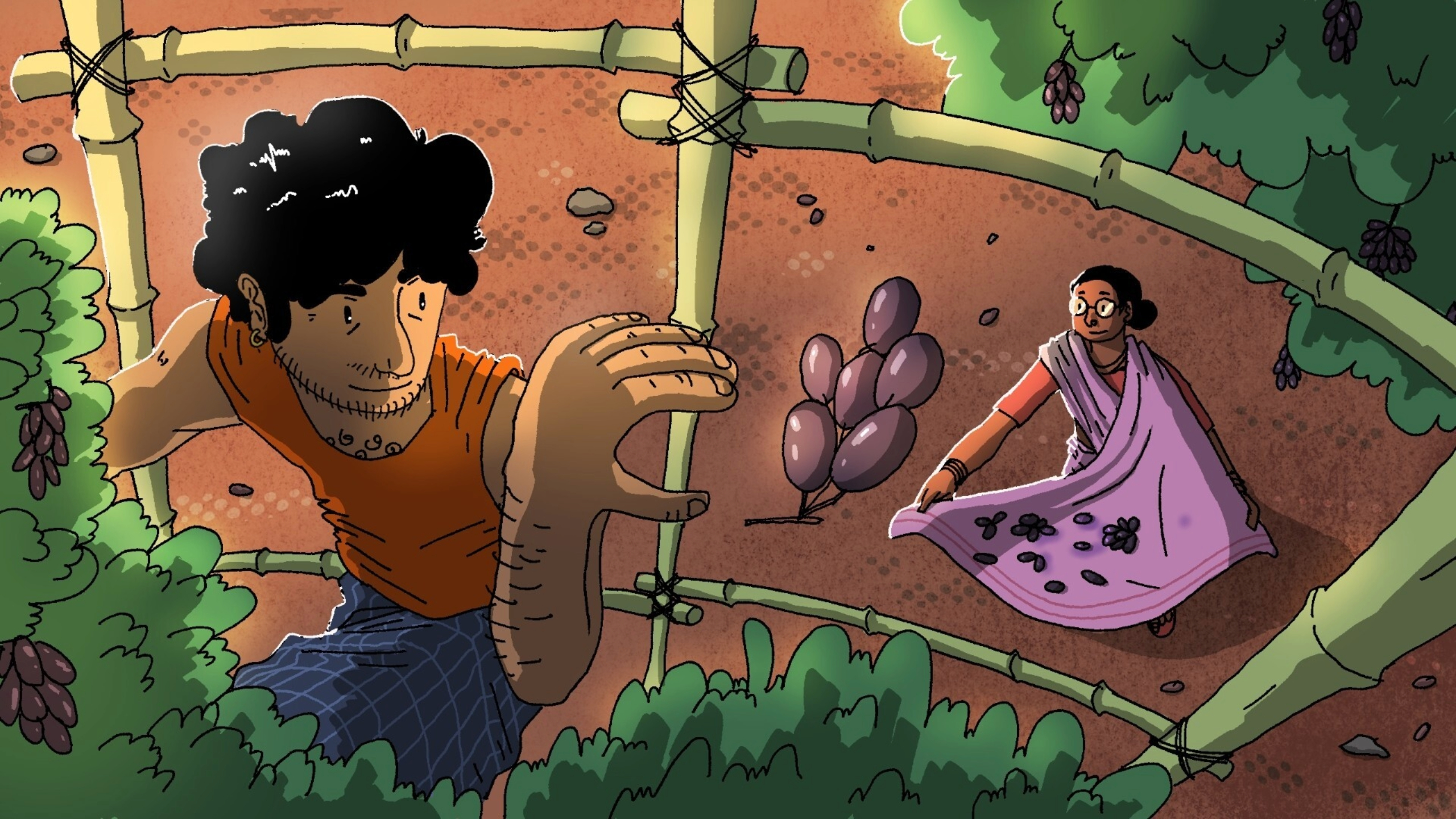

Maharashtra’s jamun capital won a GI tag. Its legacy remains a work-in-progress
Bahadoli’s jamuns, recognised for their flavour and fewer seeds, power the local economy, signalling the potential for commercial success


Editor's Note: This article is part of the Good Food Movement's series to spotlight India's summer fruits. Here, we analyse both the ways in which their cultivation expands a farmer's horizons, and the challenges of growing them in a changing climate.
Tongues stained purple, and mouths teased by a sweet, tart flavour—this is how 67-year-old jamun farmer Prakash Kini remembers the summers of his childhood in Maharashtra’s Bahadoli. The village, situated in Palghar district, on the outskirts of metropolitan Mumbai, is also eponymously called Jambhulgaon. For a brief window between April and June, it comes alive with harvest activity; families collect, sort, and transport the jamun fruit (Syzygium cumini) growing on trees in every corner to nearby urban markets. For generations, it has sustained entire households belonging to the Agri Koli community, with families relying on a short but intense selling season to earn a significant portion of their annual income. While the men are engaged in plucking the fruit and transporting it, the women are responsible for selling it and turning it into value-added products.
Maharashtra is India’s largest jamun producing state, with cultivation concentrated in the state’s Konkan region. The ‘Konkan Bahadoli’ variety, recognised by the Maharashtra Agricultural Department in the early 2000s, is the most coveted, even winning a GI tag in 2023. It is oblong, succulent, has a white-pinkish pulp and fewer seeds.
For generations, it has sustained entire households belonging to the Agri Koli community, with families relying on a short but intense selling season to earn a significant portion of their annual income.
Produce from Maharashtra’s jamun capital has become a fast favourite among consumers, fetching a premium. However, Jambhulgaon’s economy, primed by this seasonal fruit, now finds itself in a lurch. The vagaries of climate, a market demanding scale and consistency, and difficulties in farmer organisation stand in the way of a legacy.
From commons to commodity
Bahadoli sits at the confluence of the Surya and Vaitarna rivers, whose floodplains are home to fertile alluvial soil. In their pursuit of a GI tag over a decade and a half, farmers dug into archival documents to piece together a history of how their village came to be associated with jamuns. “We collected ancestral property papers from generational jamun-farming families. In the process, we found that one Bala Joshi had planted the first two trees in 1885,” says Kini. “Perhaps they were carried in on the tides of the floods and deposited here, and then birds spread the seeds all across the village.”
Paddy was once Bahadoli’s primary crop—for sale and sustenance. “A few jamun trees stood on baandhs [the raised edges of fields], but our parents discouraged us from growing them because rice couldn’t thrive in the shaded canopy of these trees,” says Madhav Prabhakar, 72, another jamun farmer. “We had lived through the 1972 drought and famine, we couldn’t afford a bad harvest.”
There was a scarce market for the fruit at the time. The village was isolated from Mumbai, and jamuns were consumed only at home along with mangoes. The purple fruits were converted into liquor, while raw mangoes were dried and prepared as the amboshi souring agent, the Agri-Koli community’s kokum equivalent.
Eventually, some farmers started experimenting with selling the fruit in the 1980s. “My father, along with some of his friends, began transporting jamuns across the river in hodhis [small hand-rowed boats] to the Vasai-Virar phata [the junction connecting Mumbai’s northern-most suburbs],” says Kini. There, intermediaries (colloquially referred to as bhaiyyas) would decide the rate of each batch—selling for as low as Rs. 4 per kg.
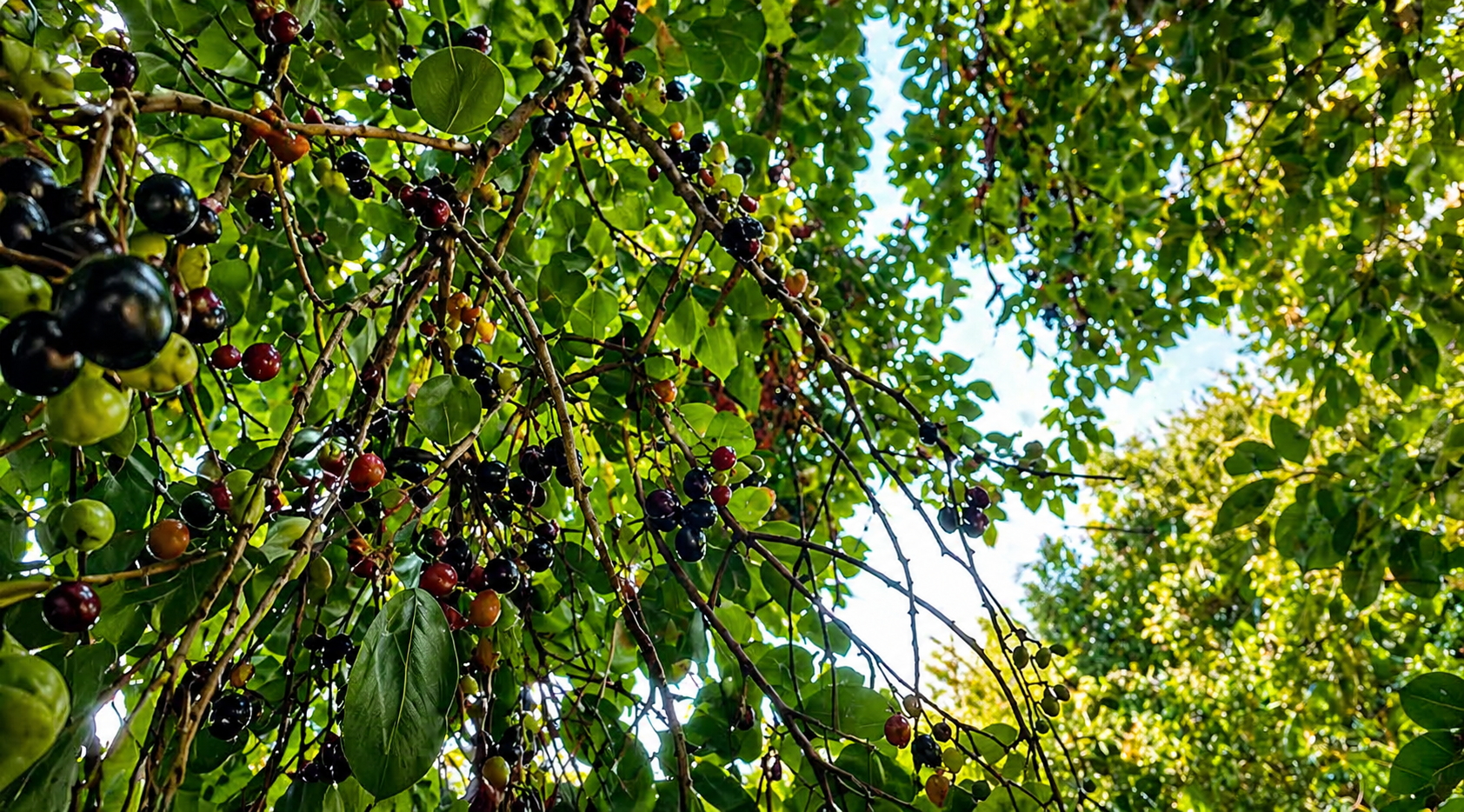
Today, nearly every farmer in Bahadoli has anywhere between 10 to 25 jamun trees growing in his backyard and fields. Over a thousand families farm jamun across about 70 acres in the village, with some trees dating back to over a century. A mature tree can bear between 50-80 kg of fruit every season, with each kilo fetching anywhere between Rs. 1000 to Rs. 2500.
It is sweet success that comes after much patience and long-term planning. “The tree takes around 10 to 15 years to mature and become economically viable,” says Jagdish Patil, Senior Field Officer, Palghar Agricultural Department. “However, it had the potential to become a major crop in the Konkan region. With this aim, the Palghar Agriculture Department organised a Jamun Mahotsav in Bahadoli in 2004 (and every year until 2008) to promote and scale up its cultivation.” The famed Konkan Bahadoli variety was popularised in this festival.
Today, nearly every farmer in Bahadoli has anywhere between 10 to 25 jamun trees growing in his backyard and fields.
Jamun trees were hitherto cultivated via seeds. The introduction of grafting techniques (a process of propagation by which a young bud is fused with a rooted plant, such that their tissues merge and grow as one) during the festival enabled the propagation of superior, true-to-type varieties, improving uniformity and yield. State support in the form of sapling distribution, workshopping new ways of growing and caring for jamun trees, and guidance with storage and processing laid the groundwork for scaling jamun as a commercial horticultural crop in the region.
Also read: In Uttarakhand's Shama, kiwi cultivation has restored faith in agriculture
Collective action meets state support
Every summer, this glistening violet fruit arrives in fruit markets across India. Apart from its distinct astringent taste, it is also valued for its many medicinal properties, from controlling blood sugar and managing diabetes, to lowering lipid levels in the body and boosting iron content.
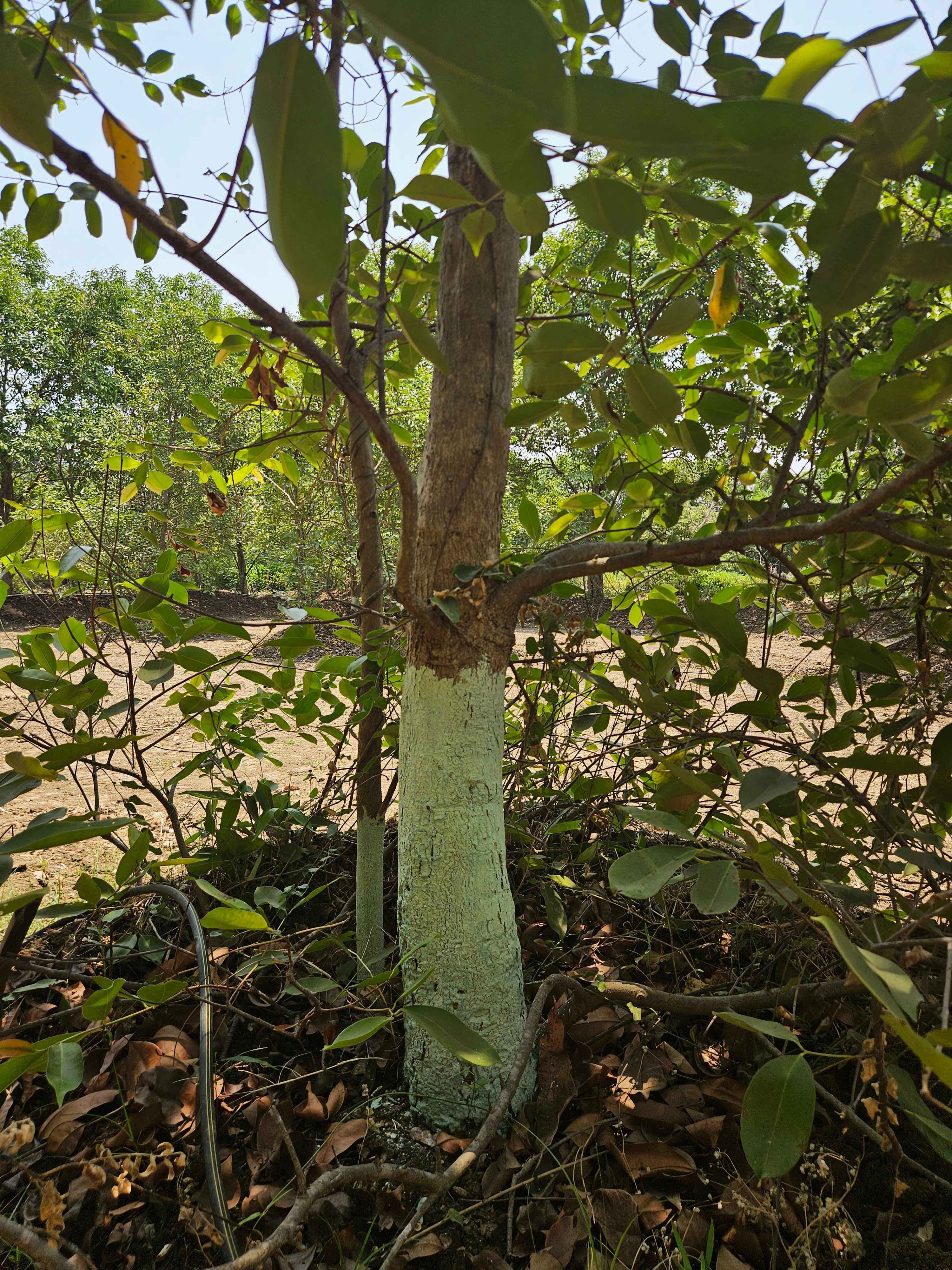
The Dr. Balasaheb Sawant Konkan Krishi Vidyapeeth in Ratnagiri, in partnership with the Palghar Agricultural Department, began conducting workshops for Bahadoli’s farmers 2015 onwards, to train them in better practices. Farmers were encouraged to use organic fertilisers, and even now, many trees in the village are coated in the green hue of simple medication comprising chuna, rock phosphate and jeevamrutha.
While the aim had been to bring jamun farmers together, formalise supply chains, and help them make value additions, things played out differently on-ground.
In 2018, the Jambhul Utpaadak Shetkari Gath (Jamun Farmers’ Collective) was established as a farmers’ outfit with state support, with Prakash Kini at its helm. While the aim had been to bring jamun farmers together, formalise supply chains, and help them make value additions, things played out differently on-ground. “Dahanu’s chikoo had earned a GI tag,” says Patil, “and I wanted Bahadoli’s farmers to mobilise themselves for a similar effort. The establishing of a producers’ union was a step in this direction.”
A GI tag would not only help the eponymously named jamun get recognition, but would ideally also protect the people and land behind it—and instill a sense of pride in them. “Working towards the application for a GI tag helped us learn a lot about the fruit’s ancestry to this village. We used the Devgadh Hapus mango as an example to understand the benefits that this could bring,” Kini says. Farmers also compiled a resource book tracing the history of the Konkan Bahadoli jamun and insights gleaned from the jambhul mahotsavs, agricultural officers, and scientists—both to support their GI tag application and to serve as a one-stop cultivation guide.
Previously, bhaiyyas would offer the village’s jamuns as ‘taste tests’ to consumers, disguising the fact that the fruits actually being sold (which were smaller and more sour) were sourced from places like Nashik and Badlapur. The GI tag would help tackle this ‘identity theft.’ “No one will be able to pass off counterfeit produce under the Bahadoli jamun’s name now,” Kini adds.
What made the jamun truly Bahadoli’s? The Vidyapeeth worked with farmers to conduct soil tests, assess different parameters of the fruit such as size, shape and pulp-to-seed ratio, to establish its distinctness. “However, only a few farmers incorporated what we practised during the sessions,” says Dr. Lahanu Gabhale, Associate Professor of Horticulture, Konkan Krishi Vidyapeeth, who has worked with Palghar’s farmers for over a decade.
Also read: The tell-tale apple trees of Thanamir
Fragmented realities
The journey towards earning a GI tag was one where farmers were disjunct from realising the full promise of their produce, and how intellectual property tools could help play a role in this. “Getting farmers together for meetings, and convincing them of the benefits of a gath was a mammoth task in itself. Only about 25-30 farmers attended the first meeting,” recalls Kini. Farmers remaining suspicious of administrative intermediaries and village politics along caste lines meant that the Gath remained a fragmented effort carried on the shoulders of a few village elders—a reality that persists today.
Enthusiasm remains low, and the farmers are somewhat divided. In the process of obtaining a GI tag, Kini, Prabhakar and a few others carried the season’s best jamuns and different associated products, such as wine, wadi and barfis and powder made from crushing the seeds that aids in managing diabetes. The farmers, the state, and the scientists are united on one opinion: the awarding of the GI tag has not resulted in any benefits materialising yet—an unfortunate reality observed in the case of more than one product across India. And how will they, asks Patil. “The Gath needs to raise a minimum amount of money to translate some of these benefits into practice,” he says.
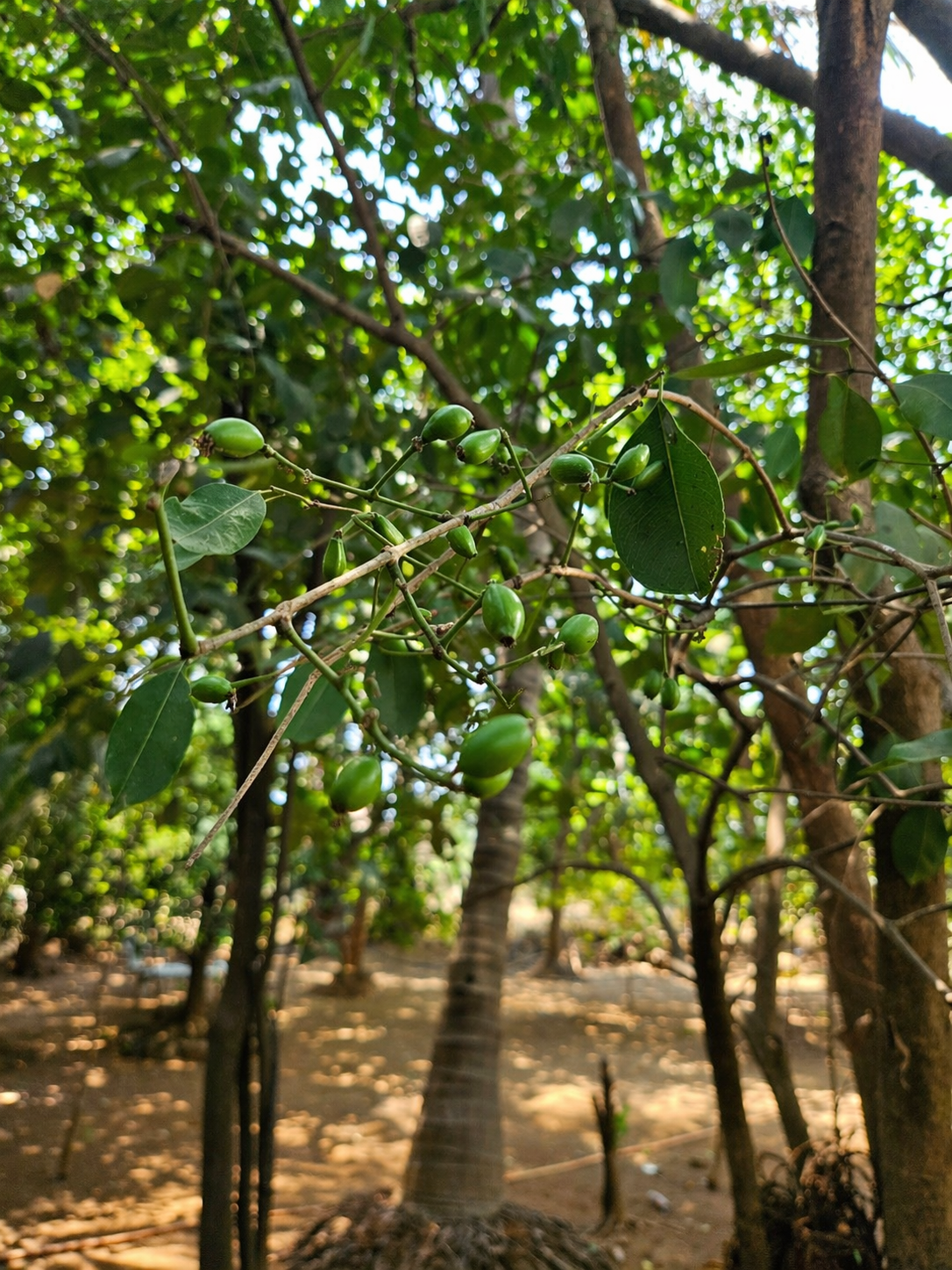
Jamuns are a perilously perishable fruit. They must be consumed within 2-3 days of being plucked from the trees. Jambhulgaon’s farmers line their tokris with sarees to prevent them from getting squashed during transport. “We balance 8-10 tokris on each side of the bike and drive slowly,” says Prakash Kudu, whose first jamun trees were an inheritance from his uncle. The summer heat is relentless, which makes jamuns mushy quickly, and more likely to burst during the ride. “We also don’t water the trees too much once they start flowering to prevent the fruits from bloating becoming more susceptible to damage,” he says.
Part of the GI tag effort was also to urge farmers to raise funding requests for storage and transportation. “We experimented with packaging and design. The blueprint of the corrugated boxes inscribed with the GI certification is ready,” Patil says. This would extend shelf life by about a week and enable them to travel farther and garner a greater consumer base. Farmers, however, have been slow to respond to even encouragements to apply for subsidised fertilisers and bamboo through the Gath.
Also read: In the battle of Alphonso versus Kesar, climate change plays dirty
Growing the perfect jamun
Harvest is a hand-picked, laborious process. The jamun’s branches are sprawling and delicate, hollow on the inside and unable to bear the weight of climbing farmers. “We erect bamboo structures around the trees and pick fruits on alternate days,” say Prabhakar and Kudu. Farmers also tie sarees to poles, creating a hammock-like structure where jamuns rain down and are collected into the soft fabric.
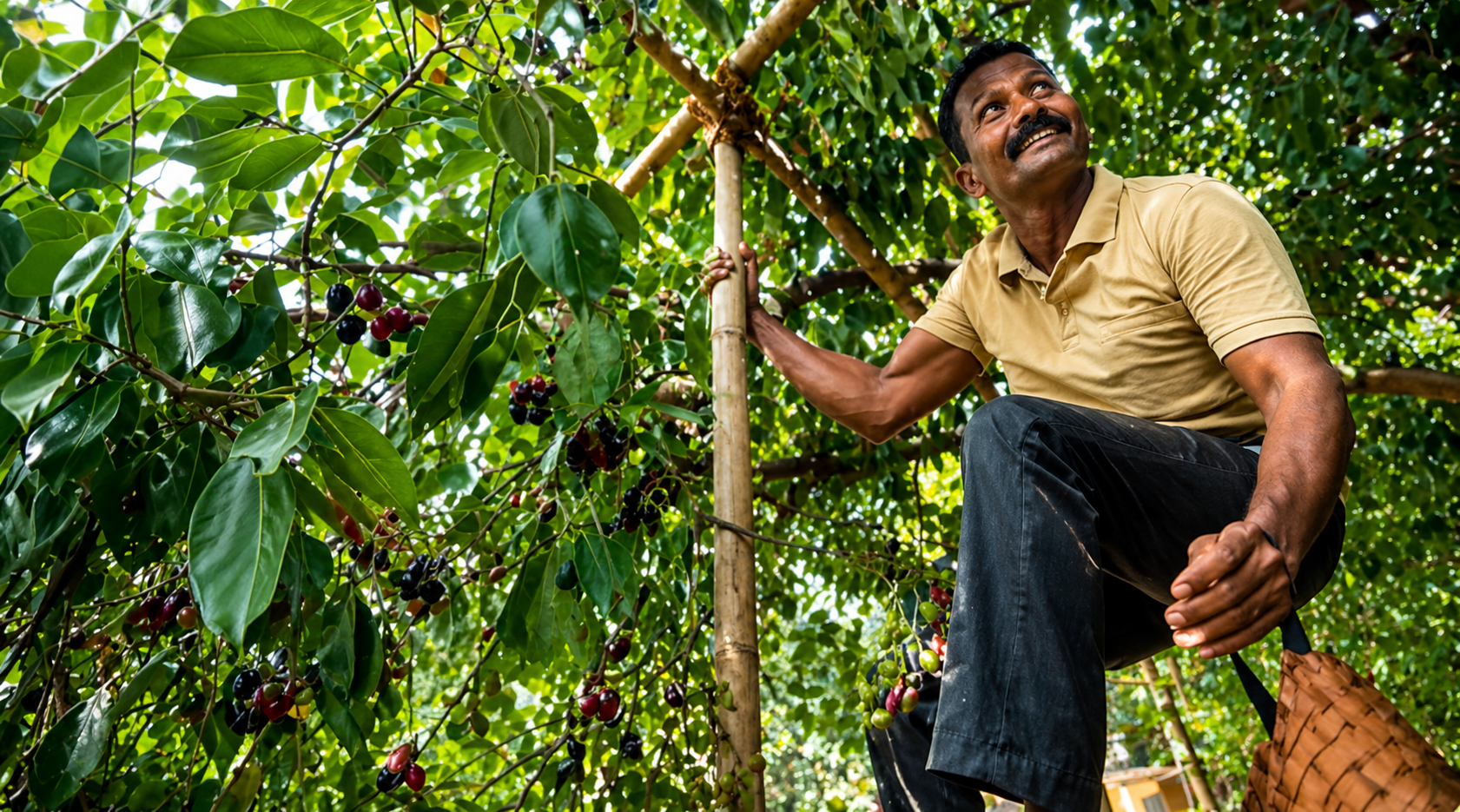
Climate change is increasingly unsettling Bahadoli’s fruit economy in other ways. It has disrupted the fruit’s tightly timed season and, in turn, the prices it commands. Erratic rainfall and shifting weather patterns are delaying flowering and fruiting, pushing the harvest deeper into the monsoon. “Trees that would start typically flowering by late March and ripen by May are now burgeoning with fruit as late as July,” says Prabhakar. The monsoon births conditions that jamuns are particularly vulnerable to, causing the fruit to split, rot, and fall prematurely, say farmers.
The jamun’s branches are sprawling and delicate, hollow on the inside and unable to bear the weight of climbing farmers.
In recent years, especially post 2020, such shifts have led to significant crop losses. “Jamuns may get infested with worms and bacteria during wet weather. Customers are hungry for jamuns, but wary too. The fields are littered with fallen fruit and we are forced to sell a kilo for Rs. 500–Rs. 800.” As a result, even though Bahadoli jamuns are valued in the market, farmers’ incomes have become far more unpredictable.
Bahadaoli’s giant jamun-stalk
Bahadoli’s crisis is not one of state neglect, but of stalled collectivisation. Even as climate change disrupts fruiting cycles, and jamuns and associated products command a premium in urban markets but lead to uneven gains across the value chain, the institutional mechanisms meant to buffer these shocks remain underused. The GI tag has been secured, but without capital, coordination, or trust, its benefits remain largely symbolic.
“We have asked for a cold storage and processing unit where we can box our produce in air-conditioned hygienic environments,” says Kini. The challenge is now to continue to raise awareness about the value and promise of these jamuns beyond Bahadoli's Mumbai market that has already been tapped into. The infrastructure to adapt remains out of reach without co-ordinated investment.
To face these challenges, it is imperative that farmers band together, with each other, and with those trying to aid their effort. “The next generation will continue farming because it fetches a lot of profit in one go,” say Kini and Prabhakar. For the Bahadoli jamun to endure a changing climate, new knowledge systems must work alongside traditional practices. Otherwise, a legacy built over generations risks being lost just as it begins to show new promise.
Cover Art by Sharath Ravishankar
{{quiz}}


.avif)
Explore other topics
References