In Uttarakhand’s Shama, kiwi cultivation has restored faith in agriculture
Despite early hardships due to gaps in knowledge, farmers persevered to gain training and change their fates


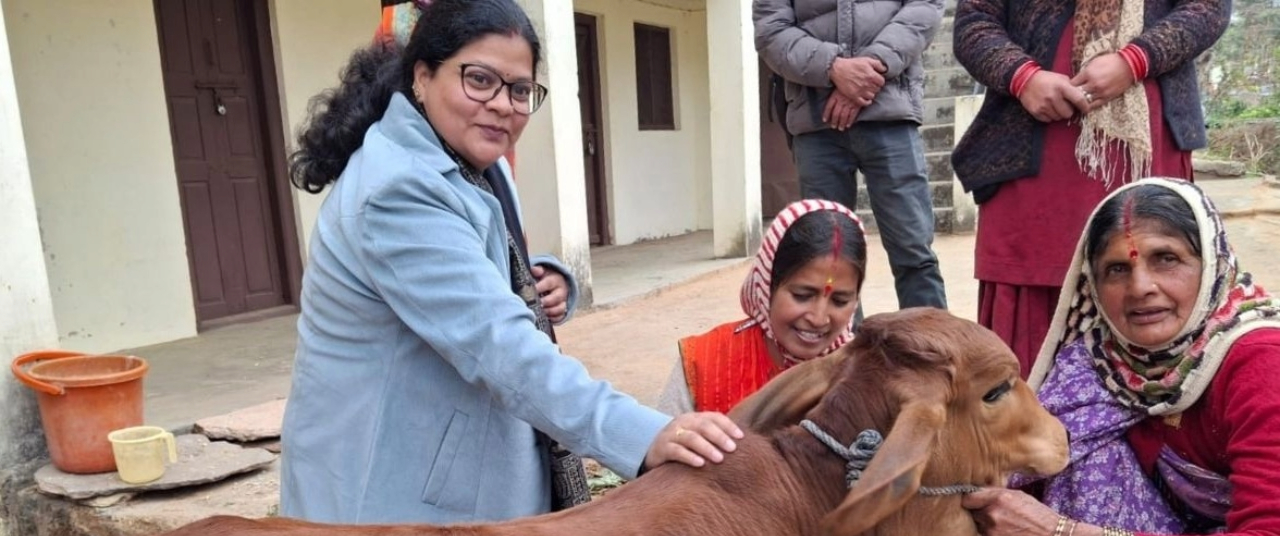
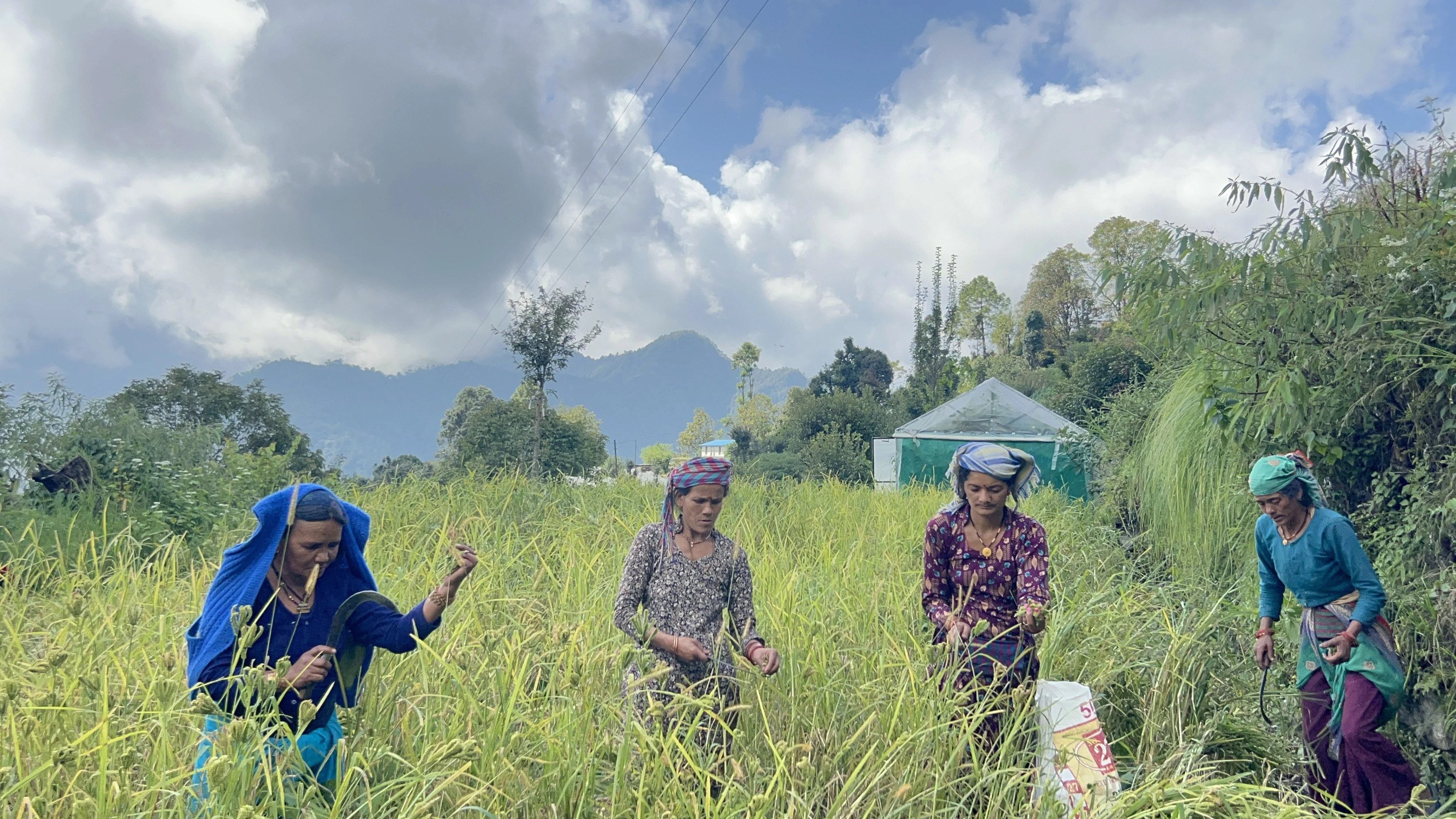
In her mid-fifties, Gwanli Devi bends over a small patch of farmland in Shama-Dana, a village of around 25–30 families in the Kapkot block of Bageshwar district, Uttarakhand, harvesting madua (finger millet) alongside six other women. September’s inclement weather has already ruined much of the harvest, and attacks from monkeys, birds and wild boars make their work urgent. The women move quickly, trying to salvage what remains before further unseasonal rains strike.
To reach Dana, one leaves the main road at Shama and descends half a kilometre along a winding path, scattered with rough stone steps cut into the hillside. The climb back up tests one’s endurance.
Behind the women, a small polyhouse stands, and kiwi vines sag under the weight of fruits still a month away from harvest. Laughter breaks out often—sometimes at inside jokes, sometimes at government policies they say have done little for rain-fed farmers, and sometimes, at my questions.
But one thing they all agree upon is that kiwi plants have changed their lives. “Lagana, paragaṇ karna or seechna toh bahut mushkil hai. Bahot parishram karna padta hai. Par fayada bahot hota hai (Planting, pollinating, and watering are tough. They require a lot of hard work, but the benefits are great),” observes Gwanli Devi, who took up kiwi farming five years ago. Since the roughly 100 plants in her fields began fruiting three seasons ago, she has earned around Rs. 60,000 per season.
Seventy-five-year-old Lakshmi Devi echoes this sentiment about hard work and the fruit. The 100-plus kiwi plants she has cultivated over the past five to six years—about 75% female and 25% male—have done more for her income than any other regional crop in decades. “Even if planting them is laborious, they are safe from animals like monkeys and wild boars, and give us good returns. Well, at least something is good,” she notes with a wry smile, offering a chunky cucumber from her fields while complaining about the lack of infrastructure in the village.
The first foray into kiwis
Eight villages in Kapkot block, perched at about 2,100 metres above sea level, have seen their cropping patterns transform over the past two decades. Once dominated by millets, lentils like rajma and bhatt (kidney beans and black soybean), and seasonal vegetables such as cucumber, capsicum, and bitter and bottle gourds, the landscape has steadily shifted toward kiwi cultivation.
The fruit has become both a commercial crop and a marker of economic change, one that neighbouring villages in Bageshwar, Pithoragarh and Nainital have been eager to emulate.
Kiwi arrived in Shama almost by chance. In 2004, under the central government’s Integrated Development of Horticulture project—a precursor to the National Horticulture Mission (2005-06) and now part of the Mission for Integrated Development of Horticulture (MIDH)—farmers from three villages, Shama-Dana, Liti and Badi Paniyaali, travelled to Himachal Pradesh to study horticulture practices.
The fruit has become both a commercial crop and a marker of economic change, one that neighbouring villages in Bageshwar, Pithoragarh and Nainital have been eager to emulate.
They returned, carrying a handful of kiwi saplings. Among them was a cousin of Bhawan Singh Koranga, then the principal of JLN Inter College in Shama, who planted two—one male and one female—on his farm. Within three years, the plants began to bear fruit. “I had always been interested in farming, experimenting with many fruit-bearing plants since childhood. When the kiwis fruited, I thought I could work in that direction,” Bhawan Singh, 76, recalls.
Envisioning kiwis as a retirement plan, a year before he retired in 2009, he ordered a hundred more saplings, planting 50 on his own farm and distributing the rest to fellow farmers in Dana and surrounding villages. The family owns a large chunk of farmland in the village, where they grew traditional crops, mostly meant for consumption and sale in the local markets. Bhawan Singh’s persistence, despite early failures and a lack of technical guidance, eventually made him one of the most respected kiwi cultivators in the region. “Harish Singh Koranga in Liti village was also successful,” he adds.
Also read: No monkeying around on this kiwi farm
India—and the world—experiments with kiwi
The story of the kiwi’s arrival in Shama reflects the fruit’s long journey into India. Originally known as Yang Tao or Chinese gooseberry, it was taken from China to New Zealand in 1904 by Isabel Fraser, an educationist. By 1910, the Allison brothers in New Zealand had managed to fruit it, and the emergence of commercial orchards followed by the 1930s.
In India, the first plants arrived in the 1960s at Bengaluru’s Lalbagh Garden, but failed to fruit. A second introduction in 1963 at Phagli in Shimla (then under the Indian Agricultural Research Institute, now National Bureau of Plant Genetics Resources) succeeded only in 1969-70, laying the foundation for the fruit’s eventual spread in the Himalayan mid-hills. Commercial cultivation has gathered pace only in the last three decades, with Himachal Pradesh pioneering the crop. Today, Arunachal Pradesh, Nagaland, Mizoram, and Sikkim lead in production.
The most widely grown cultivars—Allison, Bruno, Hayward and Monty—can all be traced back to a single seedling that first fruited in New Zealand in 1910. Horticulture scholars note in the book, Temperate Fruits–Production, Processing and, Marketing (2021) that the kiwi’s adaptability, nutritional value, and market potential make it a strong candidate for crop diversification across India’s mid-hill regions, the gentle hills between plains or low valleys and high-altitude hills.
From trials to expertise
In Shama and its neighbouring villages, one of the biggest challenges in the first decade of adopting the kiwi was that farmers struggled to harvest enough fruit. Many did not understand the basic technicalities of cultivation, even though government officials were distributing saplings in the early years.
At Shama’s main market, 46-year-old Draupadi Devi recalled receiving two kiwi saplings about 11 years ago under a government scheme. She planted them on either side of her general store, unaware that kiwi calls for careful management of male and female plants for pollination, proper spacing and support structures like trellis bars or pergolas.
In the years that followed, the male vine thrived, and the female wrapped itself around a pillar, but neither bore fruit. “It was only three years ago that someone told us about grafting the male plant. We tried it, and this season we finally saw two fruits, though one was lost in a hailstorm,” she says, pointing to the lone kiwi still hanging outside her shop.
The kiwi’s adaptability, nutritional value, and market potential make it a strong candidate for crop diversification across India’s mid-hill regions, the gentle hills between plains or low valleys and high-altitude hills.
Bhawan Singh laughs at the story, admitting that until 2014-15, he and many other farmers were making similar mistakes, repeatedly. “We kept receiving guidance, but only in fragments. There was a dearth of technical knowledge in the state, among scientists, bureaucrats, or anyone else. As a result, the fruits were of poor quality, and we couldn’t fetch fair prices.”
He had approached several institutions in Uttarakhand for support—including the G. B. Pant University of Agriculture and Technology in Pantnagar, ICAR-Vivekananda Parvatiya Krishi Anusandhan Sansthan in Almora, and the horticulture department—but the information remained piecemeal. “The most useful guidance came from Dr Kamal Pandey at the Krishi Vigyan Kendra, Bageshwar. But nothing was enough to make kiwi cultivation profitable.”
Driven to find a solution, principal Bhawan Singh pushed for more details, often approaching officials. At the time, the Jalagam Vikas Pariyojana (Watershed Development Project), Gramya II, was active in the state. In 2018, 14 farmers were sent to Himachal Pradesh for a three-day training at Dr Y. S. Parmar University of Horticulture and Forestry in Nauni, Solan, under the project. They returned with the technical skills that finally gave kiwi cultivation in the region a fighting chance.
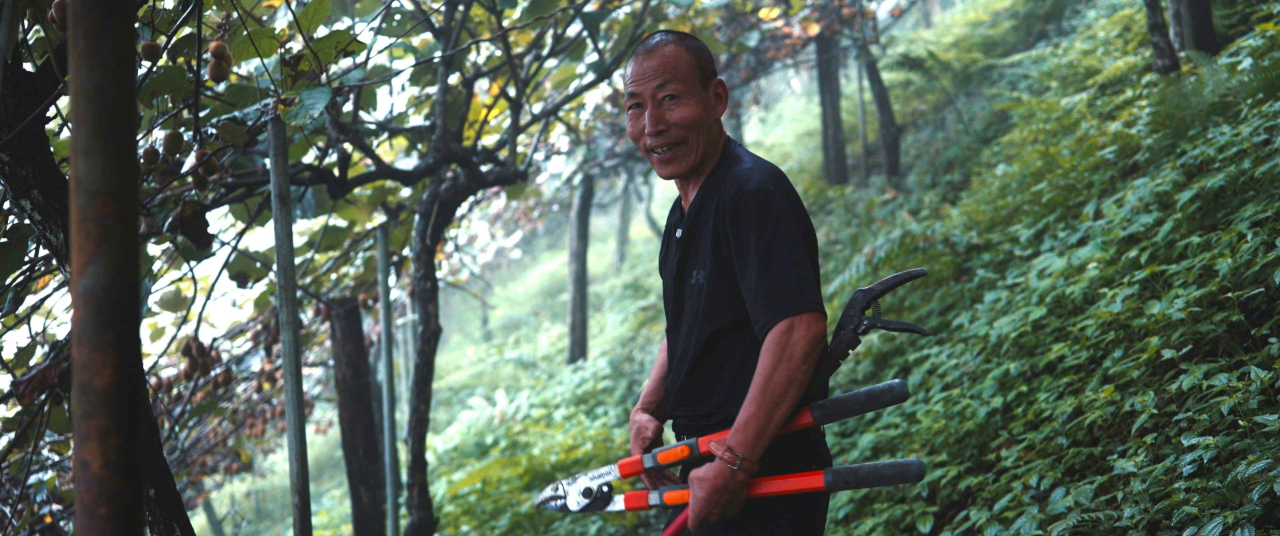
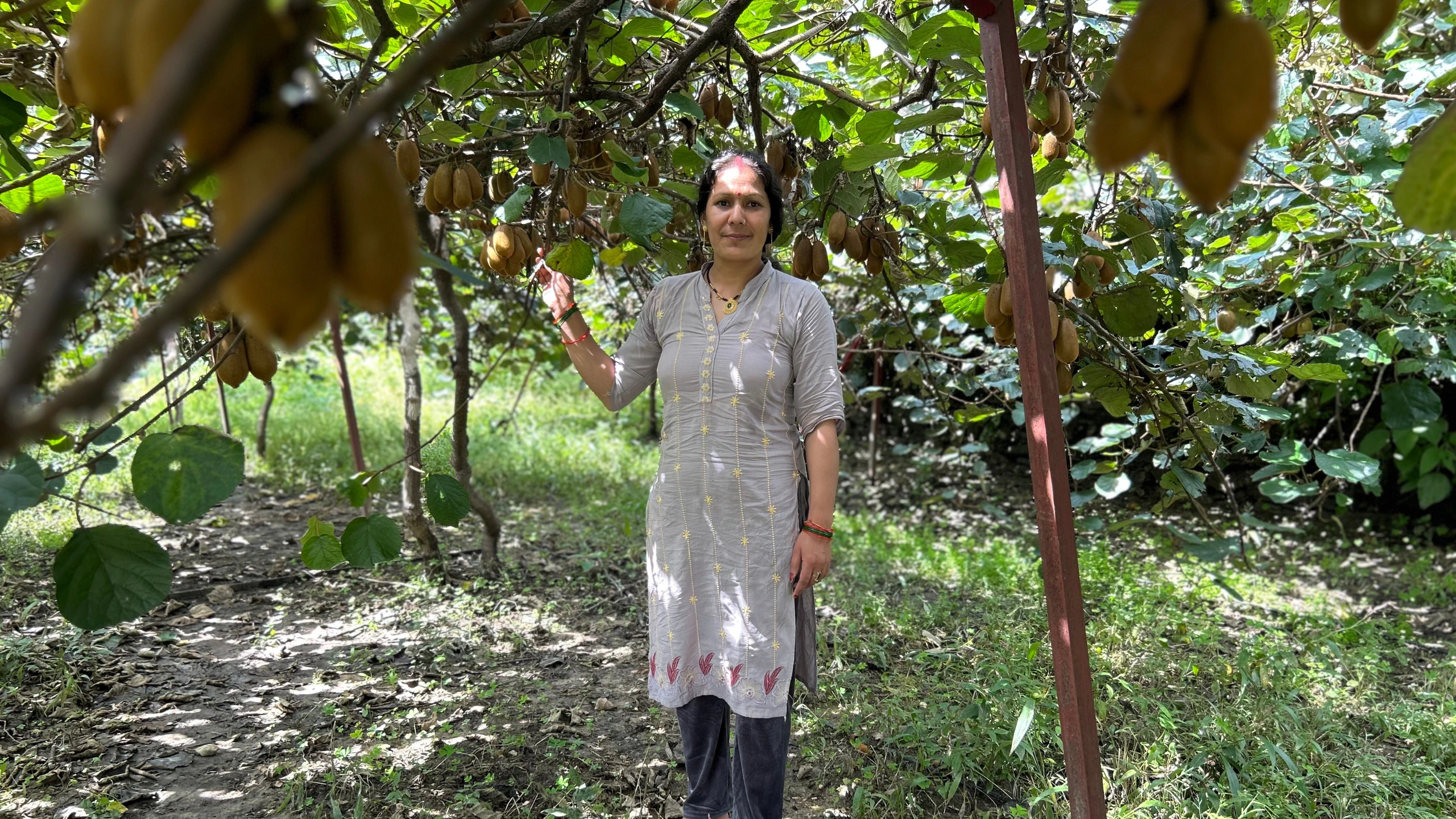
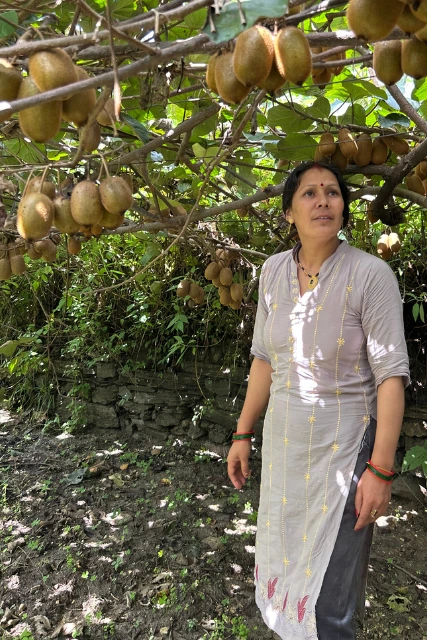
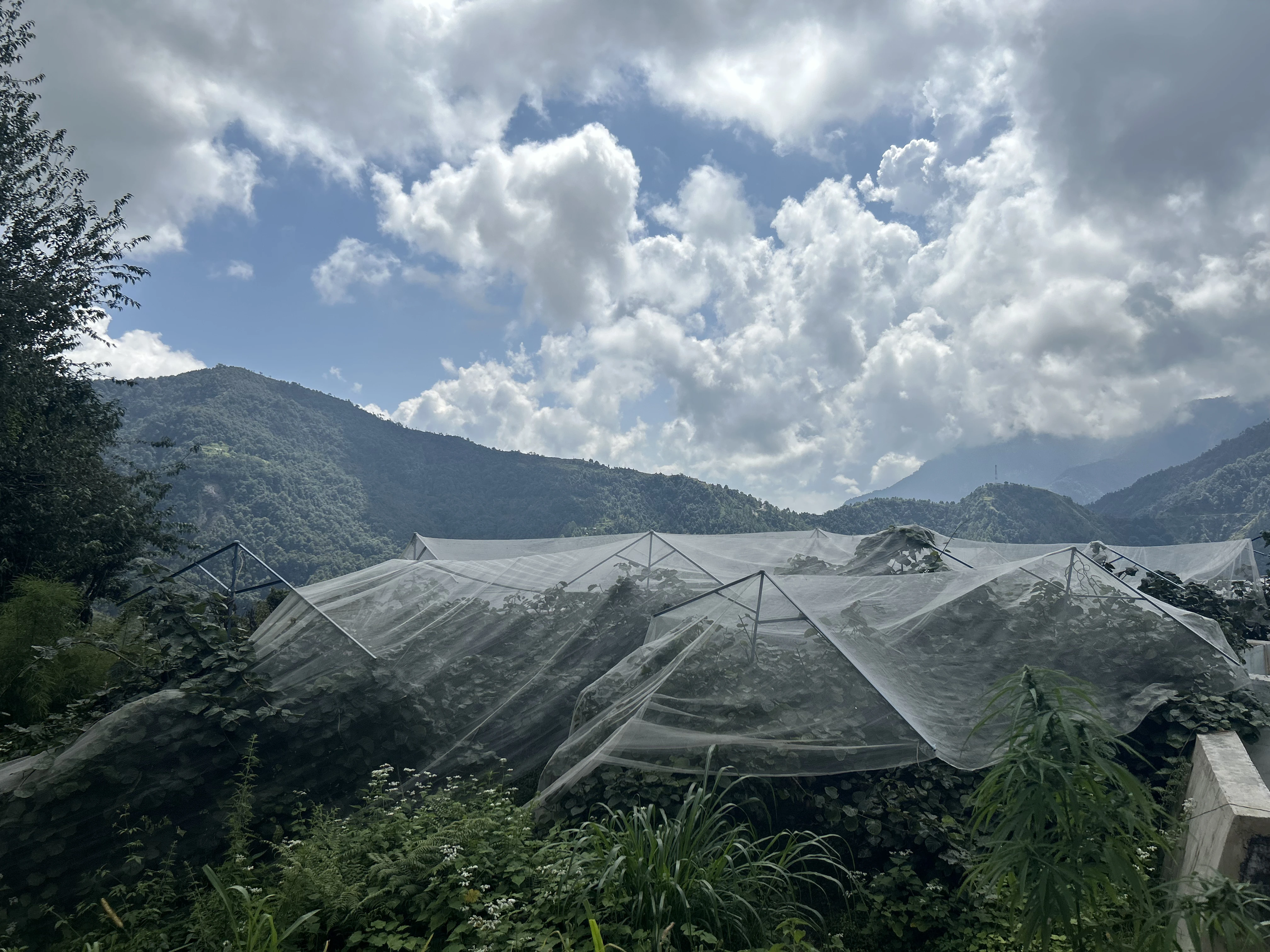
On their farm in Shama-Dana, 38-year-old Nandi Koranga—Bhawan Singh’s daughter-in-law—walks through sprawling kiwi plantations spread across more than 1.5 acres of land, with over 700 trees, lined with water drips, t-bars and polyhouses nurturing saplings at different stages.
In the paper, Kiwifruit–A High Value Crop for Hilly Terrain, H. Rymbai and colleagues from the ICAR Research Complex, Umiam, report that the kiwi fruit grown in India’s hilly regions is largely free from major insect pests and diseases, likely because it is not cultivated in dense clusters. This makes it a promising organic and eco-friendly crop, well-suited to Himalayan conditions. The authors note, however, that temperature remains the key limiting factor, as kiwi requires about 700 to 800 hours of winter chilling for optimal yield.
We kept receiving guidance, but only in fragments. There was a dearth of technical knowledge in the state, among scientists, bureaucrats, or anyone else.
When Nandi begins talking about kiwi, her excitement is visibly palpable. She dives into minute details, “Hayward is sweet and tangy, Bruno is more mellow, Allison has soft, spiky skin; shapes vary too—long, cylindrical or round. And harvests can fluctuate wildly. A mature, 7-8-year-old plant can yield over 1-1.5 quintals of fruit in a good year,” she says, adding that the fruit has transformed the lives of the entire village. An average plant yields around 40-50 kg, some exceeding over a quintal.
“Every family now knows how to plant, pollinate and care for kiwi. On our farm alone, the fruit has created opportunities for 25–30 families each season. It brings steady income and is far less prone to pests than traditional crops. For us, it has become a sustainable approach to look at and practice farming,” she says.
Also read: How lemon groves turned Manipur’s Kachai into a citrus empire
How a growth centre became a game-changer
The training received in Himachal was just the start; it spurred collective action as farmers lobbied elected representatives, eventually leading to the launch of the Uttarakhand Kiwi Mission in 2021, under which farmers received an 80% subsidy on inputs (now reduced to 70%).
In Shama, the momentum translated into the creation of a Growth Centre. Established in 2019 under the same Gramya Watershed Project, the Centre became a hub where cultivation and processing could be pursued systematically. Before reaching markets, the fruit passes through a grading process: large, uniform kiwis above 75 grams are graded A and fetch premium prices; mid-sized, slightly blemished ones are tagged B for local markets; and the smallest, misshapen fruits—C-grade—are utilised for processed food items like juice, jam, pickles or candies.
On their farm in Shama-Dana, 38-year-old Nandi Koranga—Bhawan Singh’s daughter-in-law—walks through sprawling kiwi plantations spread across more than 1.5 acres of land, with over 700 trees, lined with water drips, t-bars and polyhouses nurturing saplings at different stages.
“For the first few years of production, we didn’t know what to do with the C-grade produce. Now, we process those fruits,” says Nandi, handing over a few masala kiwi candies that became very popular in the local market last year. “We realised that while we could manage fruit production, the smaller-sized fruits could be processed into by-products, giving us double the advantage,” Bhawan Singh says.
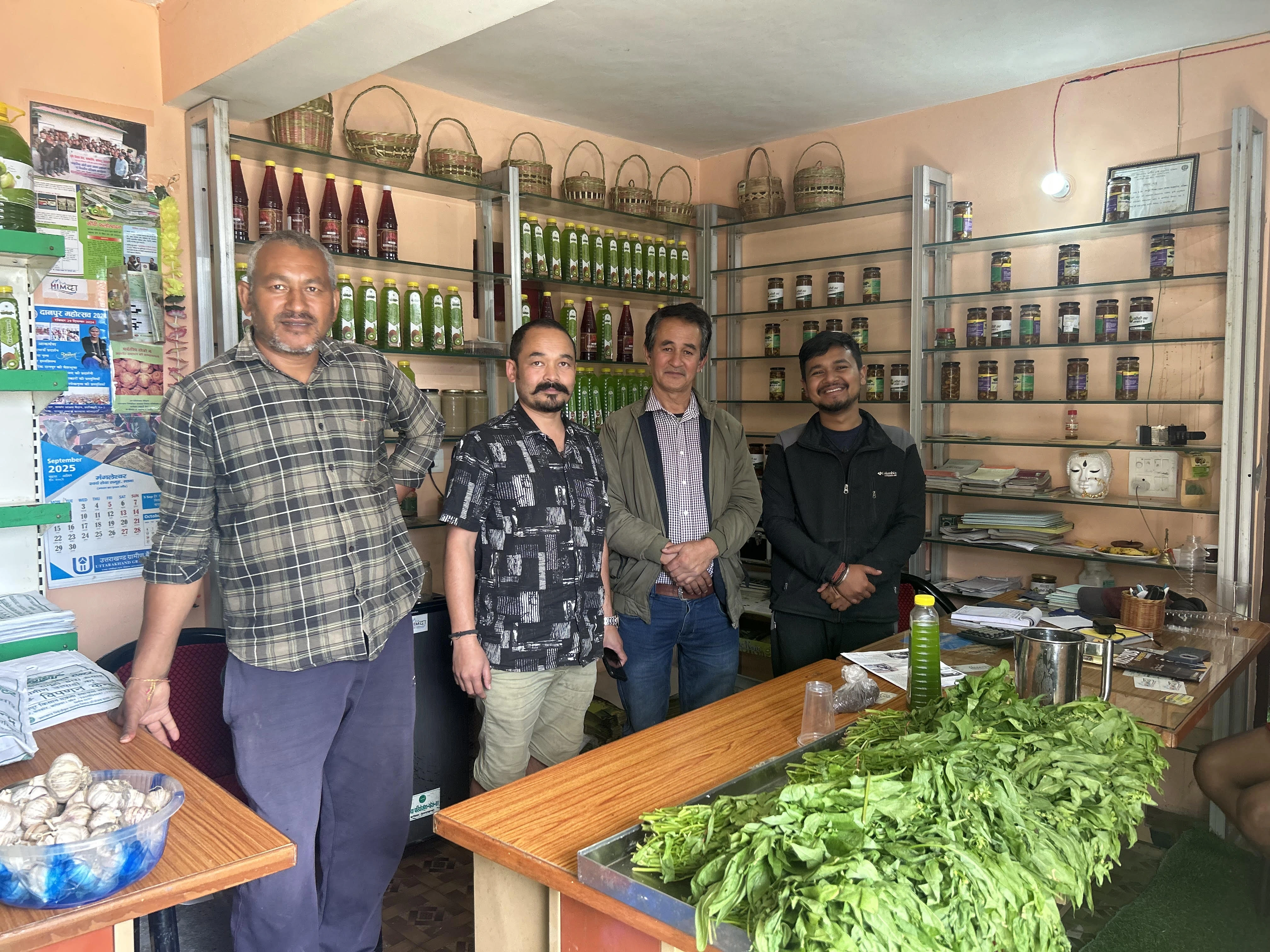
To build this capacity, the Gramya Watershed Project was approached again to send the farmers to Himachal for hands-on training in food processing. When they returned, a processing unit was set up in the Growth Centre building, complete with machinery and training for farmers from eight surrounding villages. Bhawan Singh later started another unit on his farm.
Rajendra Singh Koranga, the president of the Centre since its inception, recalls how many feared the Centre would collapse once the project ended in 2022, “as it happens in most cases when such projects end in three, four or five years.” But he is proud of the youngsters in the region, who came together to keep it alive, noting that “out-migration here is lower than in other parts of Uttarakhand because [we] are doing well.”
The younger generation’s commitment to the fruit’s cultivation took shape in the form of a cooperative society—the Danpur Kisan Ekta Autonomous Cooperative—with 500 farmers from eight nearby villages (Shama, Liti, Badi Panyali, Ramadi, Bhanar, Naukudi, Hamti Kapri and Dulam) and 11 board members. “Having a centralised Growth Centre makes it easier for organisations to reach out to farmers in groups. For instance, when the Goat Valley Project reached our region, they contacted us directly, and we took it forward,” says Dheeraj, a local in his late twenties who manages marketing and new initiatives at the Centre now.
“It has also become a platform where we can experiment. Some villages grow good rhododendron, so we learned to process that. Ramari’s strength is in Malta cultivation, Dulam Patti’s in strawberries—we are working with all that. We are also expanding into dairy, beekeeping and more horticulture produce,” explains Dheeraj, adding that the openness of villagers to new ideas has encouraged them to take risks beyond kiwi in the last few years.
Even if traders ignore them, they travel to village fairs with the products. Now and then, the persistence pays off, too. At the Gail Patal Mahotsav in Kanauli in 2024, they found buyers from Delhi and Noida who have now become regular customers.
Even if traders ignore them, they travel to village fairs with the products. Now and then, the persistence pays off, too.
For both Bhawan Singh and the Centre’s Rajendra Singh, diversification is essential to reduce dependence on a single crop amid climate and other risks, such as soil erosion and changing market demands. And thus, they are continuously experimenting with apples, strawberries and other crops.
However, Bhawan Singh remains confident about the kiwi’s future even now. “The demand is huge, and only a fraction is met locally in India,” he observes.
The data backs him up. A 2022 MDPI study estimated that India met only a quarter of its fresh kiwi demand through domestic production, with 75% imported. Imports have risen steadily, touching $63.7 million in FY25—a 25% jump from the year before. Chile, aided by a preferential trade agreement, remains India’s largest supplier, though imports from New Zealand have more than doubled in value.
The Uttarakhand government has recognised the gap in production and demand. In September 2025, the government announced a ₹800-crore Kiwi Mission to expand cultivation across 3,500 hectares of hill districts, along with plans for a study tour to Arunachal Pradesh and the setting up of a nursery in Bageshwar.
Dheeraj, standing alongside four other young farmers, voices the next aspiration. “We now want a Geographical Indication (GI) tag for the Bageshwar district’s kiwi. It will be crucial for us.”
Also read: How Jalgaon farmers weather storms to make it India’s banana capital
{{quiz}}
.avif)

Explore other topics
References