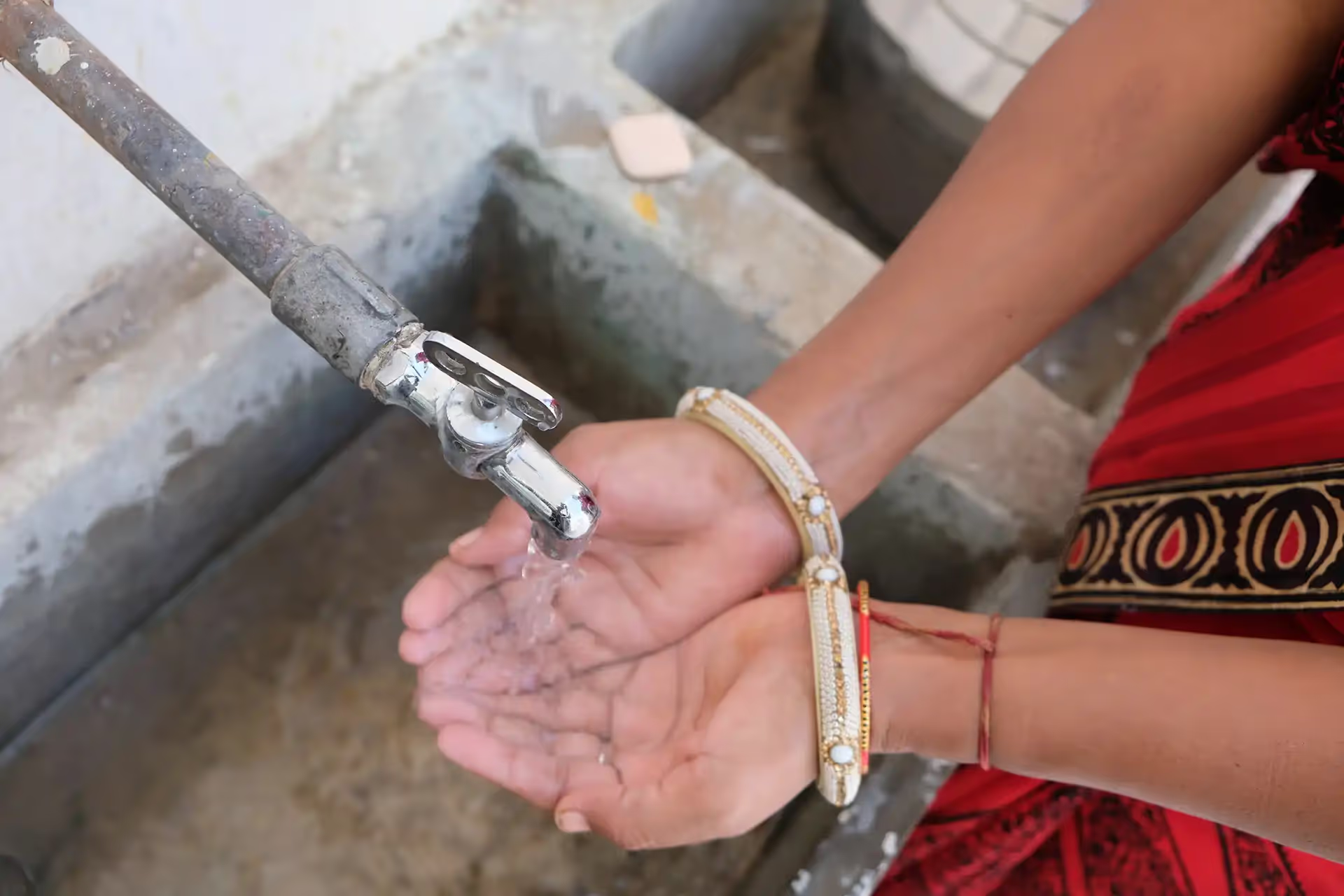
Editor's Note: The last two decades have been witness to the rapid and devastating march of unchecked urbanisation and climate change in India’s cities. Among the first victims of this change is freshwater and access to it—from rivers which sustained local ecosystems, to lakes and groundwater which quenched the thirst of residents. In this series, the Good Food Movement examines the everyday realities of neglect and pollution. It documents the vanishing and revival of water bodies, and community action that made a difference.
On a bank of Mumbai’s Mithi—a serpentine, nearly 18 kilometre-long river—a group of children gather to play at Valmiki Nagar in the Bandra East suburb. One may imagine a childhood by a riverbank to be full of frolicking in its waters, but this is the harsh truth: the children of Valmiki Nagar spend most of their early years amid piles of garbage. A few years ago, a mound of waste near the bank was cleared, which has now become a playing area. Scattered across the ground are pieces of crumpled plastic, torn fabric, and broken debris—little dots splattered on the landscape on a risky, steep slope that drops sharply towards the river.
What can a river, neglected and polluted for decades, take away from human life?
The Mithi has two identities: at once, it is a rain-fed river as well as a stormwater drain.
The Mithi, whose name incidentally—and ironically—translates to “sweet” in Hindi, originates from the Vihar Lake outfall, and also receives water from the Powai Lake further downstream (its upstream catchment area has three lakes—Tulsi, Vihar and Powai). Across its stretch, it is not uncommon to spot people throwing garbage, small-scale vendors dumping scrap materials, and industrial units draining effluents into the river. The Mithi is also choked by untreated sewage and stormwater—and this is not just anecdotal of a particular neighbourhood it snakes through. According to the 2022-23 Water Quality Index, the river exhibits a concerning water quality status with an annual average WQI recorded as 35, indicating it is “Heavily Polluted”. A good, healthy river will have a WQI of at least 75, and excellent health will reflect in a score of above 90.
For over a decade, Talat Jahan, 40, has been residing at one of its banks in Sant Dnyaneshwar Nagar, opposite the Bandra-Kurla Complex (BKC) business hub. She has long given up on the idea of a better future for her neighbourhood. “Everytime my 17-year-old daughter comes back from her hostel, I send her across the river to our other flat as the living conditions here are intolerable for her. Residents get offended and argue with you if you ask them not to throw garbage into the river,” she shares.
Why are the residents along Mithi’s banks left to this fate? The answer is revealed in a series of events that led to this consistent neglect of the river as well as the dwellers living along its shores—only made worse by staggered development, massive embezzlement and an abject ignorance of the city’s topography.
A brief history, from colonial times to 2005
From BKC to the slums of Dharavi, if one were to ask for directions to the Mithi river, they’d perhaps be greeted with puzzled stares and a curious question: “River? What river?” To the locals who have built a life alongside the river, the water body is known as a nallah, a word used to refer to a drain—usually a sewage drain. “Arre, wo toh nallah hai,” they will tell you.
“It is a river for all biological and scientific reasons, but in the Brihanmumbai Municipal Corporation’s (BMC) records, it is referred to as a stormwater drain. For the BMC, the river is a ‘Pavsali nallah’ in Marathi, which means ‘seasonal water drain’,” explains Stalin D., director of the NGO Vanashakti, a Mumbai-based environmental NGO that has been working to conserve mangroves, wetlands, rivers and coastal belts for nearly two decades now.
The Mithi has two identities: at once, it is a rain-fed river as well as a stormwater drain. Originally, it was only a river with water flowing solely in the monsoon season. It was a part of the city’s water supply chain, used as a transport system, and importantly, the estuarine region of the river fed and supported the local fishing communities. It was large, clean, deep. But it was in the way of a growing city.
In the late 18th century, when Mumbai was a collection of seven islands, a major land reclamation project began; under the East India Company, the erstwhile Bombay was to become one, joined city. Land was reclaimed from the water bodies flowing in and around the city, and all seven islands were united by roughly 1838. This put into motion a series of land reclamation projects that would, again and again, sew Mumbai’s lands together.
Alongside reclamation, encroachments—slums and unauthorised construction—significantly narrowed the river’s flow path, reducing its natural capacity to carry floodwaters and causing severe bottlenecks.
The Mithi river has always been important to Mumbai. It runs through some of the densest areas of the city, and is able to drain water from multiple suburbs like Powai, Andheri, Kurla, and Bandra when it rains. It also provides the most direct route to carry the excess runoff to the Arabian Sea, where it eventually drains off. And Mumbai’s particular topography, which affords it excessive rainfall in the monsoon season, presented the need to think carefully and urgently about flood planning. And so, as Mumbai underwent rapid urbanisation, the Mithi was “trained” as a stormwater drain.
The Mithi's annual average Water Quality Index (WQI) is 35, categorising it as a 'Heavily Polluted' river.
Large-scale land reclamation drastically reduced the river's original 800ha, as reported in 1930, to 400ha by 1973. In 1978, the Mumbai Metropolitan Regional Development Authority (MMRDA) reclaimed 370 hectares of land to create the Bandra Kurla Complex (BKC), of which 220 hectares were borrowed from the Mithi estuarine reach. Additionally, the construction of Mumbai’s International Airport and all related work from 1977 to 2004 also reclaimed swathes of land from the Mithi, destroying surrounding mudflats—essentially crumbling an entire ecosystem that traps toxins and houses biodiversity as well as nutrients crucial to the health of the river. The constant work at the airport forced the river to deviate unnaturally and rearranged its erstwhile linear flow.
These infrastructural changes were not without consequence: Since Mumbai is an island city, several parts are at a low altitude above mean sea level (MSL). When high intensity rainfall coincides with high tide, flooding takes place in low-lying areas. That was the case of the sudden deluge on 26 July, 2005. The suburban part of the city experienced unprecedented, heavy showers with a record of 944 mm of rainfall in 24 hours—and the highest rainfall intensity of 190.3 mm in one hour between 15.30 pm to 16.30 pm. This coincided with the highest tide of 4.48 m.
The Mithi—choked, thinned and heavy—extracted its revenge by throwing up caught rainwater into the city, leading to a devastating flood in a form that was much worse than it otherwise could have been.
Alongside reclamation, encroachments—slums and unauthorised construction—significantly narrowed the river’s flow path, reducing its natural capacity to carry floodwaters and causing severe bottlenecks. “The river’s training was not really focused on the river itself, but on creating assets, with what remained taking the shape of the river,” says urbanist Gautam Kirtane.
Blanket of garbage on Mithi river on Sant Dnyaneshwar Nagar.
To be neighbours with a neglected river
Presently, as the water from the Vihar lake flows down, it passes through Filterpada, a notified slum and the first immediate settlement on the river. Zoya, a 10-year-old who lives in Filterpada, shares that she battles swarms of mosquitoes every night, relying on repellants like coils.
When the water from both the Vihar and Powai merges, the river threads through the neighbourhoods of Morarji Nagar and Jai Bhim Nagar in Powai. As one steps down from the main road to enter into the slums of Jai Bhim Nagar, the river emerges as an open-mouthed dumping site for household waste. In the area, a visibly gigantic freshwater pipeline passes over the river, through the two localities. This risky pipeline is often used by children and adults to walk over and cross the river in a hurry.
Ahsan Akhtar Sayyed, over 70 years old, has lived in Powai's Jai Bhim Nagar for over two decades. He is also the president of the Aadarsh Rahiwashi Welfare Committee, a group formed to resolve the issues of Mumbaikars living in the area. “Earlier, though the water was polluted, as it included wastewater from households and the runoff from cleaning filter tanks, the Mithi was never stagnant. Today, aside from the monsoon season, the river is inert, which leads to waste getting accumulated and rotting for several months—sometimes years,” says Sayyed. In this neighbourhood, the river is covered with blankets of hyacinth and other waste.
A few months before every monsoon, a strange routine unfolds: a bulldozer collects the waste rotting in the river.
Barring one placed in front of Sayyed’s house, there are no dustbins in the riverfront lane. Neither is there any door-to-door collection of waste here, Sayyed informs; even this lone bin was provided by the current MLA of Andheri East, Murji Patel. Residents are asked to dispose of garbage in one dumpster kept at a distance; with access so curbed, residents are left with no choice. As a result, an unbearably foul smell emanates from the bank.
“Yeh garib basti hai (This is a slum),” says Sayyed, “People here leave early in the morning and return home late, after work. It is difficult for them to worry about environmental issues when they are finding it difficult to make ends meet.”
A few months before every monsoon, a strange routine unfolds: a bulldozer collects the waste rotting in the river, Sayyed shares. “But since a dumping truck can’t enter inside the narrow lanes of this neighbourhood, the garbage is levelled back into the river.” Stalin throws light on this inexplicable phenomenon: the waste is levelled inside the river when heavy rains are expected so that it can be carried further downstream as the river flows. The waste then gets collected in the mangrove near the BKC estuary area, polluting the ecosystem heavily.
Notably, the Mithi has been consistently included in Priority I of Mumbai’s polluted river stretches, primarily due to Biochemical Oxygen Demand (BOD) values exceeding 30 mg/l. The average BOD of Mithi in 2022-23 was 37.3 mg/l, and the maximum was 82 mg/l.
Retaining walls are constructed along riverbanks to secure the edges between two ground surfaces of different elevations. However, in the case of Mithi river, these were constructed to train the river’s course for flood control, after the 2005 floods. Jal Biradari, a community dedicated to the protection and revival of rivers, and the Vanashakti NGO challenged the Coastal Regulation Zone (CRZ) clearance granted for constructing retaining walls, which impeded water flow to mangroves. In May 2016, the National Green Tribunal imposed a Rs 25 lakh fine on the MMRDA as environmental compensation for violating CRZ norms by constructing retaining walls.
“Years ago, in 1995, this place felt like our village. The river was dirty and had waste dumped on the sides, but it was visibly clean in the centre. There were no retaining walls and the water was 15-20 feet deep. People would bathe in it and wash their clothes at the banks,” Sayyed says, recalling the “acche din” of the river’s past.
For Sant Dnyaneshwar Nagar’s residents in BKC, it is a nightmare to bear the consequences of all these years of neglect. One is greeted by heaps of solid waste on the entrance road of this area; not only can you find residents and shopkeepers throwing waste nonchalantly into the river, but also children competing against each other–aiming for the farthest shot. The river is heavily contaminated with plastic bags, scrap materials, food waste, metal, alcohol bottles and thermocol waste. You may even happen upon an unbearable sight for any nature lover: birds like sparrows, crows and egrets searching through waste to find food for themselves.
As is the case in Powai’s Jai Bhim Nagar, there is no dumpster in sight at the riverfront lane. In fact, in the low-lying area of Valmiki Nagar, it won’t be surprising to find an empty dustbin afloat at the bank’s edge, surrounded by trash.
"Previously, we tried to install dustbins in Sant Dnyaneshwar Nagar, but delinquents either burnt them or sold them to scrap dealers for quick cash," says Lubna Shaikh, a social worker. During the scorching heat of the summer, locals have no option but to take calculated breaths amid the stench of rotting waste that persists for months, even years, as water in the river remains stagnant. “This is a densely populated area where malaria, dengue and typhoid are some of the most common diseases,” Shaikh adds.
Talat Jahan, who has a family of five and runs a paan shop, says, “Earlier, I used to confront people, but now I have resigned and accepted that I will have to live in this condition. I don’t have time to get into fights or arguments—I have a family to run and look out for. People in the neighbourhood have accepted this lifestyle.” She has a rental stay near Kalyan on the outskirts of Mumbai where a door-to-door garbage collection service can be opted for. But owing to her livelihood and her husband’s illness, she is bound to reside in Sant Dnyaneshwar Nagar. Mumbaikars like her question the unfairness of living in a city where one neighbourhood has access to garbage collection services, but the other is entirely deprived of them.
During the scorching heat of the summer, locals have no option but to take calculated breaths amid the stench of rotting waste that persists for months, even years, as water in the river remains stagnant.
The typical pre-monsoon sight of an excavator crane in Bharat Nagar removing the waste and hyacinth from the river—leaving a trail of charcoal-coloured leachate behind on the road—is a stark reminder of how year-long neglect takes a physical form. This year, as of June, this waste collection drive was not undertaken.
Excavator crane desilting Mithi river from Bharat Nagar.
The nearby neighbourhoods of Maharashtra Nagar and Valmiki Nagar (across the river) bear the brunt of Mumbai’s heavy rainfall. “The residents have to pay a heavy price as there is an absence of retaining walls in these regions since 2017, when exceptionally strong rainfall led to collapse of the previous wall,” shares Shaikh.
The retaining walls serve more than one purpose. Urbanist Gautam Kirtane sheds light on a sociological phenomenon—“splintering urbanism”—that emerges from geographical division: about how the city's local train lines shape its wealth brackets. For example, the areas to the west of the Western Line include suburbs like Bandra, Santacruz, and Khar that are far more affluent than the eastern side of the same line: Dharavi, Bandra East, and Kurla.
Such a pattern can also be observed along the course of the Mithi river. "The Mithi is the most in-your-face example of the distinction between slum and non-slum areas. It actually divides the city into administrative divisions. All that is on the east of the river are the eastern suburbs and on the west, the western suburbs. Much of the administrative boundary is also defined by this wealth differentiation. So, from a sociological perspective, these retaining walls are the great wall of Mumbai," says Kirtane.
The urbanist has observed a difference in waste management policies for slums and non-slums in Mumbai. “In the slums, a project called the Swachh Mumbai Prabodhan Abhiyan (SMPA) is conducted on a voluntary basis. But ideally, waste collection is supposed to be a mandatory function of urban local bodies,” he explains, arguing that this unequal treatment stems from the city's perception of slums. “There's a classist and casteist undertone to this reality,” he explains.
While residents have adapted to the river’s polluted state, their survival costs them multifold—in health, safety, and dignity. The authorities’ piecemeal efforts across desilting, retaining walls, and offering unfulfilled promises have failed to address the root causes of the river’s degradation. “The Mithi comes under the storm water management department of the BMC. Stormwater is meant to carry only rainwater, the garbage in the rainwater is to be removed by the solid waste department. The solid waste department puts its hands up when tasked with removing waste from the storm water area,” says Stalin, underscoring how the responsibility of ensuring their well-being, safety and health falls squarely on the shoulders of riverbank residents, abandoned by city authorities and urban planners.
Editor’s note: The last two decades have been witness to the rapid and devastating march of unchecked urbanisation and climate change in India’s cities. Among the first victims of this change is freshwater and access to it—from rivers which sustained local ecosystems, to lakes and groundwater which quenched the thirst of residents. In this series, the Good Food Movement examines the everyday realities of neglect and pollution. It documents the vanishing and revival of water bodies, and community action that made a difference.
“We’re flushing money down the commode!”
When Professor R. Rajagopalan exclaims this, he neatly captures both the value of water, as well as what we lose by simply flushing it away and draining it into lakes. Recycling water, treating it via Sewage Treatment Plants (STPs), and re-using it in our daily lives is not merely a question of water sustainability anymore. When run and used properly, STPs can enable climate resilience, recharge groundwater tables and blue, full lakes, as well as save a lot of money.
Rajagopalan, a former professor at the Institute of Rural Management (IRMA), believes this fact—and lives it. He has been the Chairman of the massive L&T South City Apartment complex in Bengaluru—a residential space comprising 1998 flats with over 7,000 residents—for over a decade. “We get our water supply from three main sources,” he explains. “Our onsite borewells, public water supply delivered by the Bengaluru Water Supply and Sewerage Board (BWSSB), and water tankers. At one point, we had 60 tankers coming every day to fulfill our needs. Who wants to hunt for so many tankers? Forget Bengaluru, it's too much for me to manage.” Tankers also don’t come cheap; Rajagoapan reveals that his apartment complex was spending as much as Rs 12 lakhs a month on them.
A city in crisis
2023 was declared a drought year by the Karnataka government. Rainfall in this year was inadequate in meeting the city’s water needs, so in the summer of 2024, Bengaluru made the national news for imposing restrictions on water usage for citizens. This led to loud protests across social media from residents of apartment complexes. More invisibly, it had steep consequences for the most vulnerable in the city.
In January 2025, the BWSSB and Indian Institute of Sciences (IISc) identified 80 wards that they understood to be most at risk to face a severe water crisis and scarcity in the summer. They recommended switching to Cauvery connections, with groundwater depleting at a faster rate.
They also note one crucial point in the face of this crisis: even as consumption of water has increased in the last few years, the amount of wastewater that is recycled in the city still remains low.
According to Water, Environment, Land and Livelihoods (WELL) Labs, a Bengaluru-based non-profit and research organisation, the factors that cause Bengaluru’s water crisis are interconnected. In their 2023 report, How Water Flows Through Bengaluru: Urban Water Balance Report, co-authors Rashmi Kulranjan, Shashank Palur and Muhil Nesi write: "With abundant rainfall and little room for recharge, wells run dry as drains overflow. Despite being allocated water from the Cauvery river, the expanding city, particularly the newer suburbs, has become increasingly dependent on a fast-depleting resource—groundwater.”
They also note one crucial point in the face of this crisis: even as consumption of water has increased in the last few years, the amount of wastewater that is recycled in the city still remains low.
It was during this crisis, in April 2024, that Rajagopalan made his case to the residents of South City. He explained that investing in a retrofit project for reusing treated wastewater (TWW) from an installed STP for flushing toilets would benefit them financially and environmentally, of course—but more importantly, this would make them more water-resilient. Stronger in the face of future crises.
“The timing of our project was important. If water is not available in a high-rise building, it will cause hell. When the Bengaluru water crisis came in 2024, the only way we could ration water in South City was to stop water supply in one bathroom in each flat. Sheer irritation was introduced,” he says, with a touch of humour. “People are willing to throw away money to buy more tankers, but you can not over-consume water when the city is suffering. What we found was that out of 12 lakh litres that we used every day, between 3-4 lakh litres was for flushing. With the BWSSB water supply never being sufficient, we had to buy tankers just for flushing. It was too expensive. So people were eager to get the retrofit for treated water use implemented.”
South City made a commitment to BWSSB: they will execute the treated water project expeditiously, if their sanitary charges can be reduced in proportion to their extent of treated water reuse. Currently, houses in a domestic highrise pay a minimum of Rs 100 or 25% of their water bill per month as sanitary charge if they get their water from BWSSB, or a flat amount of Rs 100 if they get it from borewells.
“We retrofitted 1630 apartments in 18 high-rise towers. Within a matter of 6 months, between March and September of 2024, we started saving 3.5 lakh litres of fresh water a day, and Rs 9 lakh per month on freshwater purchase through tankers,” Rajagopalan says. “People realised that they were literally flushing money down the toilet, because each house was using one tanker a month—just to flush! After installing the STP, tankers have been reduced by about 10%. In fact, after accounting for the usage of this treated water in our housing complex, we still have enough to let out into a neighbourhood lake.”
This makes South City a pioneer—the first apartment in Bengaluru to strike an MOU with the State Pollution Control Board and Bruhat Bengaluru Mahanagara Palike (BBMP) to let treated water revive a lake. “We also supply our treated water to a large public park. Our retrofit project is living proof that policy support could trigger an environment-friendly private effort to conserve water,” Rajagopalan adds.
A problem of abundance
In 2016, the BWSSB passed a mandate that required every apartment complex larger than 20 units to have their own STP and reuse all their treated water, but was met with resistance. In 2023, the mandate was amended; it stipulated that residential and commercial buildings above a certain area should install on-site decentralised sewage treatment plants (STPs).
WELL Labs reports that Bengaluru generates enough wastewater a day to fill over 750 Olympic-size swimming pools. This is more than the amount of water it draws from the ground or the Cauvery river. Critically, the city’s water supply and sewage system does not cover the rapidly growing suburbs with higher population densities.
The city now has the largest number of decentralised STPs globally—about 2,700, which can treat over 615 million litres of sewage every day. Beijing has 2000 such STPs, San Francisco has 50, and New York only has 30 plants. But many of Bengaluru’s plants are being under-utilised: many are defective, don’t meet specifications, and the apartments may remain unaware of the problems with the plant.
But there is one more problem with treating wastewater in apartments. About 30 kms across South City, an STP was installed for the residents in Century Saras in Yelahanka right when the complex was being constructed. However, even with 128 flats and over 350 residents, this society never had BWSSB connections, still doesn’t, and does not want them in the future.
According to Suresh Pai, Vice President of the Century Saras’ Owners Association, “We don’t have any BWSSB water pipes here and we are not connected to the sewage lines. The government is always 10 years behind development, but between rainwater harvesting, water saving measures, and our STP, we meet our demands internally.”
In the absence of without support from the BWSSB, there is no market for treated water. (Illustration by Prabhakaran S)
He explains the hesitation in getting a connection now, which will only increase costs. “We save about 20,000 liters of water per day because of the STP. We use most of the treated water in our common areas, and have also given it away to a nearby construction site, but now we have to let some go into the stormwater drains because no one is ready to take our excess water—even though we’re ready to give it for free!”
Pai points out a well known challenge in the STP ecosystem: he mentions the quality control that the building does once a month on its treated water, assuring that it meets every criteria. Yet, in the absence of without support from the BWSSB, there is no market for treated water. “Tanker operators were not ready to take the water, because they can’t use the same tanker for fresh water and treated water. And there were not enough buyers for treated water.”
Local authorities, too, are cognizant of how much treated wastewater is going to waste. Of the wastewater treated by both decentralised and BWSSB-held STPs every day, nearly 720 million litres remain unused. Treated wastewater can replace freshwater in many non-potable uses. In fact, a 2023 report from the Council on Energy, Environment and Water (CEEW), states that 80% of wastewater generated by urban India has the potential to be treated and reused for non-potable purposes like irrigation.
Local authorities, too, are cognizant of how much treated wastewater is going to waste. Of the wastewater treated by both decentralised and BWSSB-held STPs every day, nearly 720 million litres remain unused.
That’s not all. Treated wastewater can even recharge lakes and aquifers, or groundwater levels. Efforts of this nature and scale are regional, and each state actually sets its own policies and standards on mandated usage of treated wastewater, where it can be used, and so on. The Karnataka government lists wetland restoration, river augmentation, and environmental recreation as potential areas for TWW reuse. As of today, the BWSSB is looking to recharge about 40 lakes within Bengaluru with treated water.
As detailed in a Mongabay Indiareport, the state experimented with this in 2018, when it filled 137 water tanks in Kolar, a drought-prone region, with TWW from Bengaluru. In a recent assessment, it was found that the groundwater levels in the Kolar tank have now increased by 73% and the number of water bodies increased by 5 times. The number of trees shot up and even cropping land increased. It was an immensely successful endeavour.
Yet, having too much treated wastewater on one’s hands remains an ongoing issue.
Apartments couldn’t always sell their treated wastewater. In fact, it was only last year that the Karnataka government allowed apartment complexes to sell a maximum of 50% of their treated water. This one move created an entire wastewater market that could potentially meet 26% of the city’s needs. According to WELLS Lab, treated wastewater is being sold at around Rs 10-80/kL–compare this to the price of tankwater, which can go as high as Rs 200/kL.
Shashank Palur, Senior Hydrologist at WELL Labs says, “The wastewater ecosystem hasn’t scaled. While apartment complexes comply with the 2023 mandate, challenges with the quality of treated wastewater remain, and more importantly, the lack of places to send the excess water to. Most apartments can use portions of their treated water for green or common areas, and some can use them for flushing, but the remainder is let out into the drains. The BWSSB has set up a website where organisations can buy treated water from their STPs, but it has not caught on.”
According to WELLS Lab, treated wastewater is being sold at around Rs 10-80/kL–compare this to the price of tankwater, which can go as high as Rs 200/kL.
The private sector has invested in setting up treatment plants, too. Sachin S.V., Senior Engineer Environment at Bharat Electronics Limited (BEL), shares that BEL put in place a 10 million litre STP along the Doddabommasandra Lake in 2018; since then, the state government has recharged and replenished the 300-year-old lake with the treated water from the STP. “Through our CSR initiatives, BEL is also in charge of maintaining this STP for the next 20 years. With the rising population, STPs are the best option to reclaim 80% of water that is going to waste.”
As Bengaluru moves forward, Palur thinks all these learnings and success stories can demonstrate a more efficient approach to the city’s water with the right mix and scale of STPs, in a more sustainable fashion.
He says, “The BWSSB is building more STPs with better treatment capacities; however, these are towards the outskirts of the city, due to a lack of space. Topographically, (being) at a lower elevation, this makes sense for treatment–but not reuse within the city,”
When it comes to apartment STPs, Palur argues that the approach should shift away from individual apartments to being community-oriented. “Piped network for supplying treated water can be explored, as it makes better economical sense in the long term. The larger city-wide trunk line for treated water supply needs to be owned by BWSSB, but the initial efforts can be taken up by the community, and (helped by) incentives by the BWSSB. We are working on that right now, coming up with models and vetting solutions to see how this can work out.”
Editor’s note: The last two decades have been witness to the rapid and devastating march of unchecked urbanisation and climate change in India’s cities. Among the first victims of this change is freshwater and access to it—from rivers which sustained local ecosystems, to lakes and groundwater which quenched the thirst of residents. In this series, the Good Food Movement examines the everyday realities of neglect and pollution. It documents the vanishing and revival of water bodies, and community action that made a difference.
The sweat on your brow, the dew on a leaf, the droplets lingering on your umbrella—all evaporate, condense into clouds, and return to the Earth as rain. They make themselves at home in rivers, seas, wells, aquifers and the like. Ultimately, they make their way back to you, flowing from the taps you use to wash your face, to the streams you dip your feet into. The story of the water cycle is the story of the oldest, most consistent system of recycling this essential natural resource.
Recycled water makes a comeback
As the 1970s rolled around, the climate crisis really unveiled itself. This is when reusing water became an environmentally conscious thing to do. But long before that, people in Greece, Yemen, and closer home in the Indus Valley had the same idea: they were also connecting homes to drains, and drains to sewers, and sewers to agricultural fields. Such sanitation practices stayed relevant, and in fact, proved all the more important after several water-borne epidemics ravaged parts of the world. In the mid-19th century, for instance, European cities were planned in a way that the urban sewage would drain into nearby agricultural land, aptly named 'sewage farms'. But eventually, the growing density of populations and the increase in human settlements reduced the land available for agriculture, and other avenues had to be found to get rid of wastewater and sewage. Herein emerged septic tanks, contact beds, and trickling filters (the latter two use layers of microbes to filter and clean water) that allowed treated wastewater to be directly fed to freshwater sources.
The return of recycled water is owed to various factors, but it mainly ties into pollution, our depleting groundwater sources, increasingly irregular weather, and the growing fear that we might run out of water.
In the 20th century, these technologies became sophisticated, and one could now recycle large volumes of water in compact spaces. Urban areas spilled into rural ones, and the need to move wastewater to agricultural lands shrunk. The idea of reclaiming nutrients from used water for farming became arcane.
Now, we are inching back towards exploring the potential of recycled water. In late 2019, Chennai launched two Tertiary Treatment Reverse Osmosis (TTRO) plants that purify sewage water to the same quality as raw freshwater. In the town of Devanahalli, Karnataka, thousands have been receiving recycled drinking water since August 2023. In its annual civic budget for 2025-26, the Brihanmumbai Municipal Corporation (BMC) allocated Rs 5,545 crore for constructing seven advanced tertiary treatment plants (ATTPs) in Mumbai, which serve the same purpose.
Turn the tap, turn it back. Water gushes and retreats like magic, and we never pause to decode the magician's trick. Where does the water come from? Well, it depends on where you come from. In their paper published in 2015, researchers Mihir Shah and Himanshu Kulkarni proposed a 6 x 4 matrix to understand a city's relationship with its water.
Imagine a city as a cell: we start with a small nucleus (stage I), the centre of development. The cell grows (stage II) and expands (stage III) into suburbs and peri-urban areas. Finally, some cities either expand their boundaries significantly or merge with a satellite city (stage IV). These 4 stages comprise the first axis of this matrix. At each stage, the water supply system morphs and builds upon its former self. While a growing township starts out relying on private wells and borewells, as it grows it formalises into a system of pipelines and tankers.
At each stage, the water supply system morphs and builds upon its former self. (Illustration by Aditya Manoharan)
However, water infrastructure in India tends not to catch up with expanding cities. The nucleus continues to receive formally established public water supply, while suburbs tend to source water privately through tankers, and those on the very periphery may continue getting their water from private borewells.
For example, in Bengaluru, large parts of the city receive either Kaveri water or groundwater through the Bangalore Water Supply and Sewerage Board (BWSSB). However, the BWSSB does not yet have a presence in the periphery of the city, where residents instead turn towards private tankers or local borewells. Similarly, one’s socio-economic strata plays a role in water access. A slum's notified or unnotified status dictates its access to BWSSB supplies, even if it is located in an area with the requisite infrastructure.
The other axis of this matrix documents six geological classifications of aquifers—underground layers of rock that can store groundwater, like natural reservoirs—in India based on their quality and capacity to transmit and store water. For example, in the Himalayan ranges, aquifers flow across several villages and towns, while most of south India has crystalline rock that has low storage capacity.
The BWSSB currently has 33 STP plants that treat around 1350 million litres of sewage daily before emptying it into storm water drains.
Ultimately, whether in pipes or through tankers, your water comes from rivers, lakes, or wells fed by rivers and lakes. Once it goes down your drain, this water changes its identity, having now become dirty from the processes of cleaning it was used for. In areas where the municipal sewerage board supplies water, it also takes responsibility for the sewerage—by and large. Apartments over 120 units in BWSSB sewerage networks and apartments over 20 units outside of BWSSB sewerage networks are responsible for installing their own Sewage Treatment Plants or STPs.
The BWSSB currently has 33 STP plants that treat around 1350 million litres of sewage daily before emptying it into storm water drains. Apartments, however, are mandated to reuse the treated wastewater. Predominantly, this water is used for flushing and landscaping. Senior hydrologist at WELL Labs, Shashank Palur, shares that excess recycled water is often illegally discarded into storm water drains, too. However, last year during the water shortage in Bengaluru, the Bangalore Apartments’ Federation (BAF) convinced the Environmental Ministry to allow apartments to offer up to 50% of their treated wastewater on sale, provided that they use the remaining half.
A crash course in STPs
To be fit for gardening and flushing, water undergoes two levels of treatment. At the primary level, machinery is used to break down large particles and then separate out particulate matter through sedimentation. At the secondary level, microbes are used to digest organic contaminants like nitrates. The latter is a dynamic process, requiring constant supervision. "That's where the most maintenance and operational cost is," explains Shashank Palur.
However, there is only so much water that can be used for gardening and flushing. A survey of over 200 apartments by Boson Whitewater found that only 20% of recycled water is used for non-potable purposes. The rest is usually discarded or, if permitted, resold.
For sewage water to be drinkable, it needs to undergo tertiary treatment.
If we want to do more with our wastewater, we need to treat it further. Most STPs set up by apartments are only capable of secondary treatment of wastewater. The next round is cost-intensive, and requires added, trained personnel. Charcoal or sand filters are considered the baseline for any tertiary treatment, but they are often supplemented with reverse osmosis (RO), ultrafiltration (UF), ultraviolet light (UV), and chlorination. Each of these methods target different kinds of impurities, and are often used in conjunction with each other. For example, chlorine and charcoal filters are often paired together in water purification systems. Chlorine effectively removes most bacteria and viruses, but is itself harmful for us in large amounts; charcoal filters effectively remove chemicals like chlorine, thus protecting from the negative byproducts created during the purification process. But the silver bullet of water purification is RO: it removes everything, from viruses to dissolved solids and even the natural minerals of water, resulting, practically, in distilled water. Most RO filters are accompanied by a mineral bed to add back necessary minerals into drinking water.
These internal variations in any tertiary treatment process mean that tertiary treated water cannot automatically be declared potable—it needs to be tested to meet certain requirements and safety standards.
However, public animosity to the idea of treated wastewater comes from more than just the ‘yuck’ factor felt while drinking it.
At the national level, the Union Ministry for Consumer Affairs, Food and Public Distribution sets guidelines through the Bureau of Indian Standards. Currently, two standards pertain to drinking water: IS 10500:2012, and IS 17482:2020. The former pertains to drinking water quality specifications, while the latter covers the management of drinking water supply systems.
The BIS 10500 tests water for 6 physical characteristics, 24 chemicals, and 12 toxic substances. Moreover, water must also be tested for radioactive substances and pesticides. For most parameters there is an acceptable limit for these characteristics, and a permissible limit in the absence of alternate sources. For some parameters, like radioactive substances, there is no relaxation even in the absence of an alternate source. If water quality is below the acceptable limit, then despite the absence of alternate sources, that source should not be used to supply drinking water anymore.
However, the BIS is a standard and not a law. This means that while a conscientious supplier can obtain a certificate proving the quality of water supplied, it cannot be enforced for all suppliers. This lack of enforceability is exacerbated by the fact that water supply is a State subject. While the Centre can nudge the states in a certain direction (as the Jal Jeevan Mission does), it must leave enforcement in the hands of individual states. More recently, the government has also released the draft of the Liquid Wastewater Management Draft (effective from October 2025) which includes expected percentage of wastewater reuse for various kinds of establishments.
Two roads diverge in a yellow wood, and potable treated water cannot travel both. The choice, in this case, lies between Direct Potable Reuse (DPR), and Indirect Potable Reuse (IPR).
Direct Potable Reuse is when the water goes through primary, secondary, and tertiary treatment and is directly piped into the water supply system after spending a meagre 24 hours in a man-made environmental buffer. As a drought-prone country, Namibia was one of the first countries to embrace direct potable reuse through the Goreangab Water Reclamation Plant in Windhoek. Since its inception in 1968, residents have reported no adverse health effects from the consumption of recycled water. Yet, DPR has had to make way for its more popular sibling, the IPR.
Even though it is generally more expensive to treat wastewater through IPR, it is far more common than DPR. (Illustration by Aditya Manoharan)
There are different ways to embark on Indirect Potable Reuse, but by definition, they all involve a natural environmental buffer. The idea is to naturalise water by mixing it with sources of ground or surface water, as well as rain. Sewage water supplied by Chennai city is currently emptied into lakes after treatment and then pulled out for water supply. Palur shares how this is, in fact, counterproductive. "It is known that the quality of water right out of the STP is way better than what comes out of the lake, because the lake has some legacy contamination. That's why, again, they have to put up a water treatment plant next to the lake which pumps the water in and then sends it to people."
This extra step is a response to public discomfort with the idea of drinking treated wastewater; most administrators find it easier to placate people by undertaking an additional level of treatment from the environmental buffer rather than attempting to supply treated water directly. This explains why IPR projects are found far more commonly than their DPR counterparts—even though generally, it is more expensive to treat wastewater through this process.
However, the Devanahalli town of Karnataka has found a more purposeful way of undertaking indirect potable reuse. Its municipality has married the causes of recycled water with lake and aquifer rejuvenation. Diluted treated wastewater is first introduced into Bagalur lake, then rediluted in Sihi Neerukere, and lastly diluted by the earth when it enters the well. Then it goes through a water treatment plant before entering the water supply system. However, for such an indirect potable reuse system to work, there is one non-negotiable requirement: clean lakes and wells. The first thing the Devanahalli municipality did was to clean its lakes and wells, such that it can receive treated wastewater and dilute it with clean surface water and rainwater. Now, multiple tests have attested that Devanahalli’s treated water complies with BIS 10500 standards.
This extra step is a response to public discomfort with the idea of drinking treated wastewater; most administrators find it easier to placate people by undertaking an additional level of treatment from the environmental buffer rather than attempting to supply treated water directly.
“The water that the Devanahalli town was supplying to the town before did not meet drinking water standards, because there was no choice. But now, we are making sure that it is meeting drinking water standards,” shares Vishwanath S, director of Biome Environmental Trust, who provided technical knowledge to the Devanahalli town municipal corporation for this project.
Worldwide, across multiple projects, public response has been a big make-or-break factor in treating and consuming treated water. It only makes sense that the WHO 2017 guidelines have a separate section dedicated to ‘The Art of Public Engagement’ with real-life case studies in tow.
However, public animosity to the idea of treated wastewater comes from more than just the ‘yuck’ factor felt while drinking it. There have been, for instance, plenty of reports detailing the emptying of raw sewage into rivers by STPs, instead of treating it. Small semantic adjustments like calling wastewater ‘used water’ can help with this. But the most obscure obstruction is the lack of public trust in the administration to undertake these processes faithfully, transparently, and correctly. Disillusionment with governments in a policy like this can come at the cost of implementation, and many administrators have had to abandon projects like these. Generally, a policy of transparency is recommended where public backlash is anticipated.
This is where Singapore’s NEWater project took the bull by the horns. In 2003, they introduced a water museum, live tours of the factory through a gallery, and got the political leadership to use their packaged water in public.
In all this, it can help to revisit the philosophy of Dr Lukas van Vuure, one of the pioneers on the Windhoek plant, who is remembered for the quote: “Water should be judged by its quality, not by its history.”
Editor’s note: The last two decades have been witness to the rapid and devastating march of unchecked urbanisation and climate change in India’s cities. Among the first victims of this change is freshwater and access to it—from rivers which sustained local ecosystems, to lakes and groundwater which quenched the thirst of residents. In this series, the Good Food Movement examines the everyday realities of neglect and pollution. It documents the vanishing and revival of water bodies, and community action that made a difference.
At the end of a 14-year-long stint in the US, in 2012, a 38-year-old techie Sunil Jayaram felt an urge to return to India—more specifically to Chennai, the city he calls home. When he set foot on Indian soil, he could not help but notice how much of urban India was drowning in waste. He was particularly struck by what was unfolding in his own backyard: the Chitlapakkam lake, situated in his neighbourhood, was choked by trash—a result of years of civil and municipal neglect. Alarmed by the decline of a public space he once held dear, Jayaram felt an urgency to act.
Chitlapakkam, a locality in south Chennai located about 25 km from the city centre, is home to nearly 60,000 residents. It urgently needed organised conservation efforts to prevent its lake from degrading beyond revival and vanishing. It all began when Jayaram identified the potential of local WhatsApp groups—meant for sharing cinema updates—to bring people together. The oft-quoted words of social activist and Nobel laureate Kailash Satyarthi, nudging people to act, echoed in his mind.
The movement’s spirit and success is also evidenced by how its neighbouring localities admire and emulate it.
He reached out to two other young Chitlapakkam residents, Udaya Utthandi and Ezhildasan. At first, their intent was focused on small-but-effective interventions: painting walls with anti-littering slogans and urging neighbours to keep bylanes and roads clean. But those small acts soon gathered momentum, growing into wider initiatives like weekend cleanups. Thus, Chitlapakkam Rising—which started a people’s movement—was born in October, 2014. To this day, it remains an active presence on Chennai’s streets and Facebook, serving as a platform for people to voice local, civic issues.
Once comprising all of three founding members, the movement has grown immensely over a decade to thousands of volunteers on the ground and followers online, driven forward by a core team of 50. After six years of consistent organising as well as strengthening the community structure and purpose, the work of the movement began to show strong results and came into the spotlight: in 2019, the Tamil Nadu chief minister earmarked Rs 25 crore for Chitlapakkam Rising’s lake restoration project. In 2024, the lake and Chitlapakkam Rising were awarded the Tamil Nadu Governor’s Award for Environmental Protection; they were recognised for designing a replicable, scalable model for urban freshwater resilience. The movement’s spirit and success is also evidenced by how its neighbouring localities admire and emulate it.
'If not you, who? If not now, when?’- the words carried on the backs of CR's volunteers. Even after the lake’s restoration, the spirit of stewardship lives on, as the community continues to nurture what they fought so hard to reclaim.
The fragility of Chennai’s water infrastructure
As per the National Water Bodies Census–that surveyed, for the first time, all of India’s water bodies (in 2017-18)–only about 3% of India’s 24 lakh water bodies lie in urban areas. Across the country, metros and Tier 1 cities are fast losing their water heritage. In Chennai, this erosion is especially stark: once home to more than 474 wetland complexes that supported both people and biodiversity, the city has witnessed an 85% decline–over the last three decades–in the area of its wetlands, due to unchecked urbanisation. This loss has critically affected the city’s natural ability to store rainwater, recharge aquifers, prevent floods, and manage climate-related risks.
The 2015 Chennai flood and following droughts exposed the fragility of the city’s water infrastructure, prompting renewed attention from citizens and authorities. Plenty of reports detail just how Chennai’s water bodies have been degraded by encroachment, garbage dumping, untreated sewage, and large-scale development projects; Chitlapakkam lake isn’t an outlier, but rather an example of a troubling civic reality.
The 40-foot garbage mound that once towered over Chitlapakkam, choking the neighborhood, spreading foul air, and endangering the health of schoolchildren and residents, a true urban catastrophe in the making.
From volunteerism to activism
In the early days of Chitlapakkam Rising, the work taken on by the founding members and volunteers involved tasks like cleaning streets and railway stations. The walls of stations were stripped of old posters and transformed with artwork. The nature of these activities attracted locals, inviting them to participate and engage. Soon, the group began to ask itself questions about the state of waste in their neighbourhood: Why was trash spilling out into public spaces? Why was its management failing? Who was responsible for it? These questions gradually shaped their collective journey from straightforward volunteerism to strong, people-driven activism.
In 2018, a catalyst came in the form of a massive garbage mound, piled over 40 feet high, beside the lake. Its stench and spillover loomed over a nearby government school, making everyday life unbearable for children and teachers alike. They reported constant nausea, vomiting, and respiratory issues due to the burning of this waste and foul smells. Even the borewell water drawn from the school grounds was reported to be contaminated. "We had to bring drinking water from outside," recalls retired school teacher Suguna Sampath.
Additionally, access to clean water became a daily struggle. Residents were paying increasing amounts for tanker water, from Rs. 600 to as much as Rs.1,500 for 6,000 litres during summers. "We used to slip into depression, waiting all day for the arrival of tankers," says Sharadha, an active volunteer with Chitlapakkam Rising.
Despite years of petitioning from 2015 to 2019, government action remained elusive—and never focused on Chitlapakkam.
This personal plight was a microcosm of an eventual citywide collapse: in June 2019, Chennai announced “Day Zero”, with all four main reservoirs—Red Hills, Cholavaram, Poondi, and Chembarambakkam—running completely dry. The whole of Chennai, especially Chitlapakkam, was hit hard, as groundwater declined sharply and access to tanker-delivered water became a matter of survival. On this day, 1.1 crore people went without drinking water.
Despite years of petitioning from 2015 to 2019, government action remained elusive—and never focused on Chitlapakkam. It was only when the citizen movement grew and drew larger public attention that the bureaucrats stepped in. "We decided to desilt the lake ourselves. When we did, 1,500-2,000 people joined us. That pressure made the government act," says Jayaram.
Before restoration: A thick bed of invasive water hyacinth choked Chitlapakkam Lake. Standing at the edge, a man with a stick gazes at the clogged waters, ready to begin the long battle to reclaim the lake.
The local community was moved to act, even as bureaucratic processes moved at their own pace. Driven by a shared purpose to revive their neighborhood lake and its surroundings, a group of informed and determined residents, including engineers, IT sector workers, climatologists, retired government employees, and homemakers, came together to form a collective that continues to highlight the community’s efforts and spirit. Udayavaani, a civil engineer from the neighbourhood, explains, “The challenges we collectively faced brought us together and after the floods, it became clear that no one was coming to help. We had to take matters into our own hands.”
Social media became a powerful, vital tool during times of crisis, helping the residents to mobilise, put pressure on officials, and draw in volunteers. As a well-informed and closely knit community, they turned to social media to organise, amplify their voices, and demand attention. With relentless posts tagging officials and visual evidence in their hands, the community made it impossible for the government to ignore their plea. As a result, in 2019, the government sanctioned Rs 25 crore under the Water Resources Department (WRD) for the lake’s restoration—a milestone for Chitlapakkam Rising.
The WRD’s Assistant Engineer Narendrakumar, who led the restoration, praises the community’s knowledge and commitment, highlighting that daily petitions poured in not just from groups, but individuals, too.
Restoration in progress: The Water Resources Department (WRD) undertaking large-scale work at Chitlapakkam Lake.
Water conservation & flood mitigation
Experts agree that there is no universal approach to restoring water bodies. Each lake or pond has its own set of challenges and must be understood within its specific ecological, social, and cultural context. For this reason, every restoration project begins with a detailed assessment. During this phase, teams study crucial aspects such as water flow patterns, hydrological conditions, and soil quality. Geospatial mapping and climate analysis are also conducted to identify peak water levels and understand seasonal variations.
“Before we began the full-fledged restoration, we decided to approach the problem scientifically,” says Dayanand Krishnan, a civil engineer and a GIS consultant from the community. Many other members–like Krishnan–from the community were mobilised by Chitlapakkam Rising wherever they were needed: for legal processes, political efforts and greening projects. Krishnan, on his end, proposed installing a gate system at all of the lake’s inlets to prevent the entry of sewage water—a first-of-its-kind approach for an urban lake in Tamil Nadu. This would control the inflow and redirect the sewage; a collection well on the southern side of the lake would divert the wastewater away from the main waterbody. The idea was later adopted by the WRD, which eventually designed and implemented the model.
Generally, in urban setups, sewage from homes flows through 6-inch pipelines into manholes, which then transport the waste to pumping stations–essentially, to large underground wells. From there, it is either treated or directed to larger bodies like rivers or lakes.
"The lake was no longer just water storage; it was climate adaptation in action," says Kumaran Ram, a volunteer climatologist involved in the planning.
In the Chitlapakkam model, the lack of visibility in stormwater drains was addressed: when the cover slabs over these drains break or go missing, it becomes difficult to detect whether sewage is mixing with stormwater.
“Another innovation was the way this system helps dry the lake during summers, allowing any residual black water to be drained. This drying period makes it easier to remove siltation. Silt forms a layer that prevents rainwater from percolating into the ground. Think of it like a layer of soap blocking water flow in a bathroom drain; silt does the same to soil, blocking groundwater recharge. By controlling sewage inflow and regularly removing silt, we ensured the lake could breathe again, literally and hydrologically,” says Krishnan.
“Trial pits were dug up to 10 feet to assess soil permeability. Soil samples were tested by PWD labs, confirming that effective recharge was taking place beyond 6 feet. This scientific approach is essential for building climate resilience,” Narendra explains.
Chitlapakkam lake’s original storage capacity was around 7 million cubic feet, but years of neglect had reduced it to just 5 million. The desilting process, along with proper deepening and strengthening of bunds, didn’t just bring the lake back to its former state; they significantly enhanced it. Today, the lake can hold up to 12 million cubic feet of water, storing rainwater during monsoon and supplying it during summer.
For a lake to aid in water conservation and flood mitigation, it must turn dry during summers and absorb water during monsoons, rather than overflowing. The renewed rainwater harvesting capacity in Chitlapakkam was built to withstand 60 cm of rainfall, inching closer to Chennai’s average of 100 cm. "The lake was no longer just water storage; it was climate adaptation in action," says Kumaran Ram, a volunteer climatologist involved in the planning.
Women from Chitlapakkam Rising, key voices in the larger lake restoration movement, proudly standing as part of the community’s success story.
The need for community ownership
Creating walkways, parks, and pathways around a lake can instill a sense of ownership among the youth. "Other lakes around Chennai have started adopting a similar model," says WRD Assistant Engineer Narendrakumar. Such transformations can fill the community living nearby with pride. “During our early postcard campaigns (a movement circulating informational material, collecting signatures), the children themselves pointed to this dumpyard and collected signatures demanding its removal. Today, as we stand in this transformed space, those memories make the journey feel even more meaningful,” says Udayavaani.
“People once called this area ‘Kuppamettu School’ (a school near a garbage settlement) and ‘Saakada Eri’ (a lake turned into a dumping ground)—names that reminded us of how neglected this place used to be. But now, when someone says Chitlapakkam, they talk about the beautiful lake here, and that change fills me with pride”, says Suguna.
However, the construction of a sewage treatment plant (STP) is yet to be initiated by the local government, which leaves the question of long-term success that lasts generations, unanswered.
An artificial island at Chitlapakkam Lake, created as part of restoration efforts, now serves as a safe nesting haven for birds, helping preserve the lake’s vitality.
The way forward
“For any institutional change, classifying all urban water bodies as hydro reserves—akin to reserve forests—would help in their maintenance and make people and governments accountable for any illegal activities taking place in their vicinity,” says Arun Krishnamurthy, the founder of Environmentalist Foundation of India which works across the country for wildlife conservation and habitat restoration. “A multi-stakeholder task force should be created with representatives from the judiciary, government, academia, and local organisations, to keep a check on dying water bodies that can be rejuvenated."
There’s also a need to change public perception: lakes should not be seen merely as recreation zones or flood buffers, but as ecosystems that need biodiversity to thrive. "We all want the lake to be ‘comfortable’ for us. That’s the wrong mindset. Instead, we must think from nature’s perspective," says Ramaswamy, a concerned Chitlapakkam Rising volunteer.
"We all want the lake to be ‘comfortable’ for us. That’s the wrong mindset. Instead, we must think from nature’s perspective," says Ramaswamy, a concerned Chitlapakkam Rising volunteer.
Members of the movement are now extending their support to nearby localities, such as Sembakkam and Nanmangalam, where pressing issues include sewage mixing into the lakes and the rampant growth of water hyacinths, which clog water flow and damage the water table. Alongside their weekly clean-up and maintenance drives within Chitlapakkam, they help other groups by guiding them in filing petitions and raising awareness.
What initially emerged as collective knowledge and learning within one movement, one neighbourhood, has evolved into a sustained, community-driven process—one that thrives on follow-ups, demanding accountability, and a commitment to long-term change. This model of solidarity underscores the power of individuals coming together, not just to clean but to transform. As India faces the escalating twin crises of urban water and waste, the success of Chitlapakkam Rising shows that solutions lie not only in government policy, but also grassroots action. When informed citizens take charge, change becomes not only possible, but inevitable.
Editor’s note: The last two decades have been witness to the rapid and devastating march of unchecked urbanisation and climate change in India’s cities. Among the first victims of this change is freshwater and access to it—from rivers which sustained local ecosystems, to lakes and groundwater which quenched the thirst of residents. In this series, the Good Food Movement examines the everyday realities of neglect and pollution. It documents the vanishing and revival of water bodies, and community action that made a difference.
In the 1950s, Gurugram was just one of many small villages scattered across the tabletop-flat landscape of the Ganga basin. Known as Gurgaon until 2016, the town was only 30 kilometres from New Delhi, but that hardly mattered until the new millennium, when India’s sudden urbanisation transformed Gurugram into a prime example of how reckless city planning can plunder groundwater so quickly that the land on which the city is built immediately begins to die.
Groundwater is a mostly abstract resource to the millions of urban Indians who drink it every day. It seems like something that will last forever, so long as humans can dig deeper and deeper holes. There is little understanding of how the decline of water under our feet connects to life above ground. Real estate developers who were eyeing Gurgaon in the early 2000s didn’t understand these things better than anyone else, and so, in the absence of even a fledgling municipal corporation to guide them (Gurgaon’s wasn’t founded until 2008), they started throwing up apartment towers without thinking about how those towers would ruin the city’s drainage patterns or be supplied with water. They didn’t know–or care to find out–that they were paving over areas like the Badshahpur drain or the Nathupur drain, which are zones that could recharge groundwater. The residents, they figured, could buy groundwater from tanker trucks. It was cheap. People could use as much as they liked.
Real estate developers didn’t know–or care to find out–that they were paving over areas like the Badshahpur drain or the Nathupur drain, which are zones that could recharge groundwater.
India relies on groundwater more than any other country–230 cubic kilometers per year, which is more than a quarter of all groundwater used globally. Piped water provided by city and state governments is often limited and unreliable, but even if that wasn’t the case, India just doesn’t have enough rivers and lakes to slake the thirst of the nation’s people and crops. Farms drink up most of the groundwater, but an increasing amount is being sucked down by satellite cities orbiting major metros, many of which have flared up around New Delhi over the past two decades in a frantic bid to unclog the planet’s second most populated city. None of them seem more infamous than Gurugram, which is now home to at least 20 lakh people who must rely on groundwater for drinking, showering, cooking, and everything else—a huge reason why the Ganga basin is the Earth’s most exploited groundwater supply, and is rapidly running dry.
When groundwater levels plummet, the sudden absence of water forms a funnel, according to Abhijit Mukherjee, a groundwater sustainability expert at the Indian Institute of Technology Kharagpur (IIT-KGP). That funnel starts pulling groundwater from anywhere it can, which means that the surrounding area will also start losing groundwater even if nobody is extracting it. Eventually that funnel starts tugging on nearby rivers such as the Ganga, which relies on groundwater to flow well beyond the glacier where it begins.
“If the water in your backyard is drying out, then your rivers are drying out,” Mukherjee says.
In 1975, groundwater around New Delhi was 6-7 metres below the surface, but now it’s an average of nearly 40 metres down. Much of the region is pitted with borewells that drill more than 300 metres into the soil; in some areas, groundwater levels are plunging by about 2.5 metres per year. From the 1970s until 2016–according to a 2018 Scientific Reportsstudy co-authored by Mukherjee–sections of the Ganga have lost roughly 59% of their groundwater supply, and the river has shrunk in kind. It’s not hard to imagine what would happen to India if its most vital river disappeared every time it got hot outside.
That problem may seem too theoretical to sound any alarms, but signs of Gurugram’s rampant groundwater extraction are already abundant if you know what to look for. Small local rivers such as the Thivi have vanished, some of which reappear only when torrential downpours flood roads that were paved over what used to be their channels. Shrubs and grasses are shriveling because the city’s soil struggles to hold any moisture. Rain sloughs useless dirt into the street.
Small local rivers such as the Thivi have vanished, some of which reappear only when torrential downpours flood roads that were paved over what used to be their channels.
It’s easy to imagine groundwater replenishing with the next big storm, but that’s not how it works. Water seeps into the earth at a rate of only 2-3 metres per year, depending on the geology of the region; also, once an aquifer is sapped of its water, the ground that formed it contracts, meaning it probably won’t be able to hold that same amount ever again. Water extracted from the Ganga basin’s deepest borewells has likely been there since 2000-4000 BC. Last year, Gurugram withdrew double the amount of groundwater that it could naturally replenish, extracting over 200% of the permissible limit.
“When this is exhausted,” says Venkatesh Dutta, a hydrology expert at Babasaheb Bhimrao Ambedkar University, “maybe this area will become like a desert.”
What’s happening in Gurugram and other satellite cities is a warning to the entire country. Nearly 65% of Indians still live in rural areas–compared to about 14% of the US–but India’s rate of urbanisation has soared in the 21st century. Far more is still to come, and if nothing changes, that means much more groundwater extraction.
Satbir Singh Kadian, the chief engineer of the Haryana Water Resources Authority, which oversees Gurugram’s water supply, has struggled for years to rein in the city’s use of groundwater. He insists, though, that Gurugram will soon break its dependency because of two recent developments.
Last year, Gurugram withdrew double the amount of groundwater that it could naturally replenish, extracting over 200% of the permissible limit.
Part of the problem has always been the city’s never-ending construction. Developers drilled borewells wherever they liked and used the extracted water to mix concrete. This went on until 10th February, 2022, when part of a building in the Chintels Paradiso apartment complex collapsed, killing two people and injuring several others. Haryana had banned using groundwater for construction in 2012, but it was the collapse’s legal ramifications that finally forced developers to listen to the government, which told them the groundwater used to build Chintels Paradiso was so full of pollutants like chloride, that the resulting concrete wasn’t sturdy enough. They convinced construction companies to use the government’s treated wastewater instead, free of cost.
The government is also about to start building a canal to bring surface water to Gurugram, according to Kadian. It’s been a long time coming, and “of course” has been delayed, he says, but he believes the canal will be finished in two years. If he’s right, it has the potential to transform the city’s ecology. Then the challenge shifts to getting other cities in the Ganga basin to do the same.
Editor's Note: The last two decades have been witness to the rapid and devastating march of unchecked urbanisation and climate change in India’s cities. Among the first victims of this change is freshwater and access to it—from rivers which sustained local ecosystems, to lakes and groundwater which quenched the thirst of residents. In this series, the Good Food Movement examines the everyday realities of neglect and pollution. It documents the vanishing and revival of water bodies, and community action that made a difference.
At 2 PM every afternoon, 53-year-old Gajanan Budhaji Kadke navigates a narrow, unpaved road in his autorickshaw. This hidden path, invisible from the Mumbai-Satara Highway unless one is specifically seeking the Roadpali fishermen at the Taloja and Kasardi river confluence, leads to his home. Past a handful of makeshift houses, standing at the very end is Kadke's dwelling; it bears a silent visual memory of his past–the fishing nets that were once essential to his livelihood, now hang idly like relics on his shed and the fence guarding it. What led this former fisherman to cast aside his nets and take up driving an auto-rickshaw?
The Kasardi or Kasadi river, spanning 20 km in Navi Mumbai, is more than just a water body—it’s a cultural and ecological cornerstone for Taloja’s (approx) 11,000 residents. Historically, the river was a fishing haven with nearly 45 fish varieties–including mackerel, shark, tilapia, bombay duck and other saltwater fish. The Koli community in areas such as Roadpali, Taloja, Kopara, and Navade have been traditionally dependent on the river and Panvel Creek for their livelihood.
Gajanan Kadke's dwelling where fishing nets are kept on the shed and fence
However, steady contamination of the river has altered their very existence. Untreated industrial and domestic waste disposed in the Kasardi river has decimated fish populations, robbing the Koli community of their primary income source over the years.
“As children, we used to bathe and frolic in the river. Boats used to return full of fish, but now, you won’t be able to catch a single one.”
“A significant primary source of pollutants is the extensive old habitation directly discharging sewage into the Kasardi river. The Maharashtra Industrial Development Corporation (MIDC) has provided stormwater drainage outlets into the river. Beyond the MIDC area, new industries located on the banks of the river in nearby villages like Valap, Tondare, Pendhar and Diwale are also contributing to pollution,” says Dr Vikrant Hemant Bhalerao, Sub-regional Officer at the Maharashtra Pollution Control Board (MPCB), Taloja.
MIDC was established by Maharashtra state in 1962, leading to the quick acquisition of land in Navi Mumbai, which had been newly developed as a satellite town at the time, by the City and Industrial Development Corporation (CIDCO). CIDCO now reports 5,375 industrial plots and a total of 3,928 industries in the industrial belt along Navi Mumbai. “In a few areas, there is a direct flow diversion of the Kasardi owing to illegal dumping and development by the industries located outside MIDC,” Dr Bhalerao explains.
Kasardi river behind MIDC, Taloja
The re-writing of a community livelihood
Dashrath Koli, now in his sixties, quit fishing 12 years ago after casting nets for three decades. “The arrival of the companies by the riverside led to chemicals leaching into the Kasardi. Over the years, it became increasingly difficult for us to catch fish, so I had to quit the profession. It completely ended our livelihood,” he says. Ever since, he’s spent his days at home in Kopara gaon, Kharghar. When asked if he considered pursuing other work, he rues, “Nobody is willing to hire a man above 60.”
Koli’s story is resonant and familiar to many in the community. His household of six is reliant on his son's income from driving an auto rickshaw, as well as the earnings of his wife, Baby, who is a fishmonger. Baby buys catch from the Taloja fish market and sells it in Kopara gaon. She earns roughly Rs 500—and occasionally, Rs 800—per day. As she recalls childhood memories, Baby says, “I used to accompany my father to the riverside...it was possible to drink its water back then.”
Dashrath Koli, now in his sixties, quit fishing 12 years ago after casting nets for three decades.
Gajanan Kadke’s memories of the Kasardi are as clear as the river once was. “As children, we used to bathe and frolic in the river. Boats used to return full of fish, but now, you won’t be able to catch a single one.” A dip was observed in fishermen’s incomes over the past 15 years, when their monthly earnings amounted to only Rs 4,000–5,000—even when the city received heavy rainfall. Previously, they could easily earn Rs 10,000–Rs 15,000 per month. It was only the COVID-19 pandemic and subsequent shutting down of factories by the river that changed their fates: they were able to catch hundreds of kilos of fish in this period.
To combat the lack of fish in the Kasardi, Koli fishermen have constructed small, man-made ponds to breed and catch fish across the city. These ponds are part of a traditional fishing practice, offering a localised ecosystem where fish can thrive and the community can ensure a steady supply. The ponds also help filter out pollutants and allow fish to spawn. In this area, the fishermen’s traditional fish ponds are supported by the Kasardi creek–which in itself is surrounded by spongy mangroves and mudflats. As a consequence, during high tide, the polluted water from the creek flows over, killing the fish being bred in the small ponds. The pond next to Kadke’s dwelling sometimes faces a similar fate. When the monsoon starts, the chemically infused water flows further into the river, polluting these ponds with toxic effluents and ultimately poisoning the aquatic life–before the eggs even mature.
The river changes colour as it meanders through various locations.
Ultimately, financial strain pushed Kadke to switch professions. Beyond its impact on fishing, the Kasardi also limited Kadke’s ability to work in sand quarries. Diving into its toxic waters affected his esophagus, for which he had to undergo surgery twice.
The stark difference in the cost of living across five decades is hard for him to ignore. “My earnings from driving [an auto] are not sufficient to run the family, pay bills and meet our daily and health expenditures. On the other hand, our parents were able to build a home and the foundation for our future as fisherfolk solely by fishing,” he says. For the Kadkes, a home of their own remains a faraway dream in a city that is only becoming more expensive.
Presently, a significant chunk of the river–called Ganesh Ghat–is choked by water hyacinth, which can cut off oxygen supply for aquatic life, block water flow and increase sedimentation, along with algae formation. This is not all: the river changes colour as it meanders through various locations. It turns a caustic orange from the visible chemical effluents, plastic wrappers and clothes choking behind the MIDC area in Taloja, to a grassy green from the algae formation and solid waste dumping near Ganesh Ghat; and then a murky brown colour in some parts. The river has also turned milky white at times–due to the formation of chemical foam on its surface.
In November 2017, 10 CETP members were booked for releasing untreated waste, but the enforcement of norms faltered.
In fact, in 2017, an unusual concern made the rounds in Taloja: suddenly, the residents spotted a group of ‘blue-coloured’ dogs. The sight was bizarre enough to spark concern internationally, as well. The unusual coloration was initially attributed to the dogs wading in the heavily polluted Kasardi, where untreated industrial waste–including blue dye from a nearby detergent factory–was being dumped. It was also considered possible that they were exposed to dye directly at the factory site.
This is not all: the river changes colour as it meanders through various locations.
Beyond just the visual discoloration and waste dump, the river also emits a foul odour and being in its proximity can sometimes lead to irritation in the eyes.
In 2010, Kasardi was already affected by toxic effluents. Studies revealed alarming levels of heavy metals far exceeding safe limits
Community and legal interventions
Said to be Mumbai’s earliest inhabitants, the Kolis sensed that change was imminent when the plan for expanding Mumbai—then Bombay—into the Thane district was initiated in the 1970s. Industries that processed chemicals, fish, pharmaceuticals as well as machinery factories, started developing rapidly and haphazardly around this expanded belt. Newer townships mushroomed. The first to bear witness to this silent devastation were the fish. Species like rawas, prawns, and pomfret that were once plentiful in the rivers and creeks along suburban Mumbai began to disappear.
In 2010, the Kasardi River was already affected by toxic effluents from the Taloja Industrial Belt. Studies revealed alarming levels of heavy metals—chromium, cadmium, lead—far exceeding safe limits, threatening aquatic life and the Kolis’ work. By 2013, the river was declared “unsuitable for fishing” with fish varieties plummeting from 45 to nearly none.
“Machli hai toh hum hai,” says Kadke. If the fish are here, then we are here. He reiterates that fishing is not merely a profession, but a pact between the Koli community and a river that has sustained them for generations.
In 2016, activist Yogesh Pagade and Koli fishermen protested the inaction of the Maharashtra Pollution Control Board in the face of the Kasardi’s rapid degeneration. Even the Taloja Industries Association joined the fishing community to protest the release of untreated waste from the Common Effluent Treatment Plant (CETP) in Taloja that was polluting the river. Their water tests confirmed Biochemical Oxygen Demand (BOD) levels at 80 milligram per litre (mg/L), 13 times above safe limits, killing fish and mangroves. BOD determines the concentration of oxygen required for aquatic life to survive in the water. According to the Central Pollution Control Board (CPCB), BOD levels beyond 3 mg/L and 6 mg/L are unsuitable for human consumption and fish species respectively. The test also concluded high levels of chloride that is toxic for aquatic life and the vegetation.
The MPCB responded in January 2017, ordering a 40% water supply cut to Taloja industries until online pollution monitoring was implemented. In fact, the Taloja CETP’s poor performance was rated the worst among Maharashtra’s 25 units—persisting due to overloaded capacity and unskilled labour. In November 2017, 10 CETP members were booked for releasing untreated waste, but the enforcement of norms faltered. Dr Bhalerao informs, "Since October 2024, the CETP has complied with the norms and guidelines set by the Ministry of Environment, Forest and Climate Change (MoEFCC) and MPCB.”
But the Koli community’s plight still prevailed–in fact, by 2018, it escalated. A 90% drop in fish catch forced many like Gajanan Kadke and Dashrath Koli to abandon fishing. This is when the National Green Tribunal (NGT) intervened, fining the CETP a collective Rs 15 crore for environmental damage and ordering for 371 polluting units to be closed. The case, challenged in the Supreme Court, remained sub-judice. In 2019, four factories shut down, but activist Arvind Mhatre–the complainant who brought the case to the NGT–criticised the MPCB’s lax oversight. Beyond just the chemical effluents, the river was also the victim of illegal debris dumping near the Taloja CETP in 2018.
The Biochemical Oxygen Demand level of the Kasardi river stands at 30 mg/L, which is 10 times higher than the MPCB/CPCB's safer limit
In 2020, MIDC upgraded the CETP to treat 23 Million Litres per Day (MLD) of waste, yet untreated effluents persisted; locals reported health hazards from toxic fumes. Further, illegal tanker dumping worsened the crisis. In March 2023, IIT-Bombay submitted a report to MPCB regarding the restoration of the river, following the NGT’s 2019 orders. It highlighted the presence of chemicals in the river and warned of several health hazards if consumed. The report recommended construction of sewage and storm water drainage systems and diversion channels, asking industries by the river bank to treat their effluents, and coordination between agencies to prevent discharge of untreated waste.
The effort continued into the next year. The NGT had given specific direction to the industry units on curbing pollution, but in vain. Their final recommendation to Mhatre was to approach the Supreme Court of India. In response, the apex court, on July 24, 2024, ordered the MPCB to submit a detailed affidavit within three weeks regarding the chemical pollution in the Kasardi caused by industrial effluents from approximately 900 factories in the Taloja MIDC industrial belt.
According to the Water Quality Status Report of Maharashtra 2022-23, the BOD level of the Kasardi river stands at 30 mg/L, which is 10 times higher than the MPCB/CPCB's safer limit. In that year, samples of Kasardi river were not collected for seven months.
Rejuvenation plans
More recently, in May 2025, the Panvel Municipal Corporation (PMC) launched a rejuvenation project for the Kasardi river to combat severe pollution. Following the inspection on May 14, led by Additional Commissioner Ganesh Shete, authorities identified tankers illegally releasing chemicals at Ganesh Ghat in Navade and Tondare village, prompting immediate action. Shete has asked the CETP and MIDC to help process the chemical effluents already released into the river.
With over Rs 17.4 crore in funding, the project includes constructing check dams and gabion walls, which are mesh baskets filled with stones or rocks; they prevent soil from being eroded away with flowing water. The project also aims at diverting contaminated water to the Common Effluent Treatment Plant, and installing solar-powered CCTV cameras for surveillance.
“Machli hai toh hum hai,” says Kadke. If the fish are here, then we are here. He reiterates that fishing is not merely a profession, but a pact between the Koli community and a river that has sustained them for generations.
Gajanan Budhaji Kadke a former fisherman who cast aside his nets and took up driving an auto-rickshaw
“After the rainy season, the water that flows into the Kasardi river is primarily sewage and water used to clean floors; it's not a continuous source of water as it is a rain-fed river. Removing pollutants is not the only answer; ensuring the continuous flow of water will help in the rejuvenation of the river,” says Dr Bhalerao.
Lately, there has been a lot of emphasis on the establishment of Sewage Treatment Plants (STPs) under several missions like Atal Mission for Rejuvenation and Urban Transformation or AMRUT, Swachh Bharat Mission, and Jal Jeevan Mission, because sewage water can be reutilised for other purposes if properly treated. “An important issue to be addressed beyond just industrial effluents is domestic sewage water, with dysfunctional or defunct STPs, or a few number of STPs; issues to be pondered upon by all authorities,” emphasises Dr Bhalerao.
He further adds, "We will be working on different aeration mechanisms along with building green bridges, which will actually increase the oxygen content in the water. It is also advised that apart from the rainy season, all the MIDC stormwater outlets to the Kasardi river will be completely blocked or diverted to the CETP. We are also planning to install CCTV cameras after every 250 metres. Few social miscreants are engaged in illegal discharge of industrial waste disposal in and around MIDC, for which local police and MIDC need to improve their vigilance.”
Editor’s note: The last two decades have been witness to the rapid and devastating march of unchecked urbanisation and climate change in India’s cities. Among the first victims of this change is freshwater and access to it—from rivers which sustained local ecosystems, to lakes and groundwater which quenched the thirst of residents. In this series, the Good Food Movement examines the everyday realities of neglect and pollution. It documents the vanishing and revival of water bodies, and community action that made a difference.
In an ever-expanding city of 1.4 crore people, where food, language, and socioeconomic class can range wildly from district to district, no question animates the entirety of Bengaluru quite like this one, even if the danger is not the same for everyone.
In 2024, the city was reminded of just how close it lives to disaster. Around 40% of Bengaluru relies on groundwater, which plummeted after little rain fell in 2023 and the early months of 2024. Roughly half of the city’s 13,900 borewells ran dry. Private tanker trucks jacked up their prices, forcing residents to pool their cash to buy water just so they could shower every other day.
In 2024, private tanker trucks jacked up their prices, forcing residents to pool their cash to buy water just so they could shower every other day.
Even the city’s wealthy residents started using their own bathrooms sparingly, showering at work or at nearby gyms. Those who rely on piped water from the Kaveri River were better off–but they, too, were told to use only wastewater when watering their plants.
The onset of rains in late 2024 and early 2025 has prevented a repeat of the crisis this year, but the base condition of Bengaluru’s water supply is nonetheless getting worse. Still, if the city got through last year largely unscathed, what would it take to bring about a genuine catastrophe? Is there a point at which Bengaluru could actually run out of water?
If you’re looking for a specific date, you’re going to be disappointed–but the randomness of the actual answer is only a little less concerning. For Bengaluru, a water crisis is never more than a few fallen dominoes away.
Like most other cities in India, Bengaluru’s water supply (or lack thereof) hinges primarily on rainfall. There’s evidence that climate change has actually delivered more rain to the city than it would otherwise have received over the past few years–but this rain often comes in rough torrents that are difficult for the Kaveri and the earth to absorb, as opposed to steady showers that lead to a stable recharge and supply.
Developers chopping down trees in parts of the Western Ghats that are important to the Kaveri are a part of the problem.
Rampant and unplanned development has not helped. The Kaveri’s water comes from the Western Ghats, where the expansion of coffee plantations and tourist resorts has ripped up so many trees that the ground funneling water into the river can no longer hold much moisture, according to Krishna Raj, a water supply expert at the Institute for Social and Economic Change.
Rain can’t refresh groundwater at the rate it’s being extracted, because the rain simply can’t find the ground.
Chaotic, unplanned development is also an enormous problem for Bengalurueans who get their water from underneath their feet. Bengaluru’s population has exploded since the turn of the millennium, and the city has responded by expanding like an overflowing lake. In 2007, administrators inflated the official size of the city to encompass all the new communities popping up in the outskirts, which were even less planned than the old ones. A lot of these newly included areas were “revenue layouts”—areas that were originally agricultural land that hadn’t been formally converted to residential use. So, at the time, none of these districts had access to a piped water supply.
{{quiz}}
Private tankers filled this gap, plundering groundwater in an ever-expanding radius and selling it to residents at prices that go up as water levels go down. Groundwater is replenishable, but an estimated 93% of the city’s earth will be paved over with asphalt or concrete by the end of 2025. Bengaluru’s green cover has also shriveled from 68% in the 1970s down to just 3% today. Rain can’t refresh groundwater at the rate it’s being extracted, because the rain simply can’t find the ground. It flows down streets and tries to escape through overwhelmed stormwater drains, which is why parts of the city flood about 20 minutes into a decent downpour.
Unplanned development is also an enormous problem for Bengalurueans who get their water from underneath their feet.
Unsustainable reliance on groundwater
It’s easy to think of groundwater as an infinite resource. We can’t see it, and officials who have the tools to measure groundwater and its extraction just aren’t doing it accurately. Earlier this year, for instance, the Bangalore Water Supply and Sewerage Board (BWSSB) reported that extraction is at 800 million litres per day (MLD), while an independent report identified it as 1,392 MLD. There is also a severe lack of adequate monitoring systems and manpower that can span the intricate network of borewells in the city.
What we do know is that groundwater levels are nosediving. According to KC Subhash Chandra, an urban groundwater management expert who used to work for Karnataka’s Department of Mines and Geology, borewells are now being drilled beyond depths of 500 meters. Borewells that deep have likely dug 100-200 meters into Bengaluru’s layer of hard rock, which means they are sucking up possibly ancient water from an underground region that probably can’t be replenished within many human lifetimes.
Even if the water below the city never dries up, pulling it to the surface will cost more and more money, which will make it increasingly difficult for residents to afford.
“If the extraction and mining of groundwater is taking place continuously, about three-four times more than the recharge, then naturally there will not be any water,” Chandra says. The city is consistently extracting water from the ground at an unsustainable rate: in 2023, extraction was reported to be over 1300 MLD, when nature only replenishes 148 MLD through green spaces and water bodies. Even if the water below the city never dries up, pulling it to the surface will cost more and more money, which will make it increasingly difficult for residents to afford.
Groundwater can also be a dangerous thing to rely on even before it begins to run out. Most lakes in Bengaluru are clouded with sewage, and some tankers draw their groundwater from wells that rely on those lakes for their supply, according to Priyanka Jamwal, a water quality expert at the Ashoka Trust for Research in Ecology and the Environment. "People don’t have any option,” Jamwal says. “Even if groundwater is contaminated, what do we do?”
The onset of rains in late 2024 and early 2025 has prevented a repeat of the crisis this year, but the base condition of the city's water supply is still getting worse.
The prescriptions for these problems are all things you’ve probably read before. Developers should stop chopping down trees in parts of the Western Ghats that are important to the Kaveri. Apartments, hotels, houses, and other buildings should all be fitted with rainwater storage tanks, and the government should make sure that this actually happens. Lakes need to be allowed to expand into areas that have been paved over, and they should be cleaned up so that the water seeping underground is safe to drink. Several experts were at pains to point out that Bengaluru actually gets enough water to satisfy the demands of its booming population–for one, through a stormwater flow of nearly 17,500 hectare metres of rainwater every monsoon season. It just wastes the vast majority of it.
It would be easy to invoke a sense of urgency about all this if the city’s water supply had a definitive endpoint, but the nebulousness of the truth is in some ways more frightening.
Bengaluru’s water supply is threatened by a range of problems, and these problems can compound at any time to plunge the city into crisis. Let’s say Bengaluru gets very little rain in 2026. People on the outskirts will have to drill more borewells to compensate, depleting the groundwater supply even further. The city manages to get through the year, but 2027 also brings hardly any rain. A few big storms dump massive amounts of water on the city in a matter of hours, but almost all of it rushes off the pavement and into polluted sewers. Borewells were already drying up, and now they are failing at catastrophic rates. The city can’t dig enough new wells to keep up with demand, and suddenly, that demand includes the center of the city, because the piped water supply from the Kaveri is failing. Decades of deforestation have dried out the river’s supply of water, and two years of little rain have turned the artery of South India into a shriveled creek. Bottled water becomes Bengaluru’s last resort, but prices are so high that only the wealthy can afford to stock up, and even they soon struggle to find any.
Bengaluru will not necessarily run out of water in five, 10, or even 100 years, but so long as the city wastes its supply, the possibility of running dry will never be more than a few years away.
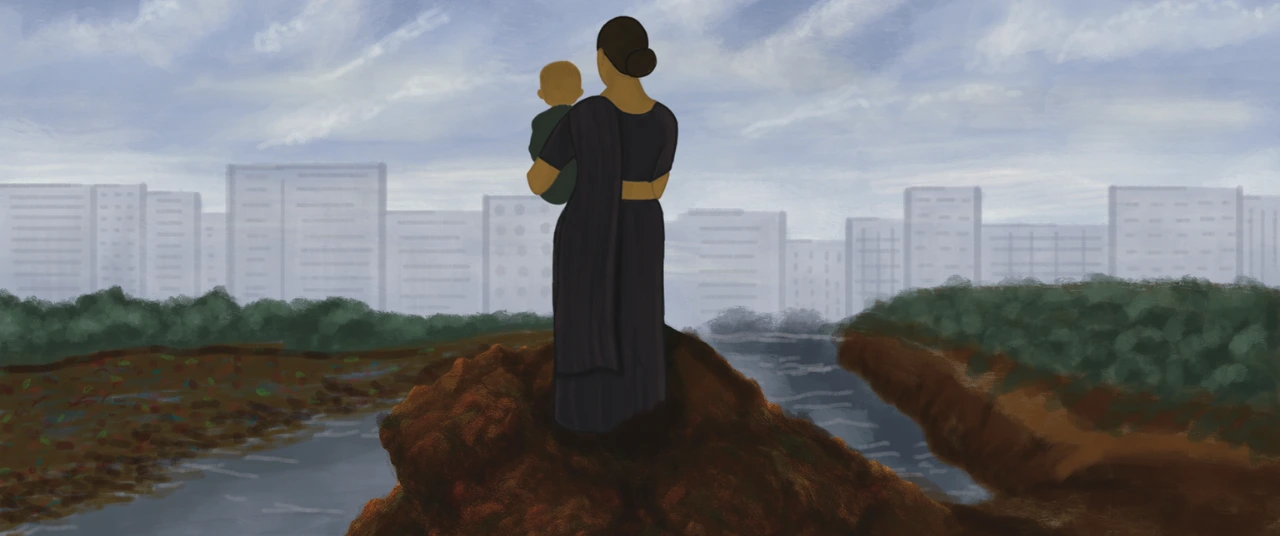
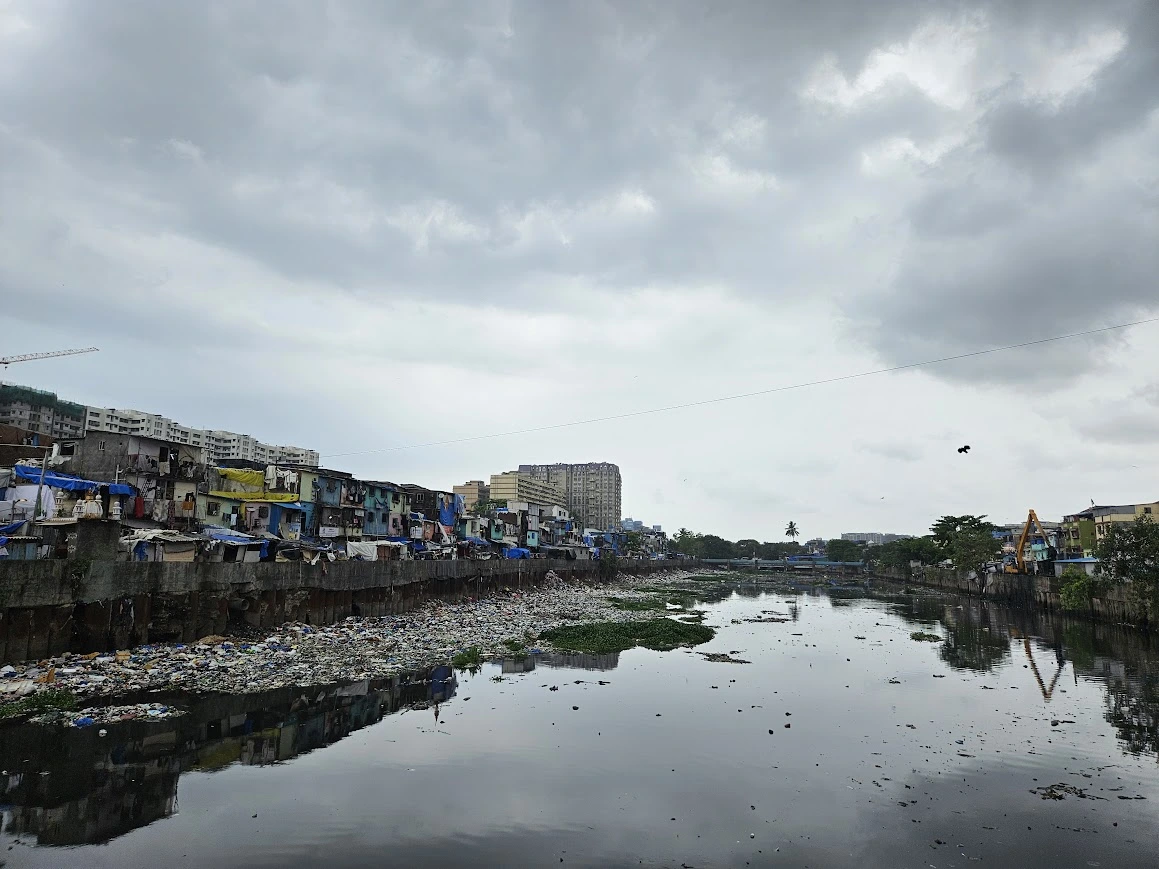

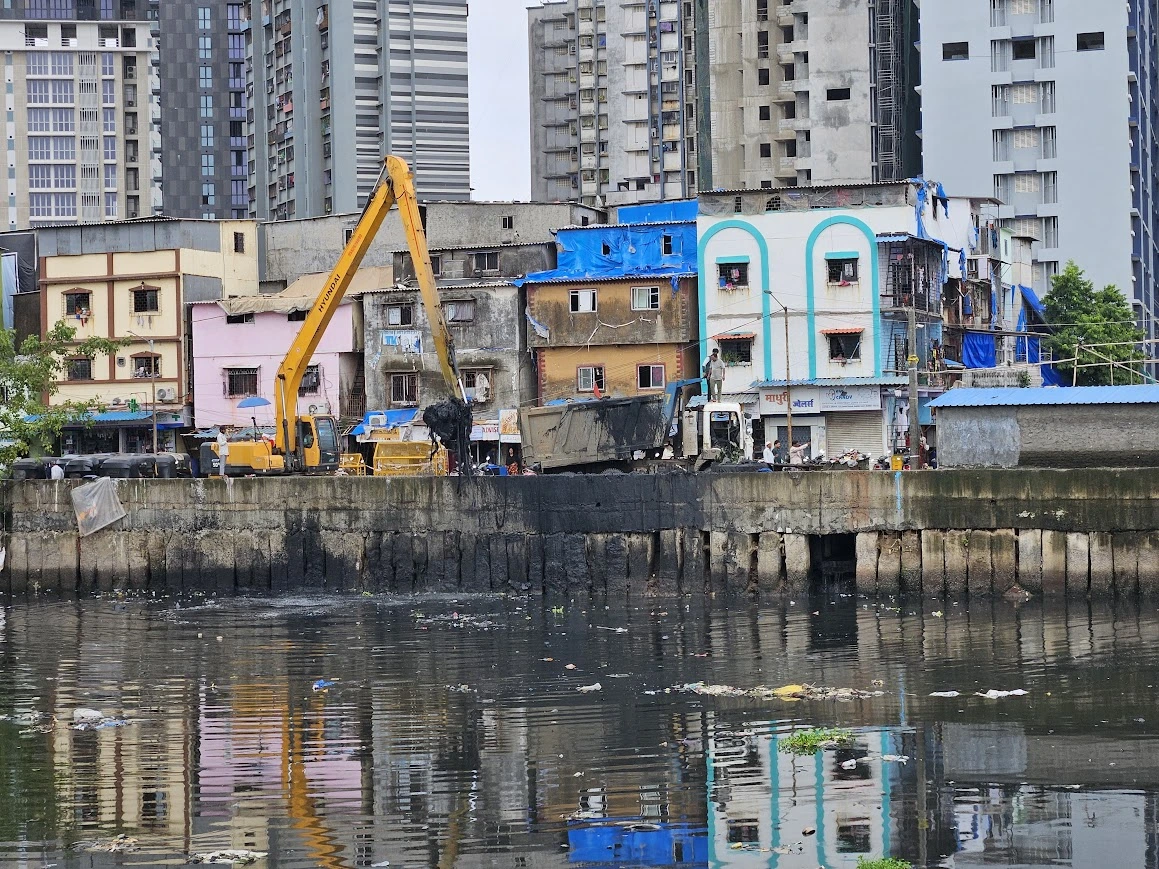

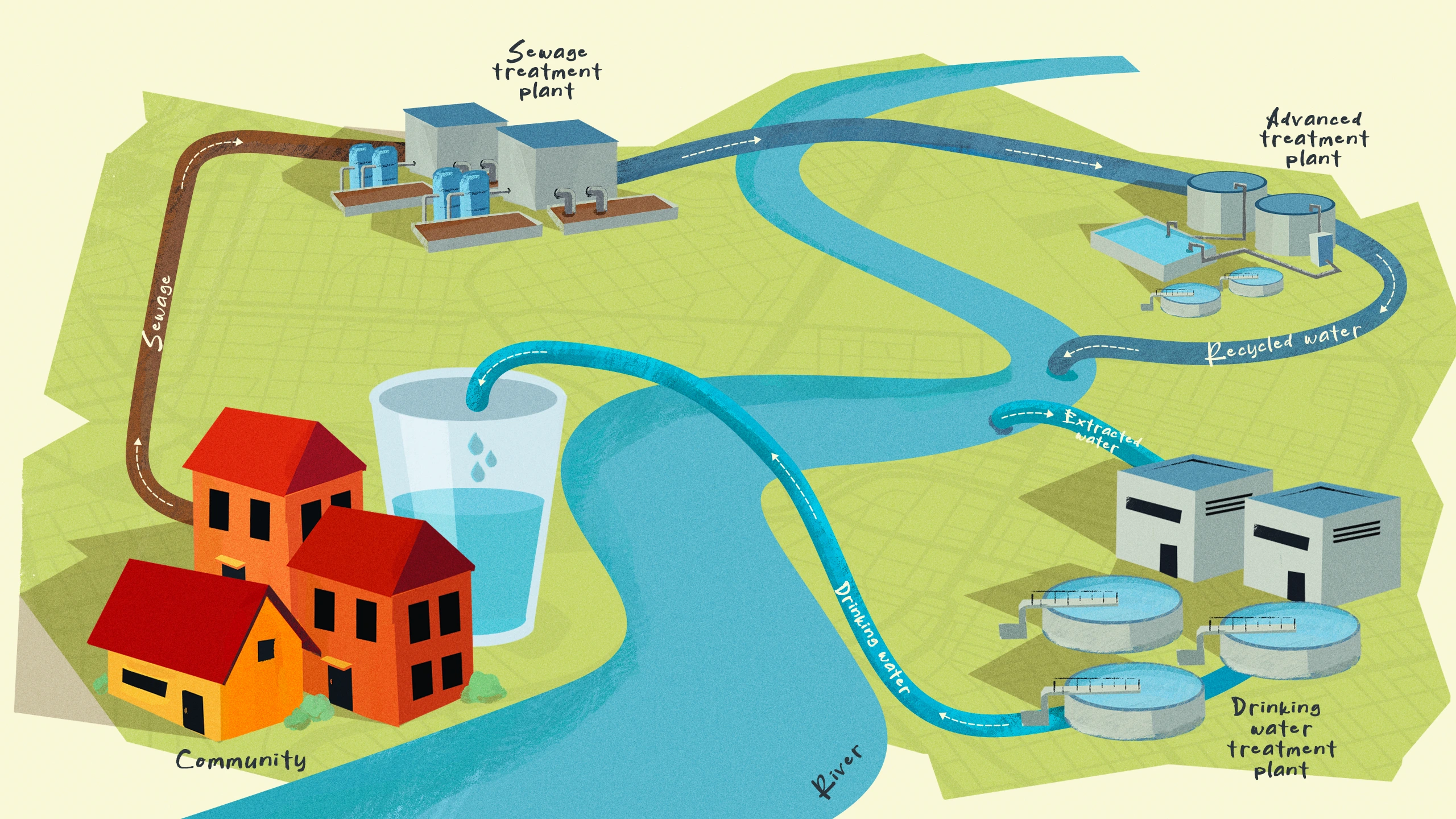
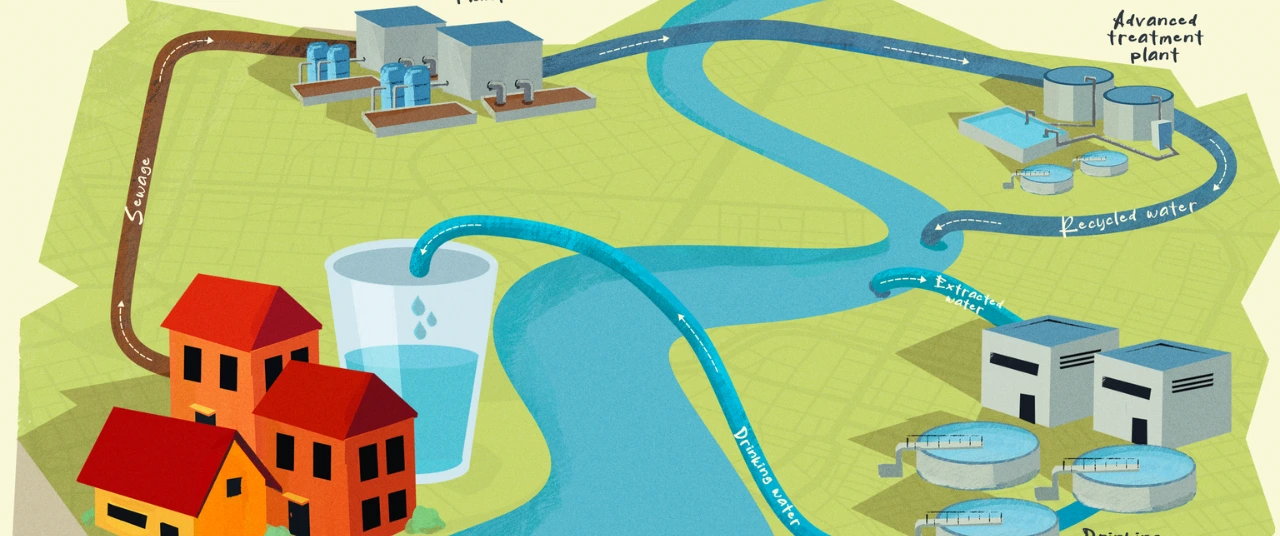
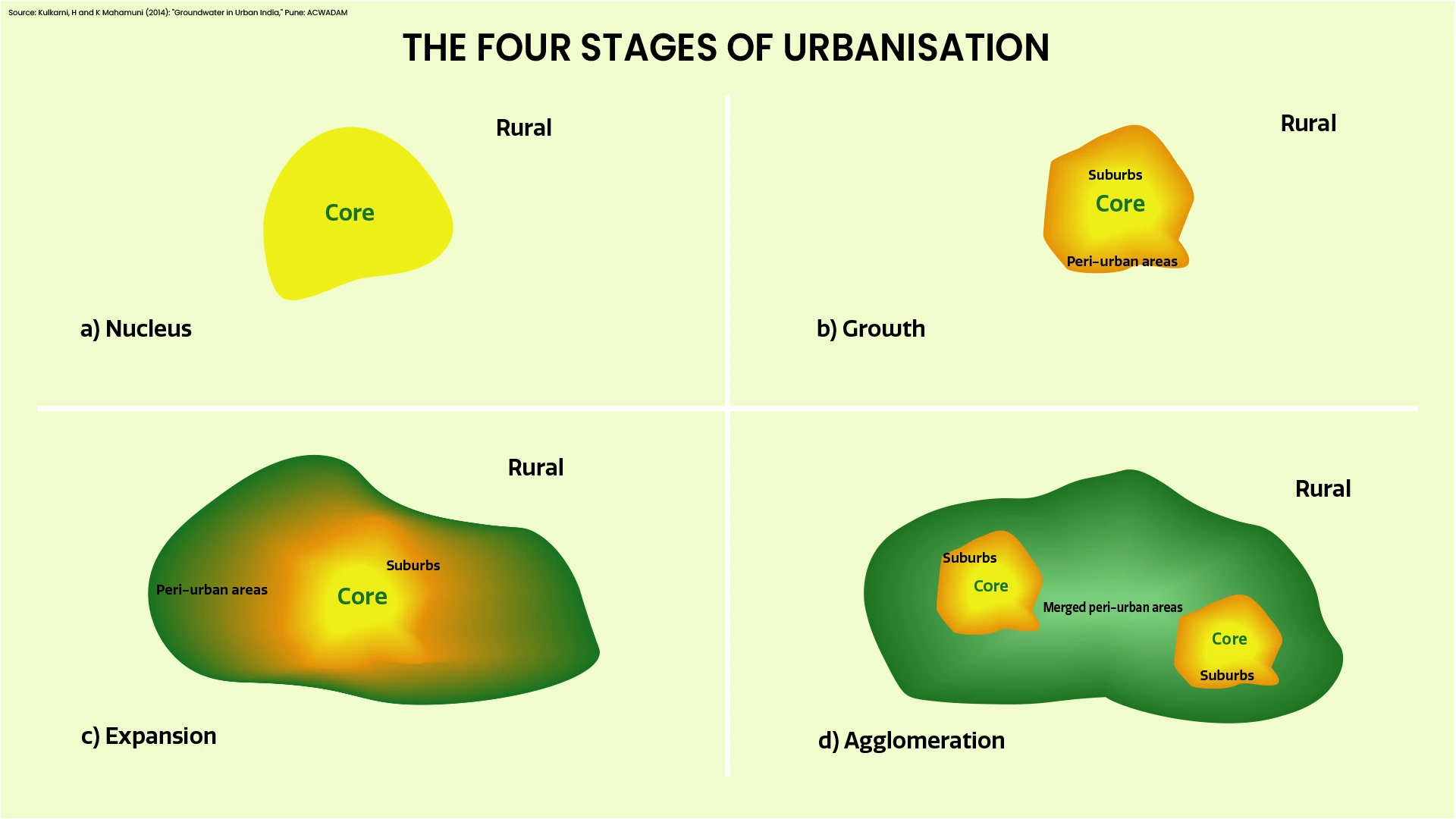
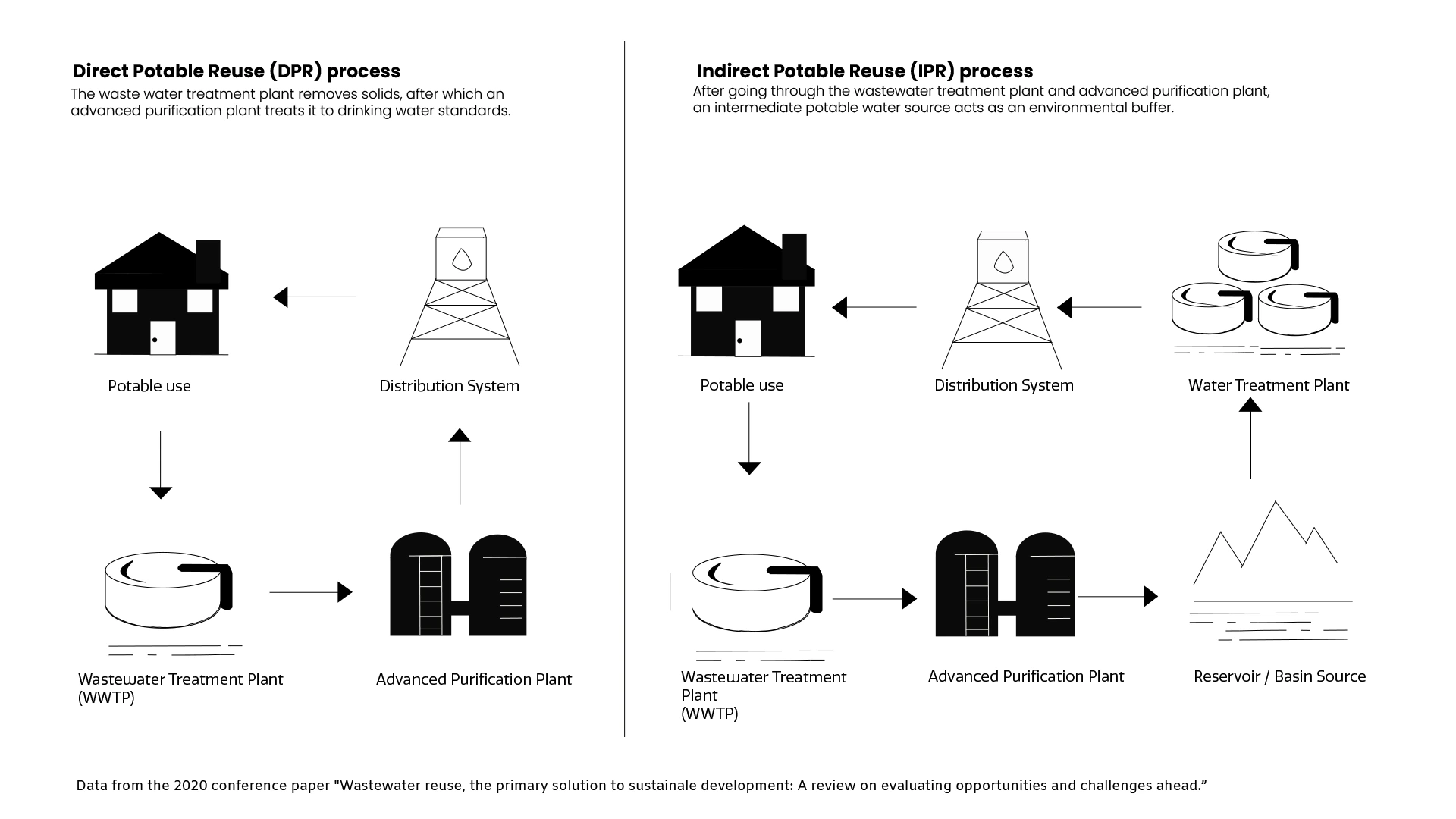
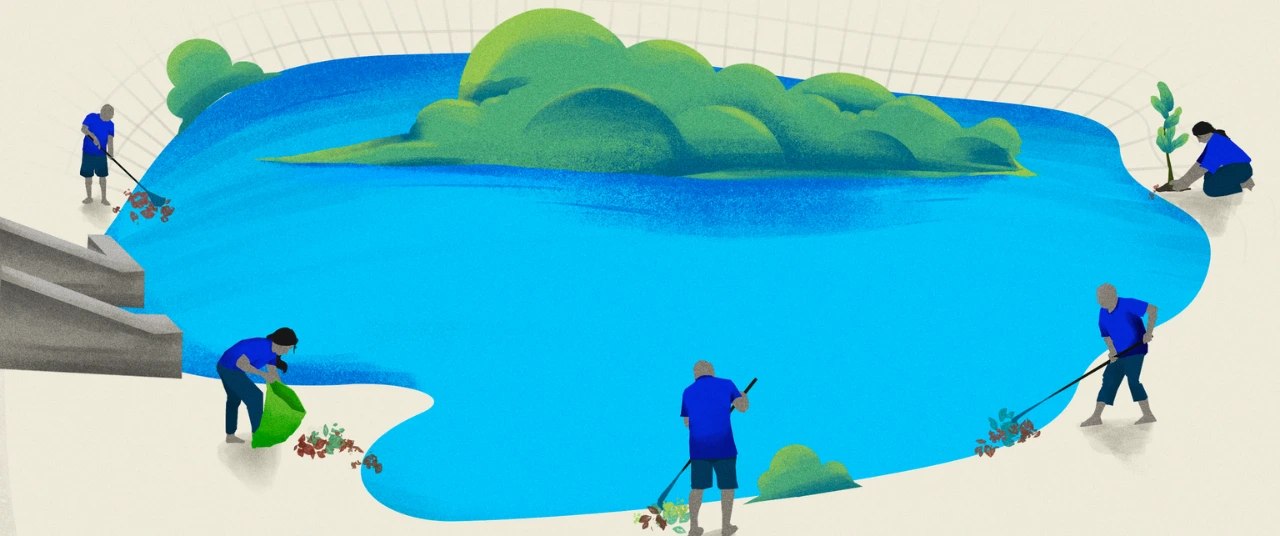
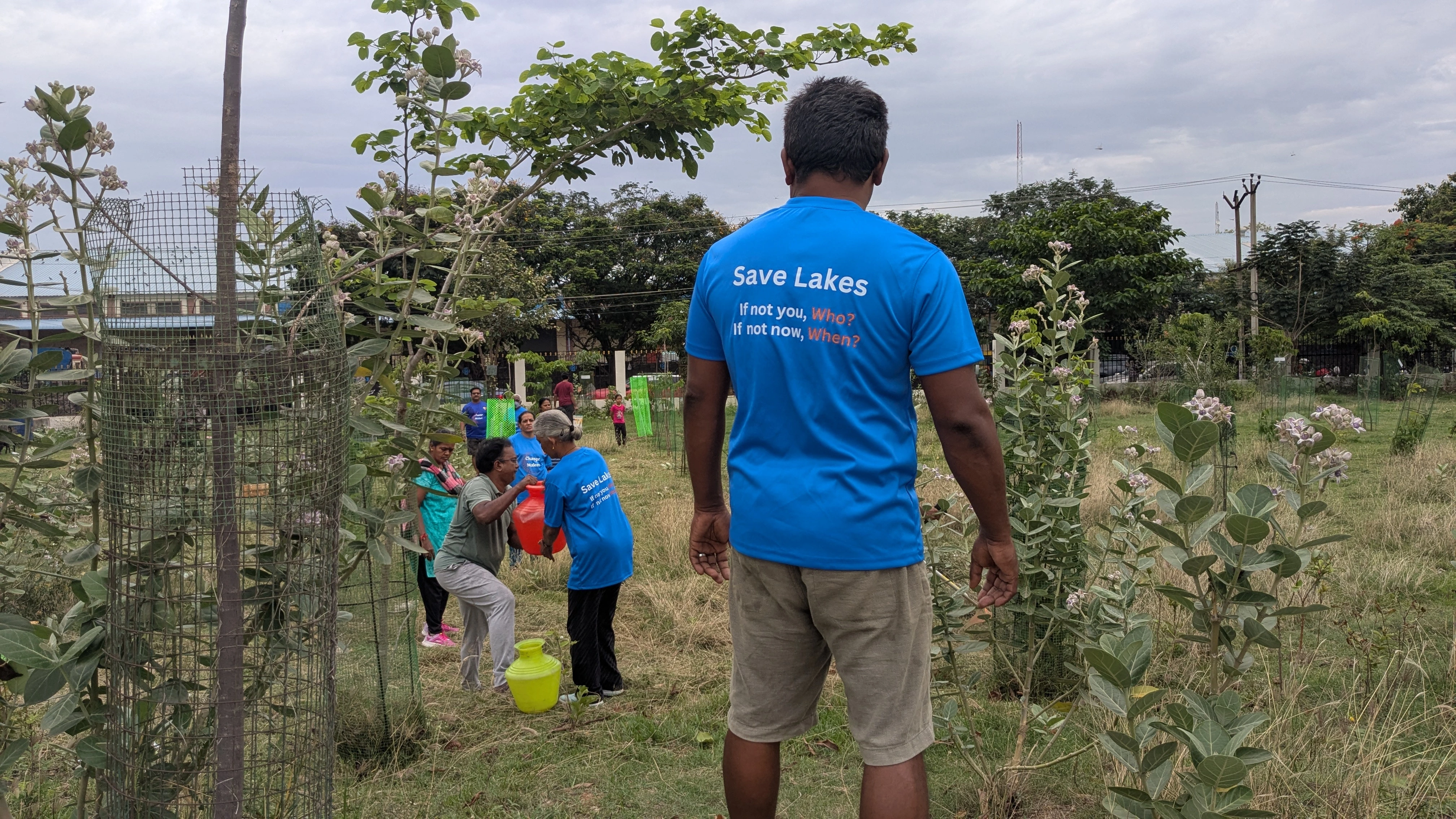
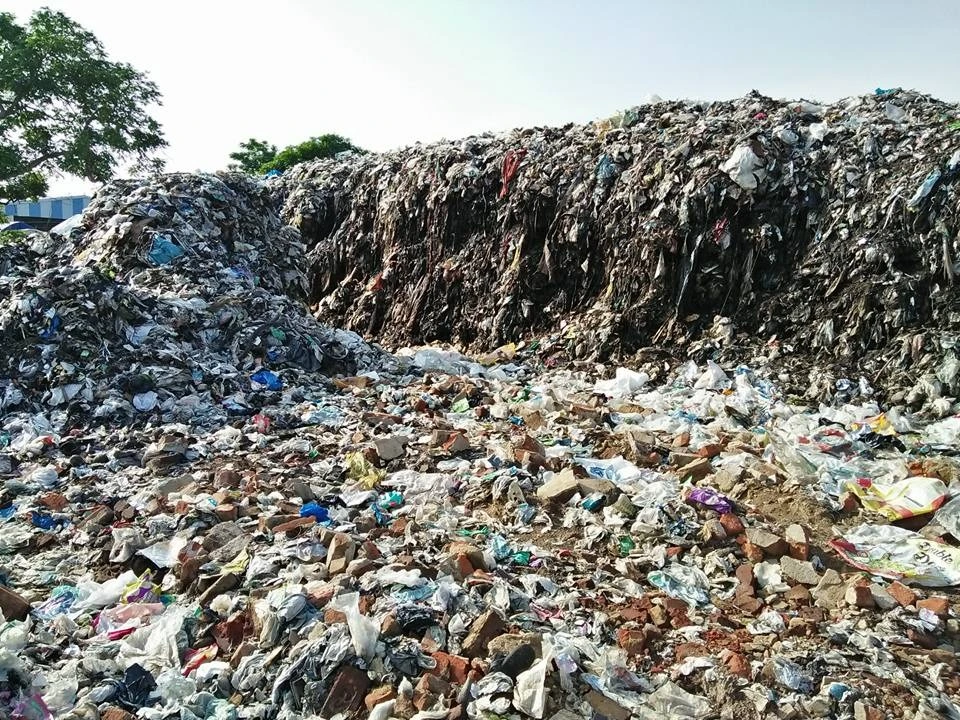
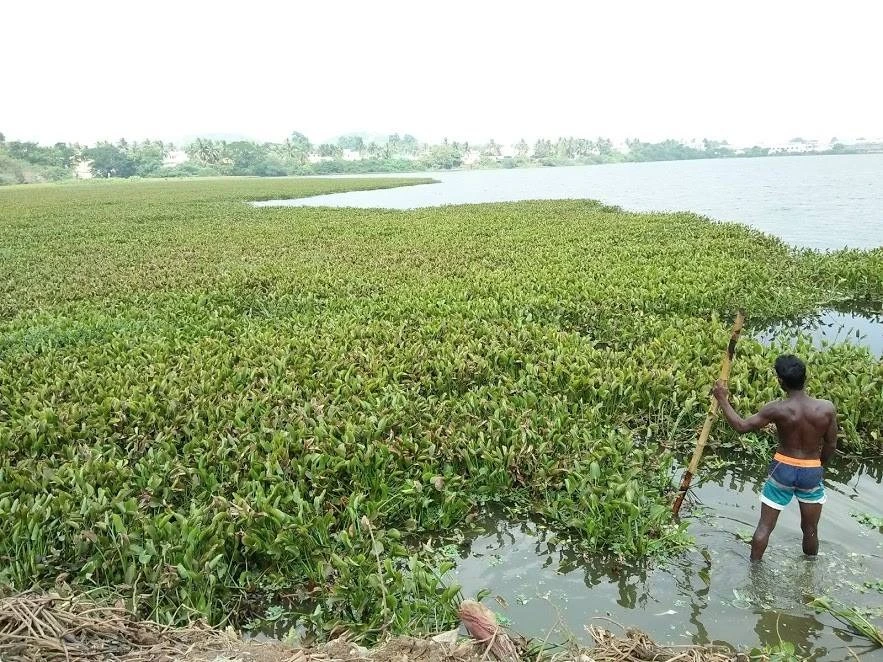
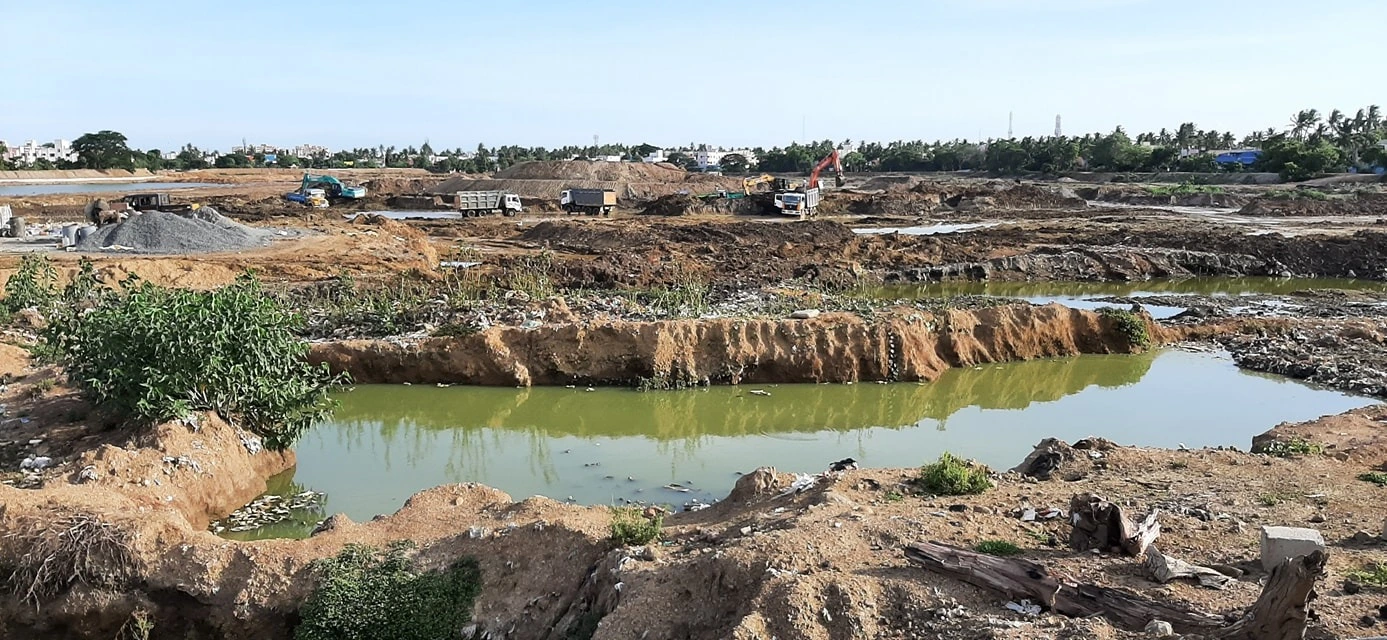
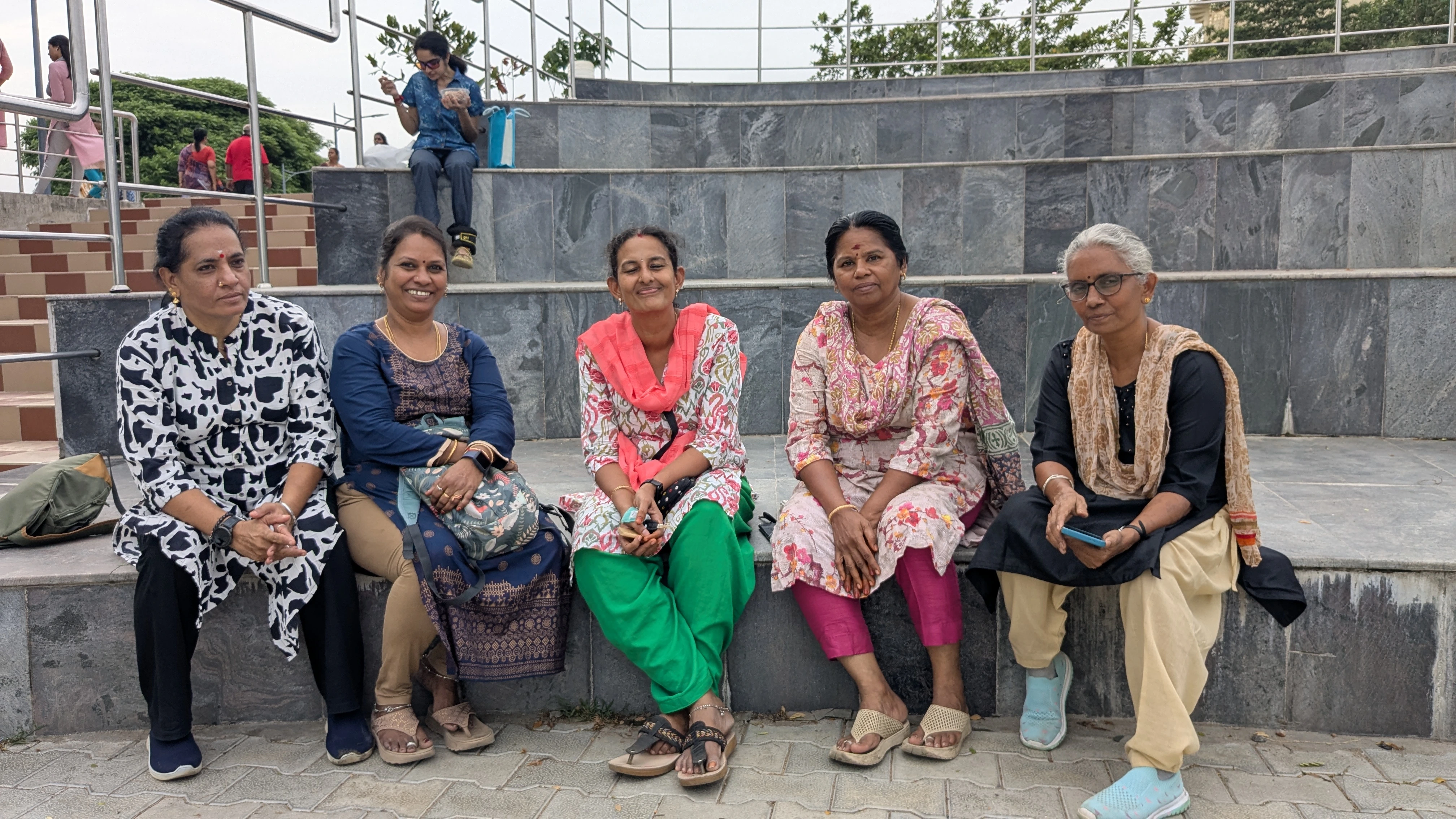
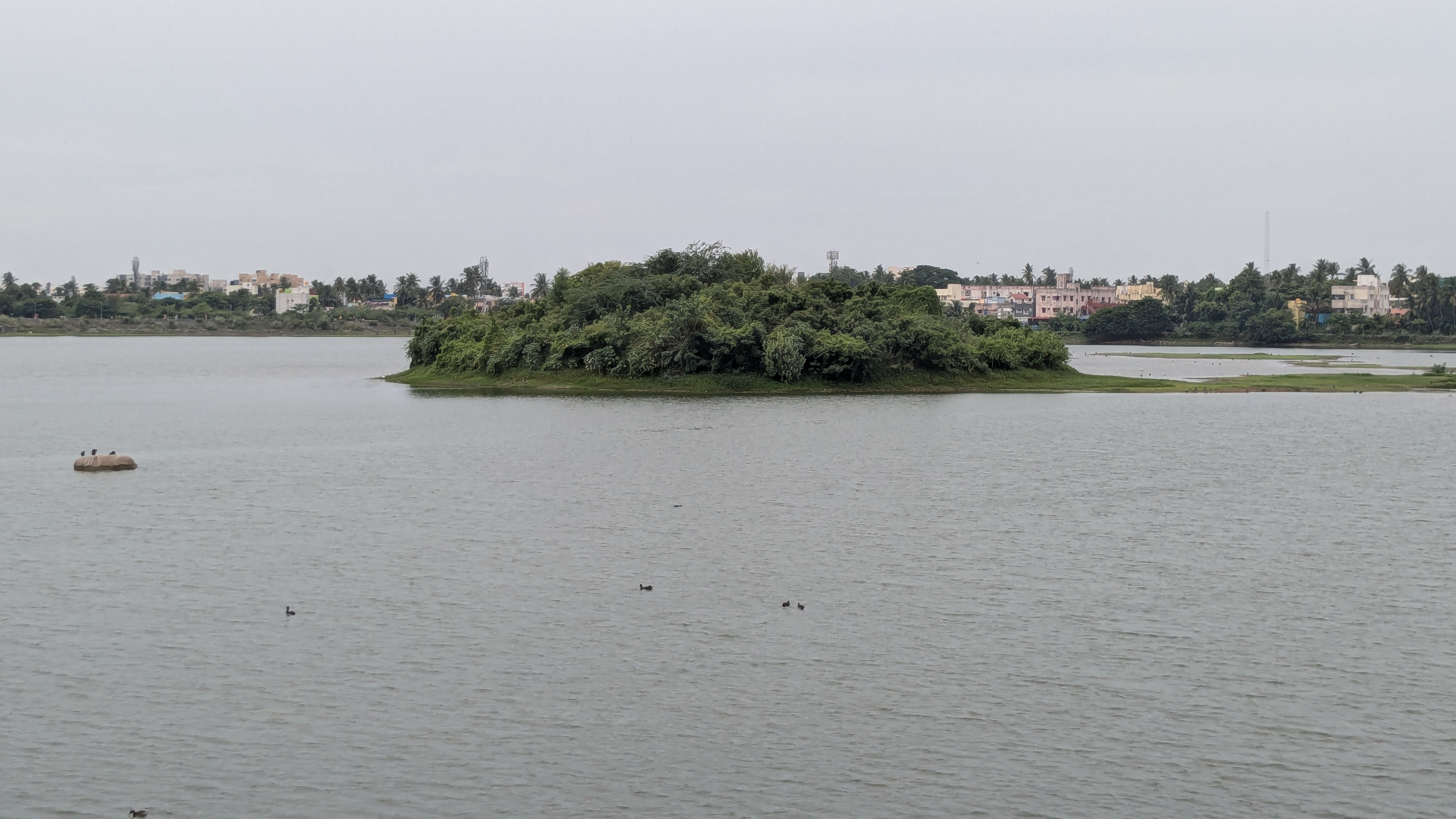

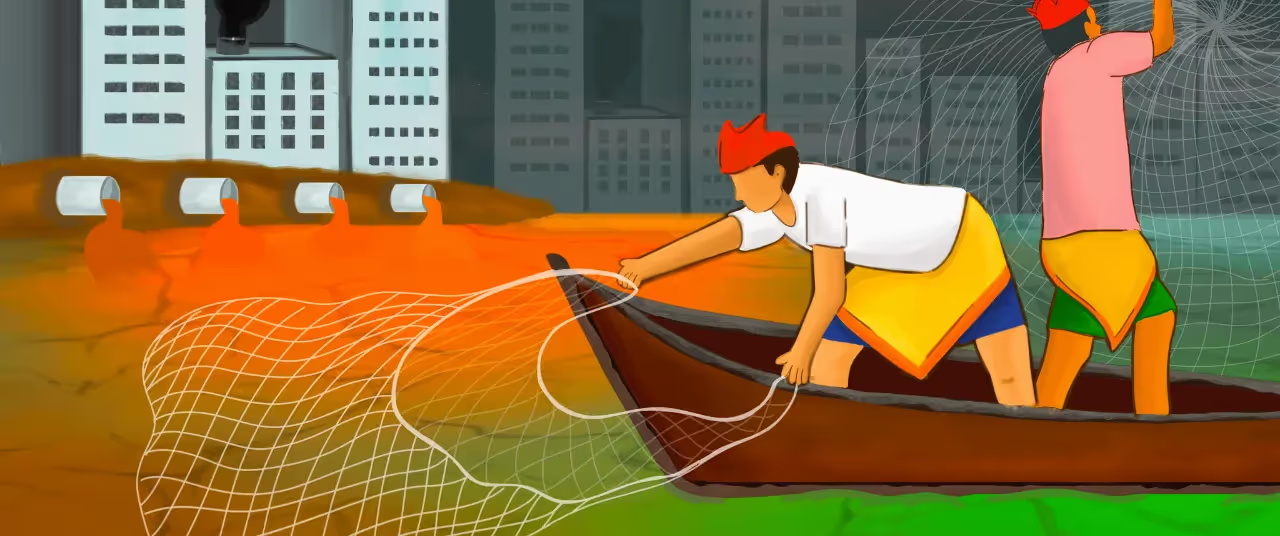
.avif)
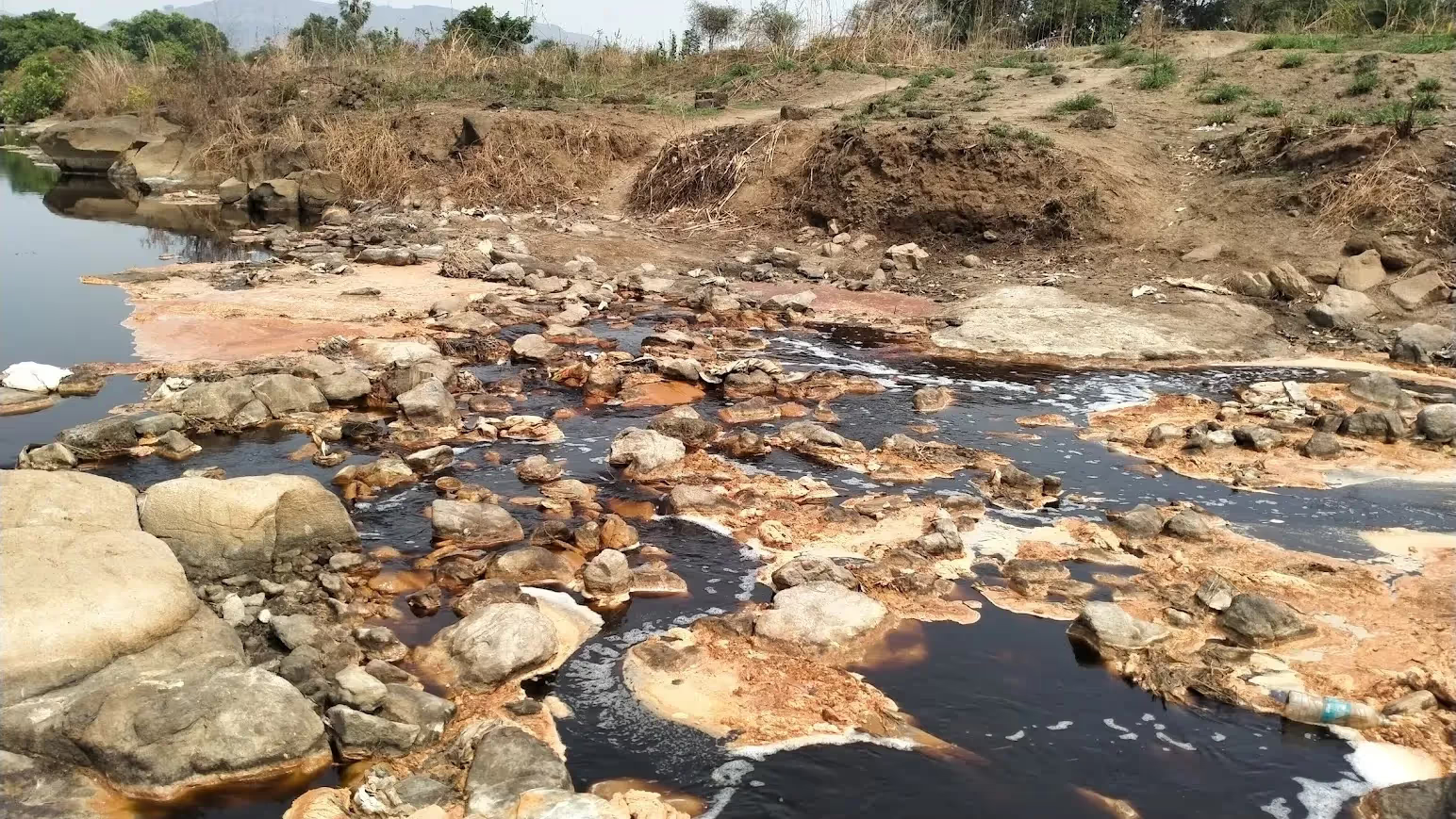
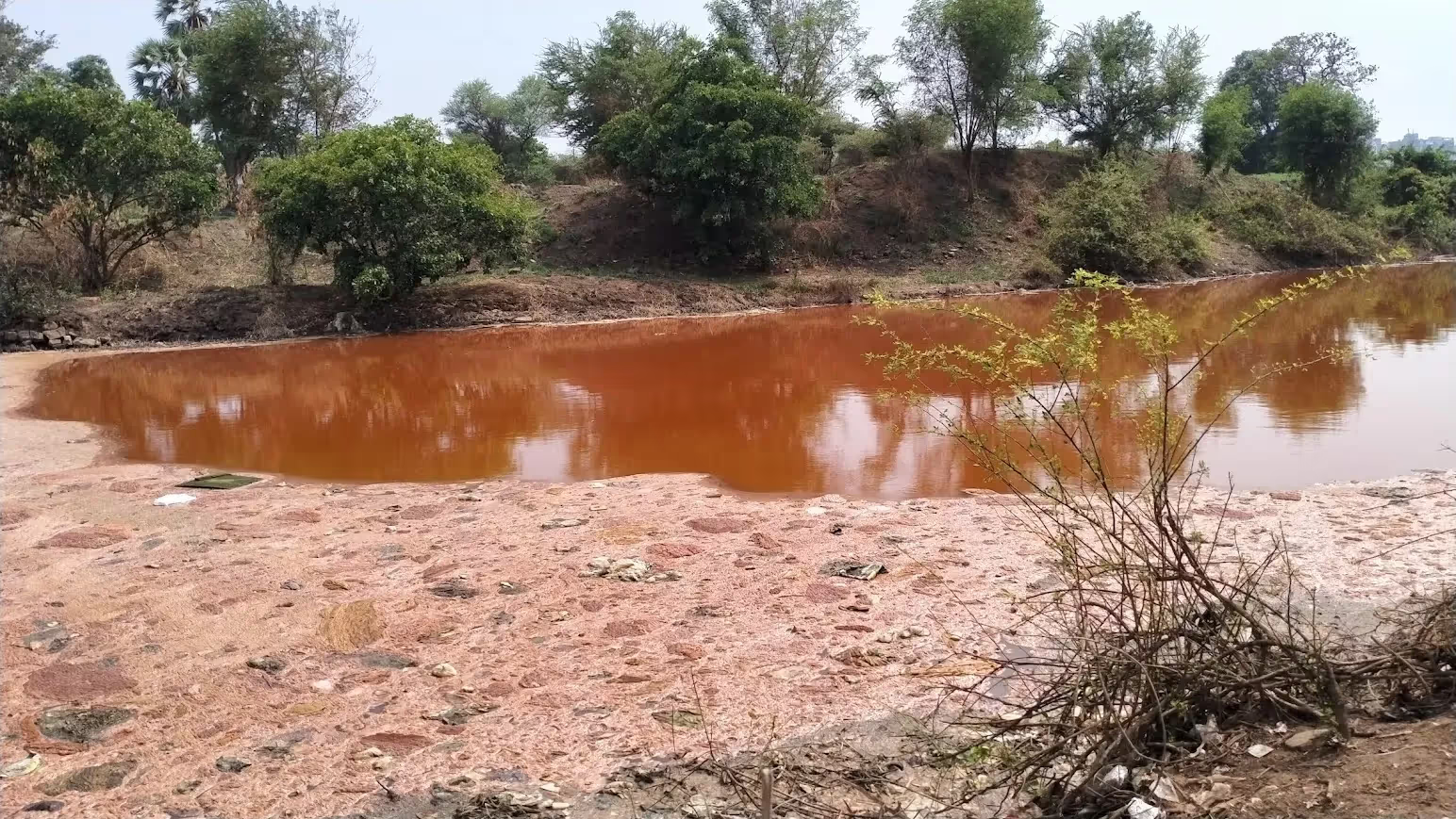
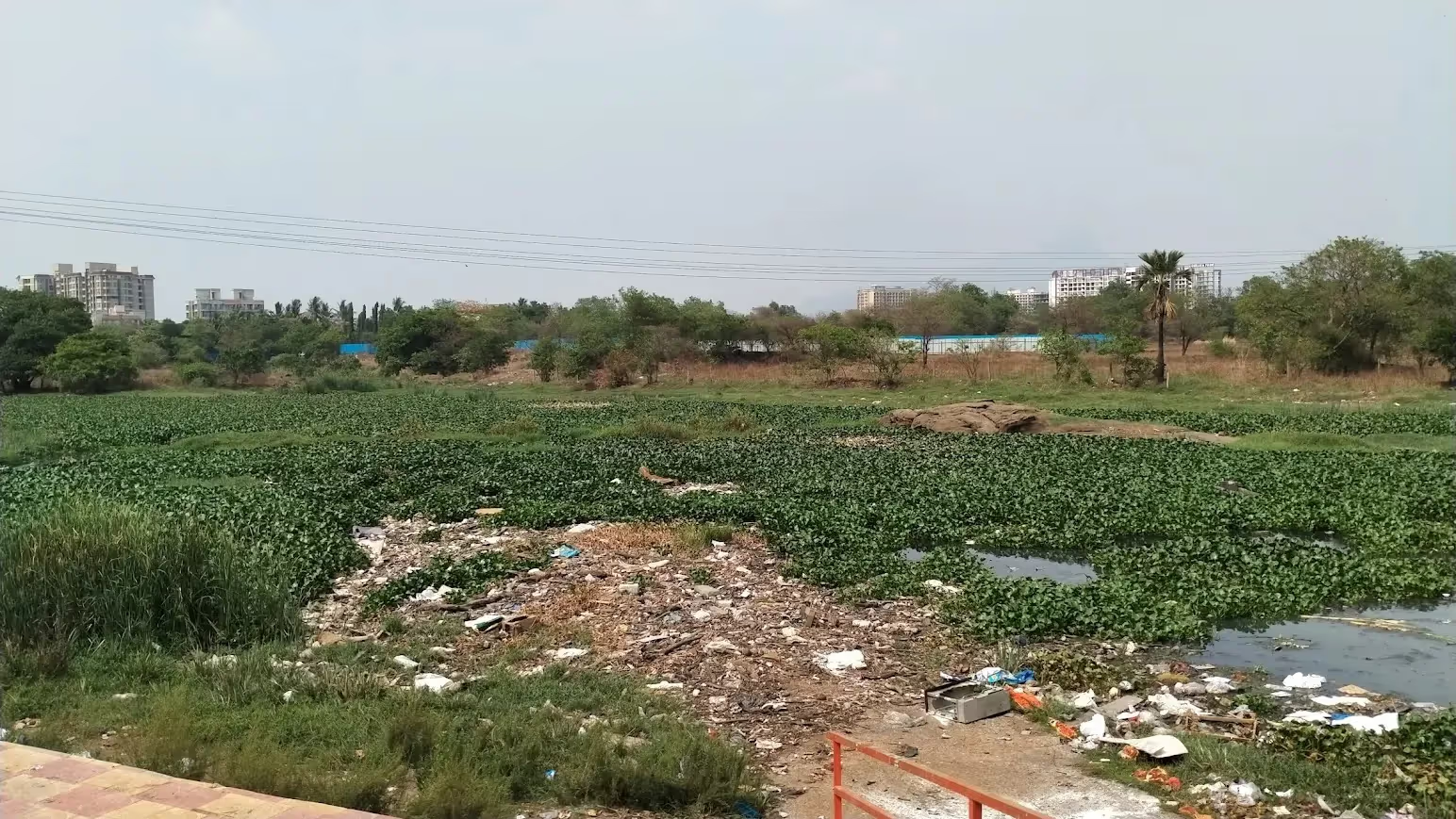
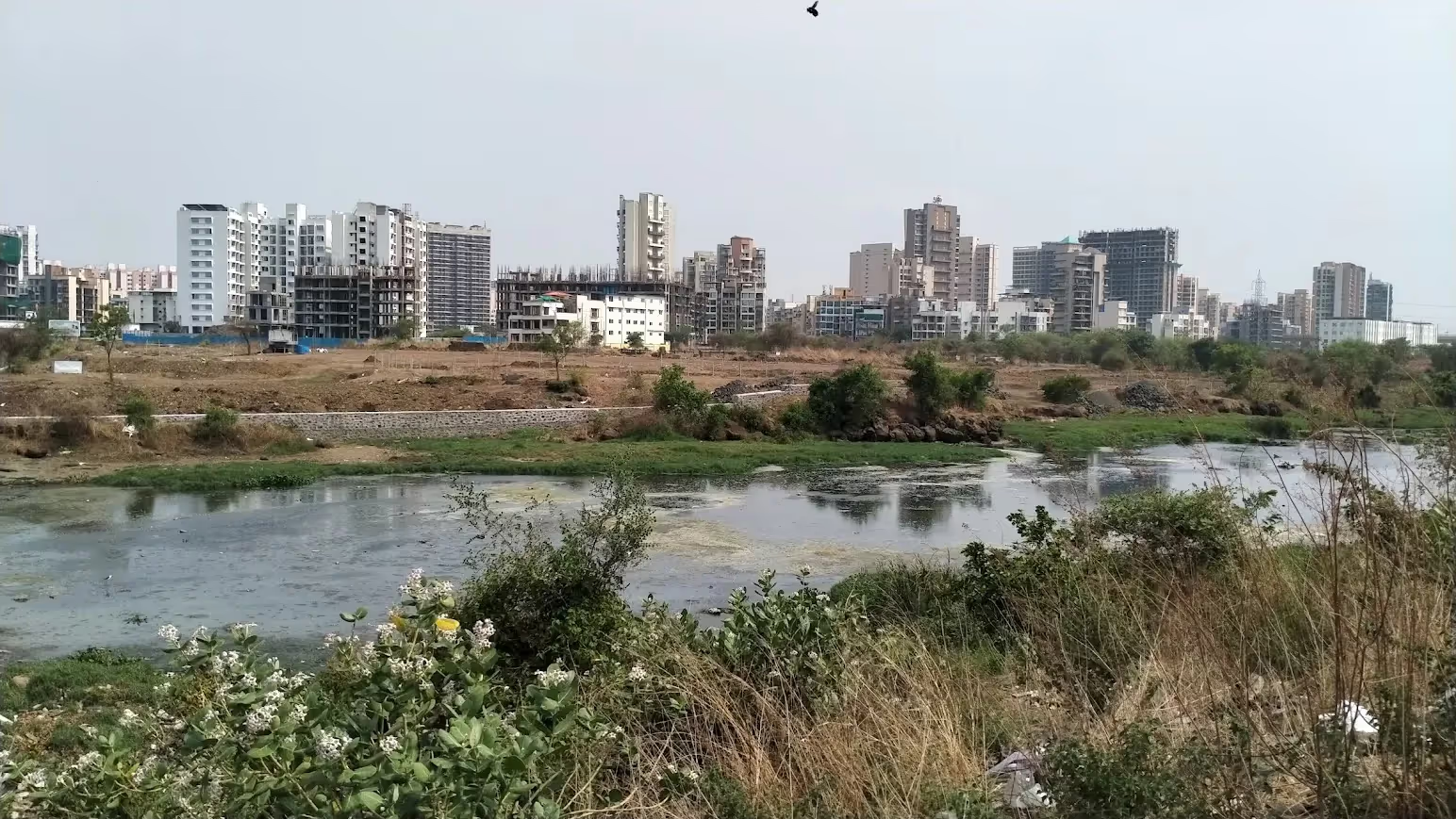

.avif)
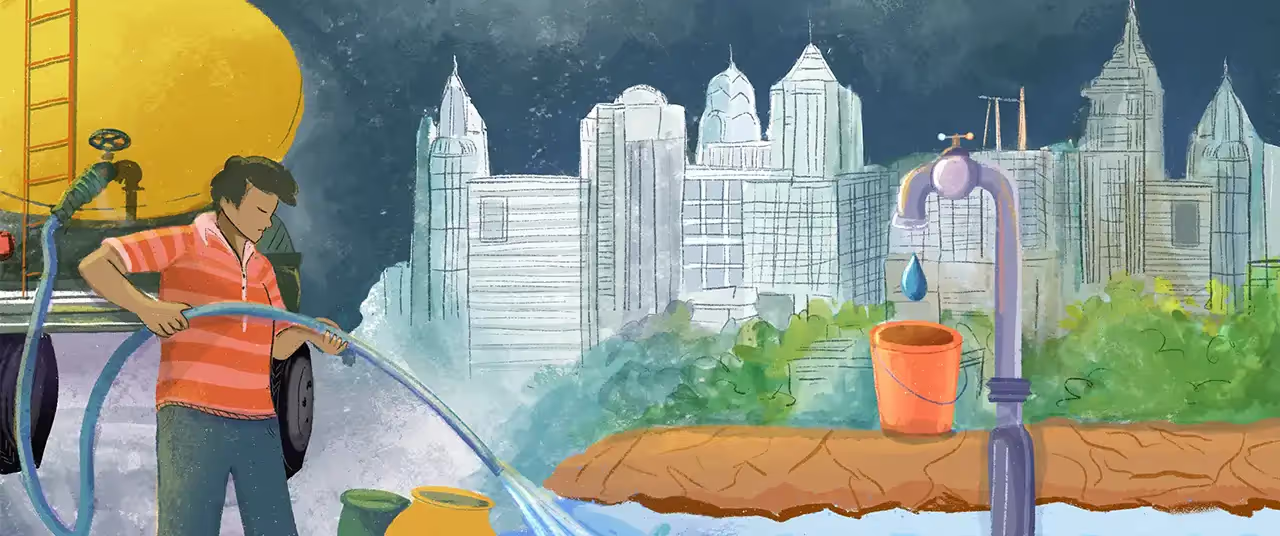
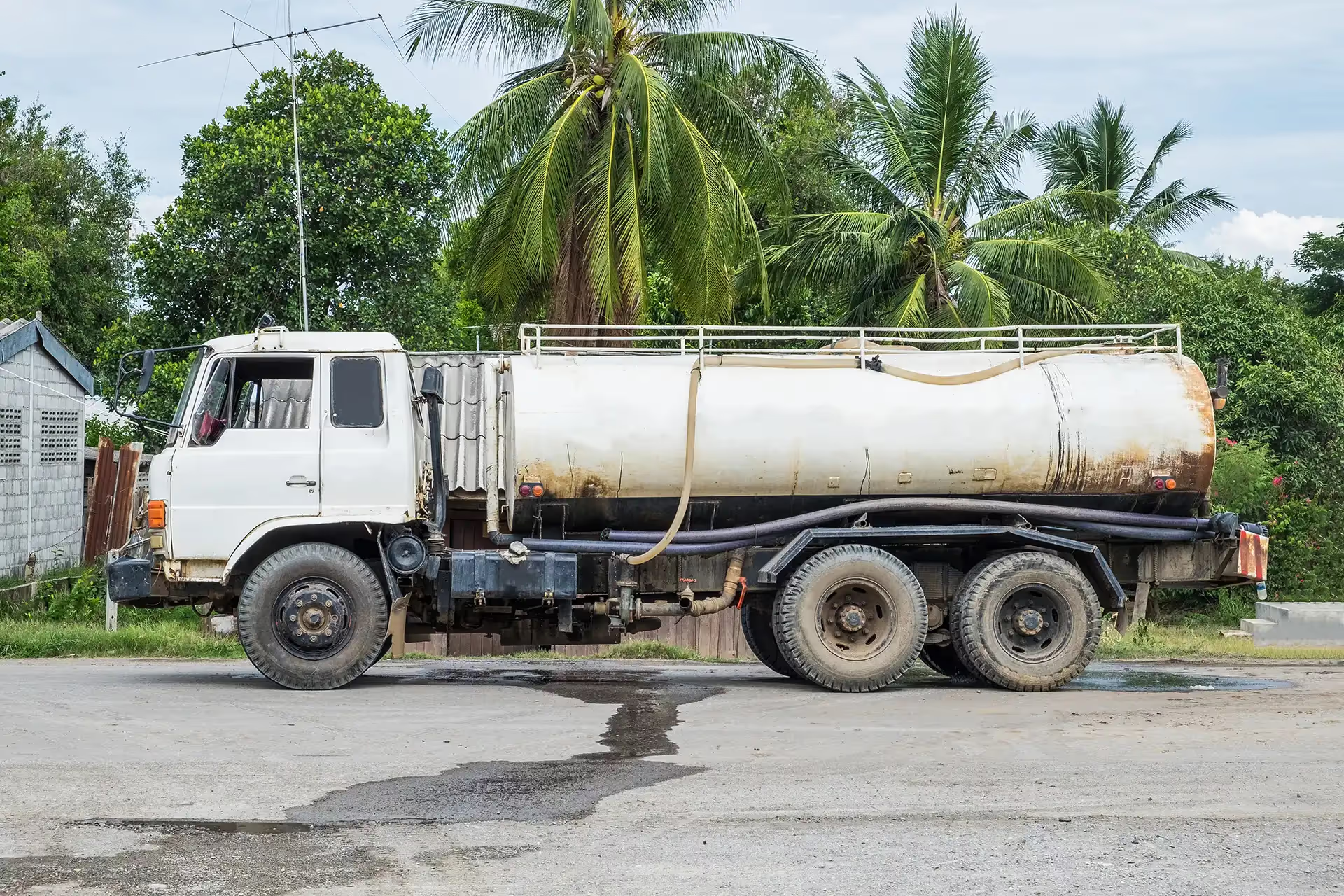
.avif)