In forest bathing, an invitation to heal by being one with nature
A society that values the sensory benefits of being in a forest will pay attention to the forest’s wellbeing and future


Editor’s note: To know Rama Ranee is to learn about the power of regenerative practices. The yoga therapist, author and biodynamic farmer spent three decades restoring land in Karnataka, envisioning it as a forest farm in harmony with nature. In ‘The Anemane Dispatch’, a monthly column, she shares tales from the fields, reflections on the realities of farming in an unusual terrain, and stories about local ecology gathered through observation, bird watching—and being.
The canvas-topped Willys jeep—my uncle’s—trundled up a narrow path gouged through the wall of massive trunks and closed canopies, spewing red dust clouds in its trail. A virgin, tropical evergreen forest in the Western Ghats (north Karnataka) was in the throes of making way for the rest of the world, and I, caught between wonder and a sense of loss.
The idea of wilderness and a connection with it was shaped by early memories of rainforests peppered with tiger tales, cascades in hidden gorges, and sunny hours spent bathing in rocky streams. Nothing could possibly match the intensity of such moments when all the senses were lifted, released as they were from their physical moorings, into an embrace with the all-encompassing being of Gaia (the goddess of Earth). The ecstasy is beyond gratification—a recognition of something magnificent, much larger than the mind can conceive, but can only sense, with an invitation to belong, if one so chooses.
Forest bathing: steeped in Japanese philosophy
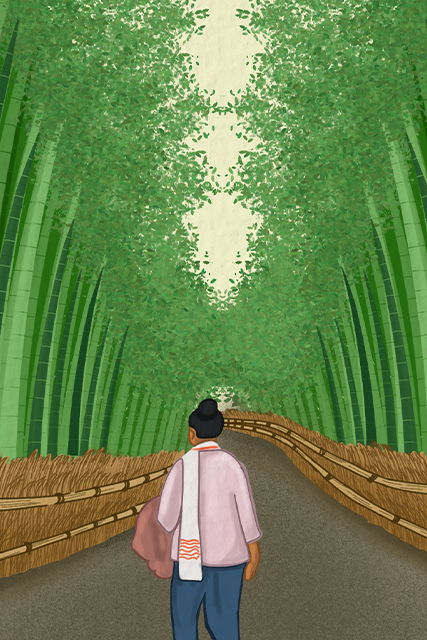
Shinrin-yoku, a Japanese term for forest bathing, is an attempt at inviting a society beleaguered by stress and its deleterious health effects to detox and rediscover the benefits of connecting with nature. Though the name is contemporary, the practices are drawn from the ancient Shinto and Buddhist traditions of Japan, where nature was venerated. Promulgated in the early 1980s by naturalist Tomohide Akiyama, who was the secretary of the country’s Forest Agency at the time, as a way of destressing, it is the practice of immersing oneself in nature, especially in forests or groves. Here are some of the acts or practices it calls for:
• Walking mindfully, with awareness, in the present moment, focusing on breathing
• Using all the five senses to deepen the experience of the surroundings
• Moving slowly or being quiet and still, allowing nature to hold you
• No distractions such as conversing, or usage of devices, especially electronic ones; not even cameras!
Shinrin-yoku, a Japanese term for forest bathing, is an attempt at inviting a society beleaguered by stress and its deleterious health effects to detox and rediscover the benefits of connecting with nature.
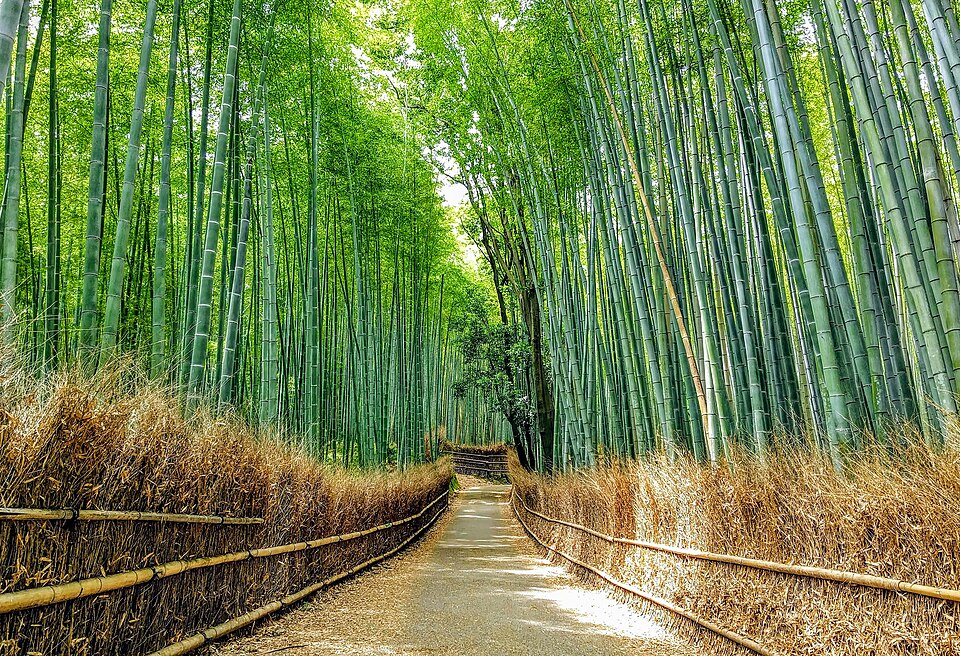
Forests and groves, both natural and manmade, were consecrated for their ecological importance fundamental to human survival. Some of the most bio-diverse, undisturbed forests in Japan have survived in the precincts of Shinto temples, venerated and protected as the abodes of nature spirits, as they are integral to the animistic traditions of Shinto. Two interesting examples are the manmade, self-sustaining forests around the Meiji Jingu shrine in Tokyo, and the ancient sacred woodlands of Kumano Kodo, with its giant cedar and cypress trees.
Like yoga and meditation, forest bathing, too, has captured popular imagination as a form of therapy. Research seems to suggest that it stimulates parasympathetic responses, thereby inducing a calm state of mind, reducing stress, anxiety, and blood pressure. It is also said to lower heart rate, improve attention and creativity, induce joy and well-ness. Phytoncides, natural compounds emitted by trees, boost immunity. I cannot, however, suppress the thought that beyond tangible effects, there are other gifts that this practice may bring—the kind that I sensed in the forests of my childhood and the ones that age-old ‘fairy-tales’ allude to. That there are dimensions beyond the senses, populated by nymphs, fairies and numinous beings described by clairvoyants like the early theosophists.
Also read: Farming under the elephant's nose: Lessons in crop choices
Spirits with a healing touch
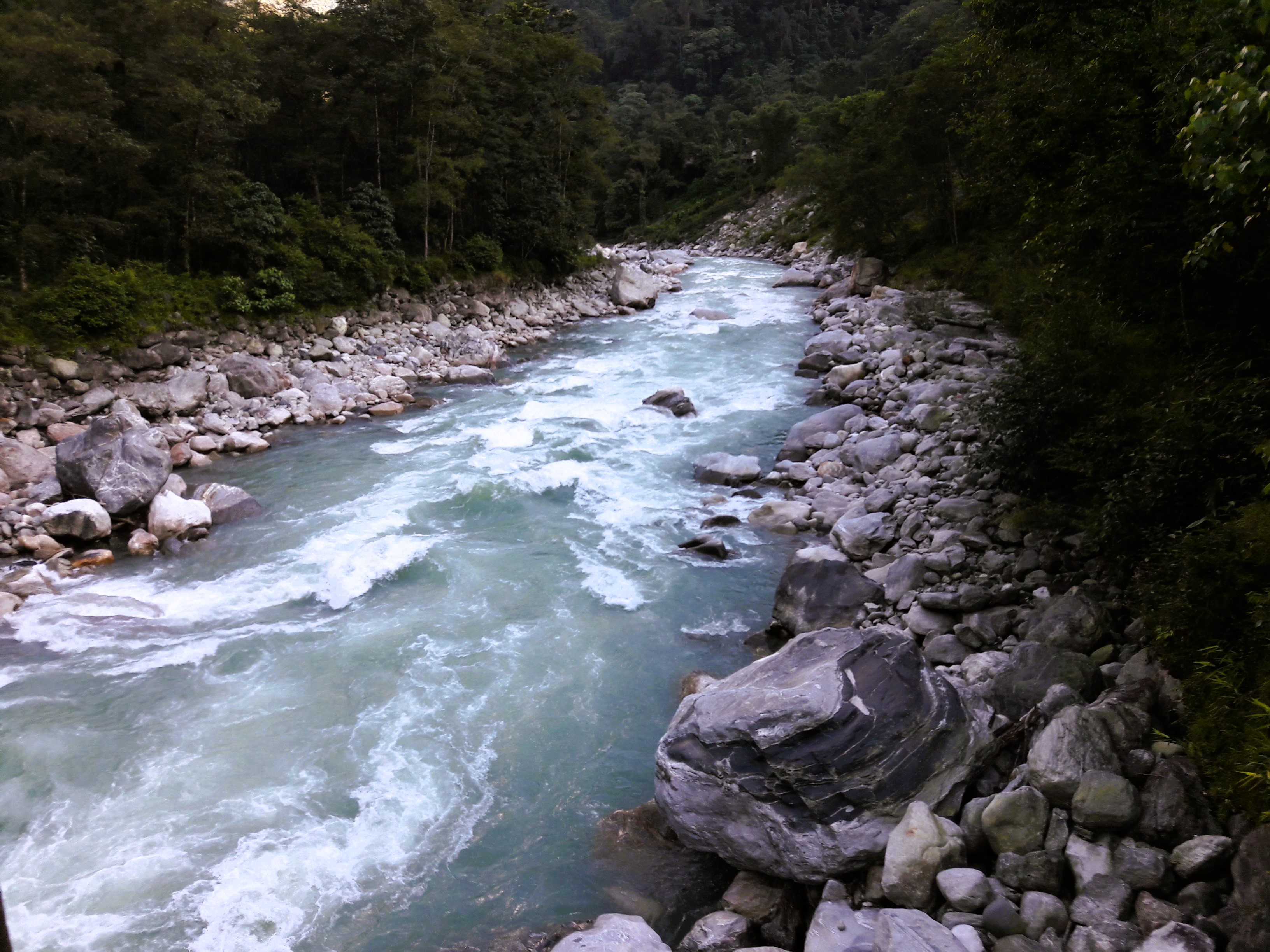
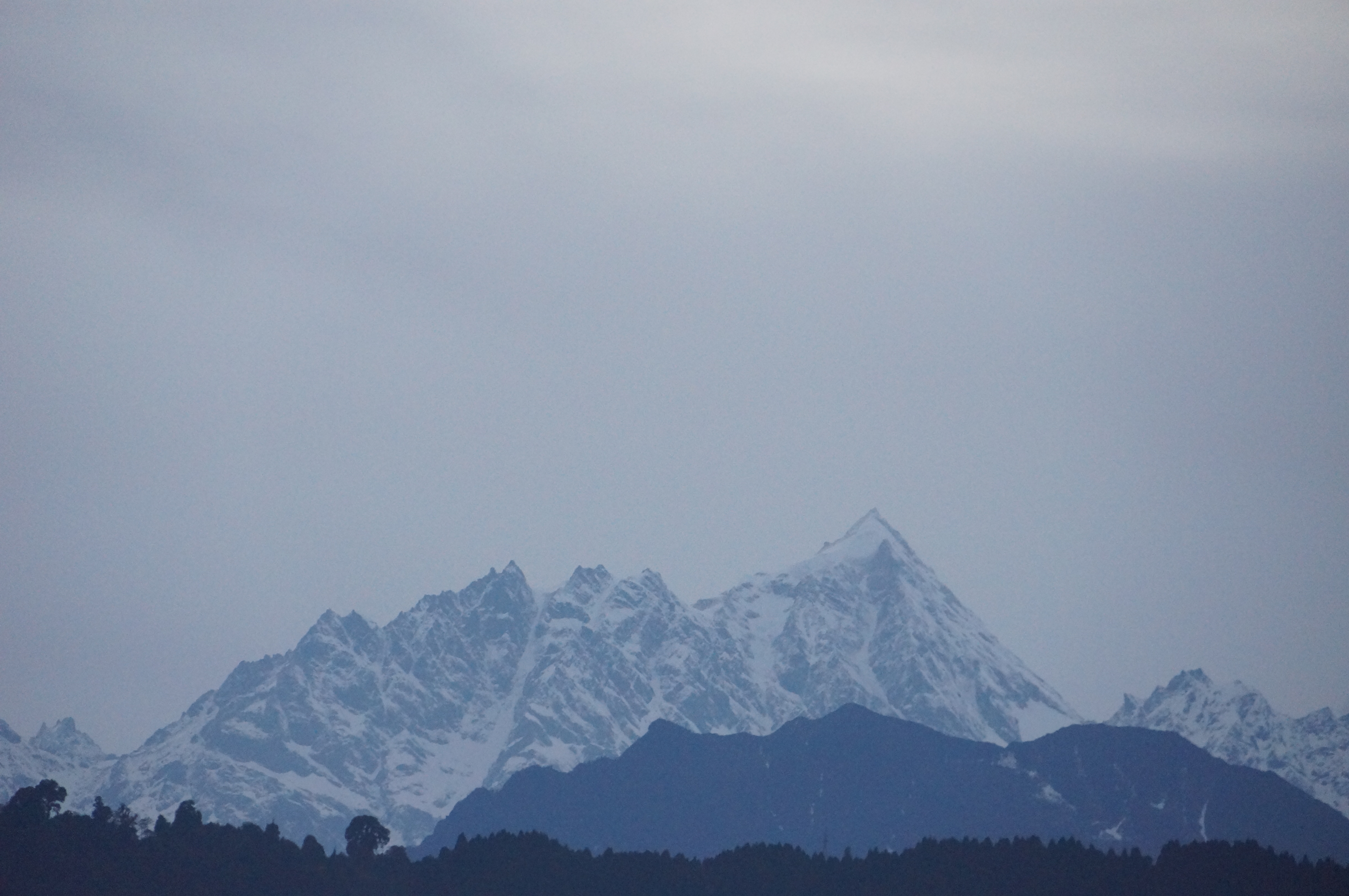
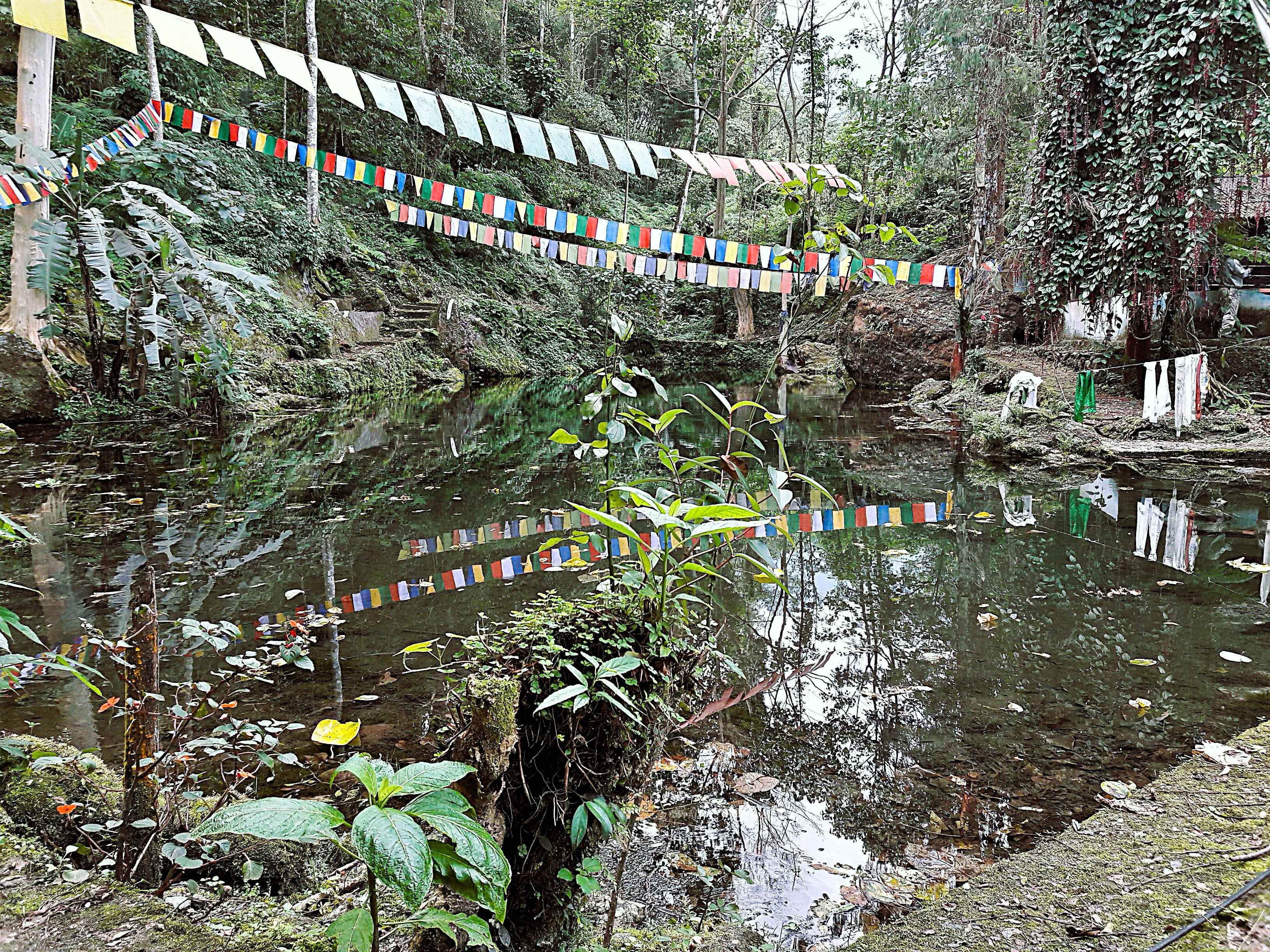
Sacred forests and groves are found all over the world, as ancient spiritual practices were associated with natural elements and the spirits who embodied them. At times, it could be an entire region: sheltered by the Khangchendzonga peak, Sikkim’s Dzongu valley is the homeland of the indigenous Lepcha community and a biodiversity hub. As our host in the area explained, Khangchendzonga is the guardian deity, Rongyong Chu is the river that carries the souls of the dead back to their mountain abode, and the fish in holy rock pools are indicators of climate change. I was entranced by the feeling that every rock was a shrine, and every blade of grass imbued with spirit.
Sacred forests and groves are found all over the world, as ancient spiritual practices were associated with natural elements and the spirits who embodied them.
The butterflies we went to study were gorgeous and otherworldly, yet I wish that I had been more aware, and listened the way mindfulness requires. A single-minded pursuit of the empirical kind, of an intellectual experience, has its limitations. It is a bit like opening a particular door while shutting everything else right at the outset.
Closer home, Igguthappa, one of the most revered deities among Karnataka’s Kodavas, is the god of rain and harvests. His temple stands atop a hill in Kakkabbe, 34 km from Madikeri, shrouded in mystery and dense evergreen forests. These bio-diverse, rich sacred forests or ‘devarakadu’ are intrinsically linked to the deity and protected by both, law and tradition. More than three decades ago, I had climbed the steep moss-lined stairway carved into the hillside. The drizzle and clouds sharpened my focus on every step while drowning out all other sights or stimuli. The challenges of traversing such a wild path, unsheltered and open to the mercies of the weather gods, offers the ideal conditions for an altered state of mind: present in the moment, not intentional, just spontaneous. To this day, I remember the climb and the utter silence. A secure, predictable environment may not offer such a possibility.
Tuning into nature’s ways
Even if one has never undergone arduous journeys to find a spot under a tree, a little magic permeates the air if we simply tune into nature. This is what tuning in feels like at Anemane: standing amid bamboos—a tall, mature clump blocking the sun, ringed by younger ones, stems interlocking like the spires of a cathedral while a White-rumped Shama pauses mid-song. A Blue Mormon butterfly glides past, a dark knight in a silvery cloak. The acacia bows, the bark that an elephant had peeled, still a gash. Earthstar fungi pop up creamy clusters from the leaf-littered earth, from where the oil in dead leaves and mold wafts up. A twig snaps, and I spin around, scanning for a wild pig. The twig was under my own foot, and the spell I was in breaks. Until that moment, I had bathed in the presence of these beings, trees, bamboos, and denizens of the sylvan realm, surrendering to their gaze and letting their vibrations drench me.
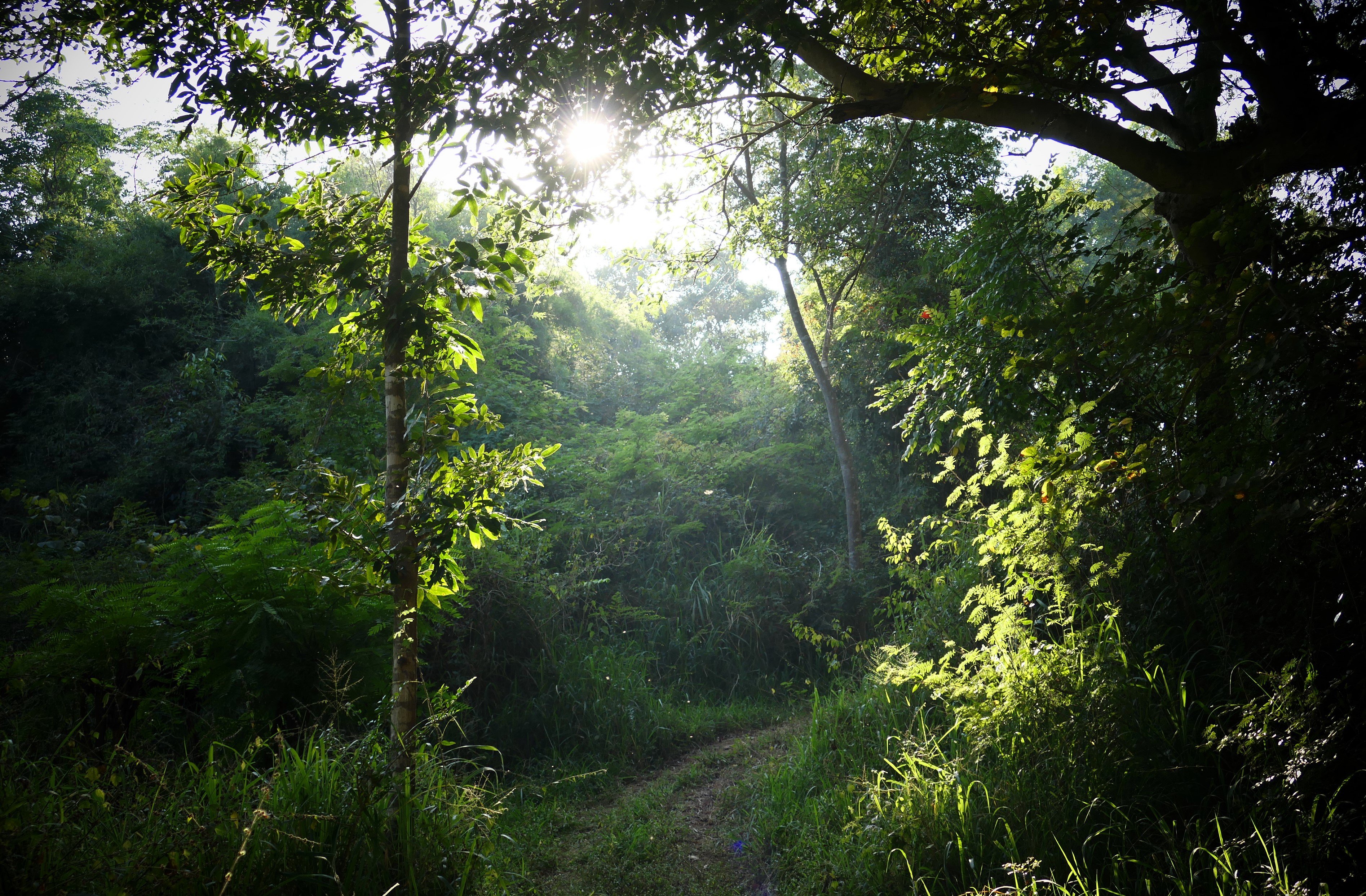
Even if one has never undergone arduous journeys to find a spot under a tree, a little magic permeates the air if we simply tune into nature.
Though never undertaken intentionally, I find myself forest bathing when I walk in the wilderness or just exist among trees. It would be perhaps more accurate if I were to say ‘I am being bathed’ at that moment.
Also read: How birds open a window to the shared web of life—our ecosystem
An essential resource in decline
Natural forests are integrated and complex environments; navigating them requires an intimate connection to their terrain and wildlife. For those who don’t have this connection, accessing the forest safely remains out of bounds. The Bannerghatta National Park (BNP), which shares boundaries with Anemane Farm, has been the site of unfortunate accidents and the deaths of people encroaching into it, due to elephant attacks. Fragmentation and the loss of buffer zones have further escalated human-animal conflicts.
Natural forests have declined, and sacred forests, despite their spiritual and ecological significance, have not been not spared either. Devarakadus along the Western Ghats are dwindling due to economic pressures and the undermining of traditions. Rapid and poorly planned development has affected our urban green cover as well. Bengaluru’s famed green cover has diminished from 68% in 1970 to less than 4% in 2024.
A paradigm shift from anthropocentric ways to an acceptance of the wholeness of nature—of man as a part of a living Earth, sensing the truth behind the animism embedded in ancient religions which gave us the Shinrin-yoku concept—is needed.
The unsustainable utilisation of precious resources like forests, trees, and waterbodies, poor waste management, and unregulated growth is eroding the quality of life within our cities and engulfing rural environs as well. Nature is firmly on the list of ‘consumables’ and ‘dispensables’ and sources of entertainment. A forest available to the public for health and rejuvenation is a remote possibility—one that could be further undermined by apathy and absence of community participation.
A paradigm shift from anthropocentric ways to an acceptance of the wholeness of nature—of man as a part of a living Earth, sensing the truth behind the animism embedded in ancient religions which gave us the Shinrin-yoku concept—is needed. We ought to keep our groves as they are meant to be: as abodes of the spirit, through stewardship and responsibility.
Also read: Friends of the soil: A farmer's key allies hide backstage and underground
Towards a green haven
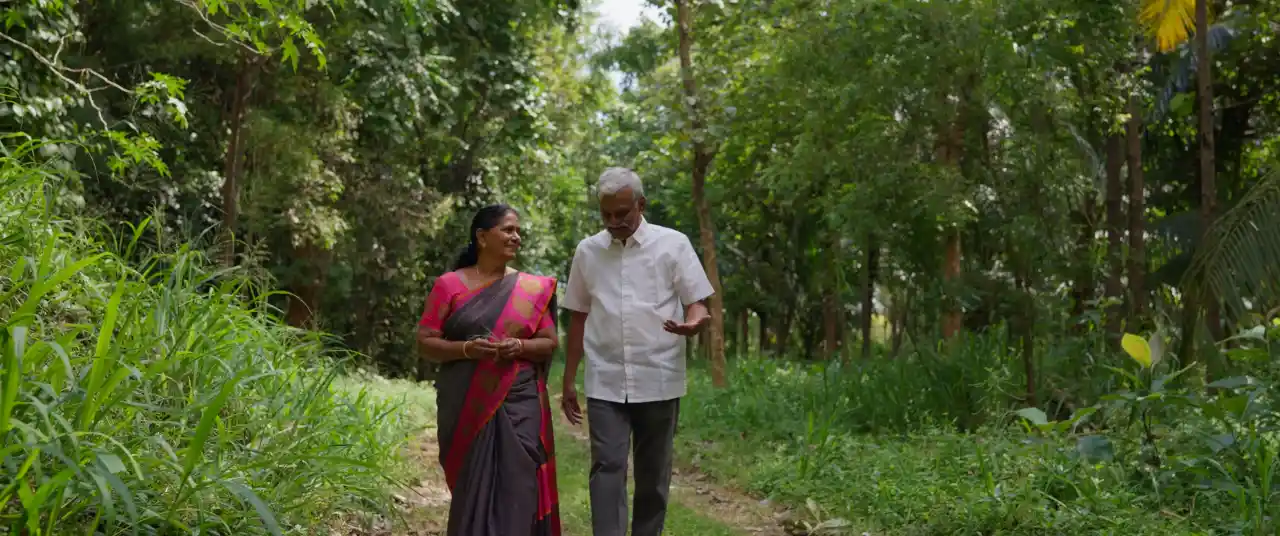
A forest farm offers a safe and suitable environment for rejuvenation and therapy. Ours had a long gestation period: the transformation from bare, degraded land to a forest farm took three decades, much of which was dedicated to nourishing soil and coaxing reluctant saplings to grow and thrive. This was a process of ‘ensouling’ the earth, allowing it time to heal and regain the ability to support life. All the elements of nature came together as part of a holistic agricultural practice called biodynamics to give the life-force a boost. The farmer is the instrument, the steward with many co-workers— human, and more-than-human.
Among our most dedicated co-workers were a group of 15 young people, most of them severely autistic (ASD), whose path to healing lay through the nascent wilderness. Mahesh, one of students, sat at the base of a teak tree, knees drawn up like a fetus, with a fear of open spaces and the unknown stifling him. This was during the first week in the five years of his time at Anemane. By the end of six months, he had grown into that space, confident, capable of carrying out tasks independently. Our practices of silence, mindfulness, rhythms, and tasks in sync with nature may have helped.
Working in nature and restoring and caring for the land transformed our autistic students into a harmonious unit—a circle of safety and peace so tangible that even new entrants, as anxious and dysfunctional as the original group used to be, just settled in as if they belonged. That is perhaps what a sacred natural space would do: enable people to connect with the rest of nature, with other people and find themselves in the process.
Children growing up without adequate access and exposure to nature have an inability to value and protect it; alienation from trees and forests underlies the lack of empathy. In this context, if active engagement and caring became a way of expressing reverence, forest bathing could also teach practitioners reciprocity: ‘I care for nature, and nature takes care of me.’
Artwork by Khyati K
{{quiz}}
.jpg)

.avif)
Explore other topics
References