A push for hybrid maize is driving Odisha’s resilient ‘maka’ out of fields
The disappearance of indigenous corn robs farmers of agricultural heritage, while cultivating hybrids impoverishes them


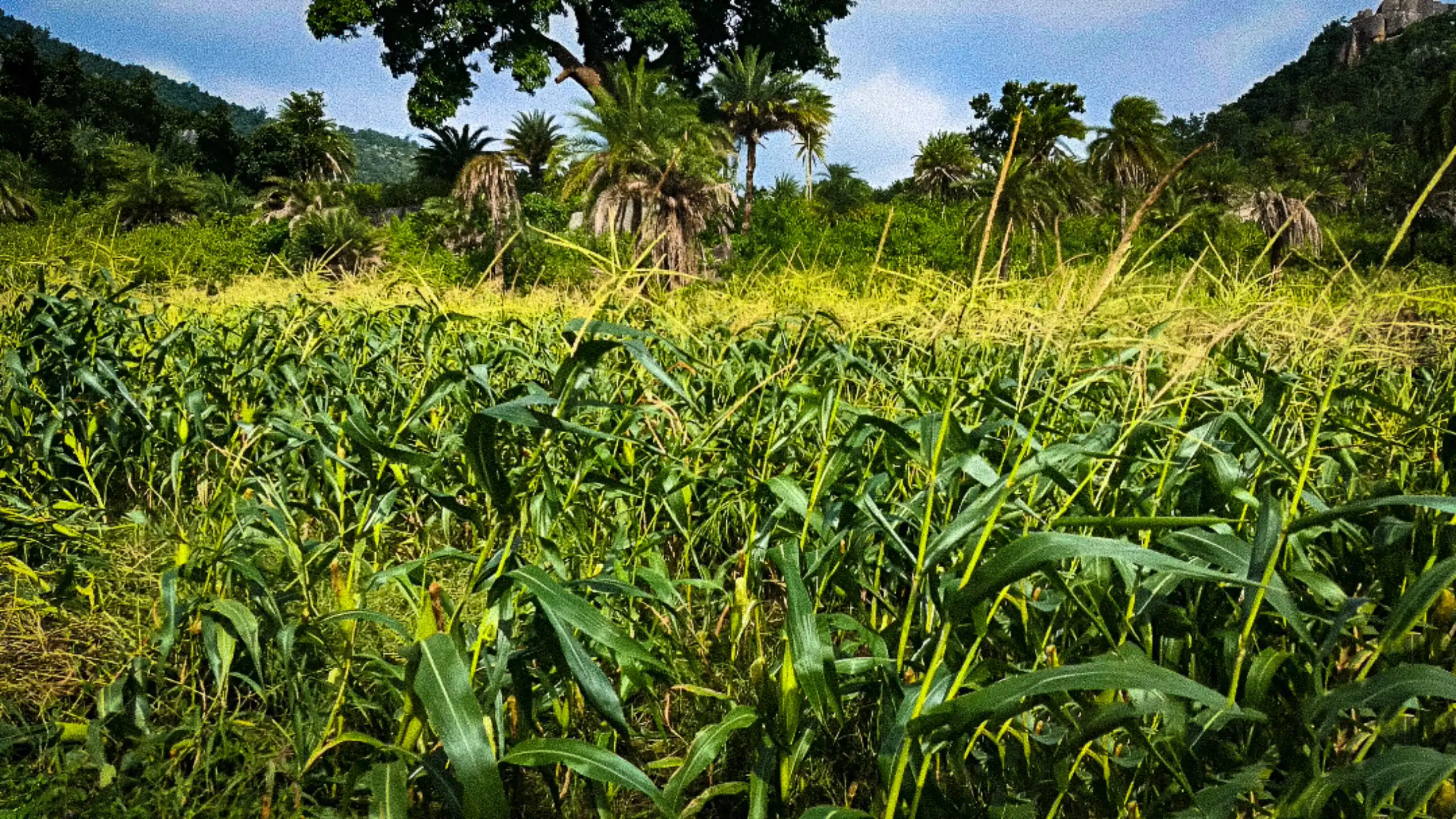
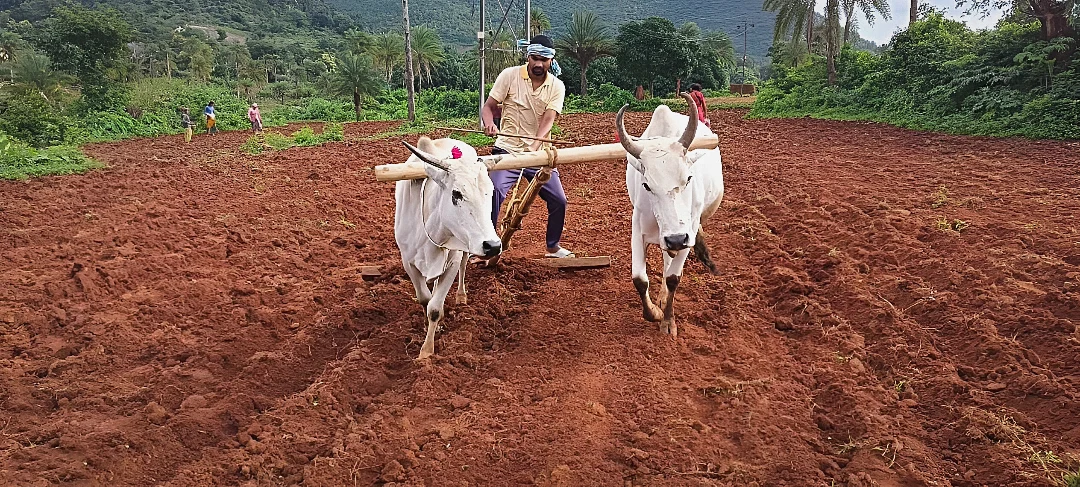
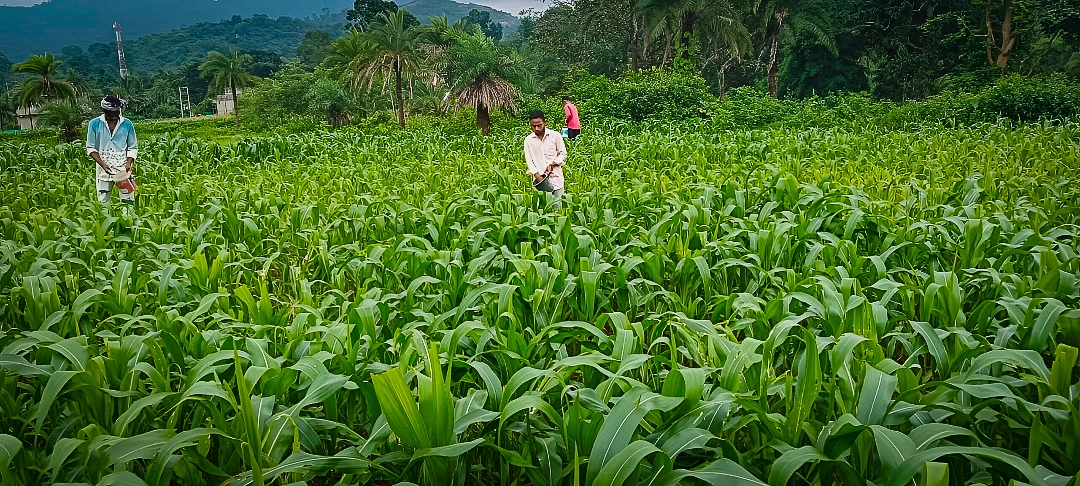
Dawn has only just enveloped the Kukudi village in Nabarangpur, Odisha’s maize basket, when 41-year-old Krushna Randhari sets off for a field, carrying a hoe. He quickly gets to work, loosening the soil between rows of tall hybrid maize plants that have dominated the landscape for about 12 years.
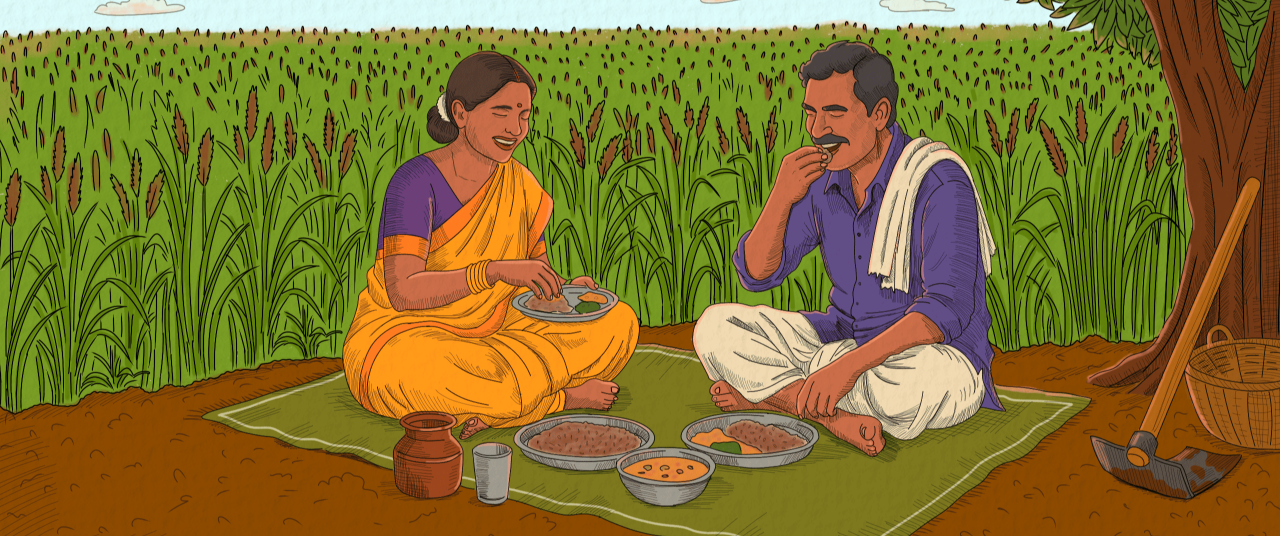
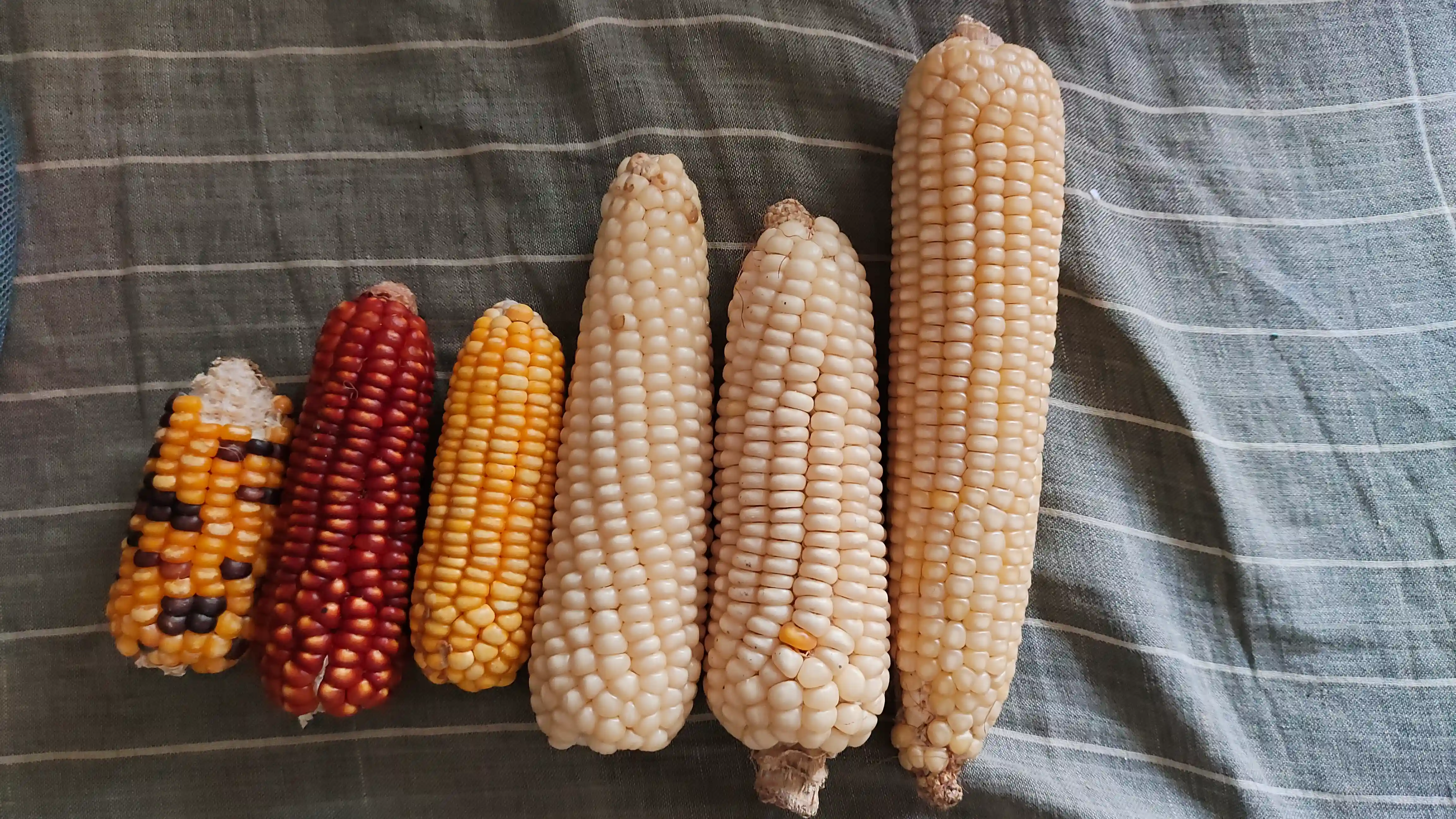
As his hands fall into a rhythm, memories of a past when his family, which belongs to the Bhatra tribal community, cultivated traditional varieties of corn—or ‘maka’ as it is locally known—come flooding back. Red, white, yellow, purple, even saffron-coloured cobs used to be sown with pulses before the monsoon. They were integral to rainfed intercropping systems (including millets, tubers and vegetables, too) commonly practised in Adivasi districts, which sustained nutrition at a household level.
These native varieties adapted well to local conditions, ensuring resilience during times of unfavourable weather. Their seeds were treasured and preserved across three or more generations (150–200 years) for their taste, ability to last in storage, and resilience against drought.
What does this mean for gleaming pearls of rainbow-hued maka, and the farmers who relied on it for nourishment?
Then came the Mukhyamantri Maka Mission, launched in 2023, which boosted yields and marketable surplus in Odisha, widening the state’s embrace of hybrid seeds which began during the Green Revolution. While traditional maize produces around 10–15 quintals per acre, hybrid varieties yield 35–40 quintals per acre in comparison. In the process, hybrids have also increased dependence on chemical inputs, whose costs steadily rise, and hardened the soil, depleting its fertility. Over the course of mere decades, local agrobiodiversity has eroded, driven by a productivity gap.
What does this mean for gleaming pearls of rainbow-hued maka, and the farmers who relied on it for nourishment?
A numbers game
Maize production in the state has grown from 7.3 lakh metric tonnes in 2019-20 to 11.3 lakh metric tonnes in 2023-24—a Compound Annual Growth Rate (CAGR) of 11.5%, according to the Odisha Economic Survey 2024-25. Under the MMM scheme, the state government allocated Rs. 481.94 crore over five years to expand cultivation across 45 blocks in 15 districts.
Farmers receive seed support along with an incentive of Rs. 2,500 per acre to cover the cost of bio-inputs and fertilisers. Line sowing is promoted, using 6 kgs of seed per acre. The traditional practice of intercropping maize with legumes to improve soil fertility is encouraged. The recommended pattern follows a 1:2 ratio of maize to legume rows.

Operational guidelines also encourage on-farm preparation and use of bio-inputs such as jeevamrutha, beejamrutha and neemastra. Forty-five Farmer Producer Organisations (FPOs) have been engaged to procure maize directly from farmers and ensure better price realisation.
The scale of adoption has been significant. During the 2025–26 kharif season, 17,365 farmers reportedly cultivated maize over 14,228 hectares under the MMM, producing 87,846 metric tonnes. Average yields rose from about 3.18 tonnes per hectare under traditional practices to between 5.3 and 7.8 tonnes per hectare with hybrids and improved agronomy. Support was also extended to sweet corn cultivation, benefiting 1,293 farmers and yielding over 10,600 tonnes.
Also read: The perilous future of Kashmir’s once-abundant trout
Who bears the cost of innovation?
Randhari’s hometown Nabarangpur aside, the top maize-producing districts include Keonjhar, Koraput, Ganjam and Gajapati, which have emerged as hubs of this transformation. Nabarangpur alone has produced over eight lakh tonnes a year.
Randhari cultivates maize on six acres and baby corn on two. While he initially received hybrid seeds and training under the MMM, he says poor germination rates pushed him to buy seeds from the local market. “I purchased varieties like DKC 9165 and DKC 9081 at Rs. 600 per kg. They yield up to 35–40 quintals per acre,” he says. But these returns come at a cost: the farmer spends Rs. 10,000–12,000 per acre on chemical fertilisers and insecticides.
In the Asanga village of the same block, which has access to lift irrigation (a method that transports water using water-lifting devices, such as electric pumps), hybrid maize cultivated in the rabi season is a major cash crop, spanning across nearly 900 acres. “Last year, I harvested about 285 quintals from nine acres and sold most of it at Rs. 1,800 per quintal,” says 38-year-old Hemananda Mali, who earned roughly Rs. 4.5 lakh. Production depends heavily on urea, DAP, potash, micronutrients and supplementary organic manure like Gobardhan Gold to improve soil fertility and promote plant growth.
But these returns come at a cost: the farmer spends Rs. 10,000–12,000 per acre on chemical fertilisers and insecticides.
In the neighbouring Koraput district, 12 acres of Duryadhan Bisoi’s farm have been devoted to hybrid maize for over a decade. After low yields from MMM-provided seeds, the 55-year-old farmer shifted to commercial hybrids such as CP333, CP555 and Adventa. “These seeds cost Rs. 800–1,000 per kg and around 7–8 kg is required for an acre. Among them, CP555 delivers the highest yield, around 30 quintals per acre, but at a steep cost,” Bisoi says.
Veteran cultivators of the crop like Bisoi fear that farming it is becoming increasingly unviable; market prices fall while fertilisers and pesticide bills run into thousands per acre. Beyond economics, he points to the long-term ecological impacts which cannot be ignored after three years pass, when the changes in the soil become palpable.
A market under strain
In recent years, drops in prices have been attributed to slowed-down demand from the poultry and ethanol industries. Simultaneously, the lack of local processing facilities has flooded rural markets with grain. “Traders from outside the state are buying maize at very low prices,” says Bisworanjan Parida, Regional Coordinator, Access Development Service, the NGO which serves as the MMM’s programme secretariat.
In recent years, drops in prices have been attributed to slowed-down demand from the poultry and ethanol industries.
To address this, district administrations are collaborating with private agencies. In Nabarangpur, for instance, a maize starch factory began trial runs in 2025, and is expected to procure large volumes directly from farmers. Plans are also underway to establish poultry feed units, improve storage infrastructure and promote decentralised, community-run processing units.
However, Parida stressed that strengthening FPOs and building robust price-support mechanisms remain critical. “Farmers need protection from sudden price crashes and returns closer to the minimum support price (MSP) during market stress,” he says. At the time of publishing this article, the MSP for maize hovered around Rs. 2,400 per quintal.
Also read: Katarni’s comeback: How an aromatic Bihari rice escaped obscurity
Leaving behind a gaping wound
Hybrid maize lacks the taste and digestibility of traditional varieties, say farmers. The switch to high-yielding varieties has had the most direct impact on their own diets, as the use of maize shrinks in local kitchens. “It spoils quickly and can’t be stored for months,” says 36-year-old farmer Parbati Beheradalai from the Betarsingh village in Gajapati district. “We eat very little of it. Even our cattle don't prefer fodder made from it.”
Mandia pej, a porridge made from ragi, maize and rice, was once a staple across southern and western Odisha. With native maize disappearing, the dish is now prepared without it. “With every lost variety, we are losing the foods that sustained our communities for generations,” says Sumitra Pujari, a 32-year-old farmer, also from Betarsingh.
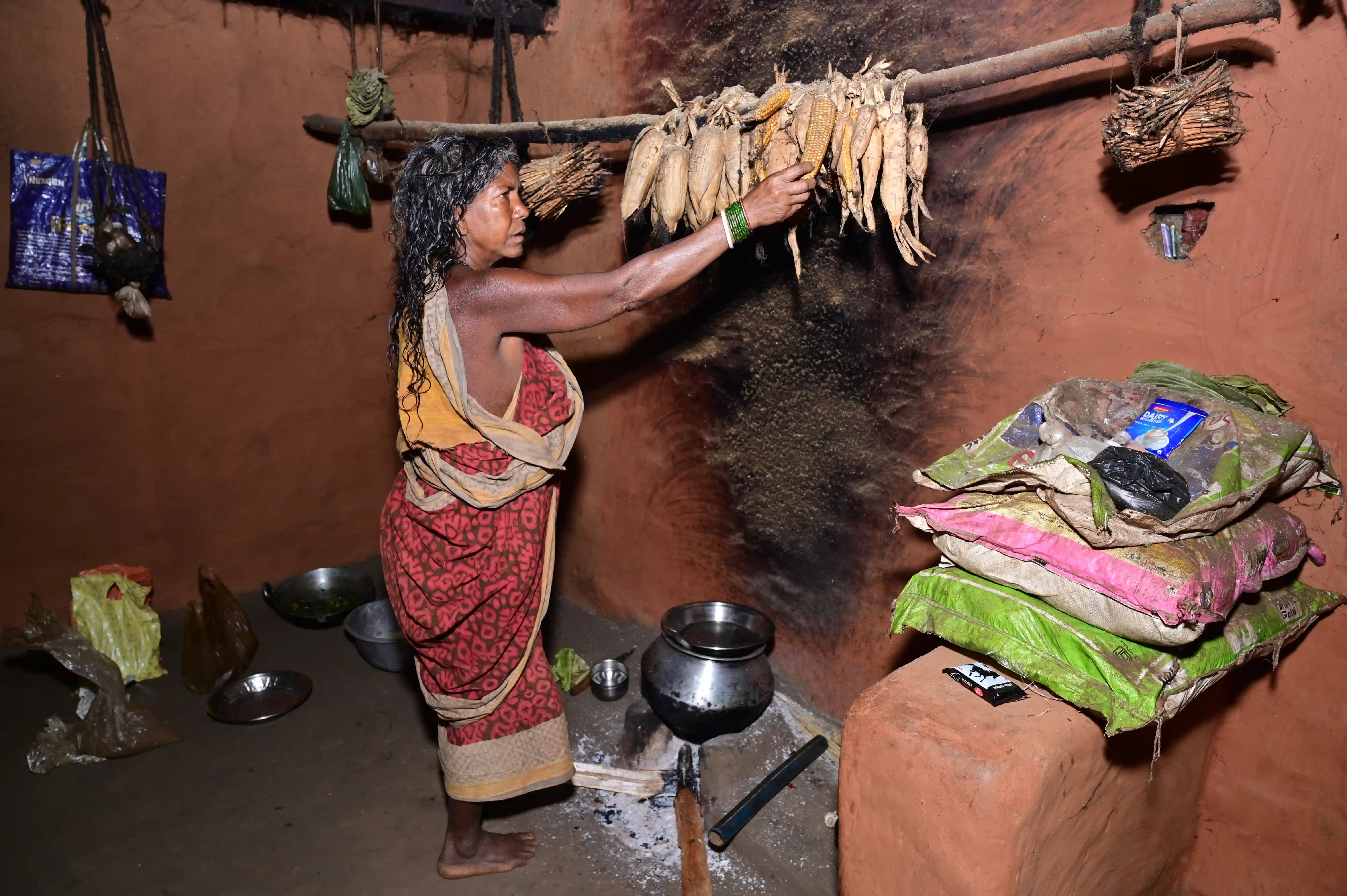
Whichever native maize varieties have not yet been lost to time or profit, are now grown in small quantities—only for household consumption. Stunningly, these cultivars are able to produce a harvest in the poorest of seasons, making them ideal for times of climate crisis. Farmers in Nabarangpur and Koraput districts recall that red, white, yellow, and mixed-coloured maize could survive delayed monsoons and other unpredictable weather because the seeds of these crops, preserved and used over multiple generations, were genetically diverse and learnt to adapt. They continue growing under low soil moisture.
Traditional maize may recover after intermittent periods of drought by producing smaller cobs, but hybrid maize shows poor pollination rates and incomplete grain filling under the same stress conditions. It is acutely sensitive to even minor shifts in rainfall or a rise in temperatures during flowering.
And yet, hybrid maize proliferates. This expansion of maize monocultures has reduced common grazing lands in Adivasi regions. Tribal households rear cows, bullocks, goats, and sheep, which are integral to both their livelihoods and cultural practices. Livestock was once central to manure supply and draft power in hilly terrain, besides offering a financial safety net during emergencies. “Earlier, our cattle and goats grazed freely on village commons and forest edges. Now those lands are all under maize cultivation ,” says Prasanna Beheradalai, a 55-year-old farmer from Betarsing. As grazing land disappears, many households are abandoning livestock rearing, cutting off access to organic manure. “We now buy chemical fertilisers because there is no dung left,” says Surendra Pujari, another farmer from Betarsing.
Also read: The uncertain future of Aarey Forest’s tribal agriculture
Can a different future be imagined?
Odisha’s experience with millets offers a possible way forward. The Shree Anna Abhiyan (formerly known as the Odisha Millets Mission) was launched in 2017 to promote the cultivation, consumption and overall commercial value of millets in the state. Under this programme, in 2024, Odisha became the first state in the country to formally recognise and release four finger millet landraces—Kundra Bati, Laxmipur Kalia, Malyabanta Mami and Gupteswar Bharati—integrating them into policy and procurement systems.
This expansion of maize monocultures has reduced common grazing lands in Adivasi regions.
“A similar approach is needed for promising traditional maize varieties,” says Debabrata Panda, Assistant Professor at the Central University of Odisha. Bringing them into formal seed and food policy frameworks can strengthen agrobiodiversity conservation and improve tribal food security, he adds.
State officials say the concern is recognised. “In the initial phase, we prioritised high-yielding varieties because of their productivity," says K. S. Redish Kumar, State Coordinator, MMM, Access Development Service, Bhubaneswar. “In the coming years, we plan to establish community seed banks to conserve traditional maize and link them to nutrition and food security programmes.”
Edited by Anushka Mukherjee and Neerja Deodhar
{{quiz}}


Explore other topics
References