Katarni’s comeback: How an aromatic Bihari rice escaped obscurity
A Geographical Indication tag and a grassroots revival led by dedicated farmers has ensured this beloved paddy variety remains alive


“For the past seven years—ever since I first tasted it—I’ve been buying Katarni rice from Subodh Choudhary, a farmer who grows it in a village in Bhagalpur,” says A. K. Singh, a Mumbai-based lawyer. “It’s far more aromatic and tender than Basmati. We bring it out only for special occasions—pulao, kheer, and festive meals.”
He swears by this indigenous grain. “Honestly, Katarni deserves to be prasad in temples.”
A forgotten grain is embraced again
Singh is not alone. Across India, food lovers and chefs are rediscovering Katarni, a heritage rice from Bihar’s Bhagalpur region that once teetered on the verge of vanishing. Katarni is a landrace rice, signifying that it is a traditional variety that adapted and evolved naturally with its climate, with a great genetic diversity. This also means that landraces like it are more resistant to climatic shifts, droughts, and pest attacks.
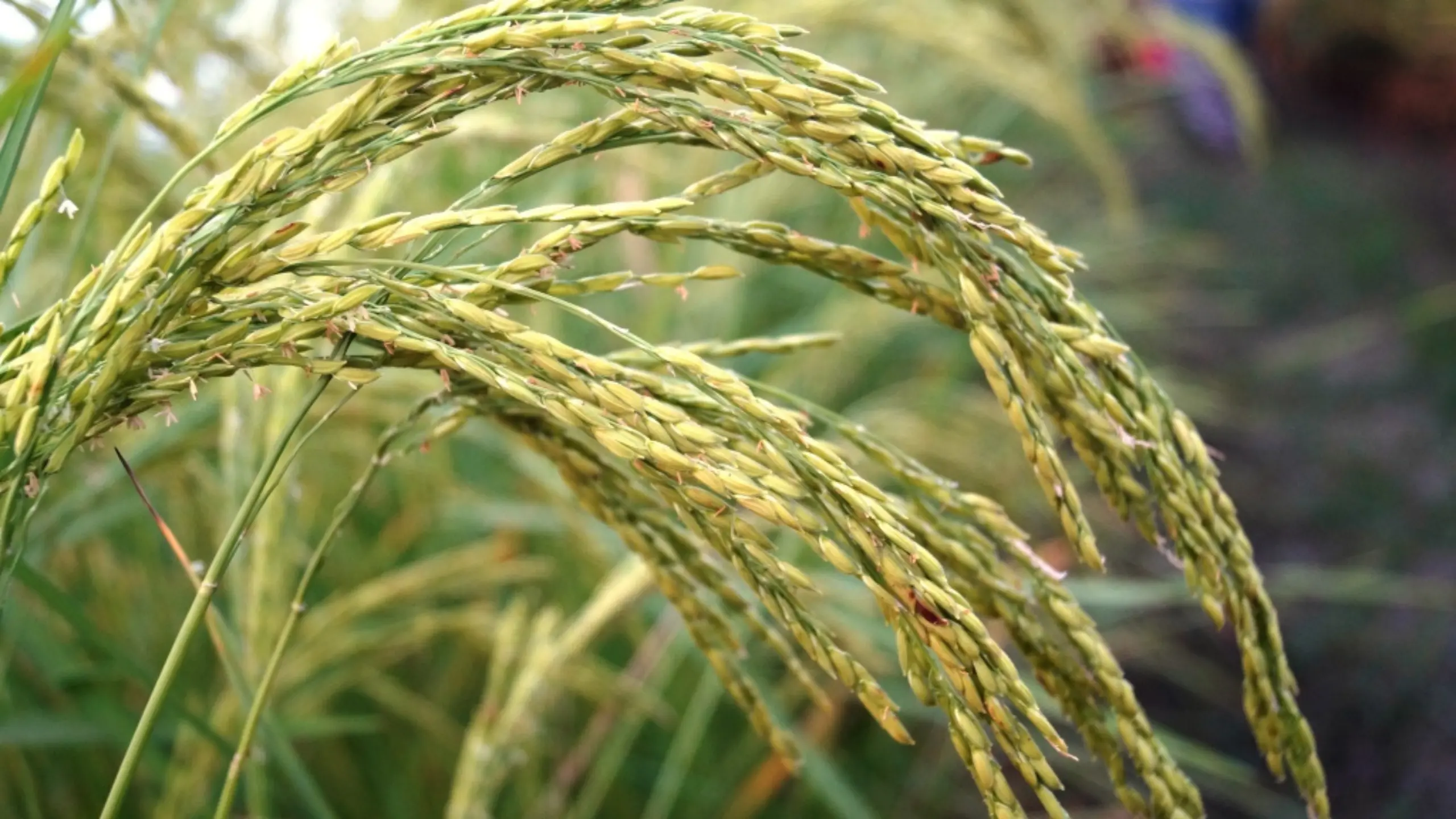
Native to the fertile Chanan river basin, Katarni stands out with its small, slender grains, subtle aroma, and melt-in-the-mouth texture. With an amylose content of 21–24%, it offers a medium-to-high starch profile that contributes to its soft texture and appealing cooking quality. On cooking, Katarni rice blooms into fluffy grains that remain soft for hours. When compared to other aromatic rice varieties, it remains distinct owing to its biochemical traits shaped by Bihar’s unique climate and soil.
Native to the fertile Chanan river basin, Katarni stands out with its small, slender grains, subtle aroma, and melt-in-the-mouth texture.
Its fragrance is notably strong, scoring high on sensory tests; Katarni is genetically linked to the inactivation of the BADH2 gene—a trait shared with other aromatic rices like Basmati. It develops its characteristic aroma only when cultivated in a handful of river-fed blocks of Bhagalpur, Munger, and Banka, where farmers have carefully preserved it, harvest after harvest.
The cultivation of Katarni in this region began over a century ago. Its very name comes from ‘katarni’, the hooked awl used for stitching; the husk’s tip mirrors the sewing tool. Local experts say it is currently cultivated as a rabi crop in Bihar.
It is especially well-suited to prepare chura or beaten rice, which is consumed with curd ceremonially, often during the festival of Makar Sankranti. For generations, local households have reserved this rice for rituals and family celebrations, valuing it not only as food but as a cultural offering.
Also read: Why bajra, the ‘pearl’ of India’s millets, remains underutilised
The fall and rise: challenges faced by farmers
But this fragrant grain almost slipped into obscurity. From the 1990s onward, its area under cultivation began shrinking rapidly. In the years leading up to the Economic Reforms of 1991, public investment in agriculture—especially irrigation and rural infrastructure—had declined. Reforms in the banking system affected agricultural credit granted to small and marginal farmers. These policies sought to introduce more competition into the agricultural sector, and favoured, by default, high-yielding breeds and bigger outputs. At this time, over thousands of landraces such as Katarni started vanishing. This drastic dwindling in their cultivation was dangerous, because it pulled down genetic diversity, exposing the rice crop to further threats.
High irrigation costs, competition from high-yield hybrid paddies, and the flood of adulterated imitations pushed many farmers away.
“There was a time when traders mixed Katarni with other rice varieties and passed it off at premium rates. Farmers got nothing from it,” recalls Subodh Choudhary, who has been cultivating Katarni as well as other other varieties like Tulsimanjari and black rice since 2016. Today, he runs direct-to-consumer sales (buyers like Singh approach him directly) to preserve Katarni’s identity.
While earning a GI tag afforded Katarni legal protection and even reduced imitation in the market, it has not guaranteed steady returns to farmers.
Even as the years left the Economic Reforms behind, the cultivation of Katarni suffered. In 1995, massive floods in Bihar’s Banka district caused field silting and sand excavation in the Chandan river. Adulteration eroded market demand locally and globally, pushing area under cultivation down significantly since 1991-92. Cultivation remained minimal and unstable.
Things changed in 2018, when Katarni was granted a Geographical Indication (GI) tag. The recognition tied its identity to the climate and soil of Bhagalpur, Banka, and Munger districts. This not only protected farmers, but also offered the rice a good chance at revival. The GI tag provided Katarni farmers an exclusive right to cultivate this rice, and continues to protect them. ‘Bhagalpuri Katarni Rice Utpadak Sangh', a registered farmers’ society, has been awarded the ability to utilise this GI tag by Intellectual Properties Rights, Govt. of India.
This recognition of authenticity has also helped producers enhance sales within and outside the state. “With the GI tag, people know what they’re buying. And that awareness is pushing demand,” says Choudhary.
While earning a GI tag afforded Katarni legal protection and even reduced imitation in the market, it has not guaranteed steady returns to farmers. One of the several challenges it faces has to do with the increasing preference for high-yielding varieties in the market; Katarni’s yields remain lower than other paddy crops, and younger farmers often abandon it for more profitable options. A recent structured survey of Katarni farmers in Bhagalpur revealed that they struggled with technological constraints, access to high-quality seeds, and the rising price of fertilisers.
Yet, its demand is slowly building again—driven by heritage-conscious consumers, artisanal food movements, and farmers like Choudhary who want to keep it alive. As frequent buyer Singh insists, “Katarni isn’t just rice—it’s part of our cultural memory. That’s worth protecting.”
Also read: Protecting place and power, not people: The trouble with GI tags
Grassroots innovation
“Currently, Katarni is grown on 2,000 acres in Bhagalpur and 1,000 acres in Banka. Its cultivation cost is approximately 25% lower than that of hybrid rice varieties, and farmers earn well from selling puwal (paddy biomass) too, adding another layer of economic value to this heritage grain,” informs Prabhat Kumar, Deputy Project Director at AATMA (Agricultural Technology Management Agency), Bhagalpur.
Choudhary, a farmer-turned-agri-entrepreneur, has spearheaded a grassroots revival. Alarmed by the variety’s decline due to market adulteration and reduced cultivation, he founded Agro Heritage Pvt. Ltd. in 2018, with support from Sabour Agri Incubators and Bihar Agricultural University. His mission: restore purity, dignity, and market value to Katarni. He distributed authentic seeds, expanded cultivation, and built fair-market channels that rewarded quality. His efforts addressed systemic challenges like poor infrastructure, lack of access, and institutional neglect, while promoting organic farming and agri-incubation.
Its cultivation cost is approximately 25% lower than that of hybrid rice varieties, and farmers earn well from selling puwal (paddy biomass) too, adding another layer of economic value to this heritage grain
Manish Kumar Singh, who comes from a lineage of farmers from Abha Sultanpur in Munger district, began his professional journey as a teacher. But when the COVID-19 pandemic forced the closure of his educational institute in 2021, he pivoted decisively to agriculture. He started by cultivating Katarni on 20 bighas, and soon leased an additional 30 bighas to scale up. Today, he heads the ‘Jardalu and Katarni Agro Producer Company’, a farmer-led initiative focused on boosting smallholder incomes through authentic Katarni cultivation and improved market access.
Breeding a better Katarni
In India’s rice heartlands, farmers face a cultural and economic crossroads: choosing between Katarni and Basmati. Katarni yields just 1.8–1.9 tons per hectare and is prone to lodging—the bending over or falling of the rice crop before harvest; it suffers from a fragile stem, making it highly susceptible to lodging under wind, rain, or excessive nitrogen. (New semi-dwarf lines may reach up to 3 tons.) Basmati varieties like Pusa 1121 and 1509 offer 4.5–6 tons per hectare, making them economically attractive.
This vulnerability often results in low yields far below those of modern dwarf hybrids. To address these limitations, the Bihar Agricultural University in Sabour initiated a breeding program to develop an improved landrace with reduced plant height, medium maturity, and higher productivity. The outcome: Sabour Katarni Dhan-1 (BRR 0215).
The rising demand for Katarni, now priced at Rs. 135 per kilogram, has triggered the influx of a counterfeit variety: Sonam.
“We began work on the variety in 2013,” says Dr. Mankesh Kumar, Associate Professor-cum-Senior Scientist (Rice Breeding), Department of Plant Breeding and Genetics. The variety was referred to the State Varietal Release Committee (SVRC) for a national-level recommendation earlier this year.
“Using molecular marker-assisted backcross breeding, we developed several semi-dwarfs, medium-duration lines that retain the exquisite grain quality of Bhagalpur Katarni. These lines closely resemble the original Katarni type. Multilocation trials across India, including GI-designated areas, have shown encouraging results, with yields reaching 46–48 quintals per hectare in farmers’ fields.”
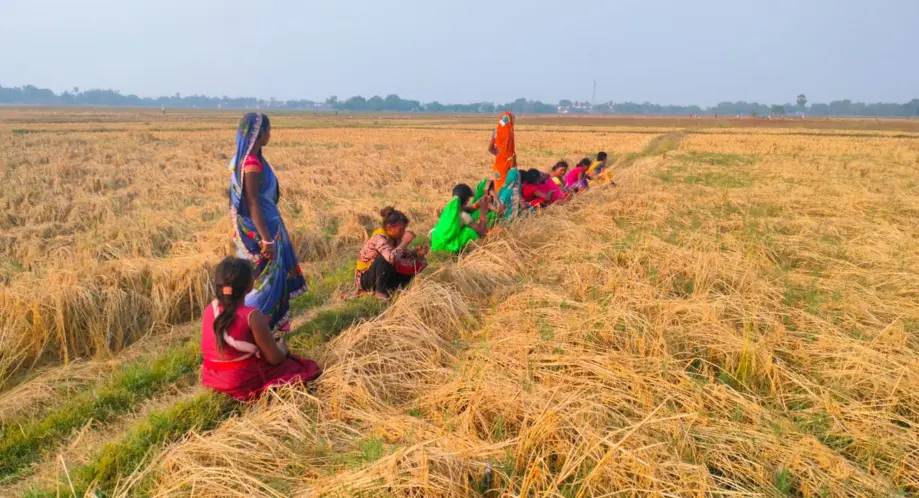
The rising demand for Katarni, now priced at Rs. 135 per kilogram, has triggered the influx of a counterfeit variety: Sonam. This is a visually similar but lower-grade substitute that sells for just Rs. 35 per kilogram. “Millers are adding a flavouring agent—propylene glycol—to Sonam rice to mimic the taste of authentic Katarni,” explains Chaudhary. “This synthetic, colourless, and nearly odourless liquid is widely used to enhance flavour.
Katarni’s revival highlights the power of community action, GI tag-led protection, and sustainable farming in preserving heritage crops. As dedicated farmers and rising consumer interest drive demand, it stands as a symbol of cultural pride and economic opportunity—and its ongoing protection ensures that this unique rice will endure for future generations.
Also read: Babulal Dahiya makes every grain of rice count
{{quiz}}
.avif)

.avif)
Explore other topics
References