In this Kerala village, amaranth is a labour of love, and a crop that uplifts
The lasting appeal of ‘Thaickal cheera’ is translating into land ownership, sustained incomes and reasons to remain committed to agriculture


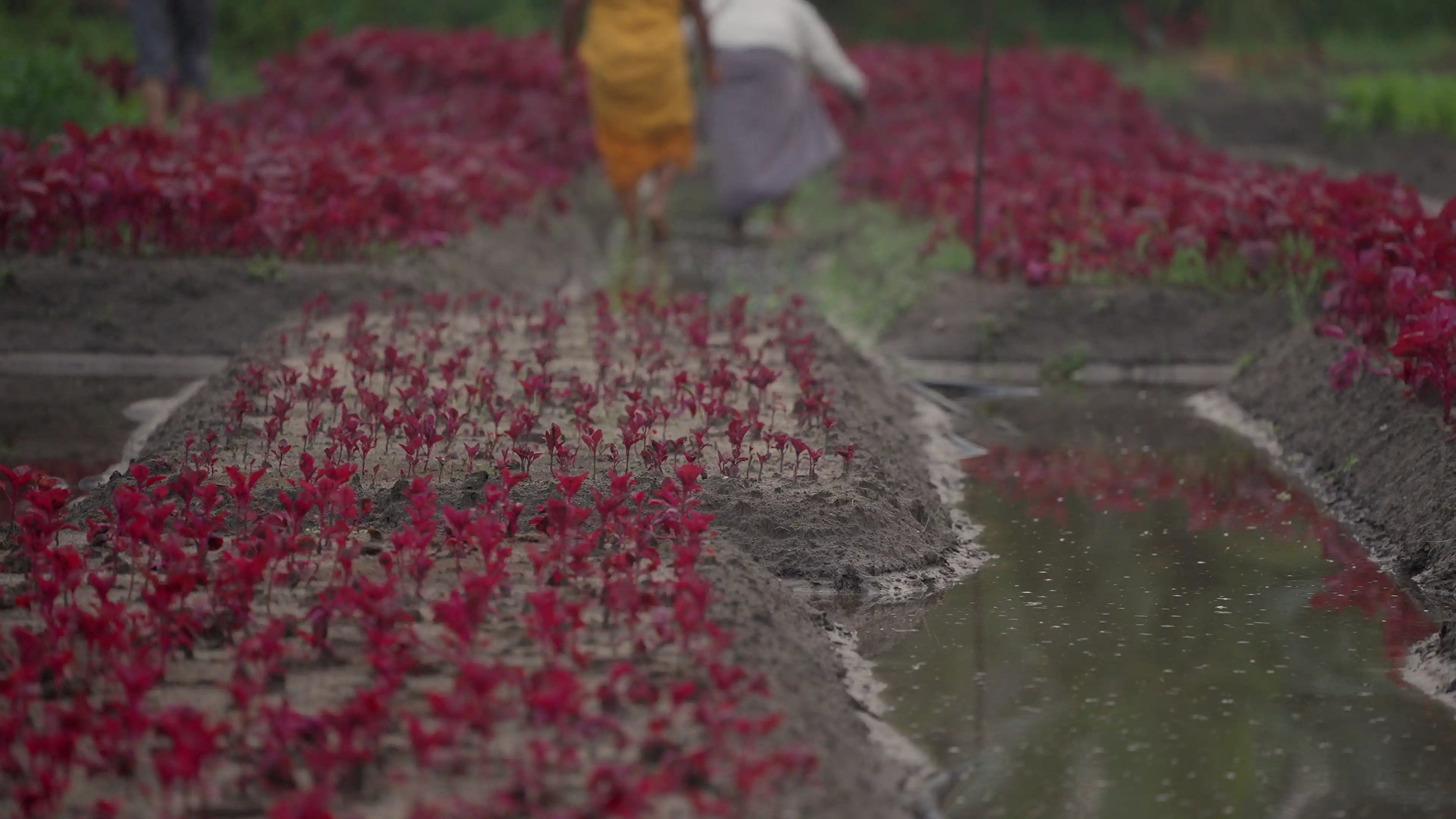
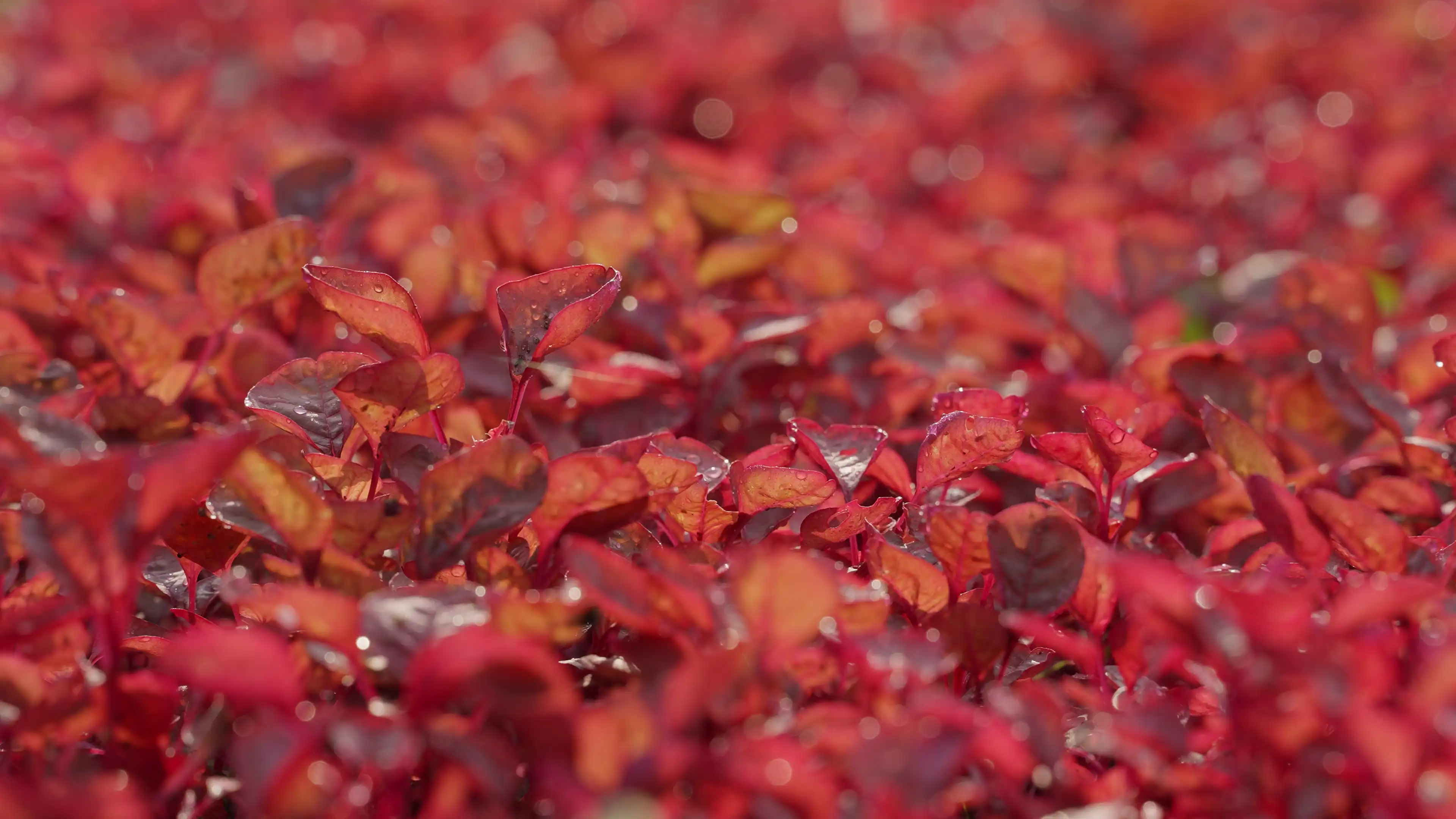
In south Cherthala, a panchayat in Kerala’s Alappuzha district, ‘Thaickal’ is more than just the name of a village. It is inextricably tied to the very identity of the village’s most popular crop—the amaranth, or ‘cheera’ as it is known in Malayalam. Its famed red variety, unique to Thaickal, where it has been grown for at least a century, has been a sure source of sustenance for many women farmers. Cultivated for six months of the year in this coastal village, the Thaickal cheera paints the landscape in a pleasing shade of red.
Amaranth (Amaranthus tricolor L.), grown in red and green varieties, is widely consumed across the state. Its leaves are chopped and thrown into a mix of hot coconut oil with minimal spices, transforming them into a delicious stir fry within minutes. Its taste and short cooking duration have made it a staple in Malayali meals. While research suggests that it is the most commonly grown leafy vegetable in Kerala (as of 2021, 2169 hectares were under amaranthus cultivation), the variety from Thaickal has attained a distinct popularity.
Most farmers tending to the growing leaves are women. Few own the land that they work on.
The farmers here prefix it with the descriptor ‘silk’, to emphasise its bright appearance and beauty. Another standout quality is its generous leaf density, or the number of leaves per unit area, in comparison to other varieties such as the Vlathankara cheera, also widely available in the region. With the Thaickal variety, one varambu (raised bed) can yield at least 10-12 kg. Farmers who make harvests early in the season can earn Rs. 100 per kilo—a Rs. 20 advantage over those who only sell during the season’s peak.
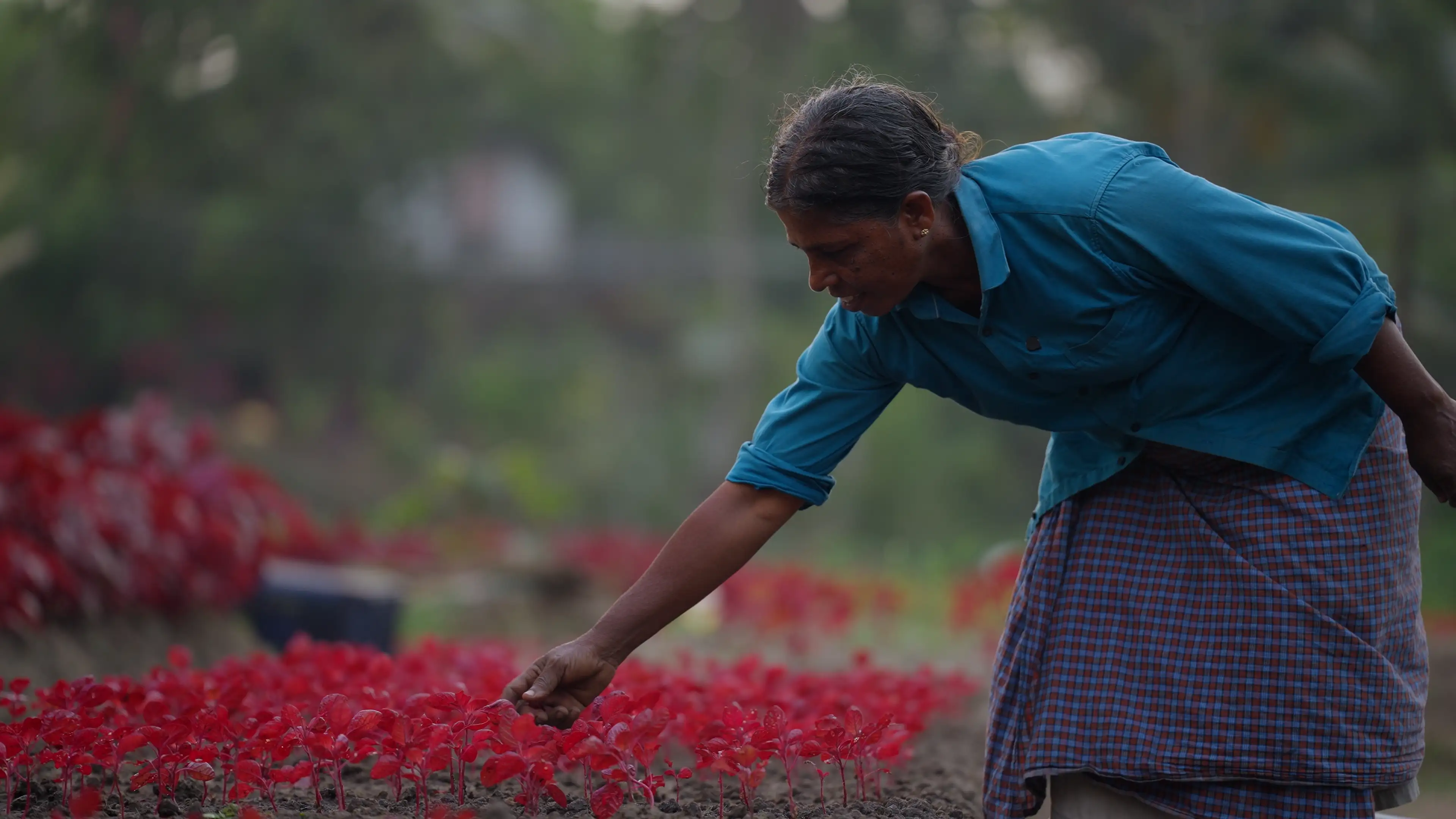
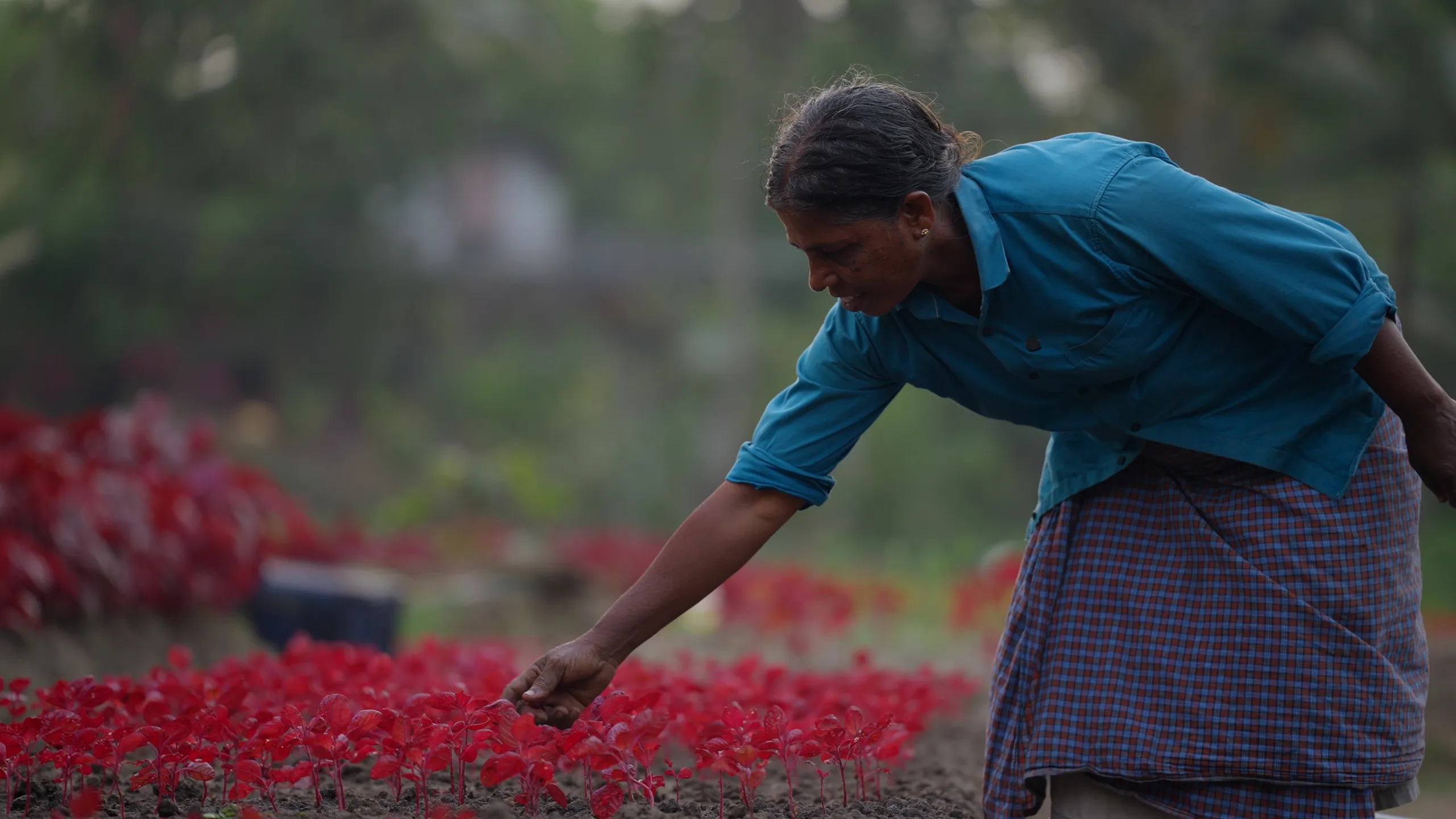
In the farmlands dotting Thaickal, the red amaranth is in various stages of bloom. Most farmers tending to the growing leaves are women. Few own the land that they work on. This was true of 58-year-old P. Sathy and her daughter Nisha Mol until shortly before the Good Food Movement encountered them.
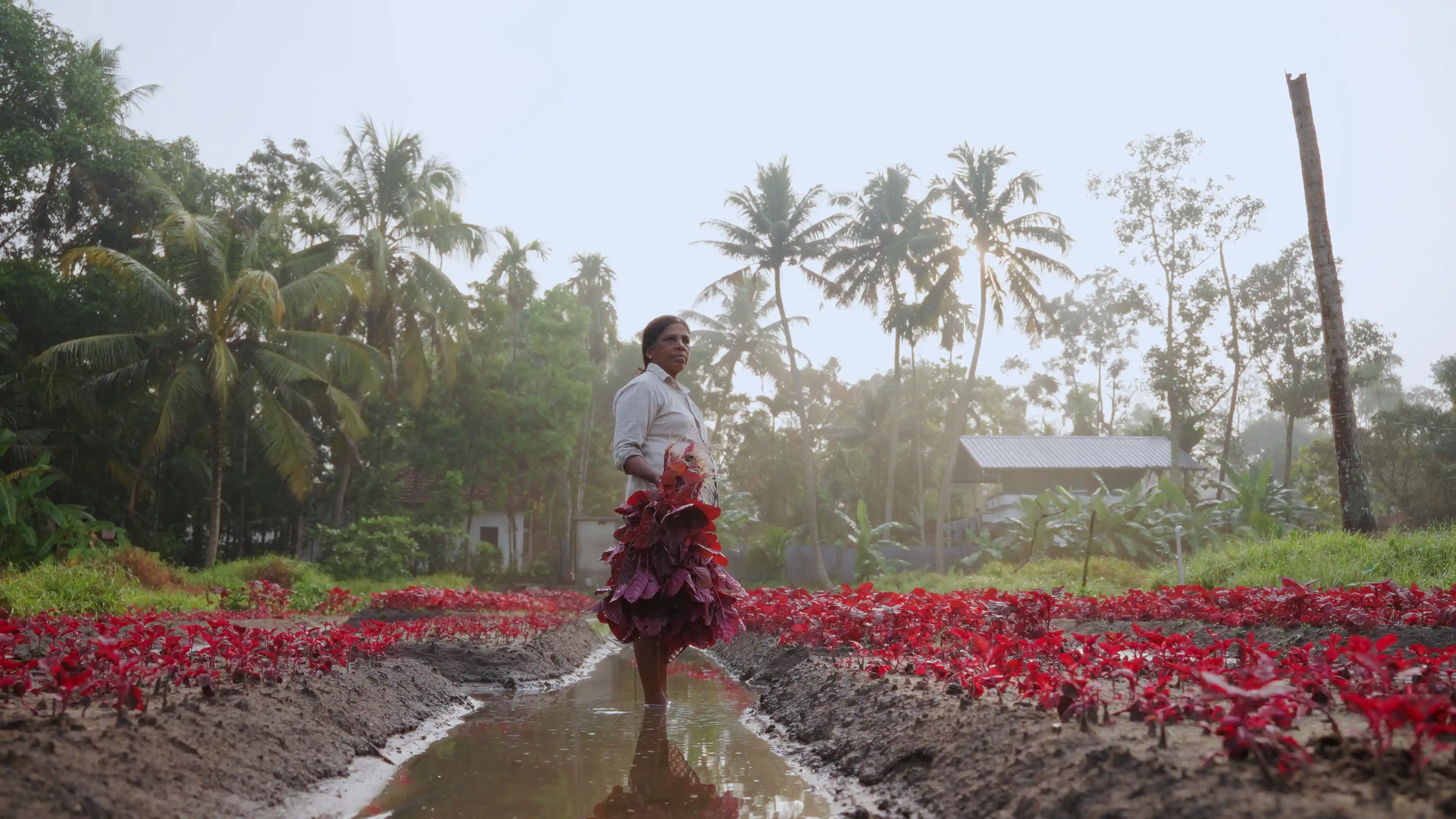
“When it comes to working on leased land, the owner will give it to us only for six months,” says Sathy, who has been growing the crop in Thaickal for 45 years. “Even if the amaranth is not ready for harvest, we are asked to pluck it out.” All that is now in the past. “I bought this plot with my income. The registration process was completed just last week,” says Sathy with a smile that rarely leaves her face. “I can stand tall with pride, on my own land. This became possible only because of my earnings from agriculture,” she adds. As she stands on the 40 cents of land that she has just purchased, she articulates a hope for the near future: to own a neighboring plot that may go up for sale soon.
Sathy lives with 40-year-old Nisha and her 101-year-old mother in a modest house adjoining the family’s farm. The harvest from these fields has also afforded Sathy the choice to send her granddaughter to “the big city of Kochi” to pursue a college education. “I feel a deep connection to amaranth—to every part of it,” she says.
{{marquee}}
A crop in need of care
Thaickal and its amaranth have been present in Sathy’s life for as long as she can recall. Both her parents were farmers in the village. “When I was a child, I went to the fields with my mother and learnt the ways of farming from her,” she says. Nisha, too, followed the same path with a daily routine that mirrors her mother’s: the duo begin their day at 4 am, retiring from the fields in the late hours of the evening.
Cultivation is at its height during the first half of the year. Under steady climatic conditions, the crop is ready for harvest in exactly 26 to 28 days. Given Thaickal’s propensity for flooding, the seeds are cultivated on raised beds, constructed by workers hired for the purpose. Once the seeds are sown, leaves emerge each week, ready to head to the vegetable market on the 28th day.
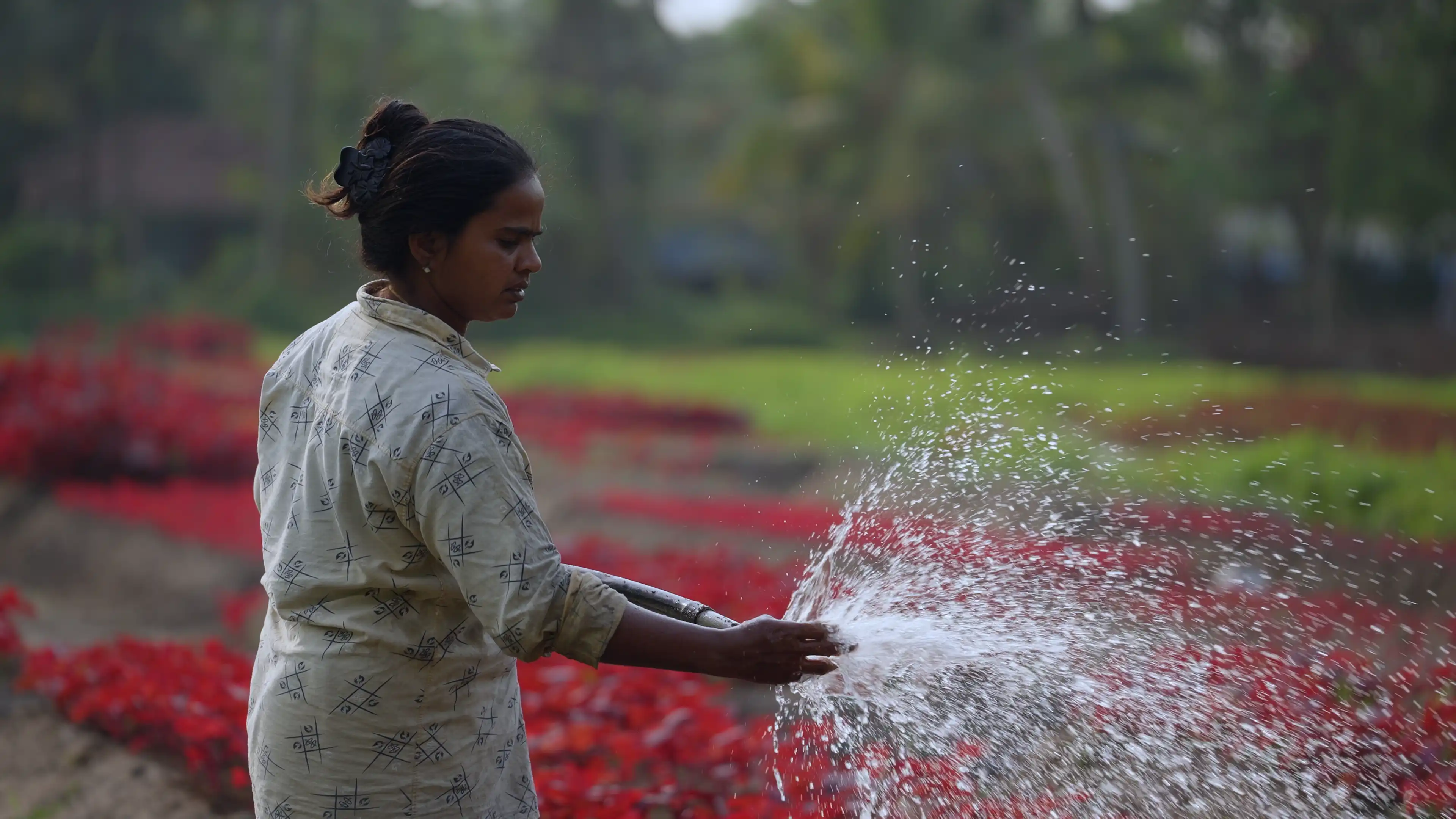
The most time-consuming aspect of the everyday labour in amaranth farming is watering the crop—a task that must be undertaken twice a day.
The harvest has a guaranteed timeline, and this is why farmers like Sathy and Nisha consider the crop to be a fortune maker. “This morning, I sold amaranth from that section of my land for Rs. 1,200. The money from the sale is here, in my pocket,” Sathy says with a laugh. From the six months they invest in amaranth cultivation, the mother-daughter duo typically earns around Rs. 5 lakh.

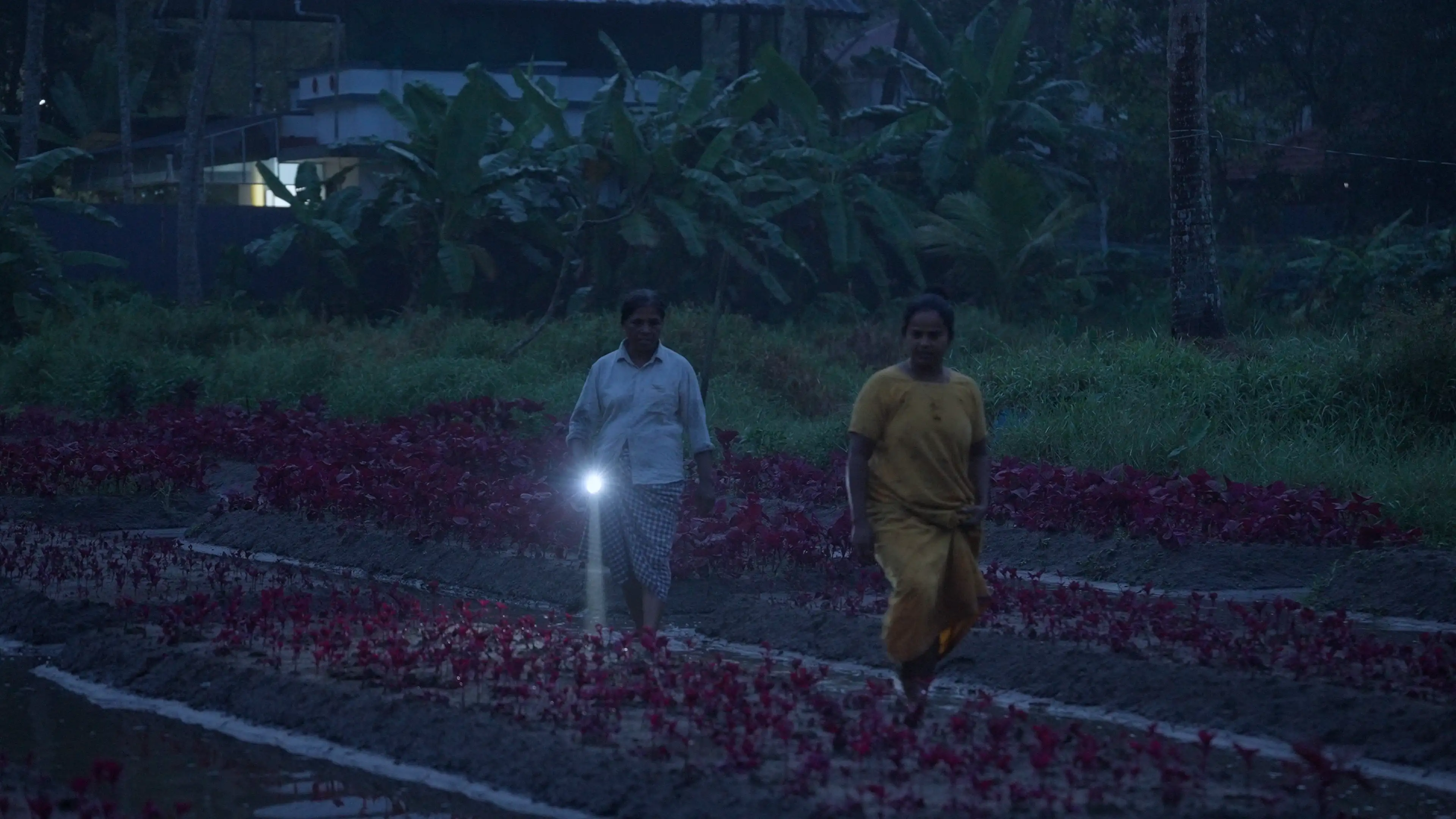
The leafy vegetable thrives under bright sunlight. “It is able to resist diseases because of the heat,” Sathy says. “During the monsoon, on the other hand, there are high chances of pests attacking the leaves.” Late at night, she and Nisha step into the fields with a torch to spot leafhoppers and caterpillars lurking among the leaves and the soil, to manually remove them. But they’re unable to do this as often as they’d like to. “After doing the day’s work, when I see my bed, I fall asleep out of exhaustion,” says Sathy.
The most time-consuming aspect of the everyday labour in amaranth farming is watering the crop—a task that must be undertaken twice a day. In its early stage of growth, it is delicate and cannot withstand the force of water flowing from a hose. So, farmers sprinkle it gently with water from a pot, a process that could take four to five hours. The result is that farm work leaves them with little time to cook meals of their own.
While it is possible to cultivate the Thaickal cheera on an elevated plot, farmers largely put a pause to cultivation in June which ushers in the rainy season in Kerala. Sathy and Nisha turn to paddy farming during this period.
“For generations, we have prepared the seeds and stocked them for the following year,” says Sathy, who is particular about storing them in a clean cotton cloth. “If you keep them in a plastic tin, they may not sprout,” she says. Amaranth seeds are minute in size, almost lost to the naked eye. “Preparing them and transplanting them for sowing is like raising a child. A seed will stand straight only on the third day. And if it is not quenched with water on the fourth day, it will wither. This means being constantly present in the fields,” Nisha says.
Also read: For Kerala’s elusive Navara rice, Narayanan Unny went against the grain
A hard day’s night
Thaickal’s amaranth has gained just enough fame on social media for people from other parts of Kerala to come seeking a taste of it. “An Idukki resident travelled to my farm after watching a video about it. He purchased seeds from me. Later, he called to complain that the produce was not as bright and tasty as it was here,” Sathy recalls. The buyer even accused her of handing over lower-quality seeds, so as to dupe him. Sathy rubbishes these claims, asserting instead that the difference lies in the conditions in which the amaranth is grown: the sandy soil in Thaickal, she believes, must imbue the crop with some special attributes.
In Alappuzha, she has 10-15 regular customers who visit her to buy the leafy vegetable. Additionally, 30 previous customers are reminded to return to Thaickal every time the family has produce that is ready to go. It may not be a large pool of customers, but those who come buy in bulk. If they find themselves with unsold stock, Nisha will go to the nearest market to find takers. They have not yet been in a situation where they are left with rotting produce.
Each day begins with the arrival of one particular customer—a vegetable seller—who comes for fresh amaranth before he opens the shutters of his shop in Cherthala. One day in February, with two hours to go before daybreak, Sathy sat on the steps of the verandah of her home, sipping a steaming cup of black coffee. The customer had not arrived by 4:30 am, as he usually does. The delay was not unexpected given the rains that had lashed Cherthala the previous night. The amaranth fields were submerged, but Sathy and Nisha did not want to deviate from their routine. They looked hopefully towards the dark pathway leading into the house for the flash of a two-wheeler.
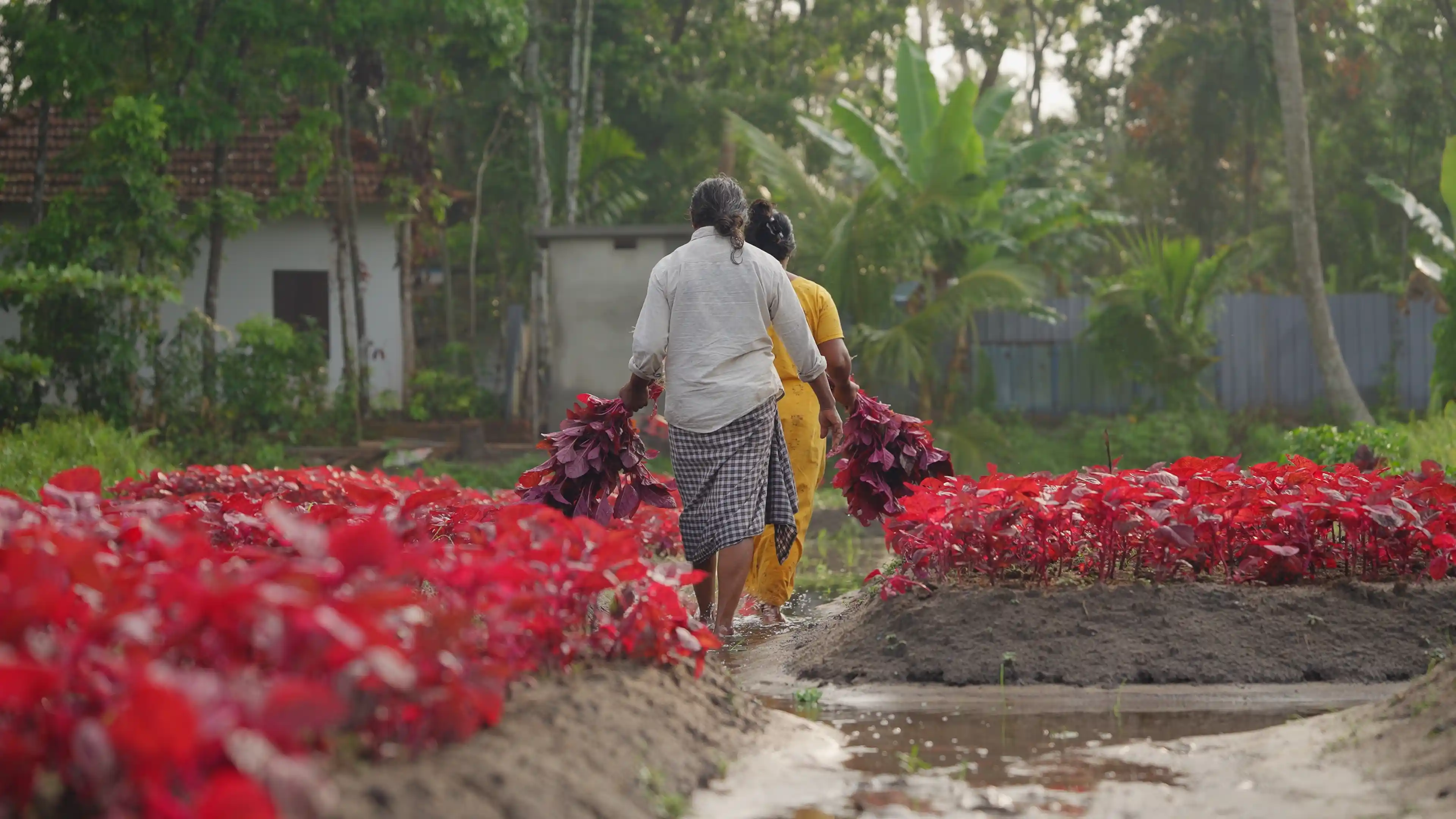
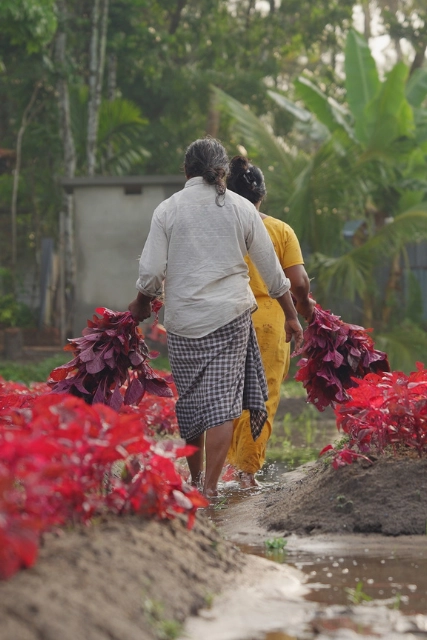
The customer eventually arrived and made his way into the fields. By the light of torches and mobile flashlights, they waded through ankle-deep muddied waters to reach the bed of the amaranth that was ripe for harvest. Sathy plucked them out and bundled them up, and with Nisha’s help, she foisted the produce weighing 10 kg on her head. They slowly walked out of the field and rested easy only after the bundle had been carefully placed in the customer’s vehicle.
Also read: Why bajra, the ‘pearl’ of India’s millets, remains underutilised
Shifts in what was once predictable—and reliable
The renowned quality of the Thaickal amaranth has suffered in the last four years because of leaf blight disease—the appearance of cream-coloured spots that deteriorate into disfigurement of the foliage. Sathy cannot place a finger on the exact cause. “I don’t know if these are changes caused by nature,” she says. Research points to the soil-borne fungi Rhizoctonia solani Kuhn, which thrives in humid conditions.
The holes in the leaves from pest attacks is another issue. Sathy has steadfastly stayed away from the usage of pesticides, with an insistence on following organic methods of cultivation. She approached the officials at south Cherthala’s Krishi Bhavan, seeking a solution, and was advised to use a decoction made from tobacco. But Sathy found it to be ineffective. The only alternative then was to discard the affected leaves, significantly impacting the weight of the amaranth that can go for sale, which also eats away at the expected income. But this is what they must do. “The customer will not buy it if they see even one damaged leaf,” she explains.
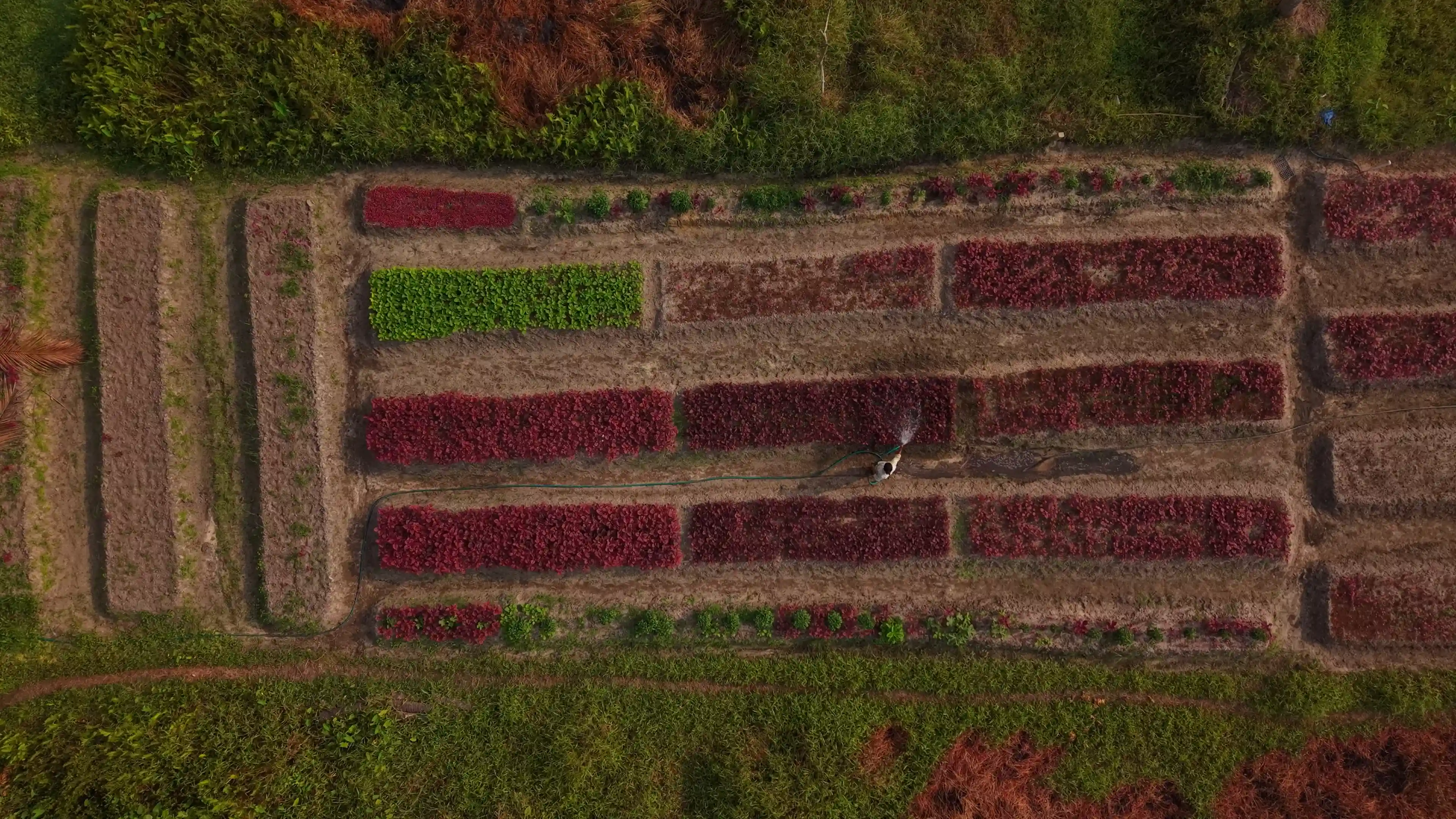
The natural fertilisers used on the farm include chicken manure, cow dung and ash. Though they resist the usage of chemical inputs, Sathy notes that the expenses are mounting. “Earlier, 3 kg of chicken manure was priced at Rs. 70. Now a packet barely weighs 15 kg, and we have to pay Rs. 140 for it,” she rues. Despite the rising costs, they persist, since most of the work is done with minimum reliance on external labour.
The steady income that arrives with the toil put into amaranth cultivation motivates farmers like Sathy and Nisha to return to the fields every day. “This is easy if you are willing to make the effort. All the hard work from morning to evening is worth it,” says Sathy. “We have no other inheritance to speak of. We are people who live on a daily income. Farming is all we have,” Sathy sums up, standing next to the eye-catching, red-hued amaranth leaves fluttering in Thaickal’s winds.
Also read: Why Karimeen, Kerala’s favourite, is a fish out of water


.avif)
Explore other topics
References