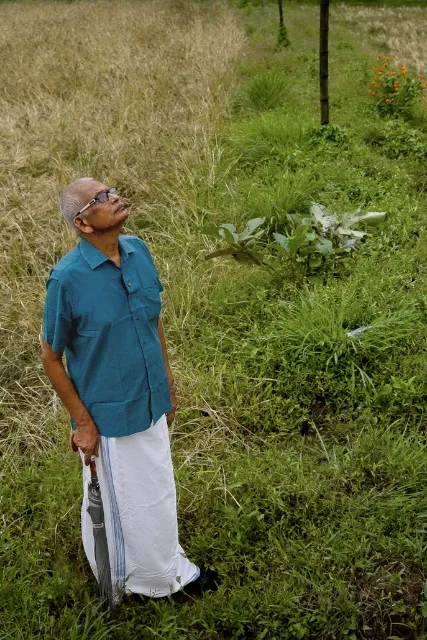
For Kerala’s elusive Navara rice, Narayanan Unny went against the grain
The medicinal rice variety demands a great deal and offers very little in return. But that never deterred Unny


Editor’s note: When he was alive, Good Food Movement had the privilege to meet and learn from P. Narayanan Unny—a rare farmer who dedicated his life to preserving a single, precious grain. After his passing, we cherish the opportunity to tell his story.
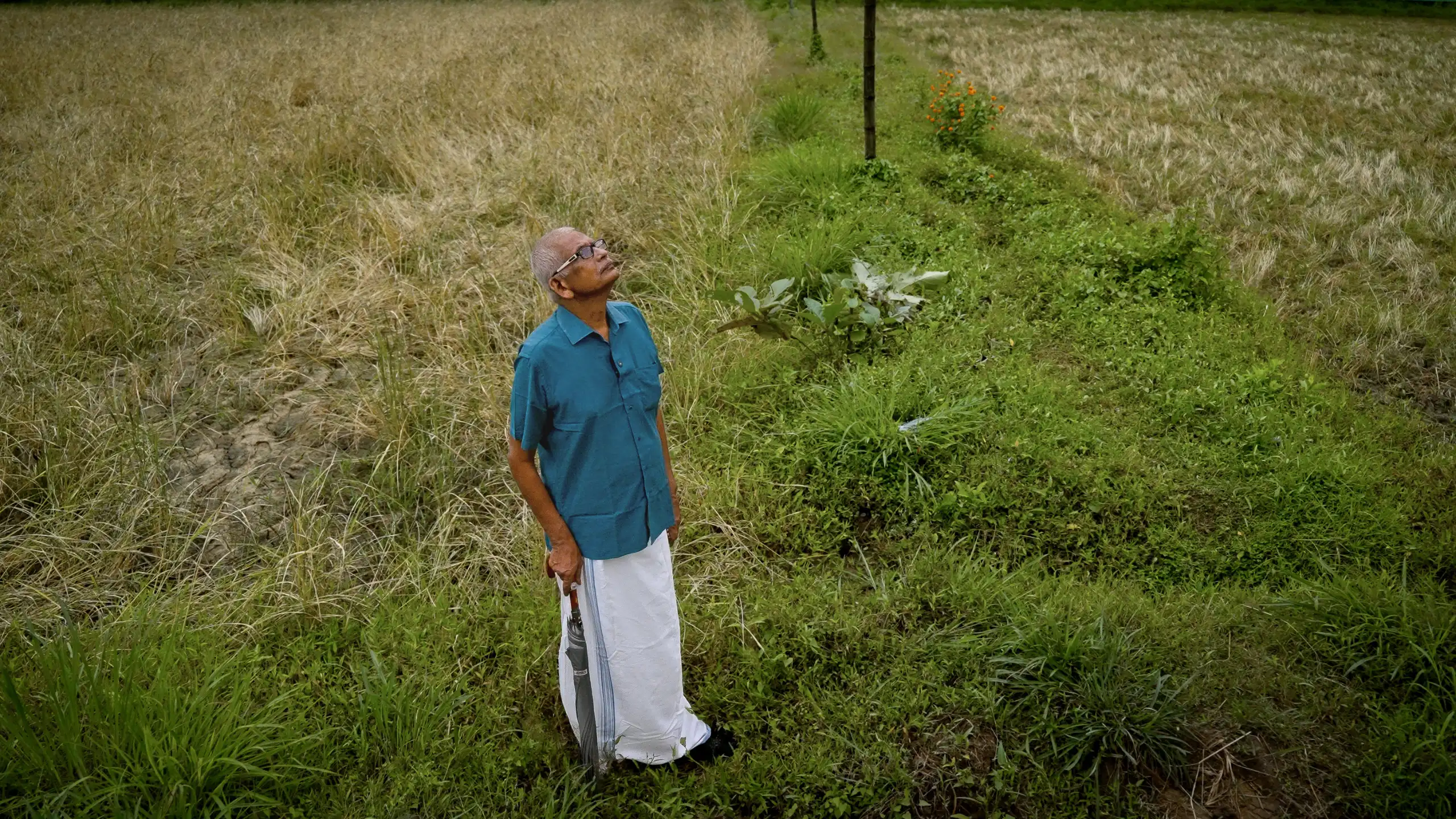
ON A PADDY field in the agrarian town of Chittur in Palakkad, which has long been christened as the rice bowl of Kerala, a handcrafted watchtower remains an unassuming presence. From this modest shed, fashioned out of bamboo and palm leaves, a farmer kept vigil over his crops against perils lurking in the silence of the night. Its compact size stands in sharp contrast to the significance it held for P. Narayanan Unny, a man who built a legacy as the guardian of a rice variety staring extinction in the face.
So central was this symbol to Unny’s vision that the image of a man seated in a shed, with a lantern by his side, was his visual of choice to represent his life’s work: the deep red ‘Navara’ or ‘Njavara’ grain, which has an earthy taste, matures in a strikingly short period of 60 days, and remains peerless within Kerala’s abundant paddy-growing culture.
An exceedingly delicate crop whose stems can be weighed down by dew, it has been grown mostly for self-consumption across smallholding farms in nine districts of the state, aside from earning a valued place in Ayurvedic practices. Navara’s medicinal properties have been attributed to elevated concentrations of phytochemicals, especially flavonoids, which support anti-inflammatory and immune system modulation functions. It also contains protein, dietary fibre, and vitamins and minerals—nearly double the iron that white rice does.
Amid these realities, Unny committed eight of the 18 acres of his farm to protecting Navara, which is said to have a 2500 year-old history.
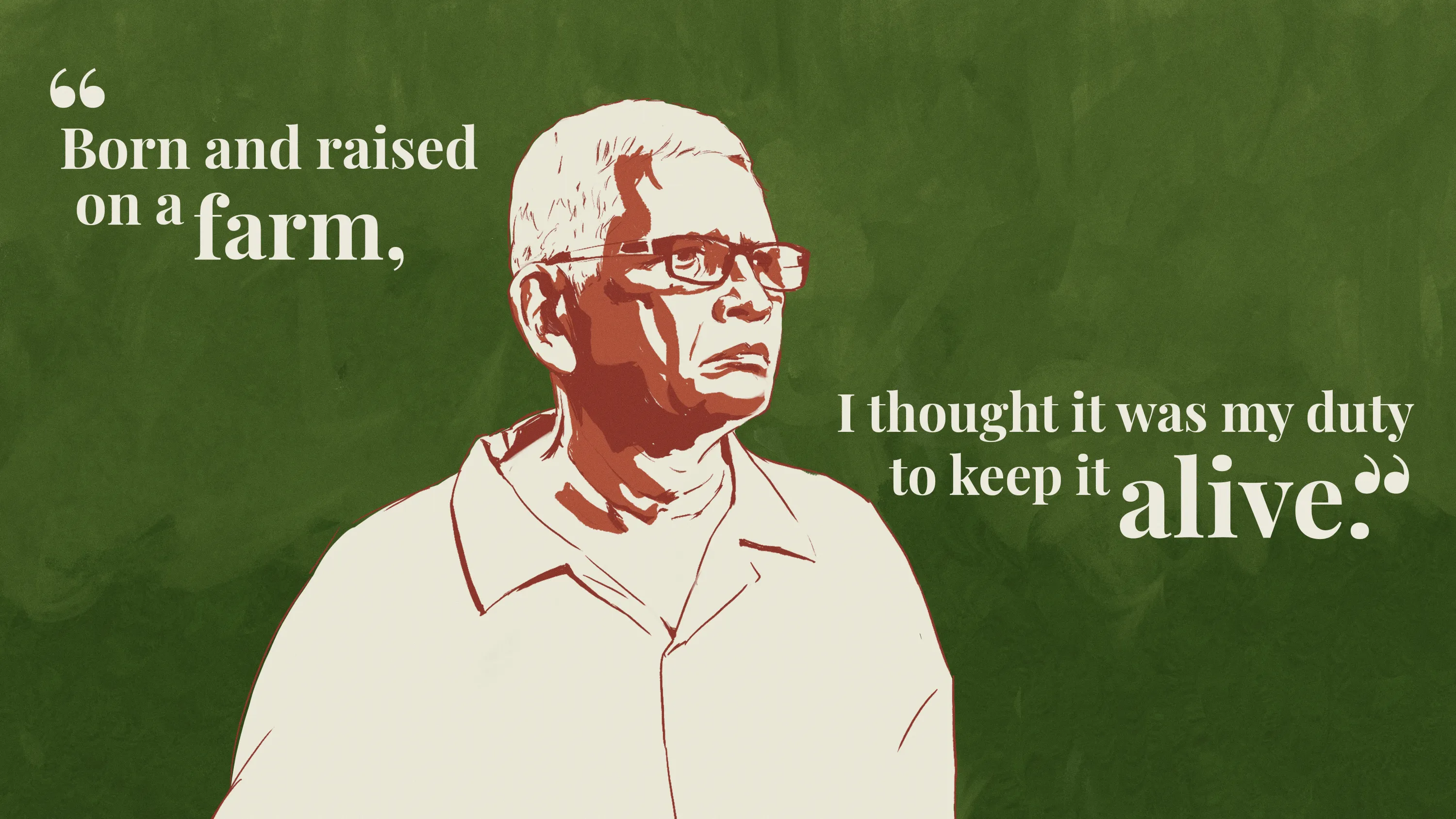
Over the last 50 years, the overwhelming preference for high-yielding hybrid paddy varieties, the fragmentation of landholdings, out-migration of farm labour, and high production costs coupled with poor market visibility contributed to the variety’s vanishing footprint. Amid these realities, Unny committed eight of the 18 acres of his farm to protecting Navara, which is said to have a 2500 year-old history. This makes it the largest organic farm dedicated to the grain worldwide. He sustained efforts to prevent its erasure for 27 years, starting in 1998 until his death in 2025.
Thanks to him, the grain now lives on, protected by a hard-earned Geographical Indication (GI) tag, even contributing to the country’s exports. Unny’s work has also spurred research on the medicinal rice variety and its potential as a safe food for diabetic patients because of its low glycemic index.
I. It runs in the family
IN OCTOBER 1996, 39-year-old Unny wrote to the Chittur taluk office with a request to update a detail on his ration card: he wished for his profession to be changed from business to agriculture. Seeking an official marker of his newfound identity as a farmer crystallised the commitment he was making. While he knew—and loved farming—as a way of life that had been in the family for two generations, this was not the path that he had initially chosen.
For a large part of his adult life, Unny, along with a few of his friends, ran a computer dealership for HCL Technologies. He thrived in the role, quickly progressing from handling HCL’s business in Palakkad district to managing it across North Kerala. It would seem that Unny’s life moved to a familiar rhythm, as he settled in Kozhikode with his wife Rema while helming a successful business. But all that changed when his father, M. Ramachandra Menon, passed away in December 1994. When Unny returned home to mourn this loss, the fields in Chittur that his father had nurtured urged him to stay back as their new steward.
Notably, he turned towards farming during a period when Malayali youth were moving away from it, migrating to other countries in search of lucrative prospects.
In reassessing his professional path at this juncture, Unny was retracing his father's footsteps. Menon was in the insurance business before a death in the family prompted his return to Palakkad. He came back to a land that did not have a proper house, or even a well to fetch water from. The farm bloomed under his care, bit by bit. In 1960, he designed an irrigation system that drew water from the Shokanashini (poetically named ‘destroyer of sorrows’) river in the vicinity. In another three years, he also built the house that Unny grew up in.
Menon was a well-established figure in Chittur. “Everybody here knew about Chandra Menon’s farm. That was a time when there were no means of publicity,” Unny said to the Good Food Movement. With his brother Kelukutty, Menon strived to develop one of the most experimentative farms in Palakkad. Kelukutty was one of Kerala’s earliest recognised experts on rice, working with the Regional Agricultural Research Station, an institution in Pattambi focused on studies and experiments concerning rice-based farming systems.
Kelukutty brought his knowledge of sowing techniques to the family’s farm. With his access to fertilisers and pesticides, the brothers tried to grow high-yielding varieties. Their farm was said to be the first in the region to have a tractor, as well as some of the first sugarcane and coconut plantations. Menon eventually abandoned the use of chemical fertilisers after reading a Malayalam translation of Masanobu Fukuoka’s One Straw Revolution, a book that inspired many farmers to turn to ecologically sustainable methods.
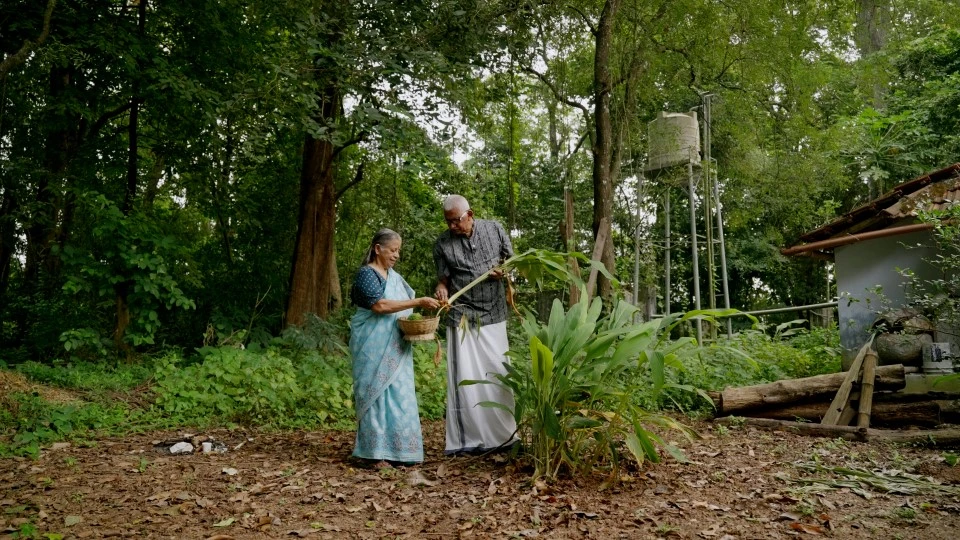
Over the course of many conversations with GFM, Unny’s words reflected a deep respect for his father's foresight and contributions. “Having been born and raised here, I have witnessed how my father, uncle, and grandmother worked hard and gradually built it all. I also like this very much, this way of life,” he said. On Menon’s passing, contrary to all the advice that nudged him to move away from the farm for good, Unny felt inclined to step into the life that his father had led. But this did not mean a careless emulation of his father’s ideas. “We wanted to make a living out of this. So we could not carry on with paddy cultivation just as before,” Unny said. He demarcated the next five years as a trial period, at the end of which he would determine whether farming could be a long-term pursuit.
The shift did not happen overnight. Unny spent another year in Kozhikode where he gradually drew the curtains on his business, bidding farewell to the loyal clientele that he had built. It was his wife Rema who held fort in Chittur, overseeing the upkeep of the family farm. “It was very tough. But she did it all without complaint. She even milked the cows when needed, if there was no one around to do so,” he said. Unny traveled home every weekend to offer his guidance.
Notably, he turned towards farming during a period when Malayali youth were moving away from it, migrating to other countries in search of lucrative prospects. “Rubber was the only paying crop at that time. This was in ’94. Even a cash crop like pepper was not doing well as it could not compete with the cost of Indonesian pepper,” Unny recalled.
The Kerala Land Reforms Act, 1963 was a pathbreaking legislation that challenged feudal land ownership and secured tenancy rights. Promoting equitable land distribution meant a significant reduction of the size of agricultural land holdings per family. Owing to the land ceiling enforced by this law, land owners in Kerala either abandoned farming entirely or looked towards cash crops that would ensure a high yield per acre.
Unny's explorations into profitability and whether agriculture could be a long-term career pursuit should have led him to some such cash crop. Instead, he decided to play to the major strength of Palakkad, a district that accounts for nearly 38.3% per cent of Kerala’s rice production.
To ensure that the labour put into cultivation was actually lucrative, he decided to focus on growing specialty rice—grains for which consumers were willing to pay more. Coincidentally, Unny’s business travels nudged him in the right direction. “When I was selling HCL computers, I used to travel to Malappuram and visit the Kottakkal Arya Vaidyashala.” It was at this renowned Ayurvedic centre that he noticed a palpable demand for Navara.
When Unny had to choose which varieties to cultivate, he proceeded with two red rice ones native to Chittur: ‘Palakkadan Matta’, whose popularity was consistent, and ‘Navara’. The latter, over the next two decades, would become nearly synonymous with his own identity.
II. An elusive grain
NAVARA HAS NEVER been grown commercially. Its cultivation has been small-scale and use-based. Ayurvedic centres like the one Unny encountered use it in the preparation of poultices and pastes for the treatment of muscles and joints. Navara kanji, a rice gruel made from this highly nutritious variant, is served as an antidote to sickness. Since the grain’s consumption was limited, its cultivation was confined to small patches of land.
Yet even the Kottakkal Arya Vaidyashala was not cultivating Navara. It relied on external sources, issuing tenders for required ingredients including this rice variant. “Even basic working knowledge about the crop did not exist. We had to start from that point—of explaining what exactly it is,” Unny said. Thus Navara was on the brink of extinction on two fronts: both the seed and the knowledge of how to grow it were lost.
For Unny, it was non-negotiable that the cultivation of a rice variety of medicinal value had to be done the organic way.
When Unny commenced his search for Navara seeds, his first instinct was to approach the Pattambi Rice Research Station where his uncle Kelukutty worked. But they had nothing to offer. He made the rounds of Ayurvedic stores, only to find that the grains they were selling were not authentic. His next step was to identify farmers who were still growing Navara on its home turf. Though he did locate fields dedicated to it, they bore the residue of chemicals. For Unny, it was non-negotiable that the cultivation of a rice variety of medicinal value had to be done the organic way.
There was reason to be hopeful when Unny found that his sister’s neighbour was N. Anil Kumar, a senior official at the M. S. Swaminathan Research Foundation (MSSRF), an interdisciplinary institute focused on rural development that was established by the pioneer of the Green Revolution. Through his sister’s acquaintance with Kumar, Unny procured a bag of seeds from the foundation. But these seeds offered no results on his soil.
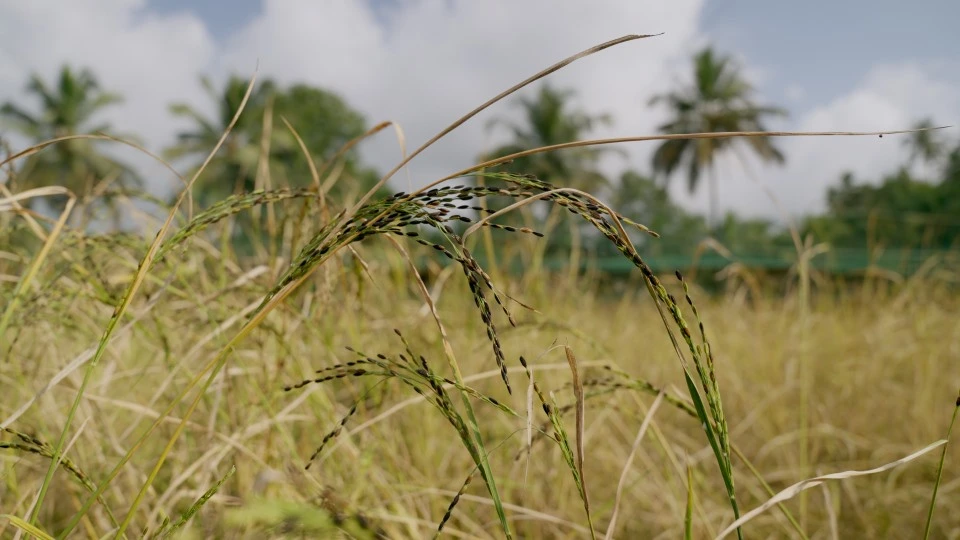
It was Kozhikode, the place where Unny’s business flourished, that became the turning point for Unny, the farmer. The MSSRF official directed Unny to a farm in a remote part of the district where he sourced a few kilos of black Navara seeds. Navara has two sub-variants, whose husks are either black or gold, though they both house the same red grain inside. Unny sowed the black seeds on 40 cents of land.
Though the seeds took root, all was not well. Since Navara was being grown alongside other paddy varieties, the intermixing of seeds was inevitable. Unny’s renewed goal was to grow Navara while ensuring that it retains all its unique characteristics. From 2000 onwards, he invested three years into producing pure seeds. “During this period, I had to discontinue the cultivation of other rice varieties for fear of contamination. As a result, a major portion of my holding was left fallow,” Unny shared in a note on Navara’s journey on his official website.
While the search for the seed took Unny across Kerala, the knowledge of its cultivation waited for him at home.
Navara is susceptible to intermixing with other crops not merely because of simultaneous cultivation. Unny was initially growing Navara on a piece of land where Palakkadan Matta had been previously cultivated. During one harvest season, he found that some Matta seeds that had shed onto the soil had grown alongside Navara, resulting in intermixing. One of the early lessons that Unny learnt was that if he wished to revive Navara with all its past glory, he had to reserve a parcel of land exclusively for the purpose through the year—a costly exercise given the fact that Navara’s life cycle on a farm lasts just 60 days.
While the search for the seed took Unny across Kerala, the knowledge of its cultivation waited for him at home. His grandmother had, in her lifetime, trusted her diary with the happenings of her ordinary life—how she spent her day, the wedding of a labourer on her farm, relatives’ visits, among details she considered notable. Unbeknownst to her, her diaries would become an archive on how to grow Navara. “There are diaries dating back to 1951. The cultivation of Navara is mentioned in two places,” Unny said. Simple entries, like this one from April 1973, which said, “One para (a regional measuring unit for paddy) of Navara grain was sent for grinding today,” became invaluable. Between home and the world, Unny managed to save Navara from the brink of oblivion.
III: Warning: handle with care
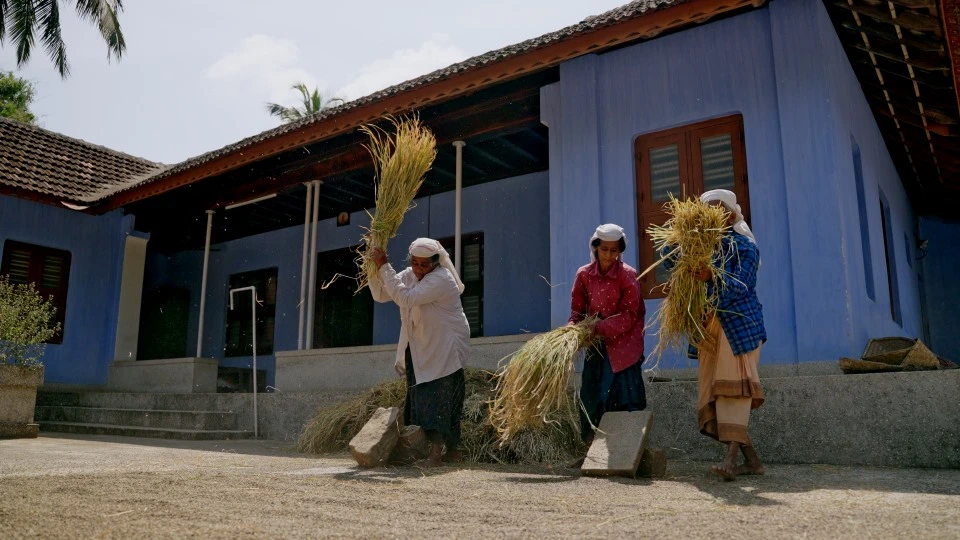
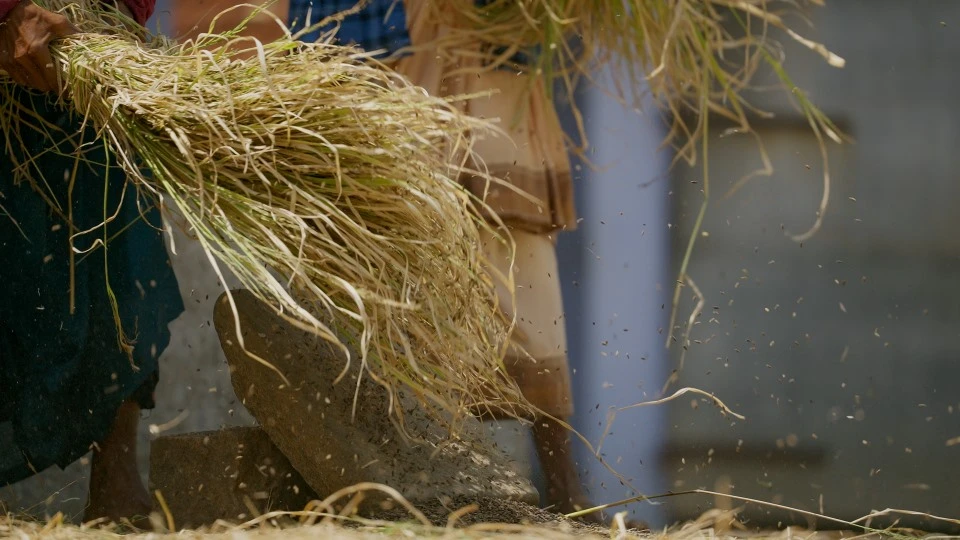
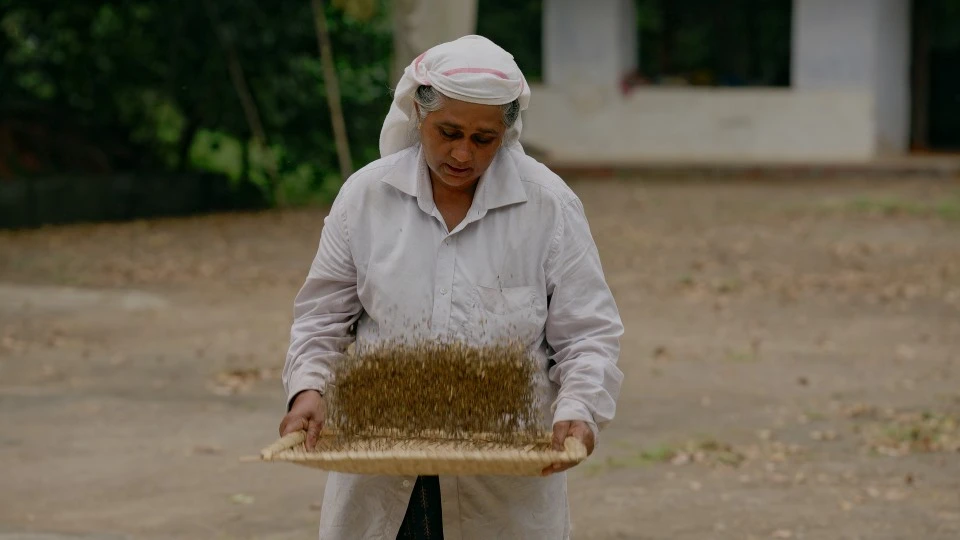
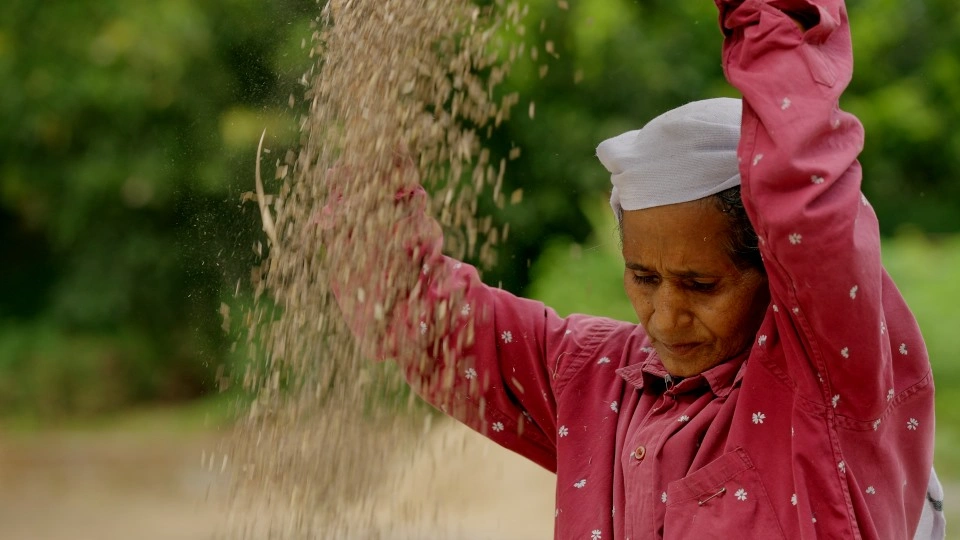
FOR THE TWO months it grows, the crop demands constant attention, not necessarily because it needs constant intervention, but because the mildest miscreant—whether wind, rain or pest—can ruin the crop. The cultivation process mirrors that of other paddy varieties, except when its fragility demands modifications. For example, the hullers (machines to remove the chaff) that most rice millers used were too harsh on Navara. The rice demanded gentleness at each stage, and pushed Unny to look for rubber hullers that were otherwise obsolete. Some friends, some phone calls, and sheer providence connected him to a rice miller in Coimbatore who was willing to part with his rubber huller.
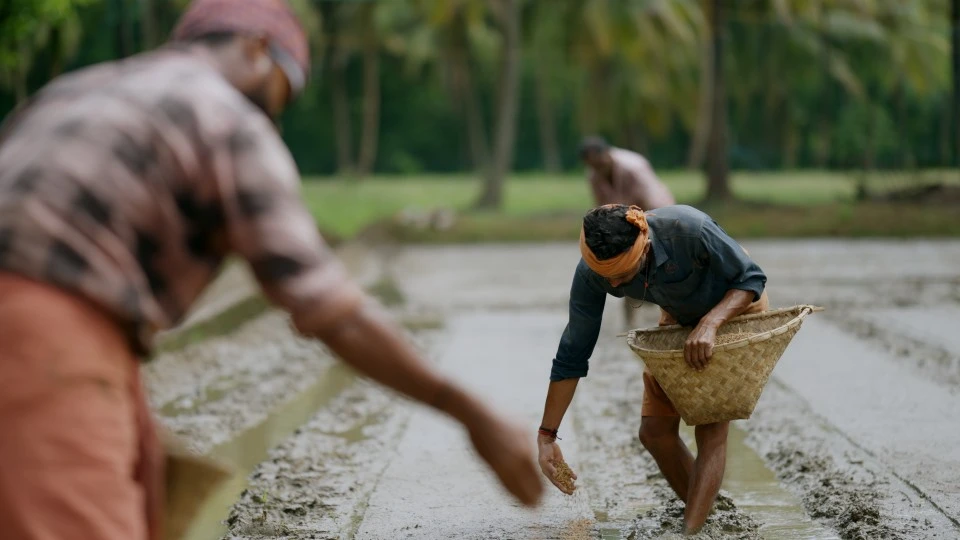
Medicinal rice varieties have a particular sensitivity to water. Far from withstanding flooding, the stems of the Navara crop can fall under the weight of dewdrops, reducing production and making harvest unviable. To ensure that such a delicate crop receives just the right amount of water is a tightrope walk. If it floods, hours of labour go into redirecting water from the fields to a drainage system. And if the summer rains fail, Unny banks on the irrigation system that his father left behind.
Far from withstanding flooding, the stems of the Navara crop can fall under the weight of dewdrops, reducing production and making harvest unviable.
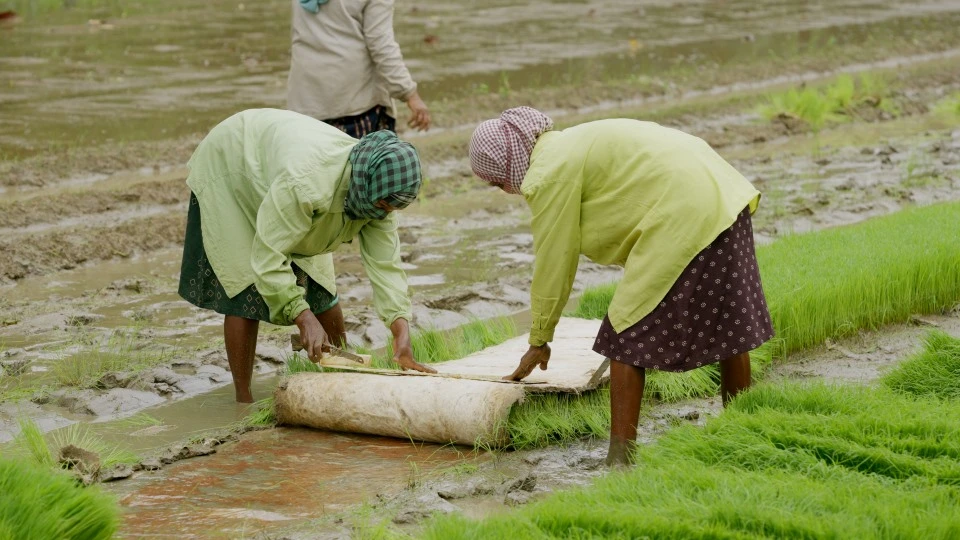
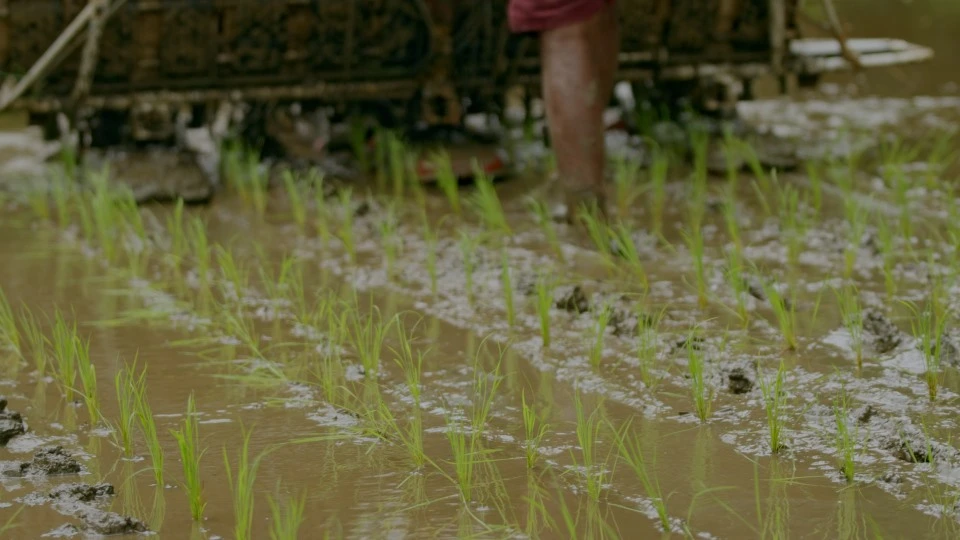
But the biggest adjustment made for the grain’s water sensitivity is its cropping cycle. Kerala observes three seasons of paddy cultivation—Virippu (April to September), Mundakan (October to December), and Puncha (January to March), which roughly correspond with the Kharif, Rabi, and Zaid cropping cycles respectively.
In the initial years, Unny stuck to cultivating Navara during the Puncha season alone, since Kerala receives rainfall from both the South-west and North-east monsoons. But when he realised that its seed longevity (the duration for which the seed is viable and will germinate) lasts less than a year, he settled on two separate cycles of cultivation as the best course—one that concludes with a harvest for sale, and the other for the generation of seeds.
Pest management posed a dual challenge: Navara’s vulnerability to pests was amplified in comparison to other paddy varieties, and the efficacy of conventional organic farming solutions was diminished when applied to the crop. Unny experimented with marigold, tulsi, fish waste, and even modified butterfly-catching nets to deal with chazhi or common rice bugs. Gradually, Unny found a rhythm to cultivating Navara, and had a pool of regular customers who banked on his produce. Just as things stabilised on the farm, Unny found himself catering to some unexpected patrons: peacocks and wild boars.
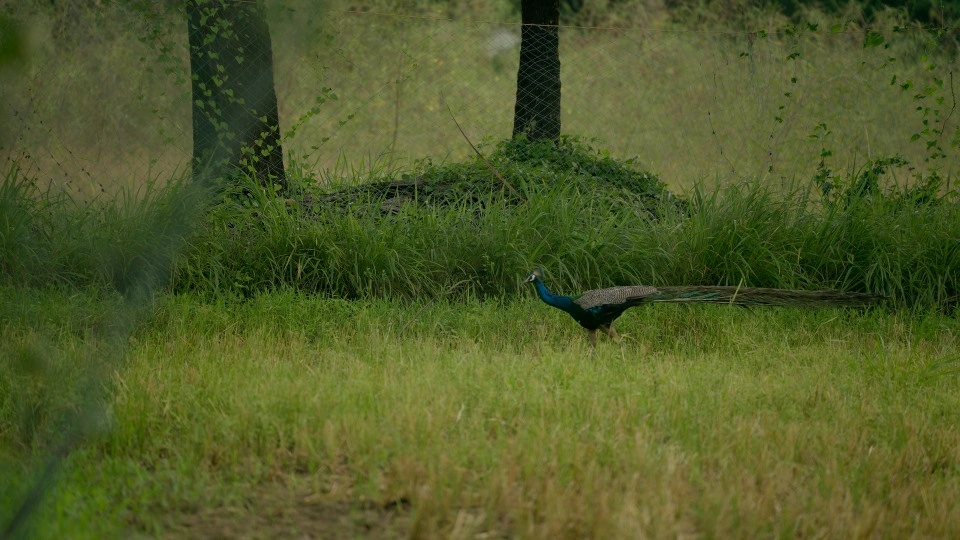
They had started trickling in as early as 2006, but it was not until 2016 that they became a full-fledged menace. Both species, safeguarded because of their protected status, started feasting unabashedly on Unny’s rice, vegetables, and fruits. He joked about how their feasting was a testament to the quality of the food he was growing. Peacocks, especially, love Navara and attack it, in Unny’s words, with the precision of “professional armies”.
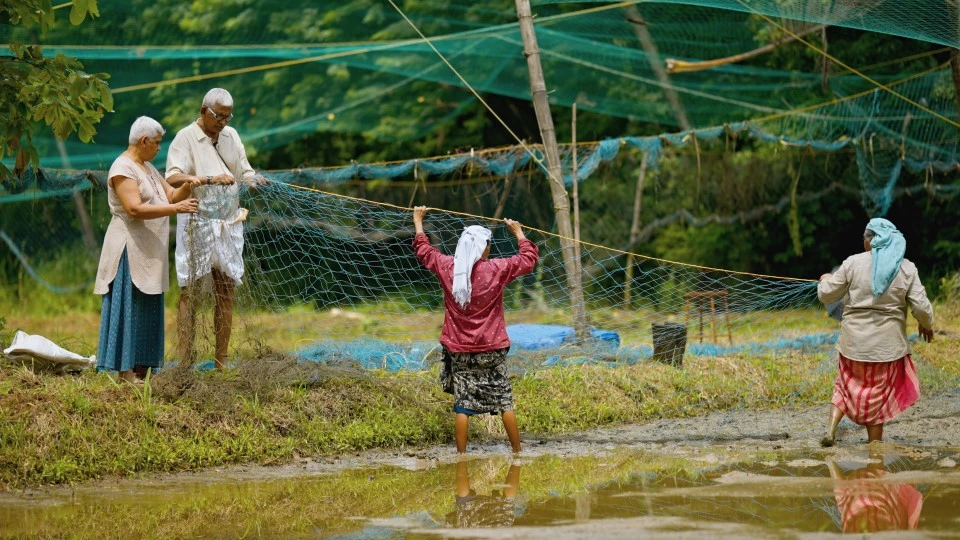
He found himself unable to fulfil orders and struggling to convince his customers that peacocks could really erode a farm's fortunes. The only solution was prohibitively expensive: layering the fields with fishing nets. Unny could only afford to cover 2.5 acres of the farm. While this worked initially, the solution was makeshift—the animals still had an advantage, and the rest of Unny’s produce was unprotected. He reflected with grudging admiration at the neatness with which wild boars ate coconuts: “It looks like someone has grated the coconut and discarded it near the tree,” he said.
When bitten into, it does not betray any moisture, and breaks in one clean click.
Despite these onslaughts, the slender, delicate Navara grows. In roughly 60 days, the husk becomes black (or golden in the other variant), signalling ripeness. When bitten into, it does not betray any moisture, and breaks in one clean click. When the husk is removed, it reveals a grain that is deep red, almost bordering on purple. When all three conditions have been fulfilled, Unny knows that the grain is ready for harvest.
{{marquee}}
IV. The fight for legitimacy and representation
NAVARA WAS DRAINING Unny's pockets, and he needed to know if it could, eventually, refill them. With stray red rice varieties passing for Navara in the market, Unny was on a quest for due recognition for the variety that he was growing in all its authenticity. His priority was to understand the organic farming landscape, and to build a network that might help champion his precious grain. He kept an eye out for forums on organic farming, attending as many as he could.
His personal journey coincided with India’s buoyant efforts to promote organic farming. In 2001, India had launched the National Programme for Organic Production, opening up the opportunity for farmers to seek organic certification for their produce. Unny applied before INDOCERT, the country’s first certification body. He believed that it would appreciate and understand Kerala’s crop diversity more than a foreign body. By 2003, his farm transitioned fully towards organic methods and was officially certified in 2006.
Unny was simultaneously looking for avenues that would recognise Navara as a unique rice variety. After attending an agritech fair held in Chandigarh, Unny made the acquaintance of top officials with the Confederation of Indian Industry (CII), a non-government organisation representing interests of business enterprises. Agriculture is one of the CII’s key areas of intervention in its capacity as an advocacy group. Unny sought the CII’s assistance in patenting Navara. In October 2006, he hosted CII officials, some agricultural officers, a journalist, and a few local farmers for a meeting beneath a mango tree on his farm. It was foundational in fostering support for the patenting of Navara and Palakkadan Matta, and in assigning Unny as the representative of the region’s farmers for this process.
Soon, the CII arranged for an attorney, who advised the farmers to apply for a GI tag rather than a patent; the latter is a form of intellectual property rights that concentrate around one individual or company. A GI was more suitable for Navara since agricultural practices and heirloom varieties inherently belong to a community within a geography, rather than any one person.
Since the process for a GI tag mandated that applications must come from registered organisations representing producers’ interests, Unny and other farmers formed the Navara Rice Farmers Society in 2004, and the Palakkadan Matta Farmers Producer Company in the following year.
A GI was more suitable for Navara since agricultural practices and heirloom varieties inherently belong to a community within a geography, rather than any one person.
The Geographical Indications of Goods (Registration and Protection) Act scrutinises applications against three criteria to check eligibility: geography, history, uniqueness. Both rice varieties have been documented over 2,000 years ago and qualified against these criteria. Navara, notably, features in the Sushruta Samhita, an ancient treatise on medicine.
After three years, in November 2007, Navara made history. It became the first farmer-led initiative to secure a GI tag for a product. In 2009, Unny was felicitated by the Union Minister for Agriculture with the Plant Genome Saviour community recognition for his efforts to conserve and purify the grain.
V. Strategy of the heart
NAVARA IS A rare grain. This is true not because it nearly faded from our world, but because even in its existence, it demands so much to give so little. While Palakkadan Matta yields 1500-2,000 kg of rice per acre, eight acres of Navara barely yield 150-200 kg.
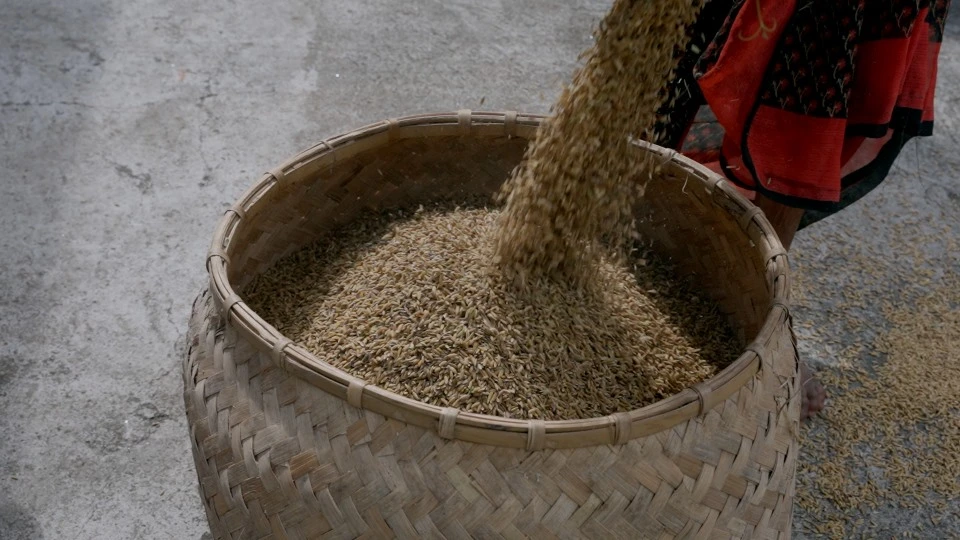
Navara pricing is decided separately for nellu (grain with husk) and ari (raw grain without husk). Before it was awarded a GI tag, the average market price was Rs. 8 per kg. Today, it is Rs. 150 per kg. With GI tags, it also became illegal for unregistered sellers to claim that their product is Navara. Consumers could be confident that what they were buying was an authentic product, and producers could sell without having to compete with nefarious sellers. Farmers realised that this rarity must reflect in the price of the rice.
This is where Unny’s business acumen shone. He knew that he wanted a brand identity tied to the rice he produced. He was also certain that he did not want to sell through an agent. Unny's reasoning was simple: for an agent, Navara was just another variety. They would not be convinced that the grain should command such a high price. Unny trusted himself to sell the rice better, in the way that it deserved to be. The brand, of course, would bolster his identity, as the reviver of the grain. Within a year of attaining the GI tag registration, Unny launched his brand—Unny Navara Farm (UNF).
Unny was initially selling Navara for Rs. 250 per kg. Once it acquired the brand name of Unnys Navara Farm, he felt comfortable demanding a premium, raising the price to Rs. 396 per kg. The price remained constant for a decade until losses brought in by the peacock menace compelled Unny to hike it up.
It takes unshakeable resolve to see oneself through such challenges, and a warmth of character to not be embittered by them.
In the months where he was not tending to the crop, Unny could be found across Kerala, and even overseas, introducing people to the rice he revived. He would get himself invited to meetings with Kerala government officials and treat them to the special rice gruel prepared using Navara. 2011 onwards, he organised the annual Navara Utsav, an event to raise awareness on the rice variety. Notably, in 2014, M. S. Swaminathan was the Utsav’s chief guest, honouring a decade-long bond that Unny had built with the agronomist after running into him at an event in 2004.
In the way that Menon and Unny had in the past, Unny’s 46-year-old nephew, too, had initiated a shift back to farming shortly before his uncle passed away. While his training was left incomplete, Unny’s death has only steeled his resolve in preserving Navara and continuing to cultivate it.
Each of P. Narayanan Unny’s choices were difficult ones: the decision to choose farming, to choose paddy, to choose organic ways, and of all the varieties, to choose Navara. It takes unshakeable resolve to see oneself through such challenges, and a warmth of character to not be embittered by them. The man with the lantern became his own light.
Edited by Neerja Deodhar and Aathira Konikkara
Also read:
Babulal Dahiya makes every grain of rice count
In Leh’s harsh terrain, farmer Urgain Phuntsog is a true ‘mitti ka aadmi’
How Rahibai Popere built a seed bank with a mother’s grit and love
.avif)

Explore other topics
References