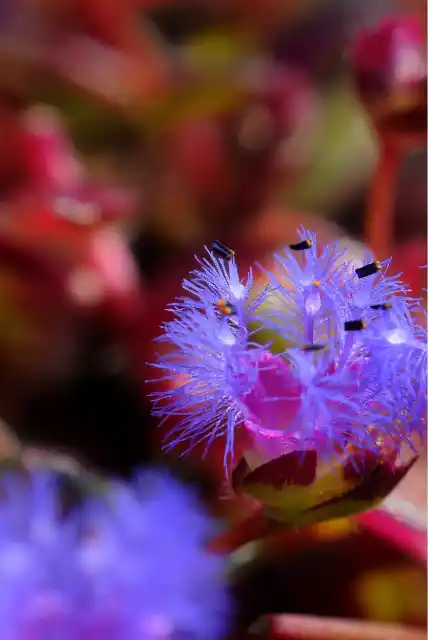
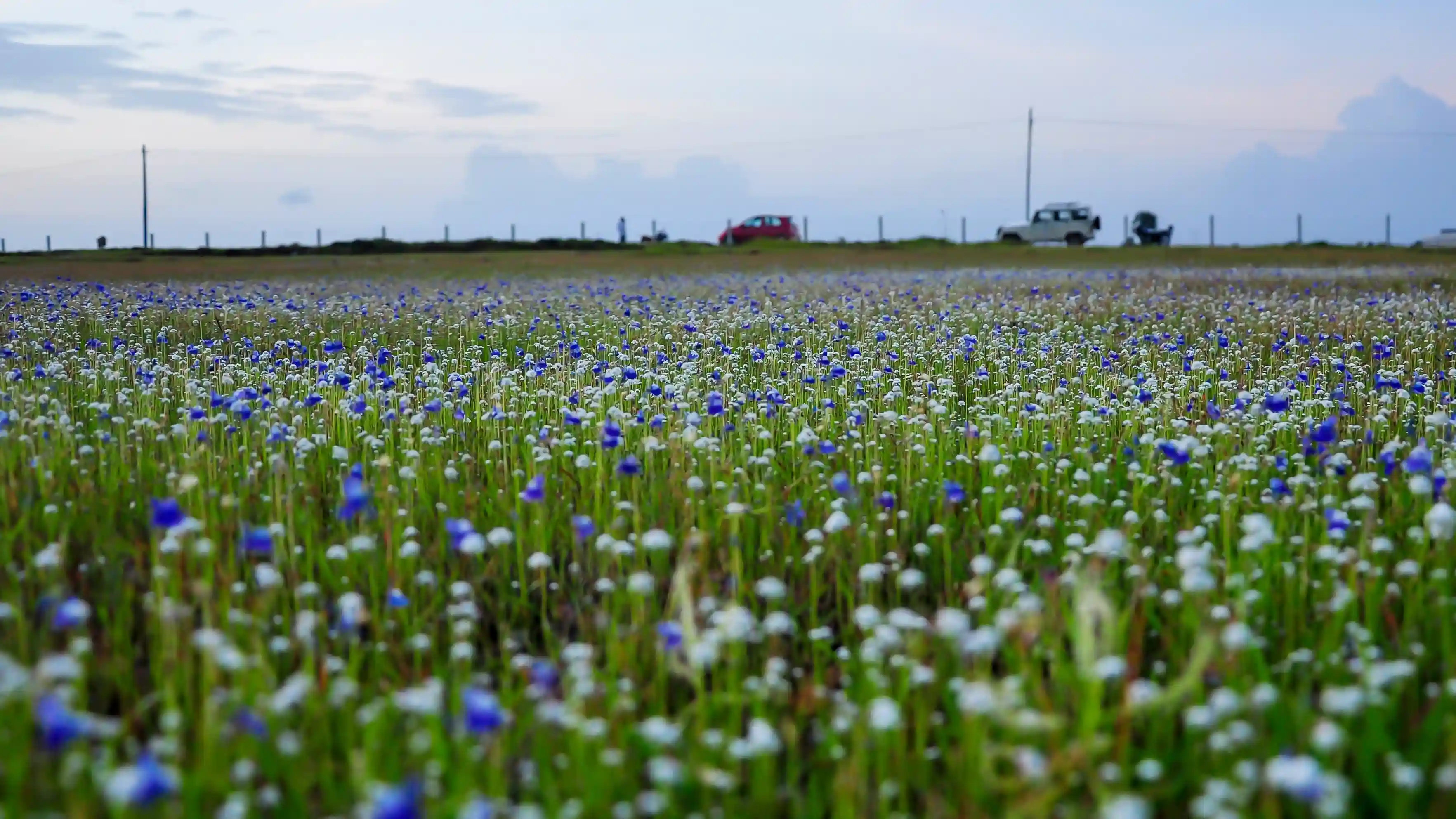
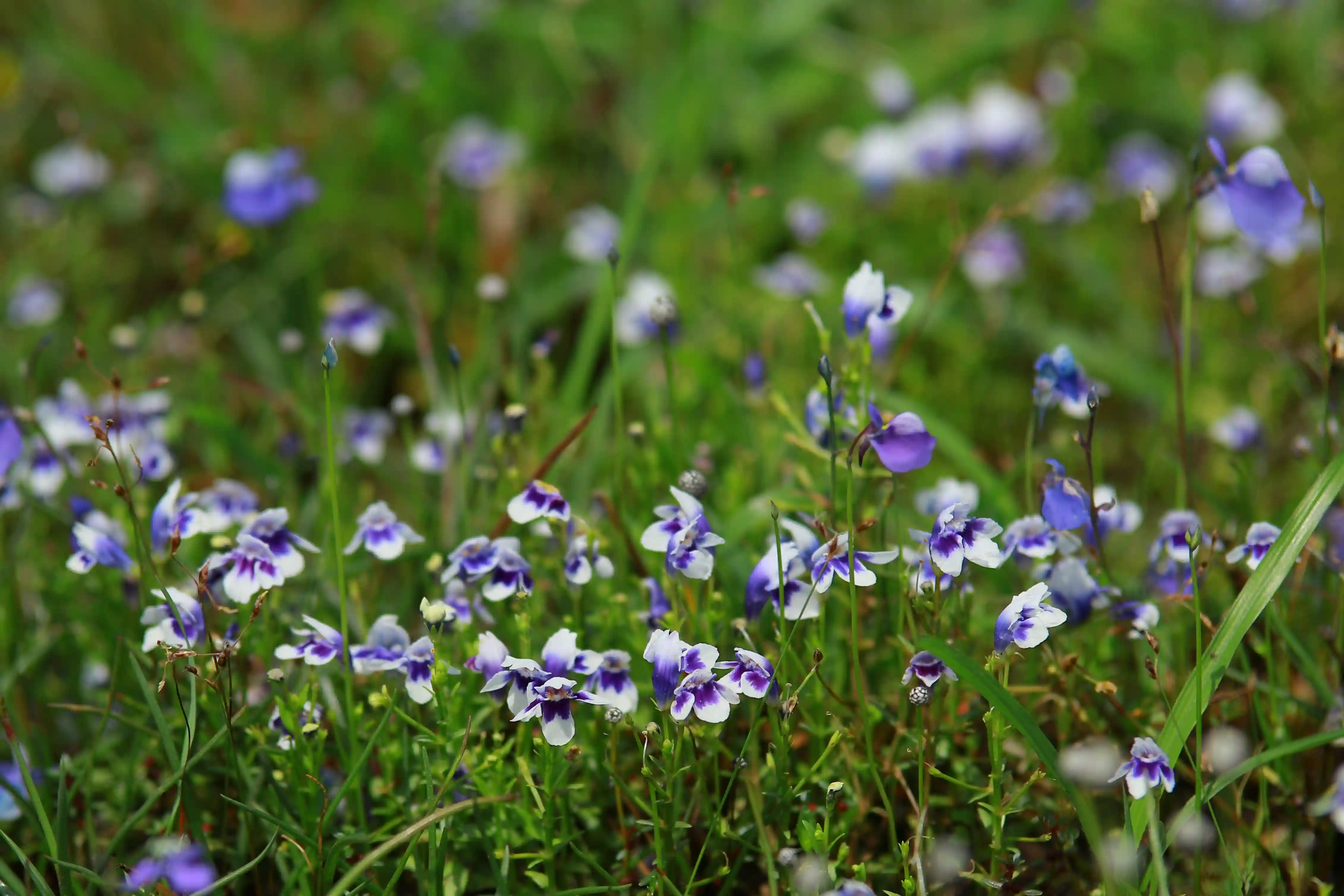
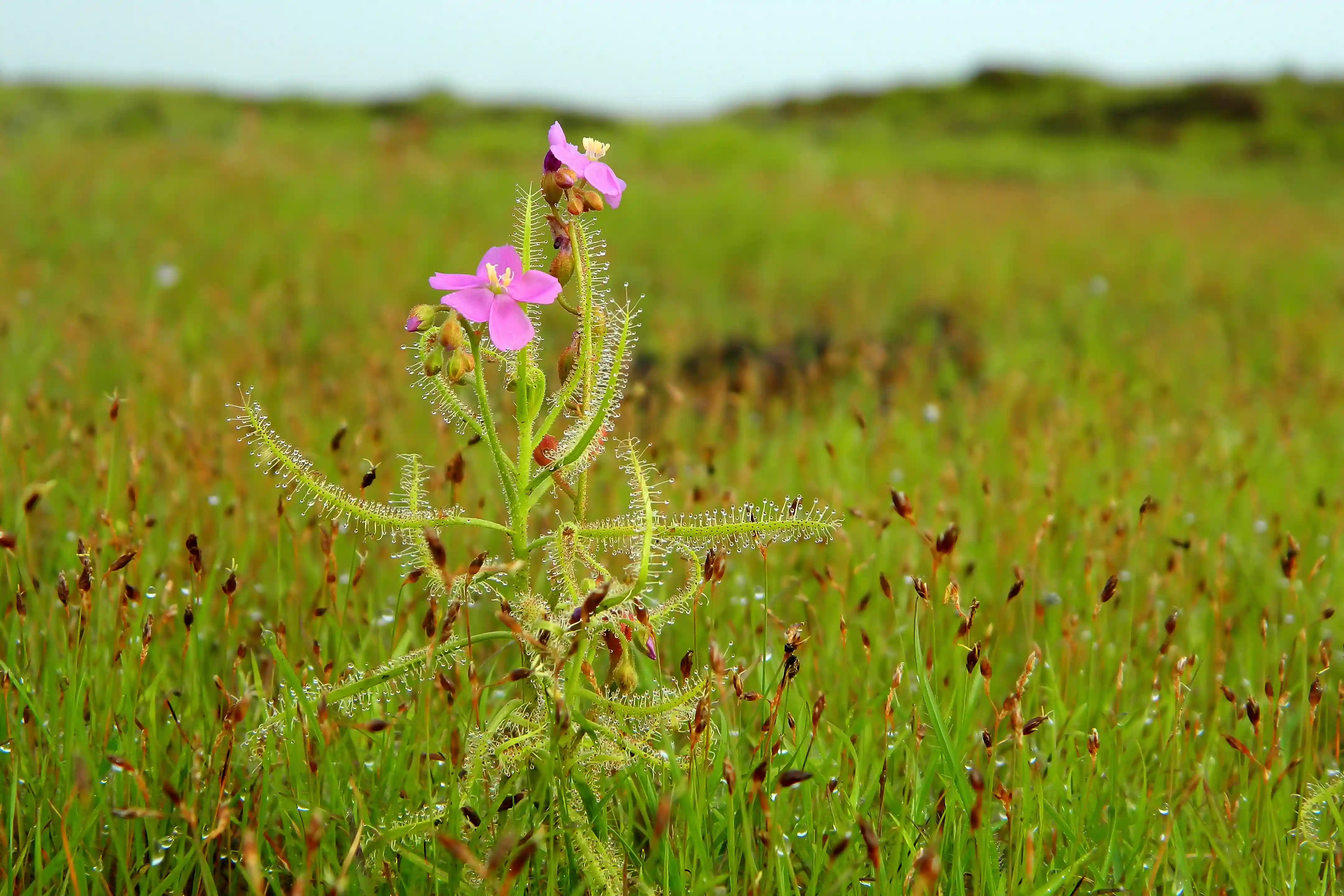
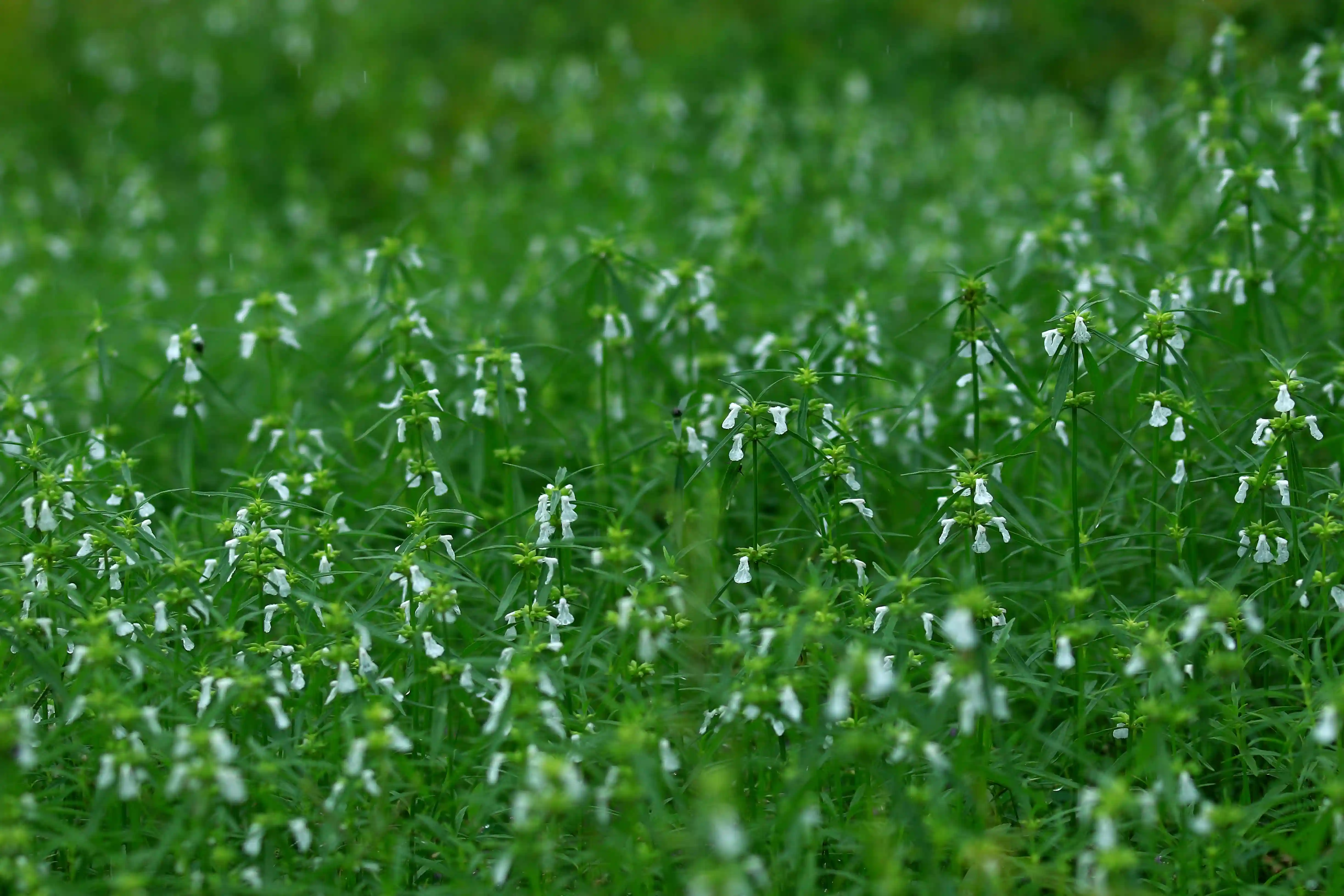
Among the most abundant blooms found during the flowering season are the ones known locally as Kakkappoovu (Utricularia reticulata). Come August, the flowers spread like wildfire, turning the plateau violet.
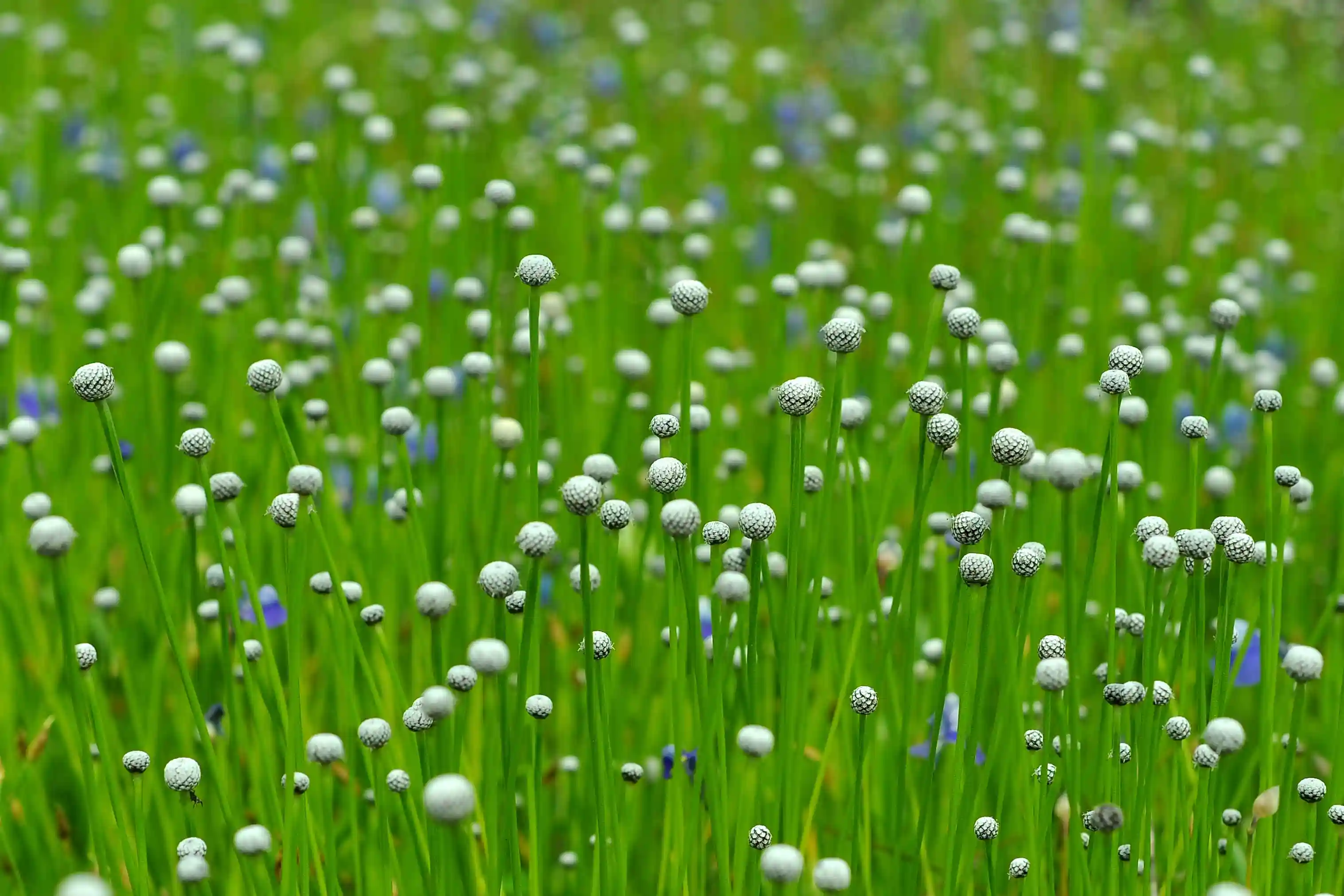
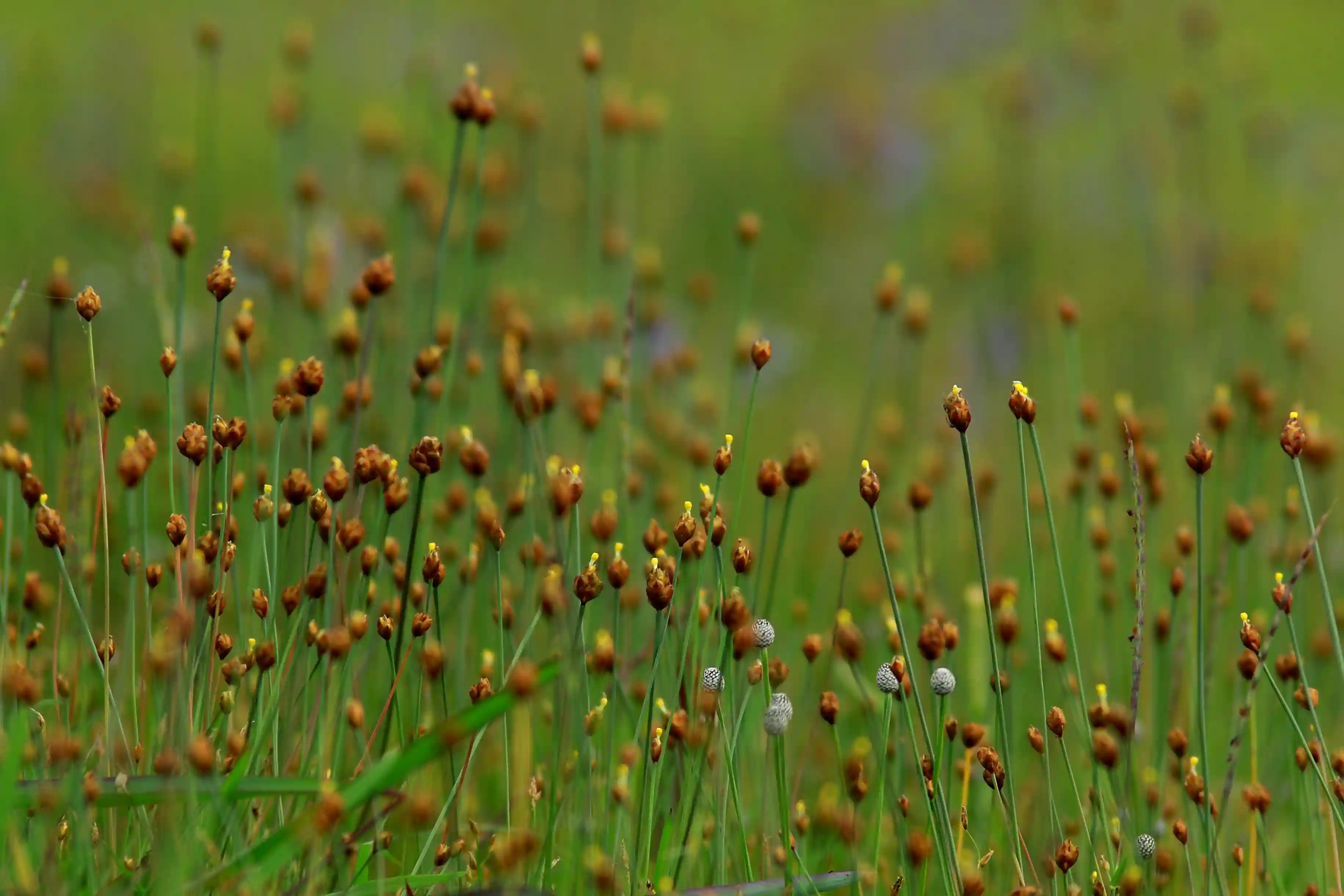
Madayichuthu (Eriocaulon madayiparense) is one of the plateau’s botanical signatures. This species is recognisable by the way its flowers gather into white, spherical heads on slender stalks. It grows in the wet depressions which support seasonal aquatic life.
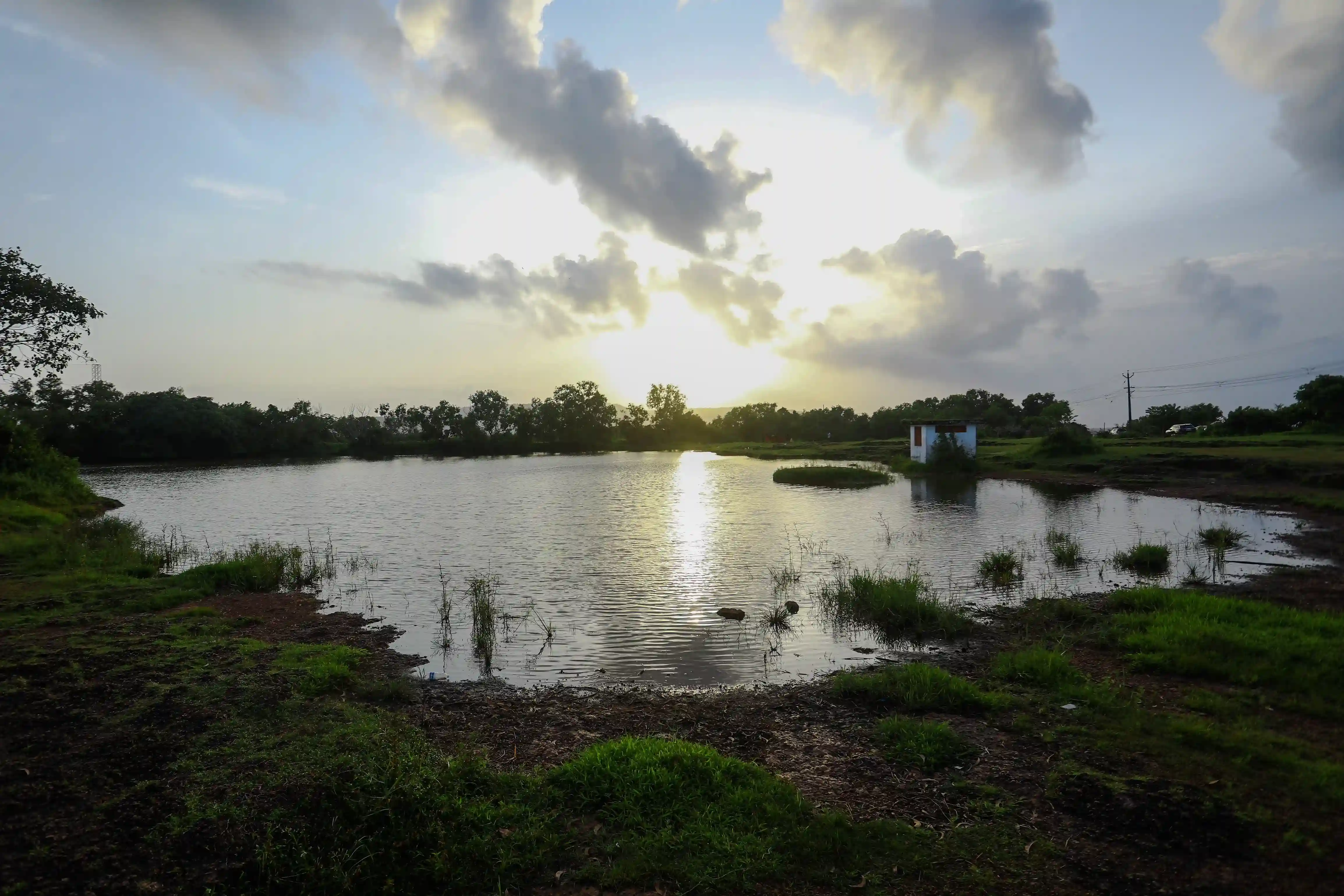
The plateau is home to the Thiruvar Kadu Bhagavathi Temple dedicated to Goddess Kali and Shakthi, and the Vadukunda Temple dedicated to Lord Shiva. These temples have a kaavu [sacred grove] and a freshwater pond respectively. Kaavus have long acted as informal conservation spaces protecting native vegetation and wildlife because of their ties to local deities.
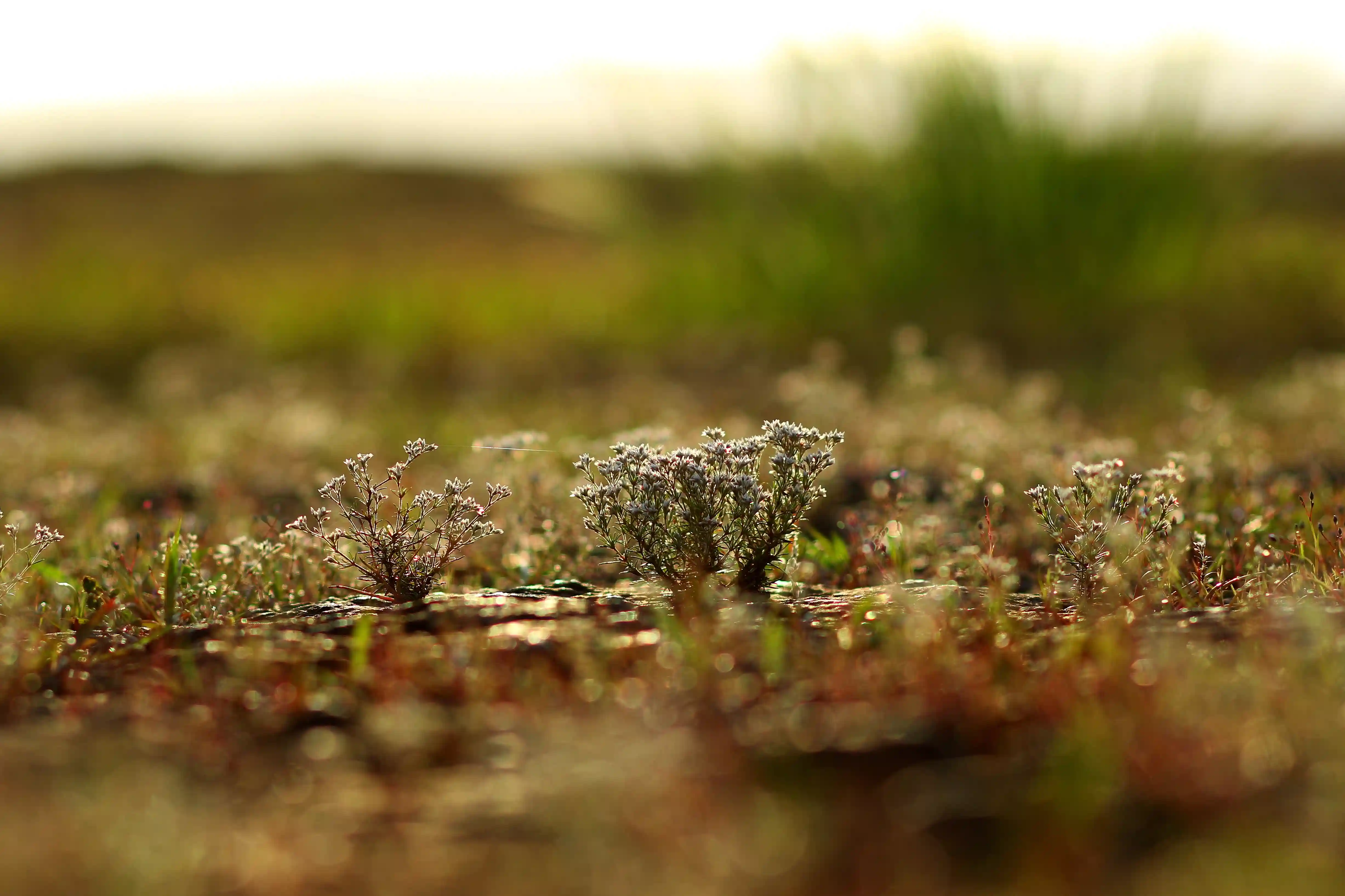
A range of niche microhabitats thrive on Madayipara. Different plants, grasses and trees grow in different conditions—in the crevices of exposed rocks, the amount and thickness of soil (which varies from as shallow as 1 cm to as deep as 1 m), soil moisture, dry scrub and rainwater pools. Several drought-tolerant varieties grow on Madayipara’s drier surfaces, while pools turn flush with plants that have short life-cycles.
Unlike rocky outcrops, which laterite plateaus are often likened with, Madayipara is incredibly diverse. A total of 636 taxa of flowering plants, including 11 new taxa, have been documented here.
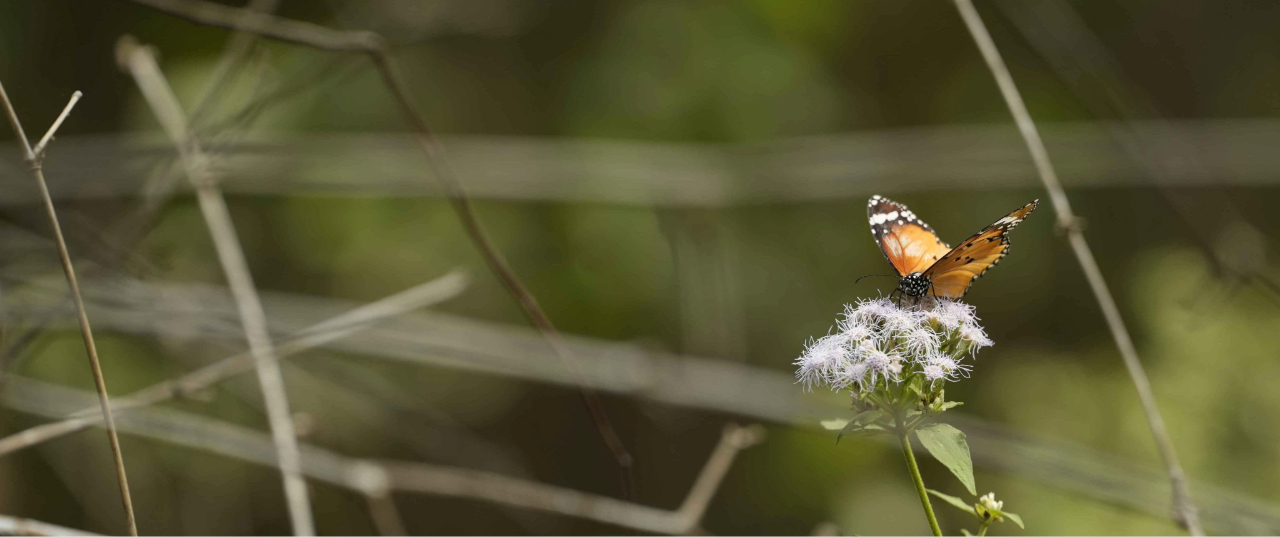
Over 160 butterfly species and 269 bird species have been recorded here, along with moths, dragonflies, wasps, grasshoppers and praying mantises, spiders and numerous amphibians.
Several migratory birds rest here before flying onward to their destinations. The Pied Wheateater took a pit-stop here before birding on to East Africa, while the Buff-breasted Sandpiper, which has only been spotted a few times in Asia, travelled nearly 12,000 km from the Arctic!
The plateau once attracted nature enthusiasts, researchers and devotees. However, this iridescent paradise has taken over social media algorithms, with people from nearby cities like Kannur thronging to make a day trip out of Madayipara. As many as 500-600 cars can gather on a single day.
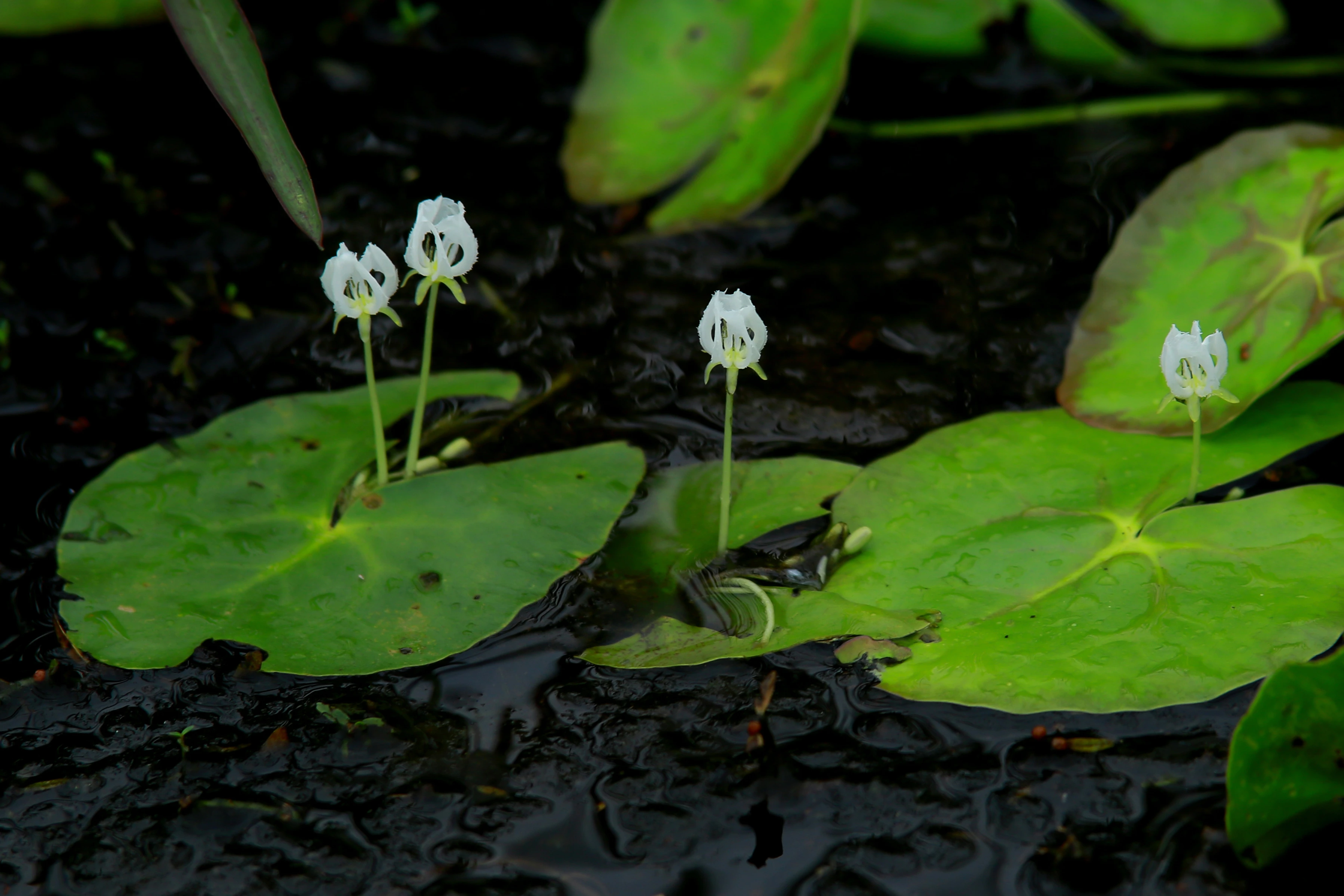
Cheru kochilachippoovu (Xyris pauciflora) is another wetland specialist. Xyris belongs to the yellow-eyed-grass family, and the species typically occurs in wet grasslands, marshes and seasonally inundated ground.
Over the years, Madayipara has come under pressure from development projects, including a proposal for a railway line across the plateau and, more recently, the widening of the road leading to the Madayikavu temple from about 3.5 m to 8.5 m. The Kerala High Court controversially deemed the ecological impact of the project to be ‘minimally damaging’.
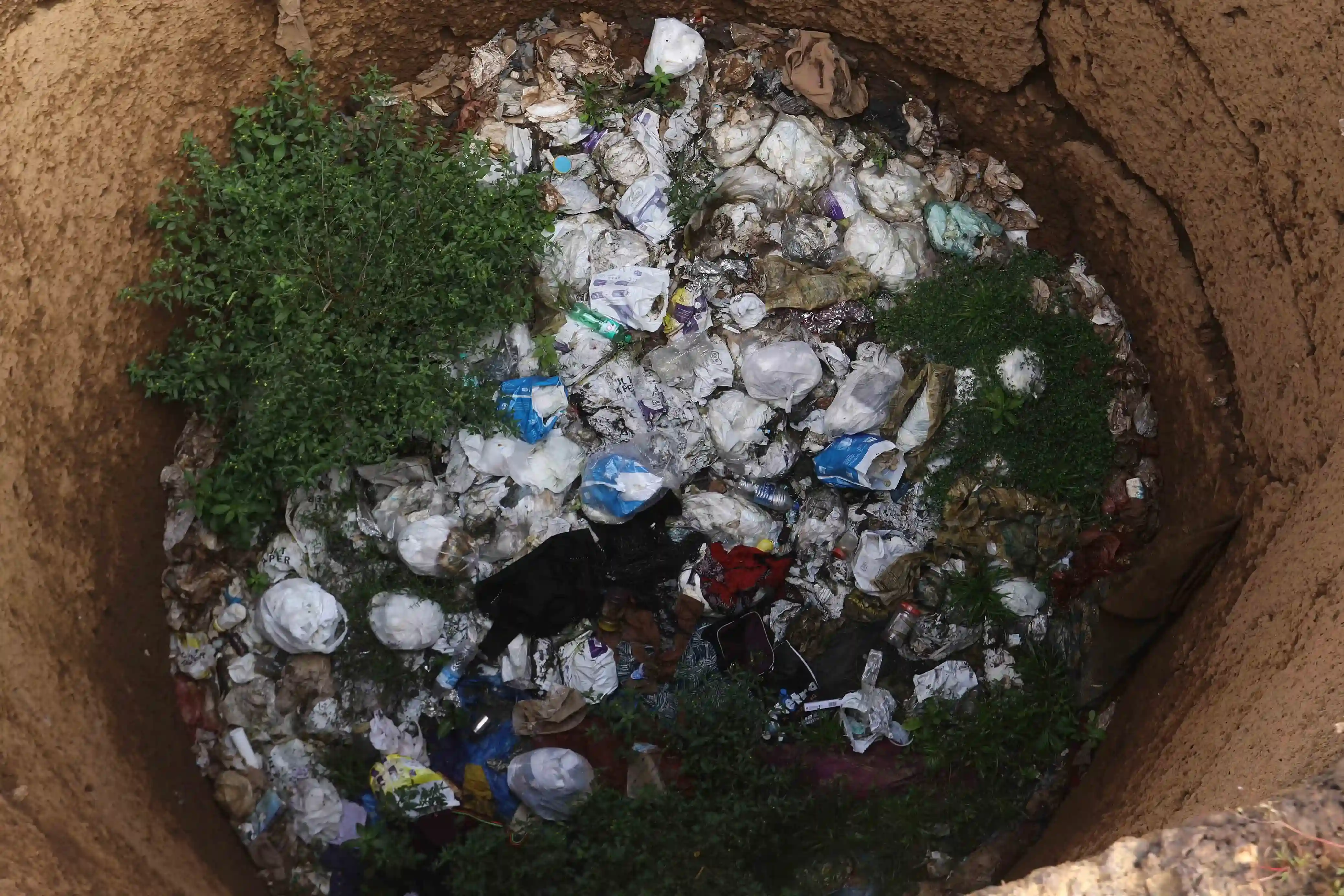
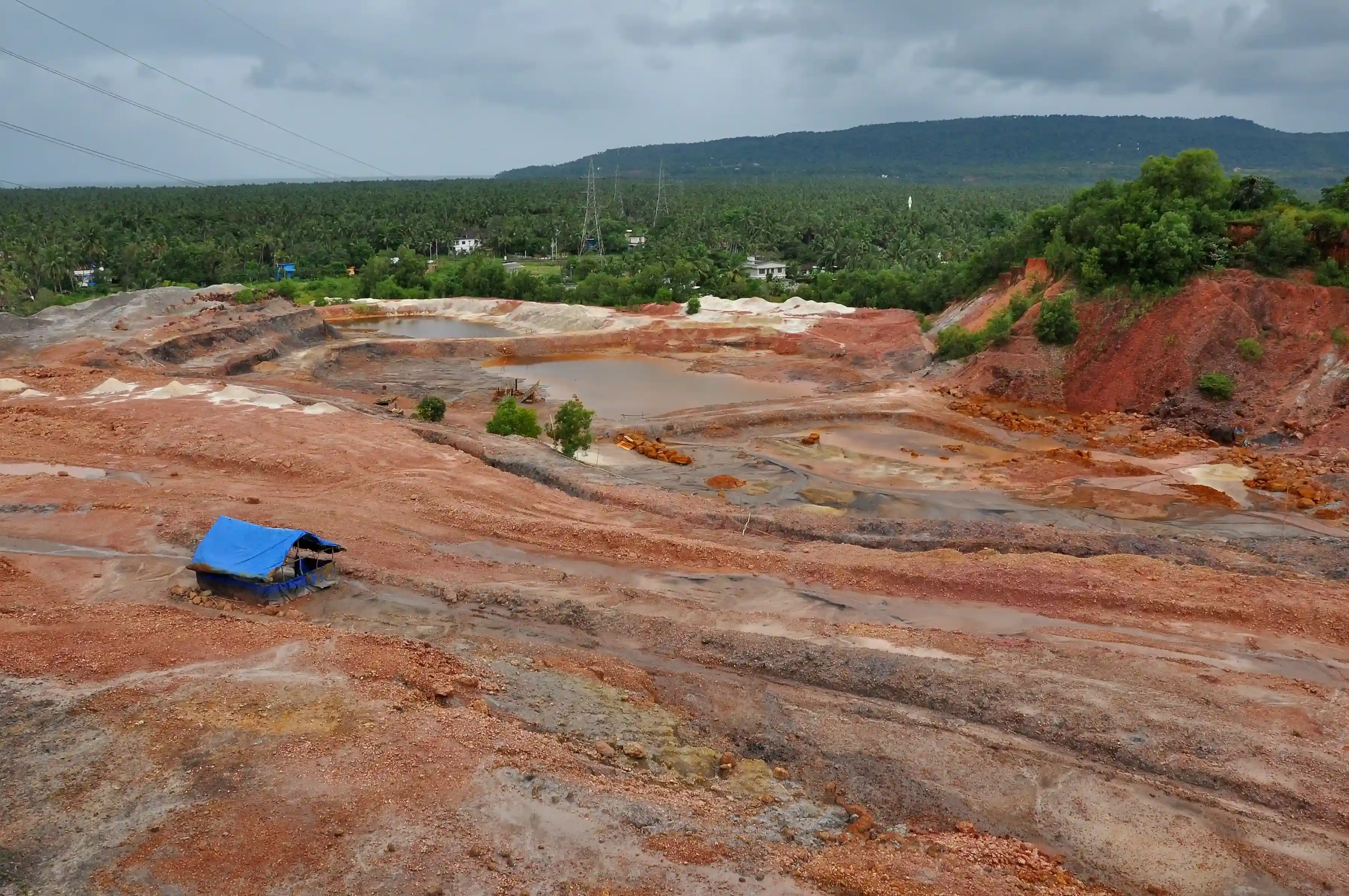
Conservationists have raised concerns that such projects, along with laterite and clay mining and increasing tourism, could fragment its seasonal wetlands and specialised flora. Pictured here is a China clay mining site at Mayayipara, where work was halted after years of protest.
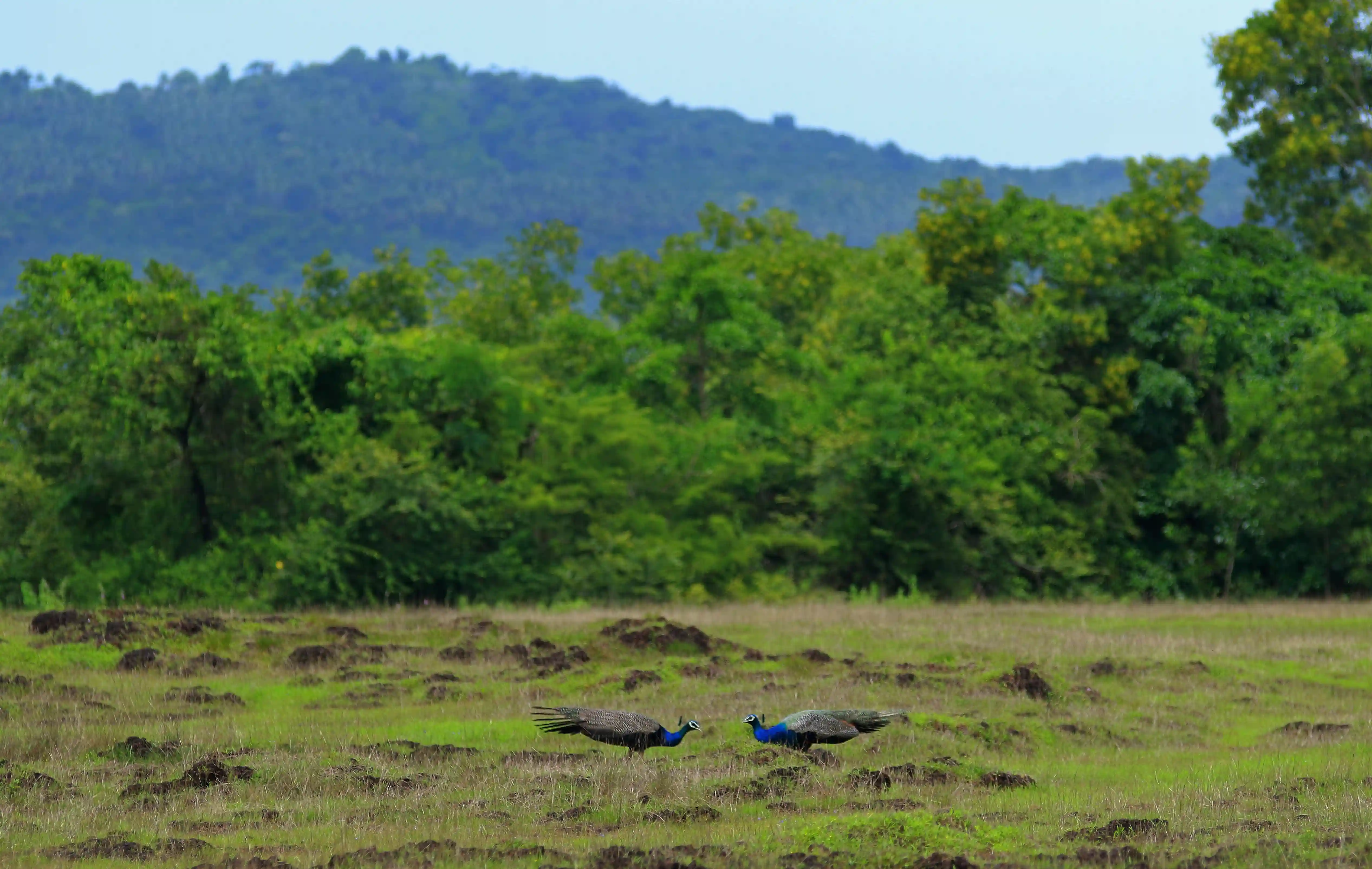
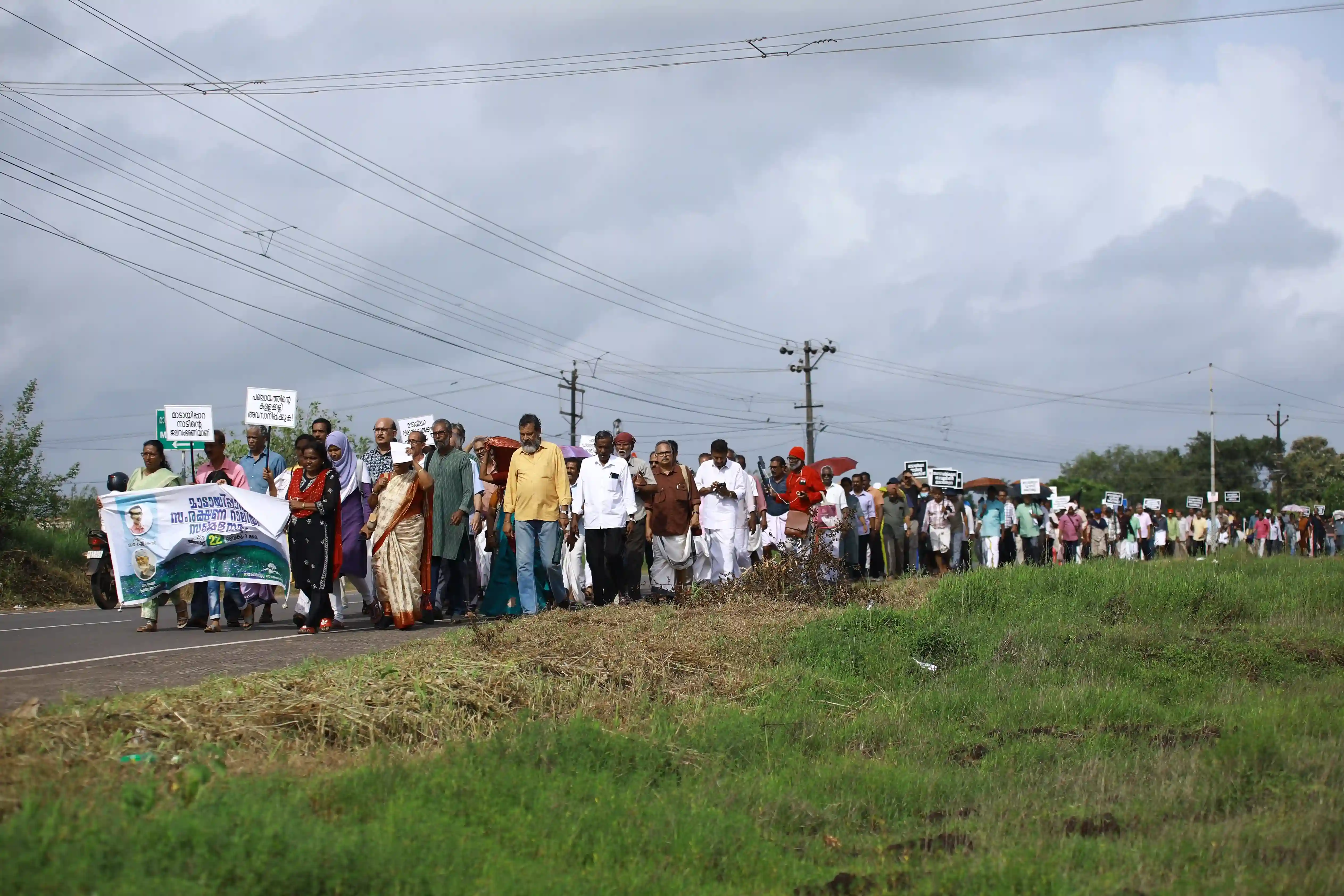
Madayipara is home to 19 bird species that nest on the ground, such as the red-wattled lapwing. Vehicles and visitors can disrupt nesting, foraging and breeding, and also trample undergrowth. Similarly, artificial lighting impacts insects and water bugs, as documented by researchers like Dr. Jafer Palot and V.C. Balakrishnan. Over 500 citizens gathered in August 2026 to demand protection for this landscape.
“The plateau is not a tourist centre,” — this is at the heart of the citizen protest, which is also calling for it to be designated as a Biodiversity Heritage Site, in an effort to ensure that the ecosystem receives formal protection and conservation efforts.
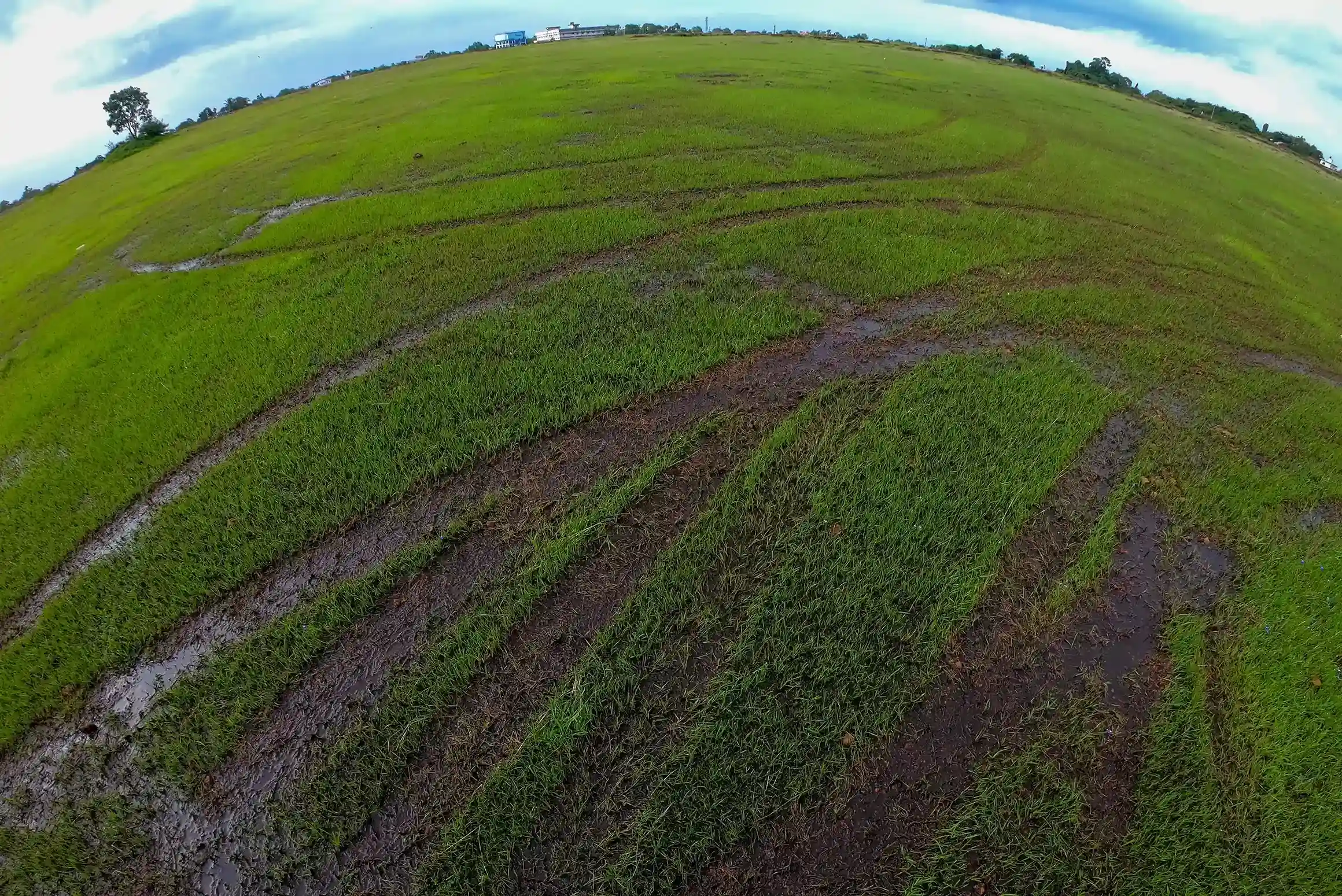
Madayipara is unrelenting but capricious. It responds differently to each season. It turns verdant in the monsoon, erupting into flowers. The sun then bleaches it into a golden grassland in the summers. Protecting this region means protecting the biodiversity endemic to this laterite habitat—else we risk losing it forever.
_11zon.webp)

.jpg)