Tomato truths: With a little help from my friends
The loneliness and overwhelm of being a farmer is no match for the support and generosity of peers


Editor’s note: Urban farmer Simran Moorjani is the founder of Simbiosis, a regenerative farm on the outskirts of Mumbai, where she grows tomatoes and salad leaves while maintaining a symbiotic relationship with the land. In this column, she reflects on the realities of farming—sometimes with humour, sometimes with candour, always with curiosity.
Six years ago, gardening came to me as a hobby-in-isolation. In the middle of the COVID-19 pandemic, when the terrace of my apartment building became my haven, the plants I grew there—and their many eccentricities—became my new companions. Now a novice farmer, I still find the process to be rather lonely. On the patch of land I call Simbiosis, my days are spent with farmhand Baban who comes from the village we are situated in. Our conversations are had sometimes in broken (on my part) Marathi, and often, in expressive hand gestures.
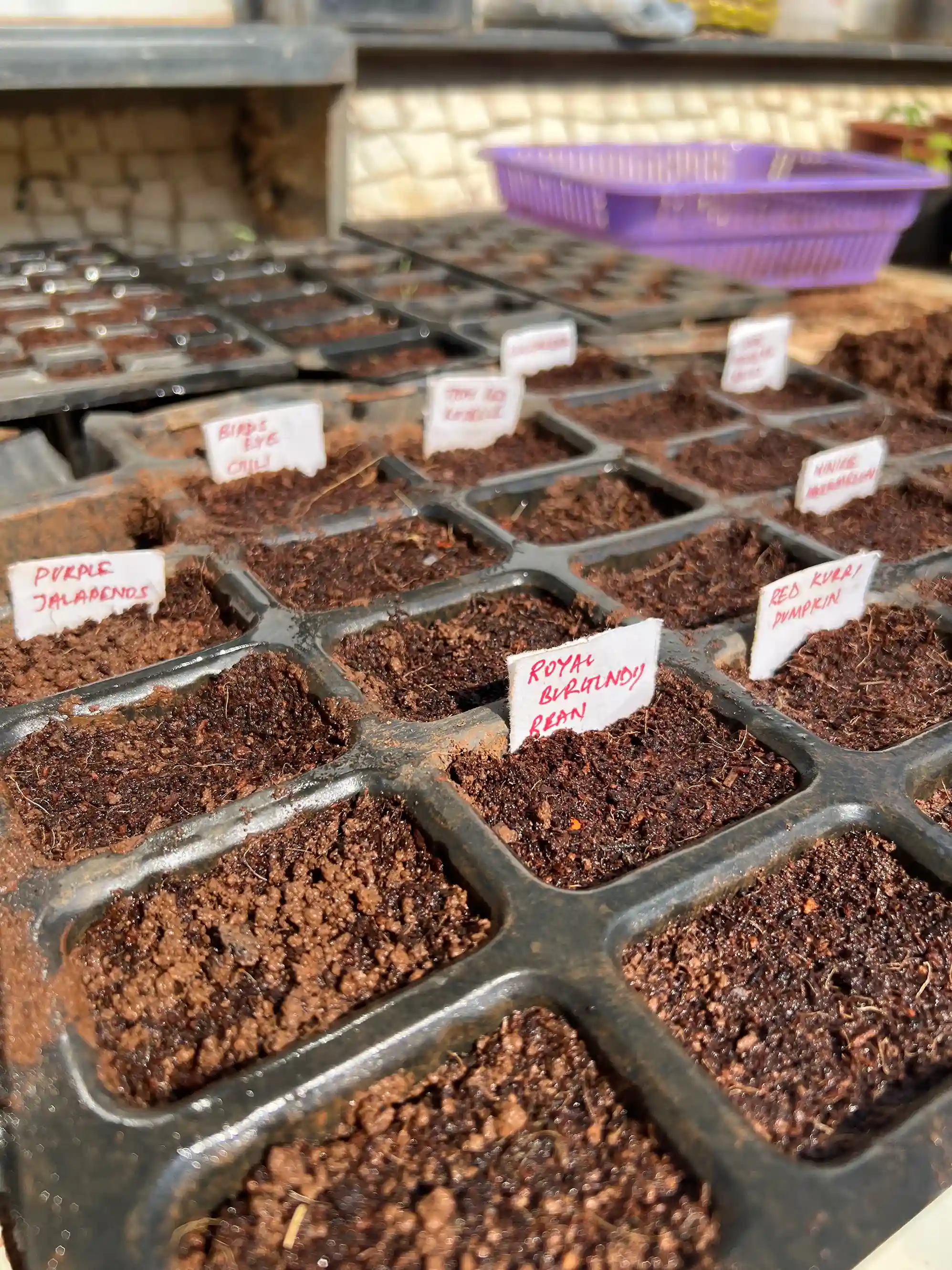
Language barriers aside, some of the solitary nature of this work also stems from being your own boss, colleague and employee. There are days on the farm when I feel, “I’ve got this”, when things go the way I planned for them to. But there are a lot more days that involve me making decisions about things I’m not entirely sure about—things I haven’t done before. While it is a rather daunting exercise, I am constantly reminding myself to keep working the decision-making muscle; it’s the only way it’ll get stronger.
Back in 2020, while I quite enjoyed growing food on my own, I also found myself desperately craving more—more plants to grow, more food to try, more things to learn, and significantly, more people I could share all this with. This was also the social media era when live videos on Instagram were all the rage, and a rare way for people to come together. It was on one such Instagram Live that I came across four women reflecting on food and farming. One among them was Gaytri Bhatia, an environmental analyst and farmer, and steward of Vrindavan Farm in Maharashtra’s Wada. Listening to her speak of seasonality, farming rhythms, and her life at Vrindavan made me feel that she was the one I needed to learn from.
Friends who help you see your potential
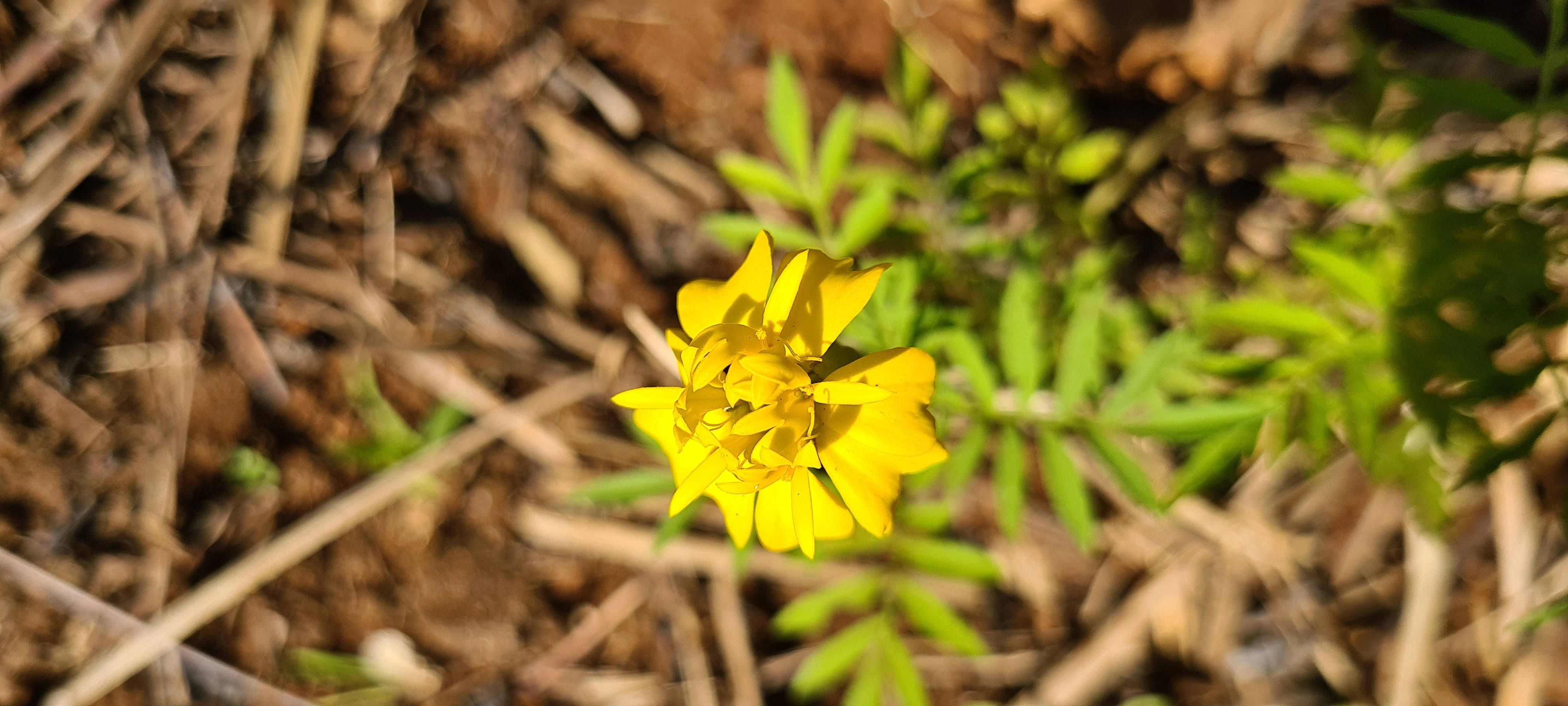
I sent her a cold email, and then another, waiting, hoping and praying she’d chance upon it. I’m so lucky that she did, and a few exchanged emails later, she invited me to come live and learn at Vrindavan. Words I write will never be able to do justice to what those two months meant to me: I got to see the farm run, day after day, to its own pulse. I was entrusted with tending to a patch of marigolds, where I transplanted little saplings, and mulched, and watered. Gaytri even made me carry a bucket of water up to the patch and bring it down for refills multiple times a day for the first week, before letting me know there was access to water very close to the patch—real Mr.-Miyagi-Karate-Kid stuff.
It was at this farm, under Gaytri’s guidance and mentorship, that I had a vision of the person I want to be: someone who grows their own food, and lives close to thriving fields.
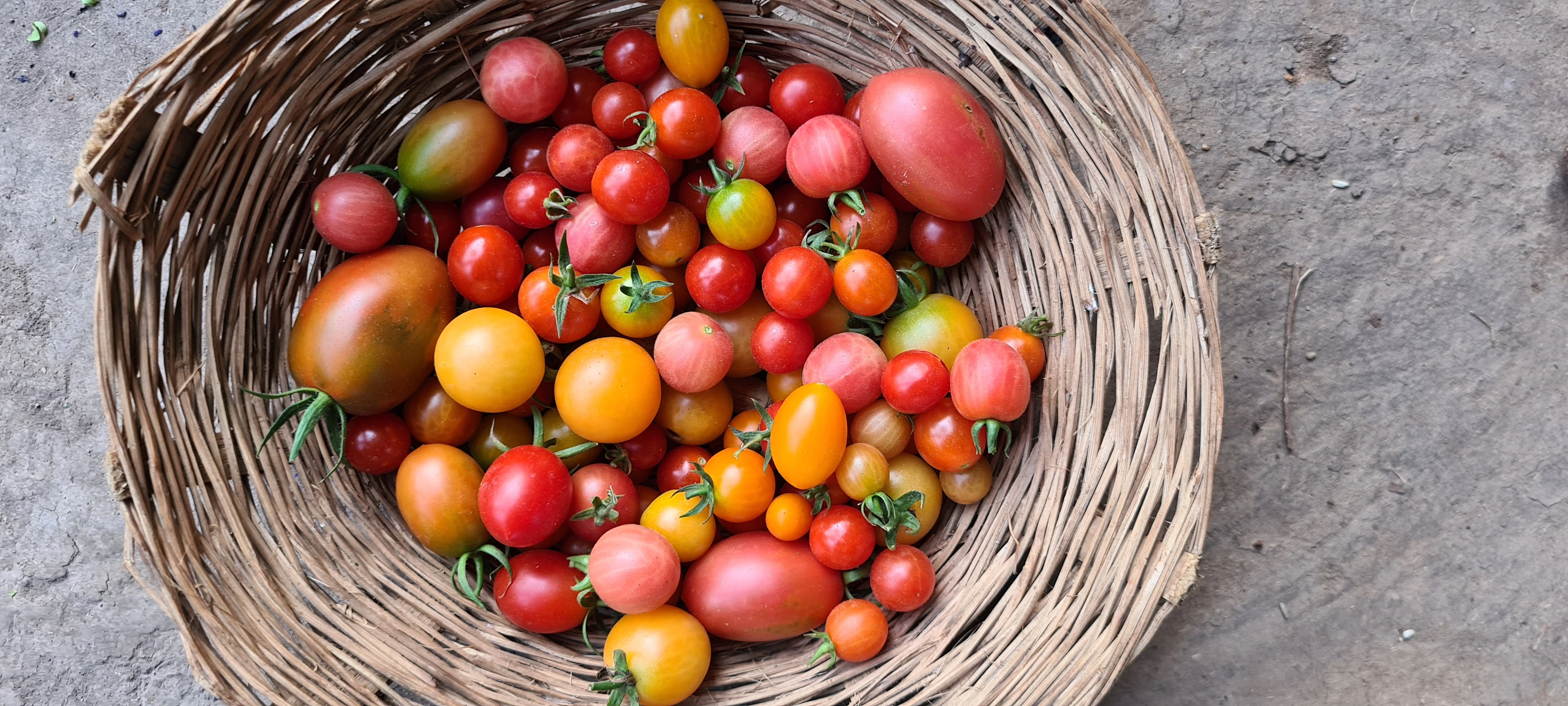
I saw a snake slithering through fields for the first time; ate a papaya so crisp and juicy, I thought it was a melon; and even learnt that pineapples do not, in fact, grow underground. I got to wake up excited about what a new day would bring, and sleep exhausted from the day that was. When asked about why I choose to grow tomatoes, my answer usually is, “Because Gaytri showed me what a good one can taste like”.
{{marquee}}
It feels fitting that I got to celebrate turning 25 at Vrindavan. It was at this farm, under Gaytri’s guidance and mentorship, that I had a vision of the person I want to be: someone who grows their own food, and lives close to thriving fields. Gaytri, who I now consider a friend, was the first person I’d met who made a career out of farming, though it looked more like a way of life than a job—a way of life that felt liveable, and that which you didn’t need to run away from.
Also read: Tomato truths: Growing your own food is a radical, rewarding thing
Friends who show up and cheer-lead
A few years into Simbiosis, I began to see a very clear shift in my longtime friend groups. I’ve studied in Mumbai all my life, and so most of my friends are the ones I’ve either gone to school, high school, or college with. I’d always been a rather social person, but now, the farm was my top priority on weekends. This meant having to say no to plans, or backing out of them at the last minute, for a lack of energy to see them through.
A distinction appeared among my friends: the real ones showed up and provided support. They may not understand what I do, but they sure can understand me. Such friends will entertain the quirks of your life and vice versa, and you’ll find a way to make the friendship work. The other, secondary circle of people is what I call “party friends”. Say no to going out thrice, and you will not be invited the fourth time. Choosing the farm life made visible to me where I fall for people, and where they, for me.
A distinction appeared among my friends: the real ones showed up and provided support.
Where old friendships may be lost, new ones can be forged. During the early years of my foray into farming, I made an Instagram friend who quickly turned into an important IRL connection—Pranoy Thipaiah, a fifth-generation coffee farmer from Kerehaklu, Chikmagalur in Karnataka. The conversations we had were mainly about the books we were reading, farmers we were inspired by, the things we grew, saw or discovered. Pranoy and I were quite distant in experience but pretty close in age, and so he became a friend first, and a farming friend second.
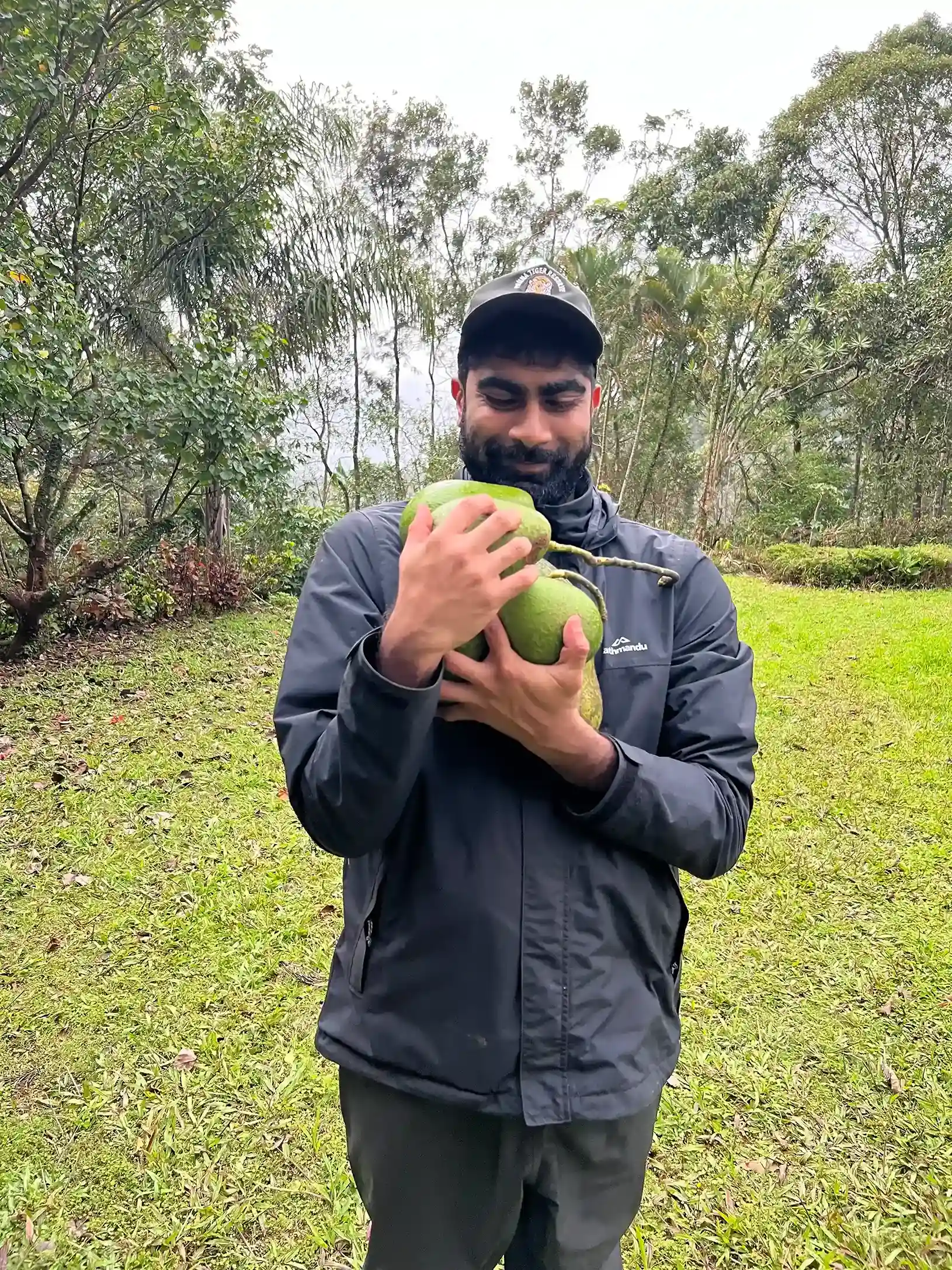
Once a student of Biology in Sydney, Pranoy returned to his family estate, unsure about his next steps. He had grown up between Chikmagalur and Bengaluru, but I doubt he saw himself at the estate full-time. As life would have it, his return was timed to India’s latest coffee revolution and the growth of the country’s first specialty coffee chain. Pranoy wondered what it would take to make his family’s coffee available there. He found the answer in post-harvest processing, and fell deep into a rabbit hole, following YouTube videos and reading all that he could find on the subject. He told me about his first few experiments in inflatable kiddie pools—a more ergonomic laboratory than the tanks at the estate.
He was the first to push me to put the tomatoes I was growing up for sale. He’s become a sounding board for ideas and thoughts, someone who gets it without me having to explain or over-explain things. No thought is too wild for Pranoy, no goal unachievable, no produce that doesn’t have value. He is who I turn to when I need some unabashedness.
Friends who lead by example
While at Vrindavan, I used to dream about being a baker. I’ll grow produce, I’d say to myself, and figure out ways to bake it into bread and cake—a winning formula! I wrote to Smita Sharan of The Good Butter Bakery, whose rustic, no-frills, big-on-flavour breads and cakes looked like they’d come out of a storybook. When Smita put out a call for people to join her team in 2023, I jumped at the opportunity. Having had no real pastry experience or culinary education, I didn’t really have a CV that’d be relevant to this position. So I wrote a long—and in hindsight, cranky—email to her about how I was at an uncomfortable crossroads in life, where what I was doing was not aligned to what I wanted to do, and how I would kill for an opportunity to intern with her.
Choosing the farm life made visible to me where I fall for people, and where they, for me.
The three months I spent at The Good Butter, learning from Smita, her partner Khamir, and their team—becoming a part of their tightly-run ship, and learning how to stand on my feet for over 10 hours a day—turned out to be an invaluable part of my journey. A self-taught baker, Smita used to work in banking HR not too long ago. At 30, she took a break from a life that wasn’t really fulfilling her, burying her head in cookbooks, and her hands in flour. She practiced relentlessly until she was somewhat happy with the cakes, cookies, and breads she was baking, after which she started selling them to the people around her. Her venture grew rather organically, and spread through word of mouth. She and Khamir run a cloud kitchen, focusing solely on the food they’re making. While the production runs on an efficiently organised schedule, the trials and experiments never stop. Smita also is probably the best boss I’ve ever had, albeit for a very short time. A phrase I’d heard her use often was “optimally sweet”, which really is tougher to achieve than you’d think!
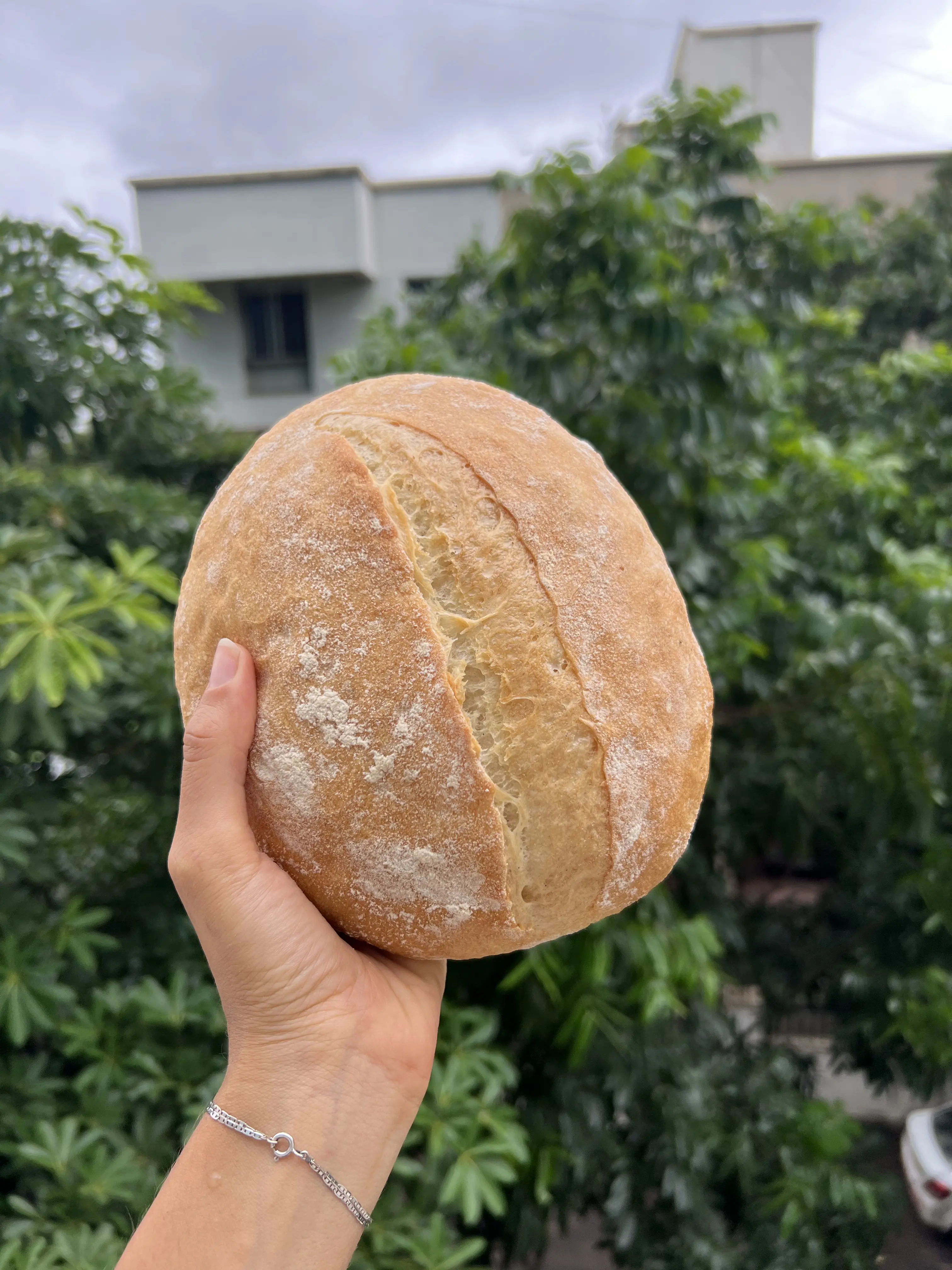
With an endless library of books she lends generously, and a decade of knowledge, The Good Butter set the standard of what a small business should look like: developing a great product, maintaining high quality standards, delegating and working in a team. Soon after my time there, I felt equipped with the skills to try doing something of my own, and that’s the first season I grew at Simbiosis.
Also read: Tomato truths: What this novice farmer learnt and unlearnt about the fruit
No woman is an island
In another life, Gayatri Desai used to work in advertising. She left it behind to go study Culinary Arts at the Northwest Culinary Academy of Vancouver. From there, she’s allowed her travels to be the guiding force behind the food she makes. And as her travels took her to parts unknown, she honed her craft, discovering ingredients, learning techniques, and sharpening her skills. The deeper she explored this labyrinth of food and flavour, the more she realised that the best food is built from the ‘ground up’, which inspired the name of her test kitchen and fermentary.
I am the culmination of things I’ve experienced and learnt, and the people I surround myself with.
Through the years, I’ve spent some time either visiting or helping out in her kitchen. I got to play bartender on the closing night of her first restaurant, and on occasion, supply tomatoes. A tough boss, and a solid friend, she’s shown me how curiosity must be our guiding light. That diving deep is far more rewarding that floating at the surface. She doesn’t seem to know another way, and I’m trying to emulate this philosophy as I chisel this rock called “life” into the shape I desire.
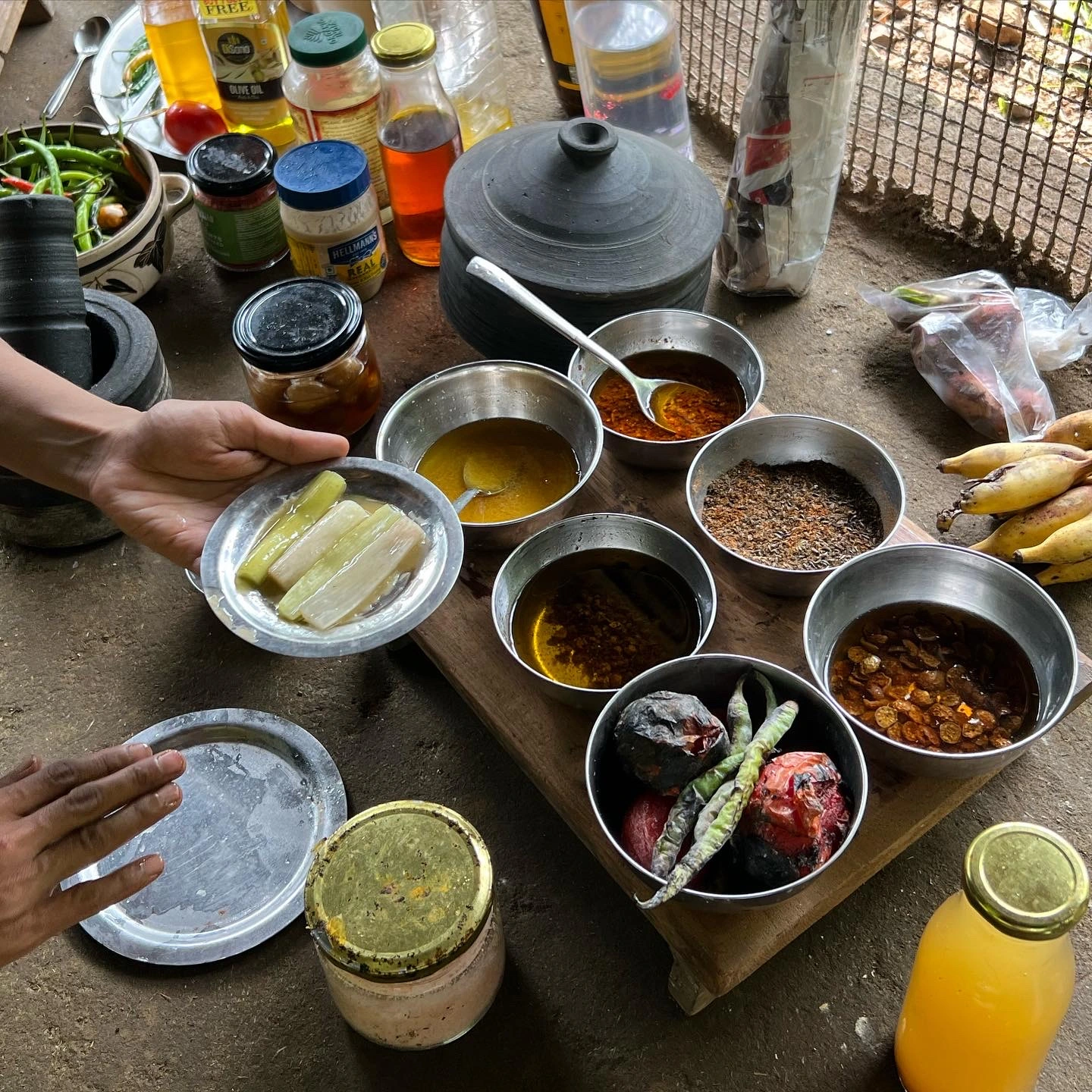
Over the last six years, words that poet John Donne wrote centuries ago make more and more sense to me: “No (wo)man is an island, entire of itself”. I am the culmination of things I’ve experienced and learnt, and the people I surround myself with. Some parts I was born with, and some I’ve borrowed. I’m grateful to share this life with the people I call my friends. They help me, guide me, inspire me, celebrate wins, mourn losses, and push me in their own special ways.
Also read: Tomato truths: To know your farmer is to know your food
Carousel Photos by Simran Moorjani
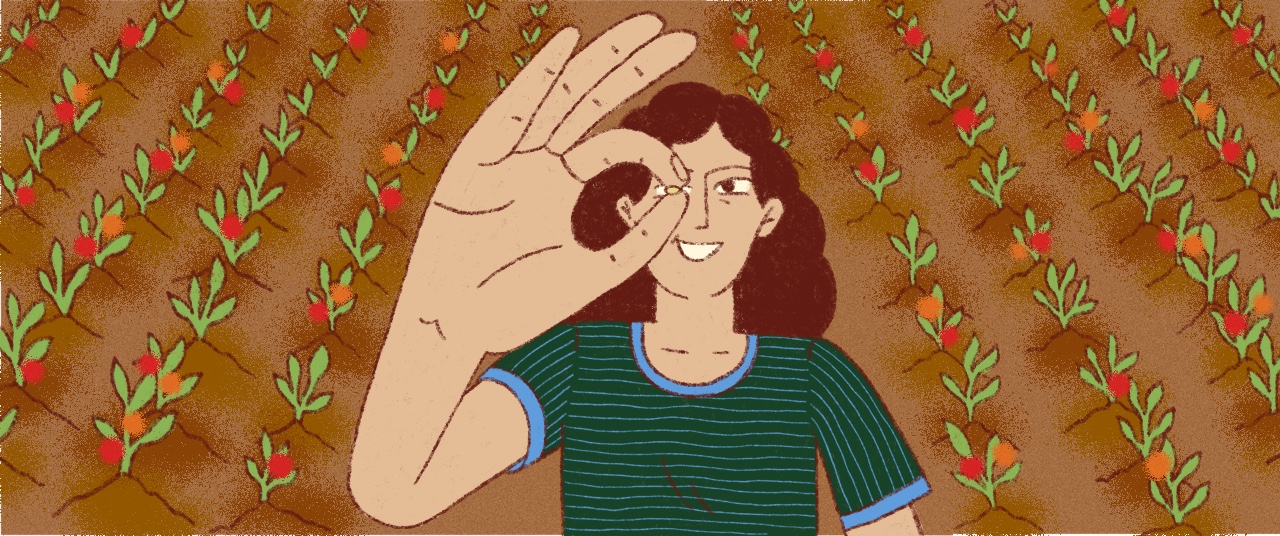
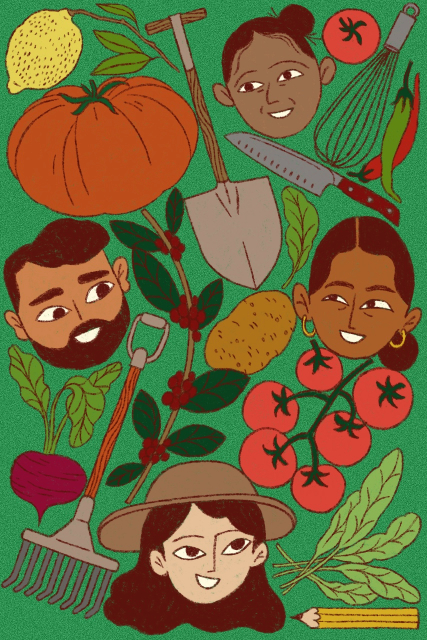
Cover illustration by Pearl D'Souza


.avif)
Explore other topics
References

What did Simran dip her hands into alongside farming?