India's right to food is written into law. But getting ration is another battle
The National Food Security Act has improved access to subsidised grains, but gaps in implementation and digitisation continue to leave beneficiaries struggling


On a hot Tuesday morning in October, members of the Rationing Kruti Samiti (RKS) gathered for their monthly meeting in one of the leafy bylanes of Kamgar Nagar, Kurla, Mumbai. RKS is a federation of community-based NGOs working to help people avail of the Right to Food under the National Food Security Act (NFSA), 2013.
The meeting begins with the review of the month. Husna Khan from Youth for Unity and Voluntary Action (YUVA), who works with residents of Vashi Naka, starts by listing the month’s problems: arrogant shopkeepers who refuse to hand over the full ration, poor quality grains, and deletion of names from the ration card. As members go around the room, they enumerate a range of issues: from problems related to Aadhaar-linked ration cards, to agents charging a hefty amount to add names to the ration card.
Under the National Food Security Act, 2013 (NFSA), up to 75% of India’s rural population and 50% of the urban population is entitled to receive food grains at highly subsidised rates through the PDS. Agencies of state governments and the Food Corporation of India (FCI) buy foodgrains at the minimum support price for the central pool for distribution under the NFSA. It is the responsibility of the central government to allocate grains to states according to the number of eligible households. The state government takes delivery, and organises intra-state allocations to Fair Price Shops (FPS), popularly called ration shops, making sure they deliver it to the shop’s doorstep.
The beneficiaries are divided into two categories: Antodaya Anna Yojana (AAY) beneficiaries who are the poorest of the poor, and Priority Households (PHH). AAY beneficiaries get 35 kg per household per month, and priority households get 5 kg per person per month. But the government has recently proposed an amendment to the NFSA, 2013, under which the AAY households will receive 7 kg of grains per person with the maximum per household being 35 kg.
For the year 2025-26, the centre allocated 554.99 lakh tonnes of grains including rice, wheat and nutri-cereals for 79.8 crore end users. But like the proverbial slip twixt the cup and the lip, a lot happens between the allocation and the beneficiary receiving it.
While the Public Distribution System (PDS) has always been one of the pillars of social security in India, the system is not without its limitations. Over the years, studies have recorded that the introduction of the NFSA has reduced leakage of foodgrains from what ration card holders are owed, but digitisation of the PDS system has also created new problems for the beneficiaries.
Universal vs targeted PDS
The origins of the PDS can be traced back to the period of World War II. Reetika Khera, in her book Revdi ya Haq, explains that rationing was born out of scarcity of grains due to the war. According to the Food and Agriculture Organisation, the programme was introduced in only one city–then called Bombay–in 1939, with entitled card holders receiving grains. Towards the end of 1943, 13 cities were getting rationed food grains. Post-independence, the PDS was continued in the first Five-Year plan, which extended it to rural areas strained by scarcity of food grains.
Khera also explains in her book that the Green Revolution further strengthened the PDS. In the 1960s, the Food Corporation of India (FCI) started buying rice and wheat at a minimum support price (MSP) from farmers. And in 1997, the Targeted Public Distribution System was launched.
Generally, universal PDS is much better simply because it avoids this whole problem of exclusion.
Up until 1997, India had a universal public distribution system: all ration card holders could buy ration at subsidised rates. In 1997, this was transitioned to Targeted Public Distribution System (TPDS). People below the poverty line (BPL) were identified, and given ration at subsidised rates.
“Now what happened with that was that it resulted in a lot of leakages and errors,” says M.R. Sharan, a development economist. He explains that there were two kinds of errors: the exclusion of ration card holders, and the inclusion of those who were not eligible to receive subsidised grains.
“Exclusion errors were the bigger problem,” he explains. “Really poor households didn’t have access to subsidised grains.”
Sejal Dand, of Anna Suraksha Adhikar Abhiyan concurs, “Generally, universal PDS is much better simply because it avoids this whole problem of exclusion…anything which is universal has a better chance of actually reaching everybody, especially the most marginalised.”
There are several arguments made against universal PDS. As Khera writes in her book, the first one is the lack of revenue to provide grains to everyone. The second is that it is unfair to give subsidised rates to those who can afford to buy their ration in the open market. But she further points out that this issue can be addressed if we understand that ‘universal’ does not mean ‘uniform’: those who need the food more should ideally get it in more quantity. Dand adds that in the system of universal PDS, many people voluntarily opt out, also putting an end to this notion of having to provide for everyone.
Sharan points out two reasons why universal coverage reduces leakage: one, he offers an example of how this system works in rural areas, where there is almost 80% coverage.
“Because they said that 80% of households have access to grains, almost everybody in the village had a stake in the system. This included some households that actually had a voice—that had some powers in these villages,” Sharan explains. These families use their influence to curb corruption at the shop level. Secondly, because a majority of households have access to PDS, the really poor households often find themselves in that bracket.
An important flaw with the way coverage is calculated is also that it is based on the 2011 census.
In fact, as Dand and Sharan explained, southern states have not only performed better at PDS implementation, but states like Tamil Nadu have also been successfully practising universal coverage by topping up what is provided by the central government. The state even adds other items like dal, sugar and oil.
An important flaw with the way coverage is calculated is also that it is based on the 2011 census. Dand says, “How can a list that is drawn 5 years, 10 years back actually be allowed? If you read the original PDS control order, it will say that it has to be continuous identification. Where is that happening?”
Vivek Shelar of the NGO Svitech, a member of RKS who works in Ghatkopar, Sakinaka, and Chembur, also points out that since COVID, grains have been given free of cost to the end users. As a result of this, members of the RKS have repeatedly come across cases where shopkeepers humiliate people, label them freeloaders, and use this as an excuse to deprive them of their full quota. Hence, RKS argues that people’s dignity should be respected by giving grains at subsidised rates as per the NFSA, rather than for free.
A step towards transparency
The Supreme Court (SC) passed an important order in 2001, recognising food as a right. In an interim order in the People’s Union for Civil Liberties (PUCL) vs Union of India case, the SC affirmed that right to food is a part of Article 21 of the Indian Constitution, which grants the fundamental right to life and liberty. This prepared a ripe background for the NFSA, 2013 to enact the right to food into a law. Economist Jean Drèze says, “The act created a sense of entitlement among people. Now, most of them know what they are entitled to. Earlier, people were not even clear because there was no transparency.”
Before the Act, ration card holders were completely at the mercy of the dealers, who could lie about not receiving stock. Drèze adds that now they insist on getting the ration allotted to them; portals and apps such as Mera Ration allow them to check that the dealer has received their rations, if necessary.
Sharan, the development economist, further explains that the PDS is working more efficiently than it was 20 years ago, and he attributes this mainly to the NFSA. The figures also support this. In her book, Khera shows that the percentage of diversion of grains dropped between 1999-2000 and 2022-2023. It peaked at an all-India level in 2004-05 at 54%, but had reduced to 22% by the end of this period. The diversion or leakage of grains can take place at different points of the supply chain: grains can be siphoned off while being transported from the godown to the shops. Moreover, shopowners can also give beneficiaries less than the quota allotted to them, selling the remainder in the open market for a profit.
Shelar says, “The government took time to recognise that food is a right. This Act should have come a long time ago.”
He agrees that electronic verification is a useful tool to question corrupt dealers, but believes that the benefits are fairly restricted to urban areas. Poor network and lack of smartphones limit its utility in rural settings. Moreover, not everyone is aware of the app. Shelar says shopkeepers also tend to humiliate people for not having smartphones or digital awareness. He adds, “First make people digitally literate, and then carry out digitisation.”
Also read: In an age of food abundance, why does ‘hidden hunger’ hold India back?
Digitisation of daily ration
In February 2017, the government brought out a notification making Aadhar-linked ration cards mandatory. After a series of deadline extensions, the most recent deadline was March 31, 2025. The purpose of introducing biometric authentication via Aadhaar cards was to eliminate “ghost” ration card holders, to deter diversion of grains into the open market, and ultimately ensure that the food reached the beneficiaries.
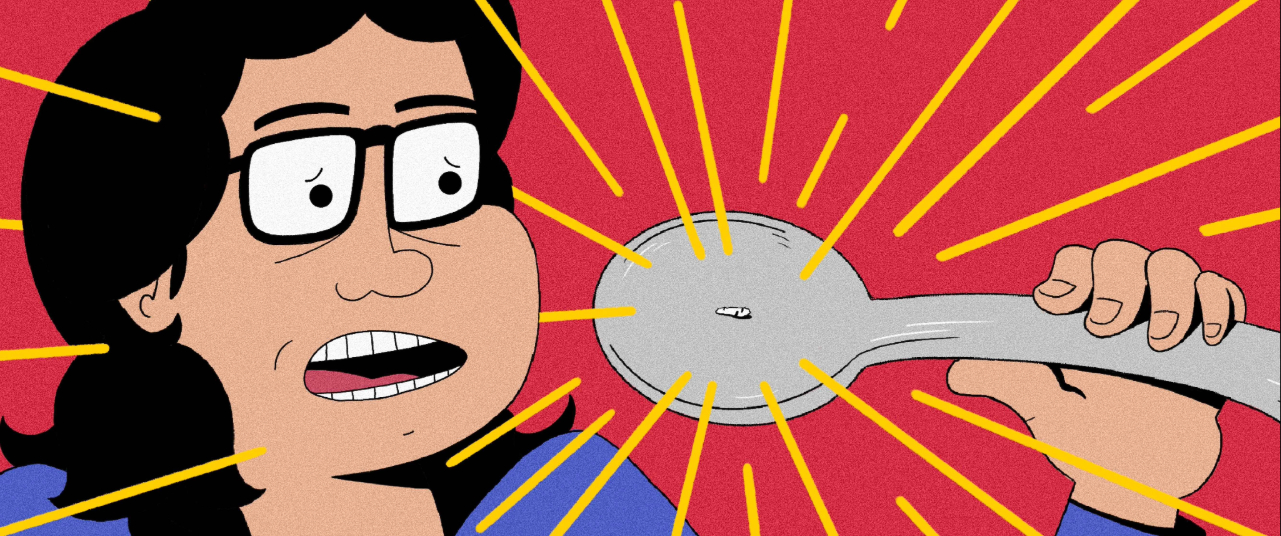
For some people, the biometrics do not work because of wear and tear of fingers–which could be due to manual labour or age.
Dand wonders how effective biometric authentication has been to curb corruption. In her experience of working in Gujarat, she has found that the government claimed that thousands were “ghost card holders,” a term referring to a person who does not exist, or has died, or has migrated permanently, and cancelled their cards. This often happened as card holders had not updated the eKYC of the Aadhaar card linked to the ration card.
The Ministry of Consumer Affairs, Food & Public Distribution reports that by the end of 2025, more than 99.9% of ration cards had been linked to the holder’s Aadhaar card. Moreover, more than 98% of transactions had been biometrically authenticated.
But Aadhaar-linking has its own set of issues. Drèze says, “It had created a lot of problems, at least initially. Some people didn't have Aadhaar. Others didn't know how to link their ration card with Aadhaar. Others still were struggling with biometric failures or discrepancies in the spelling of their names between the ration card and Aadhaar, and so on.”
The mandate also required the ration card holders to submit their biometric information while accessing food grains, to help keep track of the beneficiaries by linking to their Aadhaar data. For this, they had to submit their thumbprints. Some states have also started offering face authentication, recently.
Crucially, for some people, the biometrics do not work because of wear and tear of fingers–which could be due to manual labour or age. Another persistent problem, says Drèze, is that the government keeps redesigning the system. Adding retina and face scanning is a recent example of this; such changes create a new set of teething problems each time. He suggests that a simpler and lasting system, like smart cards, might have worked better.
Technical snags can also hold up ration. For instance, Shelar found that a glitch caused his Aadhaar card to be linked to another family’s ration card. His was one among ten to twelve cases of such incorrect linking that they came across. Some were within the city or state, and some across the state.
Shelar explains, “If someone goes to get ration, the shopkeeper just looks at the Aadhaar card, puts in the number, and gives the ration. They don’t verify whether your name belongs in that family’s card. They see that you are entitled to receive ration, and give it. So, one person gets double the ration, and another person goes hungry.”
Digitisation has also produced a new kind of middlemen: agents who charge for addition or deletion of names, or to update the eKYC.
In a 2021 report, Karthik Muralidharan, Paul Niehaus, and Sandip Sukhtankar showed that Aadhaar-linkage has reduced some forms of leakage–biometric authentication is one such means–but whether the user has benefitted meaningfully from this depends on protocols and implementation. For instance, biometric authentication may be useful to prevent identity frauds, but does not prevent the dealer from giving less ration. Some of the suggestions the authors make include having safeguards against exclusion with offline alternatives, and prioritising the end-user experience rather than financial savings. This reflects the opinion of social workers who believe that digitisation measures have made the beneficiary experience more tedious.
Digitisation has also produced a new kind of middlemen: agents who charge for addition or deletion of names, or to update the eKYC. Ajay Borkar of YUVA, who works in Panvel, has found that ration officers themselves direct people to agents who charge up to Rs. 10,000 to get a new ration card, which should cost Rs.90. Moreover, Panvel is a city where many struggle with digital literacy, says Borkar. He explains that digitisation has allowed people to add or delete names online, adding that the verification request has to be approved by the ration officers, who are prone to do this more urgently if it is filed by an agent. Otherwise, they may keep the applicant waiting for months. With red tape all around, it doesn’t help that the ration office itself has poor bandwidth, delaying the process.
The NFSA has brought much needed reforms. Leakage percentages have dropped significantly. But the everyday experience of the beneficiaries shows there are gaps that need to be plugged, so that people can truly avail of their right to food. As Shelar says, “It is our right. They are not giving us alms.”
Also read: What it takes to feed India’s growing cities
Artwork by Alia Sinha
{{quiz}}


Explore other topics
References