Goodbye, monocropping: A new future for cotton farming?
In opting for organic methods and intercropping cotton with food crops, farmers in Andhra Pradesh are increasing their incomes and access to nutrition


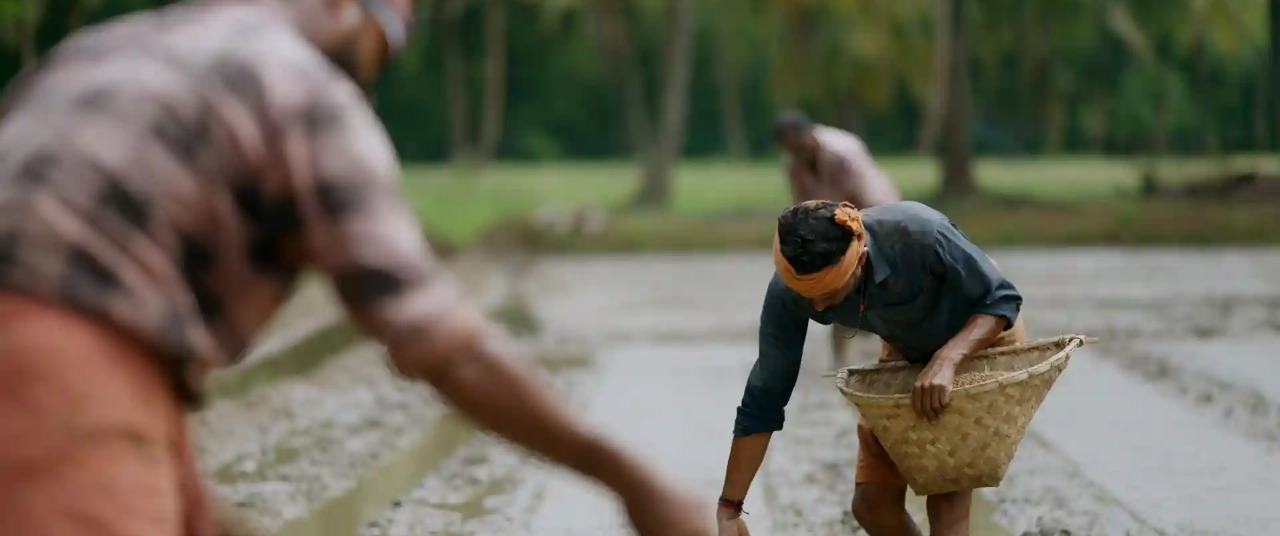
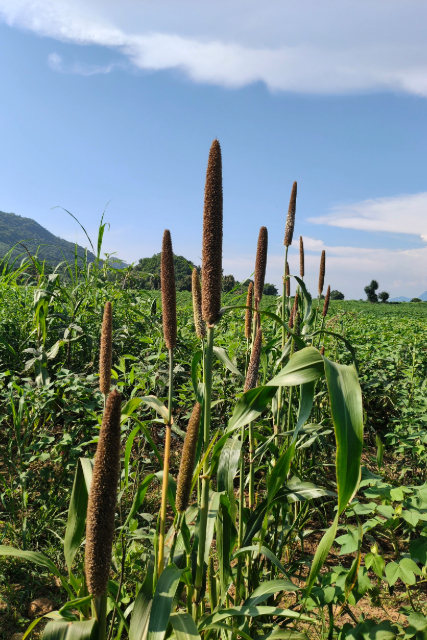
In Andhra Pradesh’s Parvathipuram Manyam district, change is afoot. Farmer Arika Ramesh no longer sees his one-acre holding in Kariguda village as a mere cotton field. Foxtail millet, little millet, sorghum, okra, maize and beans punctuate the cotton crop. Horse gram, red gram and black gram fill the spaces between rows. Along the borders, ridge gourd, bitter gourd and bottle gourd climb over supports, while marigolds grow near the fences.
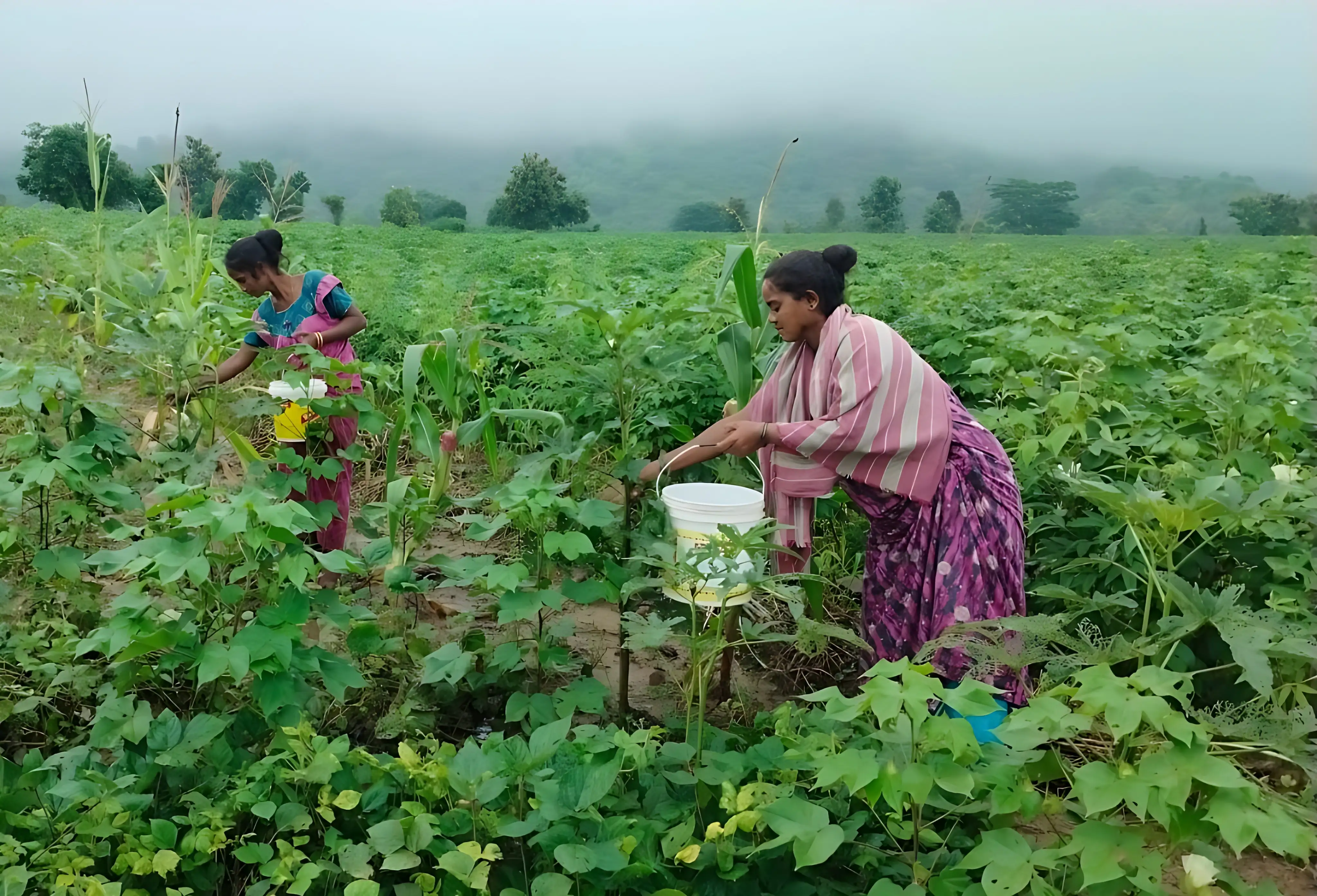
Until three years ago, the same field had little crop diversity. Ramesh, 42, who belongs to the Savara tribal community, was accustomed to growing Bt cotton as a monocrop. Initially, his harvest was seven quintals per acre, but over time, the yield fell while spending on fertilisers and pesticides only increased. “The soil began to feel hard and tight under our feet,” he recalls. “Earlier, it was soft and loose. We were spending more, and harvesting less.”
With the inputs tied to one crop and one buyer, there was little room to plant anything else on the field.
The problem at hand was larger than Bt cotton. For a family growing one crop on rainfed land, a weak harvest meant having no option but to buy more food from the market. Like many farmers in the area, Ramesh sourced his Bt cotton seed and chemical inputs from local dealers and traders, on the condition that he sold his harvest back to them. With the inputs tied to one crop and one buyer, there was little room to plant anything else on the field.
In 2023, Ramesh began changing the way he farmed: cotton was no longer monocropped. Its harvest dwindled to five quintals an acre, against the six to seven quintals in earlier years. But none of these are choices that the farmer mourns or plans to reverse.
Making room for food crops
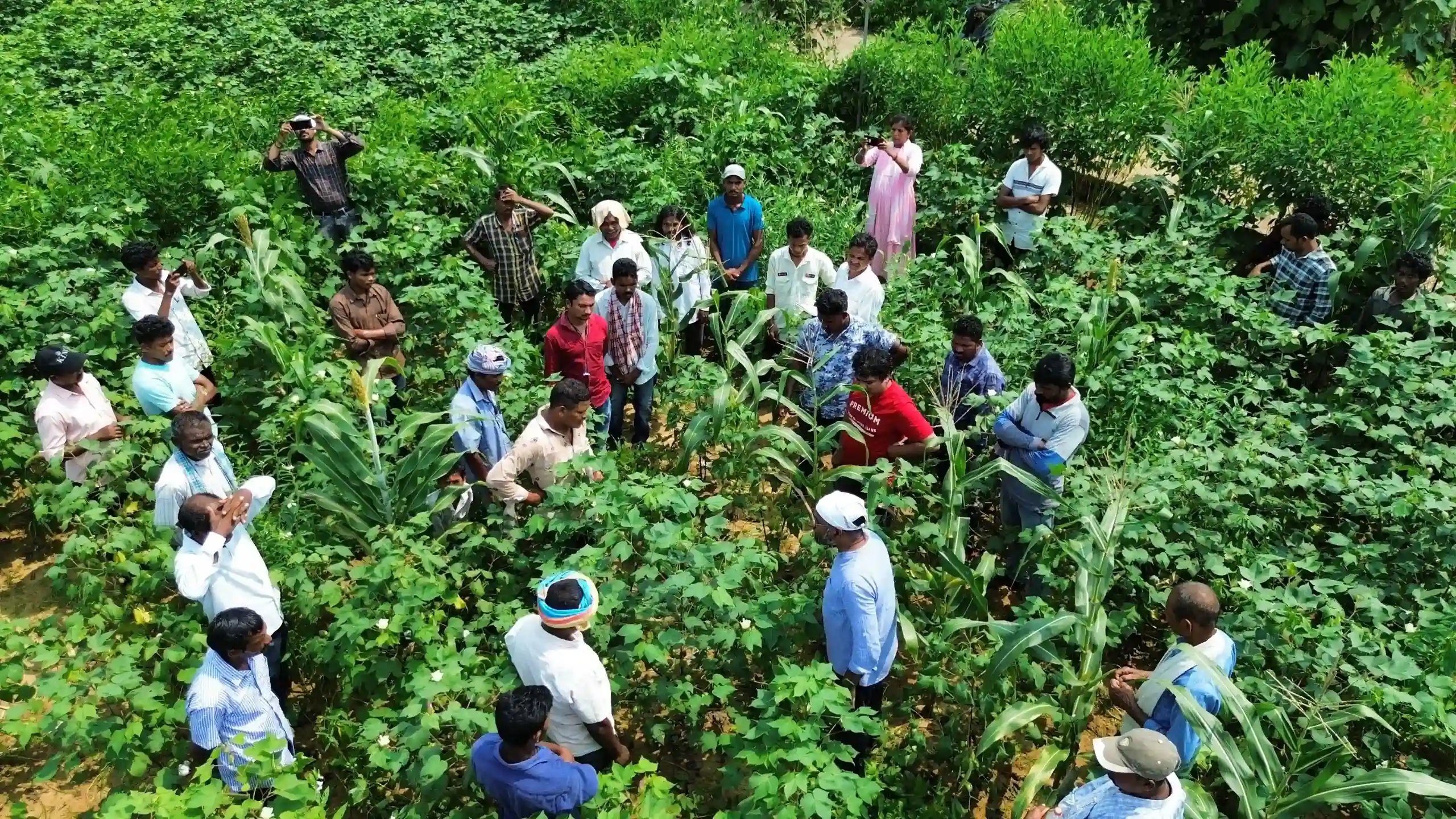
Since 2023, roughly a hundred farmers in Bhamini Mandal block, many of whom belong to the Savara community, have adopted diversified organic cotton farming techniques, marking a shift from genetically modified seeds, chemical inputs and a dominant cash crop in the region. As part of a project undertaken by a resource support organisation and a national bank’s Corporate Social Responsibility (CSR) arm, Ramesh was among the farmers chosen, and his three-decade-old field was developed as a demonstration farm so that his peers could observe and learn about the underlying approach.
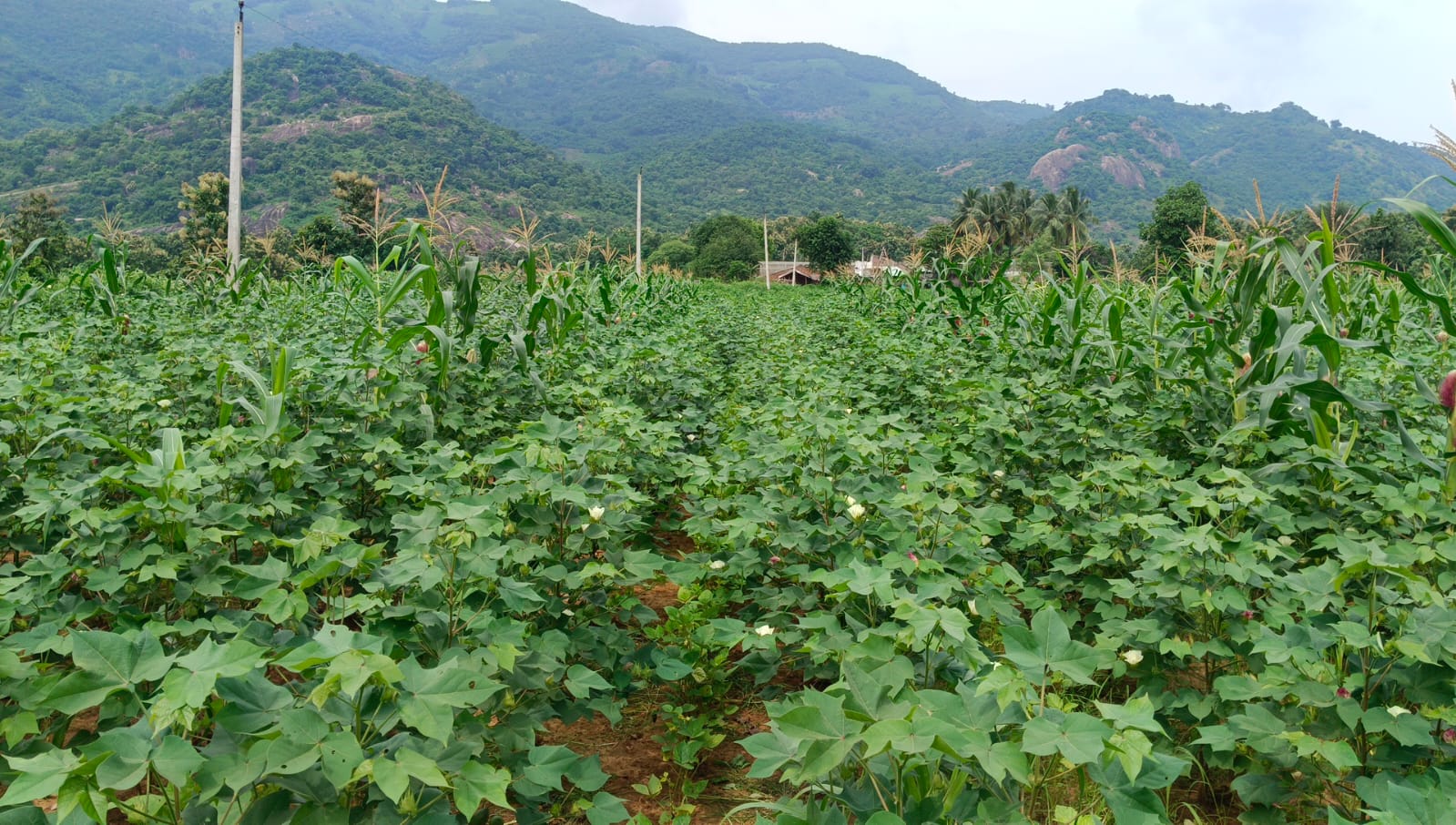
Biddika Lokanadam, a community resource person who works in the Maniga, Bhamini and Burujola panchayats, observed that farmers were more willing to experiment after seeing the results of the approach on another’s field. “When they see different crops growing together, they understand that the field can give them more than one harvest,” Lokanadam, 36, says of farmers accustomed to monocropping. A resident of Boddaguda village, he switched to the diversified organic cotton and encouraged others to adopt the same model. “We saw that the cotton balls were fuller. We also saw honeybees around the farm,” says farmer Biddika Roja (37), who witnessed the demonstrations. “We realised that if we take care of the soil, the soil will take care of our crops.”
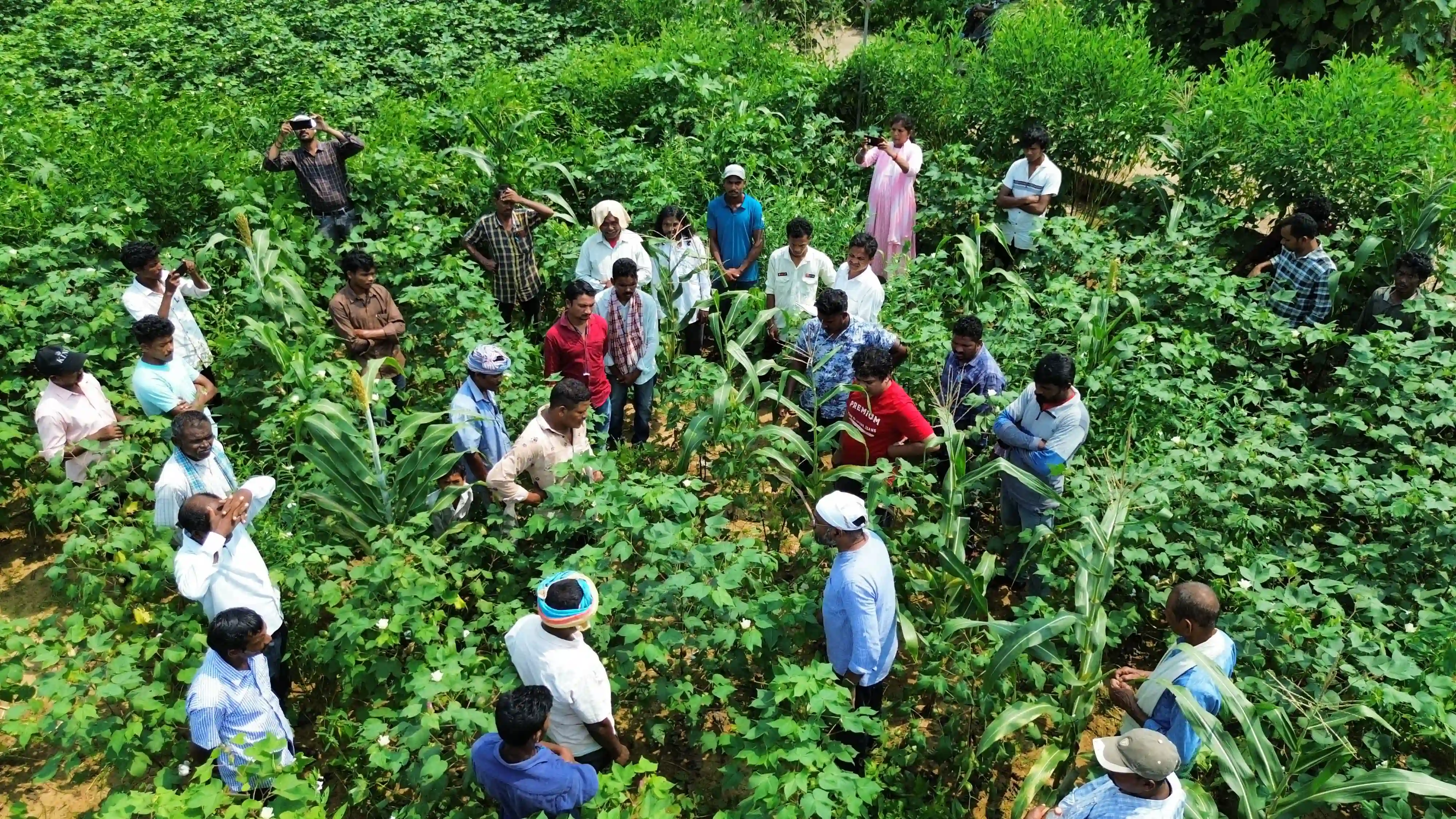
With millets and pulses feeding families like Roja’s and Lokanadam’s, the reliance on market produce decreased, vegetables could be eaten fresh, and any surplus could even be sold locally, incrementally adding to household incomes.
The reliance on market produce decreased, vegetables could be eaten fresh, and any surplus could even be sold locally, incrementally adding to household incomes.
Feeding the soil that feeds us
For Arika Ramesh, the first, most crucial step was restoring the field. Having reduced his dependence on fertilisers and pesticides, he employed compost, crop residues, and farmyard manure instead, as well as organic preparations such as Jeevamrutha and Ghana Jeevamrutha. (Jeevamrutha is a fermented liquid preparation made with cow dung, cow urine and locally available ingredients such as pulse flour and jaggery. Ghana Jeevamrutha is its concentrated solid form.) Both are used to improve soil fertility, promote root growth, and enhance the soil’s water retention.
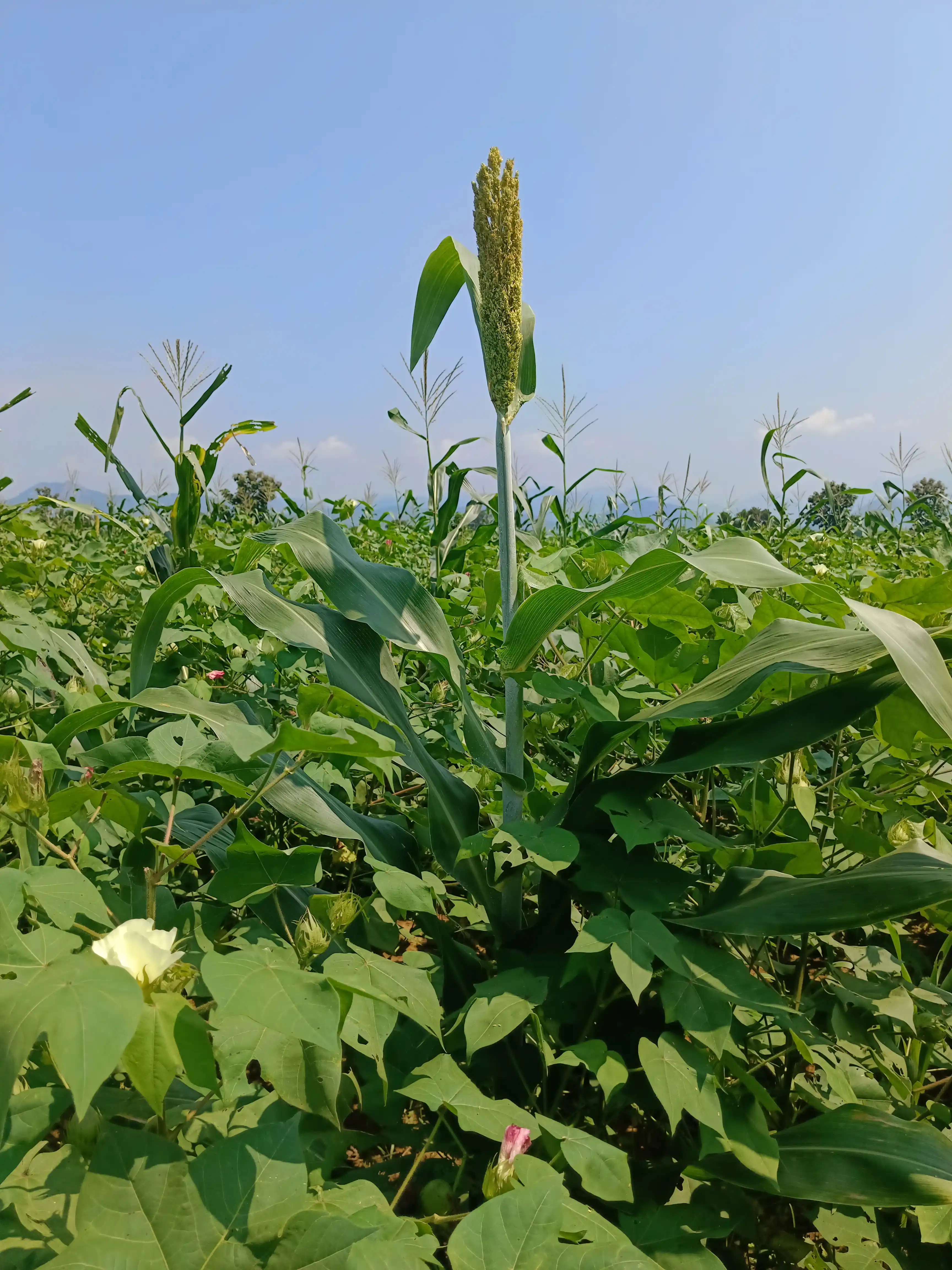
The transformation was slow. “Under natural farming methods, you have to keep feeding the soil and wait for it to recover… At the start we did not see much change. It took us nearly two years to return the soil to its former state,” Ramesh says. Planting a diversity of crops was part of the prescribed recovery process. Unlike a field with bare soil between rows of a single crop, the intercrops keep much of the ground covered. Their leaves and stems shade the soil, reducing direct exposure to the sun, and helping slow down moisture loss. The cover also reduces the amount of heat that would otherwise scorch the soil’s surface during periods of hot weather.
After harvesting, crop residues are left behind on the field where possible. They gradually break down and add organic matter to the soil, providing nutrients to the next crop. When used in combination with compost and farmyard manure, this helps improve soil structure and fertility.
This intercropping system is based on symbiotic relationships between different crops, and reduces the need for chemical inputs.
Then came the signs Ramesh could see and feel. “Slowly, the soil turned softer and began to hold moisture better. We saw earthworms again!” He picks up a handful, observing its porosity and the way it crumbles in his hand. “The soil is alive again,” he rejoices.
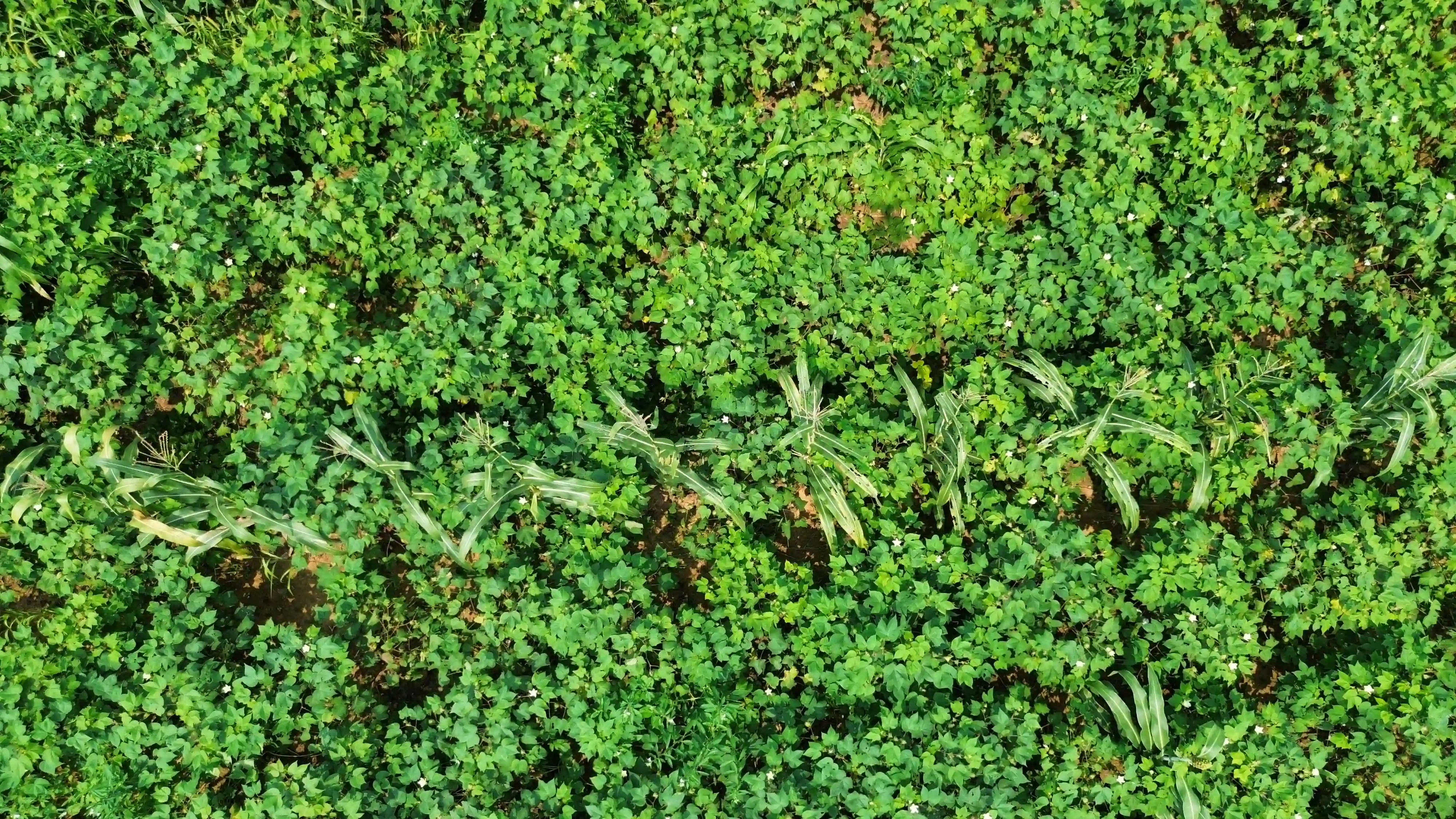
The pulses and other legumes growing alongside the cotton contribute in another way: through their association with soil bacteria, the rhizobia bacteria in their roots fix atmospheric nitrogen and contribute to nutrient cycling within the cropping system. Their dense foliage also helps cover the soil and can suppress weed growth. “This intercropping system is based on symbiotic relationships between different crops,” says K. Ratnakumari, Assistant Director of the Department of Agriculture in the Palakonda Division (in the same district). “It reduces the need for chemical inputs and helps maintain a healthier soil ecosystem.”
Also read: Why Akkadi Salu, an ancient practice of intercropping ragi, deserves a comeback
More than a harvest
During the six-month cotton cycle (June to December), Ramesh earns approximately Rs. 20,000 to Rs. 25,000 from surplus intercrops. His wife, Sarojini, has noticed this change most clearly in her monthly budget. “Earlier, we’d reserved funds up to Rs. 1,000 so that we could vegetables on a weekly basis,” she says. “Now I just walk onto the field and pick what we need. The vegetables are fresh, and better yet, they come straight from our own soil.” During the months when the vegetables are in season, Ramesh’s household saves roughly Rs. 2,800 to Rs. 4,000 a month.
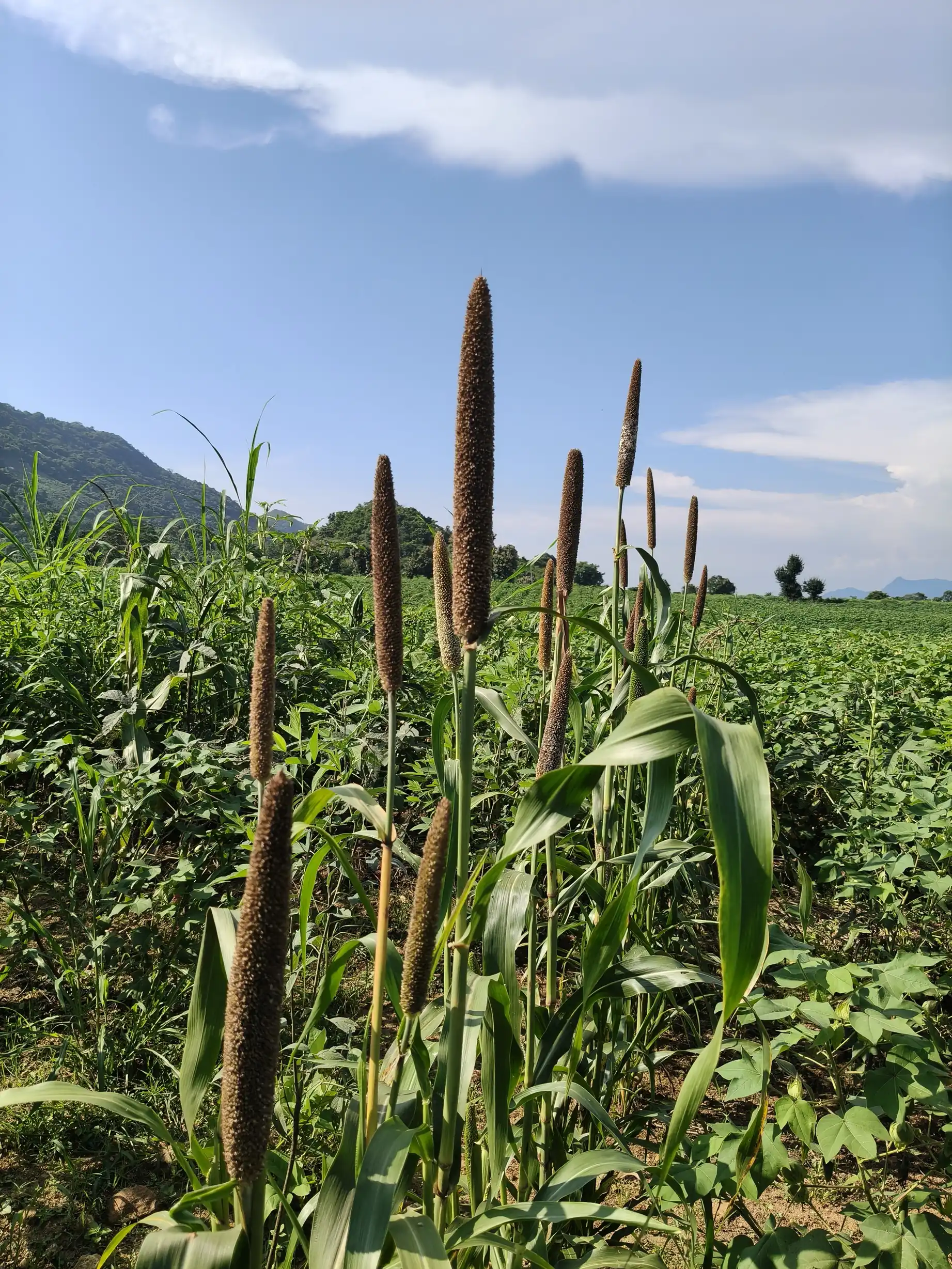
This is a far cry from the past, when the entire family’s well-being was tied to one crop. “Previously, cotton was everything to us. It was like white gold. If the cotton did well, we earned, but if it failed, we were staring in the face of a financial crisis.”
The amounts may be modest in comparison to earnings from cotton farming, but the impact they have the lives of women is substantial.
Crop diversification is changing who stands to benefit from the field, too. Women have traditionally undertaken much of the farm labour, while men have enjoyed privileges such as taking decisions about seeds, purchasing inputs, and finally, the sale of the harvested cotton. Today, women are gaining greater control over the earnings in their families. Roja, for instance, has become a familiar, successful presence at the local weekly market. In the 2025 kharif season, she earned about Rs. 16,000 from her sale of vegetables, and another Rs 4,500 from pulses. “I used to depend on my husband for money, but now, I have my own income. I can spend it on household expenses and other needs without having to ask anyone,” she says. The amounts may be modest in comparison to earnings from cotton farming, but the impact they have the lives of women is substantial.
Also read: Tomato truths: Seed saving is serious business
An altered relationship with chemicals
The shift from chemical-based monocropping to diversified intercropping is transforming how some farmers perceive and experience their labour. “After working in the cotton field, my skin would itch and burn,” Kadraka Samvayya says. A 58-year-old resident of Palavalasa village, he now opts for natural solutions and feels more assured about his health and safety.
His experience is echoed among other cotton growers. In a 2005 study of cotton-farming households in three Indian villages, 83.6% of the 323 pesticide exposures recorded were followed by symptoms of poisoning, from mild to severe. The women who mixed the chemicals and refilled spray tanks were as much at risk as those spraying.
In present times, farmers like Samvayya are using leaf-based pest repellents such as Neemastra, which is made by fermenting neem leaves with cow urine, cow dung and water. Such tonics and pastes are prepared locally rather than being purchased from dealers. Similarly, Kashayam--a low-cost herbal input used in natural farming--is made by mixing leaves from 10 plant varieties, including neem, custard apple, castor, papaya, and mango, with cow urine, cow dung, turmeric, ginger and garlic paste.
.jpg)
Farmer Biddika Somayya, a resident of Kariguda, attests to seeing fewer pests on his farm. “Earlier, we saw many bollworms, especially pink bollworms, but their numbers reduced drastically after we adopted organic techniques and used Neemastra and Kashayam. We have also observed that intercropping helps reduce pest infestations in cotton,” the 42-year-old says.
These changes do not imply that cotton has disappeared from the local farming system. Instead, its role is being altered.
What happens beyond the field?
Whether this approach can gain wider acceptance depends on more factors than individual farmers’ interest and initiative. “Access to suitable non-Genetically Modified (GM) cotton seeds remains a major challenge,” says Uday Kumar Nagubandi, Programme Manager for Sustainable Seed Systems at the Centre for Sustainable Agriculture, Hyderabad. Bt cotton seed, he explains, is only a phone call away: local dealers deliver it to the farmer's door, often along with fertilisers and pesticides. No such form of access exists for non-GM seeds.
Obtaining organic certification can also be difficult for small farmers when the costs have to be borne individually.
More than 96% of India's cotton area is under Bt cotton, the Union Agriculture Ministry told Parliament in 2024. Farmers who want to move away from it must turn to traditional, locally-adapted varieties. These are often better suited to local soils and rainfall, but with the market being taken over by Bt cotton, they are hard to find in the quantities farmers need. Markets pose another challenge: organic production does not automatically fetch a higher price, particularly when farmers sell several different crops in small quantities. “Farmers need buyers who recognise the value of their produce,” Nagubandi says. Obtaining organic certification can also be difficult for small farmers when the costs have to be borne individually.
For farmers like Arika Ramesh, the challenge now is to keep crop diversification viable through the seasons, amid pressure to return to a single crop that has a pre-established market. Cotton still anchors the farm economy, but its success is increasingly tied to what grows around it and what the soil it is growing in can support. For now, Ramesh remains undeterred. On his field, cotton and food compete less for space, instead growing in a unified farming system.
The aforementioned project on diversified cotton intercropping was undertaken by the Watershed Support Services and Activities Network (WASSAN), in collaboration with HDFC Parivartan. The author is a consultant with WASSAN.
Also read: This women-run milk co-operative transformed a Kumaon village
Edited by Anushka Mukherjee and Neerja Deodhar


Explore other topics
References