This women-run milk cooperative transformed a Kumaon village
By unravelling superstition and building support systems, the Kamdhenu Swayatta Sahkarita has helped women achieve financial independence


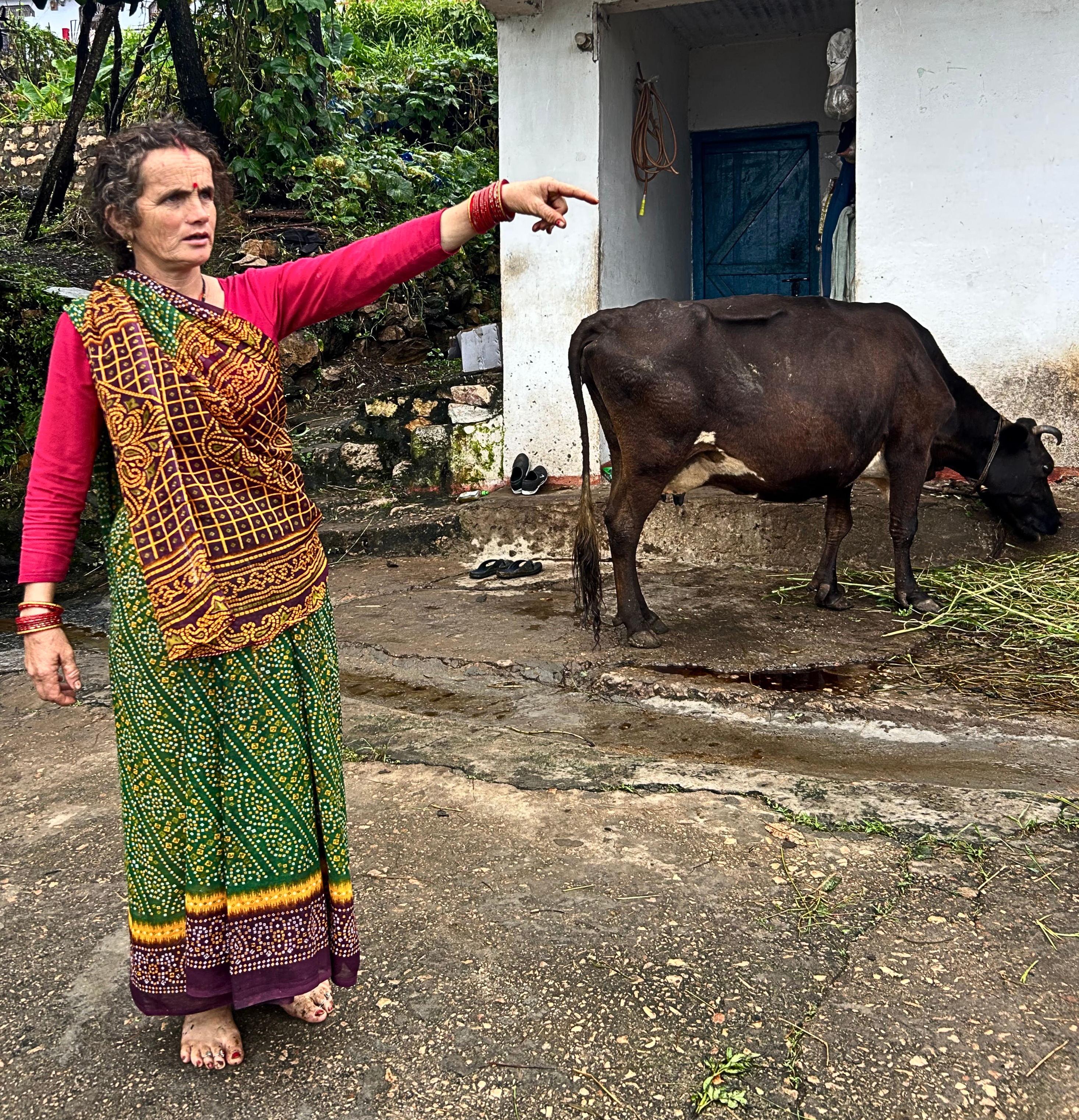
The pallu of her sari would shield the milk pail she carried as she made her way to the collection centre. On some days, Manju Bhatt would even put a string of chillies or a piece of coal on the pail’s lid—superstitions many in India still follow, to ward off the evil eye. In Manju’s case, all of these protective measures were meant for her cattle. She laughs sheepishly at this memory as she recalls tiptoeing out of her house with the milk, for fear of her even more conservative mother-in-law.
The house, located in the Futsil village, overlooks the Panchachuli and Nanda Devi peaks and the surrounding pine-covered ridges in Uttarakhand. Spread across just over 2 sq. km, Futsil is a sleepy hill village in Gangolihat—a ridge-top town at an elevation of around 1700 m above sea level, known for its cluster of temples and shrines.
People in many villages in this region were reluctant to sell milk for the longest time. Cattle were reared in nearly every home, and it was acceptable to even sell by-products such as ghee, but milk was only for consumption within the household. “Never to sell,” recalls Manju, now in her late 40s, grinning at how naive that rule seems to her in retrospect. Like much of India, belief here shaped everyday practices: the hesitation to sell milk in this corner of Kumaon is rooted in people’s faith in folk deities like Churmal and Kalsin devta, who are traditionally associated with the protection of livestock. The villagers consider themselves the deities’ descendants.
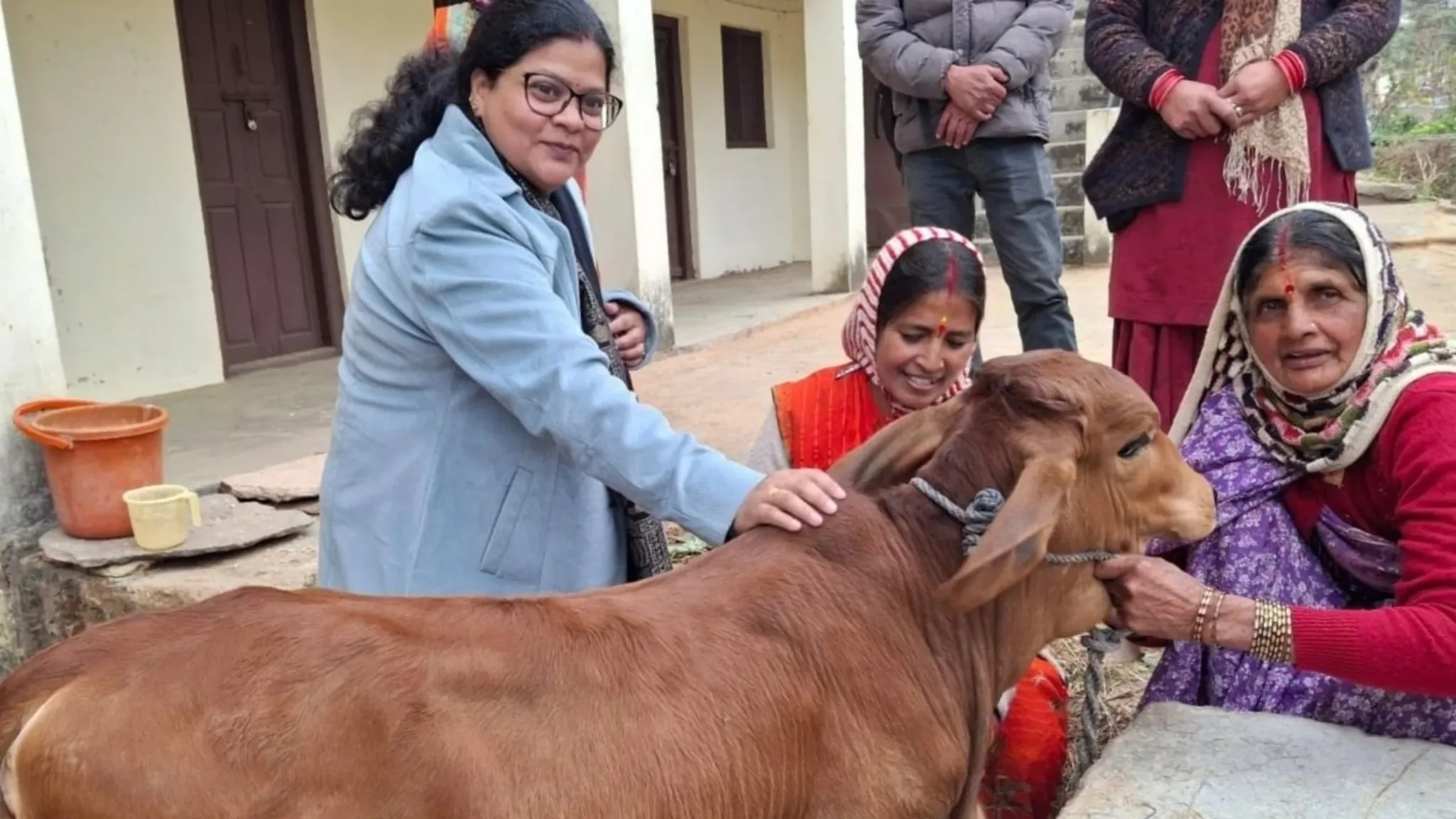
Manju’s fear, and the cautious defiance it took to overcome it, traces back to a time in the late aughts when a milk cooperative, the Kamdhenu Swayatta Sahkarita (Kamdhenu Cooperative Society), was established in Futsil. It is run entirely by women, with the assistance of Himalayan Gram Vikas Samiti (HGVS), a non-governmental organisation.
The financial security it has brought to the women’s homes was not previously considered possible through livelihoods like farming.
After its establishment in December 2009, the cooperative has scaled up despite—and across—uneven, hilly terrain. It embraced Kothera, another village in the vicinity, and over the years spread to four more villages in Munsiyari, which falls within the same district of Pithoragarh. A total of 422 families are engaged in the cooperative, which has had a turnover of Rs. 42–45 lakhs over the last three years annually from two villages, says Rajendra Singh Bisht, the founder of HGVS.
The financial security it has brought to the women’s homes was not previously considered possible through livelihoods like farming, owing to precarity induced by climate change. Neither Manju nor her husband, a life-long farmer, imagined the life they live now, with savings that run into lakhs. “For villagers, realising that money can be earned through work beyond farming, that a different life is possible, is a marker of growth,” says Sunil Bhat, the former Gram Pradhan of Futsil. All 130 families of the village are now active suppliers of milk, he adds.
Braving the long road
In Manju, money from the milk sales has instilled confidence to make decisions that weren’t historically and socially hers to make, as a woman. “Pehle toh hum bolna bhi nahi jaante the,” she says in reflection. [We didn’t even know how to talk to people.] Now, she deals directly with buyers, dealers, and bankers. She goes to the bank to deposit and withdraw money, and to update her passbook. Every once in a while, all the women associated with the cooperative plan outstation trips, some for workshops, others just for leisure. “I have been to so many places, from Bageshwar to Nainital,” she tells me, elated.
Also read: This Bengaluru neighbourhood drowned in waste, until women took charge | Good Food Movement
After over a decade of earning and saving money with the help of the cooperative, Manju has been able to send her three children—two of them girls—to study at nearby urban centres.
In Manju, money from the milk sales has instilled confidence to make decisions that weren’t historically and socially hers to make, as a woman.
Enabling this empowerment has been a long and daunting journey, says Jagat Singh Dashoni, a program manager who has worked with HGVS for over two decades now. We speak while walking through the hilly terrain, crossing a stream from the HGVS centre towards the village settlement in Futsil. “All this that you see—a clean, walkable path—wasn’t there,” Jagat says, pointing to the pucca road built with cut stones and asphalt. “It wasn’t just the terrain that was the problem; there was no basic infrastructure for proper sanitation in most of these villages either, so these paths were littered with excreta and thick with the smell of urine.”
HGVS took shape in the 1990s, in the years following the Chipko movement—independent India’s celebrated forest conservation agitation, whose spirit touched every nook of Kumaon. Rajendra Singh Bisht was a toddler during Chipko’s peak in the mid-70s; as a teenager in the same hills, and then part of Uttar Pradesh, mobilisation came naturally to him.
“We were restless,” says Rajendra, recalling the push for a separate hill state (which took shape as Uttaranchal in 2000, later renamed Uttarakhand in 2007) and the smaller struggles over land, forests, livelihoods, and infrastructure like public transport. But the epiphany came early: “Agar hum andolani mein reh jaayenge toh logon ka dukh-dard kaise dur karenge?” [How are we to alleviate the hardships of the people if we remain mired only in agitation?]
As this realisation dawned upon him and other like-minded Uttarakhandis, on February 4, 1990, 3000 km away, Ernakulam in Kerala was declared India’s first fully literate district—the outcome of a mass, door-to-door campaign that mobilised thousands of volunteers to teach reading and writing. Officials from the campaign, looking to replicate it countrywide, contacted Bisht and his peers in Gangolihat as they made for a good fit. A 45-day programme ran in October and November of the same year, but the Kerala team withdrew soon after because of a lack of any new projects.
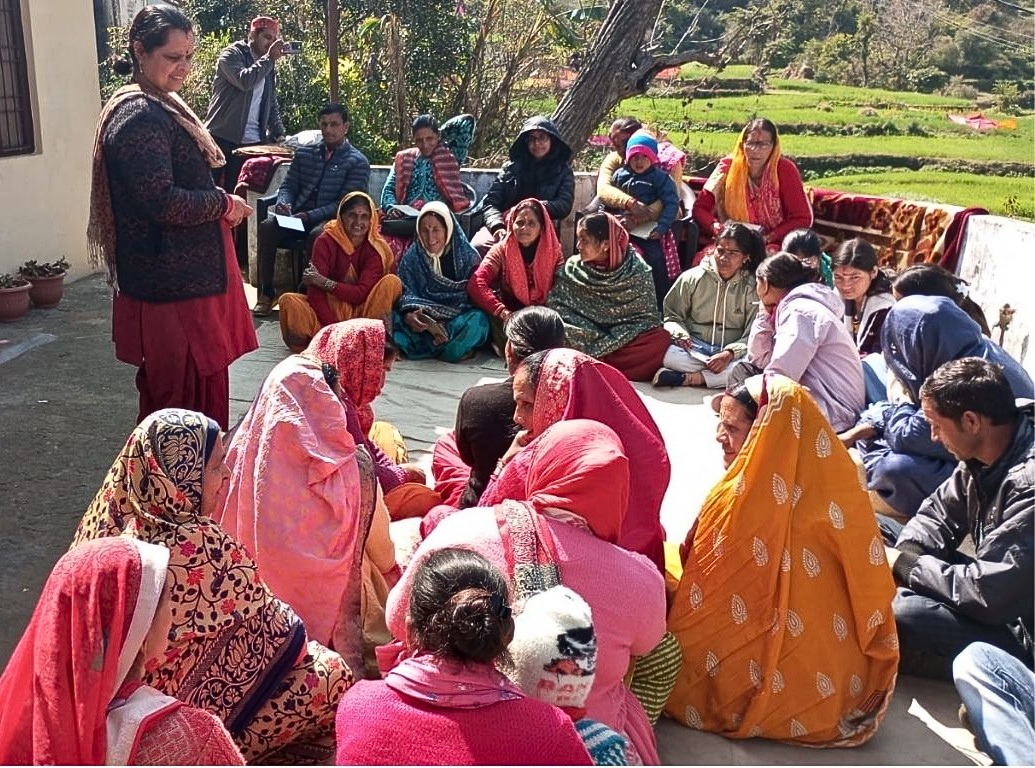
Bisht and his peers soldiered on, developing a 56-day literacy module later replicated across dozens of villages around Pithoragarh. “We started with the basics, like teaching people, including all the women, to write their names, as well as the plants and crops that they grow.”
Before milk, came water
Literacy was the foundation upon which agricultural innovation was built.
“In the 2000s, while we took up projects on crop diversification and water management, one thing that nagged at us constantly was the condition of women in these villages. They started their day at 4 am, worked till late into the night and had no autonomy at all,” Jagat recalls.
One of the women’s most time-consuming chores was fetching drinking water. It would eat up five to six hours of their days. “Once we were able to instate piped drinking water to the villages, the women showed an interest in doing something more, something that would be financially viable,” he adds.
One of the women’s most time-consuming chores was fetching drinking water. It would eat up five to six hours of their days.
HGVS tried setting up sewing machine centres but was unable to draw in enough women regularly. They also tried spice-processing units and horticulture-led collectives, which worked for a while, and then flattened. Some of these efforts have continued as individual efforts, just not under the cooperative model. It was around the same time that they read reports of remote and rural areas in other states prospering through milk cooperatives—a worthy idea to explore in Futsil.
On the women’s own terms
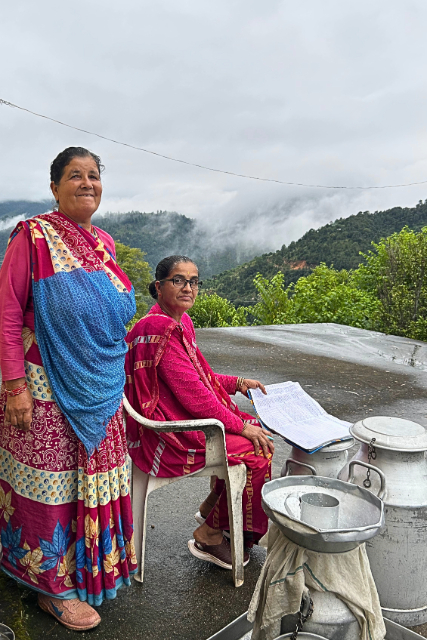
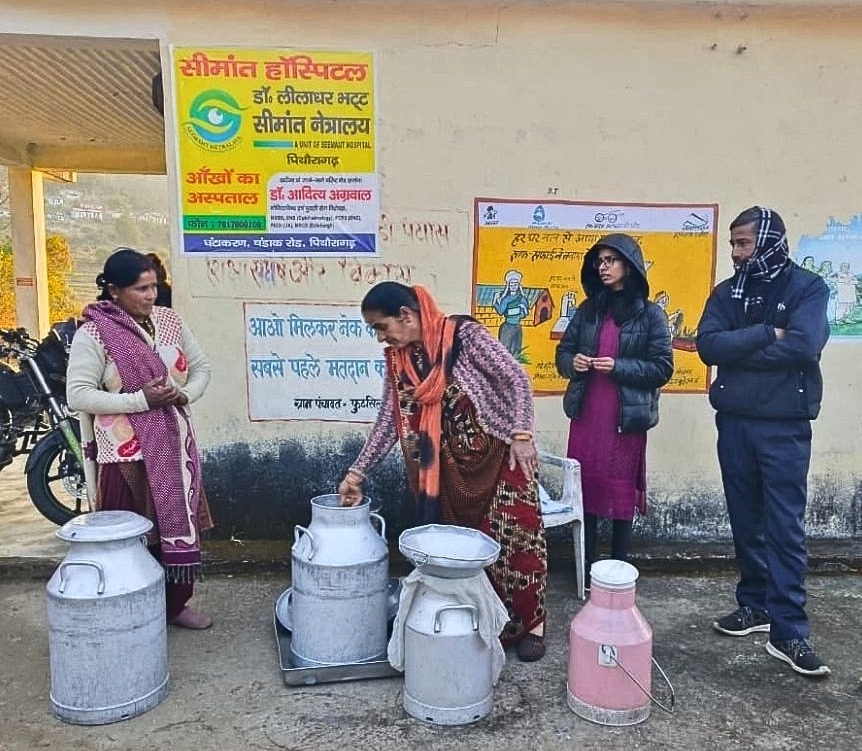
A few metres down the hill from the main village periphery, Pushpa Dhariyal oversees milk collection at a common area—the daily average being 150 litres. “The idea wasn’t an easy sell in the early days,” the 50-year-old tells me. Pushpa and Bhagirathi Bhatt, who is also 50, are among the collective’s earliest members and have watched it grow from nothing. “In the first few months, we would go door to door, and most villagers would turn us down. When they saw us handing over cash to the women who gave us milk every month, it worked. When others saw them receive this income, they felt inclined to join, too,” says Pushpa.
Slowly, she iterates, the old beliefs began to matter less, and change took root: bank accounts were opened for the women, and self-help groups (SHGs) emerged. “Ab toh humne croron ka vyavasay kar liya hai,” Pushpa says with a laugh, “Kahaan socha tha aisa kabhi hoga?” [We’ve now done business worth crores. Who would have thought this would ever happen?]
Also read: In this Konkan coast town, women rock the boat with their mangrove safaris | Good Food Movement
The idea behind the SHGs was to create a support system for the women and build a sense of solidarity. To ensure even the most marginalised felt included, they started collecting a monthly sum—Rs. 10 at first, which has now become Rs. 100. Across Futsil and Kothera, there are seven SHGs with 16–20 members each. They interloan money to buy new cattle, improve cattle sheds, invest in livestock health, and support personal goals, like children’s education or home renovation.
“The cooperative has expanded the scope of our lives. We know how to measure milk quality, handle transport, and convert milk into paneer, ghee and khoya. We were completely home and farm-bound earlier, but now, we move around and meet new people,” says Bhagirathi, as she talks about a shop the women have opened in Gangolihat’s main market (about 7 km away, along a winding hill path from Futsil), where they sell the collected milk and milk products. “That, too, is entirely run by us women.”
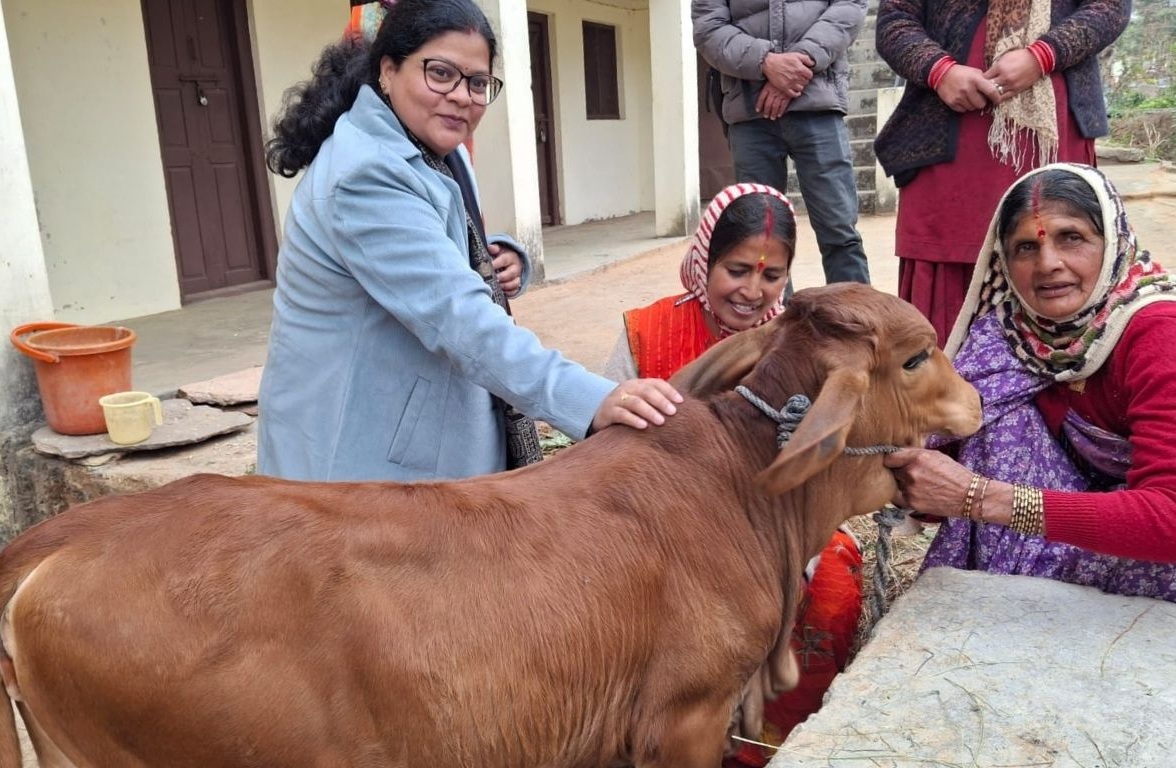
The women have, for the most part, built and sustained the cooperative on their own terms; in fact, since 2012, the cooperative has been run without any external backing. The support of the Uttarakhand Co-operative Dairy Federation Ltd. (UCDF), set up in 2001 soon after the state’s formation, has been limited to occasional workshops and training programs. A modest amount came from the Tata Trusts, and some of the early work was carried out under the still-new Mahatma Gandhi National Rural Employment Guarantee Act (MGNREGA). At the time, the national employment scheme supported drought-proofing and land development; a 2012 revision to the scheme added provisions for animal husbandry.
The seen and the unseen
The ripples that the cooperative has created go beyond income. It may seem that the resultant prosperity could complicate, even amplify, Uttarakhand’s out-migration problem, with more youth like Manju’s children leaving to pursue other careers. But HGVS’ Rajendra argues that the opposite is true; people who once left the state for seasonal work, which paid as little as Rs. 5,000–10,000 monthly, have found more merit in the cooperative, and now stay back to contribute to its growth. “It can arrest out-migration if the work expands further, with better state support—which isn’t present at the moment,” he adds.
Perhaps the democratic nature of the cooperative will cause a shift in the region’s casteist tendencies.
The resilience that the cooperative has built against crop failure and climate shocks has carried over into the village’s social fabric. Many recognise the importance of an alternative income, as weather events wreak havoc on crops and even fodder. The once-magnificent oaks that provided fodder for cattle have, over years of cutting and replacement with pine, been reduced to stumps.
Former Gram Pradhan Sunil Bhat notes the village has moved past most of its old superstitions, though when it comes to caste, change is more slow-moving. Futsil remains a village of mostly upper-caste, Brahmin families; only 30–40 families belong to scheduled castes. “People are apprehensive of buying their milk for religious rituals,” he remarks. On festive days or religiously significant ones, the milk collector is asked to keep a separate container aside to hold milk from upper-caste households.
Perhaps the democratic nature of the cooperative will cause a shift in the region’s casteist tendencies. Phulanti Devi, a Dalit woman from Futsil, has held the president’s position for the last three years. It was not too long ago that she was treated as lesser because of her caste; when attending meetings, she would sit at the back, in a corner. “Now, the women want her to become a member of the Block Development Council as well, which will help her contest the election for Pramukh [president of the Block Panchayat],” Rajendra explains. “I believe that among the women, there’s no discrimination left. Maybe the men still need time. But change is afoot, and we are all hopeful.”
Also read: Bibijan Halemani dared to dream—of millets, and a better world for women
Slider Image Credit: Himalayan Gram Vikas Samiti
{{quiz}}
.avif)

.avif)
Explore other topics
References