This Bengaluru neighbourhood drowned in waste, until women took charge
Women of Wisdom’s success is attributed to its engagement with the municipality, and the attention it brought to waste collectors’ welfare


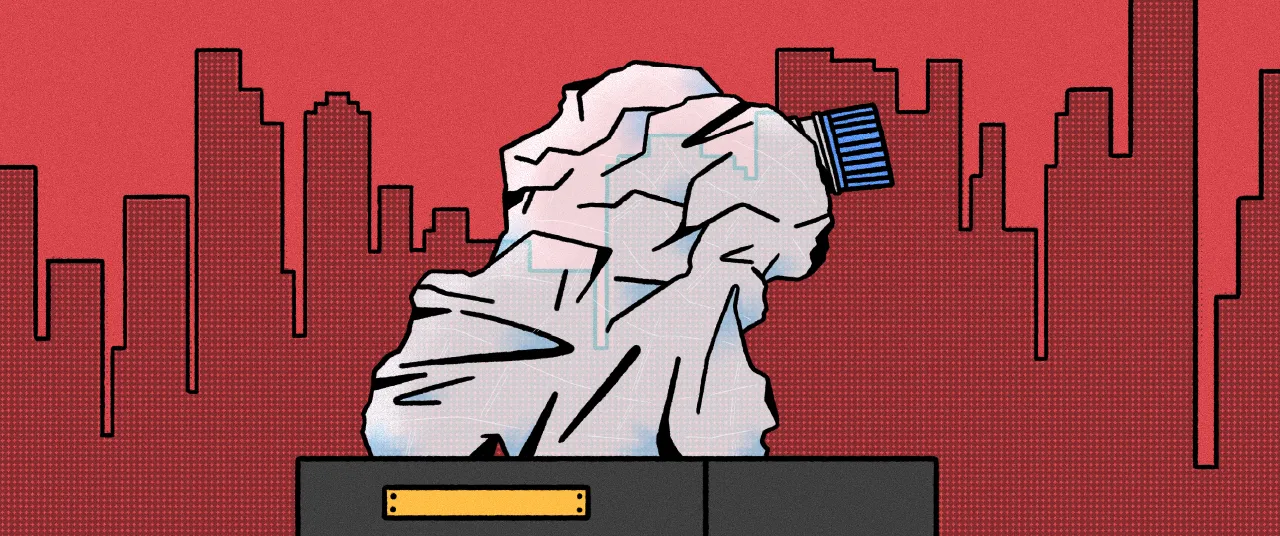
Snipping off the corner of a new milk packet and tossing it into a dustbin may seem like a harmless, everyday act. So does throwing away plastic takeaway containers with leftover food still inside them, or bundling together vegetable peels, plastic wrappers and sanitary waste into a single garbage bag. The seemingly harmless, no-consequence nature of these actions is not an isolated thing; once the assorted mix of waste leaves our doorsteps and disappears into garbage collection vehicles, it is easy to assume that it has become somebody else's responsibility.
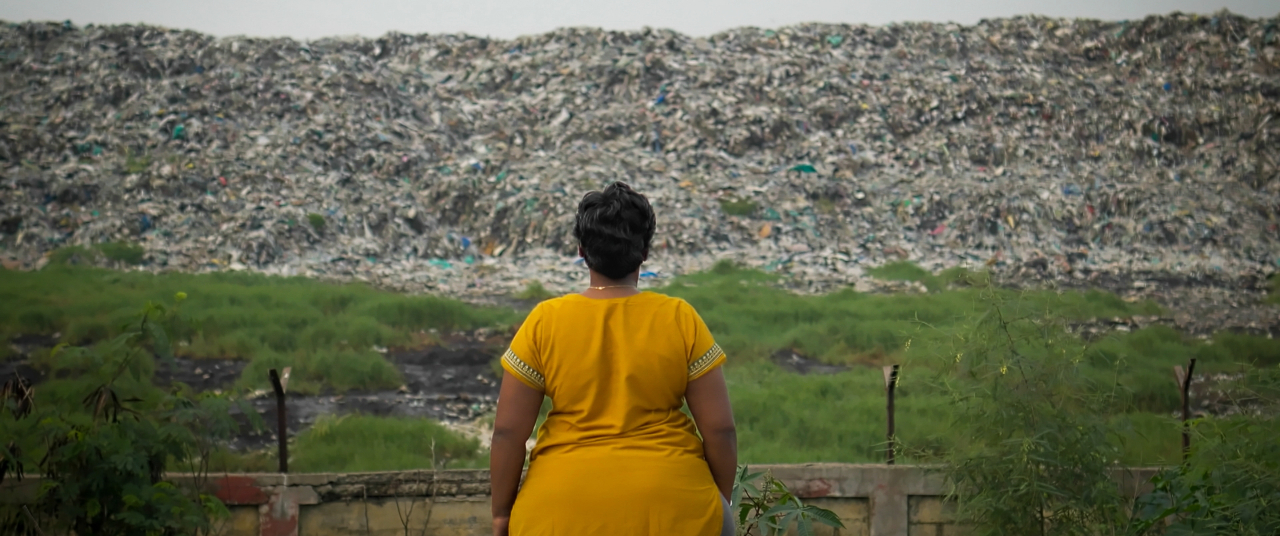
For years, this was the mindset at 17th B Lane, in Bengaluru's JP Nagar 2nd Phase. As in any urban Indian neighbourhood, the street's waste problem was not created overnight: residents (living in independent homes) who missed the call of municipal waste collection trucks in the early mornings began dumping their household trash on the side of the road. It accumulated gradually, through dozens of everyday decisions made inside the 70 homes that line the lane. Over time, these roadside ‘dumpyards’ became an excuse to not hand over garbage to waste collectors. By 2018, the consequences had grown into a mound that was impossible to ignore.
The average resident generates about 300 gm daily, amounting to roughly 1.2 kg for a family of four.
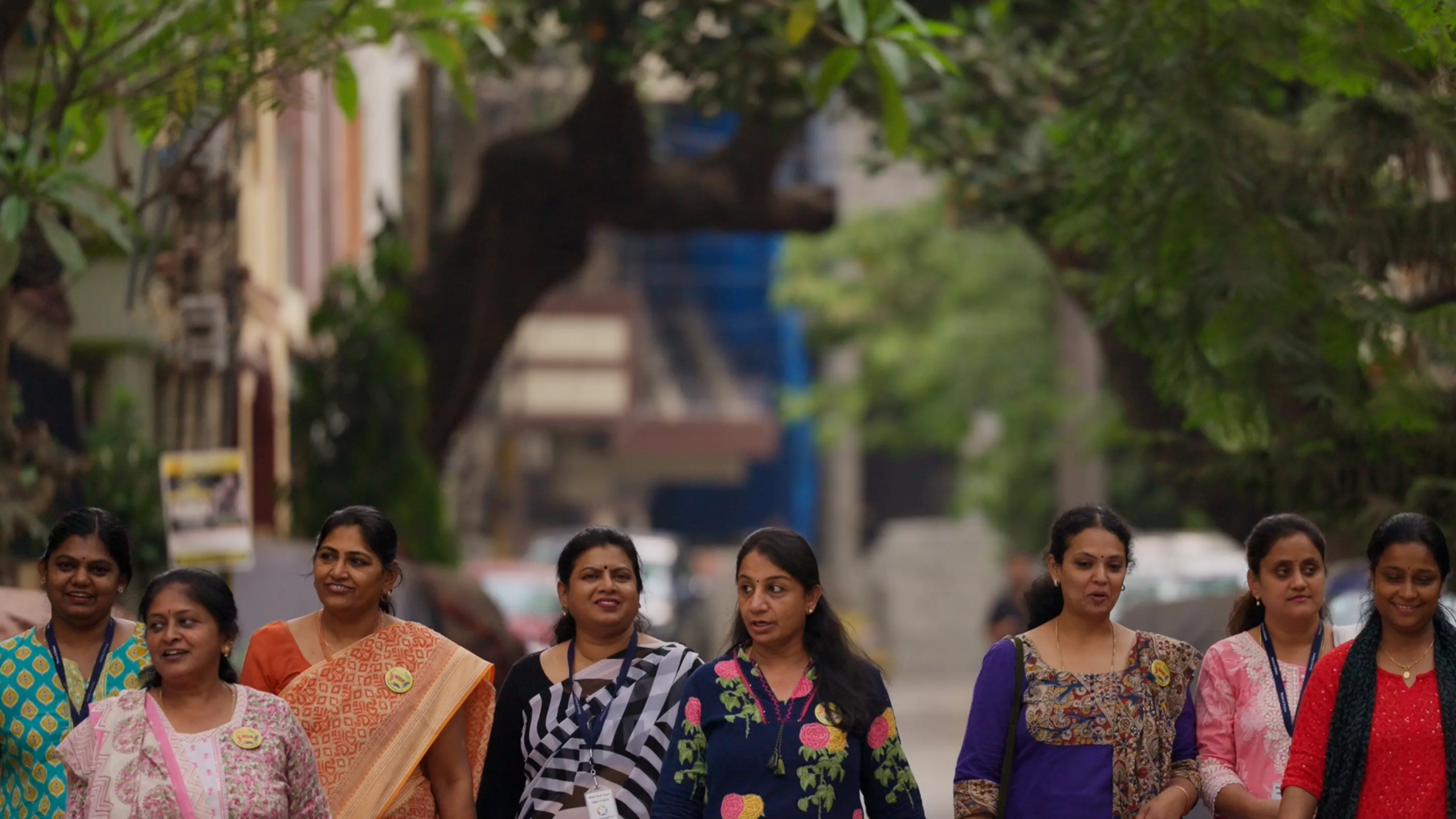
While most residents in the locality looked to the Bruhat Bengaluru Mahanagara Palike (BBMP), the city’s municipal governing body, for a solution, a small group of homemakers took it as a chance to introspect: if the waste was being generated in their homes, they reasoned, shouldn't the solution begin there too? To this end, they formed a group named ‘Women of Wisdom (WoW)’ in 2018.
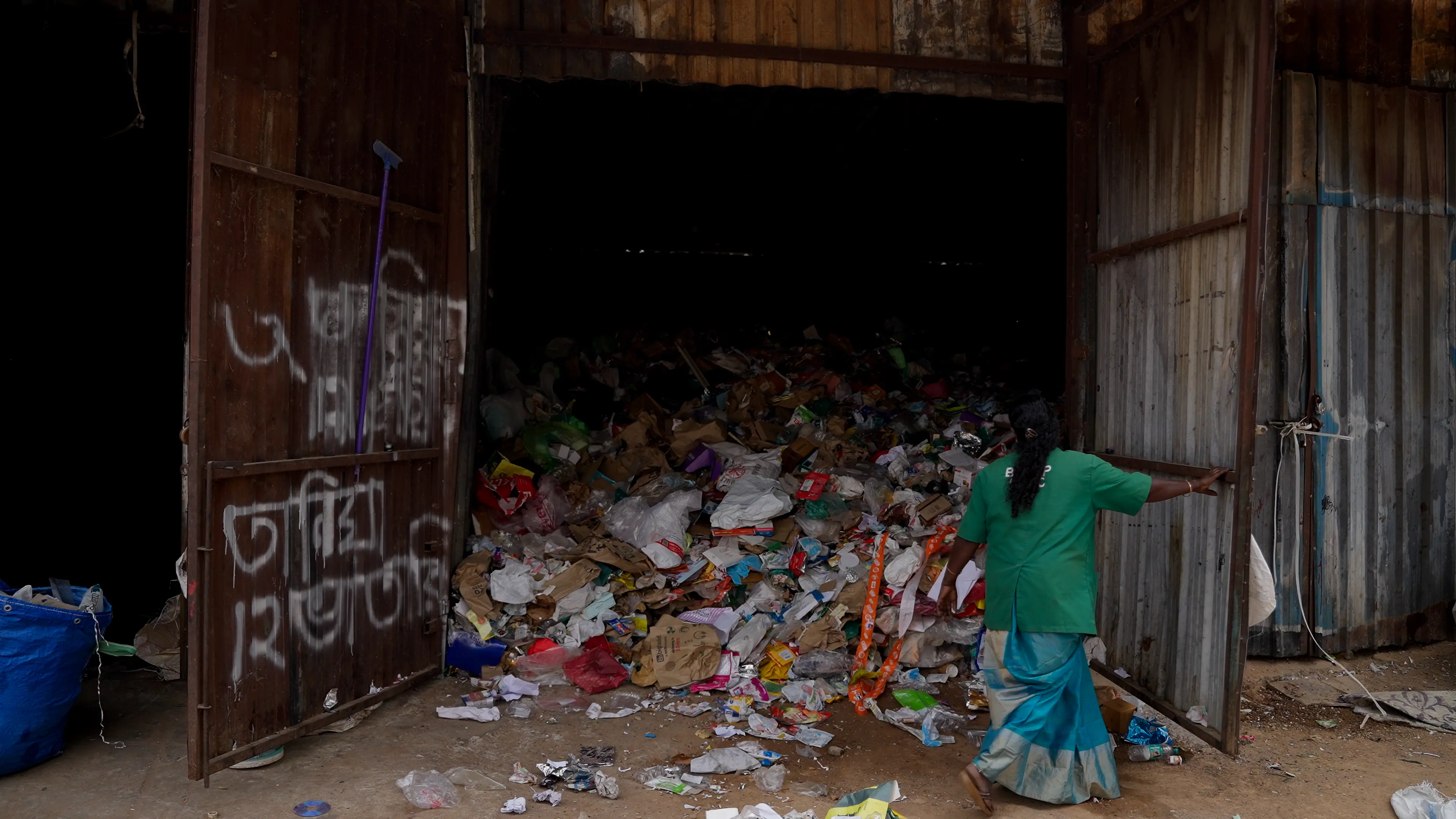
Yet, the challenge they were taking on was not a simple one. In 2018, Bengaluru generated around 4,500 metric tonnes of waste every day. This figure has increased to around 5,500 metric tonnes in 2026, of which nearly 58.5 % comes from households. The average resident generates about 300 gm daily, amounting to roughly 1.2 kg for a family of four. Around 60% of this is biodegradable wet waste, 25% is dry waste such as plastics and recyclables, and the remaining 15% comprises inert materials, including silt and stones.
"We did not aim for a lot initially. We just wanted to take care of the 1.2 kg of waste we generated in our own homes," says Shwetha Urs, President of WoW.
Looking back, it sounds like a modest goal. But this focused objective foretold what WoW was to accomplish in the months to come.
Women take charge
When eight women of the 17th B Lane started meeting frequently, others assumed it was nothing more than a huddle for gossip. The women laugh about this assumption in retrospect. "Like many streets in Bengaluru, ours is home to families from different parts of the country. Despite our cultural differences, we all grew up knowing our neighbours. We wanted to bring back that sense of connection and use it to address civic issues affecting our street," says Shwetha.
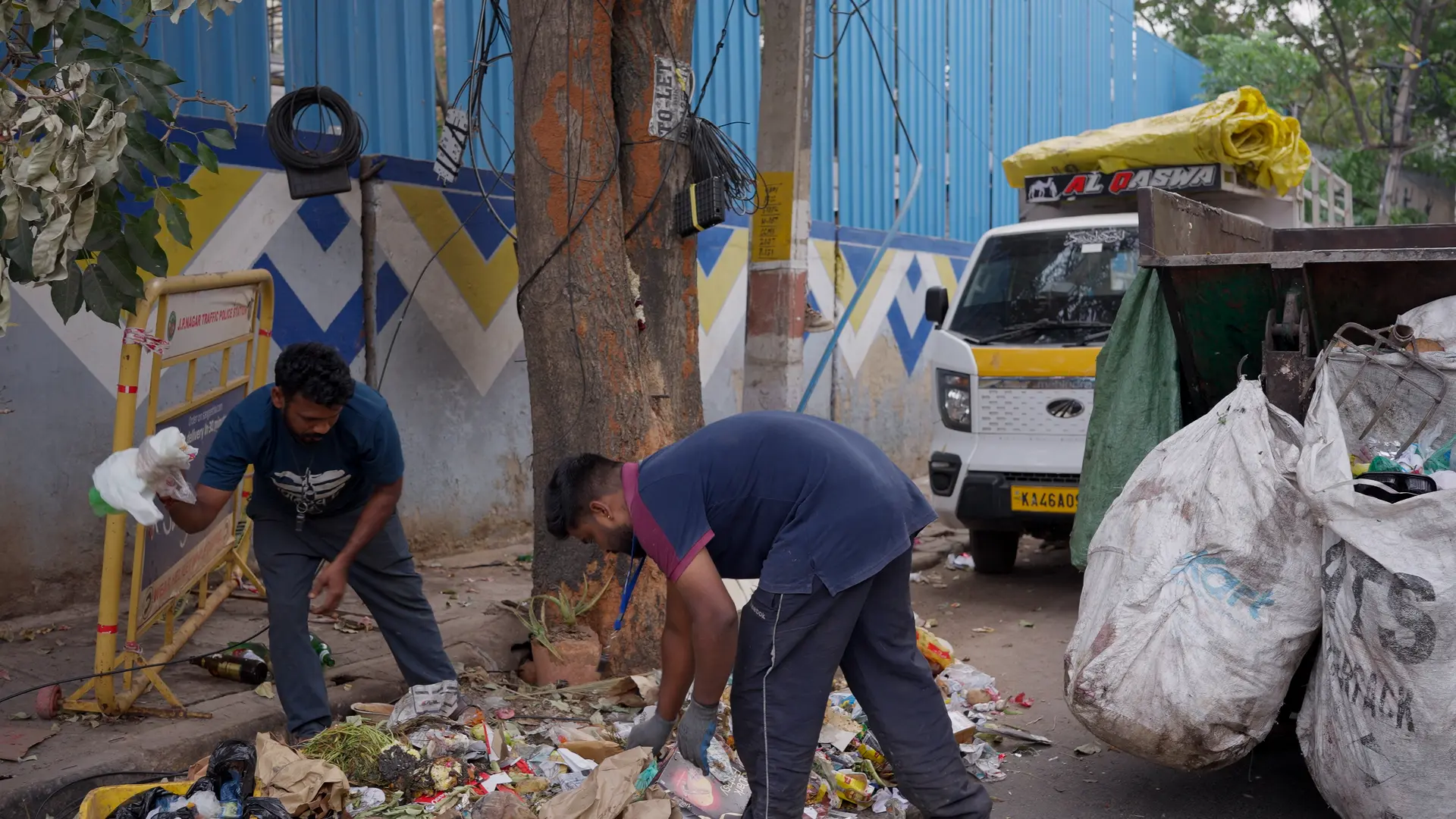
The most pressing of these issues was one that the residents encountered every single day: used sanitary pads and diapers were frequently discarded in public spaces. Garbage left out in the open attracted stray dogs, leading to safety concerns, particularly for children and elderly residents. For Shwetha and her team, this accumulation of waste became the starting point to addressing other problems—of public space, civic responsibility and community participation.
Before proposing solutions, however, they wanted to understand the problem better. To begin with, Shwetha and a few others spent two days auditing waste at the ward's dry waste collection centre in 2018. The experience was eye-opening. "After trying to segregate mixed waste, in an effort to understand the different categories, we fell sick for two weeks. It made us think about the people who handle waste every day for a living," she recalls. More importantly, it showed them how little most residents knew about what happened to their waste after it left their homes.
Some people mistook us for salespersons and shut their doors on us. Others were irritated by our persistence.
The same year, they launched a campaign with the distribution of pamphlets explaining three-way segregation into wet, dry and reject waste (sanitary waste, sharp objects, construction debris), going door to door to 70 households. Residents were encouraged to put the pamphlets on refrigerator doors or other visible spots in their households so that segregation would become a daily habit rather than an occasional effort.
"Some people mistook us for salespersons and shut their doors on us. Others were irritated by our persistence," Shwetha says. They worked closely with sanitation workers, asking them to identify households that continued to hand over mixed waste. In every such instance, members of the group would visit the home in question and explain the importance of segregation.
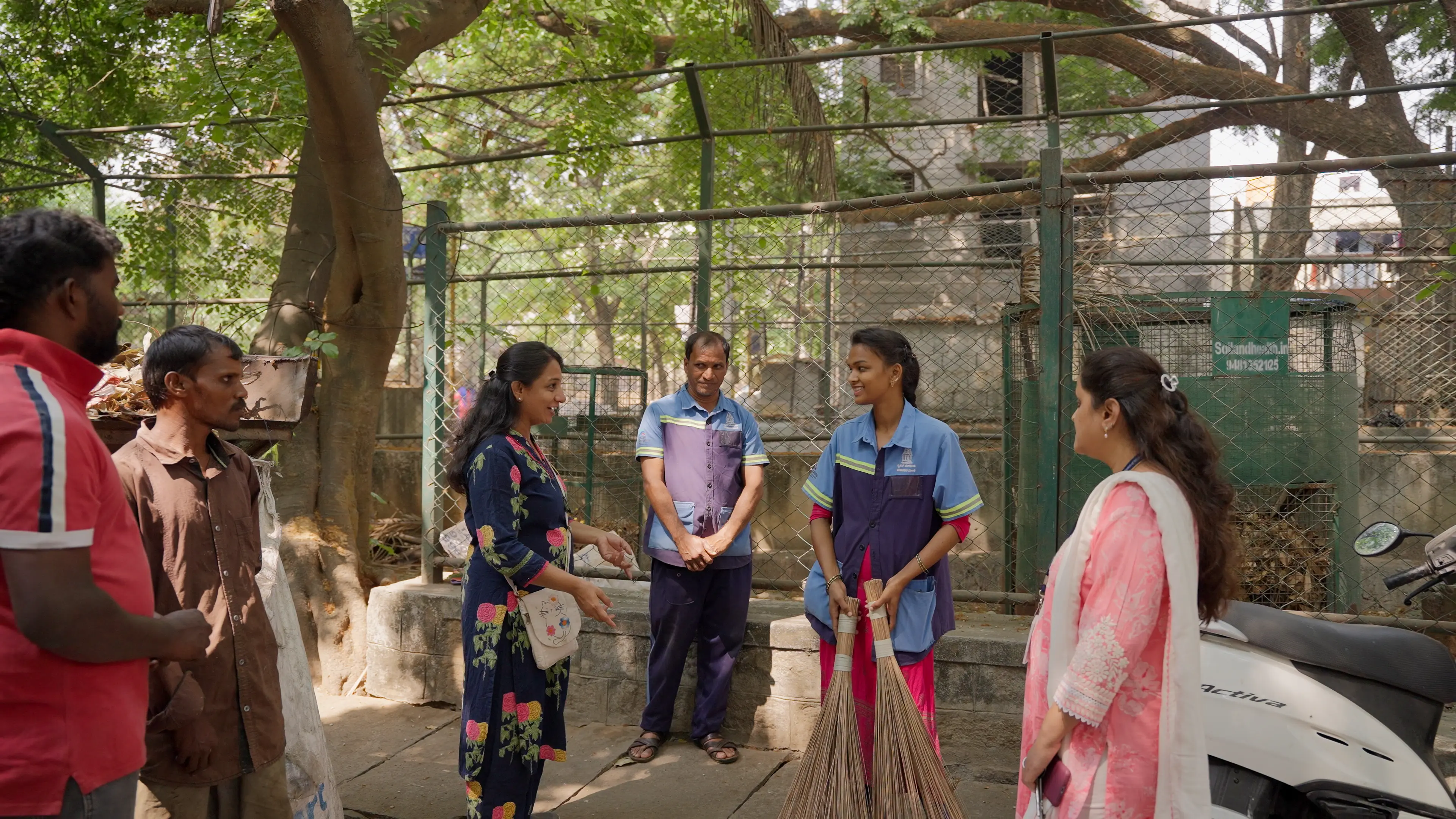
Not everyone appreciated this intervention. "Many people were offended by our involvement," Shwetha says.
Realising that awareness alone would not be enough, the group sought support from the BBMP’s health inspectors. “We requested ward officials to simply enforce preexisting laws and assured them that we would support them on behalf of the community. Until we approached them, we were also unsure if government officials would work alongside the public. But they were very cooperative,” notes Shwetha. Soon, sanitation workers stopped collecting mixed waste from the street altogether.
The residents did not take this well. But the presence of BBMP officials during the collection hours, along with WoW’s team members and sanitation workers, made them comply.
Also read: ‘What river?’: How Mumbai’s neglected Mithi punishes those who live on its banks
A change in attitudes
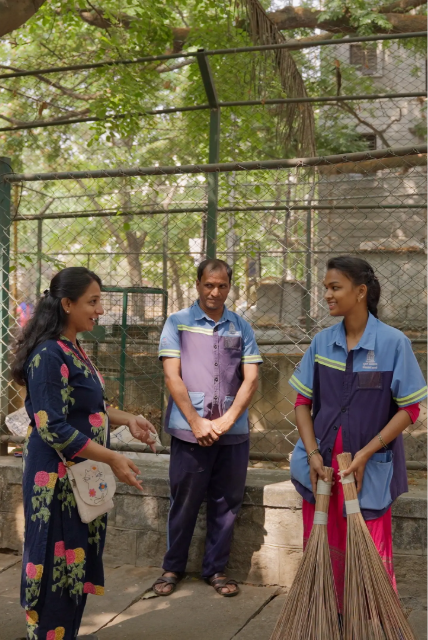
“The residents used to call the waste collectors ‘kasa’, which means waste. It was very inhumane. To bring about a change in their attitudes, we made sure all the residents know the names of the collectors and only call them by their respective names,” Shwetha says.
After WoW’s early street-level interventions, it took nearly six months for segregation to become a regular practice.
Manohar, a waste collector with the BBMP, notes that every morning, when they whistle to call Bengaluru’s residents to take out their garbage, they’re told to segregate it, but hardly anyone listens. “Only a few like the people in this street understand our troubles,” he says.
In 2018, only about 40% of households were following the practice of three-way waste segregation. Today, that figure stands at nearly 90%, according to Shwetha and BBMP officials.
Also read: Trash threatens to swallow Chennai up. This citizens’ initiative won’t allow it
From kitchen waste to compost
Segregation was only the start. As more households started separating waste correctly, the volume of collected wet waste increased substantially. The women soon found themselves facing another question: if they had managed to segregate waste at source, could they also process it within the neighbourhood?
They attended workshops and met with communities across Bengaluru, such as the Solid Waste Management Round Table (SWMRT), SwachaGraha Kalika Kendra, Hasiru Dala, and The Indian Ploggers Army, who were already pioneers in community waste management. “Lucikly, we did not have to go elsewhere to learn; the city has more than enough role models,” says Shwetha.
If they had managed to segregate waste at source, could they also process it within the neighbourhood?
From the learnings imparted by these groups, WoW concluded that lane-level composting was the most practical solution. The BBMP-appointed waste collectors were then trained in the layering techniques required for composting.
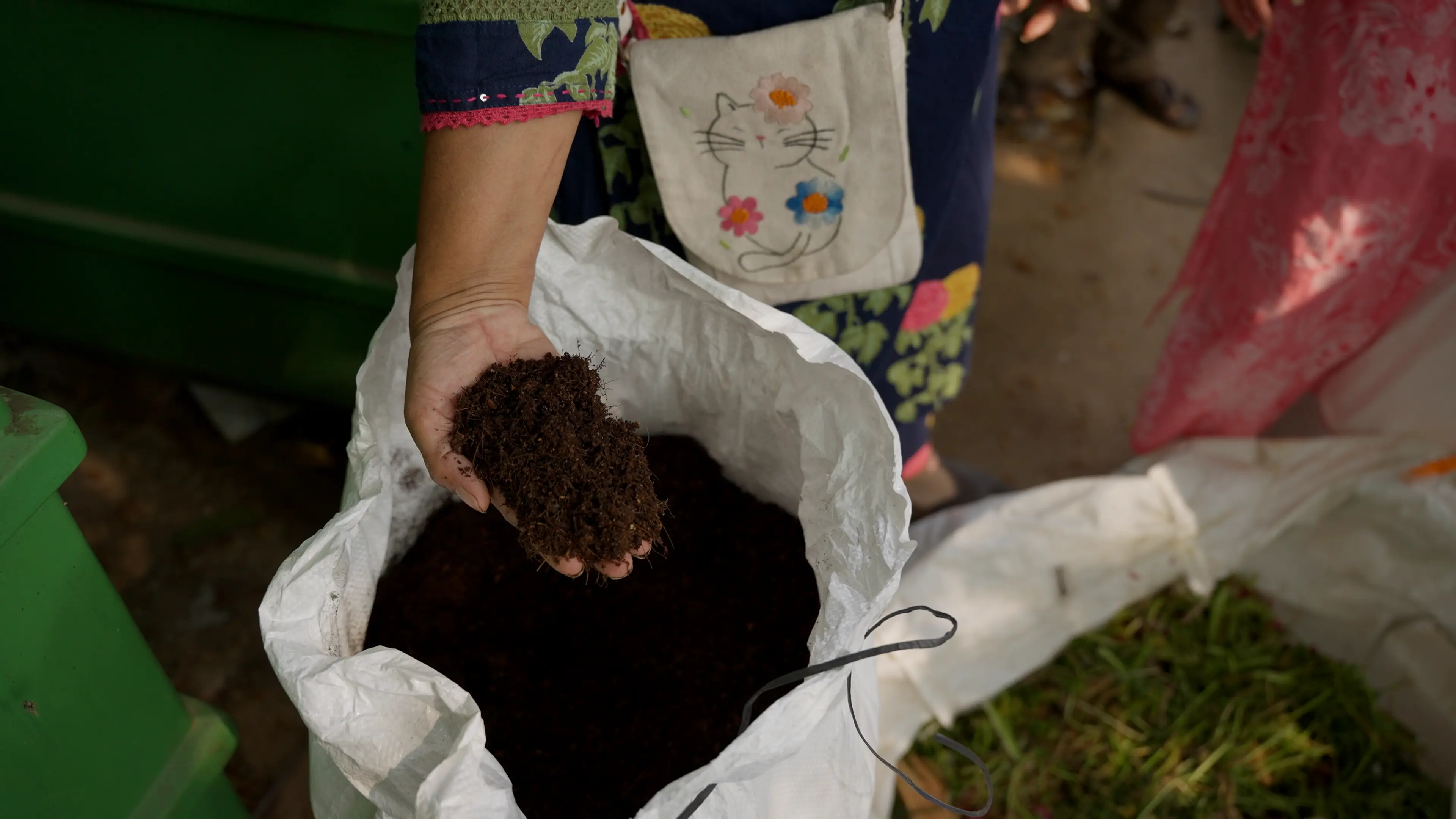
During the summer and festive seasons, the street generates nearly 30 kg of wet waste each day. On a regular day, the figure is closer to 20 kg. With a monthly processing capacity of 750 kg, the composting system produces around 300 kg of manure every month. “Residents use it in terrace gardens, and some of it is sold to farmers on the outskirts of Bengaluru,” says Swathi, a core WoW member.
This composting journey, however, was not without setbacks. "When we tested the compost during the early stages, we found traces of lead, despite careful segregation," notes Swathi.
The women began investigating the source of this contamination. Eventually, they discovered an unexpected culprit: many residents lined kitchen counters with newspapers while chopping vegetables, and then disposed of the paper along with the wet waste. The lead-based ink from the newspapers had found its way into the compost. Once the issue was identified, residents were advised not to throw newspapers along with the wet waste, thus resolving the problem.
Also read: Can composting be the solution to expanding landfills in cities like Bengaluru?
Turning sustainability into community ethos
As the composting initiative matured, the group's focus gradually expanded. They started organising health camps for sanitation workers, conducting repair workshops, and campaigning against single-use plastic in nearby temples and markets. They run a rental cutlery bank, which residents can dip into during family functions, instead of buying plastic alternatives. "To reduce the use of disposable plastic decorations during celebrations, we collect leftover fabric from tailors and turn it into decorative materials," says Malini Nijagal, the Vice-President of WoW.
They also expanded their outlook beyond the lane and started Whatsapp groups for all 17 blocks in ward 177, with volunteers from each street. WoW now has 18 core members.
Perhaps the most visible symbol of the neighbourhood's transformation is a place that once represented the problem itself—a roadside dumping site, next to a dilapidated building. No matter how often it was cleaned, people continued to dump mixed waste there.
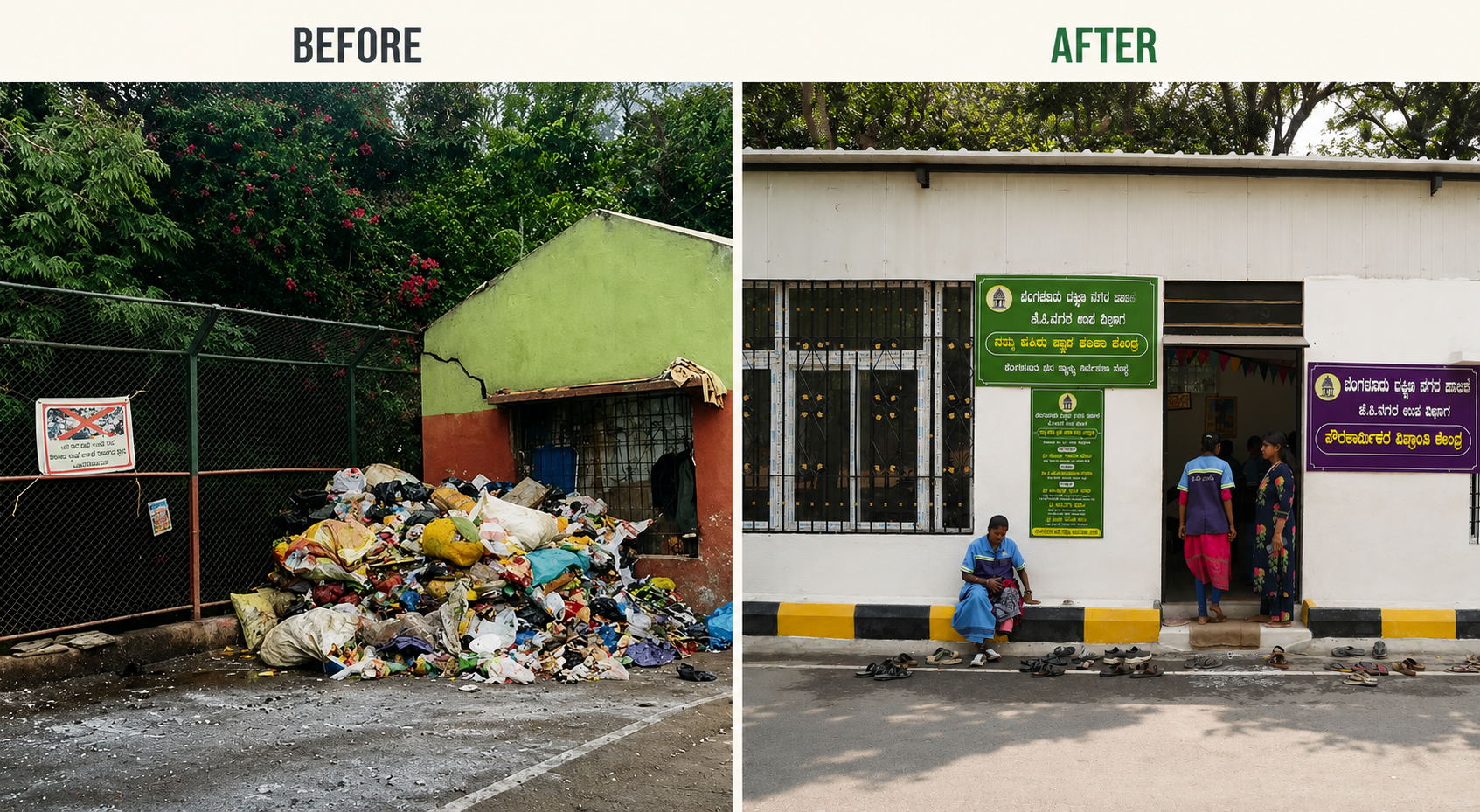
Rather than clearing the site over and over, the women decided to tackle the root cause. Along with the BBMP, they came up with a detailed plan to renovate the building. One part was reimagined as a ‘Vishranthi Kendra’, a centre providing shelter, a changing room, and a toilet for the sanitation workers. The other part became ‘Namma Hasiru Gnana Kalika Kendra’ (Our Green Knowledge Learning Centre), where school children, residents, and institutions can learn about sustainable practices.
The transformation of 17th B Lane began not with a government scheme or a major investment, but with decisions made inside kitchens and homes. Every segregated vegetable peel, every rinsed milk packet and every household that chose responsibility over convenience reshaped not only the street's waste management system, but also its civic culture.
Waste collectors were recognised as skilled workers whose labour made the neighbourhood's change possible.
In the process, residents' interactions with sanitation workers changed, too. Waste collectors were recognised as skilled workers whose labour made the neighbourhood's change possible. By bringing together residents, sanitation workers and BBMP officials into the same conversation, these women replaced a transactional relationship with one built on dignity, trust and shared responsibility.
Edited by Neerja Deodhar and Aathira Konikkara
{{quiz}}


Explore other topics
References