Life with plastic, not all fantastic: The paradox of a transformative material
Long after today's plastic products have been forgotten and discarded, their microscopic remnants may still be circulating in ecosystems and living bodies


Editor's Note: The planet we inherited as children is not the planet we will someday bid goodbye to. The orchestral call of cicadas in the evenings, the coinciding arrival of the monsoon with the start of the school year, and the predictability of natural cycles—things we thought to be unchanging—are now at risk. An altered climate, declining biodiversity and warming oceans aren’t distant realities presented in news headlines; they affect us all in seen and unseen ways. In ‘Converging Currents’, marine conservationist and science communicator Phalguni Ranjan explores how the fine threads connecting people and nature are transforming with a changing planet.
Few materials have transformed human civilisation as profoundly as plastic: lightweight, durable, inexpensive, and endlessly versatile. It's in the thin film coating fruits and vegetables in supermarkets, the bottle holding our water, the keyboard beneath our fingers, the fibres in our clothes, the dashboard of our cars, our spectacle frames, and the medical devices that save lives every day.
It is woven into modern existence so intricately that it has become indispensable. And that is precisely what makes plastic so fascinating, and just as problematic.
Origins
Plastic originated as an alternative to natural materials like ivory, tortoiseshell, and shellac; this new, flexible synthetic polymer was considered remarkably useful, especially as industrialisation increased the demand for durable and affordable substitutes.
The 1860s saw the invention of Parkesine, a hard but flexible semi-synthetic plastic, and then celluloid, which gained commercial success as a substitute for ivory in products like piano keys, combs, and other objects.
Then, in 1907, Belgian-American chemist Leo Baekeland invented Bakelite, the first fully synthetic plastic. Durable, heat-resistant, and electrically insulating, it found widespread industrial and household use, laying the foundation for the modern plastics industry. Incidentally, many pan handles today are still made of Bakelite.
The 1930s saw the development of polymers such as polyvinyl chloride (PVC), polyethylene (PE), polystyrene, and nylon, expanding plastic's applications across textiles, construction, and consumer goods. World War II accelerated plastic production, as synthetic materials replaced scarce natural resources in military equipment, packaging, and communication technologies. After the war, these innovations transitioned into everyday life, with plastics becoming central to mass consumer culture, democratising everyday products like dinnerware, that were once made of ivory and horn and considered luxuries. Synthetics like nylon revolutionised women’s fashion by replacing fragile silk with durable, affordable hosiery.

In 1940, Fortune Magazine described the early years of the plastics industry as "something like the world on the first day of creation"; a limitless frontier where chemists could seemingly invent entirely new materials. Plastics were celebrated for their colours, and their ability to transform ordinary household objects into symbols of modern living. Manufacturers advertised what plastic replaced rather than the material itself, and by becoming ubiquitous, plastics became invisible.
In the following decades, plastic production continued to rise rapidly, accompanied by the growth of disposable packaging and single-use products. It rose from approximately 2 million tonnes in the 1950s to 436 million tonnes in 2023.
At the same time, environmental awareness began to emerge, with early concerns about litter and pollution evolving into broader recognition of plastic's long-term ecological impacts.
Manufacturers advertised what plastic replaced rather than the material itself, and by becoming ubiquitous, plastics became invisible.
By the 2000s, plastics had become indispensable to modern life, even as their persistence in the environment and accumulation in ecosystems raised urgent questions about sustainability and waste management. Environmentalists showed how ‘biodegradable plastics’ didn’t really degrade in real-world conditions. Marine samples collected in 2019 found plastics dating back to the 1960s.
The irony here is impossible to ignore: the very qualities that made plastic revolutionary—durability, affordability, longevity, and versatility—are why it has now become one of humanity's most enduring environmental challenges.
From novelty to dependence
Plastic has become the backbone of the food and beverage industry, as well as agriculture: it now lines irrigation systems, covers crops, preserves freshness and nutrients through supply chains, prevents contamination, extends shelf life, reduces food waste and losses, and enables global supply chains that deliver exotic fruits, seafood, and even relief materials across continents.
Without plastic, modern food distribution systems might not exist on the scale they do today. Agricultural value chains use around 12.5 million tonnes of plastic annually, and food packaging comes up to a whopping 37.3 million tonnes. The food packaging market in 2025 was valued at over $420 billion, projected to touch $599 billion by 2033.
By 2023, the world was already producing over 430 million tonnes of plastic annually, a significant portion of which leaked into the environment. This comes up to roughly 52 kg of plastic produced by every single one of the 8.3 billion people on this planet, annually—which means that each of us generates a kilo of waste every week. Multiply that by the many more years we’ll live, and you get an even more alarming lifetime total.
Also read: Bugging out: Why declining insect populations in India spell doom for agriculture
The problem
Unlike organic waste, plastic does not biodegrade or integrate into the soil. Instead, it fragments under sunlight, oceanic waves, and weather into progressively smaller particles: microplastics (smaller than 5 mm) and nanoplastics (smaller than 1 mm). These particles have now been found virtually everywhere, from deep oceans and Arctic sea ice to mountain snow, agricultural soils, rivers, and the air we breathe.
Without plastic, modern food distribution systems might not exist on the scale they do today.
But plastic is no longer just an environmental issue; it is increasingly becoming a biological one.
Marine organisms, from plankton and fish to turtles and seabirds, all ingest plastic directly or through contaminated prey, carrying it through entire food webs—webs that lead back to humans. Microplastics have now been detected in human blood, lungs, placentas, breast milk, liver, kidneys, and brain tissue. While scientists are still investigating their long-term health effects, studies suggest they may trigger inflammation and can have toxic effects at the cellular and tissue level.
Each year, millions of tonnes of plastic enter marine environments, where turtles mistake bags for jellyfish, and seabirds feed plastic fragments to their chicks. Abandoned fishing gear or ghost nets continue trapping marine life, coral reefs are smothered by debris, and hermit crabs occupy plastic caps instead of shells.
Plastics created decades ago are still around, and while they may have originated on land, many have ended up in the oceans.
Which raises an uncomfortable question: what exactly are we leaving behind?
The scope and limits of solutions
The Food and Agriculture Organization (FAO) recommends a hierarchical 6R framework—Refuse, Redesign, Reduce, Reuse, Recycle and Recover—to move from a linear to a circular economy. The hierarchy prioritises avoiding unnecessary plastics and keeping products in use for as long as possible before recycling them.
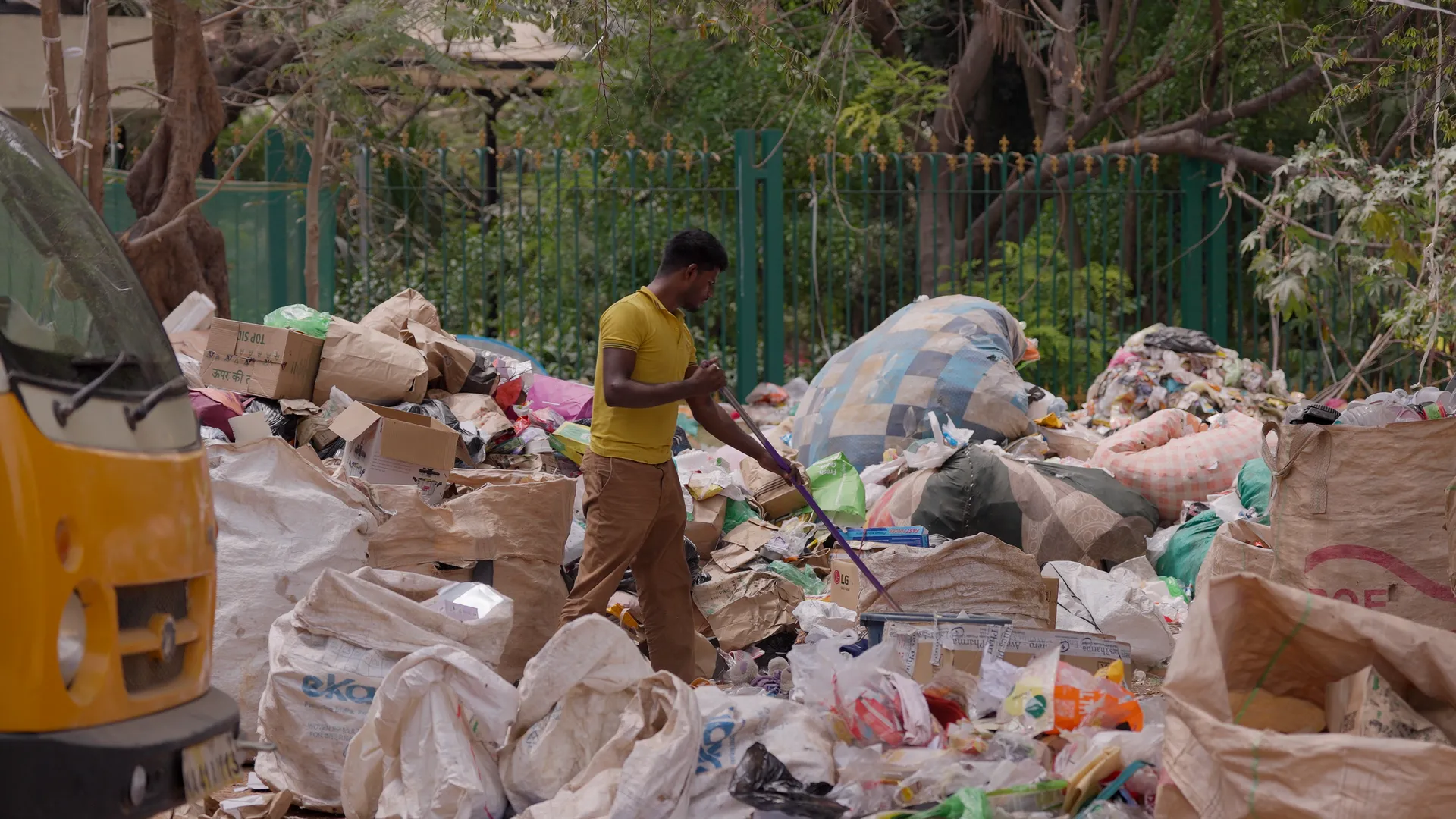
However, recycling is not the solution many think it is. In 2019, only 9% of global plastic waste was recycled; 50% of it ended up in landfills, 19% was incinerated, and 22% was mismanaged, allowing around 22 million tonnes to leak into the environment. Many plastics can only be recycled a limited number of times before their quality degrades, ultimately going into landfills again.
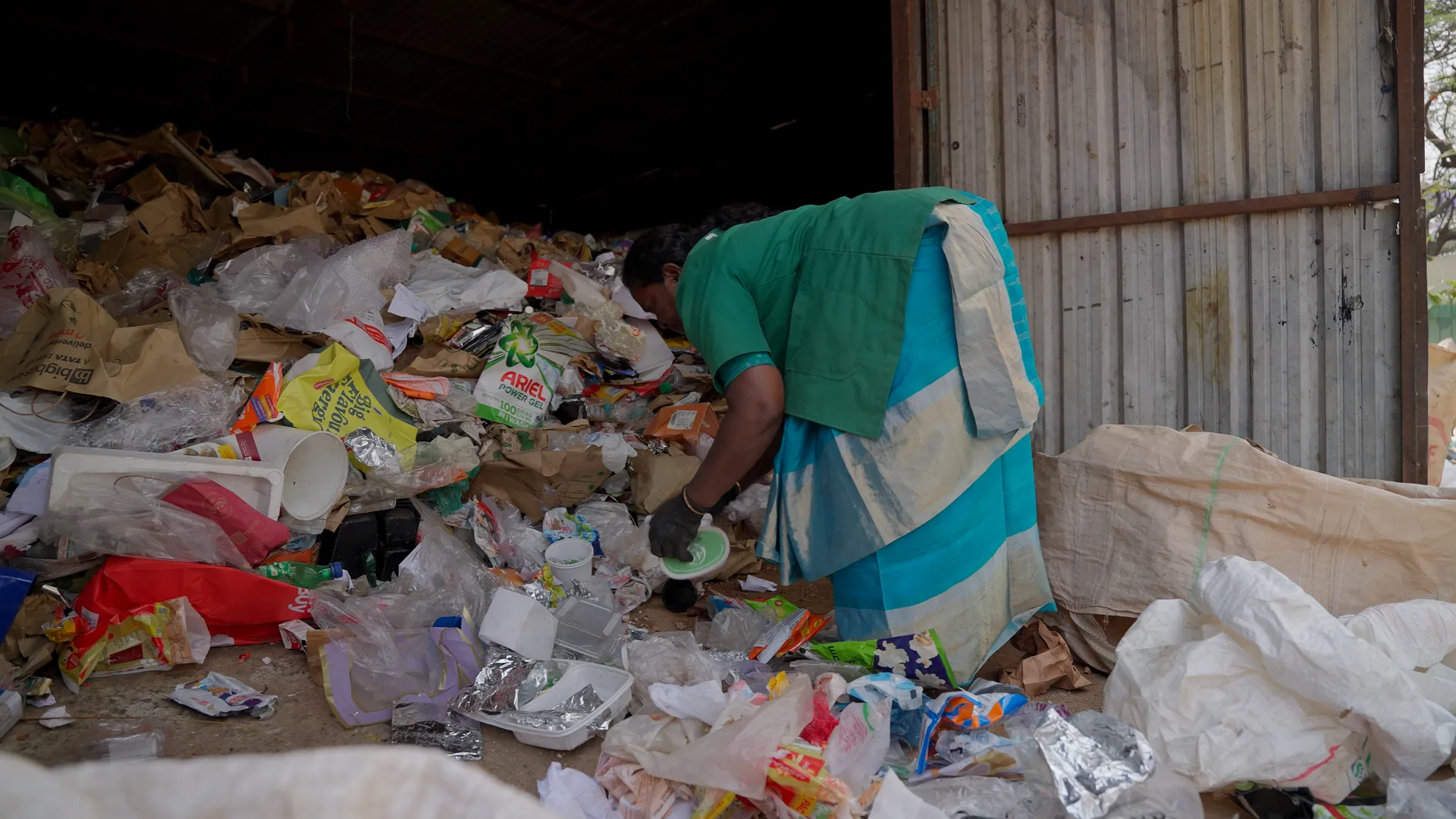
Extended Producer Responsibility (EPR) is a policy approach that shifts accountability from consumers alone to the companies that manufacture and market plastic packaging. India’s Guidelines on Extended Producers Responsibility aim to do just that: the producers, importers, and brand owners are required to collect and process the plastic packaging they introduce into the market through deposit-refund systems, buyback schemes, or other strategies. When companies cannot realistically manage this on their own, they can outsource EPR to qualified third parties called Producer Responsibility Organisations (PRO).
However, the success of these measures depends on collective choice, effective implementation, transparent monitoring, and meaningful integration of India’s vast informal waste sector.
Also read: Fish and seasonality: How year-round demand and extraction hurt our seas
The plastic legacy
India’s situation probably reflects that of every developing country. We entered the plastic age much later than nations that were already industrialised, but plastic became integral quite rapidly after 1991’s economic liberalisation. Single-use sachets, introduced in the 1980s, soon became popular for their convenience and affordability. By the 1990s and 2000s, this low-cost packaging had expanded to consumer goods for ‘one serving’ portions, from coffee to oil to ketchup and pickle. These one-serve packets made consumer goods more accessible and affordable for rural populations, and companies capitalised on that.
Now, it is one of India’s most persistent challenges as sachets, with their mixed materials and small pieces, cannot be recycled, and these often leak out of the waste management chain into the environment.
Extended Producer Responsibility (EPR) is a policy approach that shifts accountability from consumers alone to the companies that manufacture and market plastic packaging.
I have childhood memories of walking to a dairy with my grandfather to buy milk, which was poured into our large, stainless-steel milk cans. The same dairy sold fresh paneer, and fresh curd set in large steel trays—nothing was packaged—and the grocery store nearby sold cold drinks in returnable glass bottles.
I don’t remember when everything changed, but packets and plastic bottles became the norm. Admittedly, some of these options were more hygienic and made food easier to transport, with fewer chances of mid-chain adulteration or contamination. But it all came at a cost.
We cannot eliminate plastic altogether, but we can attempt to use it intelligently, where it is genuinely indispensable, and reduce the unnecessary single-use applications that drive modern consumption. Our vegetables do not need extra packaging, nor do we need plastic carry bags for everything we purchase. We definitely do not need to use single-use sachets of face packs and cosmetic creams when reusable containers fit travel bags easily, and you can’t really go wrong with a reusable stainless steel water bottle.
Many of us aware of the problem have the privilege to choose better; but are we truly exercising that privilege in a way that matters? Shampoo and detergent sachets may be an affordable necessity for some, but not small packs of cosmetic skin creams and hair conditioner.
We are leaving behind trillions of microscopic particles already embedded in oceans, soils, freshwater systems, wildlife, food, and living tissues. Long after today's products have been forgotten and discarded, their microscopic remnants might still be circulating through ecosystems and living bodies, where they definitely don’t belong.
We cannot eliminate plastic altogether, but we can attempt to use it intelligently, where it is genuinely indispensable, and reduce the unnecessary single-use applications that drive modern consumption.
For context: a plastic bottle can take around 450 years to break down, a fishing line 600, plastic bags can take 20 years, and your takeaway containers and coffee cups hang around for at least 50 years. These eventually break down, continuing to live on in the environment for decades more. They are never truly gone.
But let’s hit pause here. None of this means plastic is inherently evil. On the contrary, the invention has enabled major advancements across several fields.
The problem lies in our usage, in the lack of accountability of big corporations, and policies that do not translate into action. All the plastic we produce today is likely to outlive us in some form. The tragedy is not that plastic was invented, but that we built a disposable culture around a material that was designed to last.
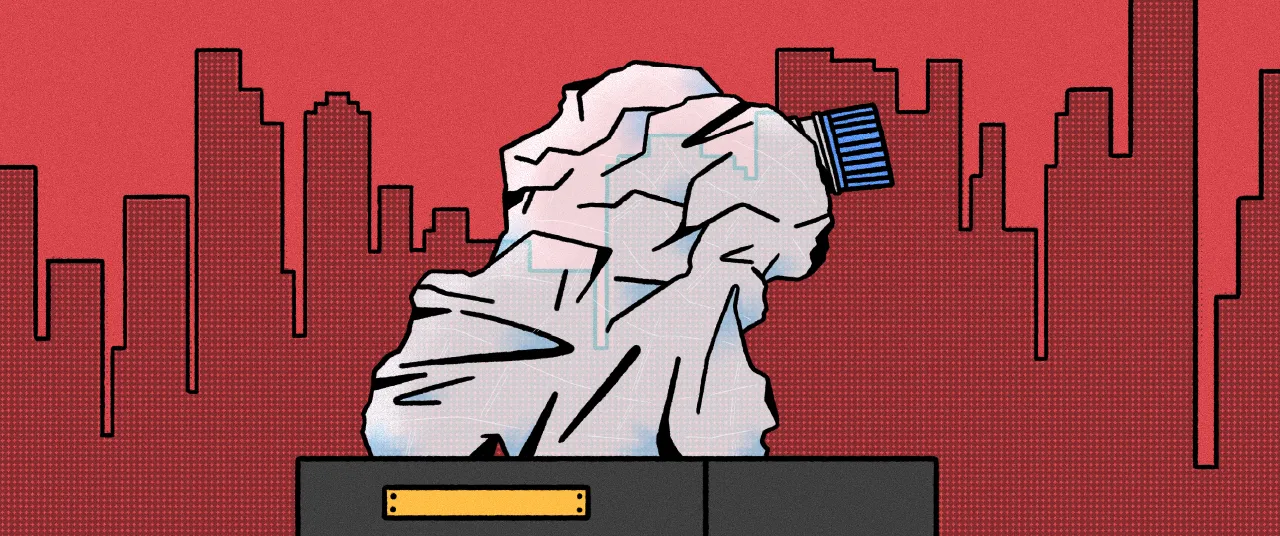
Cover art by Pratik Bhide
Also read: In an age of food abundance, why does ‘hidden hunger’ hold India back?
{{quiz}}
.jpg)

.avif)
Explore other topics
References