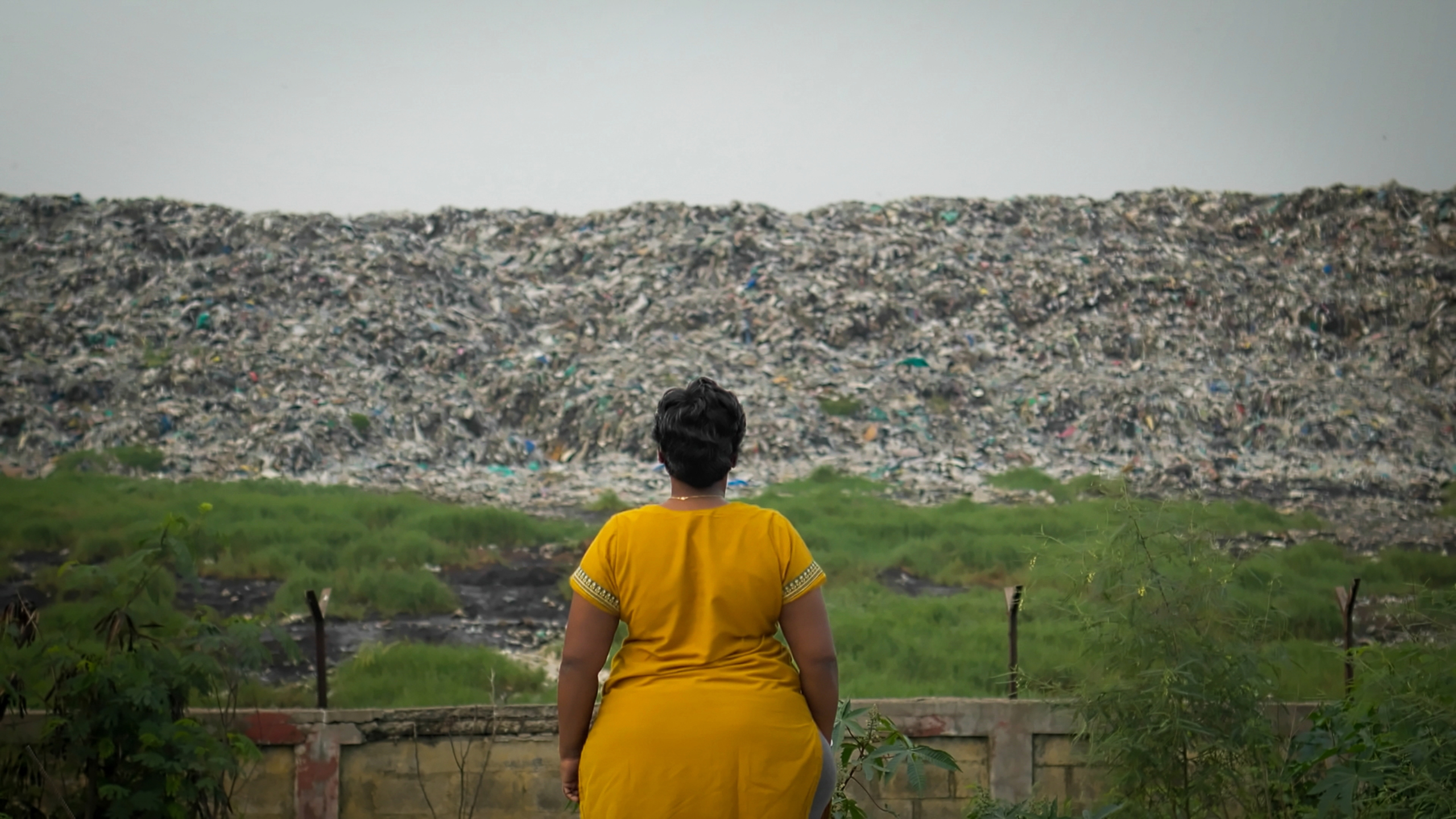
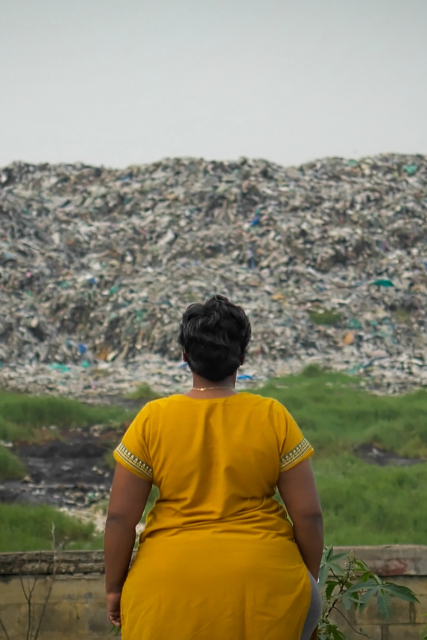
Trash threatens to swallow Chennai up. This citizens’ initiative won’t allow it
ROKA’s Janani Venkitesh writes about building and sustaining a people’s movement that inspires neighbourhoods across the city


What others saw as trash, I saw as my calling.
Having grown up in Chennai in the 1980s, the sight of overflowing garbage bins in residential areas and careless dumping on the roadside was an everyday occurrence. When I moved overseas after my marriage, spending years in different countries, my relationship to waste changed, owing to a difference in laws pertaining to its management and the way in which these laws were implemented.
During this period, a habit that stayed with me was segregating the trash we generated in our home. It became second nature, and so, when we returned to India in 2017, I wanted to be a little more mindful about waste. I began by managing the organic waste in our home. Through sheer coincidence, I came across a social media post from my friend about composting at home—cementing my belief that this was, in fact, a mission meant for me.
I then joined the Namma Ooru Foundation (NOF), a non-governmental waste management organisation, as a volunteer. Here, my eyes were opened to the magnitude of waste Chennai generates. As of January 2025, data from the Greater Chennai Corporation (GCC) suggests that the city produces 5,900 tonnes of waste daily.
Volunteering at NOF also taught me about the powerful role individuals can play in managing it. For close to a year, I was engaged in their waste management awareness initiatives in schools, colleges and even temples. In the process, I learnt about the regulations governing solid waste management (SWM).

Back home, in my neighbourhood of Kasturba Nagar, Adyar, the status quo remained unchallenged; things went on as they always have. One day, as I sat on my balcony and tried to savour a cup of coffee—with the satisfaction that I was part of a worthy cause—I was forced to confront the view before my eyes: overflowing dustbins right outside my apartment building. Deep down, I knew I had to do something about it. I decided to take the first step, going door-to-door to raise awareness among my neighbours, one conversation at a time.
There was no looking back after that.
Winning over stakeholders
In 2018, segregation at source and door-to-door collection of segregated waste were still alien concepts in Chennai. This meant that I had to appeal to two stakeholders—the residents of housing societies, and the local government.
I approached the GCC and Ramky Enviro Engineers Limited, the private company commissioned to handle waste in my ward. They promised to send a separate vehicle to collect and process segregated waste, but on one condition: a hundred households in my locality had to segregate waste at the source.

It was obvious that the catalyst should be the residents themselves. I knocked on the doors of 2500 households located on eight main roads in Kasturba Nagar, explaining the basics—how to segregate, where the segregated waste goes, and where the mixed waste goes. While some welcomed the idea, others shut their doors on it. The few who joined me became the founding team behind the Residents of Kasturbanagar Association–ROKA. The movement was kickstarted with the Azhagiya Adyar event in June 2018, which featured workshops on composting led by experts in the field and activities for children based on the principles of SWM. The response to the event boosted my confidence.
I had to know and understand the system in and out, because I strongly believe that systems change behaviour faster than slogans do.
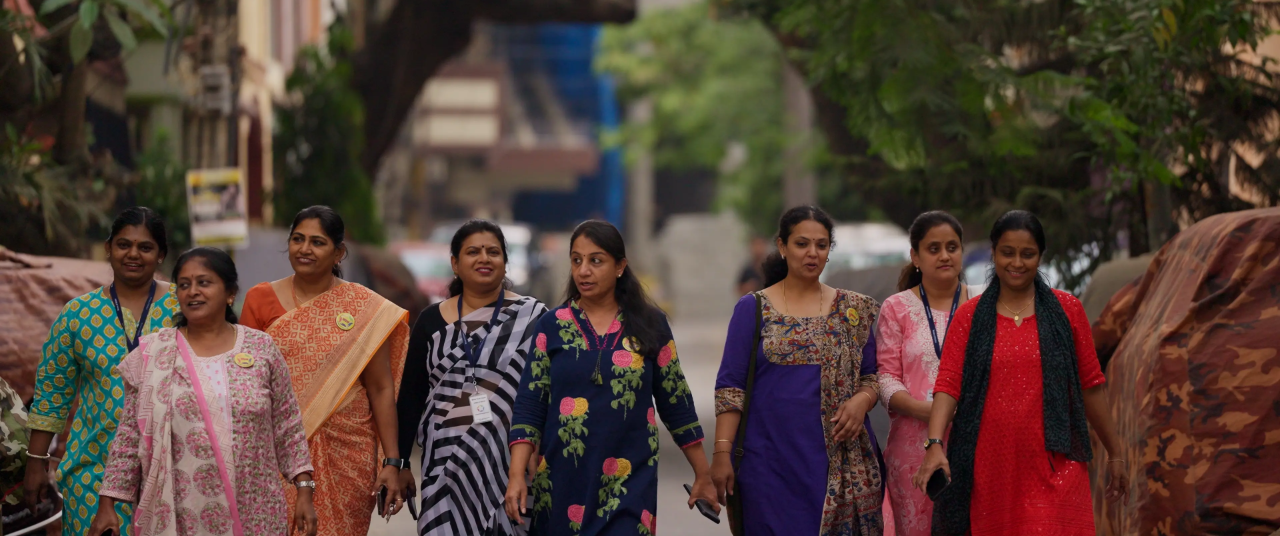
By 2019, we had seven resident volunteers who took on the task of talking to more people from different neighbourhoods about waste segregation. It was a task that called for footslogging, convincing, rapport building and understanding garbage—and people—better.
Parallely, I was also visiting the facilities installed by GCC across Chennai, establishing contacts with ward- and zonal-level officers and senior officials. I had to know and understand the system in and out, because I strongly believe that systems change behaviour faster than slogans do.
Most of our afternoons and evenings across 2018 and 2019 were spent ironing out the basics, from training conservancy workers to use tricycles for collection (modified with baskets at the back for waste), to recommendations about where residents should buy their coloured bins—green for organic, blue for dry, and red bin for sanitary & domestic hazardous waste.

Also read: A hidden solution to Bengaluru's water crisis: Sewage treatment plants
Watch and learn
In the early years, we were keen to learn from other groups who had gone through their own journeys of trial and error with similar initiatives. We paid a visit to Bengaluru’s HSR Layout, where lane composters (located in shared spaces like public roads to process the organic waste collected in the neighbourhood through aerobic composting) had been installed to understand the day-to-day operations and challenges on the ground. This visit, combined with meetings with members of the Solid Waste Management Round Table (SWMRT)—a collective of practitioners in Bengaluru promoting the adoption of sustainable methods—helped us to chart the way ahead for ROKA. To this day, SWMRT are our go-to experts for troubleshooting and sharing knowledge on composting ideas and equipment like recyclers.

It has been my dream to create model spaces for in-situ or decentralised waste management systems, which can serve communities, schools, temples, restaurants and offices, and which can be replicated in similar spaces across Chennai. To some extent, we have achieved this dream in our own community through the We Segregate project, which has been running successfully since October 2023. Its main focus areas are community composting and low-value plastics (flexible and multi-layer plastics like provision packaging, biscuit/chocolate wrappers, milk packets), a problematic category in plastic waste, both in terms of collection and processing. To aid in the collection of such packaging material separately from other waste items, a ‘punch-the-plastic’ hook was designed by students at the Indian Institute of Technology–Madras. The We Segregate project is supported by the Okapi Research and Advisory and Chennai Resilience Centre, and funded by the Urban Ocean program, whose objective is ending ocean plastic pollution globally.

We could gauge residents’ acceptance of the project from the incremental improvements in segregation levels in 1005 households. They could see the results of their efforts, as their organic waste was converted into compost—and readily available for their own gardens. This transformed their involvement from one of mild interest to a more proactive approach.
We could gauge residents’ acceptance of the project from the incremental improvements in segregation levels in 1005 households.
Having recognised that numbers and figures are, undoubtedly, a measure of success, ROKA and Okapi have been diligently maintaining as much data as possible over the last two and a half years. The wet waste processed through community composting is about 11 metric tons, and the compost generated is 3700 kg. Of low-value plastics, we have collected nearly 850 kg and sent them to SPRECO, a Chennai-based social enterprise whose focus is recycling.
Also read: In this Konkan coast town, women rock the boat with their mangrove safaris
Creating self-sustaining models
While ROKA’s projects progressed at the community level, we were also exploring ideas to expand the scope of our work to schools and colleges. Coincidentally, in 2019, the GCC’s Chennai High School, located at Kamaraj Avenue in Adyar, became the venue for a waste collection drive we undertook in collaboration with the corporation. Little did we know about how it would define our mission in the years to come.

What started as awareness drives among students slowly expanded into building in-situ compost to show them how organic waste from kitchens can be turned into manure. Soon, we built a kitchen garden on the terrace of the school; the produce grown here is used to prepare meals in the school’s kitchen. When we noticed an excess of food waste, we installed a food waste treatment plant (biogas) in December 2024. Now, the produce from the garden goes to the kitchen, the organic waste from the kitchen goes to the biogas plant, which produces biogas that is used for cooking in the kitchen and manure that is eventually used as a fertiliser for the garden—creating a circular system within an educational institution. Since December 2024, a total of 5000 kg of food waste has been converted into biogas, helping the school save on 12 LPG cylinders in the process, making this a ‘model school’ for circular management of organic waste.

The initiative paved the way for us to take up similar steps in more corporation-run schools. Currently, ROKA works with three such institutions, for awareness about solid waste management and the installation of biogas plants. Of these, the biogas plant in Chennai High School, Thiruvanmiyur, which was established in November 2025, has processed close to 1300 kg of food waste thus far. We continue to build new relationships with more schools and colleges.
Since December 2024, a total of 5000 kg of food waste has been converted into biogas, helping the school save on 12 LPG cylinders in the process, making this a ‘model school’ for circular management of organic waste.
Also read: How Jayshree Vencatesan got Chennai to finally care for its wetlands
From learning to mentoring
Once a group of individuals curious to learn from other communities, today ROKA has assumed the role of a mentor for those who want to venture into waste management practices, aiding them in the replication of the Kasturba Nagar model. For example, the apartment building Clover By the River in Kotturpuram began composting its wet waste under Okapi and ROKA’s support. Recently, Kalakshetra Colony in Besant Nagar undertook a door-to-door campaign to improve waste segregation and collect soft plastics under our guidance. There has been a growing interest in information from experts, especially from gated communities that fall under the ‘bulk waste generator’ category.
Over the years, we have encouraged a shift in perspective, so that people look at waste as a resource.
I should not forget to mention our bi-annual dry waste collection drive, started in 2019, which has now become a city-level movement. Over the years, we have encouraged a shift in perspective, so that people look at waste as a resource. When it is segregated and collected homogenously, it becomes an economically viable venture for the aggregators or recyclers through decentralised waste collection drives.
Through it all, my husband and son have been my pillars, living this life right alongside me. There are tough days, but moments like a 94-year-old stranger calling to cheer me on reminds me, this—ROKA’s impactful work—matters!
Cover Image Credit: Aparna Ganesan and Nanda Kumar

Explore other topics
References