In Chennai’s Toilet Repair Cafe, a new model for community sanitation?
By promoting public toilets as legitimate workplaces, the initiative hopes to improve existing facilities instead of adding new ones


On a humid morning in Chennai, as corporate employees set out to work in business parks and offices, a group of sanitation workers, too, begins their day—outside a public toilet.
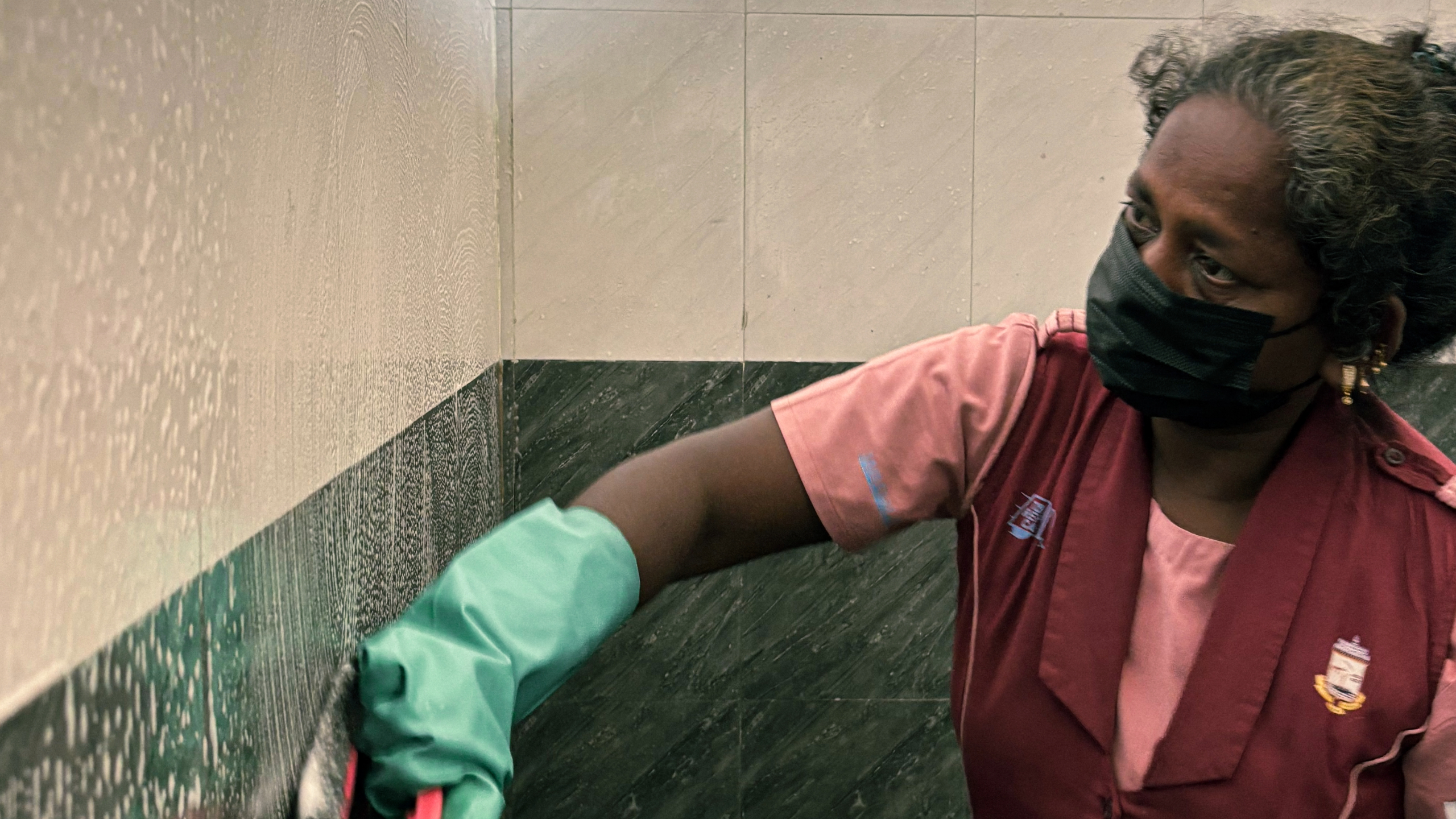
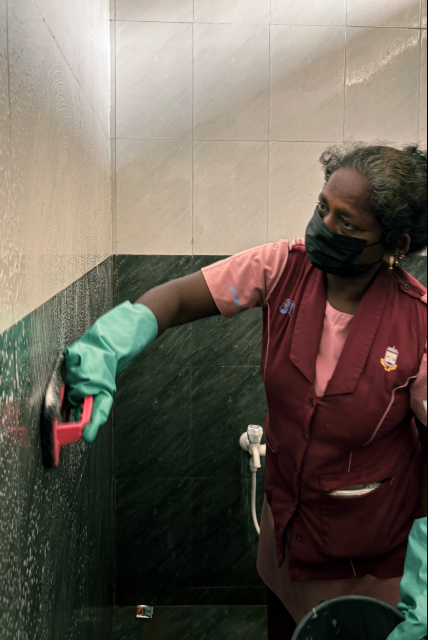
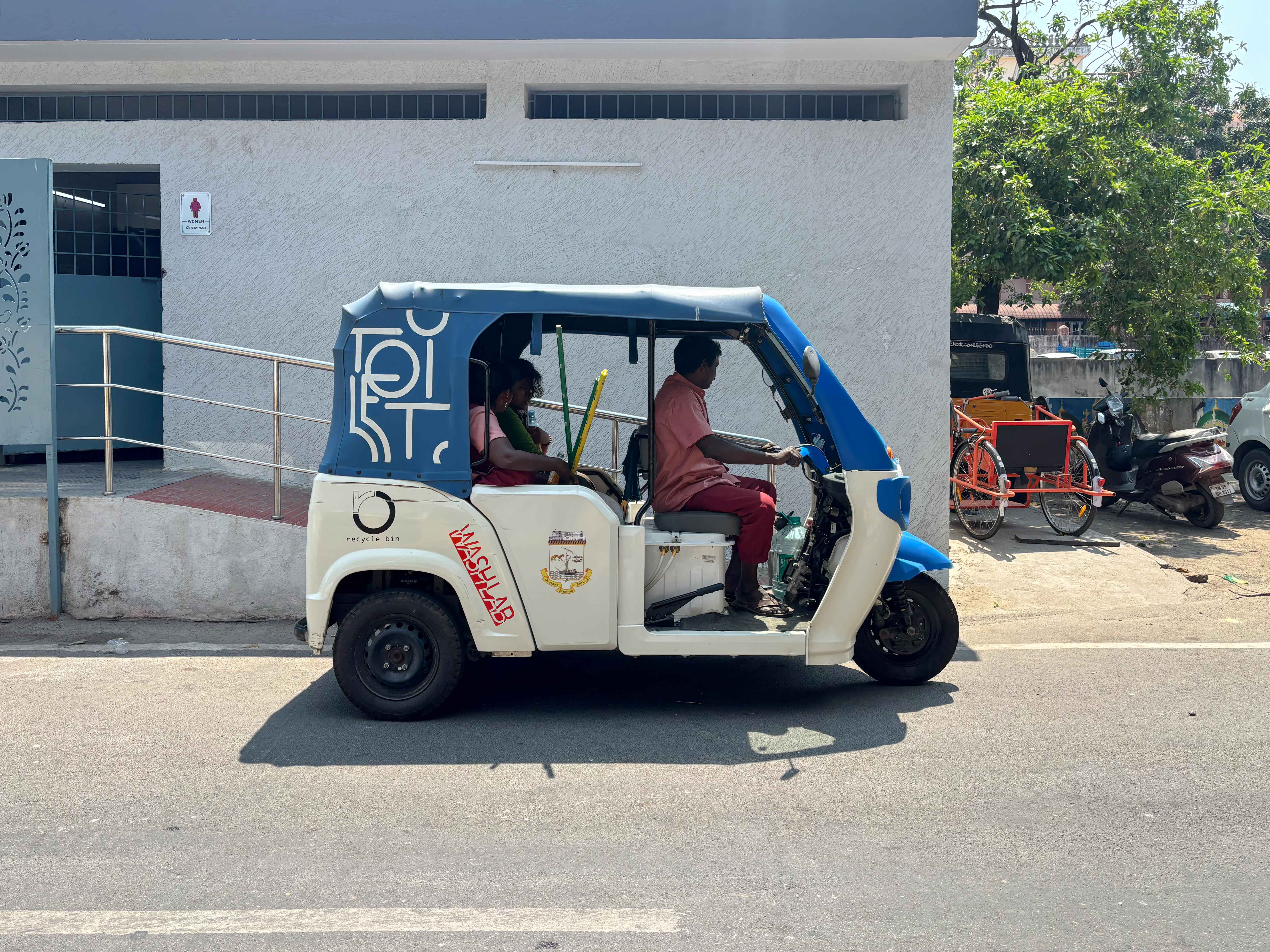
At 10 am, on the dot, they gather at the office of the Toilet Repair Cafe (TRC) in the Triplicane neighbourhood, where they first check-in and report to their supervisors. Shortly after this, they travel together in a vehicle to their assigned public toilets, where upon arrival, they begin a systematic deep-cleaning process: manually scrubbing surfaces, clearing waste, and inspecting for structural issues like leaks or broken tiles. These are then reported for repair.
After soaking the toilets, they use high-pressure water guns to thoroughly wash them down. The work is intensive and methodical, transforming the spaces step by step.
This routine is now a familiar one at the TRC, an initiative to strengthen existing sanitary facilities rather than adding new ones. It was founded to address a gap: when a toilet becomes unusable, the typical solution is to build a new one. “But instead of adding new infrastructure, can we invest in the human resources around it?” asks Shebin George, who works with WASH Lab, one of the initiative’s stakeholders. “Everyone talks about building toilets, but few talk about what happens after that—who repairs them, who maintains them, and what kind of dignity do those workers get?”
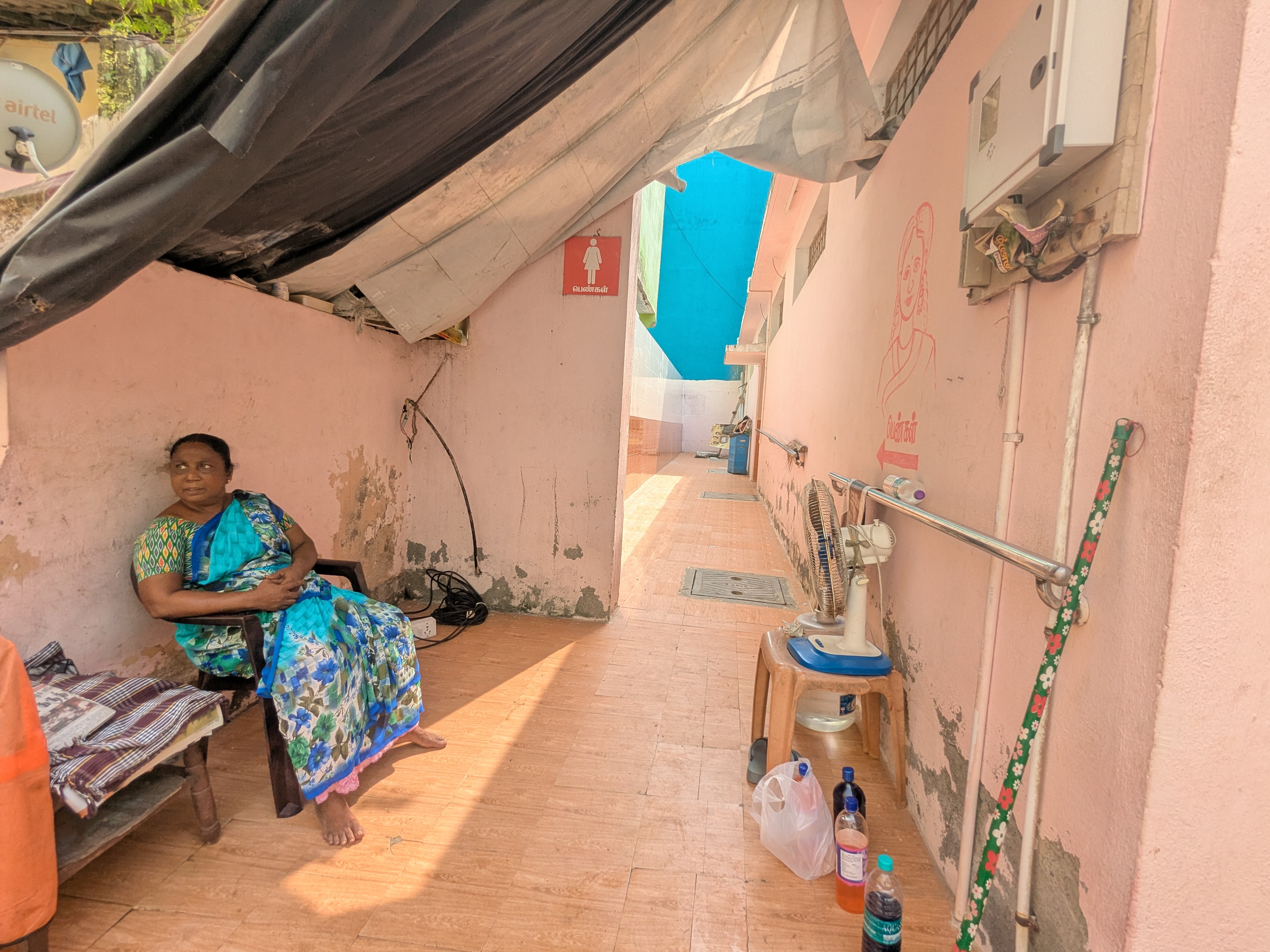
Public and community toilets in Triplicane, a dense, low-income neighbourhood, serve as vital community spaces. Many residents live in small homes with cramped or non-functional toilets, making these public facilities essential to daily life. The urgency of TRC’s work lies in the chasm between infrastructure and maintenance. A 2022 report noted that Chennai had 812 public toilets under the Greater Chennai Corporation (GCC), yet several were in poor condition, and instances of open defecation persisted despite official claims of being open defecation-free.
As of February 8, 2026, data from the corporation states that 5,176 toilet seats across 474 locations are available for public use, indicating expansion. However, the central concern remains not just the number of toilets built, but whether they are functional, clean, and consistently maintained. “It is within this gap between construction and sustained upkeep that TRC positions its intervention as necessary,” says George.
Public and community toilets in Triplicane, a dense, low-income neighbourhood, serve as vital community spaces.
At its core, TRC is a community-based repair system. Currently implemented as a pilot project powered by CSR funding and support from the GCC, it operates through two field teams. Every janitor posted at a toilet is given a TRC coordinator’s contact number. When a repair issue arises, the janitor alerts the coordinator, who dispatches a supervisor along with a crew of three members to inspect and address the issue. It functions as two mobile sanitation units—vehicles equipped with cleaning and repair tools, operated by deep cleaners, janitors, coordinators, and staff members.
The model is envisioned as building accountability and systematic functioning at each step: identify the problem, photograph it, carry out the repair, document before-and-after images, and submit a report. Once verified, the team moves to the next site. The pilot programme began with 23 toilets; currently, 20 centres across Chennai are managed under this system.
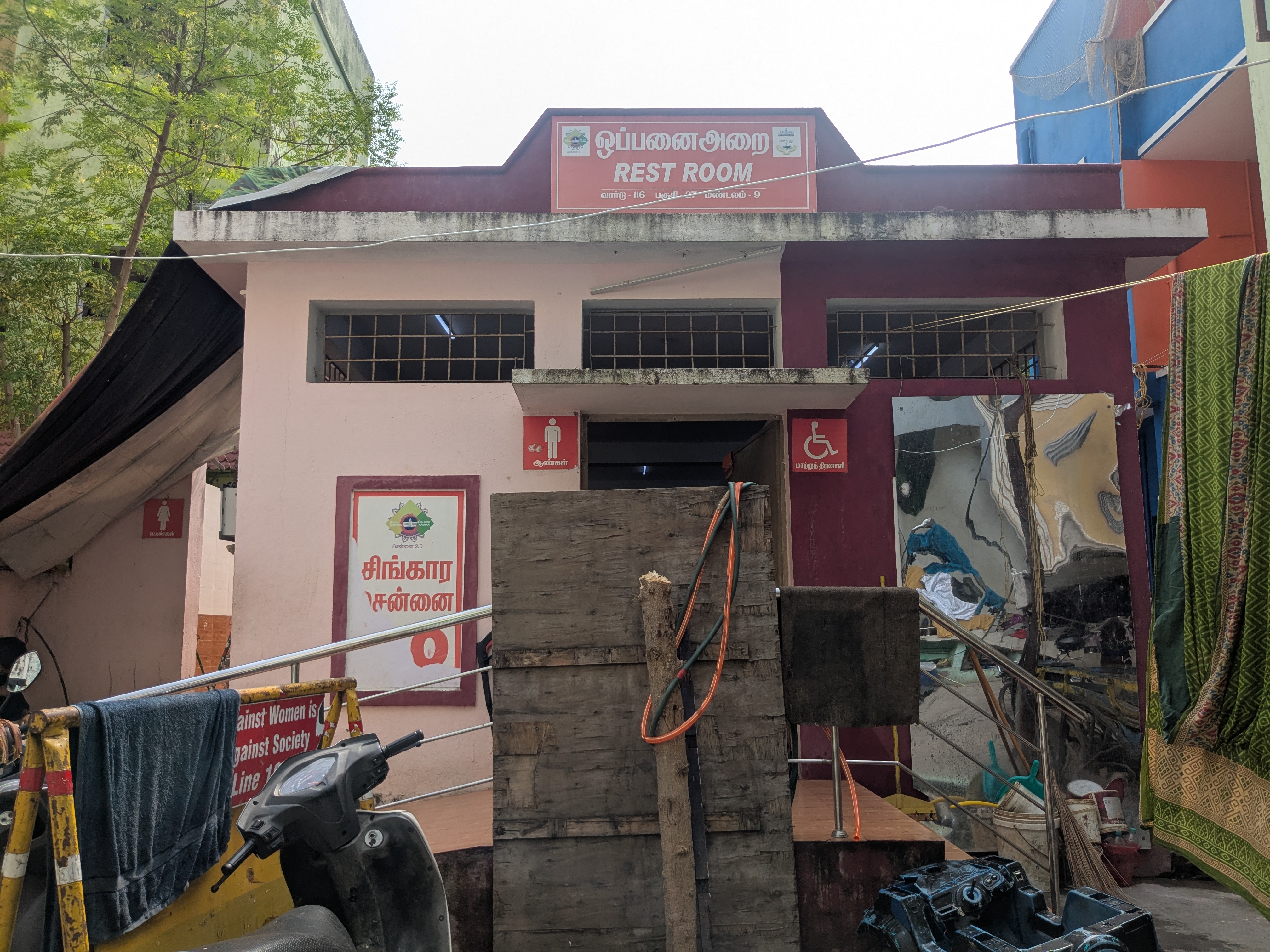
Implemented jointly by Studio Recycle Bin, WASH Lab, and Chennai-based NGO Cheer, the concept was launched on June 15, 2024. WASH Lab’s parent organisation Recycle Bin is an architecture and urban designing consultancy, and has been engaged in water, waste, and welfare interventions for over 8 years now. Cheer, on the other hand, is a community engagement partner in the project, raising awareness and enabling residents to take up shared responsibility towards community cleanliness.
How the model works
A key component of TRC is upskilling: many janitors lack access to basic phone literacy, and training them to communicate repair needs via phone calls is one of the first steps. TRC also trains staff to identify problems, determine the level of intervention required, and carry out preventive as well as scheduled repairs.
The sanitation maintenance department under the GCC covers multiple divisions, with public toilets being just one component. And though tenders for Operation and Maintenance are floated and funds are allocated for this purpose, toilets frequently fall into disrepair for multiple reasons: heavy use, weak maintenance cycles, and vandalism.
Toilets frequently fall into disrepair for multiple reasons: heavy use, weak maintenance cycles, and vandalism.
George, the director of the programme, also points to design issues in these toilets, such as the lack of support bars for elderly users. Some of the other infrastructure challenges were assessed by understanding guidelines from organisations such as the Central Public Health and Environmental Engineering Organisation (CPHEEO)—such as one seat per 35 men and 25 women.
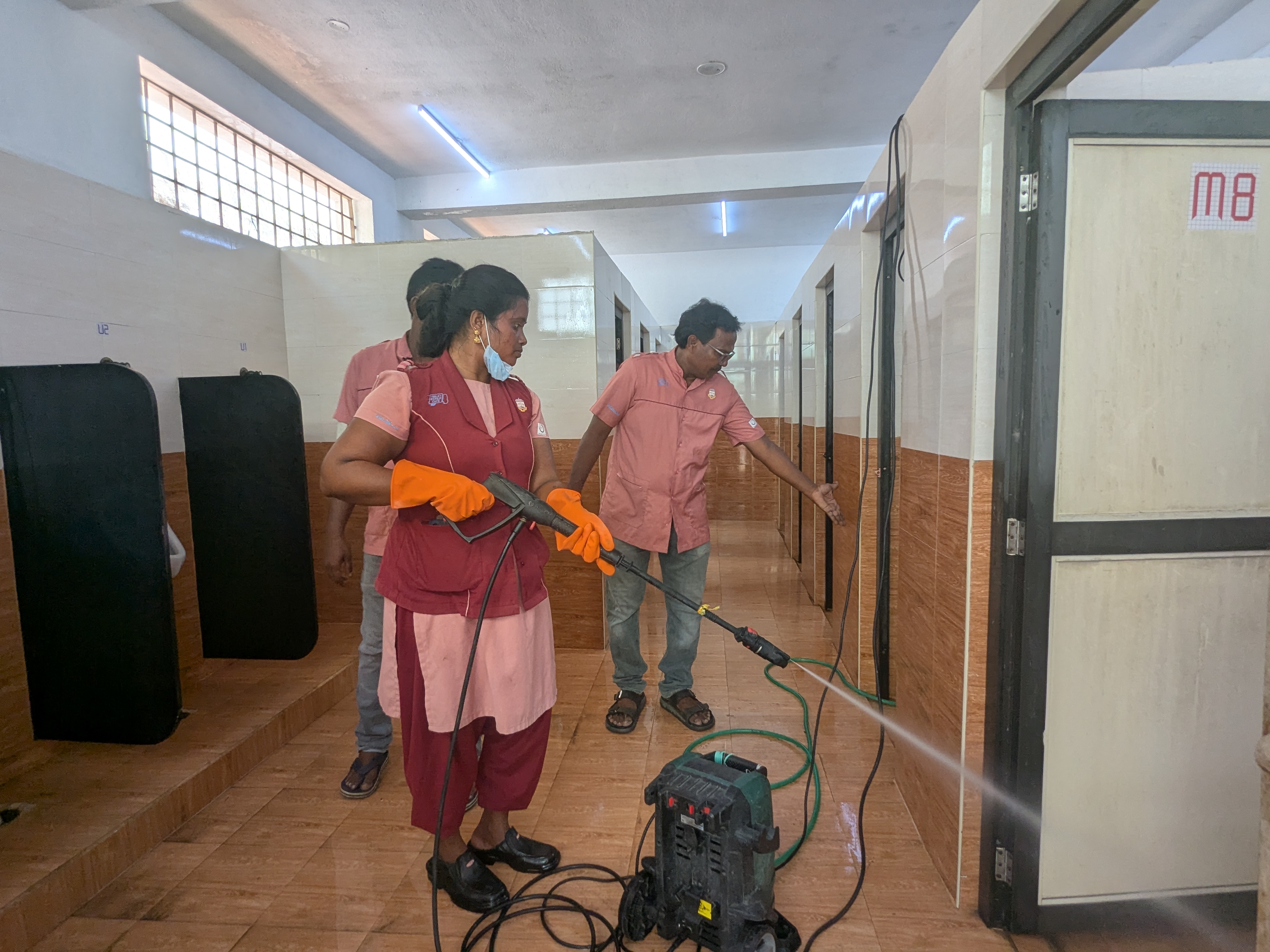
In developing a skill bank, training workers in deep cleaning, plumbing, masonry, and electrical work, TRC positions this project as a means to create employment within local communities. With a future goal of decentralising operations, it hopes to make maintenance more community-driven.
Also read: Recycled water helps meet India’s cleaning needs. But can it quench our thirst?
Putting repairs at the front and centre
“Maintenance is an economy in itself,” says George. “Every flush, every mop, every repair is part of a value chain. When we recognise that, we begin to treat sanitation not as charity, but as skilled, professional work.”
Repair work, especially in sanitation, is carried out by those who live at the margins; a neglect of repair, therefore, is a neglect of their working conditions and livelihoods. “If I had been educated, would I have worked here?” asks Selvi, a 53-year-old janitor with TRC, who has worked in sanitation for over 13 years. Selvi’s reality is a result of the very system that has created these margins. There is no choice but to work instead of study, and there are very few outlets offering dignified labour to those who are not able to access education.
To ensure toilets are recognised as workplaces is a slow process, but makes a granular difference in the everyday lives of sanitation workers. Dhanalakshmi, a 37-year-old sanitation worker, has worked at TRC for nearly two years now. “Earlier, I worked as a housekeeper and my income was very low,” she says. “Now, through this cleaning work, I earn better. The sessions I attend and the support from the community make this feel like a job with dignity, compared to the work I was doing before.”
Sustainability by design
TRC is designed to be self-sustaining. Over time, more workers are being trained to handle plumbing and electrical repairs independently, reducing dependency on external contractors. “We want a system that builds capacity from within,” says George. “It’s not just maintenance, it’s ownership.”
To ensure toilets are recognised as workplaces is a slow process, but makes a granular difference in the everyday lives of sanitation workers.
Coordinator Charu Priya explains how data from each repair helps track usage patterns and recurring issues, allowing for planning to be preventative. One such intervention was the improvement of the Key Performance Indicator (KPI) framework that the GCC had introduced. From their ongoing data, TRC was able to propose refinements to this system, including conducting water tank inspections at more frequent intervals to systematically assess functionality.
TRC also conducts regular health check-ups and training sessions in community halls. Activities like ‘Toilet Birthdays’ and ‘Toilet Galatta’ celebrate sanitation workers’ contributions and challenge the stigma surrounding toilets. “Every year, during Toilet Festivals, we ask: can we see toilets as governance? After all, people work here,” George says.
Also read: Typhoid lurks in India’s water. Why are antibiotics failing to stop it?
‘Kakkoos Sabha’
TRC also conducts ‘Kakkoos Sabhas’, literally translating to “toilet talks.” These meetings bring sanitation workers together to discuss their challenges, share their experiences, and voice their needs directly to the management and government. Thus far, only two such meetings have been conducted, and both were attended by the GCC Commissioner and the Deputy Commissioner (Health).
Critically, these sessions also act as platforms to create visibility and agency for workers long left out of decision making.
“During the Kakkoos Sabha, we spoke about salary increments, umbrellas, and seating spaces for janitors, and all of these were implemented across constituencies,” says Srikanth, a TRC supervisor. “It was helpful to finally have a space to talk about our needs.” Critically, these sessions also act as platforms to create visibility and agency for workers long left out of decision making.
A replicable model of sanitation literacy?
At its core, TRC aims to redefine how society perceives public toilets—not as a symbol of poverty, but as spaces of collective responsibility. By merging governance, welfare, and design, the project promotes what is called “a social rule of care.”
“The public toilets are very clean nowadays. Even though we have toilets at home, we prefer using this one because it has been reconstructed and is cleaned frequently,” says Vijaya, a 60-year-old Triplicane resident. “As users, we also feel responsible for keeping it clean.”
The TRC team plans to expand its reach across Chennai, including to public schools and institutions. “The change is already visible,” says repair staff member Dhanalakshmi. “When people tell us the area is clean after we finish, it feels satisfying. The number of users from the community has also increased.”
{{quiz}}

Explore other topics
References