A life, undone: A dam leaves farmers bereft of home and identity
Forced to quit farming and live on barren land, farmers in Madhya Pradesh’s Panna now labour in mines


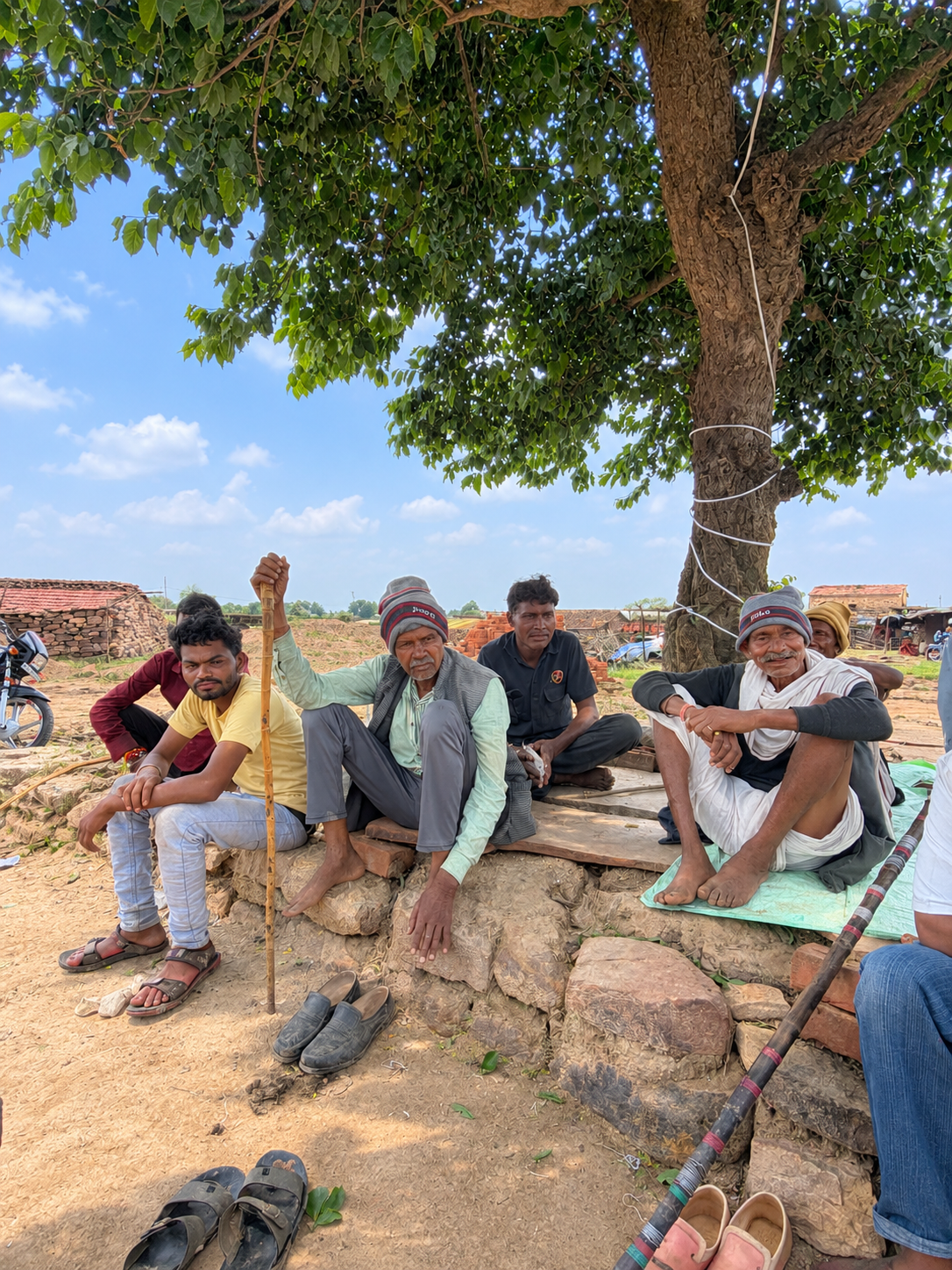
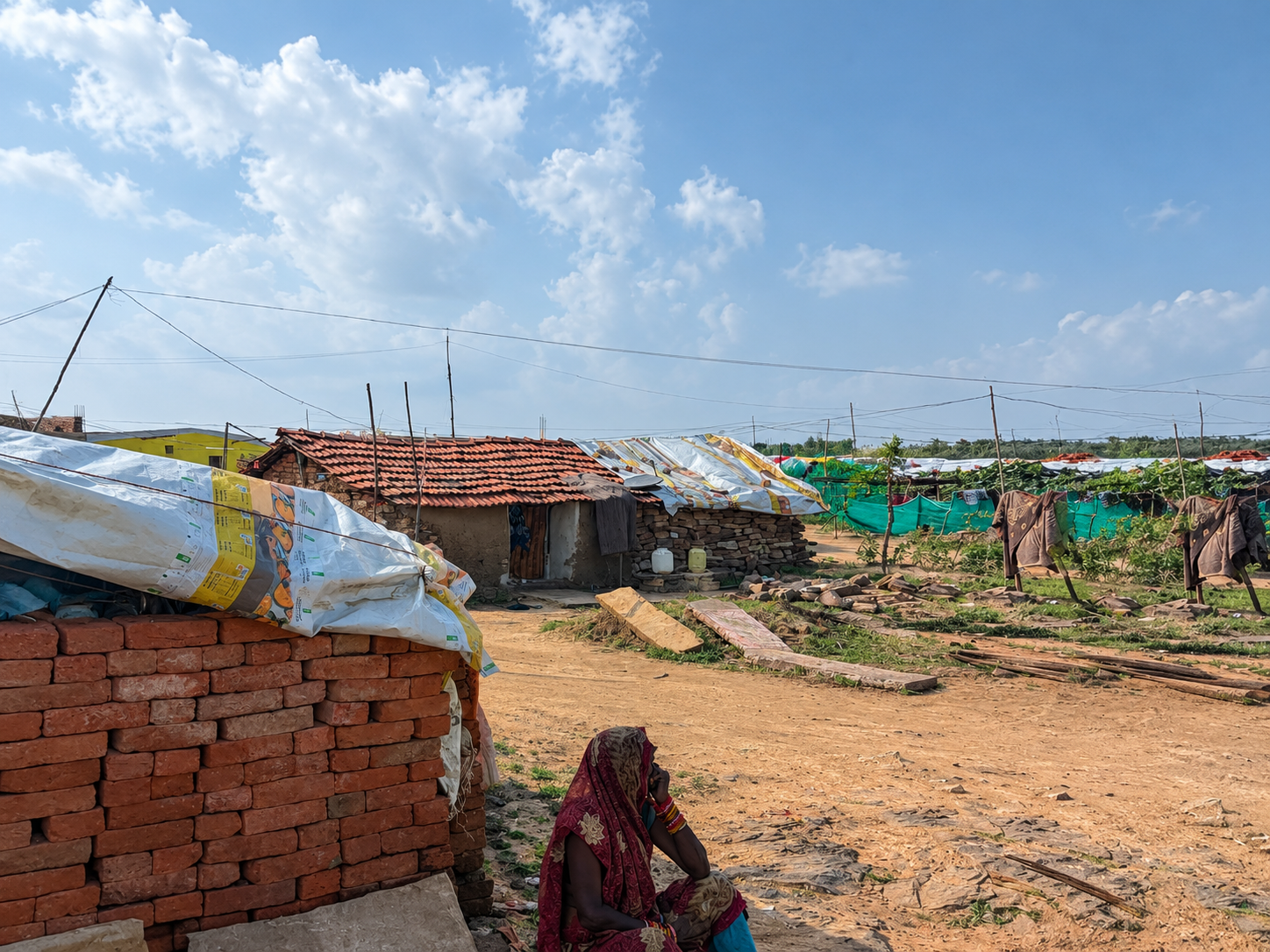
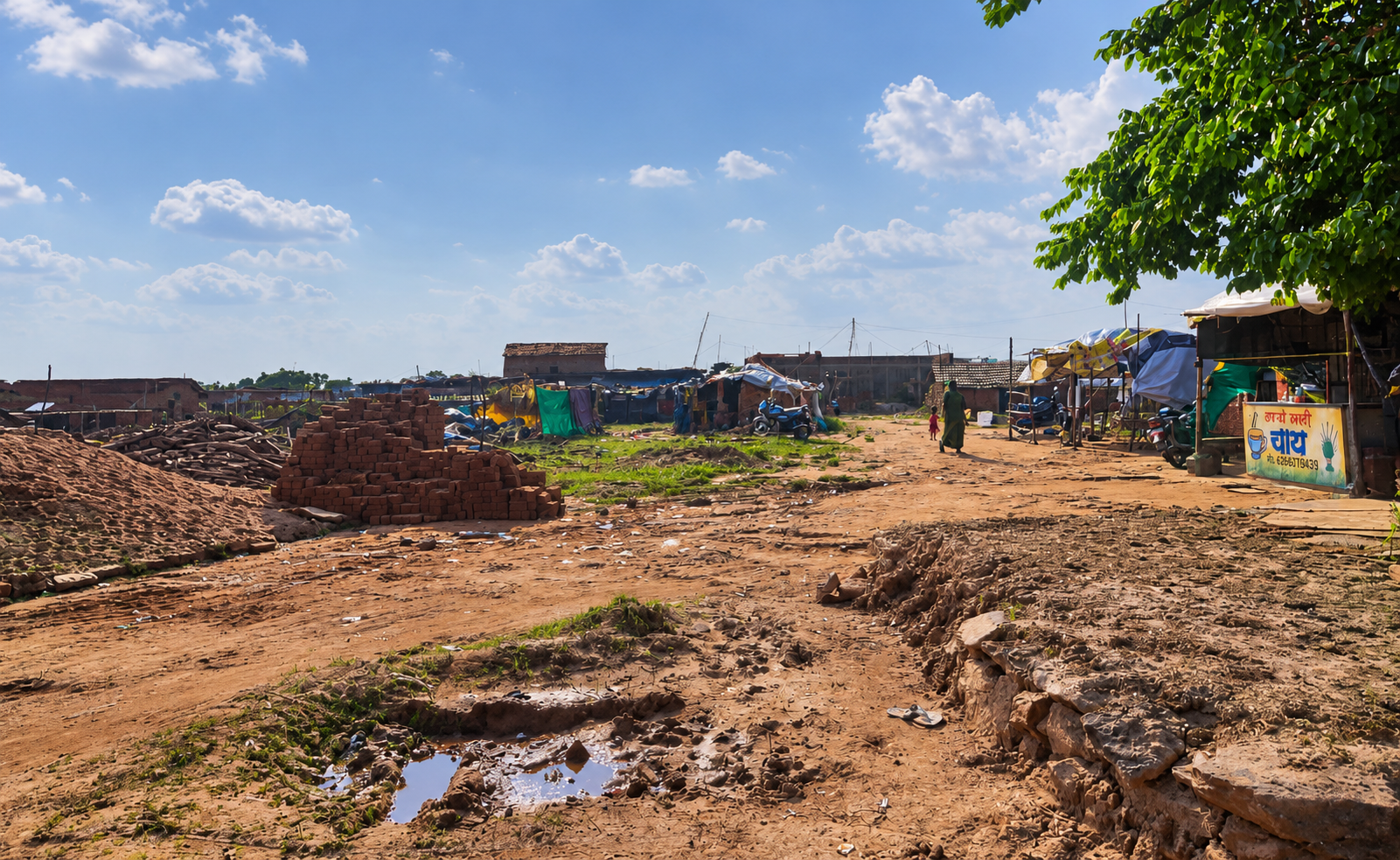
A few kilometres into the outskirts of Tara village in Madhya Pradesh’s Panna district, a yellow flag marks a potholed path leading from the main road to a hastily built settlement. Its entrance is rigged with sharp, metallic wire. One-room shanties with exposed brick-and-cement walls and pockmarked asbestos roofs bear the brutal September heat and lean against each other. Heaps of sand and construction granite crop up at intervals. A group of men are gathered underneath a tree, visibly distressed. They are in the middle of a heated exchange about repairing their homes, which have been impacted by the year’s heavy monsoon.
These are the displaced individuals left in the wake of the Ken-Betwa Link Project (KBLP), a Rs. 44,605-crore river-linking project that will reportedly transfer ‘surplus’ water from the Ken basin to the Betwa basin through the Daudhan Dam and a 216-km canal. The project, intended to address water scarcity and provide irrigation and drinking water to Bundelkhand, has (or soon will) displaced nearly 7000 families from 8 villages in Panna and 14 from the neighbouring Chhatarpur district. Their everyday lives are now wagered on the temperaments of the weather, and on how long their compensation sums can last.
“Over the years, the promised compensation has fluctuated. We have fought to increase the amount from Rs. 5 lakh to Rs. 12.5 lakh per voter,” says Hisabi Rajput, a local activist who has worked on tribal displacement caused by large dam projects in Bundelkhand for nearly two decades. He is also one of the frontline leaders of the Chita Andolan, a grassroots movement that has emerged in response to the KBLP. The people of Chhatarpur and Panna have built symbolic pyres and nooses in the middle of the river’s waters to express their resistance to the fate that awaits them.
Compensation, particularly in Panna, has varied widely, Rajput adds. According to multiple accounts shared by affected farmers, some have received token payments of as little as Rs. 10,000, while others have received anywhere between Rs. 50,000 and the full promised amount. Many have received nothing at all.
Hundreds of farmers from the affected cluster of Dondi, Khamri, Marha, Majhauli, Koni, Kathari Bilhata, Gahdara and Kudan in Panna banded together after their homes were razed down in early June, says Rajput. They travelled for over 24 hours before setting up camp near Tara. Four months have passed since then, with no aid in sight, say the villagers. The unfinished houses and piles of construction material which are ubiquitous to their new realities bear little resemblance to the homes and fields they left behind. Life wasn’t always like this.
I.
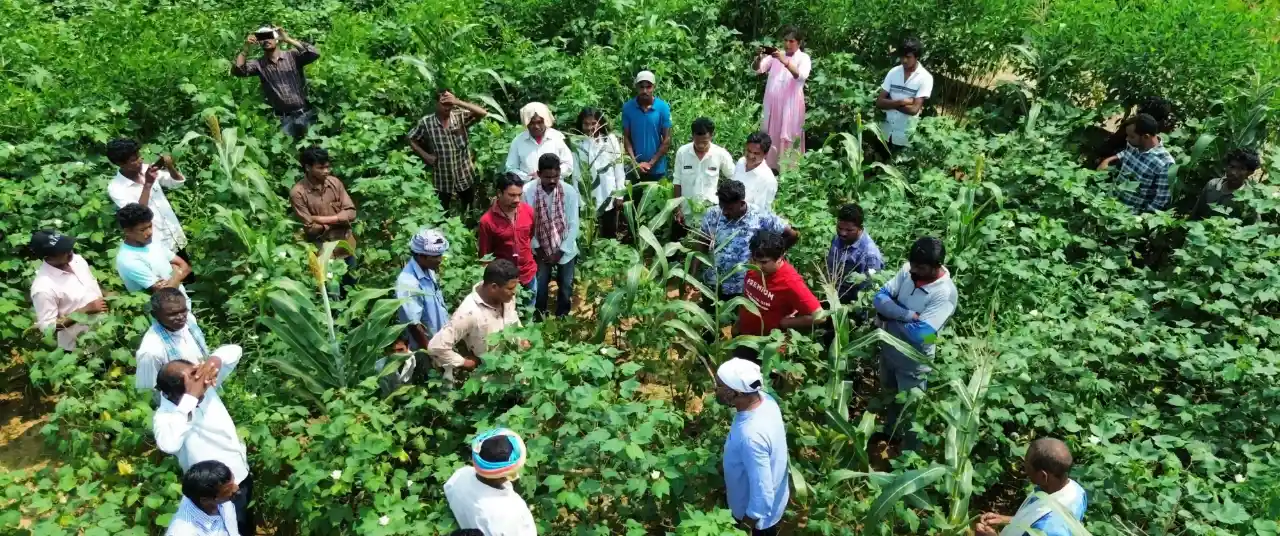
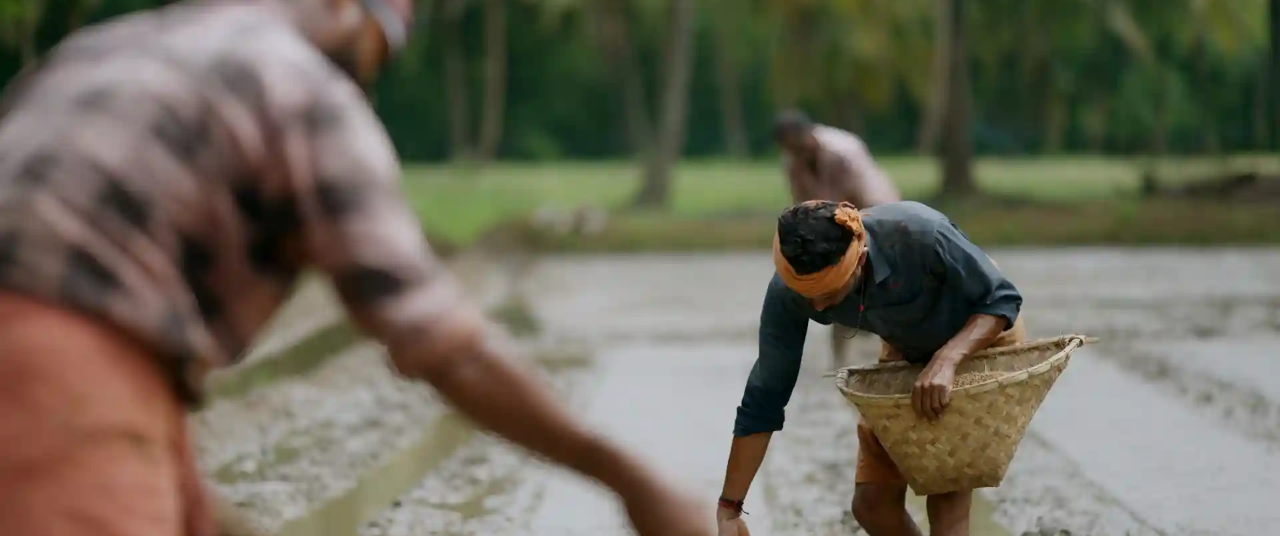
Fifty-two-year-old Gond farmer Ruab Lal Adivasi’s 2.5-acre field in Kudan was a small holding, but it was enough to support his family of five. When asked what he cultivated, he responds, “Kya nahi ugat the, didi? Jowar, bajra, urad, arhar, tili, chana, sab kuch tha.” [What didn’t we grow? Jowar, bajra, urad dal, arhar dal, sesame, chickpea—we grew everything!] He followed a mixed-cropping system where land was divided into different patches for legumes, pulses and other vegetables, which were alternately left fallow and rotated.
Bundelkhand, spanning parts of Madhya Pradesh and Uttar Pradesh, is a predominantly agrarian region where farming remains closely tied to the monsoon. According to a study conducted in 2026, 61% of its total geographical area is arable land, and over 20% is forest cover. Across its varied landscapes, generations of farmers, including Gond, Baiga, Bhil and Sahariya tribes, have cultivated crops while drawing on the surrounding forests for food and other resources.
Historically, millets have been an important part of Bundelkhand's granaries. Across Madhya Pradesh, however, their cultivation has receded over the past few decades, amid changing food preferences and agricultural policies that favoured other crops, including high-yielding varieties of wheat, rice and soybean.
Yet indigenous Bundelkhandi millet varieties have steadfastly held their place in the fields of farmers like Ruab Lal. Grown primarily for the household, they carry the memory of an older, fast-disappearing way of farming. “Millets are very hardy crops, which grow well in the mix of alluvial, red and yellow soils we have here,” he says. The red and yellow soils he refers to is the loamy, coarse earth characteristic of the region. “Agriculture is largely rainfed and we are at the mercy of the monsoon. Our friends kodo and kutki (millet varieties) have carried the village during many dry years,” he says.
Apart from farming, the daily rhythms of Ruab Lal’s family were arranged around their foraging and gathering routines. “The forest was our mother and nourisher—we spent many hours everyday collecting mahua, charwa [chironji], tendu leaves , tamarind, ber [Indian jujube], bamboo shoot and other herbs. We also foraged for other wild vegetables that sprung up like treasures—padora, bitter gourd, shataavari [Indian asparagus], amaranth and other leafy greens. Tubers like yams and mushrooms covered fallen trunks after just one spell of rain,” Ruab Lal says.
When asked how they gather from the forest, Basanti Devi, a 46-year old Gond from Gahdara says simply, “Identifying what is edible and what is poisonous is just part of being people of the forest.” She is puzzled that people can live so far removed from the knowledge of their surroundings. For her, knowing what to pick from the forest and what to leave behind is something learned over generations and woven into everyday life. “Dekhat toh milat. Patal kand palaas ko jam ke pakadta hai. Kaseru kand taalab ke paas milta hai.” [You just need to know where to look. The vines of the Patal kand wrap around the palash tree and the Kaseru kand grows near ponds, in marshy land.]
These tubers can be cooked with simple spices like chillies and the kaali haldi [black turmeric] that is also collected from the jungle, she says. “Mushrooms are tasty when pickled, and we boil and eat the singhada [water chestnut] seeds as a snack at the end of a long day’s work!” she chuckles.
The forest was our mother—we spent many hours everyday collecting mahua, charwa [chironji], tendu leaves, tamarind and other herbs.
Both cultivated crops and wild edible plants are primarily regarded as subsistence, with only surplus sold in local markets. The people from Kudan, and other villagers sold forest produce in the markets of Panna, with mahua and chironji fetching up to Rs. 250 per kilo. “Along with these, we also sold mushroom varieties like Raj Bhondo, Sarai and Chirko, prized for their medicinal properties and delicious taste by people in the city,” Ruab Lal says. Each family earned about Rs. 20,000 every week just from selling forest produce—especially between March and June when they collected and stored mahua flowers and fruit. “We bartered other commodities like salt, spices and clothing with mahua. Even if we didn’t work for the rest of the year, or our other crops didn’t have a good harvest, these earnings kept us going,” he adds.
Basanti Devi recalls a time when water was plentiful and farming in Gahdara was easier. “Do-teen taalab aur tanki the. Nadi thi. Gaanv mein sab vyavastha thi. Hamare bachche sukh se khaate aur khelte,” she says, with a weary face. [Our village had everything. The lakes and tanks stored rainwater and the river was close by. We had built channels that directed this water towards the fields. Our children led peaceful, happy lives, spending their days eating and playing.]
And then, the bulldozers came.
Also read: In Bundelkhand, century-old ties with mahua trees are being severed
II.
Budhram Gond, a young man in his 30s, describes the eeriness of the night they were forced to leave. “We heard the rumbling echoing through the night. Officials and police stormed in while we were eating dinner or taking a bath and threw us out. We watched our homes being destroyed in front of our eyes,” he alleges. The older men seated around him nod sombrely, almost in resignation—this alleged manhandling was restricted not just to Kathari Bilhata, where Budhram is from, but across the affected cluster of villages in Panna.
In Tara, Budhram picks up a stone from the ground and holds it up. “Kankadi zameen hai. Kya hi ugat?” [The soil here is coarse and rocky. What crops will possibly grow here?] The women say that they had loaded a few sacks of wheat and jowar into the trucks, in anticipation of having to flee their homes, and those sacks contain the last of their foodgrains. They claim they haven’t received any ration supplies for the last six months.
The soil here is coarse and rocky. What crops will possibly grow here?
Phulmati Adivasi, a 32-year-old Gond from Koni says that many homes had a small kitchen garden with an assortment of vegetables. “We planted spinach, cucumber, chillies, beans and radish,” she says. “We had to leave our cows and goats behind, and have neither milk nor eggs to feed our children. We also had stocks of mahua flowers, boiled gulli [seeds] and dals,” she says. All of it disappeared into the rubble when their homes were demolished.
Budhram, who owned a 3.5-acre farm in Kathari Bilhata, says they were already preparing their fields for the upcoming kharif season when the threats began. “We had weeded out the residual stubble from previous crops and begun ploughing our fields when forest officials visited our village and told us to stop farming,” he says. “They warned us that if we didn’t, they would take away our bulls and tractors. We were scared, but continued tilling cautiously. How could we just stop?” Budhram asks bitterly. “If we were in our village at this time, we would be preparing to harvest our crops of arhar, moong and sesame. What are we supposed to eat now?”
Such threats have reportedly been a recurring feature of the displacement process, with officials warning Adivasi farmers against cultivating land even before they had to relocate. This left many families in a cruel lurch. “Many of the affected villages, such as Gahdara, lay along the Ken, where the soil was fertile,” says Rajput. “Farmers have not been fully compensated for their homes and fields, let alone their livestock, agricultural implements, machinery or fruit trees,” he alleges.
Farmers were already preparing their fields for the upcoming kharif season when the threats began.
The monsoon arrived with a ferocity that inundated the settlement at Tara, turning the land into a mix of muck and slush. “Our ceilings were leaking, and we had no option but to unsuccessfully seal the holes with plastic bags. We couldn’t eat or sit anywhere for at least a fortnight,” Budhram says. Unlike in their native villages, there are no ponds or reservoirs in the settlement for this rainwater to be stored. The villagers dig borewells, attempting to find a vein in the water table, further boring into their meagre compensation.
Life earlier was hard but familiar. The labyrinth of the dense forests of Panna is a map inked in muscle memory. “We have spent hours chopping firewood and withstanding everything the jungle throws our way,” says Ruab Lal. “Do you think we ever had the ACs and fridges that are now being promised to us? We are not asking for much—just what was always ours,” he says.
Also read: This land is your land: The story of Ippimala Third Share Producer Co.
III.
The forests of Panna have outlived generations of Adivasis who have sought sustenance and shelter under their canopies. They are living landscapes through which people built livelihoods, inherited knowledge and made sense of their place in the world. Yet, the language of development tries to quantify this ancient relationship.
Cut off from their ancestral forests, most villagers have resigned themselves to the fact that they might never farm again. The idea of becoming a first-generation migrant worker is not an easy reality to reckon with. Diamond, stone and sand mining, which is widespread in the Panna district, along with construction labour have become among the few sources of wage-based work. Much of this work is physically punishing; workers dig, carry and sort stones and ores in the intense heat.
The mines are a big change to the clean forest air we are used to breathing. I have already developed a persistent cough.
“We are exposed to dust all day long, hauling bags of cement and stone while the sun beats down on us. The pits are precarious—one misstep and I might break my foot. All for Rs. 250 a day,” admits Budhram.
The risks extend beyond physical strain: the fine silica dust released when stone is drilled and cut can cause silicosis, an incurable lung disease that progressively makes breathing and even walking difficult. “The mines are a big change to the clean forest air we are used to breathing. I have already developed a persistent cough,” says Budhram.

Earlier, Ruab Lal showed us a piece of giloy, the climbing vine whose papery bark has several medicinal properties. “Take one bite of this and your fever will vanish in 5 minutes,” he says. Many such herbs were foraged from the forest and used to treat ailments. Now, without access to it, villagers have lost this source of natural medicine and left to their devices. The cost of earning a daily wage thus also includes villagers having to contend with illness, lost income and mounting medical expenses.
The Ken-Betwa project promises to bring water and prosperity to Bundelkhand. But for the families displaced to make way for it, the project has already meant the loss of the things that sustained them: their farms, forests, livestock and food systems. As the forests are cleared and the river is dammed, an ecological loss is being compounded by a human one. What is being left behind is not simply a displaced population, but a people stripped of the means to feed, heal and sustain themselves, now forced to depend on precarious wage labour and compensation that cannot replace what they have lost. For them, the promised development has not brought a new way of life—it has taken away the one they already had, along with a wisdom and kinship with the Jal, Jangal, Zameen (water, forest, land) fostered over generations.
Also read: Carbon credits in agriculture: A half-baked promise?
Additional edits by Aathira Konnikara
Cover Art by Jishnu Bandyopadhyay
{{quiz}}



Explore other topics
References