This land is your land: The story of Ippimala Third Share Producer Co.
The first share is reserved for nature, the second for the children of producers. The third is sold to consumers through a model that prioritises fair prices for Adivasi producers and farmers


In Gudalur, a misty mountain town in Tamil Nadu’s Nilgiri district, the Kattunayakan tribe looks forward to the period from April through August. To them, these months denote venturing deep into forests, to carry on an age-old practice of honey gathering. It’s hard work—the tribe must gear themselves physically and mentally for their sojourn in the wilderness.
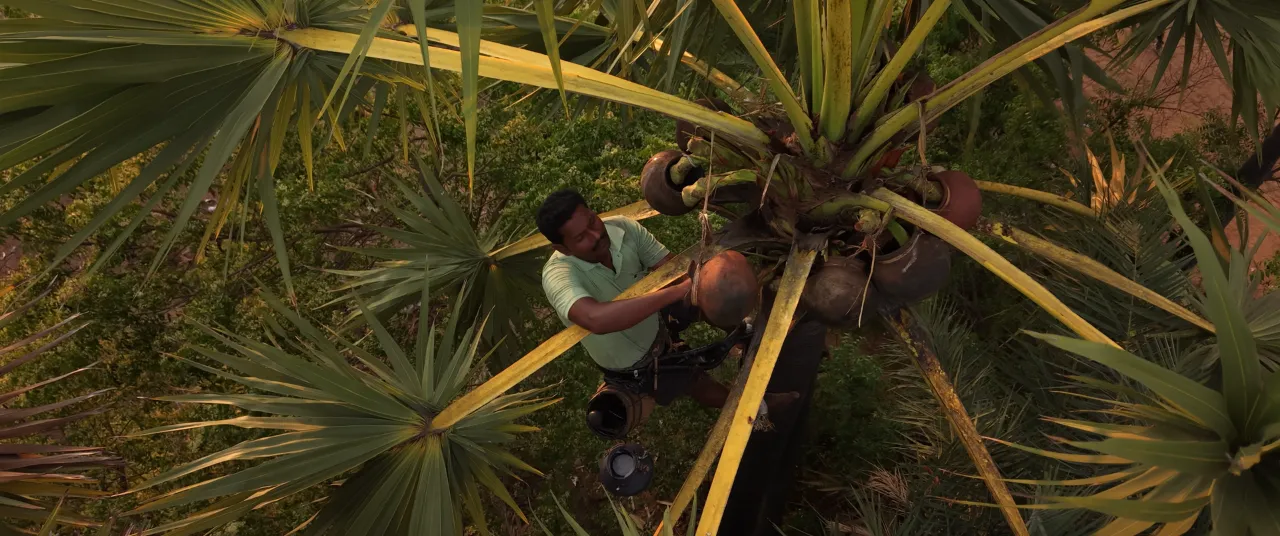
The Kattunayakan honey harvesters are adept at predicting from the ground level whether a hive 60-80 feet up in a tree contains honey. This shrewdness helps them assess whether the climb is worth it. While harvesters keep one eye on the task at hand, their other is on the lookout for bears and elephants. Their children stand beside them to watch and learn.
It is said that on a honey-harvesting trip, the only things the Kattunayakans carry with them are a knife, the items needed for the puja, rice to eat and a tin for the honey.
Call them ‘honey hunters’ and they don’t like it. They prefer being referred to as ‘honey harvesters’: they wait for the right time, when taking the honey will cause the least harm to the bees and their young inside.
There is a sacredness to the process of gathering the honey. Before the tribe can venture into the forest, a puja (religious ceremony) is performed. The goal is to seek the protection and blessings of their ancestors and the spirits of the forest. This is followed by asking for pardon from the bees, and giving them thanks. It is said that on a honey-harvesting trip, the only things the Kattunayakans carry with them are a knife, the items needed for the puja, rice to eat and a tin for the honey.

The ‘third’ share, and a pact with nature
“At the centre, we weigh the collected honey and check that its quality is good, with a particular focus on the presence of dust or any other contaminants,” says Jaya M. After this initial check, the honey is sent to a Food Safety and Standards Authority of India (FSSAI) lab. The centre she refers to is the Ippimala Third Share Collection Centre in Srimadurai, also located in Gudalur. In the last season, she says they managed to collect 3,000 kg of wild honey—a bountiful harvest by the tribe’s standards. Jaya, who is 57, has been a staff member with the Action for Community Organisation, Rehabilitation and Development (ACCORD)—the implementation partner of Ippimala Third Share Producer Company—since 1995. She has always marvelled at the deep reverence that Adivasi communities like the Kattunayakans harbour towards nature. Today, this marvel is mixed with relief that they are finally being fairly compensated for their efforts. The inflection point, she observes, was the inception of the Ippimala Third Share Producer Company in February 2025.

It is owned and governed by its producer-members who are organised into village producer groups. It now comprises 886 farmers from 106 villages. Aside from honey, it collects coffee, honey, pepper and tea directly from producer-members’ homes. Produce is weighed on the spot, so producers carry no transport costs or deductions. Prices are set against newspaper-listed market rates rather than the inferior offers made by traders. This way, no one can coerce them into settling for a lower rate, explains Stan Thekaekara, the co-founder of ACCORD. Honey prices are agreed upon with the producers before each season. Since the company is owned by the Adivasis, all profits belong to them as shareholders.
The establishment of this model rested on a dual purpose: to enhance market access for producer-members, and to bring in a shorter value chain to ensure self-reliance for the Gudalur tribes. The past they were accustomed to involved selling produce to the buyers they could seek out, and often getting cheated in the process. “We wanted to give them bargaining power in a market economy,” says Thekaekara. “The idea evolved from wanting to help the Adivasis become part of mainstream society on their own terms—in a way that they would not be subjected to exploitation by local landowners or employers.”
The establishment of this model rested on a dual purpose: to enhance market access for producer-members, and to bring in a shorter value chain to ensure self-reliance for the Gudalur tribes.
Since honey harvesting is the primary source of income for the Kuttanayakans, the conception of a small honey collective was proposed a decade ago. “That led to people saying, why don't we do the same thing for coffee, tea and pepper harvested by the Paniyas, Kattunayakans, Bettakurumbas and Mullukurumbas (all of which are classified as Particularly Vulnerable Tribal Groups)? That’s when we launched ‘Ippimala’ and created the Third Share brand,” he explains.
The mention of the ‘third share’ in the company’s name stands for a promise that the Kattunayakans made long ago to the forest: they have an unsaid but consistently honoured pact with the bears of the forest, to leave behind the beeswax for them to lick. In this way, the first share (the beeswax) is for nature. The second share is for the people who depend on nature, such as the children who will consume the honey. And the third share is made available to the consumer.
Also read: In Bundelkhand, century-old ties with mahua trees are being severed
Reclaiming the forest
‘Ippi. Ippi.’ Growing up, 29-year-old Madhu M. would often exclaim the word when startled. It’s a common expression among the Paniya tribe, to which he belongs. Loosely translated, it means ‘Oh gosh!’. The reasons for Madhu’s startle could be: a snake in the forest; tripping on a twig; or spotting something really beautiful. After all, the forests of Gudalur are home to a kaleidoscope of diverse flora.
The name Ippimala takes from this word/expression. Mala means mountain. Thekaekara adds, “The Paniyas were happy with us using the term, because they don’t want their children to forget it. ‘Ippimala’ is a way of making it permanent.”
The deep-rooted, ancestral ties of the Gudalur tribes to nature were disrupted during colonial times. The Indian Forest Act of 1865 allowed the British Government to establish state control over forest resources. Control was fortified by the Indian Forest Act of 1878, which commercialised timber extraction and restricted local community access. Thekaekara says the Wild Life (Protection) Act of 1972, which banned the hunting of wild animals, further drew firm boundaries around the forest and the rights of Adivasi communities. They continued to be displaced and disenfranchised: cut off from the forest physically and culturally, and no longer free to act upon the forest that was theirs.
How the profit is shared is decided by the Board at the time; it could be paid as a percentage of profits, or in proportion to the produce each producer supplied through the company.
“They lost easy access to its resources and to the places that mattered to them. These limits grew over the years. In 2007, Mudumalai was declared a Tiger Reserve, and access to the forest was curtailed even further,” he explains. Mudumalai, which borders Gudalur, had been a sanctuary since 1940. After it was declared as a tiger reserve, the families living in the region— Kattunayakans and Paniyas among them — were relocated in phases.
“This changed their food, their access to forest resources and their cultural spaces.” Thekaekara also adds that the Forest Rights Act of 2006 “brought a real improvement.”
He explains, “For the first time, their rights to the forest were recognised again. It helped communities regain some of what they had lost, such as honey collection and other non-timber forest produce, but not all of it. The change is still in progress.”

But during colonial times, the stress on the forests meant the Paniyas were reduced to bonded labourers; the tribes were considered encroachers on land which was once their own. They were pushed to the margins of society.
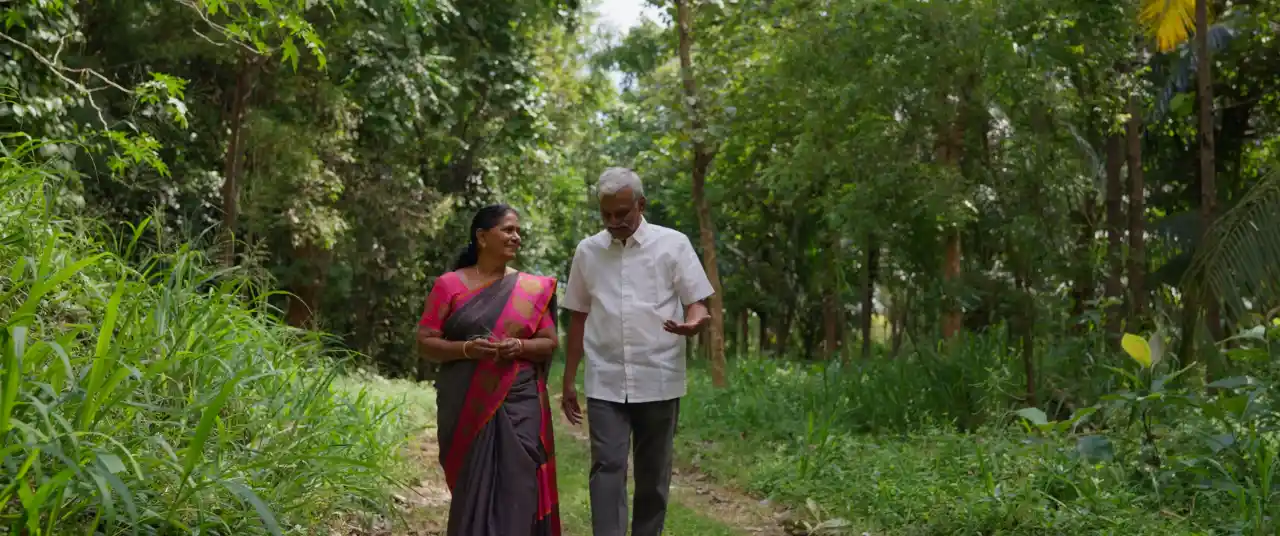
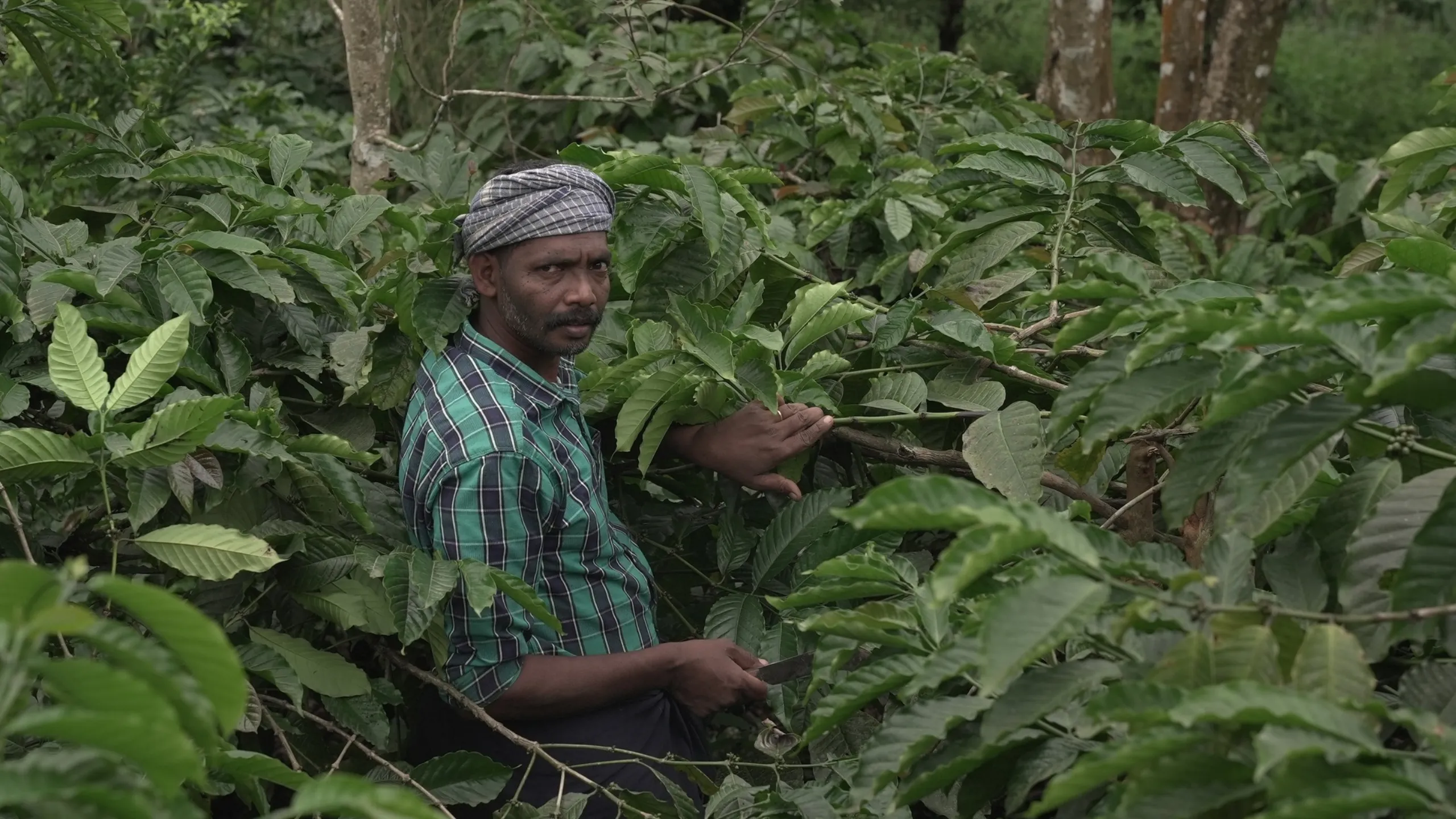
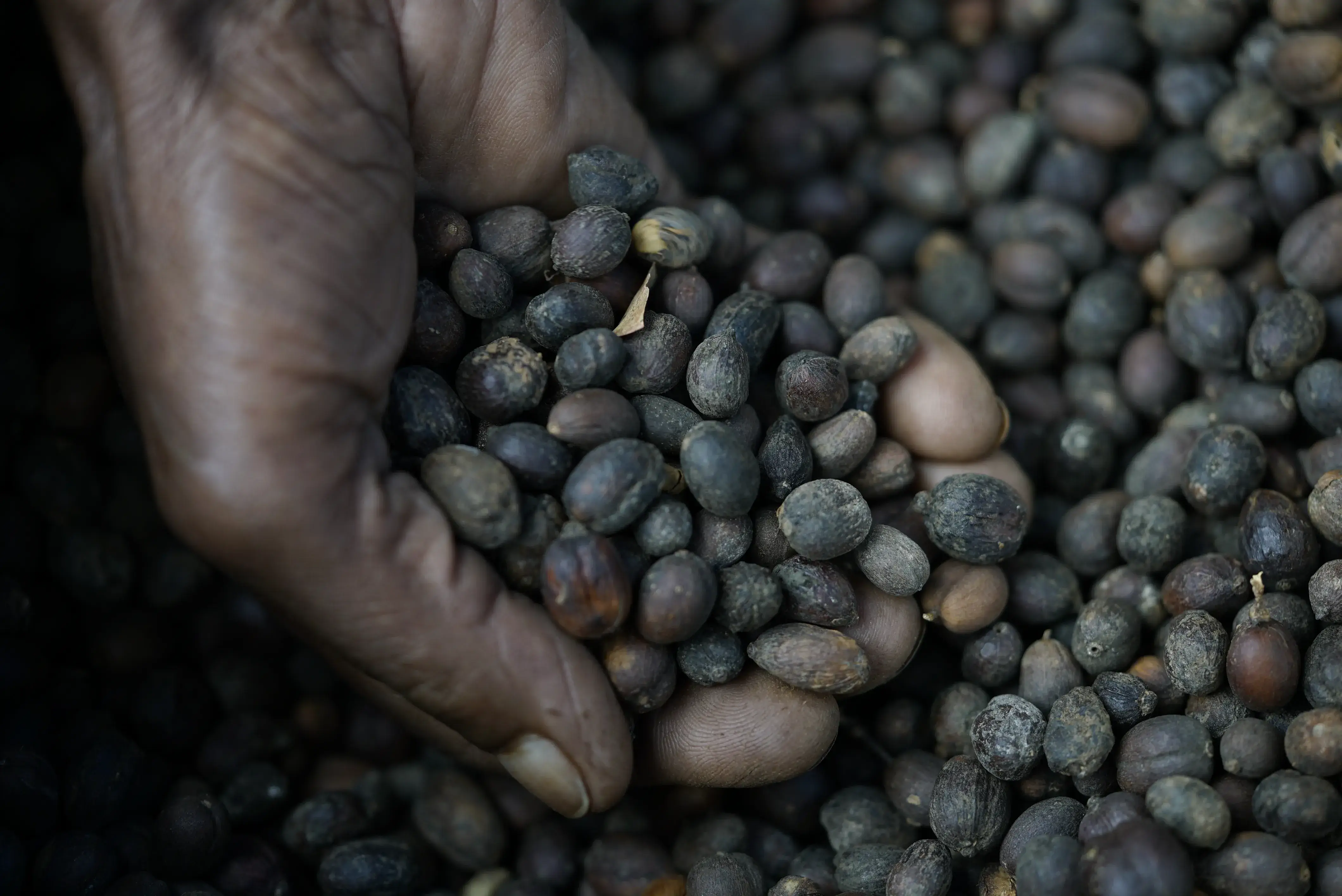
The Ippimala Third Share Producer Company builds on ACCORD’s foundational work in the representation of Gudalur’s tribes and their rights. Padmini, a 42-year-old farmer from the Bettakurumba tribe, says the biggest boon is no longer having to scout for buyers for their products. “Previously, we had to take our produce to the market. Now, after picking and drying the cherries, we inform the company, and they send their personnel to our doorsteps, along with a weighing machine, so we can weigh our produce and are paid the amount against the weight. The amount is Rs. 10 higher than the market price,” she shares.
Beyond the improvement in convenience, the access to broader markets beyond the forest has been a boon. The farmers’ trust in Ippimala has deepened because of the transparency of its workings. “The good part is that the people of the community are involved in every step,” Madhu shares. Every producer is a shareholding member of a producer group, and each group is a shareholder of the Producer Company. Directors are chosen from among the members to represent them on the Board of the company.
A group's shareholding is based on the number of its members. Each member of a group represents Rs. 1,000 of shareholding, and the shares are issued to the group as a whole, in shares of Rs. 250 each. A group of 10 members holds Rs. 10,000, which is 40 shares of Rs 250. A group of 15 members holds Rs. 15,000, which is 60 shares. A group's stake in the company grows with its growing membership. As in any producer company, all the shareholders are producer groups, so any profit the company makes goes back only to them. How the profit is shared is decided by the Board at the time; it could be paid as a percentage of profits, or in proportion to the produce each producer supplied through the company.
Currently, online sales are facilitated through the company’s website, while offline sales take place at exhibitions and stores in Tamil Nadu and Bengaluru.
Building an economy of trust
When the idea of a producer company was first pitched, the Adivasi communities were not particularly keen or confident. A troubled history with outsiders was to blame. But, as Subhash Gautam, the CEO of Ippimala Third Share Producer Company shares, trust was earned by following up on promises. “Initially, the community told us that local traders were giving them a comparable price to what we were offering them. And so they did not want to get into this [arrangement]. So we said, ‘If at some point you feel that the market is not paying higher than this, let us know.’ Promptly, within a month, they called us and said that they were not being offered a fair price for bulk orders,” Gautam says. “That’s what led us to set a benchmark price in the market. We saw the producer company as a force that could safeguard the interest of the community.”
However, entering the mainstream market was not without challenges. But Gautam emphasises that they let the products speak for themselves. “In February 2026, the coffee produced by Ippimala Third Share along with Binny Varghese, co-founder of Barista Training Academy which has workshops uniquely crafted for the Indian coffee industry, secured the third position at the India International Coffee Festival in Bengaluru. That has helped boost sales. Then there’s also the fact that the coffee market is slowly growing; there is space for experimentation, people are willing to try new flavours, tastes and lots from different regions.”

While coffee has been a space for experimentation, tea remains mired in hurdles.
Thekaekara, who moved to the region in 1984 with his wife Mari–both driven by a deep commitment to the well-being of Adivasi communities–says, “We found that all the Adivasis, except the Mullukurumbas, had lost their land. The members of the other tribes were landless labourers. So we started a successful tribal land rights campaign to help them get the land back. But they only had physical possession, not the title.” Planting tea, the region’s mainstream crop, became a way to change that: as a permanent crop, it served as proof of possession and gave families an income of their own, loosening the landlords’ hold. But, Thekaekara says, “The people who exploited them all these years figured out how to exploit them in a new circumstance by buying the leaf from them.”
But tea is no longer lucrative. Since liberalisation, cheaper imports from countries such as Kenya have undercut Indian tea, and Gudalur’s leaf has become what the trade calls a “filler tea”, used to add strength to blends. Costs have risen while earnings have fallen, and small Adivasi growers are hit hardest. “What they are losing is the independent livelihood that tea was meant to give them,” Thekaekara says. Many young, educated Adivasis now end up as labourers. It was their frustration, and their wish for enterprises of their own, that led to the producer company. Ippimala hopes to make a change, Thekaekara says. “ By bringing together the tea that producers already grow, and by finding new value-added tea products, we hope to raise the income of Adivasi families who have tea farms.”
Also read: The meagre morsels swallowed by Assam’s tea workers
No place for middlemen
A community-owned model is not new to India, Gautam reasons. Brands have implemented them, with success. “The question is whether the farmers and the producers are benefiting from being shareholders, and whether that benefit can be generated by going up the value chain.” At Ippimala, benefit is viewed through a dual lens: the company benefits farmers by collecting produce directly from their homes, ensuring accurate weighing and eliminating transport costs and other deductions. For coffee, this approach alone enabled them to pay Rs. 8–10 more per kilo. The second benefit is that the company returns profits to farmers through in-kind support, including farming tools, baskets and tarpaulins for drying coffee. However, the most significant benefit lies in farmers’ ownership of the enterprise, allowing them to share in its success rather than remain dependent on middlemen, Gautam shares.
The question is whether the farmers and the producers are benefiting from being shareholders, and whether that benefit can be generated by going up the value chain
For a moment, we pan our gaze to the Paniyas of Wayanad. Despite being promised compensation under the Forest Rights Act, 2006 (FRA), which aimed to redress historical injustice against tribals and forest dwellers, a 2017 report from Current Conservation records that in fact, they weren’t thrilled—and viewed it as ‘a piece of paper’ since they felt community rights were not vested. Another recent study explores how the economic life of the Paniya community in Wayanad has historically revolved around the vallippani system, where workers received valli (paddy) as payment instead of cash. This barter system entrenched subsistence and dependency, forming part of a trifecta of trauma marked by economic exploitation, social marginalisation and generational poverty.
The harsh realities faced by Paniyas in other areas explains why the community in Gudalur may have been mistrustful of any new models. But Gautam credits their works and investment in the area; this includes the setting up of the Gudalur Adivasi Hospital and community health programme (ASHWINI), and the Vidyodaya School and village education programmes.

Also read: This women-run milk cooperative transformed a Kumaon village
They see their futures in the forest
In urban India, it is believed that forest communities live life at a slower pace, but that is far from the truth. Padmini wakes up with the sun. “The first thing we do after waking up is cook. After that, we collect water on days when it is available. Then we go to work at the self-help group (SHG) where we make lantana elephants (hand-crafted Asian elephant sculptures made from Lantana camara, an invasive flowering shrub), which are then sold. We work in the forest until 6 pm and then return home to cook again,” she shares. She adds that after sundown, they stay indoors, for fear of wild animal attacks.
Padmini adds that while the forest always provides, the quality of its produce is dictated by a number of variables. “In the case of coffee, if the area receives adequate rain before flowering season, only then will the crop be good. If it doesn’t rain at the right time, we don’t expect anything! It’s the same with cherries. Where we could have harvested 2 kilos of coffee, there is a chance of earning only 1 kilo, if there’s no rain.”

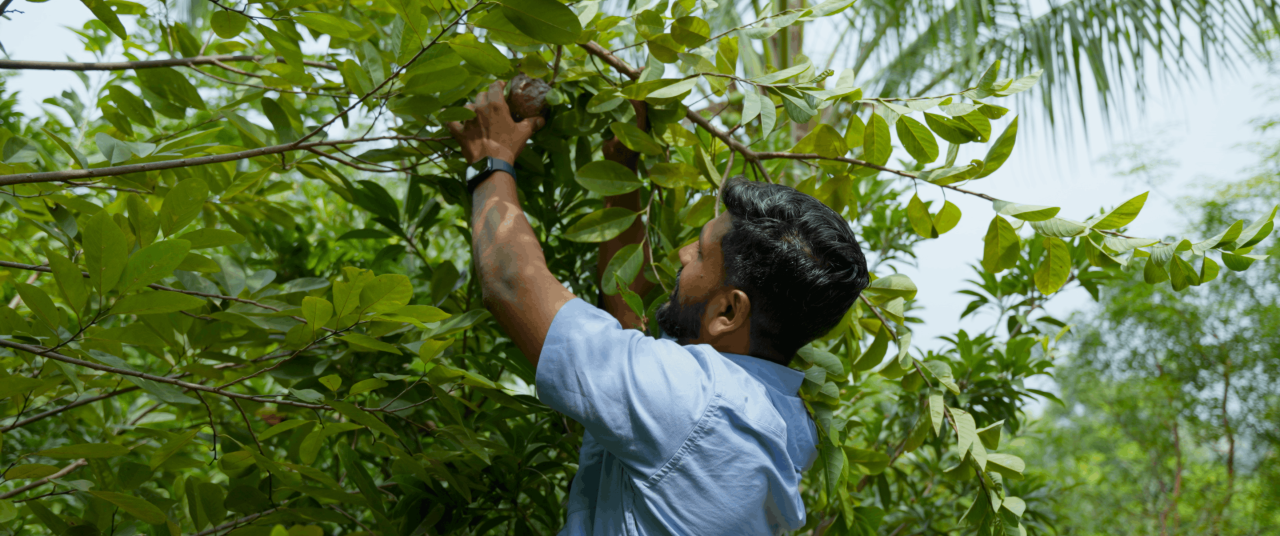
Madhu, who also works in the forest, grows sentimental each time he enters it, as he recalls the stories his parents told him as a child. “In those days, we depended on the forests for food and most of our daily needs. We rarely needed to buy anything from markets. I feel fortunate to have grown up with such a close connection to the forest,” he says. In his stories are strands of shared memories across the tribal communities of Gudalur, who can now envision a new future in a mighty but familiar forest.
Edited by Anushka Mukherjee and Neerja Deodhar
Cover image by Gokul Gopi
{{quiz}}


Explore other topics
References