.png)
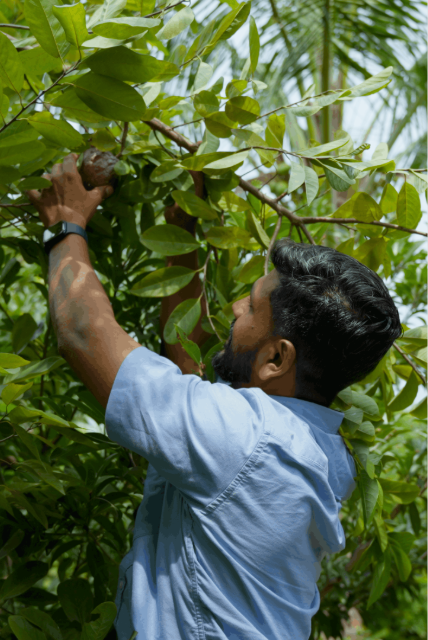
Summer in a food forest: A time of harvest, and pause
Shihab Kunhahammed, the guardian of such edible ecosystems, believes that food forests thrive in the heat—by design


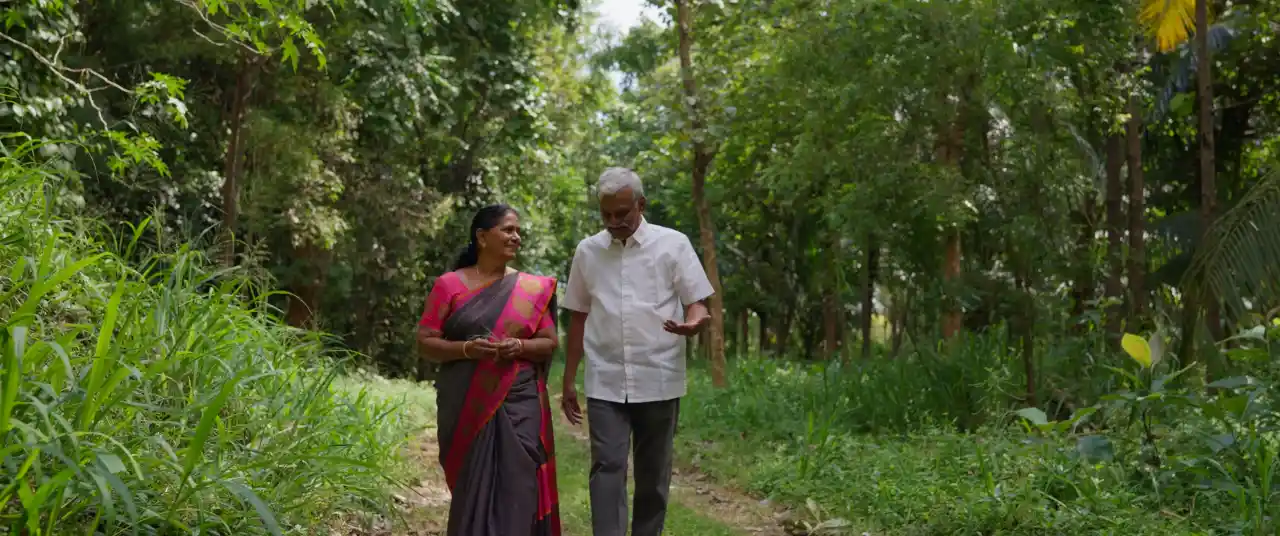
A food forest is a farm unlike any other. It is a comforting space where I feel rich, not because of material wealth, but because of what surrounds me.
Here, in Tamil Nadu’s Hosur, where we’re guardians of an edible ecosystem spanning five acres, the peak of summer brings with it a luxury I cherish: we harvest a variety of fruits, grown naturally without compromise or artifice, allowing us to taste mangoes, jackfruits and mulberries the way they were meant to be.
By providing respite from the heat, a food forest can rewrite the feelings we associate with summers. In me, the season evokes gratitude for a generous bounty of produce, because it is the most important season, marked by the highest yield of the year. It calls for an observation of changes taking place inside the forest, inspecting crops and trees to understand what is lacking, ensuring a steady supply of water, preparing the earth for the rain, and planting diverse species.
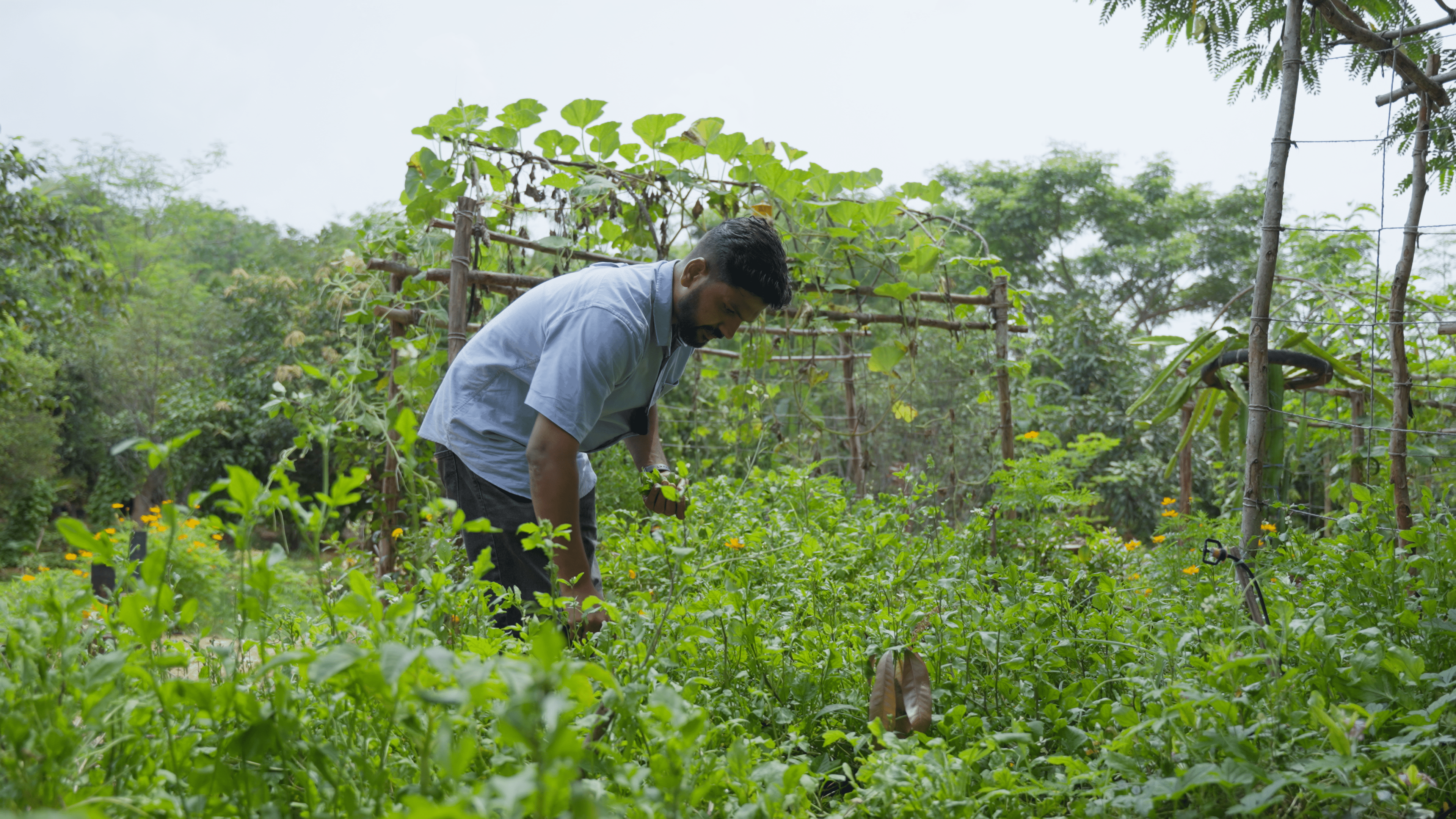
Letting the forest breathe
Farming never comes to a halt in a food forest. It produces throughout the year. But even the mighty food forest needs a little pause, to stretch and to breathe. Summer is the right time for this. It is not just a season for harvest—it is a crucial point when the forest rewilds and welcomes new additions.
Even the mighty food forest needs a little pause, to stretch and to breathe.
About a month before the monsoon, when the heat starts to ease, we embark on the planting of new varieties. Planting saplings at this time of the year gives them a good headstart. We also grow hibiscus and other flowering plants, to welcome pollinators such as bees, birds and bats. Many species of birds, such as Red-whiskered Bulbuls and sunbirds, have built their nests in the trees’ canopies. We did nothing to attract them; the ecology here is inviting by itself.
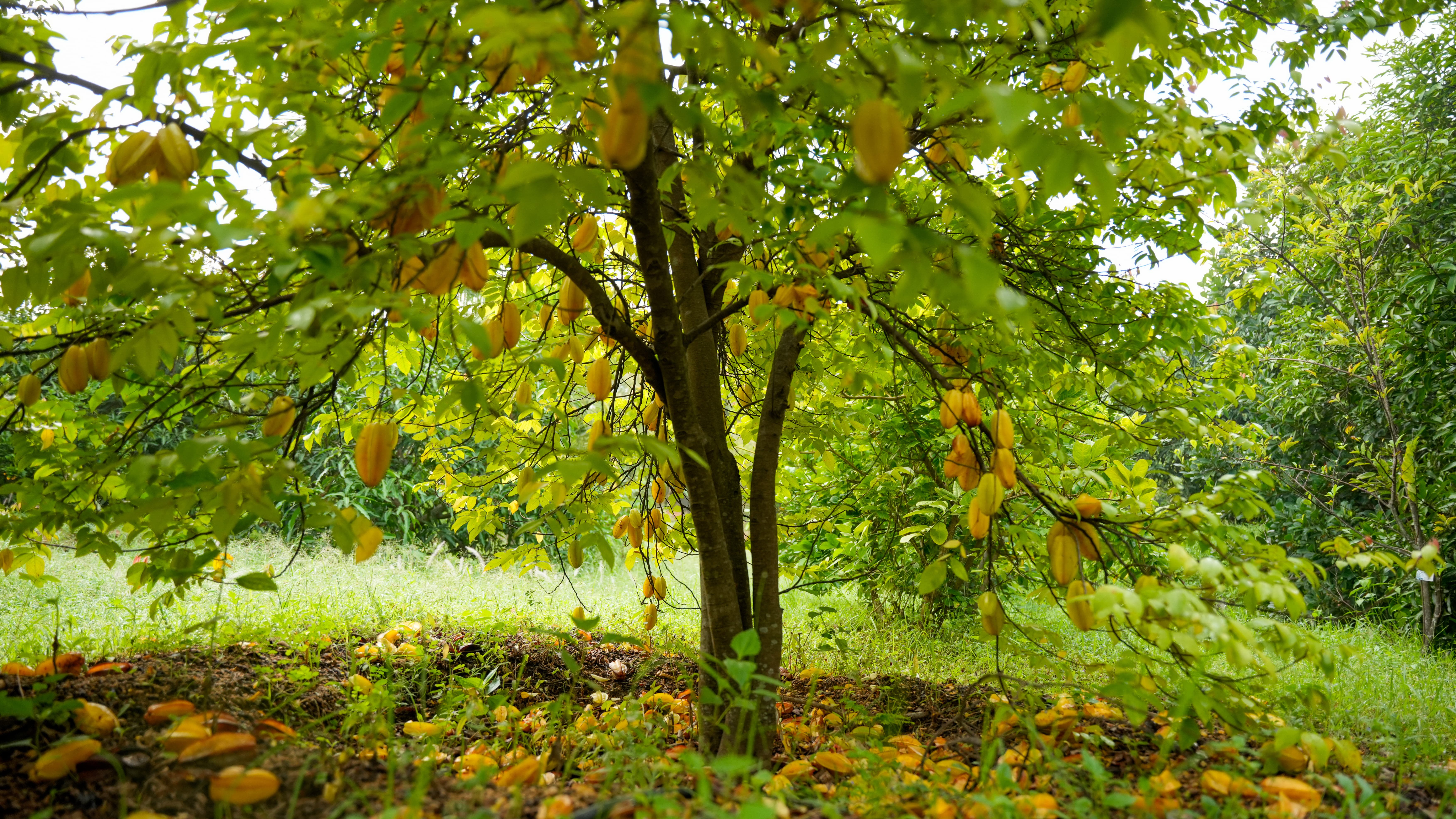
The floor of the forest becomes a carpet of dry leaves shed by trees in their mature state, which we use to make mulch. The leaves are stored in drums and returned to the soil a year later as naturally fertile, no-cost manure—making it ecologically sensitive and cost-effective at once. We usually use the previous summers’ mulch for the crops that we grow the next. This process helps to maintain the soil’s moisture and an optimal temperature, as well as keeping the roots hydrated at all times.
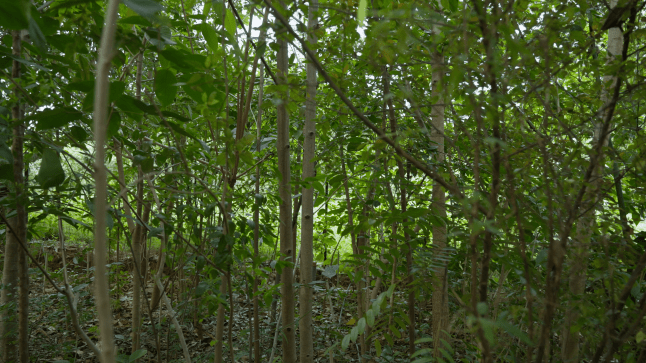
There is a palpable difference in the temperature within a food forest, and the temperature you’d experience outside its boundaries. Thanks to its compact design, the crops grow in close proximity and provide shade to each other, enabling them to endure the heat while also maintaining a specialised microclimate.
Also read: Turn left for Mumbai's concrete jungle. Turn right for its thriving food forests
Water, water, everywhere?
The most challenging aspect of farming during the summer is ensuring there is enough water for crops. The heat induces exhaustion in plants, making them weak, tired, and wilted. Yet irrigation is no easy task. We dig contour channels and swales—paths that direct rainwater and allow it to be collected efficiently. This process becomes challenging after the monsoon, when the soil turns loose. During the summer, the dry texture of the soil makes it much easier to work with.
Rainwater collected during the previous monsoon, stored in ponds or tanks, is released during the summer. This is why pre-monsoon preparation—building channels and storage—is crucial. We also carry out drip irrigation, which involves gradually releasing water directly to the root zone (the soil surrounding the roots) through pipes or porous hoses. This is done to ensure that the water level reaches the crops according to their needs and capacities.
Also read: A man dreamt of a forest. It became a model for the world
The impact of climate change
There have been years when I noticed crops worn out, and yields far below what was expected. Last summer, our jackfruit trees offered 60% less yield than the usual rate. This is evidently a huge loss, but I am unable to pinpoint a precise reason for it. Initially, I wondered if it was because of the rise in temperatures; but the jackfruit is a summer fruit, and it is hard to believe that this could be the only cause for such extensive losses. This was neither to do with the summer, nor a phase of low growth. I believe that climate change was the culprit.
The extreme heat in the summer months may feel like a curse, but for an organic farmer like me, it is a blessing in some ways.
There was a similar change in our mango trees during the last winter, which was colder than usual. Mangoes, being summer fruits, were impacted by it. Lychees, on the other hand, thrived; they are early summer fruits, and the cold suited them well. Each crop responds to changing climate patterns in its own way.
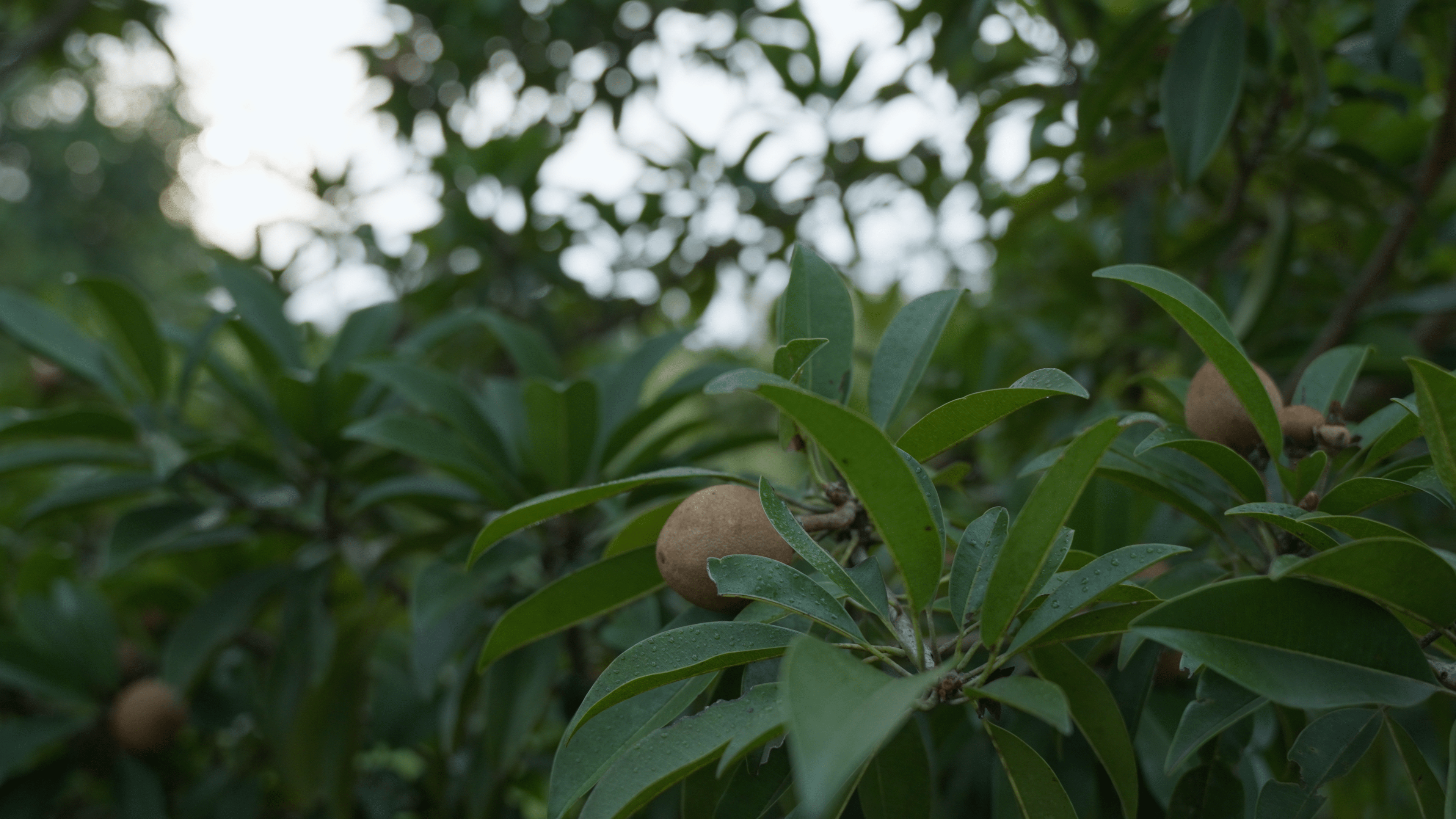
The extreme heat in the summer months may feel like a curse, but for an organic farmer like me, it is a blessing in some ways. For one, we do not use chemicals to tackle pest attacks; we rely on organic alternatives, of which heat is one. Pests often find it hard to withstand heat. Thus, summers bring a significant decrease in the rate of pest infestation and reduce damage to crops.
It is easy to blame summers for deleterious effects on farming cycles, but we should first remind ourselves that the root cause is human interference. I do not curse summers—I see them as a blessing.
—As told to Sreekanth K.
Also read: How an Alappuzha coir exporter nurtured a one-acre forest
{{quiz}}


Explore other topics
References