India’s urea usage reveals the vulnerability of its food systems
Disruptions in the Strait of Hormuz have laid bare the reality of India’s soil nutrient imbalance


The war in West Asia engulfed Israel, Palestine, Lebanon, Syria, and the Persian Gulf for nearly five months, and its devastating impact on human life and ecology has reverberated far beyond the region. Aside from livelihoods, global gas supplies and trade, another key economic outcome is pinned on the war: the hopes of billions of people counting on bountiful harvests and affordable meals.
Since March 2026, the war choked the Strait of Hormuz, a narrow, critical maritime trade route through which much of the world’s energy reserves travel, including oil, petroleum and natural gas. The Gulf region is a key producer of both LNG (liquefied natural gas), and nitrogen fertilisers like urea. In fact, a third of the global supply of fertilisers also passes through the Strait—making the region fundamental to agricultural prosperity. As a result, the war exposed the faultlines in a fertiliser economy contingent on a geopolitically sensitive bottleneck.
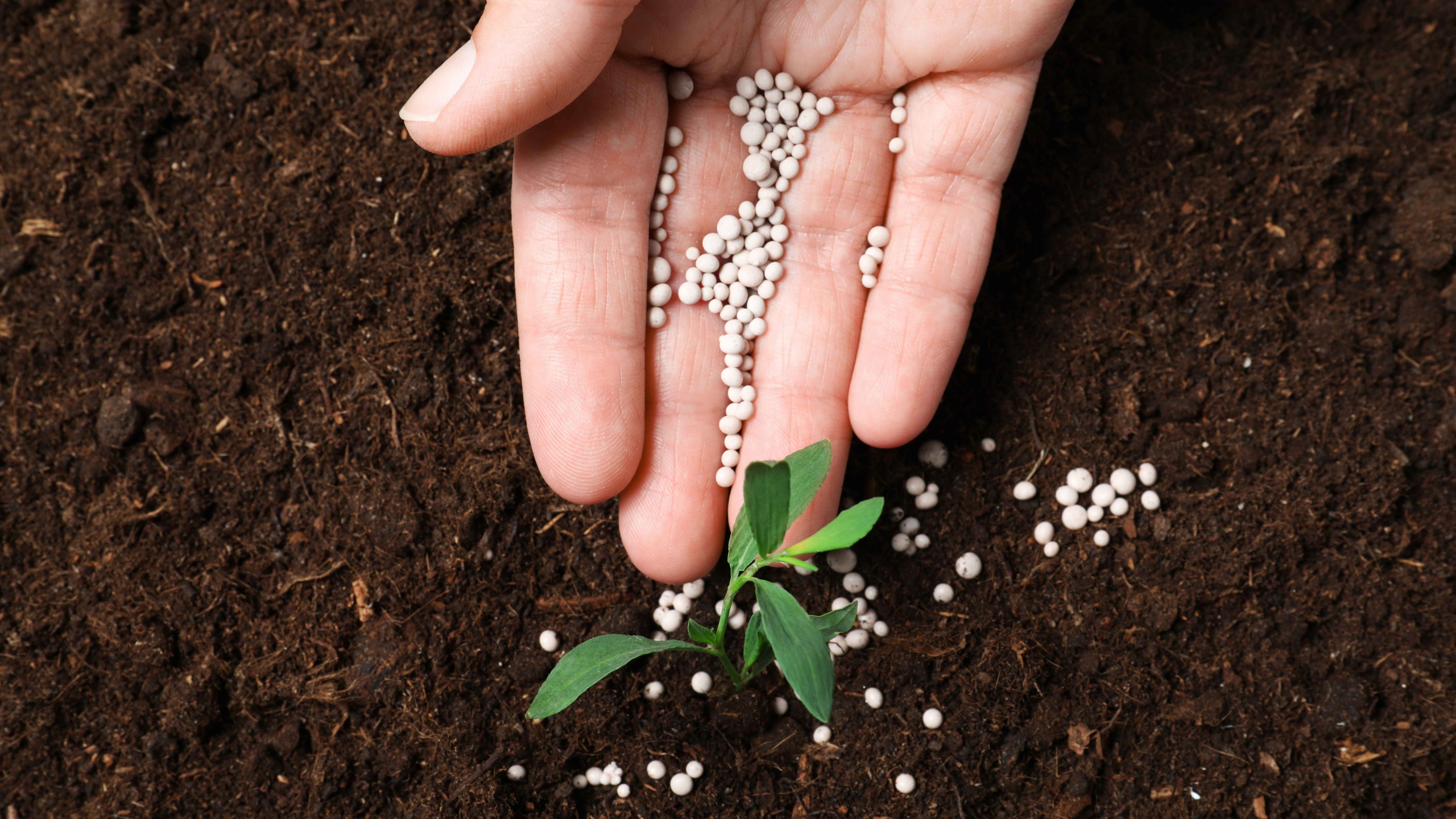
Urea is a synthetic nitrogen fertiliser. Natural gas is industrially burned with hydrogen to synthesise ammonia, and then the ammonia is reacted with carbon dioxide to form urea. It contains 46% nitrogen by weight, making it the most concentrated solid nitrogen fertiliser. It is also India’s most widely and diversely used crop nutrient, with farmers applying over 40 million tonnes of the fertiliser to fields of cereals, oilseeds and vegetables, annually. The far-reaching impact of the war stalled the passage of LNG through the Strait of Hormuz, making imports uncertain and slashing the domestic production of urea. The crisis could not have struck at a more precarious time in India’s crop calendar; farmers are looking at a compounded setback with a below-average monsoon prediction ahead of the kharif season (courtesy the Super El Nino), and cuts in fertiliser and fuel.
Feeding a young republic
The synthesis of urea was actually a serendipitous accident: In the 1700s, scientists successfully isolated this organic, nitrogen-rich compound from urine, through which it is naturally excreted from the body. In 1828, German chemist Friedrich Wöhler conducted an experiment to create a different chemical called ammonium cyanate. But when he heated the substance, the compound crystallised into urea. The discovery was also revolutionary because it disproved the ‘vital force theory,’ demonstrating that an organic compound could be made in a laboratory from inorganic chemicals.
Urea would become a key player in agrarian economies like India. After Independence, India was overwhelmingly powered by agriculture, but lacked technological infrastructure. In the 1950s and 1960s, we relied heavily on food imports, particularly wheat shipments from the US under the Public Law 480 (PL-480) programme, a concessional food aid scheme. With memories of famine still fresh and food shortages a persistent threat, fertilisers were seen not merely as agricultural inputs, but as strategic tools for achieving food security and self-sufficiency.
With memories of famine still fresh and food shortages a persistent threat, fertilisers were seen not merely as agricultural inputs, but as strategic tools for achieving food security and self-sufficiency.
The first major state-owned fertiliser factory was inaugurated at Sindri in present-day Jharkhand in 1952. It produced ammonium sulphate and later became the country’s first producer of urea and ammonium nitrate-sulphate. In many ways, this plant became the blueprint for India’s future fertiliser boom. It carried the hope of a young nation, reeling from colonialism, and trying to internally generate the tools to feed its growing population. Others soon followed at its heels. The Fertiliser Corporation of India was established in 1961. Large state-linked enterprises such as Rashtriya Chemicals and Fertilizers, IFFCO, and KRIBHCO emerged as central to agricultural policy. Plants were built across the country to keep meeting the domestic demand for fertiliser.
Also read: The grave personal cost of pesticide use
In a headlock
The Green Revolution of the late 1960s transformed Indian agriculture—and also laid the foundation for several anxieties that would propel it for generations. High-yielding varieties of wheat and rice, supported by irrigation, mechanisation and chemical fertilisers, dramatically increased foodgrain production and helped the country reduce its dependence on imported grain. But this agricultural productivity came with a new dependency that would prove difficult to wean off. The new crop varieties were bred to respond to heavy doses of nutrients, particularly nitrogen, which was supplied through urea. As farmers chased higher yields, nitrogen fertilisers became central to crop production, gradually displacing traditional nutrient sources such as farmyard manure, compost. Mixed and intercropped farming systems gave way to monoculture farms and plantations.
While urea supplements soil nitrogen (N), phosphatic and potassic (P&K) fertilisers deliver phosphorus and potassium. These are the three critical macronutrients for soil health and plant growth: nitrogen promotes lush leaf and stem growth, phosphorus is important for early seed and root development, and potassium boosts plant immunity. India introduced its Nutrient-Based Subsidy (NBS) scheme in 2010, subsidising P&K fertilisers to make them affordable, while encouraging a balanced soil application of crop nutrients. However, urea has been excluded from the purview of this scheme, and its prices kept artificially low.
Over decades of subsidised fertiliser use, urea has acquired an almost talismanic status on many farms, based on the assumption that more nitrogen means more grain.
A key reason for urea's dominance is that it remains extraordinarily cheap. A 45 kg bag has been sold at a government-fixed price of Rs. 242 since 2018, despite repeated spikes in global fertiliser and natural gas prices. Because farmers are shielded from the true cost of nitrogen, urea is often cheaper relative to other fertilisers supplying phosphorus and potash, encouraging its overuse and contributing to India's persistent soil nutrient imbalance. Over decades of subsidised fertiliser use, urea has acquired an almost talismanic status on many farms, based on the assumption that more nitrogen means more grain, even though research shows that balanced fertilisation consistently outperforms nitrogen applied alone. The average NPK application ratio in India was 9.8:3.7:1 in the 2024 kharif season, which far exceeds the recommended average ratio of 4:2:1 for Indian agricultural lands.
Urea journeys through the soil like smoke. Part of India's dependence on urea stems from the fact that much of its soil’s nitrogen is lost before crops can use it. Urease breaks down urea into carbon dioxide and ammonia, which can escape into the atmosphere through volatilisation (the process by which chemicals escape from the soil into the atmosphere in gaseous form). Nitrogen can also be washed away from the root zone into groundwater, with crops often unable to access a substantial share of the fertiliser applied. With nitrogen-use efficiency estimated at only 33–35%, farmers often respond by applying more urea, believing additional doses will help secure higher yields. The result is a cycle in which losses and overapplication reinforce the crop's dependence on a steady supply of the fertiliser.
The costs of overuse extend beyond the farm. When excess nitrogen escapes from fields, it does not simply disappear: elevated nitrate levels in soil and water have been linked to health risks such as methemoglobinemia or ‘blue baby syndrome’; in infants, a condition that reduces the blood's ability to carry oxygen. Some studies have also associated long-term exposure to nitrate-contaminated water with thyroid disorders and certain cancers.
Also read: Cover crops: A means to renew soil health without using chemicals
Warring with urea
The blockages in the Strait of Hormuz highlighted a less visible vulnerability in India's food systems: their dependence on imported gas. Urea production relies heavily on natural gas as a feedstock, and the Gulf accounts for a significant share of India’s LNG and urea imports. For example, India imported over 46% of its natural gas consumption in 2023-24. India produced 306 lakh metric tonnes of urea in 2025 and 71% of its import requirements were met by West Asia. In the past, urea shortages have forced farmers to line up outside fertiliser outlets.
As disruptions compounded in the Strait, India's domestic urea production dropped by nearly a third in March 2026, falling from around 2.4 million tonnes to 1.6–1.8 million tonnes. Production rebounded the following month, but the disruption underscored the fragility of the country's fertiliser supply chain.
For now, the disruption has been largely absorbable. Government buffer stocks, diversified import sources and the ability to draw on existing inventories have helped cushion farmers from immediate shortages. However, even the temporary dip was significant enough to prompt the government to float a global tender, eventually securing roughly 3.7 million tonnes of imported urea.
With India being the world’s second-largest user of fertiliser after China, higher import costs and delayed shipments have created an uncertain climate around the availability of both fertilisers and their raw materials, and a ‘food security time-bomb’. The term ‘domestic production’ paints an illusion of self-sufficiency, and obfuscates a reality where much of this fertiliser, generated at home, depends on imported intermediary products.
Also read: What's lurking in our food?
The Indian Council for Agricultural Research (ICAR) has encouraged states to consider ammonium sulphate as an alternative source of nitrogen, particularly for paddy cultivation. Unlike urea, which depends heavily on natural gas and remains tied to volatile global energy markets, ammonium sulphate can be manufactured domestically, as well as imported from a wider range of countries, and has a lesser conversion lag (unlike urea, ammonium sulphate does not need to be hydrolysed; its ammonium contents can be directly absorbed by the soil). It also replenishes the soil’s sulphur deposits. This encouragement from the state came long before the war, emphasising that dependence on a single fertiliser can become a strategic vulnerability—which is what Indian farmers are grappling with today. But scientists caution that simply substituting one chemical fertiliser for another will do little to address the deeper problem of nutrient imbalance in Indian soils. It might create a loophole that will take another crisis to expose.
Scientists caution that simply substituting one chemical fertiliser for another will do little to address the deeper problem of nutrient imbalance in Indian soils.
The debate raises a larger question about what food sovereignty really means. For decades, India has measured self-sufficiency through grain production and fertiliser output. But the events in the Strait of Hormuz reveal the limits of that definition. A fertiliser bag stamped ‘Made in India’ may still depend on imported gas, imported minerals and shipping routes vulnerable to geopolitical conflict. True food sovereignty may lie not only in producing fertilisers at home, but in reducing dependence on external inputs altogether: rebuilding soil organic matter, diversifying cropping systems, integrating livestock, recycling nutrients and harnessing biological nitrogen fixation—bringing back the ancient wisdom of farming. The lesson from the war may not be merely that fertiliser supply chains need safeguarding. A more holistic model of food sovereignty may require rebuilding soil fertility in ways that are more resilient to global conflicts unfolding thousands of kilometres away.
{{quiz}}


.avif)
Explore other topics
References