
Pesticide residue contributes to breast cancer? A new study probes
In the 30 samples tested by oncologists affiliated with the HCG Foundation, pesticide residues were found in every single one


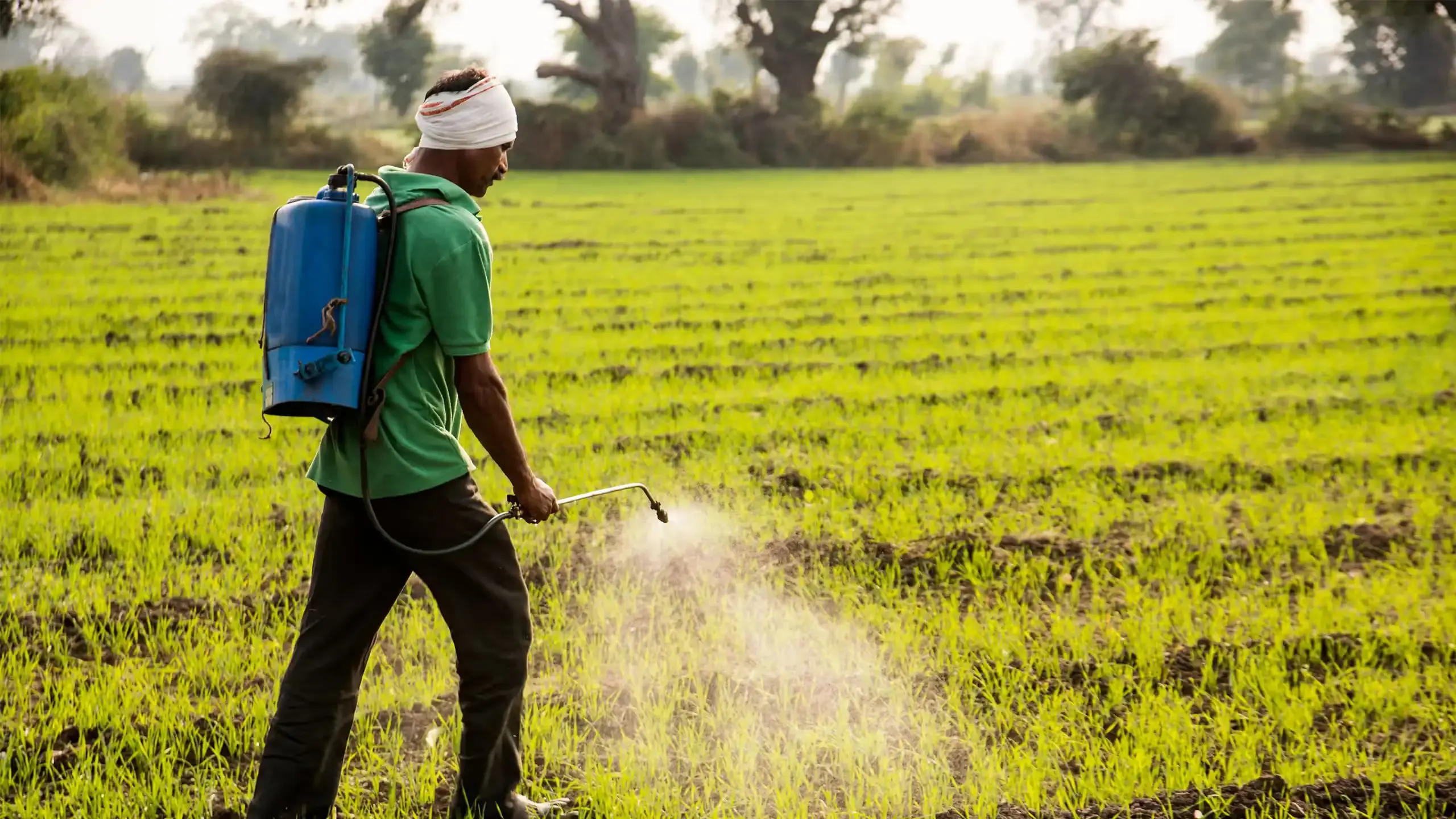
It's old news that pesticides are bad for us. We remain aware of this fact as we wash fruits and vegetables, in an attempt to free them of trace chemicals. We know it when we stifle our breaths and hurry our footsteps every time a fog of insecticide envelopes our housing societies or parks. But we still consume pesticides through what we eat and drink, even through what we breathe and touch. The traces add up, and are associated with a host of long-term health issues, from chronic inflammation and anaemia, to impaired respiratory function, and potentially, cancer.
A group of oncologists affiliated with the HCG Foundation, an Indian network of cancer care institutions, attempted a root cause analysis on this intersection of agricultural realities and breast cancer-related outcomes. Instead of looking to attribute blame, they looked for simple changes in farming that may reduce cancer risk for larger populations. In May 2026, they published an abstract with details of their study in the Journal of Clinical Oncology.
What concerns Dr. Krithikaa Sekar, lead author of the study in question, is that “most of these pesticides have only been studied for their toxic effects, like toxicity caused when ingested. They haven't been evaluated from a cancer-causing point of view. This is far more dangerous than using something that is probably dangerous. If at all a pesticide has to be used, it is wiser to use a safer variant, and also ones that are water soluble.”
If at all a pesticide has to be used, it is wiser to use a safer variant, and also ones that are water soluble.
This is what is scary: these pesticides are government-approved, widely used, and, as Dr. Krithikaa explains, poorly studied as carcinogens. To understand the study’s findings, let’s first understand how cancer works.
Cancer 101: Inflammation and genetic mutation
Cancer is a disease of excess. It allows cells to multiply, while deactivating the body's signalling system that would otherwise keep this multiplication in check. This results in the uncontrolled growth of tumours that invade or spread to other parts of the body. The growth of these tumours is bad news for us because, firstly, it blocks the host organ from executing its function (for example, bone marrow cancer may prevent the production of enough red blood cells to carry oxygen). Secondly, cancerous cells have a sneaky way of convincing blood vessels to grow towards them. This ensures a rich supply of oxygen and nutrients to the tumour at the cost of nourishing the body.
Cancer arises from a genetic mutation. But only a fraction of cancer patients have these genes at birth. For 90-95% of patients, the kink in the system is induced by a variety of other factors like lifestyle, diet, other illnesses, and even the environment. Smoking, obesity, excessive red meat consumption, air pollution, and even exposure to chlorinated drinking water have been associated with an increased risk of cancer.
Read that sentence again. The reason studies use phrases like "associated with an increased risk" of cancer, rather than saying "smoking causes cancer" is that it is the interaction of multiple risk factors that causes cancer, rather than one isolated behavior. Dr. Krithikaa shares, “You will be surprised that even smoking is not a proven direct carcinogen...it is associated with increased risk.” Research shows that smoking is responsible for a large proportion of lung cancer cases, and that tobacco has over 50 carcinogens, but acknowledges that some dots are yet to be connected.
The web of factors influencing cancer is complex, and to brand any one factor as causative is to miss the wood for the trees.
Though research is underway, we do know that a number of factors are involved in prompting cells to become cancerous. The most well-recognised are genetic mutations, non-genetic mutations in gene expression, and chronic inflammation. Inflammation, in the short term, helps heal injuries. But if it persists over long periods of time, it becomes a stressor that can cause genetic mutations, hormone imbalances, and oxidative stress. The web of factors influencing cancer is complex, and to brand any one factor as causative is to miss the wood for the trees.
Also read: The grave personal cost of pesticide use
What the study found
One of the reasons Dr. Krithikaa and her colleagues chose to study breast cancer tissue is because it becomes a likely meeting ground for these factors. The fat tissues surrounding the breast are more prone to collecting fat-loving chemicals and becoming chronically inflamed. Since breasts are also sensitive to changes in hormone secretion, imbalances in the secretion of estrogen or progesterone also affect functioning.
Pesticides are associated with breast cancer through many pathways. Many pesticides display estrogenic or anti-androgenic activity, meaning that they mimic estrogen and progesterone to stimulate cell growth. Oxidative DNA damage (damage to DNA caused by free radicals, or unstable molecules), mitochondrial stress (when mitochondria, that produce energy in cells, are damaged and stop working properly), and chronic inflammation have been demonstrated even in non-cancerous breast tissue of people who are chronically exposed to pesticides.
In the 30 samples tested, pesticide residues were found in every single one.
A majority of breast cancer cases are hormone-dependent. Moreover, the fat cells surrounding the breast might house lipophilic (fat-loving) pesticide residues, contributing to chronic inflammation. These establish a strong possible correlation between the bioaccumulation of pesticide residues and the onset of breast cancer.

The first part of the study involved testing eight breast cancer tissues and adjacent fat tissues for common pesticide residues. The authors found that the surrounding non-cancerous fat tissue contained significantly more residues than the cancerous tissue in all cases. Thereafter, only fat tissues were tested for a broader range of pesticides that are commonly used by farmers, such as Triticonazole, Ethion and Buprofezin. In the 30 samples tested, pesticide residues were found in every single one. Forty-nine distinct pesticide residues were detected, which were grouped into seven broader categories.
Also read: A life, undone: A dam leaves farmers bereft of home and identity
The need for safer farming practices
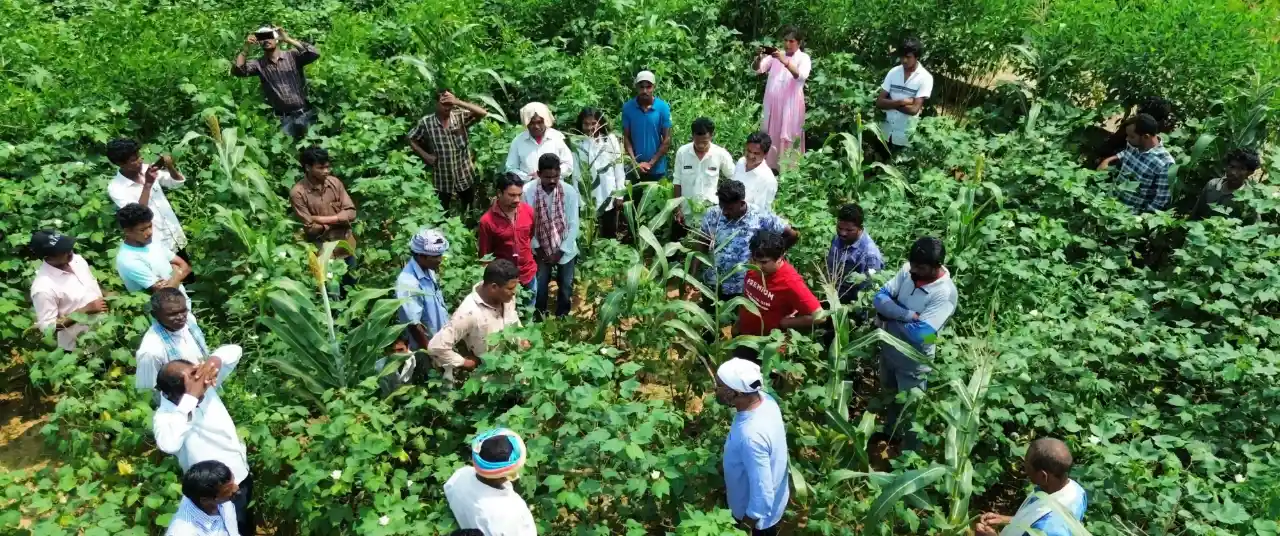
"Safe practices aren't taught to farmers. They go by hearsay. Whatever farmers nearby buy, or whatever the [input] seller suggests, they buy that. They choose depending on the yield that other farmers have achieved with that pesticide," says Dr. Krithikaa. This insight comes from the researchers’ conversations with 50 farmers from parts of Karnataka and Tamil Nadu, which revealed lapses in regulation as well as awareness.
Information regarding a chemical's safety, the quantity to be used, or the time needed for it to disintegrate isn't made available. This waiting period—before a pesticide can disintegrate—is crucial. Most modern pesticides don’t stay in a crop forever. Once sprayed, they slowly break down; they may get worn away by sunlight, water and microbes on the plant and in the soil. Each pesticide has a waiting period, known as the pre-harvest interval: the number of days that should ideally pass between the last spray and the harvest, so that trace remains on the produce break down and fall to a safe level. But this differs for each pesticide, and such information remains scarce for farmers. As a result, these factors don't influence which pesticide they choose and whether they wait for it to wear off before harvesting.
Information regarding a chemical's safety, the quantity to be used, or the time needed for it to disintegrate isn't made available.
The picture looks very different for some crops being grown for export: the soil and water are often tested before sowing for some crops, while farmers follow an approved pesticide schedule and maintain records of each application. The crops are inspected on-field and in laboratories, and remain traceable with attached farm and batch numbers.
Two insights can be gleaned from the differences in produce grown for foreign and domestic markets. First, export produce is grown to comply with both India's and the importing country's food safety rules. European countries usually have far stricter regulations, meaning that compliant domestic produce is still less safe than export produce. Pesticides like 2,4-D and glyphosate are banned across most of Europe, but still used widely in India. But more importantly, it reveals that systems to safeguard the domestic produce are not in place. Only robust systems of extensive education, testing, and traceability can ensure safe practices.
"The solution is very simple," says Dr. Krithikaa, "If the number of pesticides permitted can be streamlined; if farmers can be taught how much to use and how long to wait; if monitoring becomes tighter and if every packet of food carries the residue level reported after harvest, then farming practices could become much safer."
Also read: This land is your land: The story of Ippimala Third Share Producer Co.


Explore other topics
References