In India’s anaemia crisis, air pollution and land degradation play a role too
Interventions focused solely on dietary supplementation do not consider the impact of environmental factors like sanitation, experts say


Winter is fast approaching, and rising air pollution levels are a significant concern across India during this time. In December 2025, Delhi experienced an Air Quality Index (AQI) of 433 (out of 500), exposing its population to ‘severe’ air quality and placing it among the top 10 most polluted cities in the world. Other Indian cities were not far behind in terms of chronic air pollution.
While the impacts of air pollution are often discussed in the context of the alarming morbidity associated with it and its effects on overall health and wellbeing, another major public health concern lurks in the shadows—anaemia.
A deeper understanding of this has emerged recently. In a 2025 study published in Environmental Research: Health, global researchers examined the association between long-term AQI exposure and anaemia: they combined the air pollution data for key pollutants such as PM2.5 (fine particulate matter that measures about 30 times less than human hair), nitrogen dioxide and ozone, and stacked it up against the recorded cases of anaemia in Indian women. The researchers found that long-term exposure to multiple air pollutants was associated with higher anaemia prevalence among Indian women of reproductive age (15-49 years). AQIs are communicated on a scale of 0 to 500, and based on data from the National Family Health Survey, NFHS-4 (2015-16), the research revealed that for every 10-unit increase in AQI levels, anaemia prevalence increased by 5.2% among Indian women of reproductive age.
Other studies have also established associations between ambient PM2.5 pollution and anaemia prevalence in Indian children (less than five years of age), as well as the impacts of indoor air pollution and anaemia among pregnant women in India.
A cursory search on why anaemia is so widespread in India will point to menstrual health nutritional gaps and plant-based diets as reasons. While these are crucial factors to consider, the recent interest within the research community to broaden the discourse on anaemia highlights that there is more to the blood disorder than meets the eye. Or, in this case, the iron.
A long battle
A medical condition caused by a shortage of red blood cells (RBCs) or haemoglobin (iron-rich protein inside the RBCs) in the body, anaemia can be the result of a deficiency of iron (iron-deficiency anaemia) or of vitamins and minerals such as B12, folic acid, copper and zinc (vitamin-deficiency anaemia); a breakdown of RBCs faster than the body can replace them (haemolytic anaemia); the body’s inability to produce enough RBCs to begin with (aplastic anaemia). Inherited blood disorders such as sickle cell disease and thalassaemia also lead to anaemia. While iron deficiency anaemia is often considered to be the most widespread cause, studies have shown otherwise. A venous-blood analysis (diagnostic procedure wherein blood is drawn from the vein) of populations across eight Indian states revealed that iron-deficiency was associated with less than a third of the anaemia prevalence with varying proportions across demographic groups.
There is more to the blood disorder than meets the eye. Or, in this case, the iron.
Anaemia impacts oxygen delivery to various tissues in the body. Short-term symptoms include fatigue and shortness of breath, but over time, it can cause cardiovascular, respiratory and neurological complications, and affect maternal as well as fetal health. According to the Institute for Health Metrics and Evaluation, University of Washington, dietary iron deficiency is among the top 10 causes of death and disability combined, across age groups in India.
India’s battle against anaemia–a long and complicated one–began with the National Nutritional Anaemia Prophylaxis Programme (NNAPP) in 1970. Over the decades, the government has introduced various other programmes, each time modifying beneficiary groups and altering the dose of iron and folic acid (IFA) supplemented through these interventions. In 2018, a broader approach to combating anaemia was initiated with the Anaemia Mukt Bharat (Anaemia Free India, AMB) programme that introduced a 6x6x6 strategy–six beneficiary groups, six interventions and six institutional mechanisms to implement and monitor the progress.
Beyond IFA supplementation and building awareness about dietary diversity, the AMB programme also emphasises the need to monitor and screen non-nutritional causes of anaemia, including malaria, fluorosis and haemoglobinopathies. These conditions impact the structure and production of RBCs.
In June 2026, the Union Health Ministry added a seventh pillar to the programme and launched the 7x7x7 strategy; ‘low birth-weight babies’ was added as a beneficiary group, along with the intervention of ‘eating right’ and the institutional provision of digital monitoring of anaemia.
On paper, it looks like India’s battle with anaemia has intensified with time. As reported by NFHS-4 & NFHS-5 (2019-21), anaemia continues to affect more than half of Indian women, adolescents and children. India registered a decrease in anaemia percentage between NFHS-3 (2005-06) and NFHS-4. However, NFHS-5 data registered an increase in anaemia prevalence across demographics. The most recent survey, NFHS-6 (2023-24), excluded anaemia from the list of parameters measured, owing to concerns about the testing methodology.
It might be time for India to look beyond the plate to find answers for its anaemia conundrums.
A 2022 research paper on the challenges faced by India in combating anaemia aptly summarises the state of affairs: “Over 50 years of national policy on anaemia can be best described as shooting shadows, with overemphasis on food fortification and IFA supplementation and little heed to the complexity surrounding the incidence of anaemia.”
It might be time for India to look beyond the plate to find answers for its anaemia conundrums.
Also read: The meagre morsels swallowed by Assam’s tea workers
Where does the environment fit in this puzzle?
“Anaemia is a complex public-health problem and cannot be attributed to a single factor,” says Dr. Sagnik Dey, Professor, Centre for Atmospheric Sciences, Indian Institute of Technology, Delhi. Dey is also one of the co-authors of the air pollution and anaemia study. “Nutritional deficiencies, infections, sanitation, socioeconomic conditions, and other factors all contribute to its prevalence. Environmental exposures may represent an additional risk pathway, and therefore they need to be considered alongside these established determinants,” he explains.
Anaemia prevalence increased with higher AQI even within the same AQI category, highlighting the need for a more nuanced look at air quality communication and associated health risks.
While the authors in the paper highlight that the mechanism by which air pollution impacts anaemia is not clear, chronic inflammatory responses due to pollution exposure may have a role to play. It is well-established that during inflammation, the body pushes resources to manage it–RBC production is slowed down and iron availability is restricted in response, leading to an anaemic state. Dey and other researchers also found that anaemia prevalence increased with higher AQI even within the same AQI category, highlighting the need for a more nuanced look at air quality communication and associated health risks.
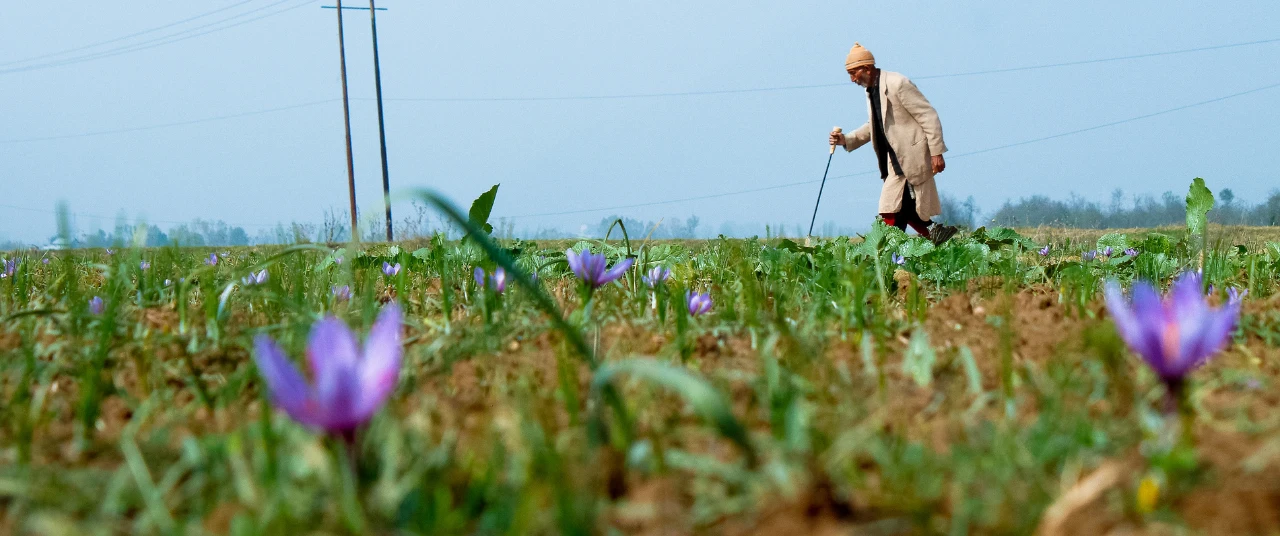
The impacts of air pollution on anaemia have gained some attention. Another research study conducted by the International Institute for Population Sciences, Mumbai, reveals the links between desertification and land degradation and anaemia prevalence across 75 districts in India. The study found that 56.2% of women aged 15-49 in desertified districts and 49.8% in degraded districts across India were anaemic. Similar results were also observed for children aged 6-59 months (61.7% in desertified districts and 41.8% in degraded districts), highlighting an association between land desertification/degradation and anaemia.
“Environmental factors receive little attention in anaemia policy. Our own findings make that gap hard to ignore. Across 75 drought-prone districts, we found that desertification and land degradation were themselves significant, independent predictors of anaemia,” shares Dr. Sayeed Unisa, who is currently a Professor and ICSSR Senior Fellow at the School of Public Health, DY Patil University, Mumbai. Unisa is a co-author of the land degradation study.
India's anaemia strategy remains almost entirely a health ministry conversation: IFA supplementation and dietary counselling, while land degradation sits with the agriculture and environment ministries.
“India's anaemia strategy remains almost entirely a health ministry conversation: IFA supplementation and dietary counselling, while land degradation sits with the agriculture and environment ministries,” she adds. “The two rarely meet in policy design, largely because the causal chain is indirect: degraded land drives poverty, poor sanitation, reliance on firewood, and heavier workloads for women fetching water and fuel, and it's these downstream effects, not the land itself, that get measured and targeted.”
For vulnerable populations, like the indigenous communities of India, the interactions with their immediate environments also play a crucial role in the onset of anaemia, as highlighted by the Chiguru Cohort Study. A multidisciplinary study initiated by various research institutions in Karnataka, the Chiguru Cohort primarily aims to understand the impacts of substance use on child growth and development in the indigenous communities of Karnataka’s Chamarajanagar district. However, both maternal health and women’s health parameters are also being monitored in the study.
In a policy brief published as part of the study, researchers highlight that addressing anaemia in these regions requires aligning relevant programmes with the “geographical realities of forest peripheries.” The brief explains that the remote location of these communities adds challenges such as access to healthcare and anaemia outreach programmes. Another study from the cohort also emphasises the role of culturally appropriate dietary diversity in improving anaemia rates among the community. This includes encouraging and supporting the foraging and cultivation of green leaves such as drumstick, colocasia and amaranthus, as well as wild legumes that are widely consumed by the community members. Additionally, the policy brief and other research articles also highlight the patchy implementation of the Forest Rights Act (FRA), 2006, as an impediment to indigenous communities’ access to forest resources.
Also read: Mess on my plate: India’s students are fixing their college diets
More studies, more interventions
Considering the growing evidence on how environmental factors impact anaemia, Dr. Suparna Ghosh-Jerath, programme Head–Nutrition and Food Policy, The George Institute for Global Health, New Delhi, states that a comprehensive assessment of anaemia is vital as we move forward.
Ghosh-Jerath explains that the AMB, with its ‘Test, Treat, Talk and Track’ approach, recognises the multifactorial aetiology (study of all causes and origins) of anaemia and includes strategies for screening, treatment, management of non-nutritional causes, deworming and behaviour change. However, the very scale of implementation often makes the programme uniform across diverse contexts.
“Further gains will therefore require a context-specific, localised, and data-driven approach that will assess the relative contribution of factors such as where the affected population lives, how food in the region is cultivated/consumed, prevalence of chronic infection, inflammation or genetic haemoglobin disorder, and the presence or absence of water security and other environmental, socio-economic stressors,” she adds. “All these will aid in a contextual understanding of anaemia and allocation of resources towards the most relevant determinants of anaemia in specific populations and geographies.”
With the Chiguru study, the researchers found that the prevalence of anaemia was 60% among reproductive women in the region, as opposed to the 46% stated in NFHS-5 data for Chamarajangaar district. While testing methodologies varied between the two analyses, the Chiguru study was able to place these findings in the context of forest-dependent communities for a better understanding of the disorder.
While these frameworks are being built, the researchers also call for some immediate intervention and policy measures to address the high rate of anaemia in Indian populations. Both Ghosh-Jerath and Unisa point to the overlaps between anaemia, soil health, and water security to establish preventive measures.
Bundling iron-folic acid supplementation with watershed and drinking-water schemes in these specific 75 districts would address cause and consequence simultaneously.
“Soil and water conservation works directly on the same pathway that produces anaemia in degraded/desertified districts—poor drinking water, poor sanitation and poor food security. Bundling iron-folic acid supplementation with watershed and drinking-water schemes in these specific 75 districts would address cause and consequence simultaneously,” shares Unisa.
Dey stresses the need for interventions that focus on reducing exposure to major environmental sources of indoor and outdoor pollution and integrating these measures with existing anaemia control programmes. “From a research perspective, we also need better longitudinal studies to understand the biological mechanisms through which environmental exposures may contribute to anaemia,” he adds.
Ghosh-Jerath adds that the bottom line is examining the multifactorial aetiology of anaemia through a cross-sectoral lens. “Anaemia may not be solely approached as a nutrition problem. Only food and nutritional supplements may not solve it,” she says.
{{quiz}}
.jpeg)

.avif)
Explore other topics
References