
Green data centres: Sustainable alternative, or marketing myth?
There is no clear, universally-accepted definition of what a green data centre may be, making adherence and regulation a challenge


Welcome to the Good Food Movement’s Climate Crisis Dictionary—your online guide to environmental phenomena and the science behind them.
Green Data Centre (noun)
Coined in: Sometime in the 2000s, when the internet began to gain popularity. The concept emerged organically in the IT industry, as a response to rising energy consumption
Coined by: Unknown. (There is no specific individual person who can be credited with coining the term)
TLDR: Can data centres become sustainable? Yes, but in India, this may happen only on paper
The longer explanation
Every time you send a message on a texting app, stream a movie online, save a picture to the cloud, or present a query to an AI chatbot, your request travels through a vast physical infrastructure. Often, it crosses entire oceans, making an unseen journey. Holding up the seamless world of the internet are enormous concrete structures packed with servers that store, process, and transmit information in blinks: data centres.
Data centres, in many ways, are the backbone of digital infrastructure, maintaining and managing computing servers and other network devices. As a greater proportion of our lives move online, the demand for these giant digital warehouses is also increasing. Running them, however, comes at a significant material cost.
India’s data centre capacity is supposed to grow from nearly 1.2 GW in 2025 to 15-17 GW by 2030, according to the Ministry of Electronics and Information Technology. The project to lead the country’s digital transformation involves a $15 billion investment in an AI data centre in Visakhapatnam, Andhra Pradesh. It has been severely criticised for displacing Dalit farmers and disrupting their livelihoods in Tarluvada, where it is located. It is also being condemned for raising significant ecological concerns, including freshwater and seawater extraction, given the scale of the data centre. The protest campaigns held at the project site by the local community, along with several environmental organisations, were met with a brutal crackdown.
A person living thousands of kilometres away has no difficulty accessing the services provided by the facility without ever seeing it, but the communities living in the area experience the infrastructure differently.
The arrival of a new data centre leads to two kinds of realities. In the first, big corporations and governments promise more jobs and overall development of the geographical area, none of which are guaranteed. The second reality is palpably felt by those whose lives are impacted in other ways: depleting aquifers, changing weather patterns, and drying up of the land through its groundwater reserves. The first reality receives far more attention than the attendant environmental costs, despite preexisting crises as a result of a changing climate, including frequent droughts, floods and extreme heat. This creates a geographical imbalance, as a person living thousands of kilometres away has no difficulty accessing the services provided by the facility without ever seeing it, but the communities living in the area experience the infrastructure differently.
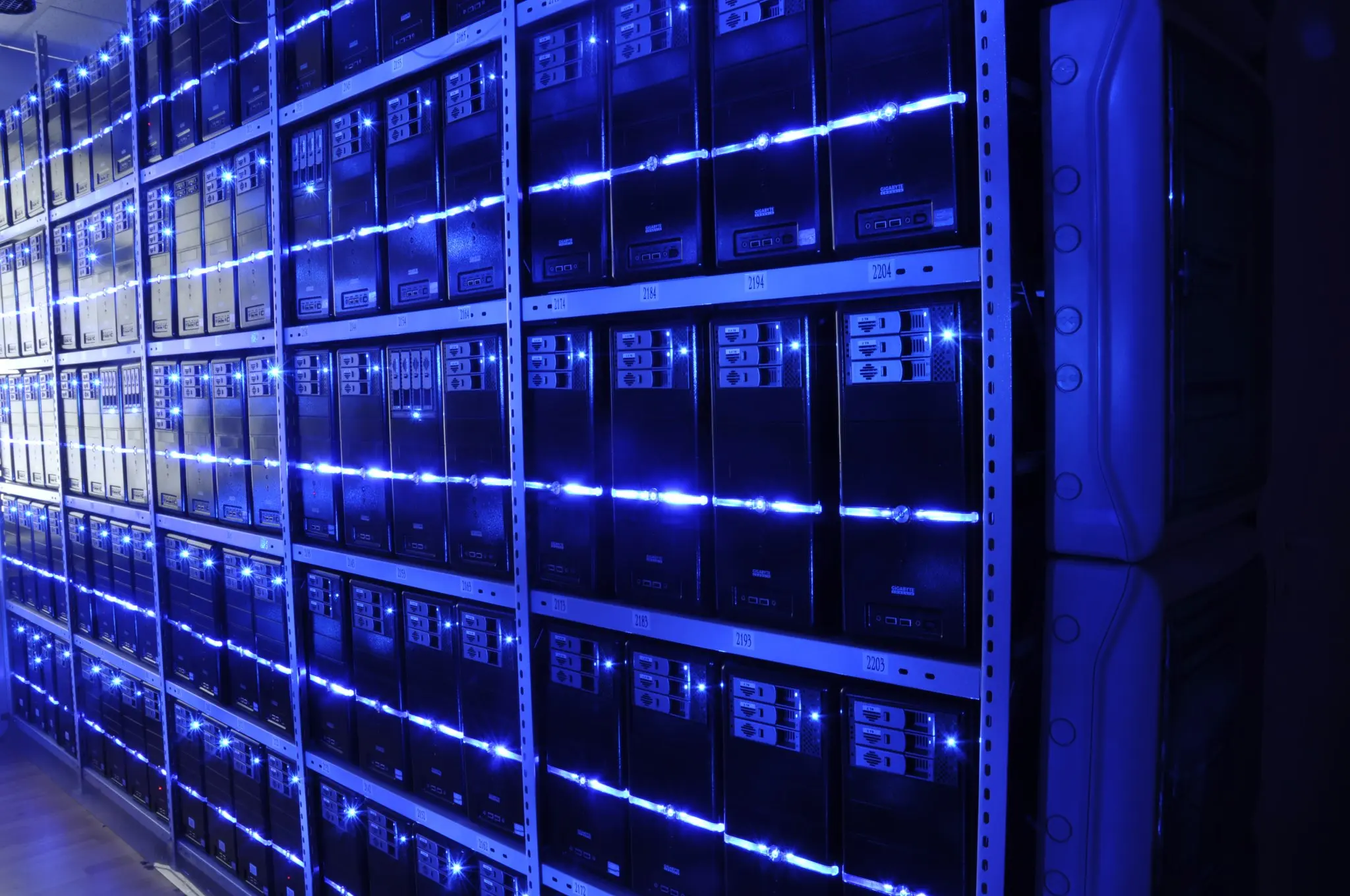
Data centres house specialised computers known as servers, which run round the clock. They can vary significantly in size, from micro data centres that may occupy little more than a shelf of servers, to hyperscale facilities that can house more than 5,000. These centres require vast tracts of land, ranging from 2,000 to 20,000 acres, and construction material. The life cycle of the hardware inside eventually ends in waste, specifically known as electronic waste.
A data centre also requires substantial amounts of energy to keep its servers running, which in turn generate significant amounts of heat. According to the International Energy Agency (IEA), the total electricity consumed by data centres is equivalent to around 1.5% of global electricity consumption in 2025. However, their share can vary significantly by location. For instance, in Europe, data centres account for around 1.6% of total electricity consumption, while within the continent, in Ireland, they consume nearly 20% of the country's total energy demand.
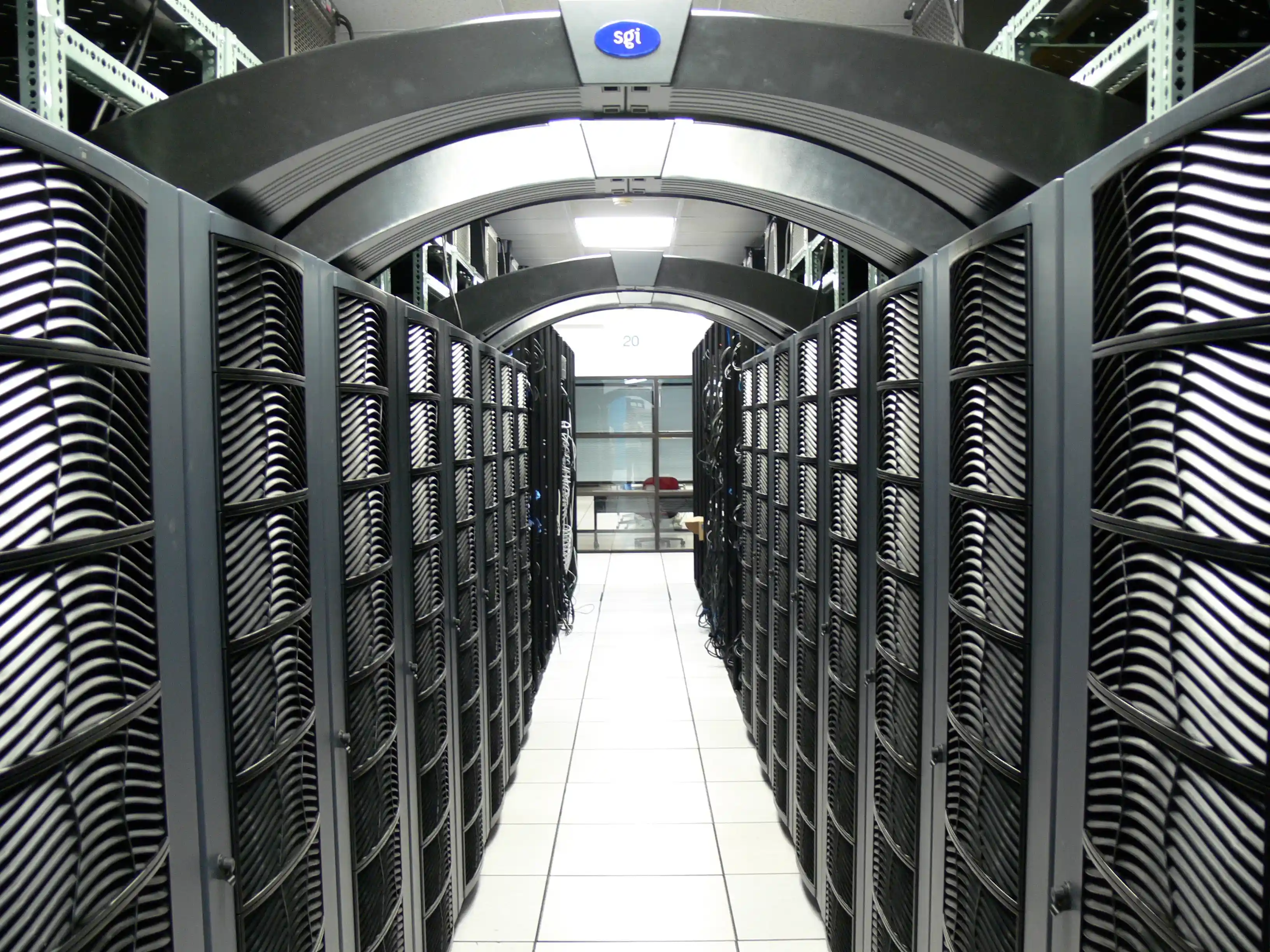
The heat generated by the server racks is eliminated using cooling techniques, which prevent the equipment from getting overheated. This calls for either additional energy sources (to set up air-based cooling) or considerable quantities of water (for liquid-based cooling).
The rapid growth of artificial intelligence adds to the existing demand. Training Large Language Models (LLMs) requires thousands of specialised processors called GPUs (Graphics Processing Units) that are installed within these servers. GPUs are capable of running continuously for weeks to process the vast amounts of data needed by AI models. During deployment, these LLMs continue to consume more energy each time they respond to a user’s request.
The concept of ‘green data centres’ emerges from a growing sustainability concern: if data centres are going to exist, and if we are planning to build more of them, then can we build them in a way that is sustainable? Or can we only aim to reduce their environmental footprint and relative harm?
Significantly, there is no clearly articulated or universally accepted definition of what a green data centre may be. It is, in fact, a self-identified label
Significantly, there is no clearly articulated or universally accepted definition of what a green data centre may be. It is, in fact, a self-identified label, not adhering to any specific, qualifying criteria. Broadly, the term refers to data centres that adopt, or are designed to accommodate, sustainable practices that reduce the energy, water, carbon and other material resources required to operate them. This can begin right with the choice of the location: for instance, by actively avoiding ecologically fragile, drought-prone or flood-prone areas.
Green design choices can include improved insulation, reflective roofs and the employment of low-carbon construction materials. Dr. Mohammad Motaharul Islam, who works on green data centre designs, explains that existing facilities do not necessarily have to be demolished and rebuilt. “Modifying the existing ‘brownfield’ data centres can reduce emissions by allowing operators to improve cooling systems, seal airflow and replace inefficient power infrastructure while retaining the existing building. However, new ‘greenfield’ facilities have the advantage of being designed for efficiency from the outset,” explains Dr. Islam, who teaches at the Department of Computer Science and Engineering at Bangladesh’s United International University.
Water conservation is another necessary aspect. Closed-loop systems circulate water repeatedly, rather than constantly drawing on groundwater. Recycled or treated water and rainwater harvesting can further reduce dependence on freshwater. However, a system saving water might require more electricity, and vice versa. Solar and wind energy could definitely reduce carbon emissions, but their intermittent nature calls for additional battery storage to maintain uninterrupted operations.
Sustainability claims can be made at different scales, leading to fractured, inconsistent conclusions; positive outcomes at an individual level may provide an inaccurate or incomplete picture of the national scale.
Waste heat recovery can be another possible solution, according to Dr. Islam. “Since servers convert much of their electricity into heat, that heat can be captured and redirected towards creating heat networks.” Such a system could cater to a stable demand for heat nearby.
Some data centres have adopted measures such as using renewable energy instead of fossil fuels. Moro Hub, a subsidiary of the digital arm of Dubai Electricity and Water Authority (DEWA), opened a data centre in 2017 that uses solar energy to power its servers. It also deploys a prefabricated, modular data centre model instead of conventional brick-and-mortar construction, which can help optimise energy use. Prefabricated data centres can also support a circular economy, as their components can be dismantled, reassembled and reused during upgrades. In countries like Germany, the Energy Efficiency Act requires data centres to source at least 50% of their energy requirement from renewable sources. Such approaches may be comparatively easier to implement in colder regions. For instance, Meta’s data centre complex in Luleå, Sweden, takes advantage of the cold Arctic air to cool its servers.
More from our Climate Crisis Dictionary: Sponge Cities: A solution to India’s annual flooding crises?
What this means for humans
In India, questions are being raised about how ecological sensitivity is factored into the locations and operations of data centres, green or otherwise. Karnataka, one of the country’s most drought-prone states, has expressed interest in establishing a total of 1 GW sustainable data centres across Bengaluru, Mysuru and Mangaluru. The coastal city of Visakhapatnam, on the other hand, has one of the lowest groundwater levels recorded in the state. There is even a proposal to establish a ‘green’ AI data centre in the ecologically fragile Great Nicobar Islands.
The environmental impact of data centres is assessed through metrics such as Power Usage Effectiveness (PUE), Water Usage Effectiveness (WUE) and Carbon Usage Effectiveness (CUE). The indices for measuring energy efficiency do not track the infrastructure that is needed to meet the demands of the growing digital economy. They do not ask how much extra processing we are demanding, or what happens when efficiency itself enables greater consumption.
To put it in simple terms: if a household replaces an old appliance with a newer one to reduce electricity consumption, but also gets two additional appliances, the electricity use might still increase. This can happen with data centres as well; even while individual units switch to renewable energy sources, the overall demand for data centres remains on the rise. Thus, sustainability claims can be made at different scales, leading to fractured, inconsistent conclusions; positive outcomes at an individual level may provide an inaccurate or incomplete picture of the national scale.
Environmental Impact Assessments, which are legal clearances mandated by the Ministry of Environment and Forests for development and infrastructure projects, become crucial in this context. So far, only 15 states have developed their own data centre policies, and transparency into data centres' resource consumption is limited. Recently, Karnataka Minister for Electronics, Information Technology and Biotechnology, Priyank Kharge acknowledged that generating 1 MW of power reportedly requires 25 million litres of water annually. He urged organisations to make more sustainable choices, adding that the Karnataka government is reconsidering its existing data centre policy.
Green data centres are not a false promise, but right now, being “green” remains a marketing choice a company makes when convenient
At present, none of the state data policies have mandated water stress mapping or thermal impact assessment for environmental clearance. “In India, policies fail to recognise data centres as a special category, instead placing them in the category of office buildings,” says advocate Indumugi C., who has extensively studied data centre regulations in India. “Placing data centres in the B2 category exempts them from a full Environment Impact Assessment (EIA) report.”
Visakhapatnam offers a preview of what is at stake. It reinforces the need for a data centre policy that brings together every concerned department, rather than each one issuing its own siloed regulations. Experts say that green data centres can definitely be more sustainable than conventional brown data centres. However, they still require energy and resources to function; it is closer to a compromise than a solution.
Green data centres are not a false promise, but right now, being “green” remains a marketing choice a company makes when convenient, not a qualification every data centre is required to meet. The gap could be closed with sharper legislation, a dedicated environmental review category, and a mandatory public disclosure of water and energy consumption.
More from our Climate Crisis Dictionary: Urban heat islands: Sweaty cities made of rising skyscrapers, vanishing trees
Edited by Anushka Mukherjee and Neerja Deodhar


Explore other topics
References