Tomato truths: To know your farmer is to know your food
At a time when food safety is being hotly debated, it’s only sensible to subtract the intermediaries and go directly to the source


Editor’s note: Urban farmer Simran Moorjani is the founder of Simbiosis, a regenerative farm on the outskirts of Mumbai, where she grows tomatoes and salad leaves while maintaining a symbiotic relationship with the land. In this column, she reflects on the realities of farming—sometimes with humour, sometimes with candour, always with curiosity.
One (among many) unexpected realisations I’ve had about farming is the persistent way in which it compels me to think about more than myself—about the microbes in the soil that aren’t visible to my eyes, the earthworms I keep trying to spot, the caterpillar chomping on a leaf that I hope turns into a butterfly, the combinations of leaves that I grow that work best for a salad, the leftovers that are being wasted in my bowl, the load that this handful of waste will put on my city’s landfills, the methane that they generate into the air. These thoughts—interconnected in an overwhelming sort of way—leave me feeling breathless, quite like that sentence just did.
It’s easier to set the thoughts aside than to confront them. But one of my favourite essays, called ‘Why Bother?’ by Micheal Pollan, makes a case for why we shouldn’t. It addresses how, on a personal scale, any change we make towards living a more “sustainable” life can be puny when compared to the scale of the problem. Sometimes I think about the turtle with a plastic straw stuck in its nose, and sometimes, I think about how much better my iced latte would taste if I didn’t have to change out a paper straw four times over. And is my ruined coffee experience really making a difference in a world where bombs are dropped at an unbelievable frequency?
But Pollan also speaks of hope, and of reducing our dependence on capitalist economies by finding one pursuit that is free of charge; for example, growing our own food. “Rip out your lawn, if you have one, and if you don’t–if you live in a high-rise, or have a yard shrouded in shade–look into getting a plot in a community garden. Measured against the Problem We Face, planting a garden sounds pretty benign, I know, but in fact it’s one of the most powerful things an individual can do–to reduce your carbon footprint, sure, but more important, to reduce your sense of dependence and dividedness: to change the cheap-energy mind,” he writes.
Unfortunately, the reality of most cities and metros in India doesn’t serve such a pursuit, since the citizen-to-open space ratio is far too low, and access to land comes at a grave cost. May I suggest a slightly different approach? One that fits more neatly into urban Indian schedules and the pace of city life?
Know thy farmer
In a world overtaken by quick commerce platforms and delivery apps, there’s great value in knowing more about your food, how it reaches you, and where it is grown. This is not an easy transition or way of living; it calls for planning meals ahead of time, going to farmers’ markets, and shopping in person. In a food economy increasingly focused on efficiency and standardisation, you’d be daring—and “inconveniencing”—yourself if you decided to eat with the seasons. This means resisting the urge to buy mangoes before the summer hits, and being skeptical of strawberries on sale in July.
In a food economy increasingly focused on efficiency and standardisation, you’d be daring—and “inconveniencing”—yourself if you decided to eat with the seasons.
All of these everyday decisions, whether big or small, add up to answer one question: “How can I eat in a way that isn’t just good for me, but is good for the planet, too?” As a cultivator and consumer, I’d argue that knowing your farmer is the best way to get started. It’s the surest way to know what is the freshest produce now, and what you can look forward to in the weeks to come. In fact, if the opportunity presents itself, consider spending a day with a farmer to see where your food comes from. We don’t bite, I promise! Most small-scale farmers are happy to host buyers or curious consumers, to show off the work we’re doing and share a meal.
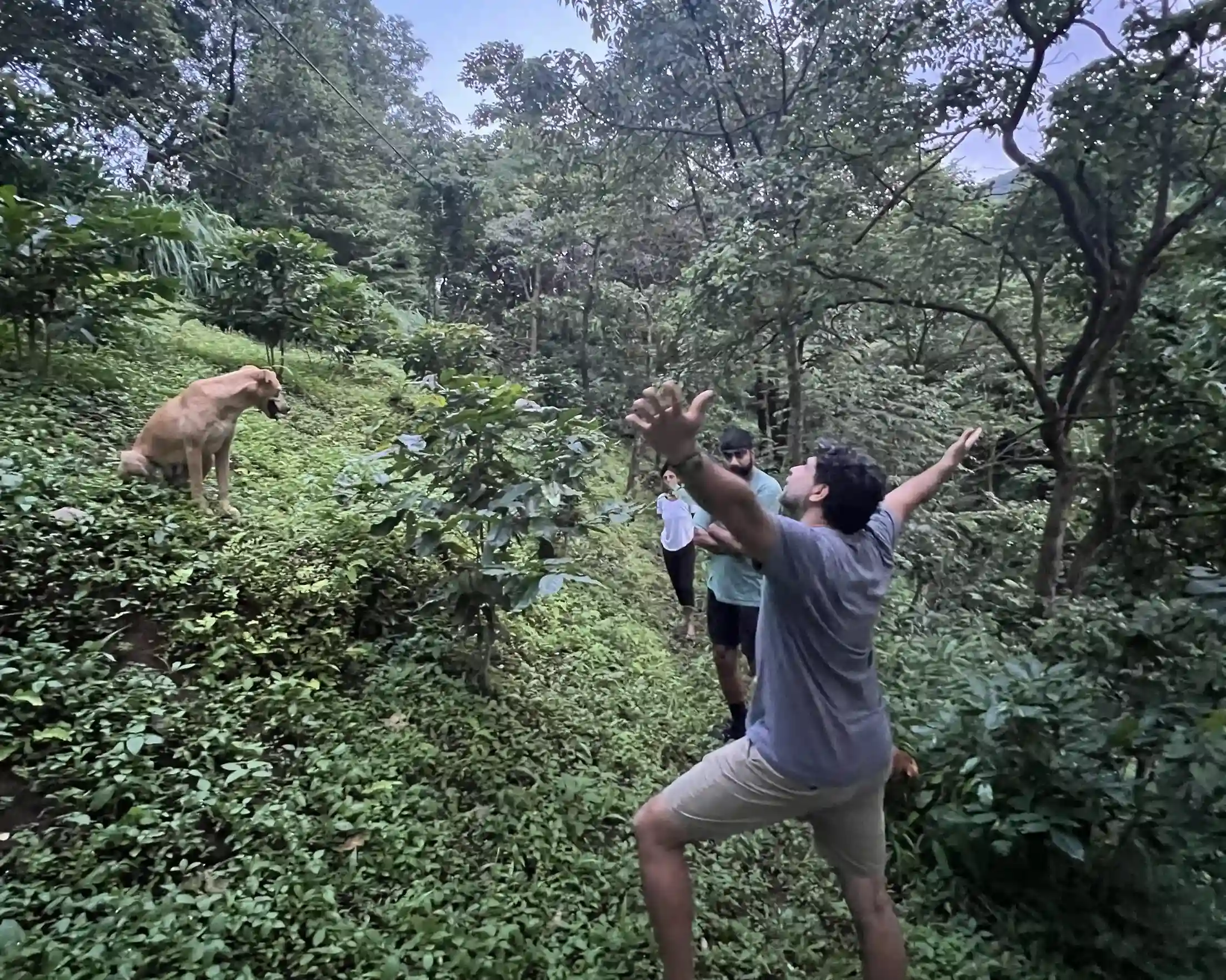
A visit to Gorus Forest Farm on the outskirts of Pune was full of revelations to me. When I think of coffee, I instinctively think of the southern half of India—the states of Karnataka, Kerala and Tamil Nadu. But here, in the Western Ghats of Maharashtra, under the dense canopy of native trees, grow strong plants of arabica coffee. We walked around the farm guided by Ashwin Paranjpe, who is also an educator, as he plucked different wild leaves for us to try, or pointed at different species of chillies he grows. It ended with copious cups of coffee, grown, roasted, and brewed right there.
Also read: Tomato truths: What this novice farmer learnt and unlearnt about the fruit
The hands that harvest
During a recent online session on heirloom rice by chef and researcher Anumitra Ghosh Dastidar of Edible Archives, a food research project and restaurant in Goa, I learnt about the wealth of paddy varieties that India was home to—over 1,10,000 of them. Tragically, Ghosh Dastidar observed, 90% of them have been lost to time, disuse or other reasons.
Much of this has to do with the adoption of high-yielding varieties (HYVs) of grains like rice and wheat in the years following Independence, when the hunger of a new nation had to be quelled and dependence on foreign aid had to be eliminated. Following the Green Revolution, Indian agriculture assumed an industrial form and scale, embracing the use of chemical inputs like pesticides and fertilisers. And food has never quite been the same.
When I first began experimenting with farming, I noticed my choices as a consumer shifting.
Still, initiatives like Edible Archives document and showcase India's rice, using food as a powerful tool for preserving agricultural biodiversity. Ghosh Dastidar combines a PhD in Theoretical Linguistics with formal culinary training. At the Kochi-Muziris Biennale 2018-2019, she showcased nearly 50 heirloom varieties, inviting visitors to engage with the sheer diversity of grains.
OOO Farms is another collective whose impact spans across 63 villages in Maharashtra and Gujarat, and they remain committed to working the old way. In their work with over 2,200 farmers from tribal communities, they focus on safeguarding indigenous practices and promoting the cultivation of native rice, wheat, dal and millets. Ancestral wisdom drives their ability to nurture microclimates and biodiversity, and their bottom line is nutrition per acre rather than the typical, “optimised” yield per acre. Every year, they organise the Wild Food Festival in Mumbai—a means to learn about foods you won’t typically find at the market. It’s also an opportunity to see the OOO seed bank in all its glory, and to shop for some of their produce in person.
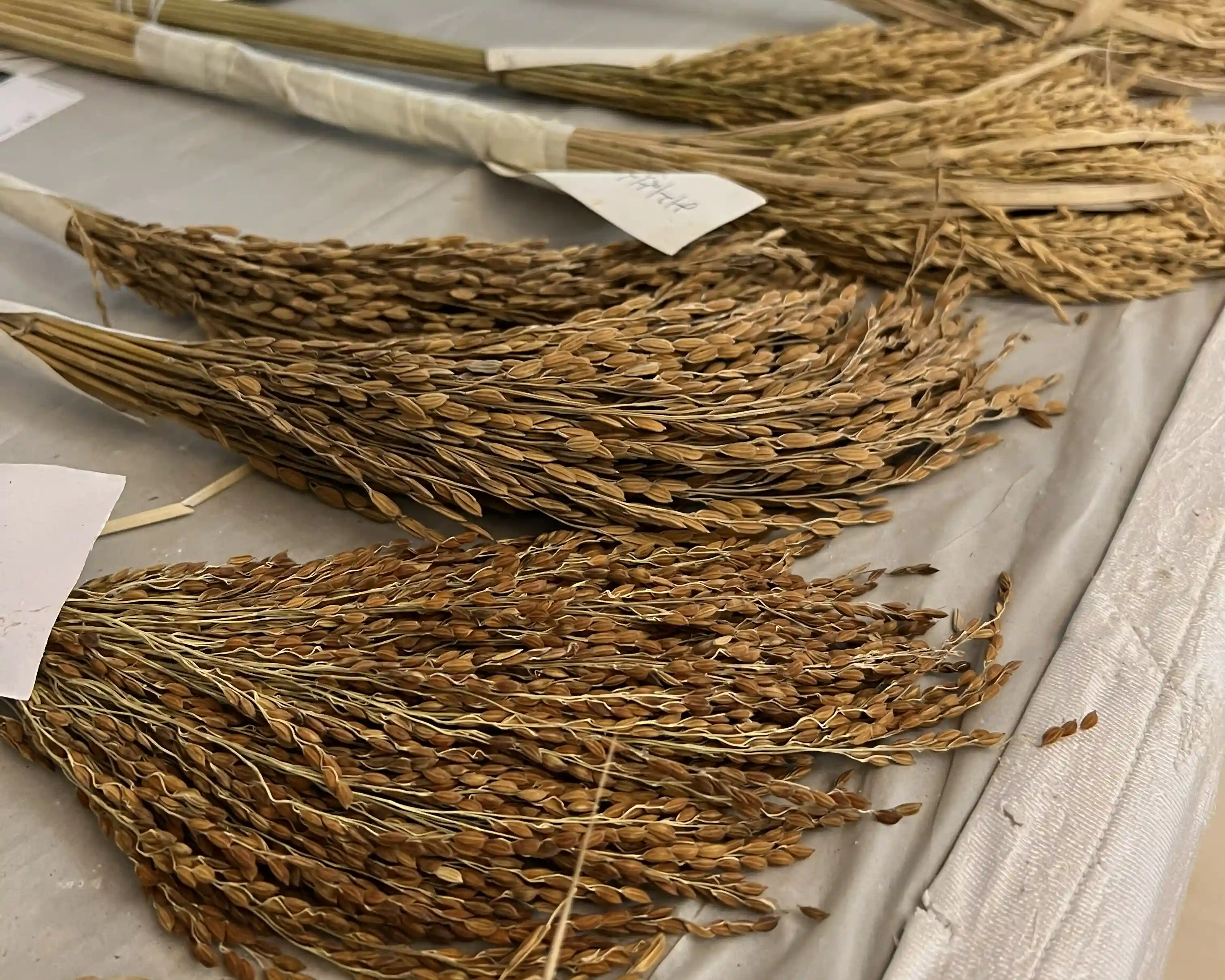
When I first began experimenting with farming, I noticed my choices as a consumer shifting. I had greater respect for the food I was eating, for how it had been grown, when I could put a face to the person who harvested it. Even composting the peels of this produce felt more joyful, as I thought of the nutrients from their land someday nourishing my land. This shift in consumption is also not just limited to the food I eat; it has trickled down into many different facets of my life. Outfits feel more ceremonious when they’re made by designers who believe in conscious clothing, be it in the materials they employ, or the dyes they use to colour them, or the wages they pay to their teams. Skincare feels better when I can pronounce all the ingredients on the back of the label.
With generosity come imperfections
The mainstreaming of hybridised vegetables over hyperlocal, traditional grains and produce—another convenience of modern life—has its own consequences. Our diets become formulaic, and our pantries become limited. In the process, the curiosity to seek out unglamourous ingredients is lost; I’ve seen this up close, as someone who chooses to grow heirloom tomatoes the organic way.
To be friends with farmers is to acquaint yourself with these ingredients and how to actually use them. Lately, I’ve been looking up different ways to cook with Gondhoraj lemons, and testing the correct amount of time needed to boil Ajara Ghansal—a GI-tagged short grain rice local to Maharashtra—to perfection.
Knowing your farmer is to also embrace the imperfections in the fruits of their labour.
If you get on the good side of your farmer, they may even offer you things from their secret stash. This is exactly how I got my hands on Termitomyces mushrooms, farmed, quite literally, by termites. Despite humanity’s best efforts, it simply cannot be grown by our hands. They emerge at the end of the monsoon at Vrindavan Farm near Mumbai, and I was lucky to be there at the time to try them. I also came across some of the nicest potatoes grown by Anil ji, who is otherwise a strawberry farmer; he generously sent a few taters along with my berry order.
Knowing your farmer is to also embrace the imperfections in the fruits of their labour. Food was never meant to look “perfect”, it is the human desire for standardisation that makes two tomatoes or heads of cauliflower look and taste identical. If a spinach leaf has a couple of holes in it, that means it’s probably not been sprayed with pesticides. It means the same piece of produce has fed us and a little critter on a farm—a critter, using only its instincts, came to this very leaf, and couldn’t resist taking a bite of it. How lucky we are to share the spinach with it.
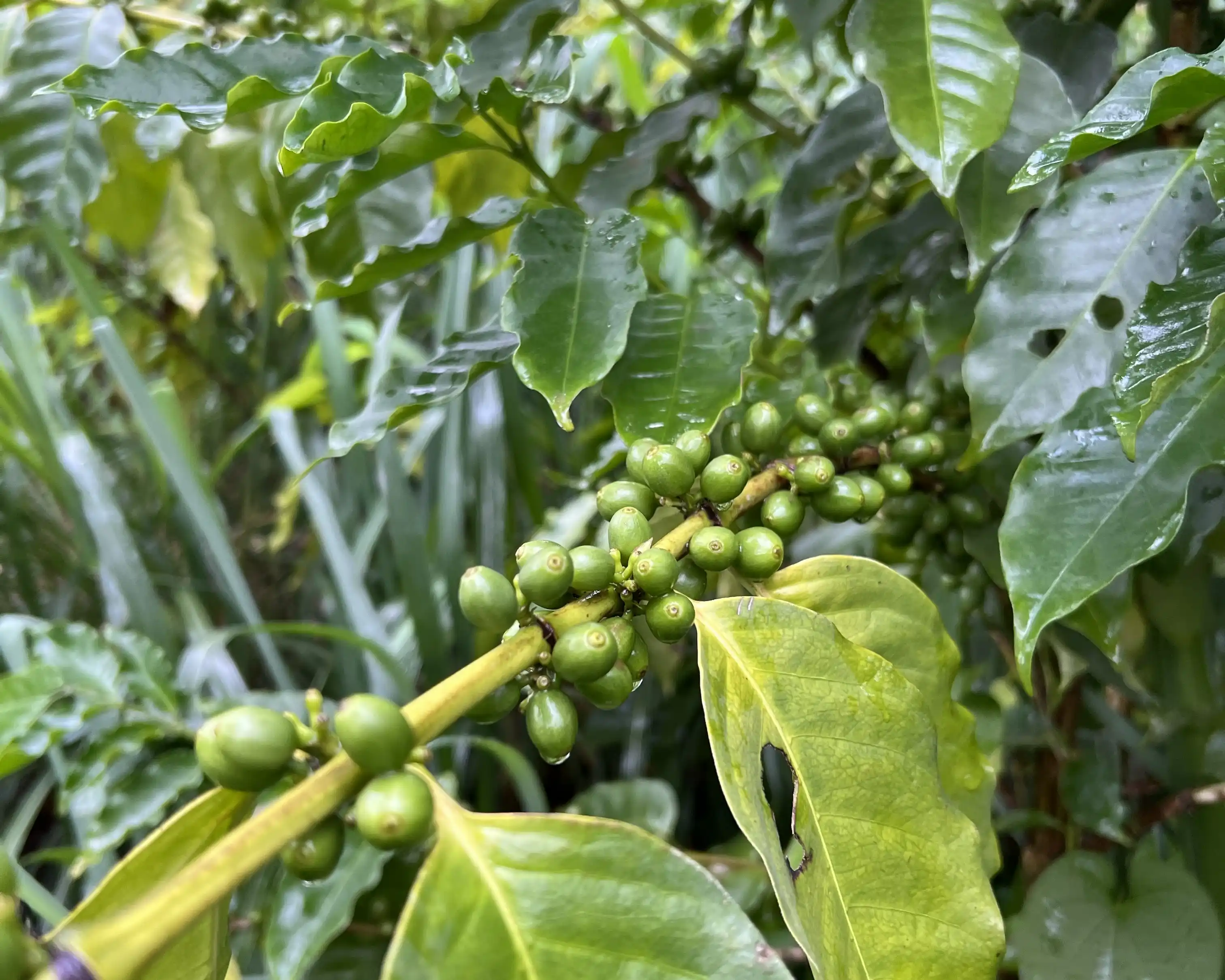
At a time when food safety is being hotly debated in India, from the quality of paneer to contaminants in spice powders, it’s only sensible to reduce the number of people between you and your food; subtract the intermediaries, go directly to the source! You could even turn this quest into the guiding force of your travels. Go to Chikmagalur in Karnataka to find where the perfect cup of coffee comes from, or to Nagaland in search of the spiciest chillies.
Also read: Tomato truths: Growing your own food is a radical, rewarding thing
From appreciation to meaningful support
To show respect for a farmer’s work is not simply to get to know them; it is also compensating them justly for their toil in the fields and their battles against the weather and pests. Maybe this will nudge the farmer's child to spend their life being a steward of the land, too, instead of migrating to the city in the hope of better prospects.
To switch from the ease and familiarity of what we know and are used to, to becoming the patron of small, sustainable farmers is a hard switch. But the best things in life often are.
Convenience comes at a cost, whether it is compromised flavour, lower quality, or a decline in the very health of the planet. And though these costs may not be visible to us, we’re not immune to them either. To switch from the ease and familiarity of what we know and are used to, to becoming the patron of small, sustainable farmers is a hard switch. But the best things in life often are.
.webp)
Cover Art by Pearl D'Souza
{{quiz}}


.avif)
Explore other topics
References




.png)