Remembering Bolmax Pereira: The guardian of Goa’s forests, mangroves
Fr. Bolmax held the powerful accountable, inspired the youth to farm, and anchored citizen-led movements while being a priest and teacher


The only time I saw Fr. Bolmax Pereira was at his last rites in Chicalim’s St. Francis Xavier Church.
A steep, tree-lined road leads to this 400-year-old church in western Goa, where he served as the parish priest from 2019 until his death in May this year. As I make my way, I see an elderly woman walking across me; she is flanked by three others. Once we reach, I ask her, in passing, why she came all the way. It was evidently a difficult walk, and one she wasn’t necessitated to undertake. She looks me in the eye and says with conviction, “It’s Fr. Bolmax. There was no way I wasn’t coming.”
Before I am able to continue our conversation, we’re split into different fast-moving, crowded lines to see the well-regarded and widely admired clergyman’s body encased in a glass casket. A parishioner is fixatedly wiping it, despite it glistening reflectively. The busloads of well-wishers arriving to the church grounds spoke to the many ways in which Fr. Bolmax touched hundreds of lives.
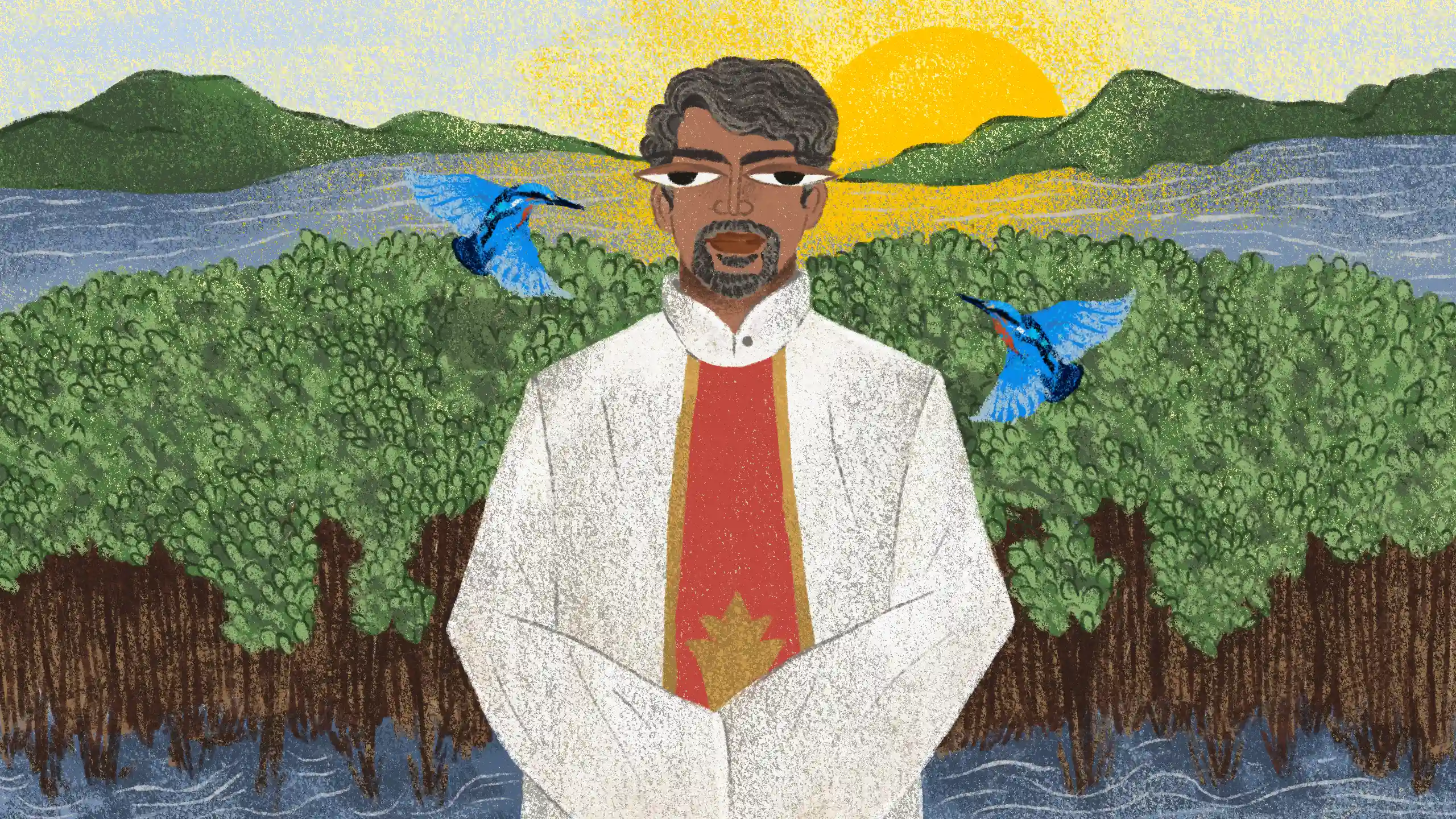
Apart from being a parish priest and Assistant Professor at the St. Joseph Vaz College in Cortalim, he had a doctorate in Wetlands Ecology, was the convenor of the Diocesan Commission of Ecology, a farmer, a social and environmental activist, and a tiatrist (practitioner of a folk theatre form in Goa). He was awarded the Goa State Biodiversity Board Appreciation Award for Biodiversity Conservation, and the Karmaveer Chakra Award (Silver) by the Indian Confederation of NGOs (iCONGO) in partnership with the UN, for his efforts in environmental conservation, grassroots activism and social service.
As I reach the front of the line, I accidentally step on a bouquet of flowers; the floor near his casket is teeming with them. I make my way out, and notice that their scent wafts beyond the four walls of the church.
‘A quintessential Goan’
“He was like a father to us in all ways,” says 22-year-old Rutik Parab. A recent graduate from the St. Joseph Vaz College, Fr. Bolmax taught him Botany for four years. “If you'd meet him, you’d instantly know he was a good person. Any student could approach him with any problem—even a financial one—and he would help them out. He even sided with the students over the Principal,” he adds.
He was a quintessential Goan. “The closest to what Konkani poet Bakibab Borkar wrote: ‘someone who could feel the land within him’,” says Nandini Velho, a wildlife biologist to whom Fr. Bolmax was a friend, guide and mentor. They met as volunteers for ‘Amche Mollem’, a citizen-led movement to protect the Mollem National Park and Bhagwan Mahavir National Park from three mega-infrastructure projects that would critically fragment the forests.
His most important contribution was that he would stand up—be it to politicians, or meeting forest officers, or conducting tree and mangrove plantation drives, or going to the site of deforestation.
Amche Mollem is known for its sustained, multipronged approach that brought together Goans from different walks of life through conventional and unconventional ways. While the non-profit Goa Foundation fought the legal side of the battle, Fr. Bolmax played a pivotal role in shaping its socio-political and cultural fronts. “There are many things he took on, from farming to coming up with the idea of flash mobs (to raise awareness about environmental issues in Goa). But his most important contribution was that he would stand up—be it to politicians, or meeting forest officers, or conducting tree and mangrove plantation drives, or going to the site of deforestation. He also wrote a letter to the Chief Minister through the Diocesan Commission of Ecology, to talk about ecological issues in Goa,” Velho says.
Also read: Bean to bar: A Goan chocolatier’s experiments in cacao farming
A man of, and for, the community
Fr. Bolmax frequently questioned the powerful, and held them to account. It was perhaps the loudest aspect of his demeanor. In a 2023 interview, he responded to a question often asked of him: why was a parish priest engaging in activism and politics? “As a Prophet and a teacher, I need to teach my people everything they need to know. Be it about society, nature, politics or economics. It is about life. And life cannot be separated. Politics is running our life. That [talking about politics] is my role as a Prophet and a teacher. Not because I know more than people, but because we tend to put politics in the back of our mind,” he responded earnestly.
During the COVID-19 pandemic, the village of Chicalim was faced with two questions: How long would it be before the fields could be cultivated again, and would the village have to deal with food scarcity in the meantime? With farm hands and labourers having returned to their own villages, most of Chicalim’s fields lay fallow. And with the lockdown looming over this almost 13 sq. km village, many were worried about food security.
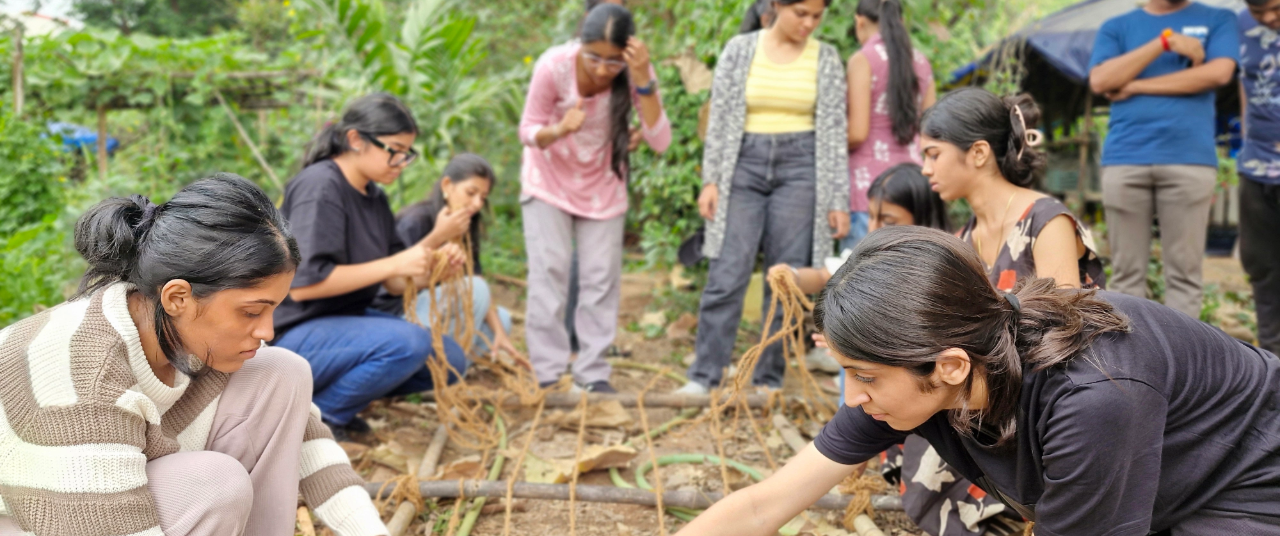
“The Chicalim Youth Farmers Club (CYFC) came about because we all worried about our sustenance. It was a way for the youth to connect with Goa’s land and soil,” says Alisha Pereira, the club’s treasurer and a parishioner at the St. Francis Xavier Church. The club she refers to was established by Fr. Bolmax. His connection with the land was forged during his childhood, when he was involved in cultivating paddy in his village, Quepem. “He always said he was a proud farmer,” Pereira says.
In the second half of 2020, Fr. Bolmax spoke with villagers who owned sizable fields in the village, in a bid to bring together the youth of Chicalim. “You’ll learn how to plant paddy,” he told them. In their first season, the club planted cluster beans, and the next summer, they cultivated two local varieties of rice. Fr. Bolmax put them in touch with Goencho Xetkar, a small group of farmers promoting Goan paddy cultivation, who also rent out necessary farming equipment. “He was there with us throughout the process, not merely during the sowing and harvesting. A lot happens before the Ukadya Xheet (parboiled rice) reaches your plate. Post-harvest, you need to dry the grain, clean it, and finally boil it,” says Pereira, who adds that the priest helped formally register the club.
The club is an example of the impact Fr. Bolmax left behind, and the institutions whose setting-up he shouldered—particularly causes involving the youth.
In the last six years, the club has expanded substantially, as more local farmers invite Chicalim’s youth to cultivate their land. It now rents tractors and ploughing machinery from the State Agriculture Department, and the members have partnered with local schools and colleges to transplant saplings. They farm without chemical fertilisers, opting for natural alternatives instead. The harvest is shared among members, the landowners and mentors. The club is an example of the impact Fr. Bolmax left behind, and the institutions whose setting-up he shouldered—particularly causes involving the youth. “He had the ability to be the heartbeat of many people, especially the youth,” notes Velho.
Also read: Basanti Devi’s boots are made for walking
A legacy that will carry forward
Ferdin Sylvester, co-founder of the One Earth Foundation, who is pursuing a PhD in mangroves and climate change, recalls Fr. Bolmax’s sense of humour with fondness. They crossed paths in 2023, during a One Earth Foundation project called Waves of Change, wherein Sylvester kayaked from Keri in North Goa to Galgibaga in the South over 22 days, cleaning up mangroves along the coast. “One of the best things to come out of that expedition was (meeting) Fr. Bolmax,” he says. During subsequent visits, the duo would plan and conduct mangrove restoration drives and other activities to conserve Goa’s shoreline protectors. Like forests and farming, mangroves too were a focus area for the priest, who wished for the Narrow-Leaved Kandelia (Kandelia candel) species to be declared as the state mangrove tree of Goa, taking inspiration from Maharashtra which recognised the White Mangrove Chippi (Sonneratia alba) in this manner. It is said that Fr. Bolmax could often be spotted wearing a hand-painted t-shirt that read ‘Plant more mangroves.’
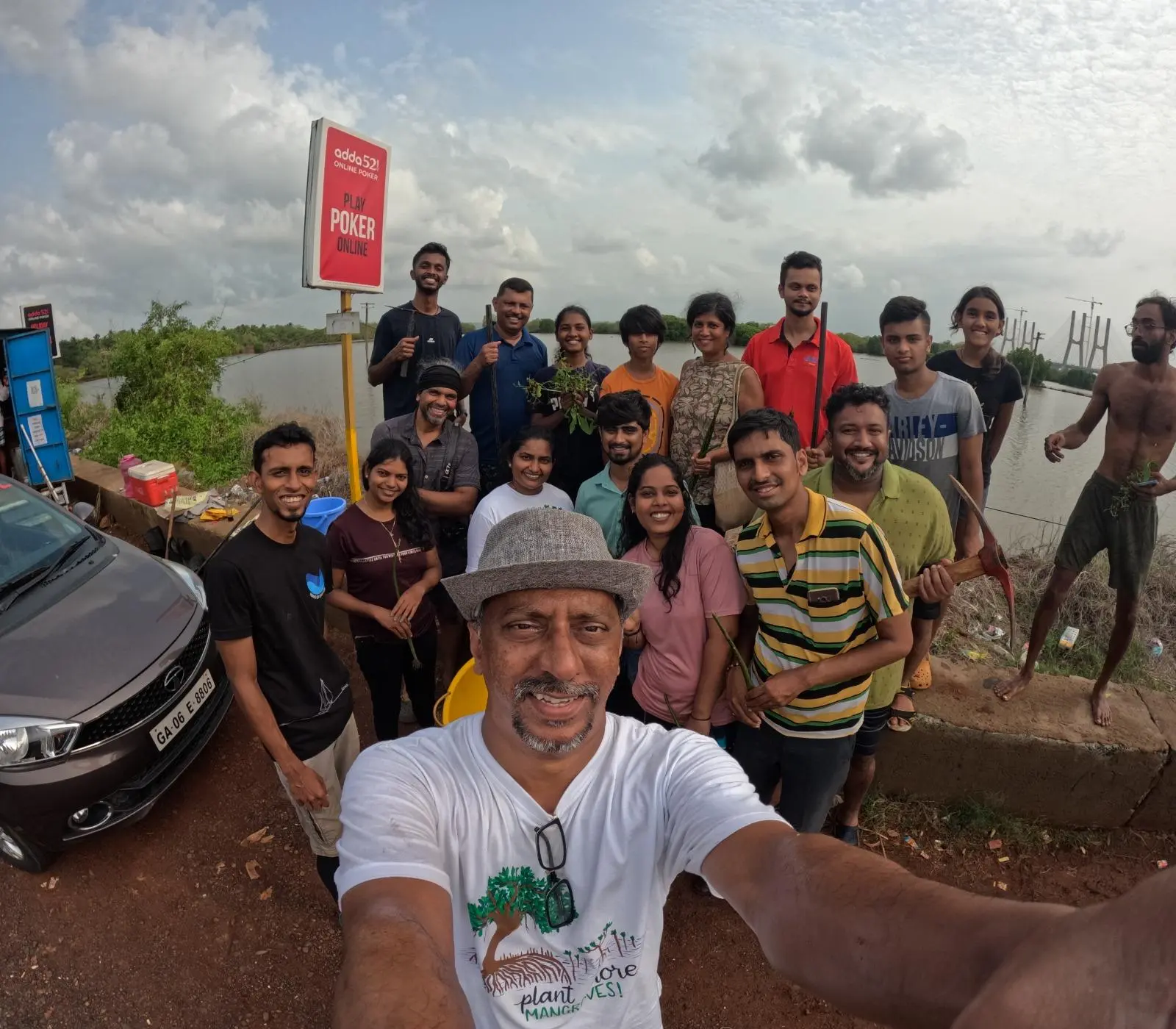
“He was the kind of leader who led from the front, and also believed in decentralised leadership. He encouraged people, especially younger people, to become leaders,” Sylvester says. According to him, Fr. Bolmax was able to cut across party lines, making allies of activists, students, the church and government authorities.
He tells me about the mangrove nursery the priest wanted to create at the church, and of the time they went scoping out land in Cortalim for mangrove replantation. “He was always full of ideas and never backed down from supporting others’ ideas. He would always say ‘Ami Koroyo’ (we will do it) and find time to make it all happen,” Sylvester adds.
Like forests and farming, mangroves too were a focus area for the priest, who wished for the Narrow-Leaved Kandelia (Kandelia candel) species to be declared as the state mangrove tree of Goa
It is strange to get to know a person after their death. To me, Fr. Bolmax is a mosaic of the memories and stories held close by the people who love and respect him. I see his legacy in the environmentalists and youth he worked alongside. Their grief around his death has strengthened their resolve to continue fighting for Goa’s soil, water, air and all its creatures. His death has made their voices more resolute when they now say, “Ami Koroyo.”
Cover Art by Jishnu Bandyopadhyay
Also read: In this Konkan coast town, women rock the boat with their mangrove safaris

.avif)
Explore other topics
References