
In seaweed farming, the promise of uplifting women’s livelihoods
Women leading companies and owning farms puts earning power and property rights into the hands of those who sustain their communities


I'm obsessed with seaweed.
Here are some reasons why: its uncanny ability to grow from only seawater and sunlight. Its role in helping transition seafood supply chains from being extractive and linear—take, make and discard—to ones that are circular and regenerative. How densely packed this set of species is, offering Omega-3s, iodine, micro- and macro nutrients in a small, delicious bite. And finally, the plethora of ways in which it can be used, from an alternative to plastic, to anti-cancer medication.
Behind this pitch deck-speak, however, is a more human reason for wanting to grow seaweed, and see wild forests thrive underwater. It’s something I learnt as a child in my grandmother's backyard: the joy that comes from nurturing a garden.
‘Growing’ as an act of resilience
I've seen my grandmother do very difficult things in her life, from raising her children on her own, to earning a degree while being a mother of four, to then educating hundreds of students in her long career as a high school teacher. Alongside this, she earned an income and the deep respect of her community. Like most women, she believes that when life gets hard, you just get on with it. But when the day's chores were done and the exam papers had been corrected, I saw her return to her plants with the curiosity and joy of a child. Day after day, I witnessed my grandmother turn her grief into gardens.
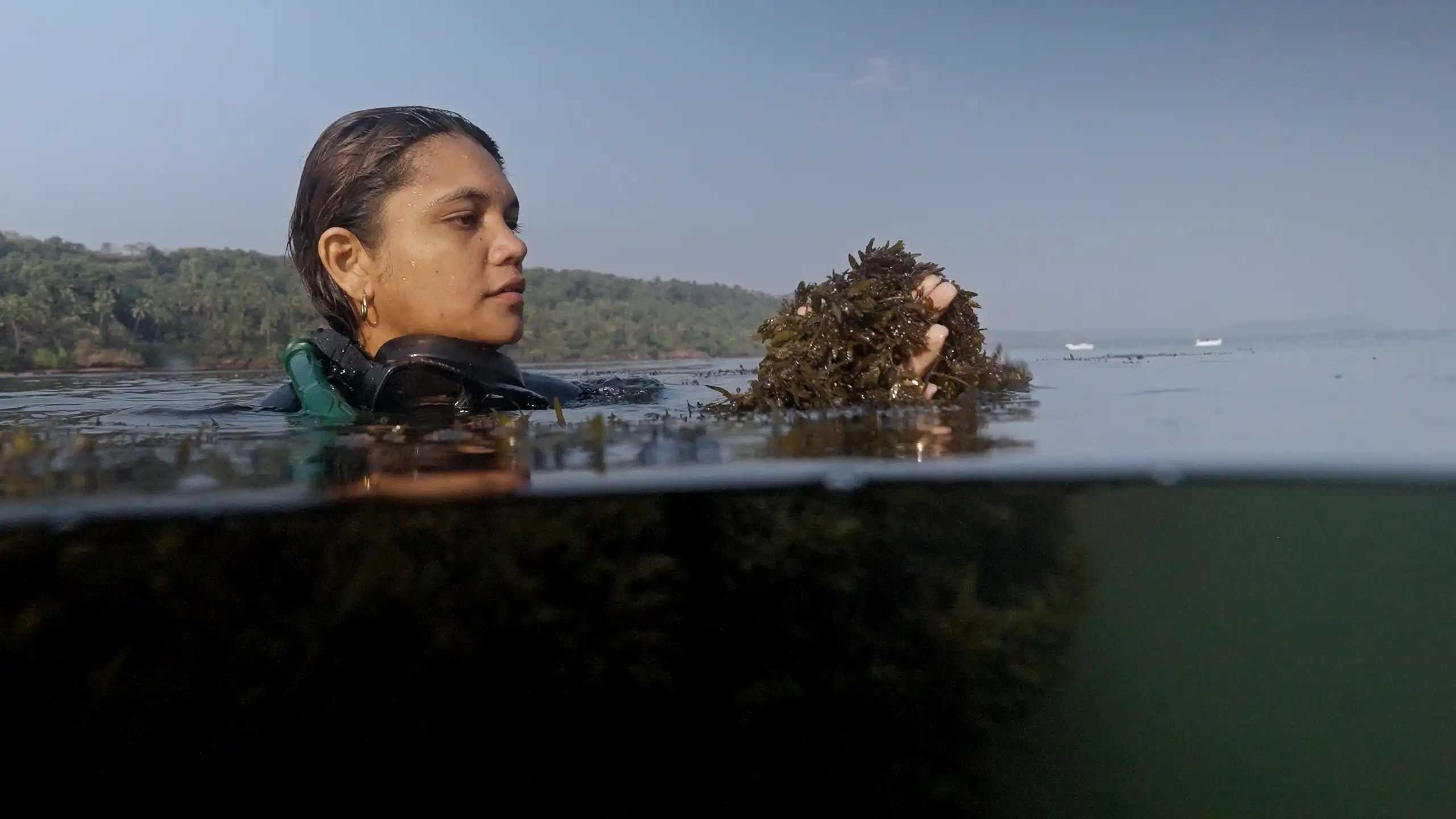
I do something similar with seaweed. I turn the anger and frustration I feel in everyday life into a small act of resilience: I grow something. My interest in growing and harvesting it began when I met a community of women seaweed harvesters and farmers in coastal Tamil Nadu in 2016. I was incredibly inspired by the sea women, who would venture out on boats in the early hours of the morning and harvest seaweed while freediving in sarees. The money they earned from selling it to agar-agar manufacturers fed their families, put their children through school and brought them respect in their communities.
It was terribly exciting, putting a raft of seaweed out into the ocean and waiting for it to grow.
My interest in seaweed was seeded, then, in Tamil Nadu, but it was years later that I decided to farm it myself along the coast of my home state, Goa. I started growing it on a raft in 2022, along with my friend and marine conservationist Nisha D’Souza. It was terribly exciting, putting a raft of seaweed out into the ocean and waiting for it to grow. However, as any skilled gardener will tell you, without the right conditions, you cannot expect a plant to survive. Our farm—faced with changing salinity, a disease outbreak and a storm—didn’t grow for very long, and we eventually lost all our crop.
Also read: To Tamil Nadu’s fisherwomen, the Cauvery delivers catch and self-reliance
Neither plant, nor animal
The thing that makes seaweed challenging to grow is that it’s neither plant nor animal. It is marine macro algae with very different ways of growing and reproducing. While we have farmed plants and animals for millennia, seaweed farming has a much shorter history. It took humans over 10,000 years to fully domesticate the banana into what it is today, and even the most advanced seaweed farming countries, such as Korea and Japan, have only a 400 year-old history of cultivating it.
The word seaweed is, in fact, not the name of any single species, but a broad term for sets of similar algal species
In addition to this is its diverse nature. The word seaweed is, in fact, not the name of any single species, but a broad term for sets of similar algal species—the three primary groups are red, green, and brown algae. The groups are called seaweed not because they are closely related, but because they are functionally similar. In his book The Seaweed Revolution, Vincent Doumeizel states that green seaweeds are more closely related to tomato plants and fir trees than they are to red seaweed!
This genetic diversity means that each type of algae requires its own approach to cultivation. Once you understand their lifecycles, you can grow them through various methods, ranging from wooden stakes, to floating rafts, to ropes in the open sea. Seaweed such as kelp start out in hatcheries, under careful conditions to oversee their reproduction, before being taken to the sea.
Cultivation can take anywhere between 6-8 weeks, or longer, depending on the species. There’s also a geographic divide: cold water species like Kelp, Wakame and Dulse will not grow in the warm waters of the tropics, whereas Sargassum, sea grapes and Kappaphycus thrive here. This also means you can't easily replicate farming technology designed for cold water species in warm conditions. Techniques developed to grow Kelp in countries like Korea move freely to advancing countries like the US—where similar cold-water conditions exist—but we, in the tropics, are only just starting to build a knowledge bank for farming warm water species.
Also read: The promises—and perils—of Indian aquaculture
The potential for women to lead
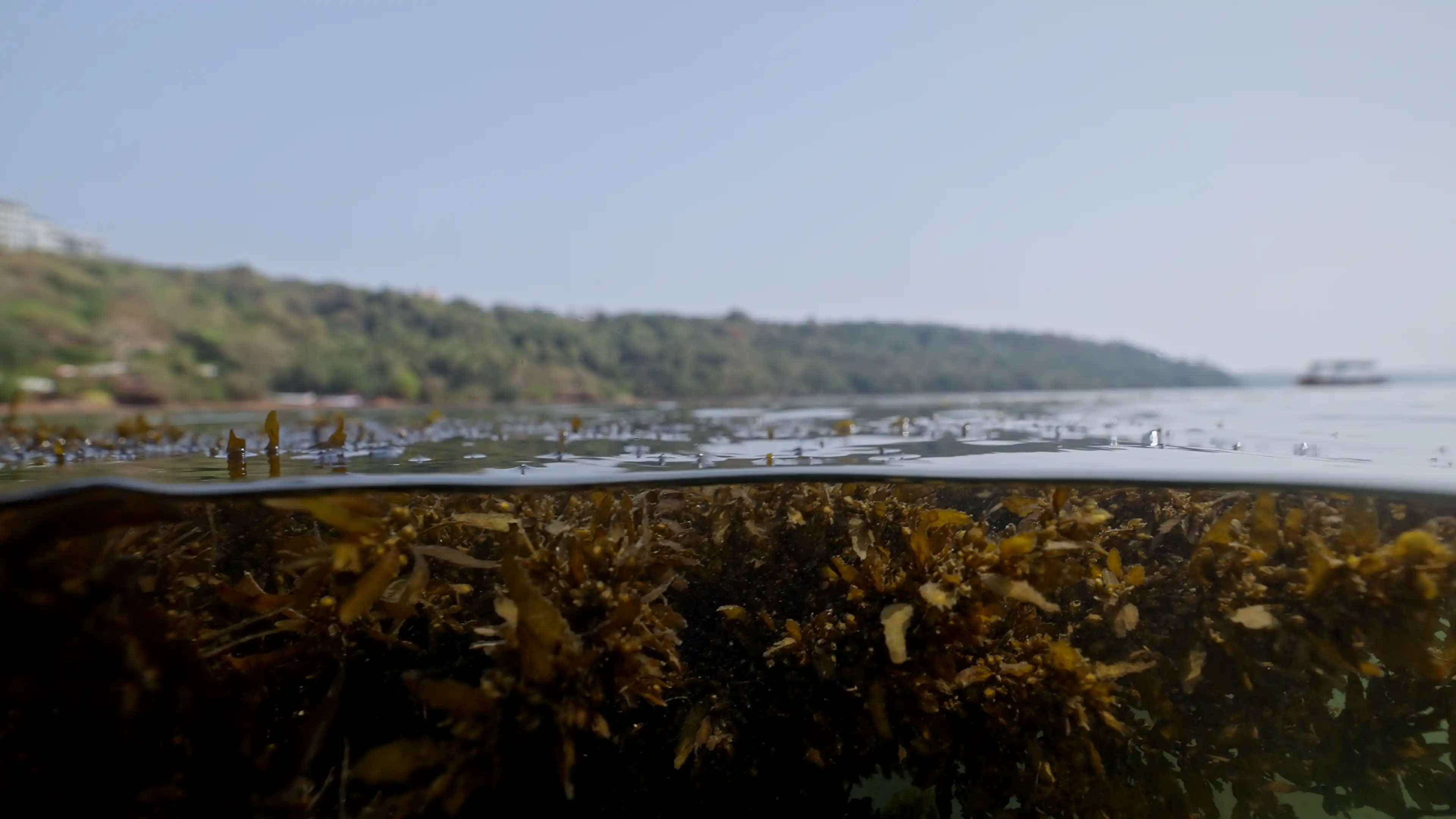
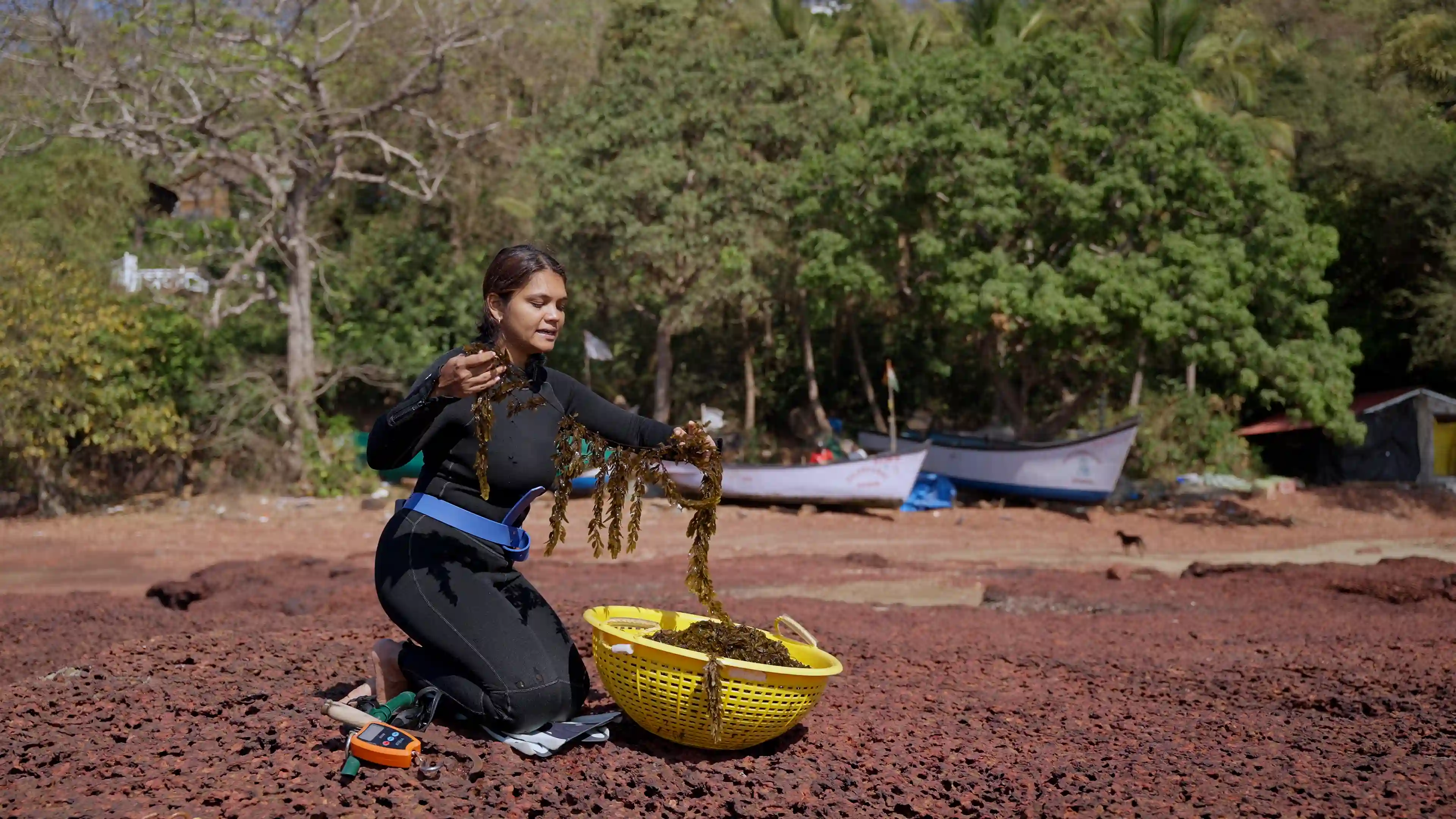
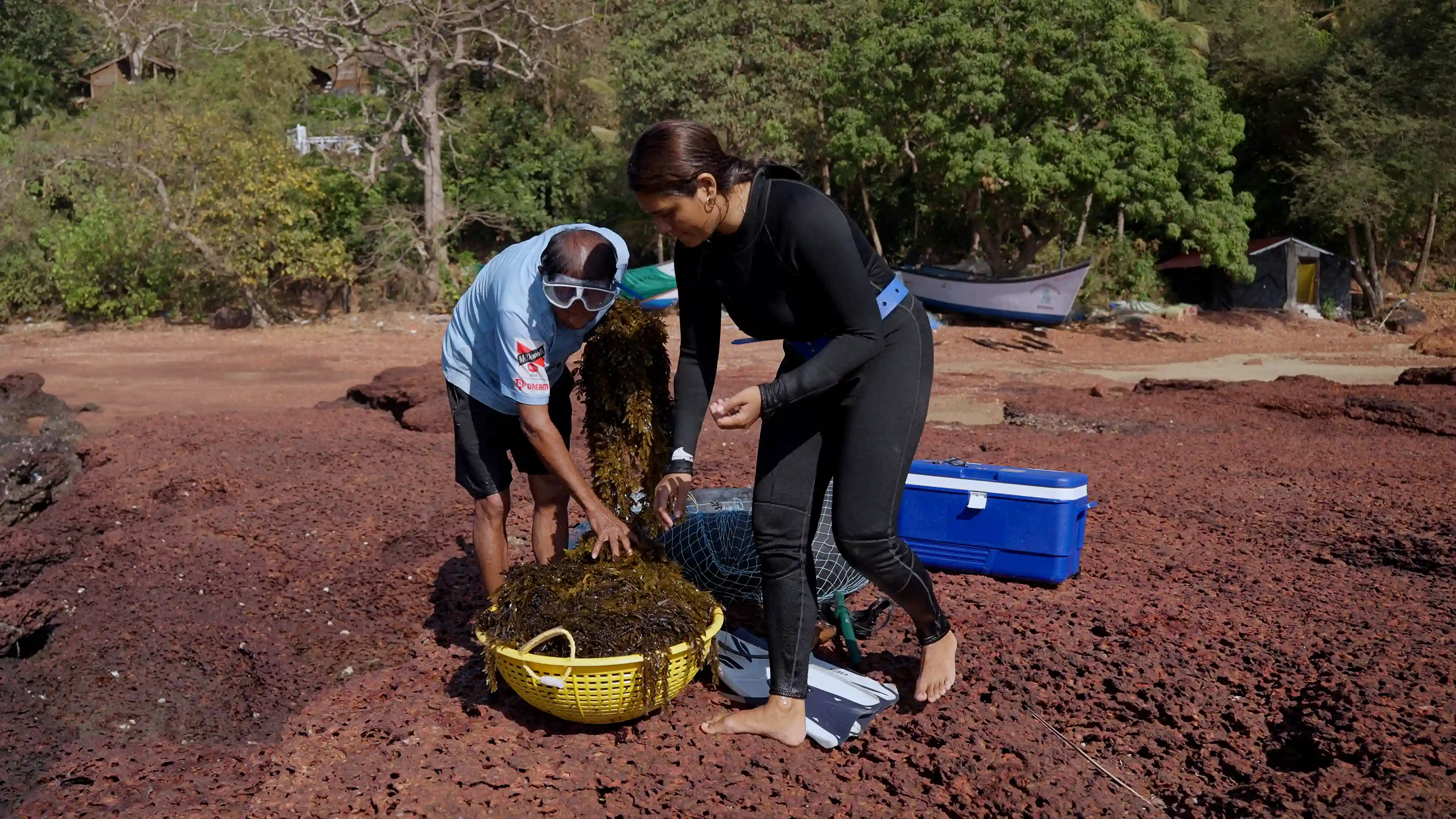
Having experienced first-hand the challenges of farming seaweed with limited research support, I turned to growing a seaweed business, where I wild-harvest small batches instead. My days start early—I usually leave my house at 7 am, and make my way down to the tidepools with my team mates, Bhagwan and Francis. We spend an hour swimming in seaweed forests and harvest small batches of the best quality produce we can find. We remain very careful not to pull the seaweed from off the rocks, but instead cut it from a height, so it can continue to grow. When we’re done, I take it back to our processing unit where it's cleaned, sorted, dried and packed by Shobha, who is an expert at checking quality. The rest of my day is spent engaging with chefs and potential customers, and also working as a seaweed consultant.
We remain very careful not to pull the seaweed from off the rocks, but instead cut it from a height, so it can continue to grow.
While I've enjoyed running a wild harvesting company, I have been waiting for a chance to start farming seaweed again—and this is the year that I finally can, with a wider knowledge pool to learn from. I have never stopped believing in a resilient future full of seaweed farmers. The ‘ocean gardeners’ of our time. Just like my grandmother taught me how to grow a spinach plant, I do predict that there will be a time that women along the coast will teach their children how to grow seaweed.
While I believe anyone and everyone should be able to farm it, I see an opportunity for women along the intertidal to transition into it first. Intertidal zones are places where the land meets the sea: rocky ledges, or long, sandy stretches—areas that are submerged during high tide, and exposed during low tide.
{{marquee}}
Women in coastal communities have always been intertidal foragers. From the Ama divers of Japan, to the Haenyo of South Korea’s Jeju Island, and the sea moss farmers of Tanzania (often called “seaweed mamas”). While men venture out to sea to fish, women dominate the intertidal, and earn money as well as respect in their communities, all while staying close to their homes and raising their children. This is the key to why small fish, seaweed, clams, crabs and mussels are farming systems that women can thrive in.
In the seaweed sector, we see women succeed both on farms and in companies. A shocking statistic that emerged a few years ago revealed that around 85-90% of the labour force in seafood companies were women, but over 99% of the CEOs leading them globally were men. The seaweed sector is very different. The last decade has seen a sharp increase in companies led by women: 40% of them now have female CEOs. Seaweed farms are also largely run by women in countries such as the Philippines and Indonesia. Over 85% of farms in Tanzania are female-run. The difference is stark.
Having more women at decision making levels can change how we build seafood businesses.
Having more women at decision making levels can change how we build seafood businesses. Women leading companies and owning farms puts earning power and property rights into the hands of those who sustain their communities. We have seen this across the globe, including here in Tamil Nadu, where the income from farming seaweed has put more children into school. Women’s inclusion needs to be not only along supply chains, but in other aspects of the sector too.
The ecosystem around seaweed farming should include women at a policy making level. Farms should be designed for women and seaweed processing units should be built with facilities such as daycare rooms, along with offering menstrual leave and well-paying, consistent work.

Along with the farms and processing units, there is an urgent need for scientists to build more seaweed hatcheries, where seed material can be grown and distributed among farmers. This expansion could create significant opportunities for female marine scientists in the sector. Further down the value chain, seaweed companies specialising in high value markets like food, nutraceuticals and skincare, can financially sustain this ecosystem.
Seaweed supply chains, thus, have the potential to nurture both ecosystems and people. We have a long way to go in making farming seaweed a well paying and accessible enterprise, but seeing a large number of women engaged in it gives me hope. Just like my grandmother and countless women do everyday, we put our hands in the soil and in the sea and grow some gardens.
Also read: Omega-3 fatty acids: The hidden costs of ‘health’ to our seas
{{quiz}}


.avif)
Explore other topics
References

Seaweeds are type of