Bean to bar: A Goan chocolatier’s experiments in cacao farming
Swiss-trained Alvinia Desouza has found success in early harvests, thanks to permaculture lessons and an embrace of the artisanal


In its native home of the Amazon, cacao is not traditionally cultivated as a monoculture crop.
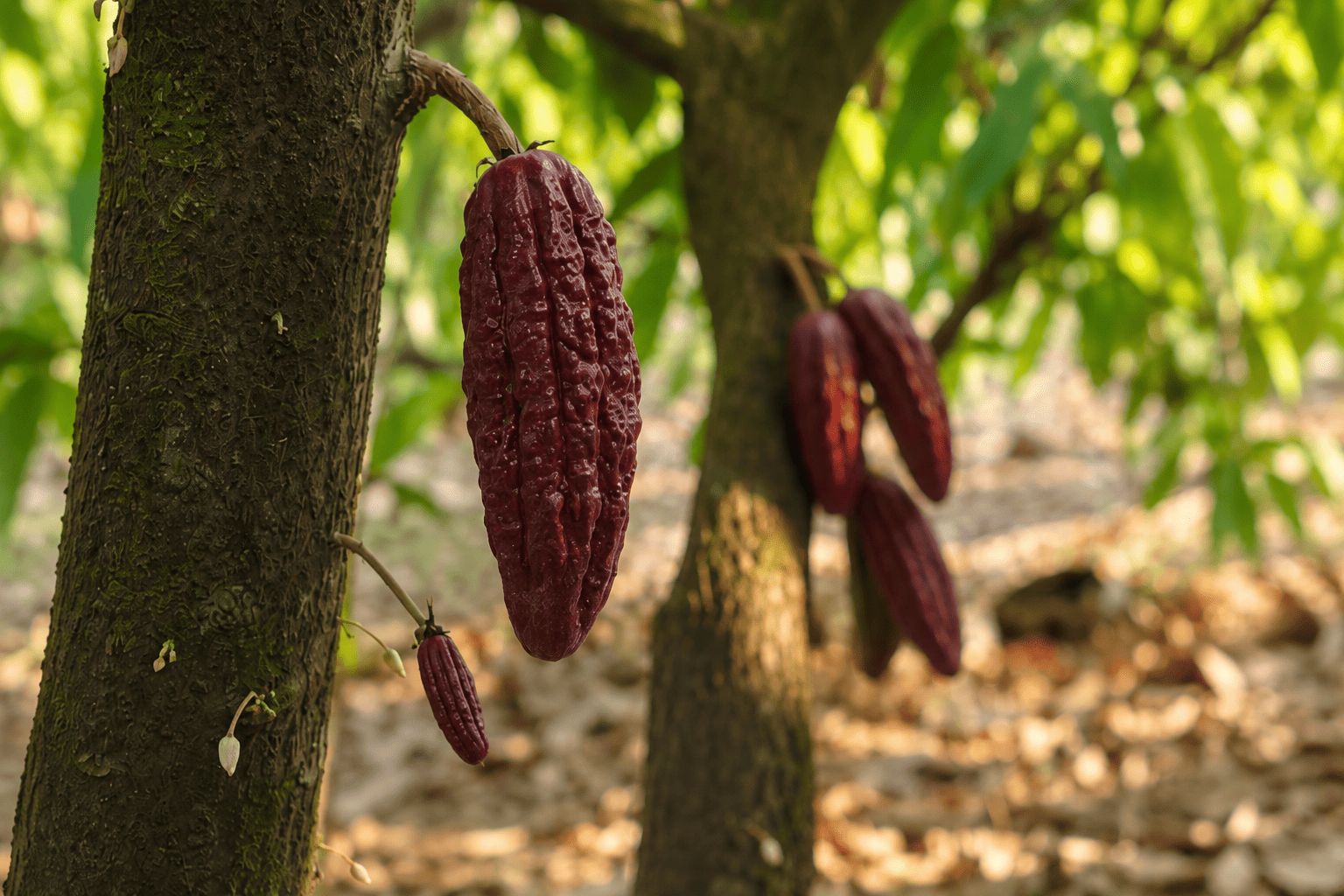
It thrives within richly-layered agroforestry systems whose underlying framework is the essence of the rainforest itself. Cacao trees grow under the canopies of taller species: think rubber, hardwoods, banana and other fruits. In filtered shade away from the harsh sun, with natural humidity, and amid biodiversity that keeps pests in check, the cacao reaches its full potential. This intercropped approach not only protects the delicate plant, but also sustains soil health and encourages wildlife.
Far from the conditions of industrial plantations, where single-crop farming often depletes land and increases vulnerability, Amazonian cacao flourishes as part of a complex ecological web.
Its conditions are somewhat mirrored in Dodamarg, in Maharashtra’s Sindhudurg district on the Goa border. Dodamarg’s leafy hills are known for their interlaced biodiversity of dense forests and waterfalls; the taluka is home to the Tillari Conservation Reserve. It is also the backdrop for chocolatier Alvinia Desouza’s innovative experiments in growing her own cacao, enabling the creation of an end-to-end processed, bean-to-bar chocolate brand.
From crafting to growing
The craft and profession 43-year-old Desouza is trained in is removed from the land, while still being embedded in global food systems. Long before Goa, there was Emmental, Switzerland. Desouza spent six years at Bäckerforum Aeschlimann, a traditional, four-generation-old Swiss bakery, where she eventually went on to manage the chocolate department almost single-handedly. Here, precision ruled: chocolate, which arrived from reputed Swiss houses like Felchlin and Läderach, was melted, tempered, paired, moulded, perfected.
“But a chocolatier,” she clarifies, “is not a chocolate maker.”
Desouza spent six years at Bäckerforum Aeschlimann, a traditional, four-generation-old Swiss bakery.
This realisation crept in slowly. Working with couverture (premium-quality chocolate) felt increasingly like working with a finished language. There was craft, yes, but very little authorship. In 2014, driven by a quest for more, she began flying across Europe on stolen weekends to learn more about the then-nascent bean-to-bar movement. In a small shop in Manchester, UK, Desouza stumbled upon a delicious single-origin chocolate. She was shocked—and delighted—to know that it came from close to home: Kerala.
This was good Indian cacao, in England. She returned to her native Goa with a phone number and a question she couldn’t shake off: If Indian cacao was this good, why weren’t more people working with it?
Alchemising cacao
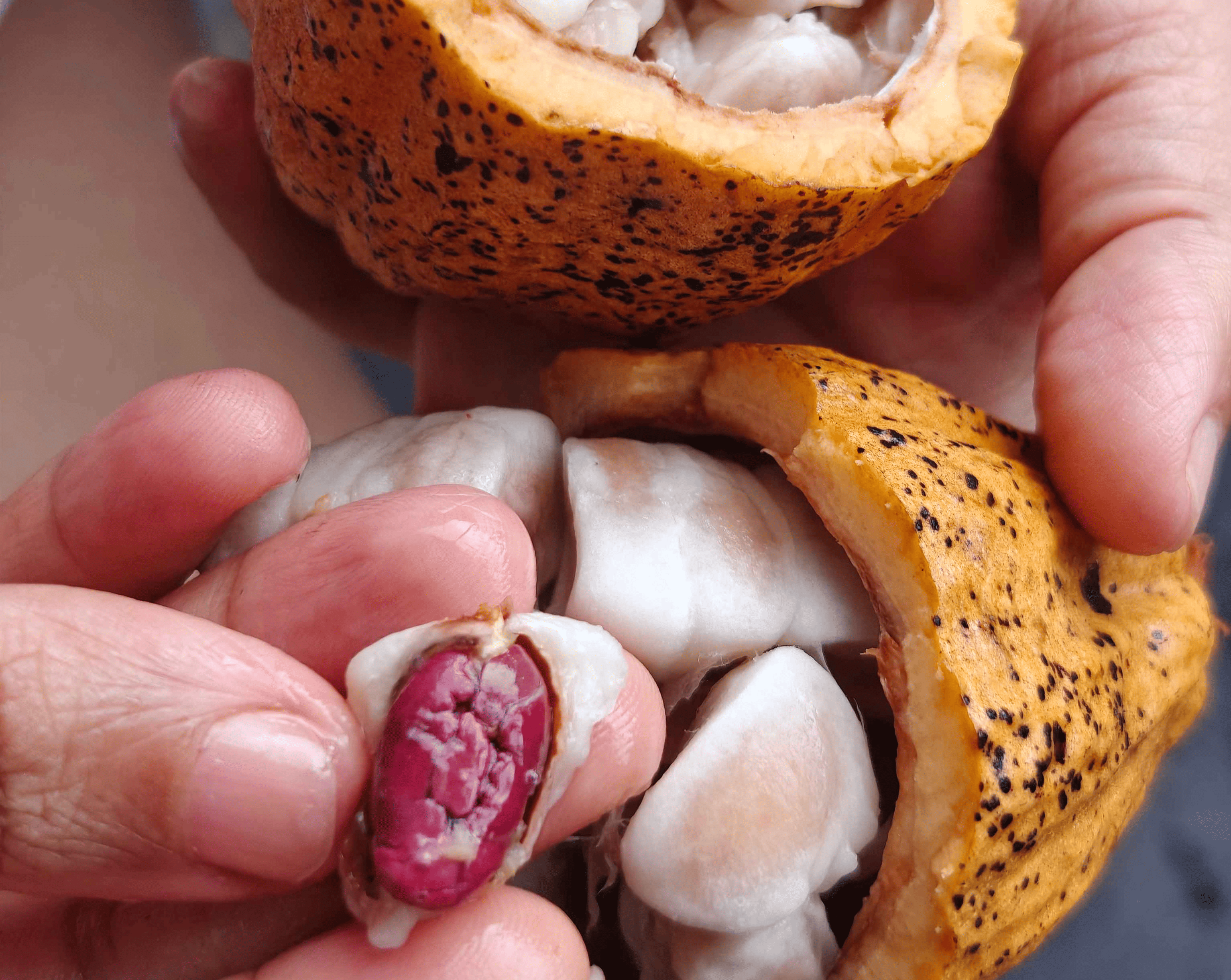
The phone number belonged to Luca Beltrami, an Italian engineer working closely with Indian cacao farmers through his company, GoGround, in Kerala. Desouza’s perspective shifted when she learnt of Beltrami’s process: he bought pods rather than beans, and fermented the beans contained in them himself. It is in this fermentation, she realised, that chocolate is truly born.
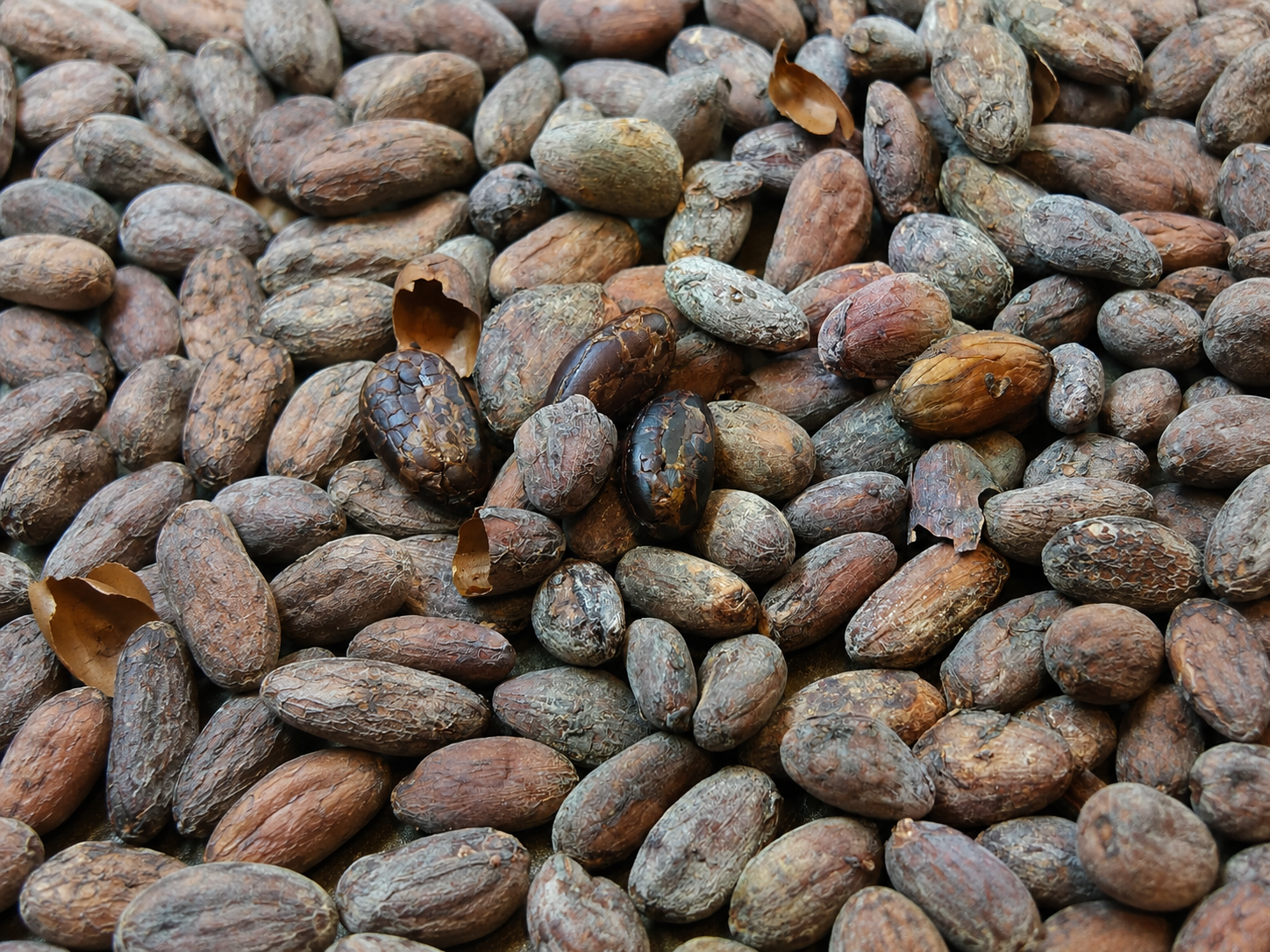
“If you get the fermentation wrong,” she says, “no talent in the world can fix the chocolate born out of it.” This new wisdom is at the heart of her 10-acre farm at Dodamarg, where she harvests her cacao crop, ferments it and turns it into chocolate bars and other crafts sold at Desouza’s Dodā Atelier, launched in December 2025.
The April harvest tastes different from the August one, because monsoon moisture changes everything, from drying to the development of flavour.
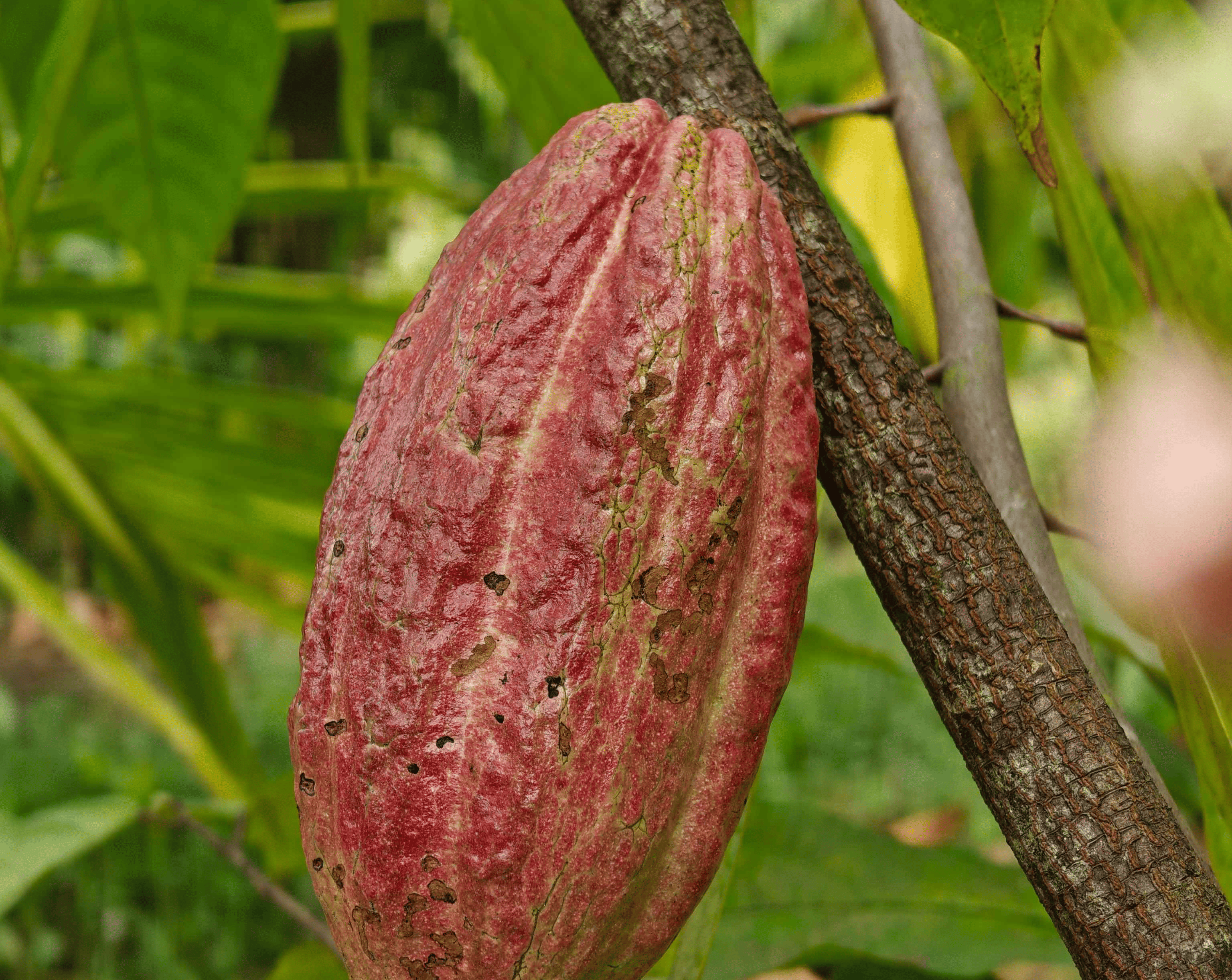
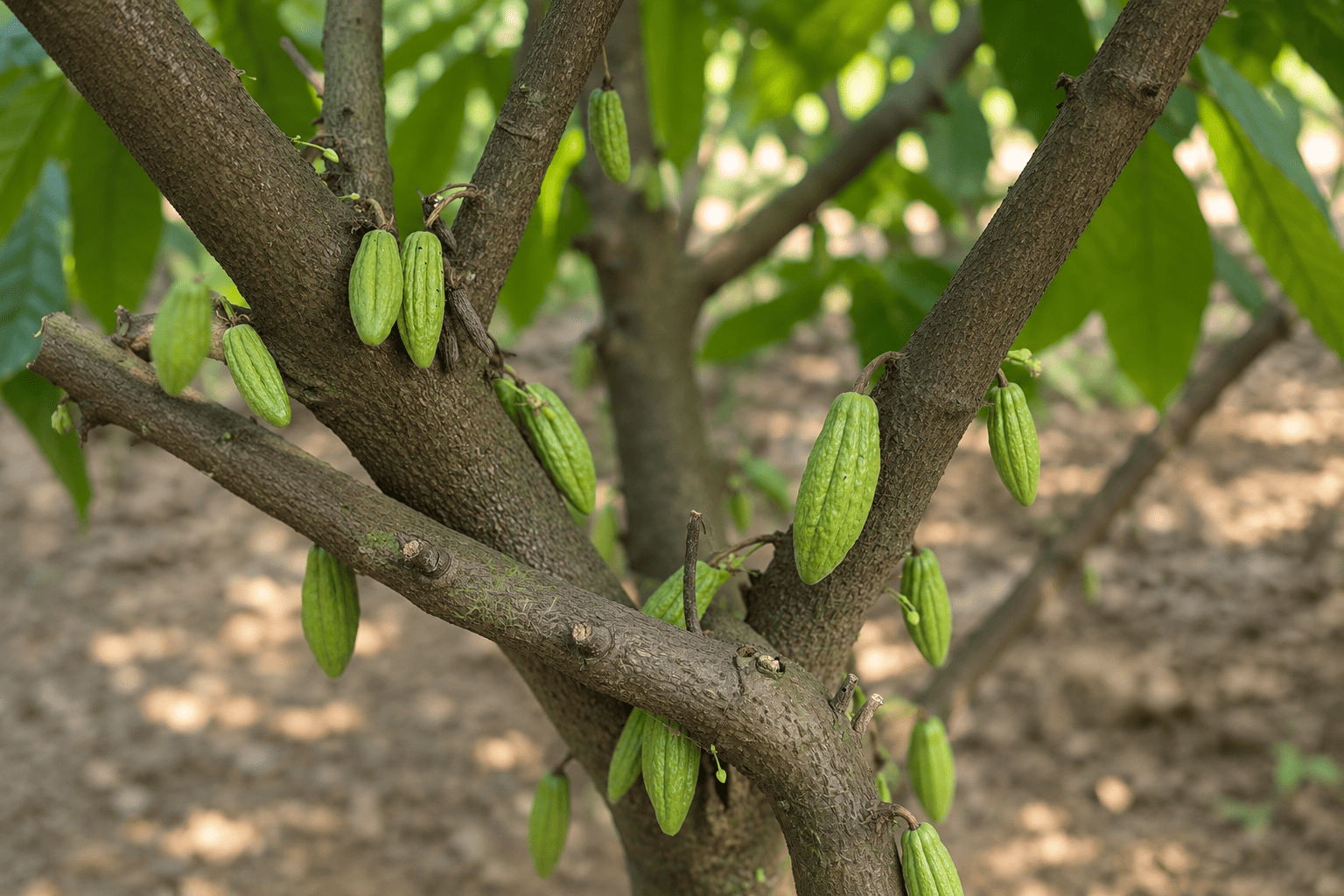
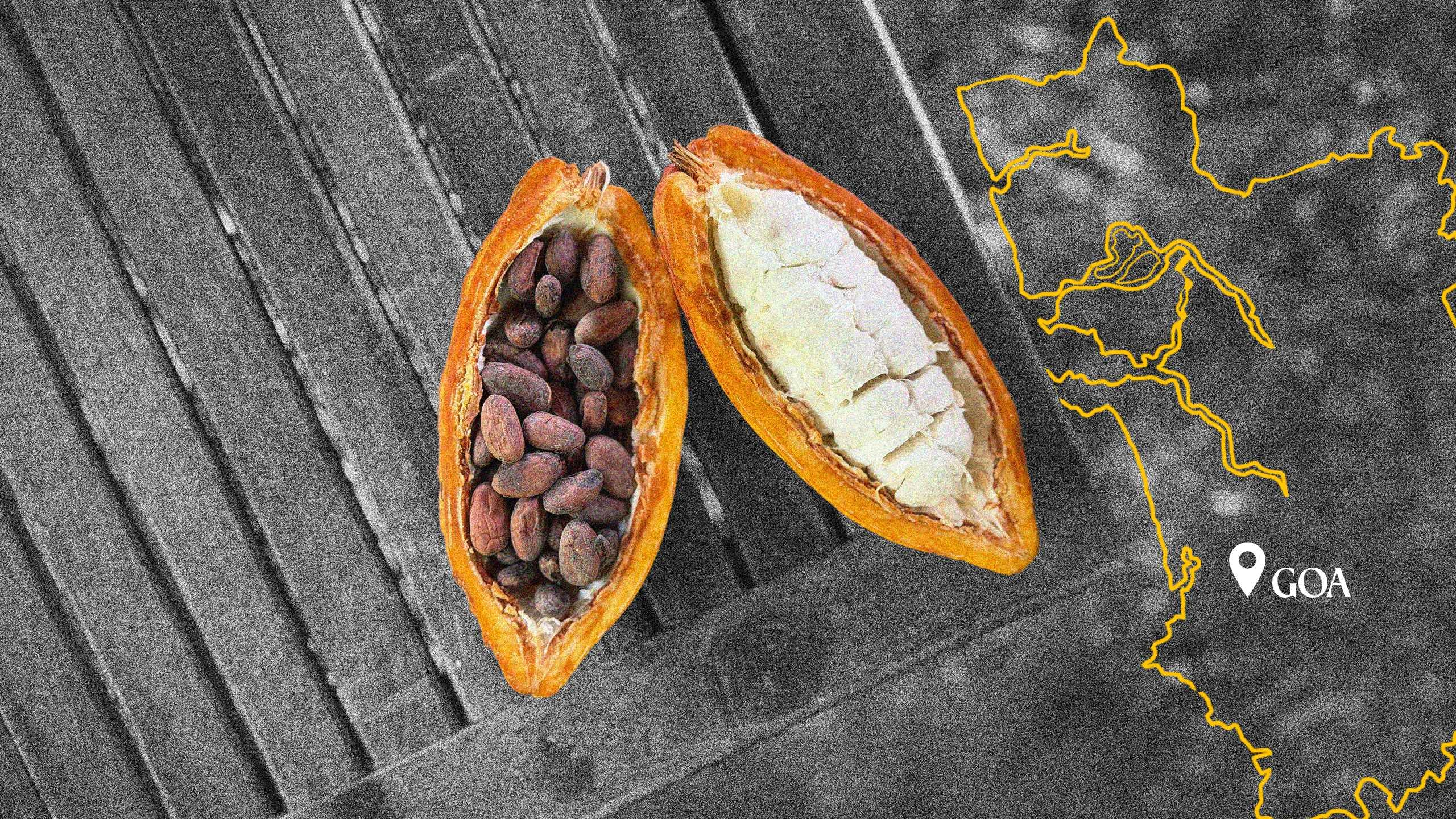
The very first harvest, in 2025, yielded barely 100 pods—each lined with a few dozen seeds. Only a year later, she produced nearly 300 kg of beans across two harvests: April–May, and post-monsoon in August (cacao typically takes 3-4 years to bear fruit).
{{marquee}}
Commercial chocolate, she explains, is built for consistency. Mixed bean sizes, bulk fermentation, single roasting temperatures, alkalisers like potassium or calcium carbonate to mute acidity, sugar and emulsifiers—all this equals predictability. Consistent results, every single time. Craft chocolate is the opposite, in the way it accommodates variations in bean sizes and weather-based differences in fermentation. The April harvest tastes different from the August one, because monsoon moisture changes everything, from drying to the development of flavour. Climate change, too, plays a role.
“No two batches are the same,” Desouza says. “And that’s the point.”
Also read: Climate change in my cup: Why India’s cocoa and coffee production is at risk
The lay of the land
In 2018, Desouza invested in ten acres of land at the foothills of the Western Ghats near the Tillari Conservation Reserve. She grew up in Goa’s Calangute, so she wasn’t unfamiliar with the terrain. But the land she purchased was in abject neglect, having been literally abandoned by its previous owner. So severe was the state of this land’s disarray, that it was in its unhindered, wilding state and even caught fire once.
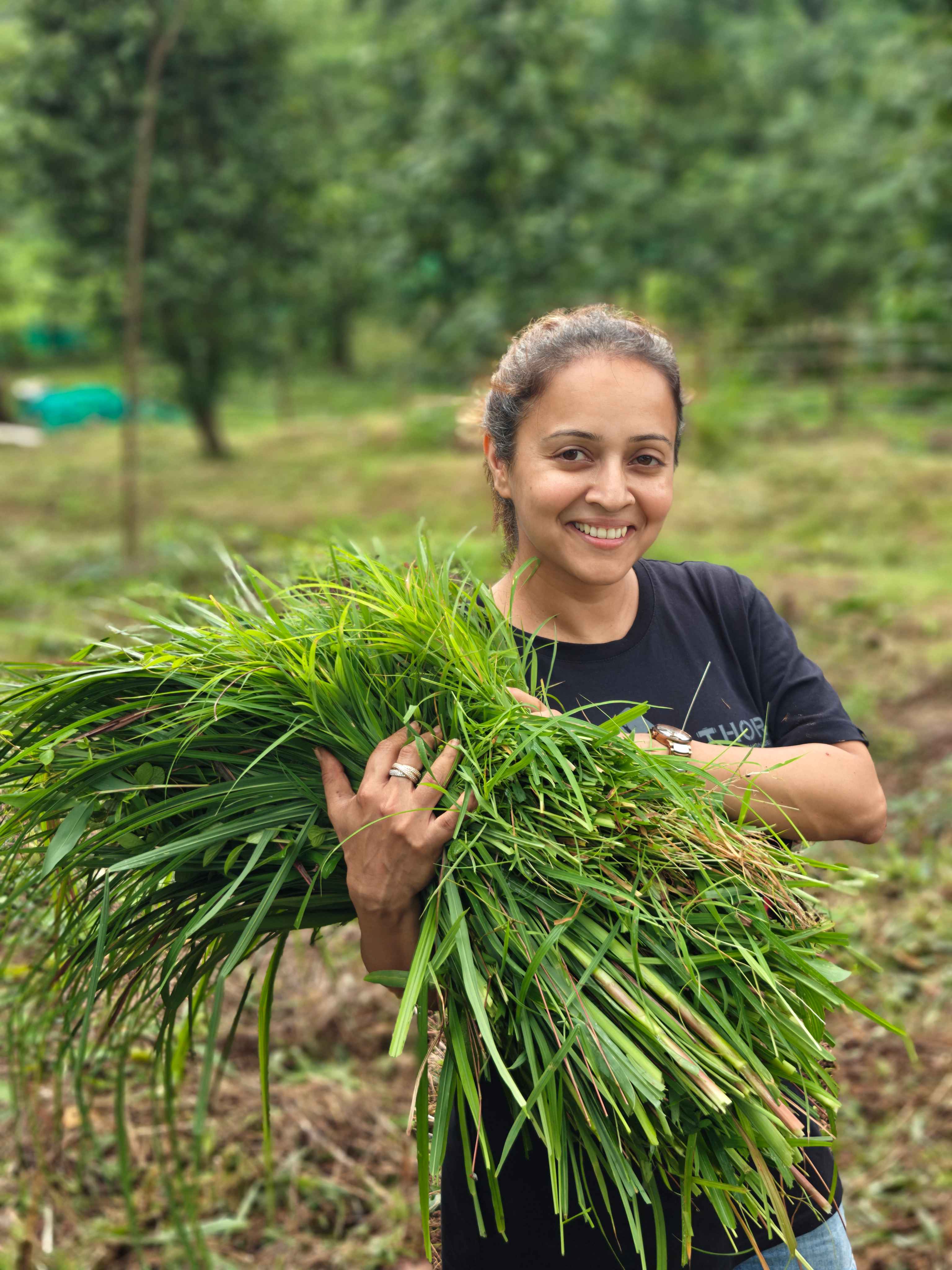
Far from Goa’s centre, the price of the land was comparatively lower. The only reassurance Desouza had was that the surrounding areas—said to drink up water from the Tillari Dam and other sources—were known to be quite fertile.
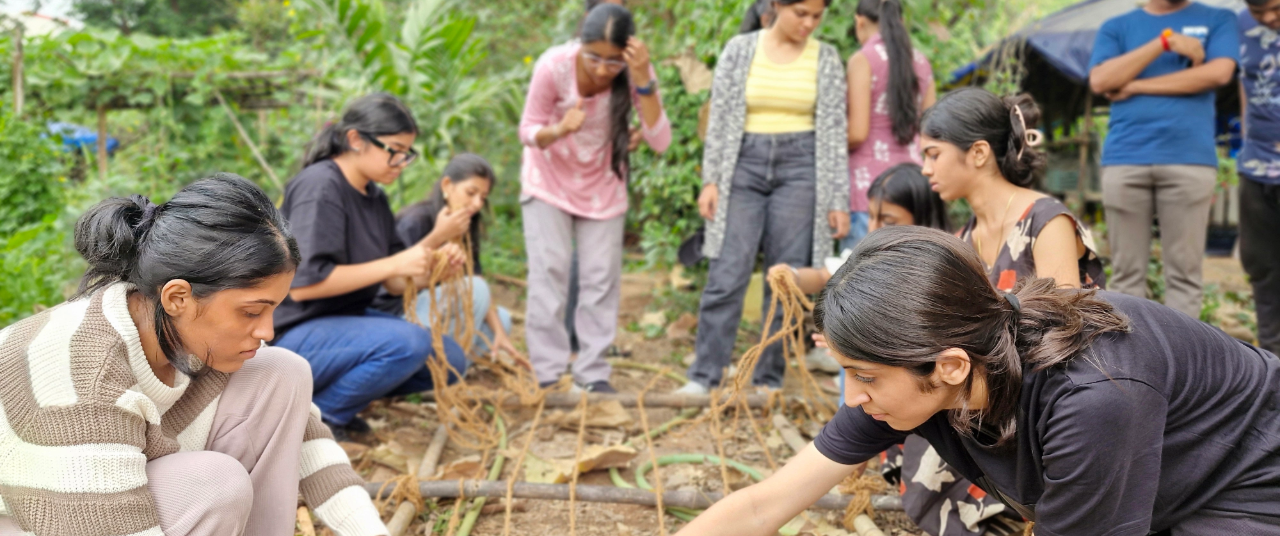
She began with working on the foundational layer of the soil and canopy structure that the cacao would grow with and within, and proceeded with numerous nitrogen-fixing crops. Around the same time, she embarked on a deep study of permaculture, and sought guidance from the Indian Council of Agricultural Research (ICAR) as well as the Cocoa Research Centre, Vellanikkara in Kerala’s Thrissur. The support of Dr. V. Arunachalam, Principal Scientist, Horticulture, ICAR-CCARI (Goa) was pivotal to the first steps she took in cacao farming, Desouza mentions. In 2020, when the COVID-19 pandemic hit, Desouza plunged into the study of the land, taking rigorous online classes and in-person workshops by Clea Chandmal, a well-known permaculturist in Goa.
Today, Desouza’s farm is home to 20 country chickens for eggs, four ducks, six geese, and 15 turkeys—not for the dinner table but rather for the snakes that make frequent appearances. Two cows and two donkeys graze the land instead of petrol-fed brush cutters, fertilising the soil as they go. “It’s an ecosystem,” she shrugs. “The planet is happy, the soil is happy.” And, by extension, so is the cacao.
Also read: A hunt for Goa’s wild ‘monsoon greens’: Foraged veggies that fed generations
A patiently nurtured farm
For a cacao tree to grow healthily, the soil that it is planted in should be deep, well-drained and humus-rich. Red laterite soils are often suitable, but it can thrive in other soil types as well. Regardless, it is important for the soil to be fertile and full of nutrients, as well as capable of holding water, since cacao needs near-weekly irrigation.
Permaculture teaches us, ‘slow it, soak it and store it’. We did just that.
“I closely attended to the earth, leaning on my learnings from permaculture. With hired help, I dug a pond for water harvesting because the land was quite arid and barren; it would recharge the groundwater level. Before I could actually plant saplings, we dug trenches which would slow down the heavy rainfall our region receives. Permaculture teaches us, ‘slow it, soak it and store it’. We did just that,” she shares.
In June and July of 2020, she planted trees that are native to the area, which would provide essential shade to the cacao. Added to the mix were Malabar neem, mango and silver oak. “When the lockdown started to ease, I bought a lot of Gliricidia sepium, as I knew it would improve soil fertility, prevent erosion, and provide organic nutrients for the soil,” she adds. Her farm boasts of banana, rubber, nutmeg, areca nut, jackfruit, and turmeric, among other crops. Coconut, which had already been growing on the land, continues to thrive.
Experiments with cacao
What Desouza has undertaken is novel and experimental, even as India thrives in cocoa production. In fact, the country’s cocoa bean production was 27,600 tonnes in 2024, up from 19,000 tonnes in 2017.
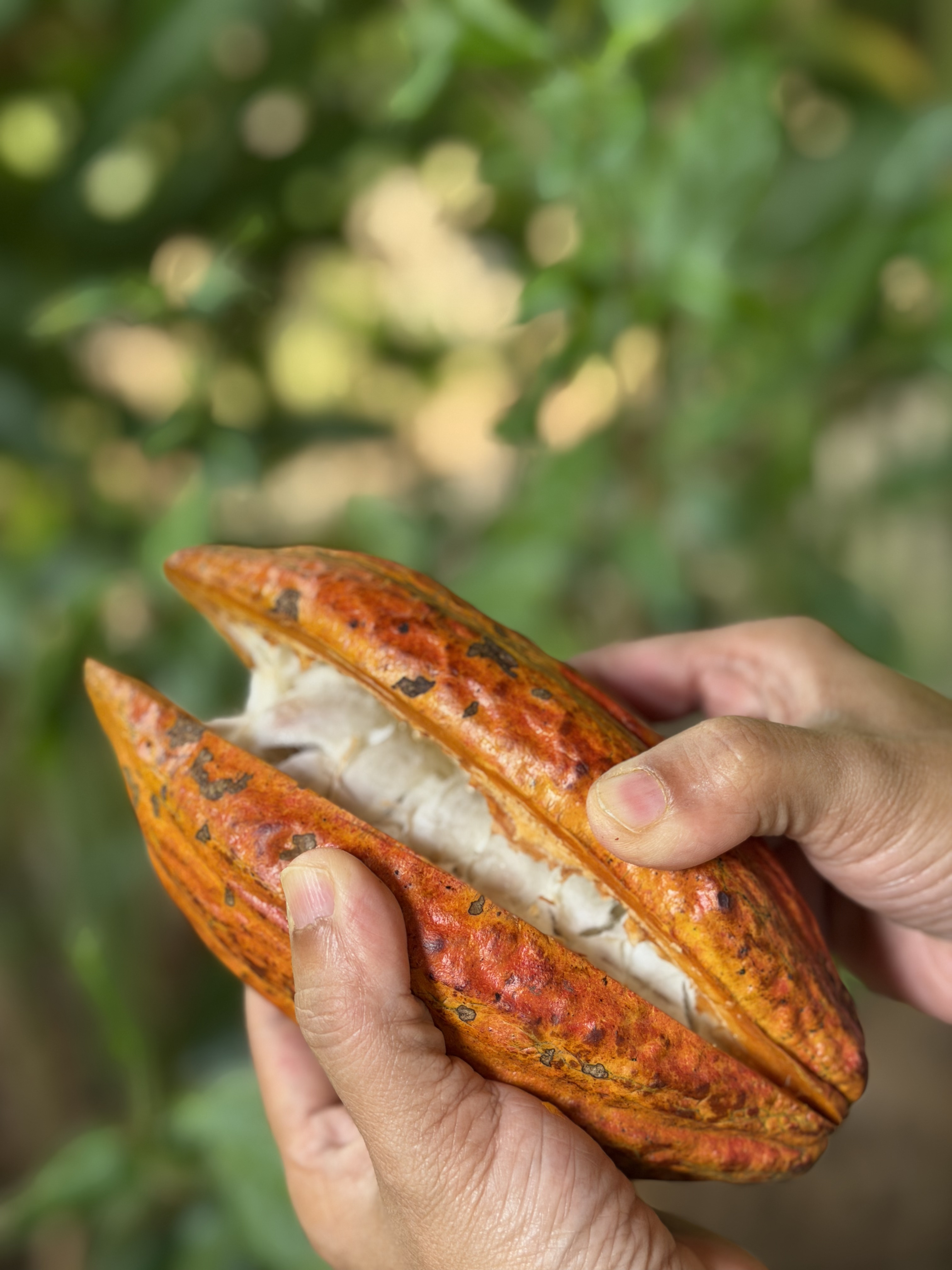
Though Goa’s humid climate, with well-distributed rainfall throughout the year, makes it a suitable home for cacao trees, much of India’s production of the crop is concentrated further down south, in Karnataka, Andhra Pradesh and Tamil Nadu. Owing to this, there is no network of farmers and traditions to lean on. With Goa’s long dry spells, heat and often heavy rainfall, the cacao needs careful management. Despite this, Desouza sees potential for the crop in Goa. In an effort to encourage its cultivation, she spends time reaching out to other farmers, making a case for growing it in rotation with their other crops.
With Goa’s long dry spells, heat and often heavy rainfall, the cacao needs careful management.
The journey for fellow cacao cultivators in the state has been turbulent. Sahakari Spice Farms, a Panjim-based plantation, swapped it for coconut, which yielded better results. “The1970s saw farmers in Goa diversifying their crops, leading to the growing of cocoa and areca nuts as intercrops. But eventually, this was discontinued, as there was no knowledge of the after-process. Also, people were not really aware of how valuable the crop could be,” ICAR-CCARI’s Dr. V. Arunachalam says.
Tanshikar Farms, in the Netravli village, has 200–250 cacao trees, and they process their pods onsite. Much of the chocolate is on sale as retail products, and the rest of it is used for consumption on the farm: in their restaurants, in desserts and shakes. “Goans really didn’t value cacao much as it was quite cheap, and we were unaware that it could command a high price. Then, two years back, its prices grew tenfold and cacao was suddenly very precious,” recalls Chinmay Tanshikar, who has been cultivating cacao trees for two decades, harvesting 6–7 quintals annually.
In her visits back home from Switzerland, a young Desouza frequently spent time tracing the origin of cacao. Where Switzerland taught her discipline, precision and a respect for process, Goa taught her where chocolate could bloom: in the soil, sun, microbes, and time.
Also read: Why kokum, a beloved souring agent, hasn’t evolved into a commercial success
Edited by Neerja Deodhar and Anushka Mukherjee
Carousel Photo Credit: Dodā Atelier
{{quiz}}

Explore other topics
References

How is cacao traditionally cultivated?