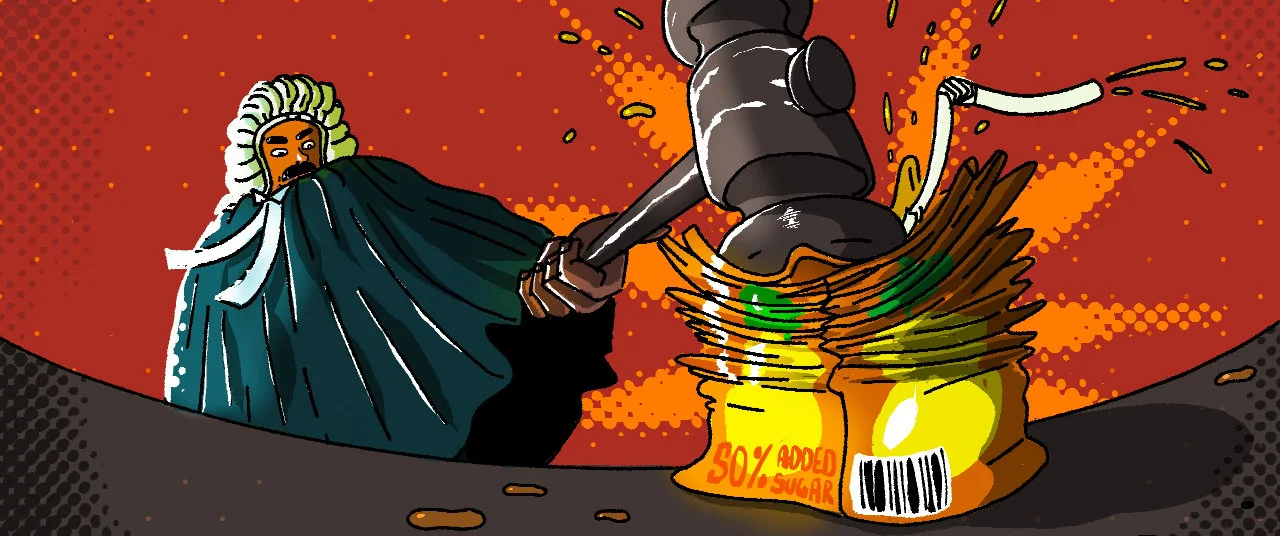
Carbon credits: Moral sanctions for high emissions?
A carbon credit is only as credible as the claimed reduction behind it: genuinely additional, accurately measured, and not double-counted.


Editor's Note: The planet we inherited as children is not the planet we will someday bid goodbye to. The orchestral call of cicadas in the evenings, the coinciding arrival of the monsoon with the start of the school year, and the predictability of natural cycles—things we thought to be unchanging are now at risk. An altered climate, declining biodiversity and warming oceans aren’t distant realities presented in news headlines; they affect us all in seen and unseen ways. In ‘Converging Currents’, marine conservationist and science communicator Phalguni Ranjan explores how the fine threads connecting people and nature are transforming with a changing planet.
There is something very mystical yet mathematically clean about a carbon credit.
Your company emits one metric tonne of carbon dioxide here. Somewhere else, on a different continent, a project claims to prevent, reduce, or remove one tonne. That reduction/removal is measured, verified and issued as a carbon credit, which is then bought and used to offset emissions elsewhere. And the equation is treated as balanced.
But did that reduction/removal really take place? Who checked it? Would it have happened naturally anyway? If the reduction occurred in a forest in India while emissions came from a factory two continents away, who is accountable?
As carbon markets move from a niche mechanism into global climate policy, these questions become critical.
Frameworks and guidelines aside, a carbon credit is only as credible as the claimed reduction behind it: genuinely additional, accurately measured, and not double-counted.
By 2025, 80 emissions trading systems (ETSs) and taxes had been implemented globally, covering 28% of global emissions through a direct carbon pricing mechanism. When the EU launched its ETS (a global first) in 2005, this number hovered at 5%. Even as carbon credit prices dipped last year, entities were willing to pay more for removal to meet year-end compliance goals. The World Bank estimated that over half of global emissions from the power sector and almost half from industries now face a direct carbon price. Reportedly, a carbon credit in 2026 can average €25 to €80 per tonne (roughly ₹2,500 to ₹8,500 per tonne), depending on the type of project and location.
Recent debates are increasingly about whether traded credits even represent real climate benefits. Article 6 of the Paris Agreement provides a framework for international cooperation to facilitate climate action and mobilise finance, including for developing countries. Subsequent sub-articles govern internationally transferred mitigation outcomes and establish the UN crediting mechanism. But, frameworks and guidelines aside, a carbon credit is only as credible as the claimed reduction behind it: genuinely additional, accurately measured, and not double-counted.

How carbon credits work
For this system to work, a tonne of carbon is taken as a theoretical unit. To issue a credit, a project must establish the quantity of emissions that would have occurred without it. The difference between this hypothetical baseline and the emissions from the project is used to calculate the reduction, for which credits may be issued.
But we can never observe both realities: a world in which the project did not happen, alongside one where it did. We can only estimate or model the former, which makes assumptions and calculations critical here.
This is where additionality becomes important: did this carbon-saving happen because of the project, or would it have happened anyway? Imagine a factory planning to install cleaner technology. If it does so regardless of carbon-credit money, a credit is not creating any climate benefits in this case. However, if the money from credits is what enables or makes the factory switch to cleaner tech, then that reduction may be additional.
A carbon market puts a financial value on greenhouse gas emissions, but buying a credit does not physically erase the buyer’s emissions
There are also two concepts here: a credit and an offset. A carbon credit is a tradable accounting unit representing one tonne of CO₂-equivalent emissions reduced, avoided, or removed. When that credit is ‘retired’ or used to compensate for emissions elsewhere, that’s an offset. Offset-oriented projects can include landfill methane capture, renewable energy, forest conservation, improved cooking technologies and engineered carbon removal.
A carbon market puts a financial value on greenhouse gas emissions, but buying a credit does not physically erase the buyer’s emissions; it offsets it elsewhere to reach a net zero in tally.
Also read: Life with plastic, not all fantastic: The paradox of a transformative material
Overstated benefits?
A 2024 analysis covering one-fifth of the credit volume issued until then (about 1 billion tonnes of CO₂e) found that less than 16% of those credits represented genuine emissions reductions. Even the verification system has a built-in weakness: project developers themselves select and pay the auditors who verify their credits. A 2025 study found that 64% of a prominent carbon credit registry’s certified auditors had been involved in problematic projects where over-crediting had been acknowledged by them, or identified by peer-reviewed research. A different 2026 analysis of 44 REDD+ (Reducing Emissions from Deforestation and Degradation) projects found that the projects had reduced deforestation, but claimed avoided deforestation was 10.7 times higher than independent evaluations supported. Further, a 2024 study conducted by the University of Pennsylvania examined 51 cookstove projects (to replace firewood stoves with clean-burning stoves) across 25 countries (~40% of all issued credits from cookstove methodologies as of 2023), and found that they had been over-credited, receiving roughly 9.2 times more credits than the actual emissions reductions justified.
A project can have meaningful impact on the ground and still generate (or sell) more carbon credits than it actually saves
It is not that carbon projects are ineffective; it’s much more nuanced than that. A project can have meaningful impact on the ground and still generate (or sell) more carbon credits than it actually saves, if the modelling, baselines, and assumptions aren’t robust.
There are also examples where projects have benefitted communities through incoming revenue. The World Bank documents a list of such projects from across Africa where initiatives including recycling, agriculture, biodiversity conservation, REDD+, carbon tax, and solid waste management have provided tangible community benefits while generating credits. Costa Rica, a leader in carbon markets, has established strong benefit-sharing policies so that a measurable part of the revenue from credits reaches local communities.
Weaknesses and uncertainties
There are inherent weaknesses in any model. Carbon stored in forests can be released by fire, logging, or degradation, undoing achieved carbon removals, creating a problem called non-permanence, while the same reduction could be counted more than once (double-counting). Emissions can also shift elsewhere through leakage, for example, restoring and protecting one patch of the forest might shift deforestation activities to another part. Cookstoves (vs wood fires) can deliver genuine benefits by reducing household air pollution, fossil-fuel use, and pressure on forests. But benefits depend on what fuel households would otherwise have used, whether the new stove is used, how often, and whether old stoves remain in use.
The UN’s Article 6.4 mechanism, originally drafted in 2015, has been revised over the years to introduce standards addressing additionality, baselines, leakage, validation and verification, while 2025 rules specifically address non-permanence and reversals. A dedicated mechanism registry is also being established to track Article 6.4 units.
Also read: Fish and seasonality: How year-round demand and extraction hurt our seas
Accountability vs. the easy way out
There are two types of credits: credits for carbon removal, and credits for emission reduction/avoidance. A company can replace fossil fuels and redesign its production processes to reduce emissions, or it can continue emitting but keep buying credits. Those are not equivalent forms of climate action, and this is where accountability comes in.
Carbon removals are complementary mechanisms, not justification for continuing emissions that could have been reduced in the first place. Offsetting does not change the fact that an industry released CO₂. What matters is whether it was avoidable, or mitigated, or whether a credit was an easier way out than re-examining industrial processes.
There is no ‘undo’ button in nature. It makes sense to avoid, reduce, and substitute where possible, and compensate only for genuinely residual emissions.
The IPCC Sixth Assessment Report clearly states, “In addition to deep, rapid, and sustained emission reductions carbon dioxide removal (CDR) can fulfil three different complementary roles globally or at country level: lowering net CO2 or net GHG emissions in the near term; counterbalancing ‘hard-to-abate’ residual emissions...in the mid-term; and achieving net negative CO2 or GHG emissions in the long term…”.
There is no ‘undo’ button in nature. It makes sense to avoid, reduce, and substitute where possible, and compensate only for genuinely residual emissions.
Carbon markets and the Global South
Carbon markets are being presented as a potentially lucrative new source of finance for the Global South: least-developed countries could generate substantial mitigation from land-based projects, attracting private capital that would then fund conservation, agriculture, and rural development.
It sounds attractive. Countries could turn their capacity to store or avoid emissions into a tradable economic asset. But revenues reaching countries and communities are modest compared to bilateral development aid, and baseline amounts required to meet SDGs. Emerging credit-generating infrastructure and land are in the Global South, while credits are ultimately bought by companies in wealthier, higher-emitting countries. There is also an emerging, increasingly murky scenario of unclear and ambiguous benefit-sharing with local communities.
Does selling credits leave developing countries enough room to meet their own climate goals while still pursuing development?
So, who gets that money? Who controls and benefits from the land and project? Does selling credits leave developing countries enough room to meet their own climate goals while still pursuing development?
Projects in developing countries can be cheaper because land, labour, and infrastructure may be cheaper, and these countries could use this investment for cleaner infrastructure and sustainable development. Carbon markets can transfer finance across borders, but the arrangement creates a difficult asymmetry. Without strong benefit-sharing, ownership and accountability rules, they risk becoming another market in which value is extracted from here and benefits are claimed elsewhere. This can reproduce an old imbalance in a new form: the Global South supplies the land, labour, and monitoring, while intermediaries capture a substantial share of the value, and the buyer gets the emissions-reduction claim.
And then there is India
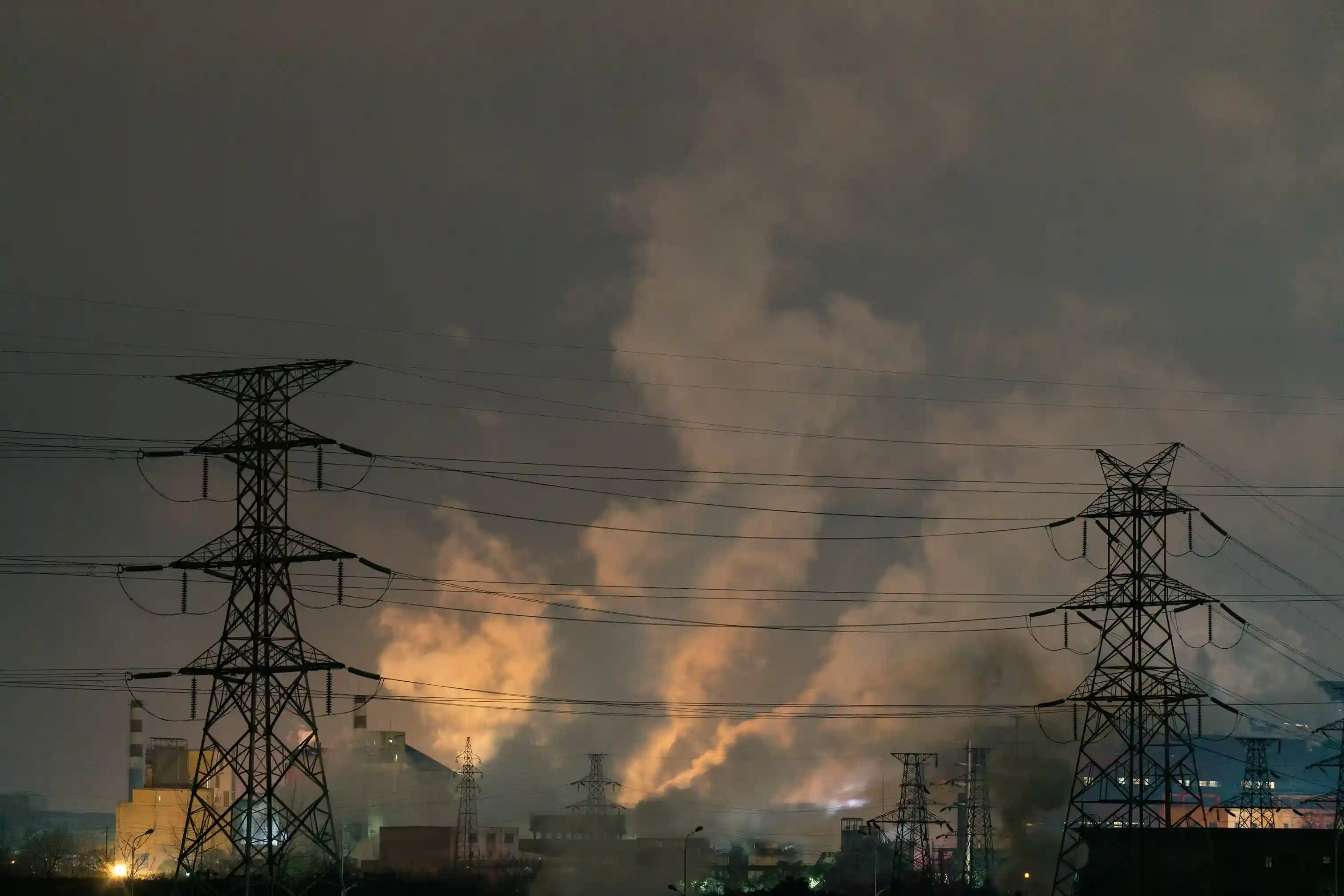
India is becoming both a destination for carbon projects, and a carbon market.
The Indian government’s Carbon Credit Trading Scheme is a domestic compliance and offset mechanism, which, officially, has been “notified with the objective of reducing, removing, or avoiding greenhouse gas emissions from the Indian economy by pricing such emissions through the trading of Carbon Credit Certificates (CCC)”.
India currently has about 50 active carbon farming projects, but a strategy presented as a win-win for farmers might have different ground realities.
India's market is still at an early stage, but the Bureau of Energy Efficiency has approved methodologies covering renewable electricity, hydrogen, industrial energy efficiency, landfill methane, livestock methane and mangrove restoration, among others. India's Carbon Credit Trading Scheme (CCTS) has notified 490 entities across seven energy-intensive sectors and assigned greenhouse-gas intensity targets, but Carbon Credit Certificates are yet to be issued.
Meanwhile, the country already has extensive experience with voluntary carbon projects where accountability and transparency become greyer, as those projects do not fall under the regulatory framework of governments.
India currently has about 50 active carbon farming projects, but a strategy presented as a win-win for farmers might have different ground realities. In a 2024 study examining 841 farmers involved in carbon credit projects across seven villages in Haryana and Madhya Pradesh, researchers found that women (4%), small farmers, and marginalised communities were grossly underrepresented. 99% had not received monetary benefits from carbon credits. Some of the agricultural practices being credited also pre-dated the carbon projects, raising additionality concerns.

Then there is the matter of farmers’ benefits: a 2025 study of 500 farmers in Karnataka found financial transparency was the weakest dimension of trust in carbon-credit projects, highlighting concerns around receiving promised revenues.
Additionally, another study of a forest carbon project in Haryana found that participating households, particularly small and marginal farmers, experienced livelihood losses from restrictions on land use, delayed benefits, and foregone benefits from crop, fodder, and fuelwood. Safety nets to mitigate these risks were largely absent.
Also read: In an age of food abundance, why does ‘hidden hunger’ hold India back?
Can carbon credits still do any good?
A carbon project can deliver a genuine climate benefit and support action that might otherwise struggle to attract capital, and there are examples of that. A genuinely additional, high-integrity project would reduce emissions, protect ecosystems and/or deliver social benefits while directing private capital toward mitigation.
Is one credit a moral sanction for high-emission behaviour? What happens when paying for a reduction elsewhere becomes easier than reducing emissions at source?
A credible carbon project requires conservative baselines, demonstrable additionality, transparent monitoring, independent verification, protection against weaknesses, safeguards against double counting, and meaningful benefits for the people living where projects operate: the ten core carbon principles of the Integrity Council for the Voluntary Carbon Market (ICVCM).
***
We live in a world where industries continue emitting while buying carbon credits; people take multiple private jet trips and buy credits without optimising flights; and countries with historically high emissions finance mitigation in ‘poorer’ countries to count towards their own climate claims.
I’m not sure any of us really imagined this to be an aspect of globalisation.
Is one credit a moral sanction for high-emission behaviour? What happens when paying for a reduction elsewhere becomes easier than reducing emissions at source?
Carbon markets are not inherently useless, but they are still flawed. They’re not magical emission erasers, or a ‘tax’ that lets big players turn a blind eye. Neither are credits a band-aid for the planet, nor an assurance to stop holding them accountable.
{{quiz}}
.jpg)

.avif)
Explore other topics
References