.jpg)
Understanding the social behaviour of buffaloes, a sensitive species
Buffalo herds are matriarchal, and the bond between a mother and calf is crucial for milk production


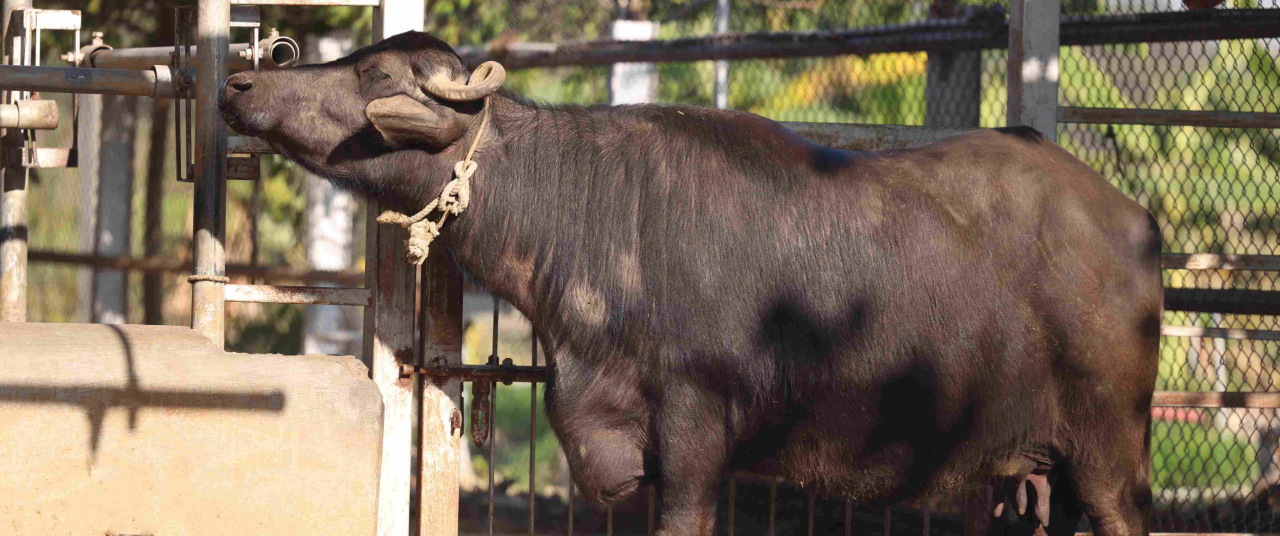
Buffaloes are a defining presence across India’s agrarian landscape. But their pervasiveness in the region for over three thousand years has done little to curb misconceptions about them. By their sheer size, massive horns and a steady gaze, buffaloes paint an imposing picture. Indian mythology, too, portrays the buffalo as a fierce character, among its most well-known depictions being that of the vehicle of Yamraj, the Hindu god of death.
This perception of the buffalo as an aggressive creature, however, does not hold true. Domesticated buffaloes are gentle by temperament. In fact, they can be shy to the point of being easily startled, triggering a defensive response. The bovine’s nature calls for patient management from its caretakers.
Also read: River versus swamp buffaloes: The role of domestication in adaptation
In fact, they can be shy to the point of being easily startled, triggering a defensive response.
The dynamics of buffalo herds
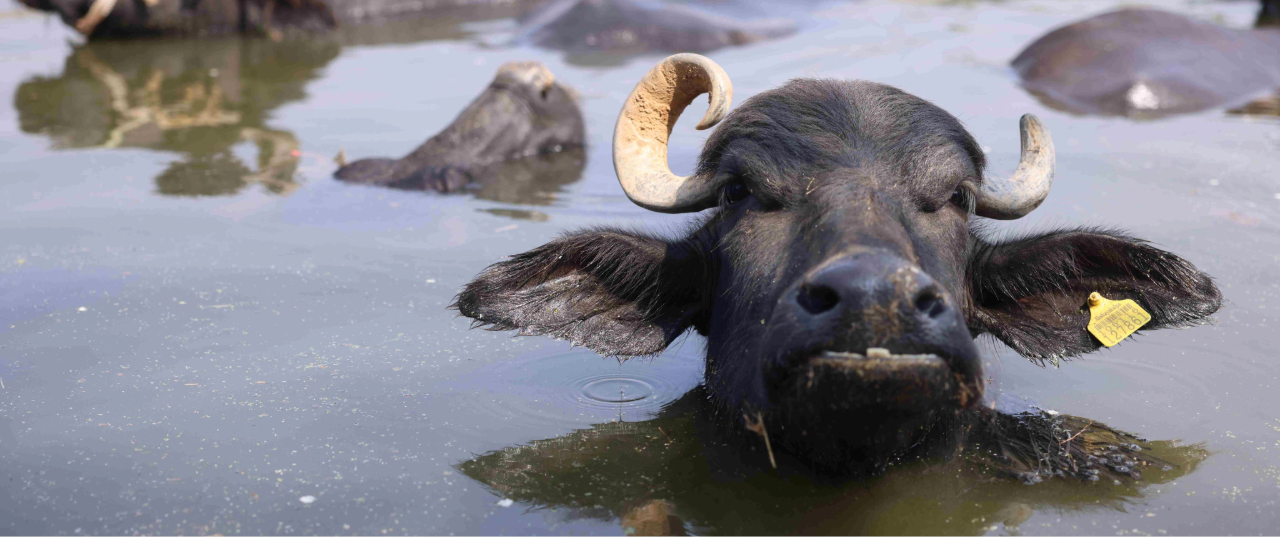
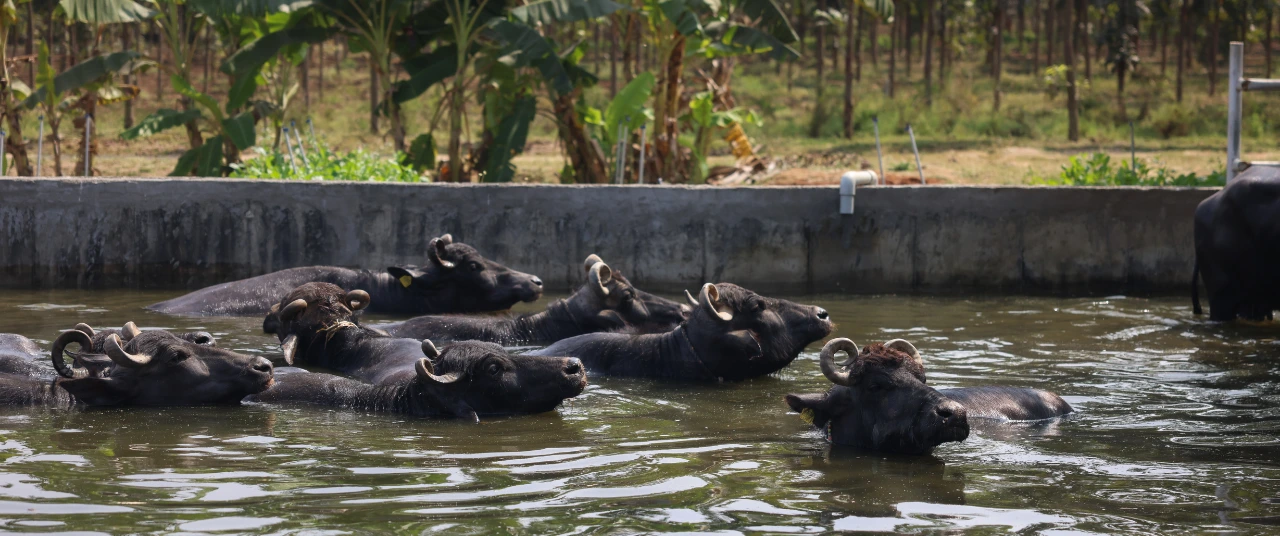
Whether they are in a season of migration or in a state of blissful immersion in water, buffaloes move around in groups. This formation is not scattered but strategic. The herds, led by a dominant female, are matriarchal in structure. A buffalo gives birth after a gestation period of about 300-340 days. When they sense an approaching predator, they are known to form tight, cooperative circles to protect young calves. Their defensive instinct is also palpable in aquatic habitats. Although they usually swim at a leisurely pace, they can accelerate in short bursts to evade perceived danger.
Female calves stay with their natal herd for the rest of their lives. Young males, on the other hand, leave the matriarchal herds at the age of three and join a bachelor herd that usually numbers around 10. It is only during mating season that a bull enters a female herd, using its strong sense of smell to find the receptive ones in the group. A bull does not exert dominance over a female herd, making its exit after mating.
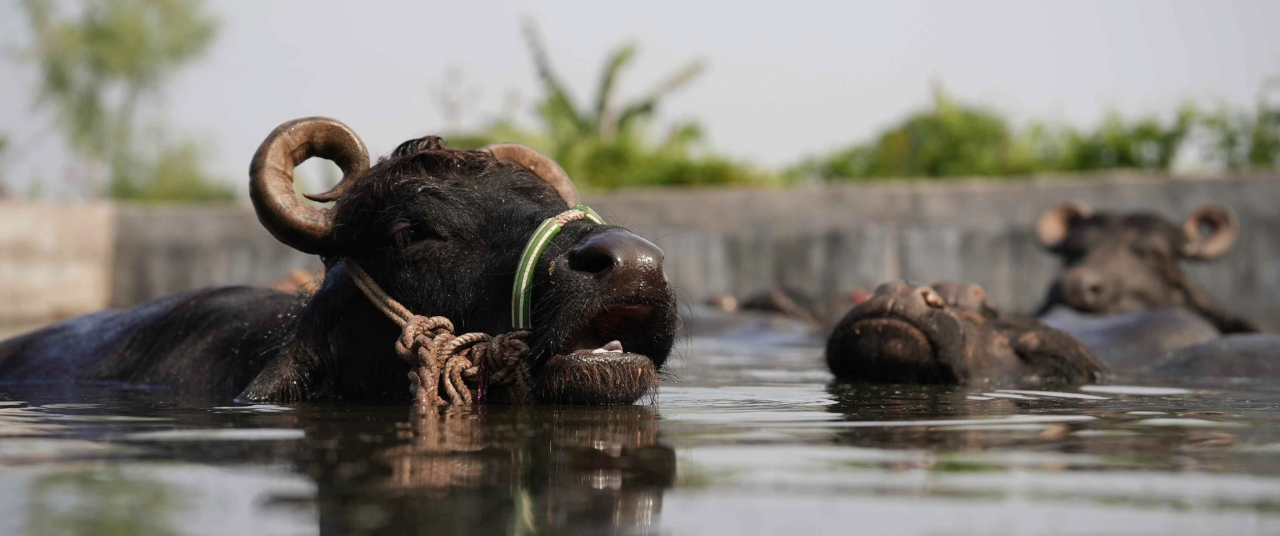
Buffaloes are most known for their physiological dependence on wallowing in water, owing to the presence of fewer sweat glands in their bodies, and therefore, a high predisposition to heat stress. Lack of access to a terrain that facilitates the buffalo’s need to wallow and stay cool has serious repercussions on its health. In a situation of heat stress, buffaloes lose their motivation to graze for food and consume it, since these are activities that produce heat. Researchers have found that buffaloes reduce their food intake by 9-13% under hot conditions. This also has a profound impact on the yield and quality of milk. A study conducted on the Murrah breed found that heat stress reduced the milk fat content by 0.26% during the summer season.
Female calves stay with their natal herd for the rest of their lives.
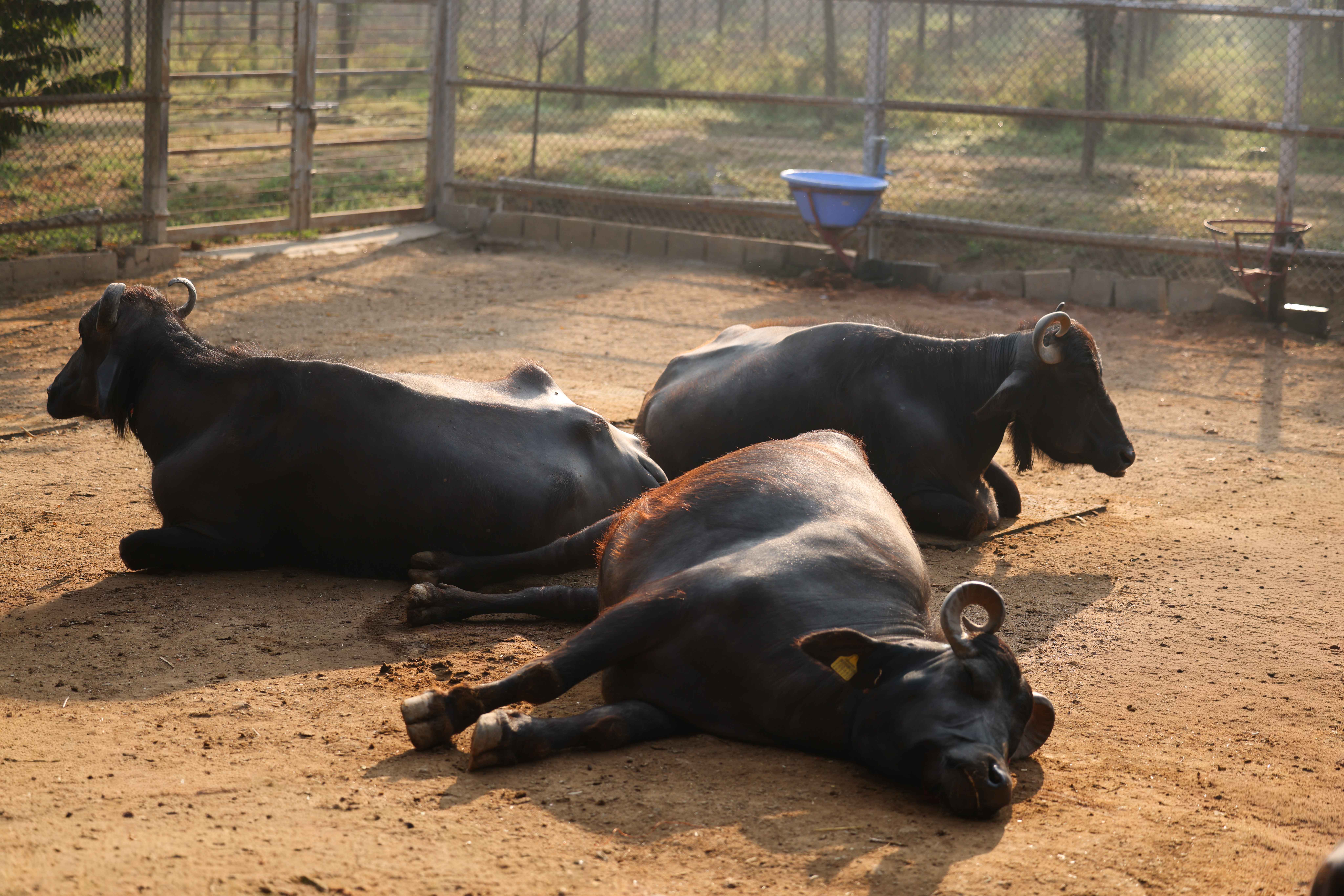
Since they are a species naturally prone to a daily routine of grazing and wallowing, buffaloes do not respond well to confinement. A loose housing system—an expansive space where buffaloes are free to explore their environment—stimulates their natural behaviour, and keeps them content.
Also read: Decoding buffalo behaviour: Why the domesticated beast wallows in water
Influence of humans on buffalo welfare
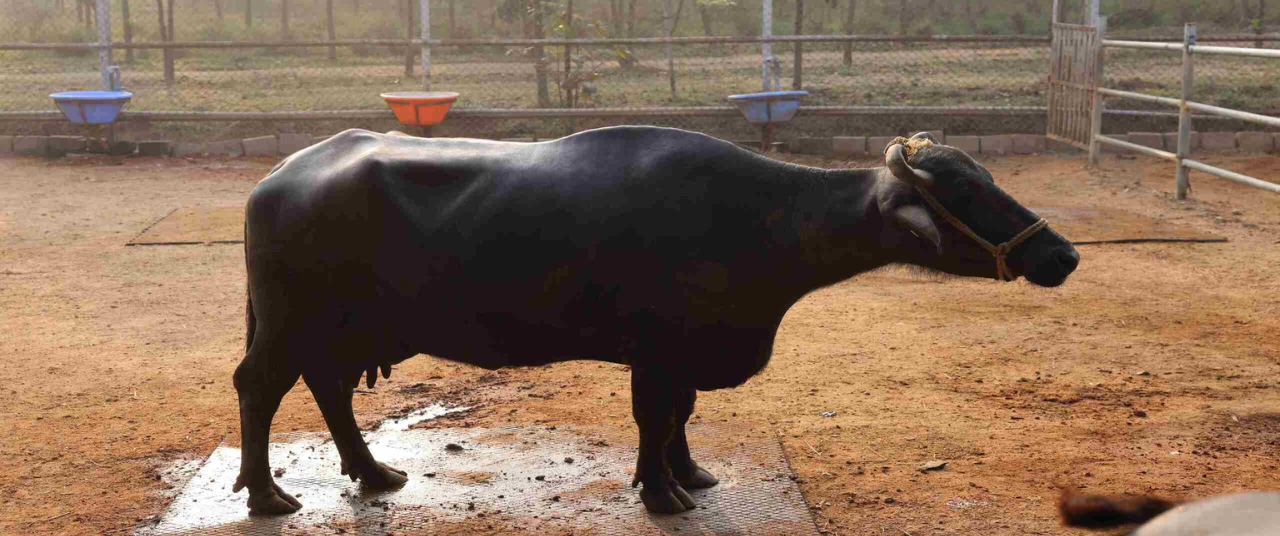
For buffaloes living on farms, close communication with humans is a part of their daily routine—a result of domestication and evolution. The buffalo’s temperament during milking has a direct correlation with the yield. If they register a negative human interaction during the process, they may respond with restless gestures. A factor of severe distress in a buffalo is early separation from its calf.
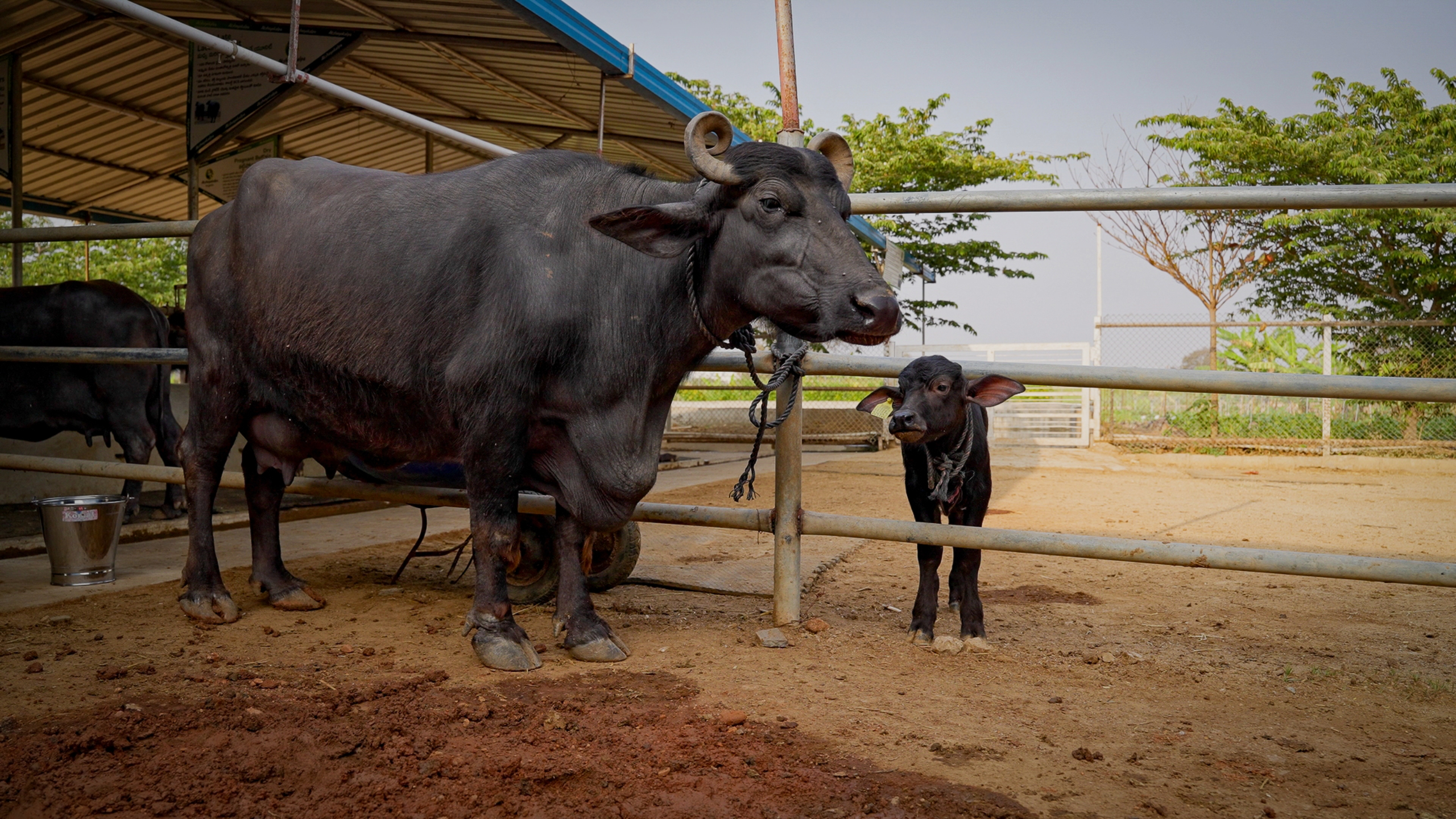
The first few hours after a buffalo has birthed a calf are critical in ensuring that the two develop a bond, becoming the key to the newborn’s survival. The absence of the calf negatively influences the production of oxytocin in buffaloes, a natural hormone that stimulates milk production. Given the high sensitivity of this species, even a subtle change in the environment during the milking process suppresses the release of oxytocin in the buffalo which then struggles to discharge milk.
The first few hours after a buffalo has birthed a calf are critical in ensuring that the two develop a bond, becoming the key to the newborn’s survival.
Many farms have responded to this problem by resorting to injecting the buffaloes with oxytocin, to speed up milk secretion. But unsupervised repeated dosage of oxytocin can result in long-term deterioration of animal health, which includes fertility disorders. Its rampant misuse in the Indian dairy industry led to an order from the Union Health Ministry restricting its manufacturing rights exclusively to the public sector.
The behavioural pattern of the buffaloes, a species so central to India’s dairy economy, deserves further study so that they may be understood better and looked after with sensitivity.
Also read: Water buffaloes: A historical look into their role in agriculture
{{quiz}}



Explore other topics
References