Buffalo domestication: How housing conditions in rural, urban India affect welfare
Ventilation, the texture of flooring, and access to free space can impact how buffaloes cope with heat and produce milk


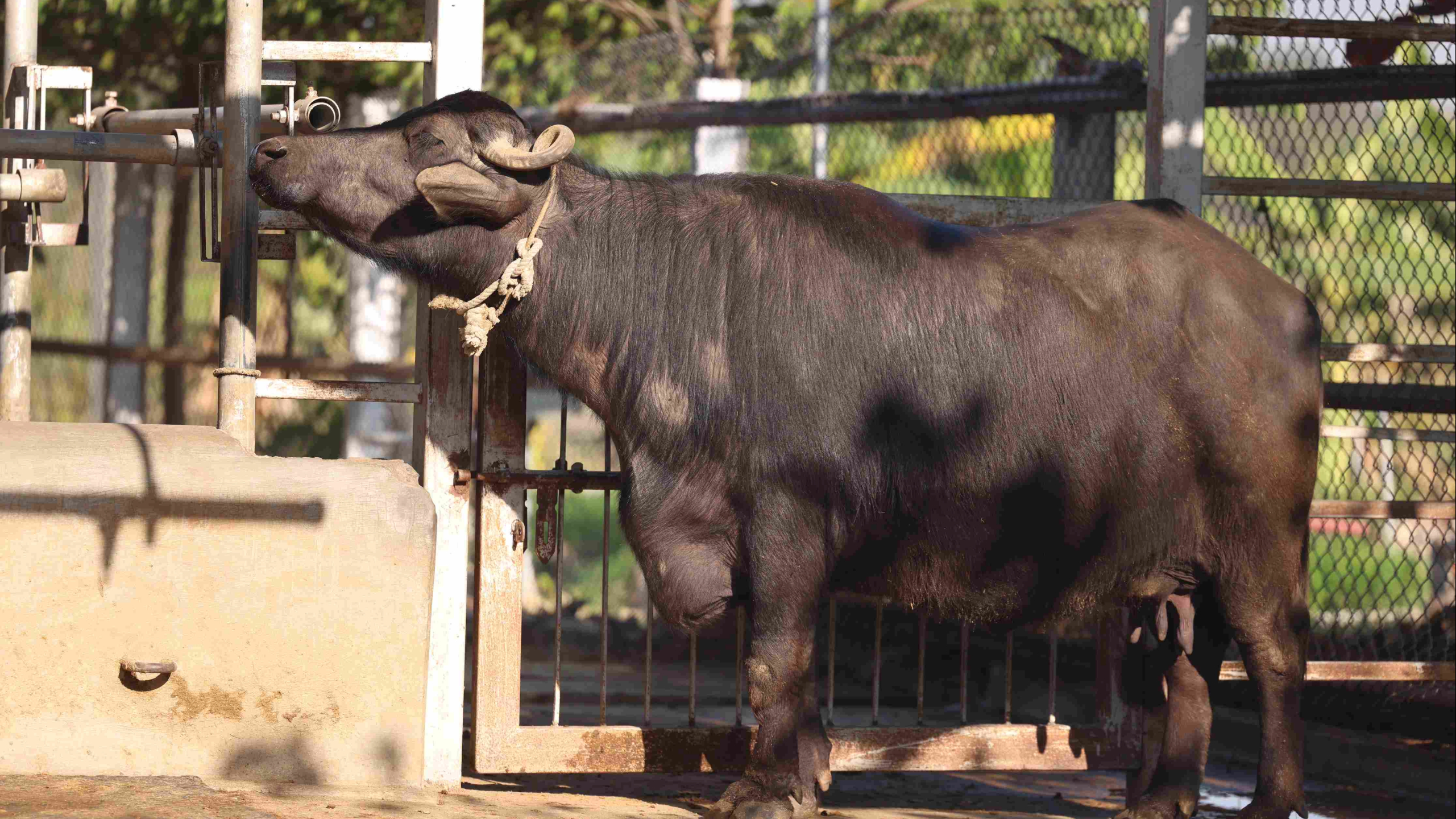
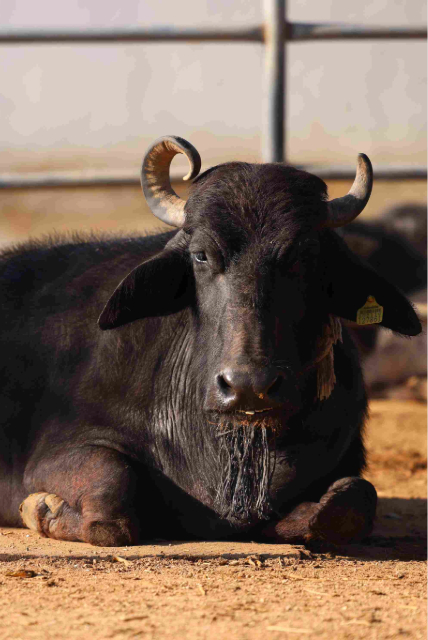
An ordinary day in the life of a buffalo is organised around adapting to heat, getting enough rest, and following a routine. In much of India, that routine begins with a slow walk to water, a pause under a tree, and long hours of chewing cud in the shade. These are not quaint images of rural life—they are clues to what buffaloes need to stay healthy. The domesticated water buffalo (Bubalus bubalis) is an animal whose welfare closely depends on how well its environment mirrors these basic rhythms.
Adapting to the heat
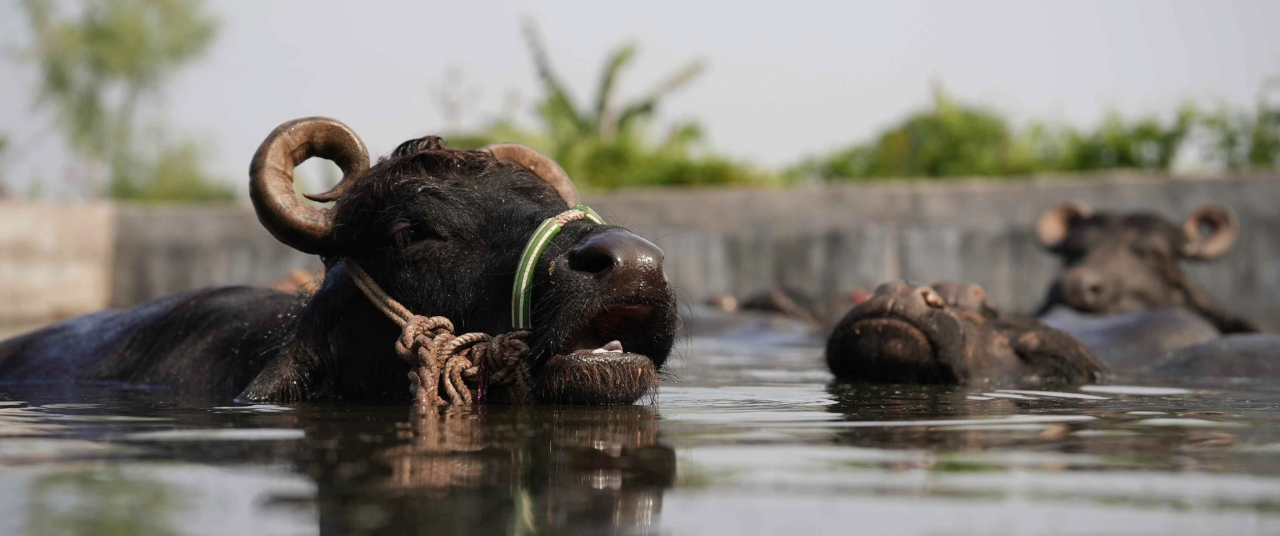
Across India, most buffaloes are raised in smallholder systems, where housing is simple but often well-adapted. Buffaloes are housed in semi-open sheds with thatched or tin roofs, which typically have mud flooring and a water source nearby. During peak summer, farmers hose down animals or lead them to village ponds, canals and backwaters where they cool off after grazing. In Southeast Asia, swamp buffaloes spend hours partially submerged in flooded rice fields, naturally regulating body temperature.
The challenges become visible in peri-urban (transitional areas on the peripheries of cities, carrying both urban and rural characteristics) dairies, where space constraints often lead to enclosed sheds with poor ventilation and little to no access to water bodies. Most farmers rely on hosing them down once or twice a day. In urban dairies, even this can be inconsistent. Without ponds or adequate cooling systems, buffaloes often stand through peak heat, panting or crowding into small shaded patches.
Also read: Water buffaloes: A historical look into their role in agriculture
Compact ground and airy housing
In rural India, buffaloes are typically raised in extensive or semi-intensive systems. Both are livestock management practices—the former relies on grazing across large open pastures, while the latter refers to a hybrid method balancing intensive care and some confinement with free-roaming. Buffaloes graze during the day and return to basic shelters at night. These systems are low-cost, low-input and flexible, allowing animals to forage and move freely.
These systems are low-cost, low-input and flexible, allowing animals to forage and move freely.
As dairying moves closer to cities, this model shifts. In peri-urban belts (like in New Delhi NCR's Gurugram-Ghaziabad region), buffaloes are often stall-fed and tethered within small plots. Green fodder is brought in from wholesale markets, and animals are fed a mix of crop residues, oil cakes, and commercial feed. Space is tighter, and sheds are frequently built with concrete flooring to simplify cleaning and waste management.
In dense urban areas like in New Delhi and the older gaothans [older, central parts of the city] of Mumbai and Pune, the constraints are even sharper. In older city dairies, buffaloes may spend most of their lives indoors. They are tied in rows, sometimes with just enough room to lie down and stand up. Ventilation can be poor, especially in low-roofed sheds hemmed in by surrounding buildings. Waste disposal becomes a daily logistical challenge, with dung and wastewater needing to be manually cleared or channelled into drains.
Studies underline this trade-off. Research on buffalo calves in Maharashtra comparing barn housing with loose, open systems found that animals in loose housing showed lower stress markers—reduced heart rates and cortisol levels—and spent more time ruminating and interacting socially. They also drank more water and displayed more natural behaviours, suggesting greater comfort. Barn-housed calves, by contrast, showed signs of physiological strain despite similar growth rates.
Studies comparing barn housing with loose, open systems found that animals in loose housing showed lower stress markers—reduced heart rates and cortisol levels.
Flooring and enclosure design play an equally important role. Mud floors, common in villages, are softer and easier on the hooves. However, while rural housing allows movement, it often struggles with hygiene. Field studies show that poor drainage and damp flooring are common, which can harbour pathogens and increase disease risk. Concrete floors, widely used in peri-urban dairies, improve hygiene but can cause discomfort when animals stand for long periods.
Also read: Understanding the social behaviour of buffaloes, a sensitive species
The economics of care
Across all these systems—rural, peri-urban, and urban—the link between welfare and livelihood is direct. A buffalo that can cool itself, lie comfortably, and move enough to maintain health will eat better, produce more milk, and reproduce more reliably. One that stands in heat, on hard floors, in cramped conditions, will do the opposite.
What emerges is not a singular ideal of a housing system, but a set of principles. Dry, well-drained floors reduce disease. Shade and airflow reduce heat stress. Access to water enables cooling. More space allows movement and rest.
Many of these improvements are not capital-intensive. A shaded extension, better drainage, periodic washing, or even a small open yard can shift outcomes significantly. In cities, where land is scarce, such changes require planning. Studies from rural India reflect the other end of this spectrum: animals roam freely for grazing but receive minimal structured feeding or veterinary care. Nearly all depend on natural pastures and crop residues, with limited supplementation or healthcare access. Here, the challenge is not confinement but lack of support systems including fodder cultivation, vaccination, and breeding services.
Small efforts like adding a shaded extension, ensuring better drainage, and even a small open yard can shift outcomes significantly.
To watch a buffalo resting in its shed is to glimpse the outcome of everyday decisions—about space, water, flooring, and care—which in turn impacts the livelihoods of those who tend to these animals.
Also read: Mumbai’s Nagori dairies are a living archive of milk, migration—and memory
{{quiz}}



Explore other topics
References


.jpg)