Keeping it cool: How to spot signs of heat stress in buffaloes
Heat doesn’t merely cause discomfort. In buffaloes, it can affect milk productivity and lead to oxidative stress


Anyone who has spent time around livestock in the middle of the summer knows that animals feel the heat just as much as we do. With the palpable rise in global temperatures, now around 1.5°C higher than pre-industrial levels, and water becoming increasingly scarce, heat stress has become one of the most underestimated threats to dairy animals.
In countries like India, where nearly half of the milk production comes from buffaloes, high temperatures can have a serious impact on the health and productivity of these animals. While both cows and buffaloes struggle in hot weather, the latter seem to show stronger signs of heat stress, especially when exposed to direct sunlight.
Heat stress occurs when an animal can no longer release enough body heat to maintain a healthy internal balance. Once this balance is disrupted, a cascade of changes begins: feed intake drops, milk yield declines, and reproductive cycles become irregular. Over time, these effects translate into significant economic losses for farmers. That is why spotting the early warning signs is crucial.
Heat stress occurs when an animal can no longer release enough body heat to maintain a healthy internal balance.
Why buffaloes are more sensitive to heat
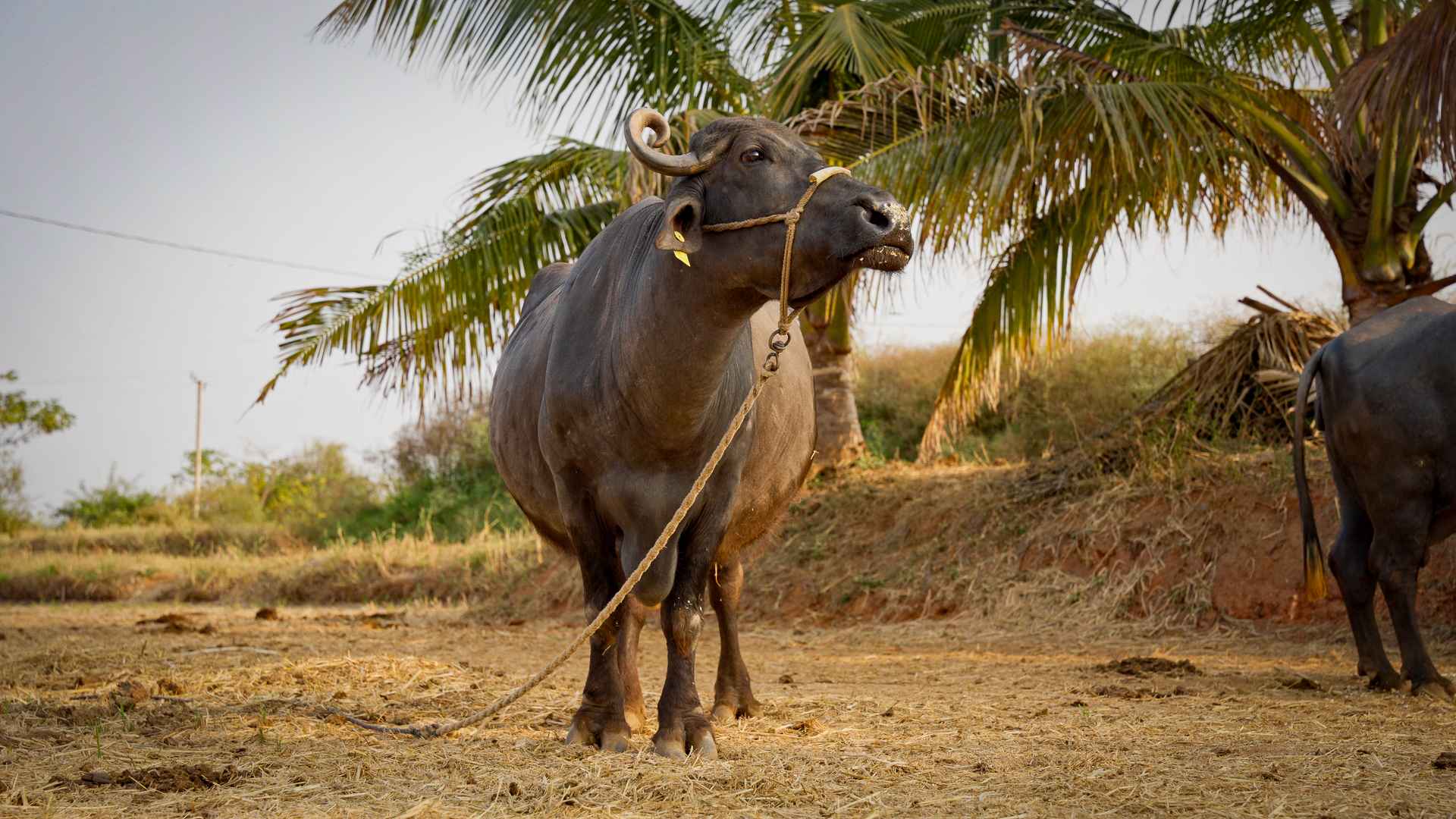
A buffalo’s normal body temperature is slightly lower than that of cattle. However, their dark skin and relatively sparse hair mean that they absorb much more solar radiation under direct sunlight.
The bigger challenge for buffaloes is to keep themselves cool; compared to cattle, their sweating capacity is poorer. In fact, they have nearly six times fewer sweat glands. Since sweat is one of the main ways for mammals to release excess heat, buffaloes reach heat stress much sooner when temperatures and humidity rise.
Researchers often assess heat stress using the Temperature–Humidity Index (THI), which combines temperature and humidity into a single measure. While cattle generally start experiencing heat stress when the THI climbs above 72, buffaloes show signs of heat stress at a THI of around 68–69.
These differences become visible in buffaloes through their behavioural and physiological responses.
Also read: Water buffaloes: A historical look into their role in agriculture
Key behavioural warning signs
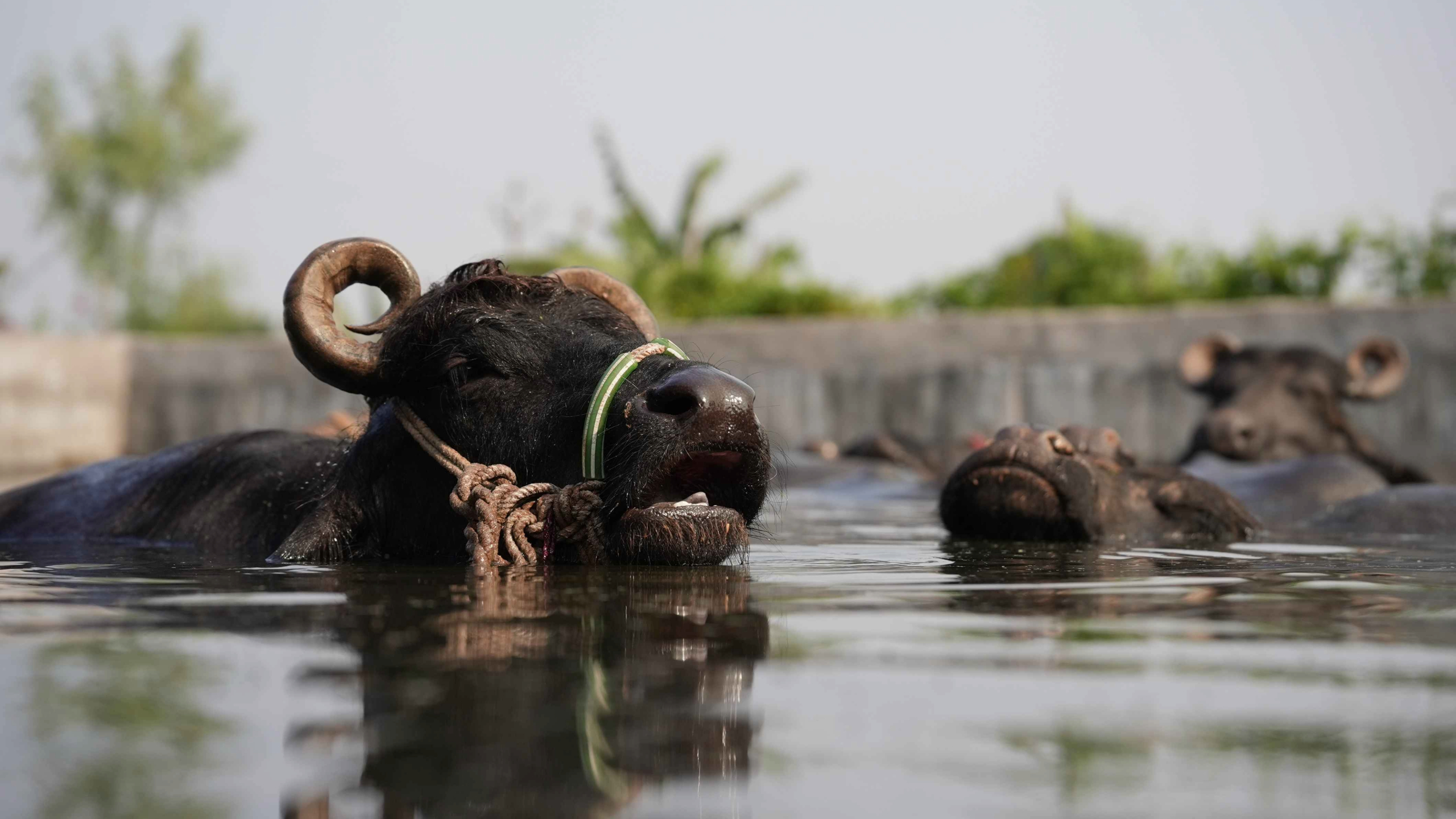
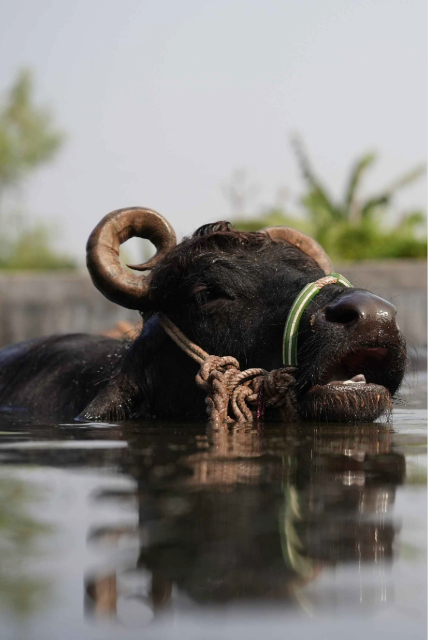
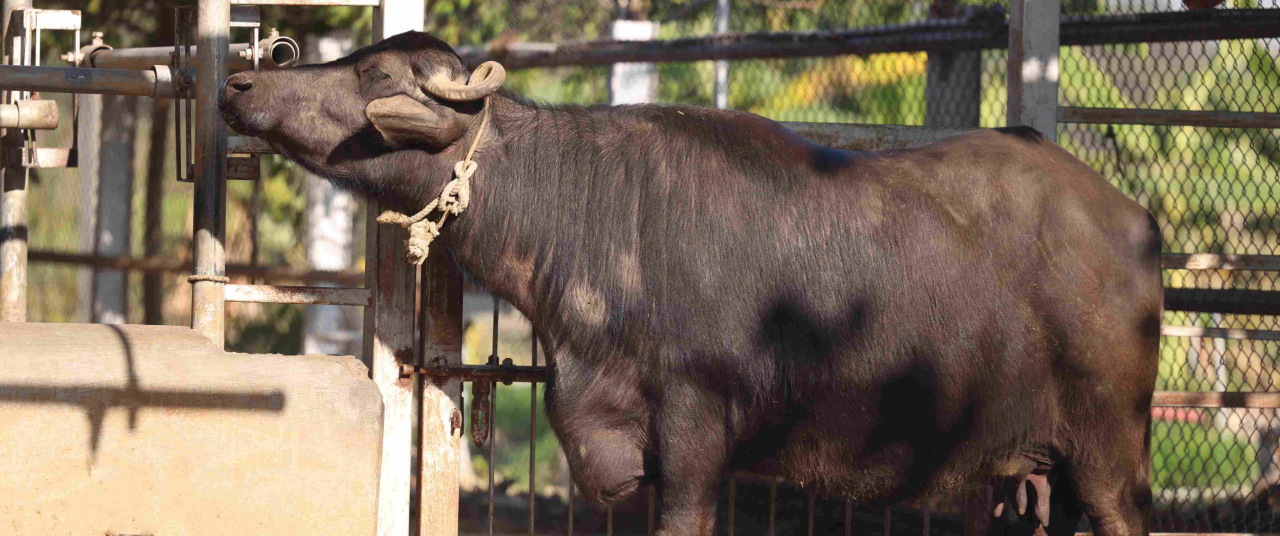
One of the first manifestations of heat stress is a change in the animals’ behaviour. This is where buffaloes and cattle react quite differently. As buffaloes cannot sweat effectively, they instinctively search for water to cool themselves. You will often see these big, crescent-horned animals happily wallowing in ponds, puddles, or muddy patches, or sluggishly ambling into the shade. It is their way of beating the heat, keeping their body temperature down while conserving energy by limiting their movements.
You will often see these big, crescent-horned animals happily wallowing in ponds, puddles, or muddy patches, or sluggishly ambling into the shade.
Cattle have a distinct reaction. Instead of immersing themselves in water, they tend to stand more and lie down less. Standing exposes more of the body surface to air, which helps heat escape. They may also cluster around fans, shaded areas, or ventilation points. Another early indicator in cattle is a drop in dry matter intake, which soon affects their physical state, and therefore, the milk production.
Also read: Decoding buffalo behaviour: Why the domesticated beast wallows in water
The impact on bovine physiology
Alongside these visible behavioural changes, heat stress triggers several physiological responses, too. Increase in rectal temperature and respiration rate are common among cattle and buffaloes. However, respiration rates often rise more rapidly in buffaloes, as they rely more heavily on panting to compensate for their limited ability to sweat.
Buffaloes may also experience higher levels of oxidative stress during periods of extreme heat. This occurs when high temperatures, often combined with humidity, overwhelm the animal’s natural antioxidant defences. The resulting imbalance can damage cells, lipids, proteins and DNA.
Also read: River versus swamp buffaloes: The role of domestication in adaptation
Monitoring and managing heat stress
The good news is that there are practical ways to reduce the impact of heat stress, particularly for buffaloes. Providing shade, fans, sprinklers or access to water for wallowing can dramatically aid their comfort and health. Adjusting feed and diet composition during hot periods can also help animals cope better with high temperatures.
Farmers can also monitor heat stress using a few simple methods: One is measuring respiration rate by counting breaths per minute. Another is the panting score, which ranges from 0 (normal breathing) to 4 (severe panting with an open mouth and tongue extended).
For many farmers, the difference between a productive season and heavy losses is determined by how soon these warning signs are recognised. The simplest yet most effective way is to ensure the upkeep of buffaloes, maintain milk production, and safeguard the livelihoods that depend on them.
{{quiz}}



Explore other topics
References



.jpg)