
How to choose cover crops: Lessons in balancing carbon and nitrogen
Legumes form the bulk of cover crops, but Brassicas and oilseeds play important roles in replenishing soil


Editor's note: Even before its current status as a nutrient-rich superfood, ragi has been a crucial chapter in the history of Indian agriculture. Finger millet, as it is commonly known, has been a true friend of the farmer and consumer thanks to its climate resilience and ability to miraculously grow in unfavourable conditions. As we look towards an uncertain, possibly food-insecure future, the importance of ragi as a reliable crop cannot be understated. In this series, the Good Food Movement explains why the millet deserves space on our farms and dinner plates. Alongside an ongoing video documentation of what it takes to grow ragi, this series will delve into the related concerns of intercropping, cover crops and how ragi fares compared to other grains.
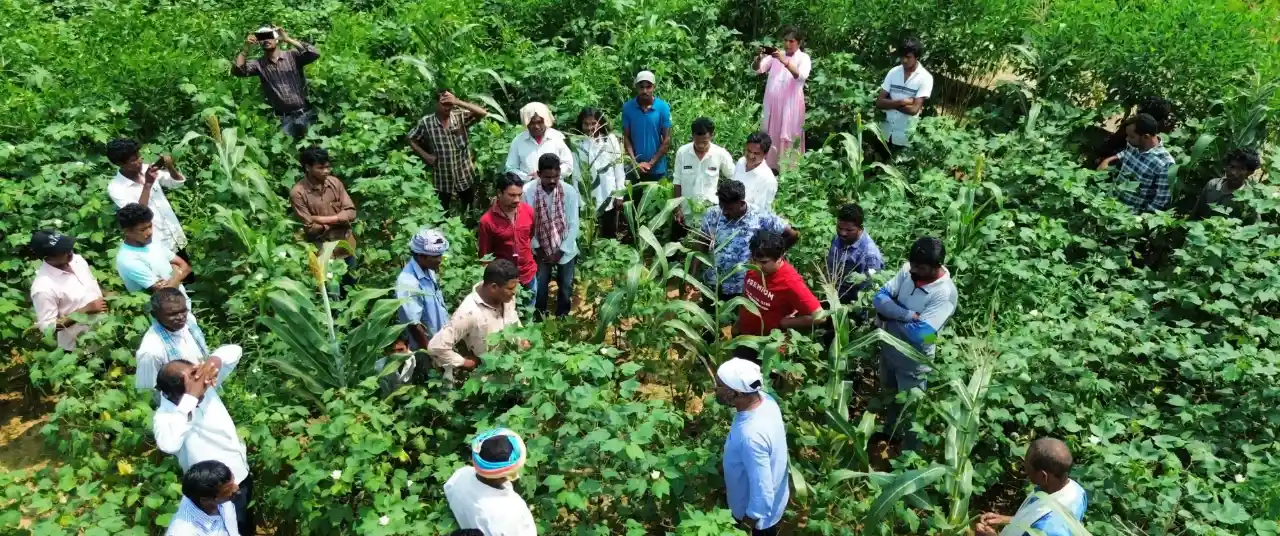
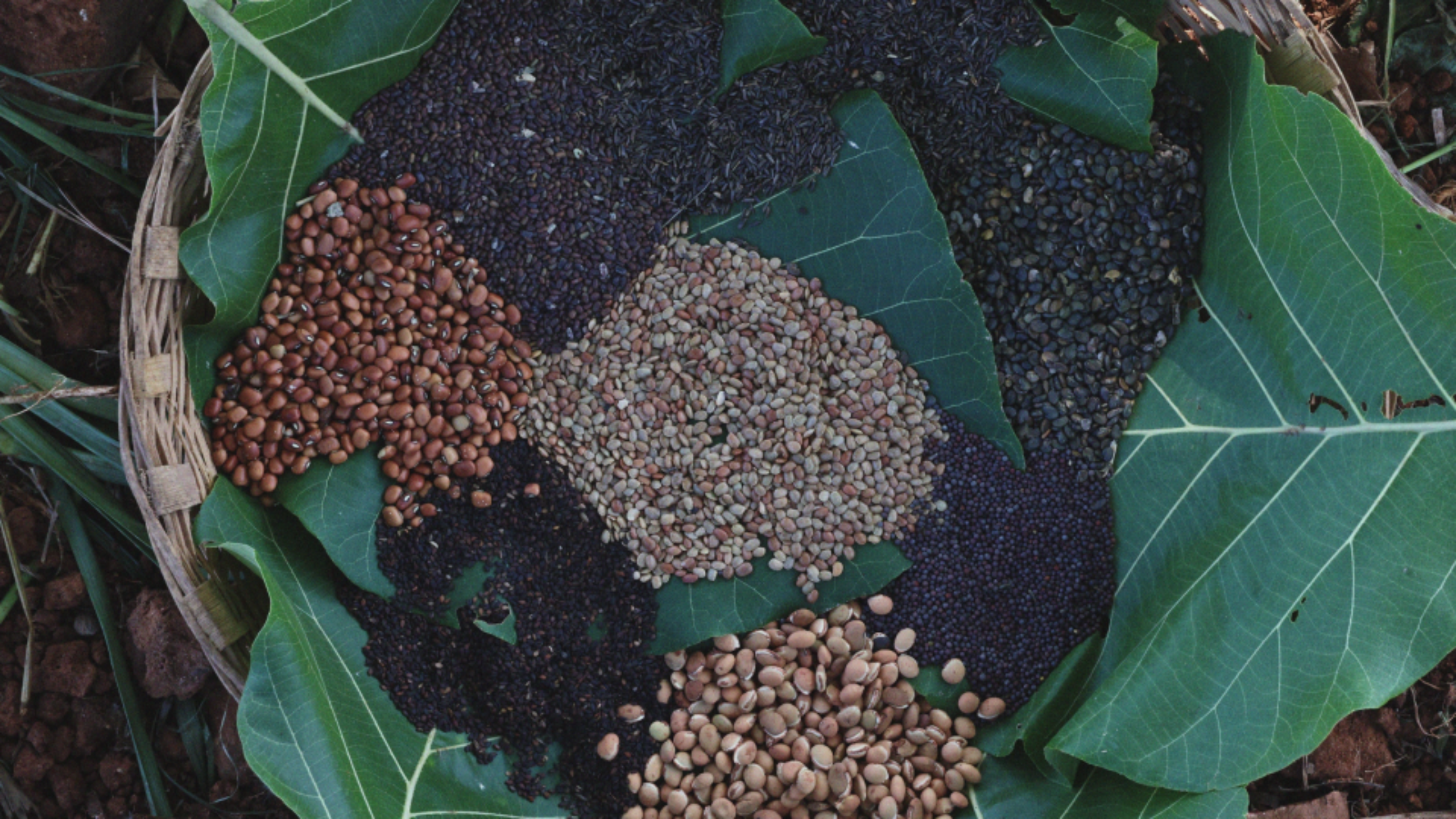
In the 2 acres of land in Tiptur where the Good Food Movement is growing ragi, we used six cover crops: sunn hemp, spiny sesbania, horsegram, cowpea, mustard, and sesame. Together, these six crops replenished soil by fixing atmospheric nitrogen, adding soil organic carbon, and serving as biological pest control. Though their name points to their function of 'covering' the land, they serve several other important roles, too. But how does one find out which cover crops to sow and if they are suited to the landscape’s cropping conditions?
Cover cropping has always been part of traditional farming, and is now being brought back into mainstream agricultural practice by proponents of organic farming. Cover crops are a natural alternative to chemical fertilisers, steadily replenishing soil nutrients, increasing microbial activity, and aerating it without negatively impacting life underground, or water quality. A 2021 report by the Council on Energy, Environment and Water (CEEW) estimates that around 1-2 million farmers in India practise cover cropping.
Bucketing cover crops
Cover crops can be broadly categorised as legumes and non-legumes. The legumes’ main function is nitrogen fixation. Legumes form symbiotic relationships with the rhizobium bacteria and fix atmospheric nitrogen into the plant’s root nodules, enabling plants to utilise what would otherwise be inaccessible. Upon decomposition, this nitrogen finds its way back to the soil, which is further used by succeeding crops and microbes. Over 80% of GFM’s chosen cover crops (sunn hemp, spiny sesbania, horsegram, cowpea) are legumes. Cowpea, additionally also forms a symbiotic relationship with certain phosphorus-fixing fungi, thus enhancing the soil’s access to another major macronutrient.
Legumes form symbiotic relationships with the rhizobium bacteria and fix atmospheric nitrogen into the plant’s root nodules, enabling plants to utilise what would otherwise be inaccessible.
The remaining 20% of cover crops are usually non-legumes. GFM used two oilseeds, sesame and mustard, the latter belonging to the Brassica genus. Most legumes have more nitrogen than carbon and decompose quickly. Non-legumes have a higher carbon to nitrogen ratio; this slows down decomposition because carbon is harder for soil microbes to break down. This staggers nutrient release and contributes more to soil organic matter. These are also crops that grow aggressively and leave a lot of residue—thus suppressing any competing weeds and preventing soil erosion.
Also read: Why Akkadi Salu, an ancient practice of intercropping ragi, deserves a comeback
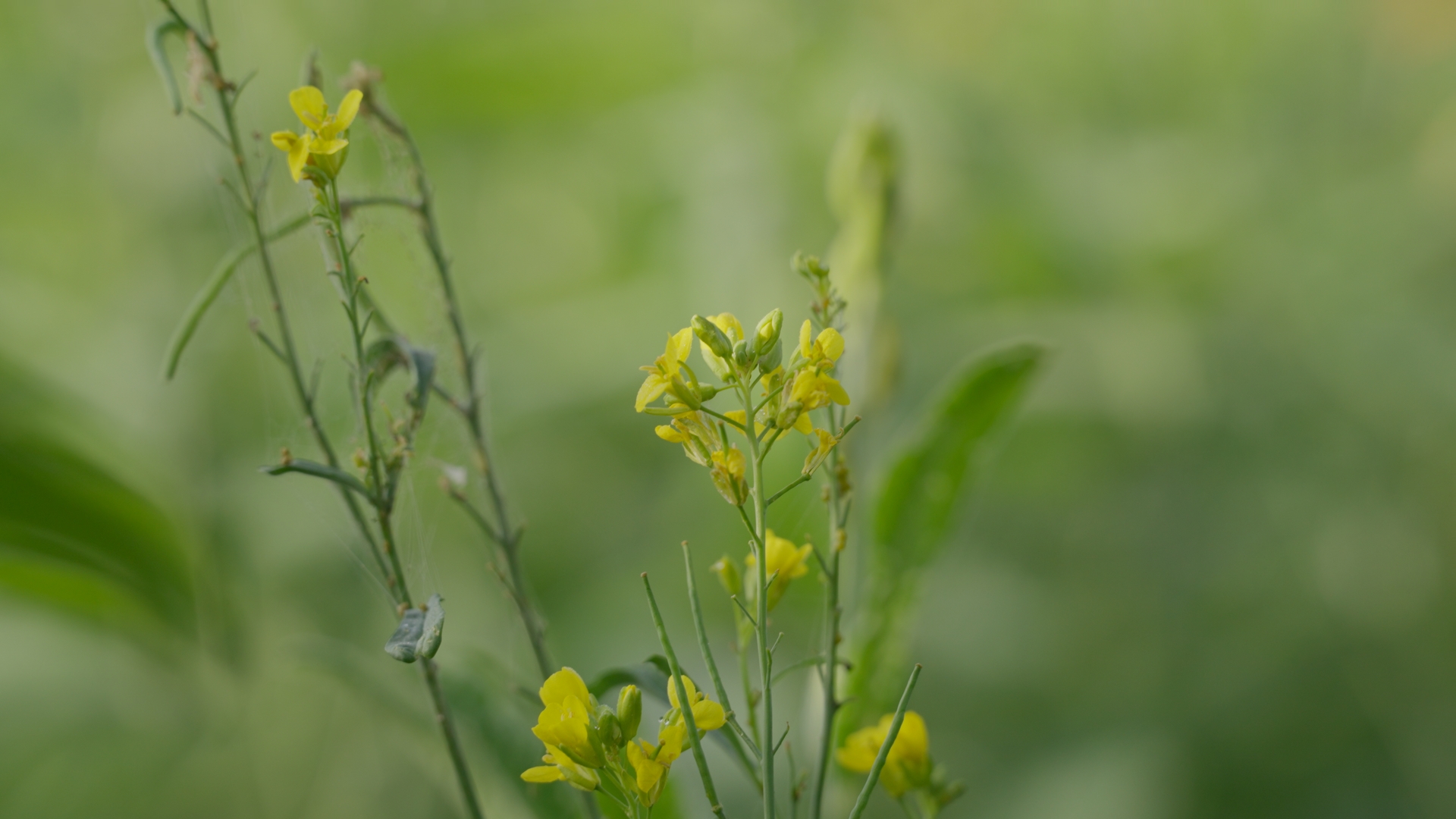
Cover crops of the Brassica genus have an additional benefit: they are biofumigants. Plants like mustard, radish, and cauliflower have the ability to release certain biocidal compounds that are toxic to various soil-borne pests, pathogens, and weeds. This makes them a natural alternative to chemical pesticides.
Rooting for the soil
Different plants have different ways of interacting with the soil and getting nourishment. Cover crops are a way to bring balance to the kind of crops being sown. To understand this, it’s helpful to look at the fundamental division within flowering plants: monocotyledons (monocots) and dicotyledons (dicots). The seed’s embryo contains cotyledons, or leaves of the seed. Whether there is one leaf (monocot) or two leaves (dicot) influences visible physical characteristics like roots, stems, and leaves. But it also influences plant functioning—how it photosynthesises, stores nutrients, and reproduces. This information becomes crucial for farmers and botanists to understand and predict plant behaviour.
Roots also strengthen soil structure by aggregating soil particles better; having roots at different strata serves to strengthen and nourish both the soil and plant better.
One such major difference between monocots and dicots is in their root patterns. Monocots (generally cereals like rice, wheat and ragi) have fibrous roots that spread wide horizontally, rather than vertically. Dicots (legumes and fruit crops) have tap roots that go deep into the soil for nutrients. Being of different lengths, dicot and monocot roots get nutrients from different strata of the soil and subsequently decompose to return organic matter to that strata. Roots also strengthen soil structure by aggregating soil particles better; having roots at different strata serves to strengthen and nourish both the soil and plant better.
They also become a way of nutrient cycling, i.e. bringing nutrients deeper in the soil to the surface. A great example here is mustard. While mustard doesn’t fix atmospheric nitrogen like a legume, it is a nitrogen lifter: it scavenges residual nitrogen from deeper layers of the soil and makes it available to the subsequent crop.
Also read: How cover crops sync with nature to replenish soil without chemical fertilisers
The world’s current cropping patterns lean towards more cereals, i.e. more monocots, because they are major carbohydrate sources. To make up for that, most cover crops are dicots. Ragi, GFM’s main crop in this farming experiment, is a monocot, and so all our cover crops are dicots.
The specific whittling down of which cover crops should be sown depends on the climate and the type of soil characterising the region. It is a good idea to observe what other farmers in that region have traditionally planted to understand what crops will be suited to it. For example, spiny sesbania [dhaincha] is commonly used in Karnataka as fodder, and mustard and sesame have culinary significance in the region.
The world’s current cropping patterns lean towards more cereals, i.e. more monocots, because they are major carbohydrate sources. To make up for that, most cover crops are dicots.
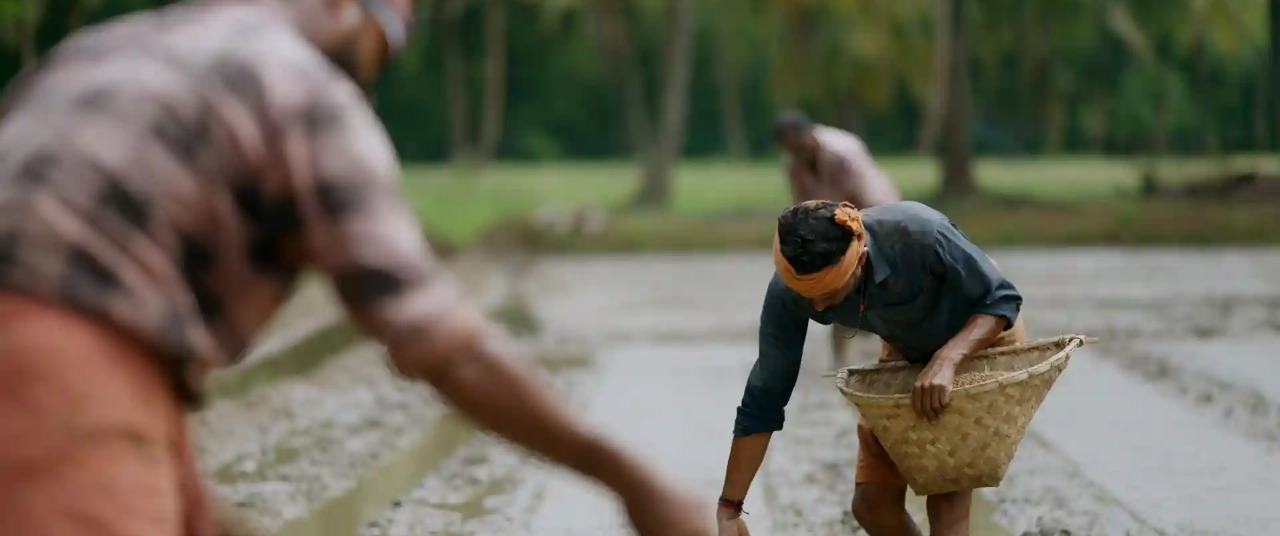
Once these cover crops are chosen, they are mixed together with approximately 30 kg worth of seeds per acre. They are then hand broadcasted, as per the traditional intercropping practice Akkadi Salu. From there grows a diverse crop, to create a diverse soil ecology.
{{quiz}}
.avif)


Explore other topics
References