Deweeding without chemicals: Better for the soil and nutrition
What if we see weeds less as intruders, and more as indicators of soil health and sources of nutrition?


Editor's note: Even before its current status as a nutrient-rich superfood, ragi has been a crucial chapter in the history of Indian agriculture. Finger millet, as it is commonly known, has been a true friend of the farmer and consumer thanks to its climate resilience and ability to miraculously grow in unfavourable conditions. As we look towards an uncertain, possibly food-insecure future, the importance of ragi as a reliable crop cannot be understated. In this series, the Good Food Movement explains why the millet deserves space on our farms and dinner plates. Alongside an ongoing video documentation of what it takes to grow ragi, this series will delve into the related concerns of intercropping, cover crops and how ragi fares compared to other grains.
On most farms, weeds are treated as intruders—uprooted, sprayed over, or suppressed with chemical weedicides. But in rainfed agrarian ecosystems, especially those growing millets like ragi, weeds have long been something else entirely: food, medicine, fodder, and indicators of soil health.
As the Good Food Movement experiments with growing ragi on a two-acre plot in Tiptur, Karnataka, we examine firsthand what it means to deweed without herbicides, and more importantly, how we can change the way we think about weeds in the first place.
Weeds that heal and sustain
In Kannada, the word for weed is kale. The adjective ‘kalegattirodu’ roughly translates to the glow or beauty that comes from being expressed. Historically, weeds were not a problem to be erased, but a presence that was allowed to express itself. Farmers recognised which plants could stay, which needed thinning, and which could be harvested for the kitchen or livestock.
On traditional ragi plots, especially rainfed ones, many weeds are seasonal and edible.“Weeds were never thought of as a nuisance. They were a part of the earth,” says environmentalist Muralidhar Gungaramale, who has extensively studied local, edible weeds and is working to preserve this knowledge. Consuming these seasonal greens also acted as preventive healthcare: the nutrients in them addressed constipation, digestive issues, even jaundice in infants, long before fibre supplements or packaged tonics entered diets.
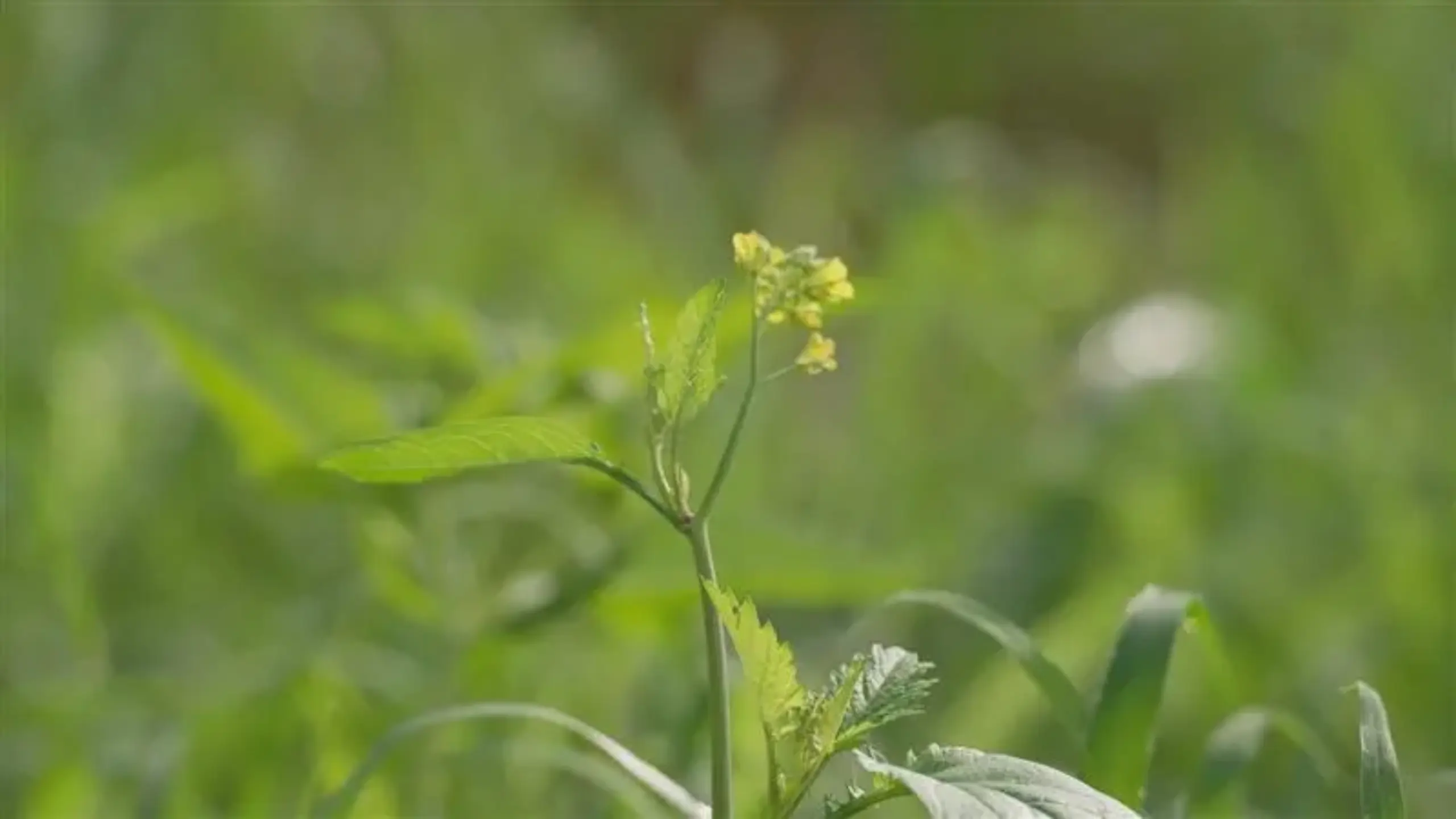
Take doddagunisoppu, a common seasonal weed known to ease constipation. Or goddarvesoppu, crowned the ‘king of weeds’, which thrives in manure-rich parts of fields and is considered one of the tastiest edible greens. Kolichitka, the smaller wild cousin of mustard, is often called the ‘original mustard’ for its intense fragrance and is used to season meals. Honnari gedde seeds are traditionally given to new mothers to help induce lactation. Wild amaranth grows thorns to protect itself, but its tender leaves are used to treat kidney stones.
Beyond nutrition, weeds also signal soil conditions.
For farmers, the colour, shape, and texture of leaves are crucial cues to distinguish what is edible and what is not—knowledge passed down across generations. Beyond nutrition, weeds also signal soil conditions. Certain species indicate fertile, manure-rich patches, others reveal the pH of the soil and excess moisture. To remove them indiscriminately is to lose this language of the land.
Also read: Foraging in Bengaluru: A source of sustenance and flavour
What weedicides erase
Today, much of this knowledge is disappearing. Many farmers believe that cultivation isn’t possible without commercial pesticides, which seem to promise quick returns but come at a massive environmental expense. Many commonly used herbicides contain toxic compounds such as glyphosate, atrazine, and 2,4-D (all of which are classified as probable human carcinogens), which can persist in the soil and disrupt beneficial microbial communities essential for soil fertility. These chemicals don’t just kill weeds, they can also leach into groundwater or enter nearby water bodies through runoff from fields, contaminating drinking water sources and harming aquatic life by interfering with plant growth and hormonal systems. They can persist long enough to enter the harvest that eventually reaches our plates. Herbicides harm farmers too, through chemical inhalation and skin absorption during mixing and spraying. Though often seen as benign tools that make for productive and prosperous farms, herbicides are in fact a specialised class of pesticides, carrying similar toxic compounds that have long-term repercussions on their health.
Cover crops (a class of crops that are planted before the main harvest crop to fix nitrogen and endow the soil with biomass) like mustard, can naturally suppress pests and act as biofumigants. However, these are often replaced with herbicides which strip the fields of biodiversity and make farms increasingly dependent on chemical inputs, weakening the resilience of rainfed systems over time.
Mechanised monocropping meant that weeds were no longer given the same importance.
The arrival of mechanisation—rotavators, seed drills, threshers—reduced labour but demanded uniformity. Intercropped fields were harder to till and harvest mechanically, so farmers began segregating crops into neat, single-species plots. Mechanised monocropping meant that weeds were no longer given the same importance. It also contributed to the loss of the repository of knowledge surrounding local, edible weeds that may have been previously passed down in farmers’ families.
Also read: The grave personal cost of pesticide use
Towards more sustainable deweeding
Deweeding without herbicides does not mean letting fields run wild. Traditional deweeding by hand, though more labour-intensive, is deliberate and selective. Farmers remove weeds that compete directly with young crops, while allowing others—especially edible and medicinal plants—to remain.
On GFM’s ragi plot in Tiptur, this approach means observing which weeds emerge close to seedlings and which grow along bunds or manure-rich edges. Some are thinned, some are harvested, and some are left untouched. The goal is not a ‘clean’ field, but a balanced one.
Mulching works by covering the soil with crop residue or organic matter. This process helps shelter soil from harsh sunlight and prevents aggressive weeds from germinating. At the same time, it conserves moisture—critical in rainfed farming (but which dissuades weeds from growing)—and feeds soil organisms as it decomposes. Unlike chemical sprays that act instantly but leave lasting damage, mulching suppresses weeds gently, while improving soil structure and fertility over time.
Deweeding without weedicides is about recognising that weeds are part of farming ecosystems, which beautify fields and diversify our sources of nutrition.
High-density planting shifts the responsibility of weed control onto the crop itself. When plants like ragi are sown closer together, their canopy shades the soil, leaving little room for weeds to establish. This reduces the need for repeated deweeding while improving land use efficiency. Used alongside hand deweeding and mulching, dense planting helps farmers manage weeds proactively by letting the crops lead, rather than reacting after they take over.
Deweeding without weedicides is about recognising that weeds are part of farming ecosystems, which beautify fields and diversify our sources of nutrition. By changing our gaze towards them—the gaze that modern farming and industrial practices have normalised—and co-existing with them, farmers protect soil and preserve ancient repositories of food knowledge.


.avif)
Explore other topics
References