How testing soil helps India’s farmers understand its nutrient profile better
Documenting soil status can help spot deficiencies, and move towards sustainable practices to improve its health


Editor's note: Even before its current status as a nutrient-rich superfood, ragi has been a crucial chapter in the history of Indian agriculture. Finger millet, as it is commonly known, has been a true friend of the farmer and consumer thanks to its climate resilience and ability to miraculously grow in unfavourable conditions. As we look towards an uncertain, possibly food-insecure future, the importance of ragi as a reliable crop cannot be understated. In this series, the Good Food Movement explains why the millet deserves space on our farms and dinner plates. Alongside an ongoing video documentation of what it takes to grow ragi, this series will delve into the related concerns of intercropping, cover crops and how ragi fares compared to other grains.
Do you remember the wonder and excitement of being in a science lab as a young school student, watching a litmus paper dipped in an acid turn red? If you garden at home—on your window sill or backyard—you can recreate the same excitement, but for a purpose: the very same litmus paper test can tell you if the soil your plants are growing in is too acidic and affecting their growth.
Similarly, if you want to check for soil organic matter, just mix soil in a jar of water, shake it vigorously, and allow it to rest. The sand, silt, and clay will settle, while the organic matter will be left floating on top. These visual tests come in handy for budding gardeners, but for a farmer, exact data on soil is critical to identify deficiencies.
Soil tests give farmers a microscopic view. Think of them as health check-ups: periodically testing samples can help understand deficiencies in nutrient profile, enabling farmers to work towards replenishing it. In India, most government soil testing labs provide their services to farmers at nominal costs, making them an accessible service. All a farmer has to do is collect the sample and hand it over to the lab.
What a soil test reveals
Most soil testing labs in India currently align with conventional agricultural practices. Based on soil health, the report recommends what mix of fertilisers ought to be added to the soil—similar to how tablet supplements are chosen to counter a vitamin deficiency. But soil tests offer so much more than a quick fix. The results of these tests can map the nutritional fluctuations of the soil throughout the crop cycle, and ensure that it gets replenished in a timely manner through organic methods.
For its ongoing experiments in ragi, GFM chose to plant cover crops (a mixture of legumes and oilseeds) instead of using fertilisers, which resulted in a slower and more sustained improvement in soil quality. We conducted a baseline soil test in February 2025 and then another in June 2025, to measure the changes before and after integrating the cover crops into the soil.
The soil is tested in three main categories: physical properties, chemical properties, and presence of heavy metals. The physical test checks for properties like pH (to check for acidic/alkaline soil), electrical conductivity (to check for salinity), and soil organic carbon (to check for carbon content, derived from decomposing plant and animal matter, and microbes). The ideal pH of soil is between 6.5 to 7.5 (slightly acidic to neutral). Excessively acidic soil tends to contain toxic metals, while excessively alkaline soil usually has some micronutrient deficiencies. Soils with excessive salinity can interfere with the osmotic process by which roots absorb water, and result in stunted growth. Soil organic carbon is often considered the most important metric of soil quality, as it represents the soil’s capacity to retain water, aerate soil, and support microbial life.
The chemical analysis measures the quantities of macro and micronutrients like NPK, magnesium, manganese, iron, zinc, molybdenum, and boron. The heavy metal test ensures that no traces of toxic metals like lead or chromium are detected in the soil. Testing regularly can help gauge where the soil stands with respect to these factors.
Also read: Decoding ragi’s cropping conditions: How farmers study soil, rains, and temperature
Learning the soil’s rhythms
Following some ground rules ensures that the test can accurately analyse soil health. The most significant one? Don’t collect wet samples. This means avoiding testing during the monsoon months, and from water-logged areas. Wet samples are harder to mix and collect, and might alter test results by diluting nutrient concentrations. Samples should not be collected from areas surrounding a manure or compost pit, or from beneath a tree either, since those are likely to give skewed results too.
Wisdom on how frequently soil samples should be tested varies, but GFM chooses to measure them once every quarter to get a granular view of how soil composition changes with changing crop cycles. There are many factors which influence the soil composition, from the climate, to the crop being grown, to which nutrients it is likely to exchange with the soil. These regular tests also familiarise a farmer with the natural rhythms of the soil and harvest cycles, and help spot anomalies.
Also read: How cover crops sync with nature to replenish soil without chemical fertilisers
How to collect a soil sample
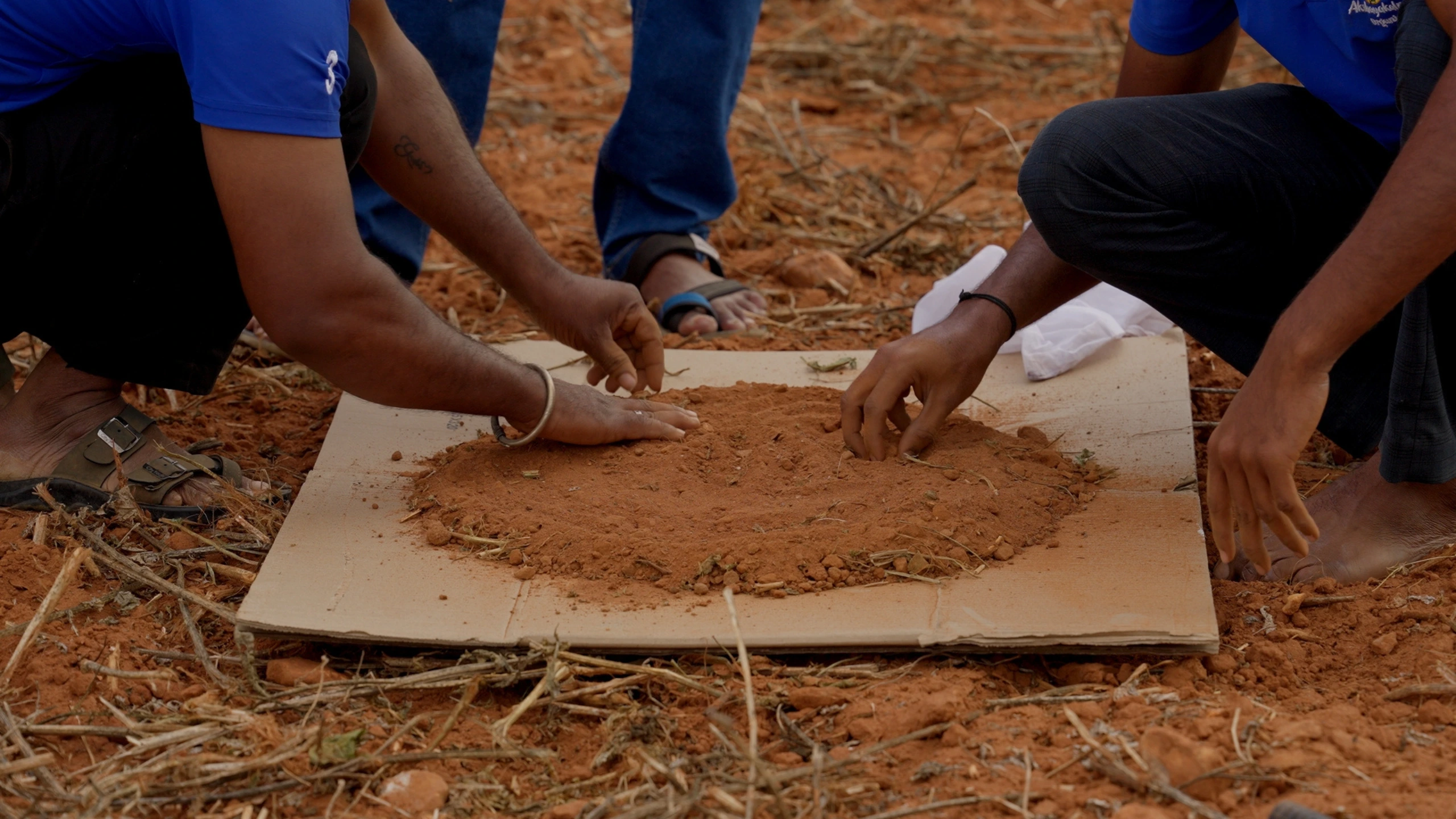
Soil samples have to be collected with great care. First, take a spade and dig a V-shaped pit. How deep you should dig depends on the length of the roots of the main crop. Ragi has an average root length of 15 cm, so GFM made a 15 cm-deep pit. Then, soil is scraped from both slopes made by the V-shape till one collects approximately 1 kg. This counts as one sample. GFM is growing ragi on 2 acres, which is divided into 4 plots of half an acre each. We therefore collected 4 samples (i.e. 4 kg of soil) from each plot. Each sample is collected from a different part of the plot to ensure diversity in the sample.
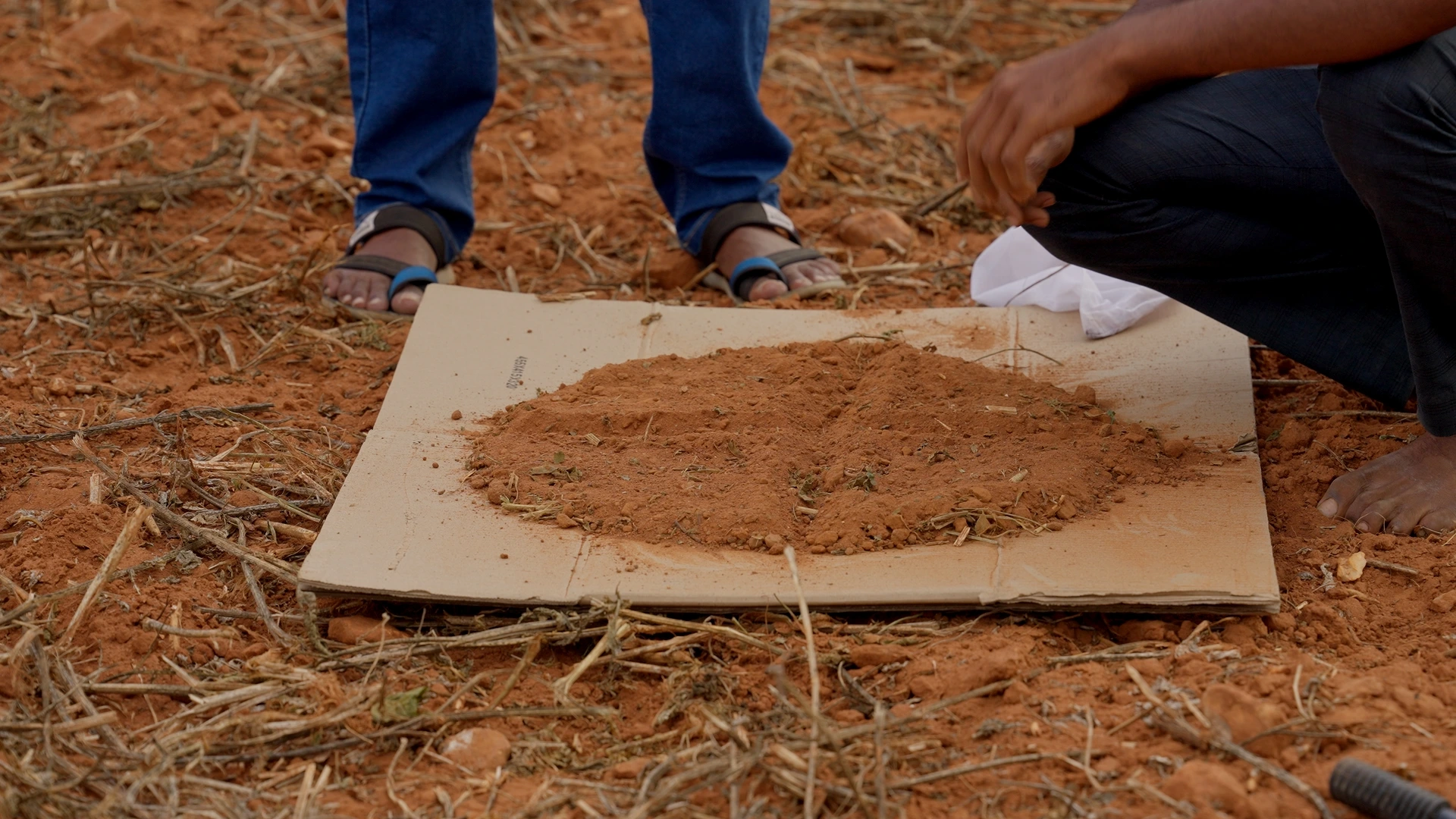
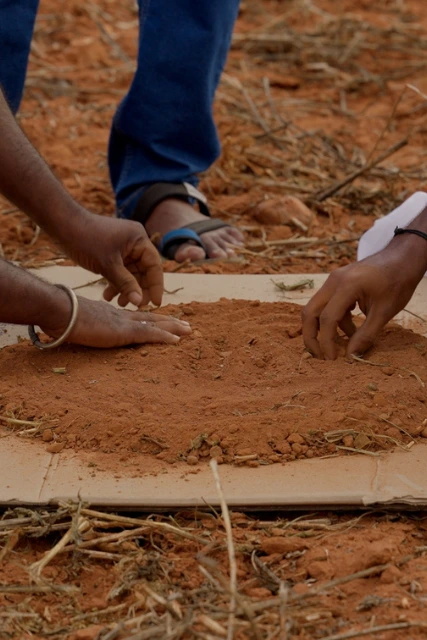
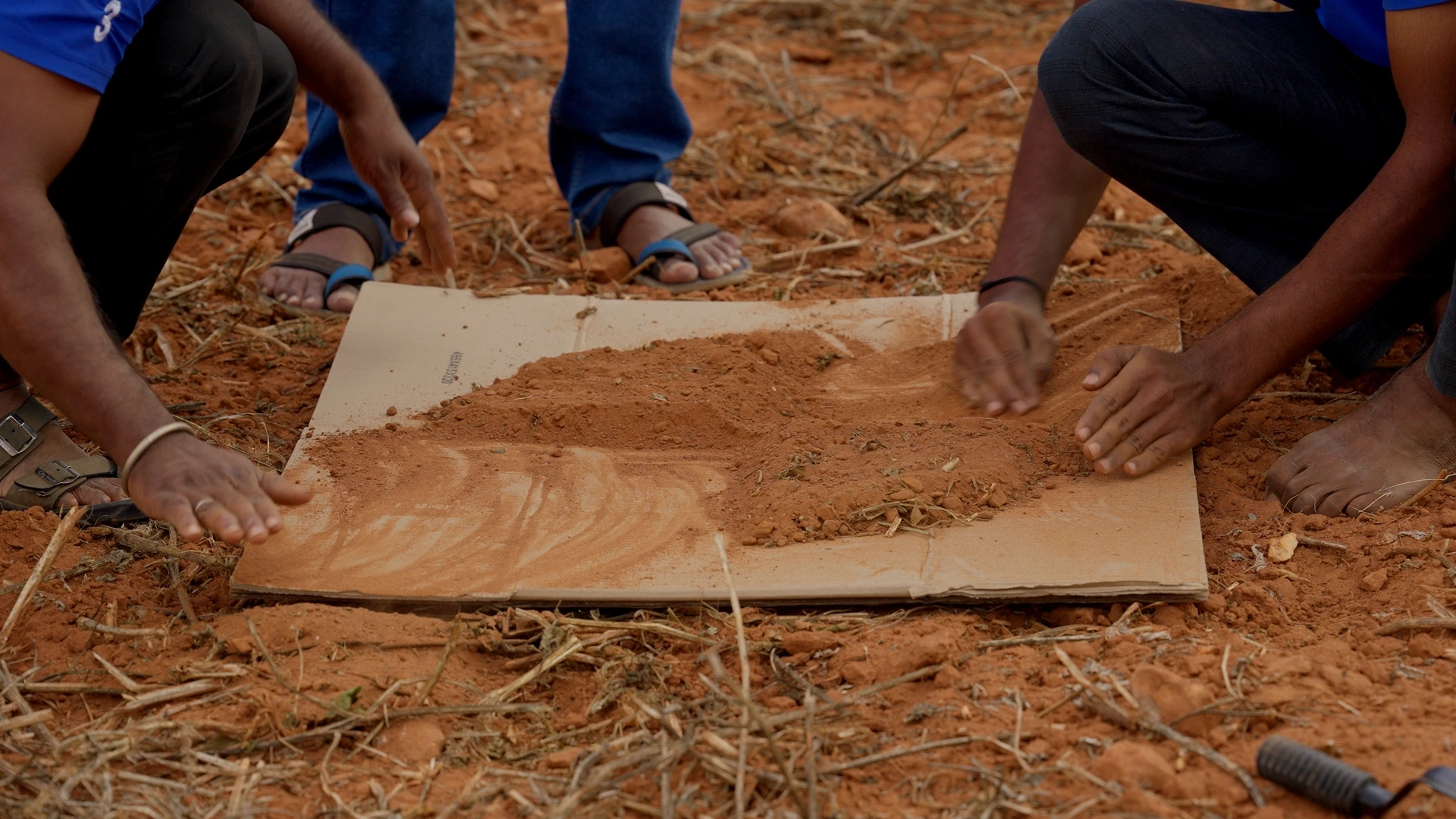
Next, these 4 samples are mixed on a flat surface, where stones in the sample are removed, and the mixed soil is then flattened into a circular shape. Then, two perpendicular furrows are made along the diameter of this circle, dividing it into 4 quadrants, lending it its name of the ‘quartering’ method. Opposite quadrants are discarded, hence reducing the size of the sample to half. The remaining sample is once again mixed, divided into quadrants, and halved. Thus, we come to an evenly mixed 1 kg sample for the first plot. This process is repeated for the remaining three plots. Each 1 kg sample is put into a white bag and labelled.
Upon sending them to the soil testing lab, these labelled bags can help farmers better understand the needs of the soil and their crop. Tests can alert a farmer to soil degradation due to chemical overuse or intensive farming, and help regulate which fertilisers they apply, and in what quantity. While the application of chemical fertilisers is not ideal, soil testing still helps nudge the farmer into more sustainable practices. In time, perhaps, they can be nudged into practicing organic farming.
Also read: How to choose cover crops: Lessons in balancing carbon and nitrogen
{{quiz}}
.avif)


Explore other topics
References



.jpg)