Why weather-beaten farmers in Lahaul-Spiti look to the future with fear
A series of floods and landslides has raised questions about strategies to survive climate disasters


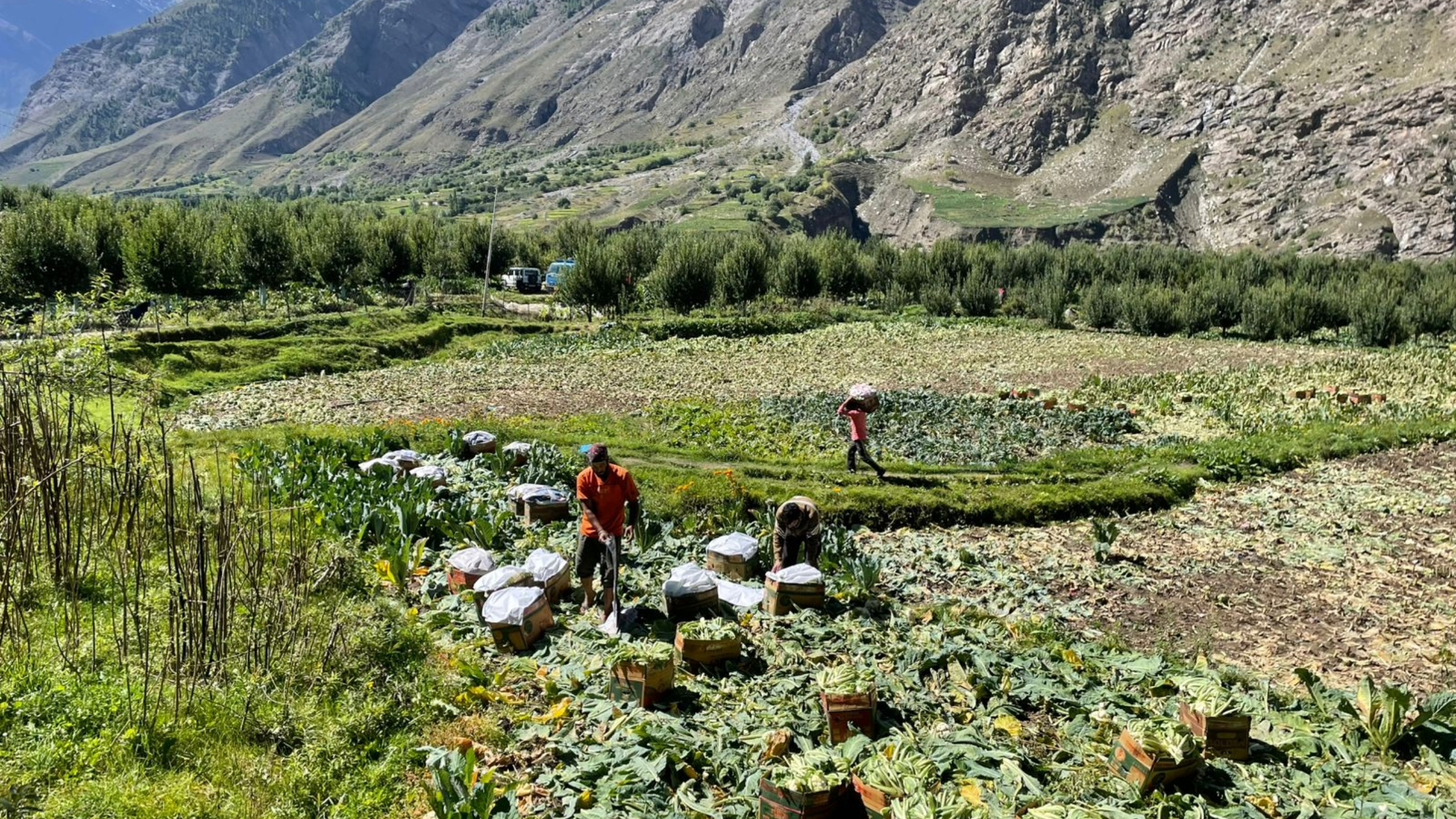
In the Tholang village of Himachal Pradesh’s remote tribal district of Lahaul and Spiti, Sahm Azad, a 45-year-old farmer, stands beside what remains of his cabbage and iceberg lettuce fields. Over August and September, he grappled with devastating losses after heavy rainfall, cloudbursts, and landslides that battered the region this monsoon.
Azad, who owns less than three acres of land and depends entirely on a single crop cycle between April and October, says his annual income—around Rs. 4 to Rs. 5 lakh—has vanished overnight. “Almost everything we grew has been destroyed. What little survived couldn’t even leave the valley because the roads were gone,” he says. “We usually cover our yearly expenses with one crop, but this time, we’re worried about how we’ll feed our families.”
Lahaul-Spiti, which remains buried under snow for nearly six months each year, is known for its short but lucrative growing season. During summer, farmers cultivate high-value vegetables—peas, potatoes, cabbage, broccoli, lettuce, and other exotic varieties—that are sent to wholesale markets in Delhi and Chandigarh, and supplied to five-star hotels across northern India. The exotic vegetables, in particular, enjoy an “unlimited market;” for the cool temperatures of May to October in the hills give them an advantage over the warm plains, which offer no competition.
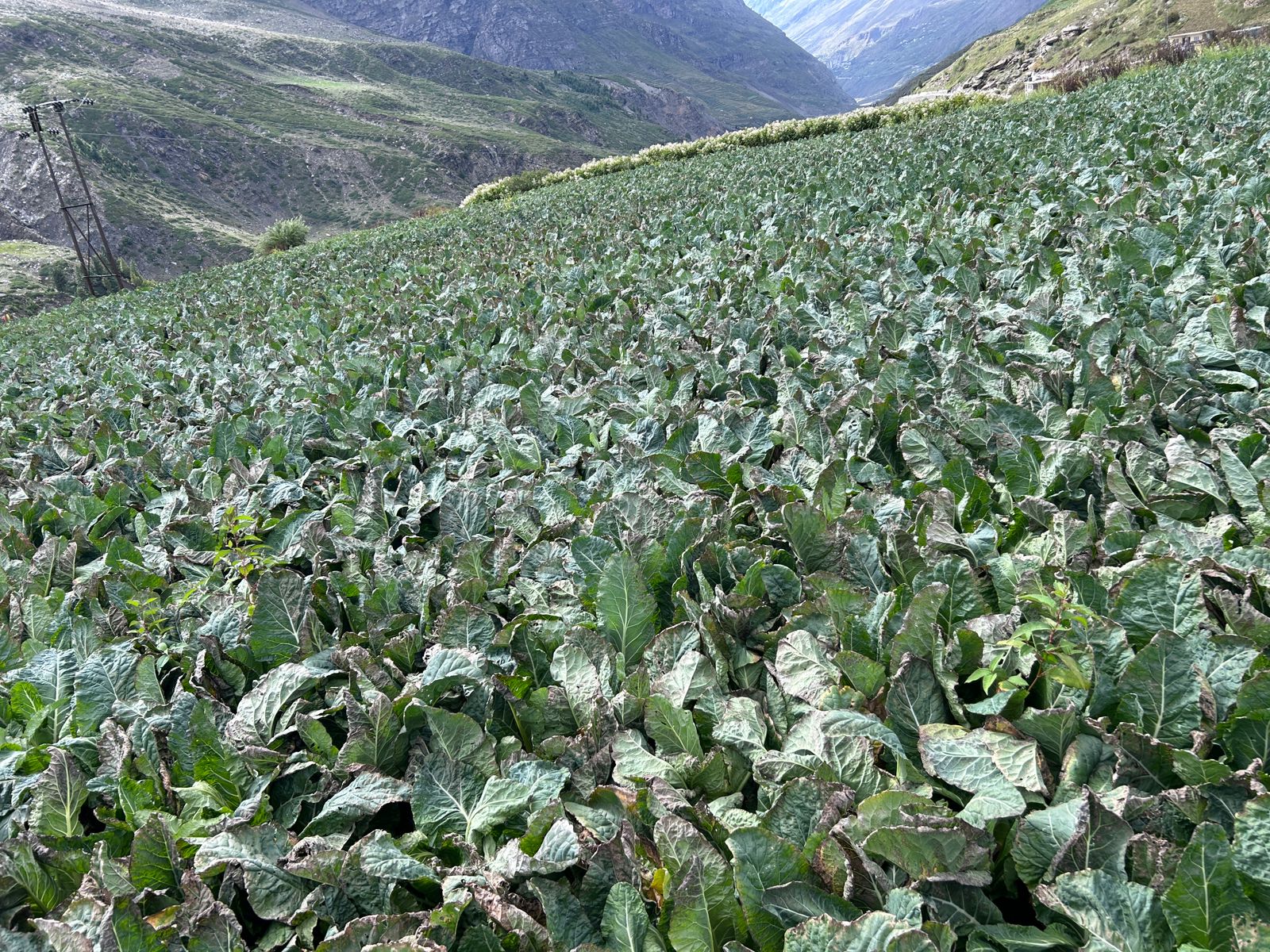
As a result, over the last decade, a growing number of cultivators in the state have switched over from cereals to exotic vegetables and horticulture. For thousands of farmers and labourers, these crops are the backbone of their livelihoods.
This year, however, that backbone has been shattered. Between August 22 and 27, heavy rains triggered landslides that cut off major highways and isolated entire valleys, severely damaging stretches of the Chandigarh–Manali four-lane and the Manali–Leh highway. For nearly three weeks, Lahaul-Spiti remained inaccessible to the rest of the state.
With access blocked until early September, vegetables ready for harvest could not reach the markets. Entire truckloads of produce—harvested after months of labour—rotted in the fields.
For nearly three weeks, Lahaul-Spiti remained inaccessible to the rest of the state.
Now, the next crop cycle, too, is at risk. Heavy rains and landslides have damaged agricultural irrigation systems across the valley. Farming in Lahaul relies primarily on “kuhls,” small traditional canals that divert glacial water to the fields. Many of these have been washed away or broken. “The irrigation of our fields depends entirely on these canals,” Azad says. “If they are not repaired soon, sowing after April next year will be affected. Once snowfall begins, repair work will become impossible.”
“All our hard work has been wasted,” says Motilal, a 52-year-old farmer from Madgran village in Udaipur. “This isn’t the first time weather has ruined our crops, but the scale of the damage in the last few weeks has been enormous. Farmers across villages are drowning in debt, and confidence in farming is fading fast.”
According to data from the Lahaul-Spiti Agriculture Department, cabbage crops have suffered the worst. Roughly 1,842 metric tonnes of cabbage, valued at Rs. 18 crore, were damaged across 5,758 acres of the district. By August alone, the horticulture sector in the state had already suffered a loss to the tune Rs 2,743 lakh, and the agriculture sector had taken a hit of approximately Rs 1,145 lakh.
Sam Bodh, a young farmer in Lahaul Valley, says he produced about 30,000 kilos of cabbage this year, but only half made it to the market. “Almost every family I know here has lost Rs. 4–5 lakh this time,” he says. “Paying back loans or even labourers’ wages has become a struggle.”
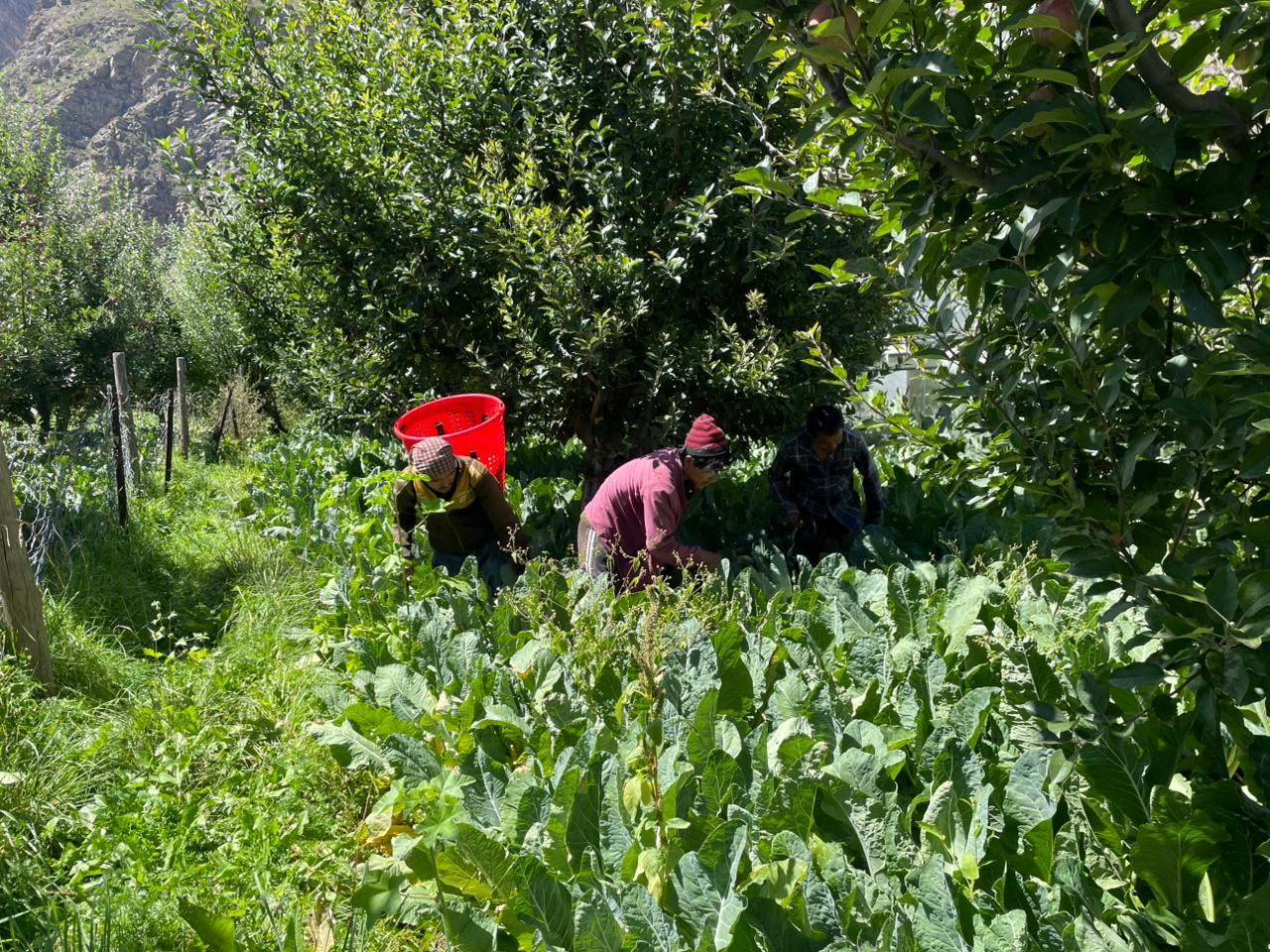
The impact extended beyond local farmers to the hundreds of Nepali labourers who cultivate leased land in Lahaul. Thaman Kumar, who has farmed in the valley for a decade, says this is the first time he’s returning home empty-handed. “Usually, by this time I’ve already sent money to my family for school fees,” he says. “Now I don’t even have enough to clear the loans we took for seeds and transport.”
In addition to vegetables, the apple crop has also been severely affected in the state. Himachal produces up to 4 crore apple boxes annually, with a turnover of Rs. 4000-5000 crore. However, this year, rain and landslides destroyed roads in apple-producing districts like Shimla, Kullu, Mandi, and Kinnaur. In areas like Banjar and Lag Valley in Kullu, apple crops were unable to reach the markets, forcing farmers to abandon their produce. The preliminary estimates reveal losses of up to Rs. 1000 crore for apple farmers in the state.
Also read: Omega-3 fatty acids: The hidden cost of 'health' to our seas
The chain of losses
The ripple effects of the monsoon choked the entire supply chain that moves vegetables from Lahaul’s cold desert to the mandis of northern India. Farmers in the region sow in March and harvest begins in early July. Normally, intermediaries called adhtiyas collect vegetables from field-side points and sell them across Himachal and beyond from July to October. This year, however, adverse weather and road closures blocked the Manali–Leh and Chandigarh–Manali highways, forcing drivers to take long, difficult alternative routes and preventing adhtiyas from reaching the valley.
.jpeg)
“Earlier, we could reach Amritsar Mandi from Lahaul overnight,” says Vikas, a pickup driver who ferries vegetables for local traders. “This time, it took us three days. We had to go via Kaza and Shimla, almost doubling the distance—from about 480 to 970 kms. The fare went up from Rs. 16,000 to Rs. 28,000. The roads were so bad we had to repack the crates halfway, sometimes even unload and reload them.”
Perishable vegetables like cabbage, lettuce, and peas rarely survive such long delays. Many shipments that finally reached mandis through alternate routes arrived in semi-spoiled condition, fetching low prices or being rejected altogether. For small farmers who depend on advance payments from traders, these losses have deepened existing debts—burdens they now hope to recover in the next growing season.
During the crisis, the Lahaul and Spiti administration arranged for a limited airlift of vegetables to prevent total losses. Produce from Lahaul was first transported by road via the Bara Lacha–Sarchu–Leh route and then flown to Delhi through air cargo. The process came at a steep cost—around Rs. 150–Rs. 200 per kg for farmers; at one point, the prices of broccoli in Delhi’s markets had spiked to nearly Rs.500 per kilogram during those weeks. In total, about 30 tonnes of vegetables were airlifted from Leh, offering some relief, though only a fraction of the original harvest could be saved.
For small farmers who depend on advance payments from traders, these losses have deepened existing debts—burdens they now hope to recover in the next growing season.
Also read: In Gurugram's rise, a cautionary tale about satellite cities and groundwater
Growing difficulties for farmers
While calamities are not new to Lahaul-Spiti—July 2023 saw similar damage—farmers repeatedly voice the same concern: “What if it happens again next year and we fall deeper into debt? What compensatory support do we have?”
Sanjay Chauhan, a state committee member of the Himachal Apple Growers Association, warns: "If landslides and road blockages keep occurring every year, the state risks losing its position in the agricultural economy. Repeated losses could force farmers to abandon farming altogether in the coming years."
The administration says it is taking steps to support farmers, though challenges remain. According to Dr. Munshi Ram, District Agriculture Officer, teams from the Agriculture and Horticulture Departments, along with ATMA officials, Patwaris, Panchayat Secretaries, and village heads, visited the affected panchayats to assess losses. Reports have been sent to the state government, and compensation is expected to be disbursed according to established standards.
But for many, compensation alone will not address the deeper structural issues exposed by the monsoon. Dr. Ram Lal Markanda, the state’s former Agriculture Minister and a native of Lahaul-Spiti, points out that delays in reopening roads meant much of the relief arrived too late. “More than half the crops were destroyed in the fields,” he says. “Current government schemes, like the Fasal Bima Yojana, are limited in scope—they cover crop loss only within a farmer’s own field and don’t account for losses caused by blocked access or supply chain disruptions. In such situations, farmers are left without adequate support.”
The crucial question is: do we have alternative models and disaster management frameworks that can protect farmers from such recurring shocks? When every landslide and flood doesn’t merely wash away roads and farmland, but also destabilises the incomes of entire families as well as the lives of consumers, the solution will come not from relief packages alone–long-term strategies are crucial.
.jpeg)
According to Dr. Markanda, the current situation in Lahaul-Spiti forces us to reconsider how to safeguard food security and the rural economy in Himalayan states from the growing threat of natural disasters. “Many farmers here lack financial safety nets. Access to tools like the Kisan Credit Card and crop insurance can help them recover from losses and invest in more resilient practices,” he says.
When every landslide and flood doesn’t merely wash away roads and farmland, but also destabilises the incomes of entire families as well as the lives of consumers, the solution will come not from relief packages alone–long-term strategies are crucial.
In the long term, he adds, policies must encourage diversified cropping to reduce reliance on a single harvest, and investment in cold storage infrastructure is essential to preserve perishable produce, limit post-harvest losses, and stabilise market prices. “With landslides and floods striking the Himalayan region with increasing frequency, it is crucial that such robust measures are put in place before the next disaster hits the state.”
Also read: In the battle of Alphonso vs Kesar, climate change plays dirty
{{quiz}}

.avif)
Explore other topics
References