Priyanka Bhadani
|
December 20, 2025
|
9
min read
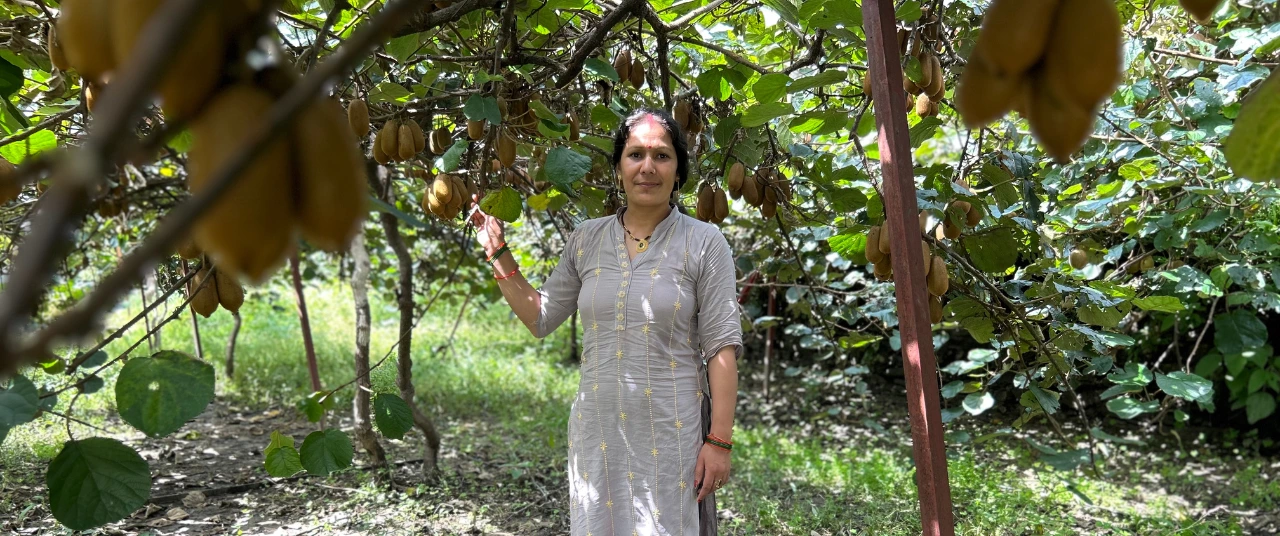
In Uttarakhand’s Shama, kiwi cultivation has restored faith in agriculture
Despite early hardships due to gaps in knowledge, farmers persevered to gain training and change their fates
Read More

A gag is either a joke or something that cuts off your air. Rohan Chakravarty’s comic strips capture both ideas. His humour is sharp, but it highlights the suffocating reality of our planet’s state.
Sea Ice? Now You Don’t is his latest book in the Green Humour collection, featuring comic strips published in The Hindu, Times of India, Roundglass Sustain, and DW News.
From woolly mammoths asking elephants about their "trimmer," to illustrated flight announcements reading, “Expect some turbulence: large-scale habitat destruction, mass hunting, and climate change on our path. Enjoy the flight, and thanks for choosing the East Asian–Australasian Flyway, the world’s most endangered flyway,” his work touches on everything. For first-time readers, the comics promise fun. For the uninitiated, it’s akin to a walk in nature. And for complacent readers, there’s a clear call to action.

Green Humour has been around for 14 years, serving as a wellspring of news, research and quaint curiosities about all things green. Chakravarty, from Nagpur, said, “In 2010, while dabbling with my cartoons, I didn’t know which direction to take my work. Nagzira is one of the tiger reserves close to Nagpur. In fact, Nagpur is called the tiger capital of the world because of its proximity to many tiger reserves around. Around this time, I had a tiger sighting that gave me the idea of volunteering for Kids for Tigers, an organisation that takes school kids on nature trails, birdwatching walks etc.” Soon after, Green Humour became a blog, and in 2013, national publications began running the cartoons.
While cartoons are often seen as something just for kids, Chakravarty doesn’t put an age limit on his readers.“Recently, I got feedback from an eighth grader on Sea Ice at a Bangalore literature festival where I spoke. He said he and his peers greatly enjoyed the book because I don't dumb down my voice. Though they had to Google or check things with their parents, they were drawn to the books as I spoke to them as I would to an adult, to a person my age.”
Finding humour in grim developments, such as a 73% decline in wildlife populations, hasn't been easy. Beyond moments of self-doubt, Chakravarty says that the impact of his work keeps him motivated. "From feedback like this to making more significant differences, I feel fortunate. For instance, in 2020, when the government decided to scrap the Environmental Impact Assessment (EIA), I drew the then environment minister as a superhero called 'Clearance Man.'"
In the cartoon, wherever he flew, trees were cut down, and corporations were thrilled. The strip became the online face of the movement against the draft EIA and helped gather six lakh signatures, putting the government on the back foot.
“I’ve realised this small humble art form, combined with bigger forces like social media or people’s movements, has the potential to create a tangible impact,” said Chakravarty, who won the WWF International President’s Award in 2017.

Indian reality is rife with paradoxical stances on ecological conservation. Chakravarty said the sheer absurdity of certain environmental initiatives makes him feel as if material for his work is being served to him on a platter.
“I think Project Cheetah was like a cartoon strip from the word go, and even experts were aware of it. Yet, it was executed with such pomp and show. We all know that today, most of the cheetahs have unfortunately perished, and the ones that remain still languish in captivity. Many similar decisions are being made across the country, and to me, they are perfect subjects for cartoons.”
But to the country, they represent ecological disasters, like the current plan to turn Great Nicobar into a Hong Kong or a Singapore, regardless of its strong indigenous tribal population.
I’ve realised this small humble art form, combined with bigger forces like social media or people’s movements, has the potential to create a tangible impact.
“They say that in the next four or five years, Nicobar will experience compensatory afforestation in Haryana. That is a cartoon punchline, but unfortunately, the government doesn’t see it that way,” he said.
“Is the country willing to pay the price for such an approach? That's the big question. Similarly, in the Northeast, hundreds and hundreds of dams are coming up in seismically fragile zones. And we can only guess where this will lead the country.” Chakravarty, who trained as a dentist, believes this disconnect stems from a gap between governance and science, not just bureaucratic stubbornness. “We don’t have a culture of speaking science to, you know, people in power.”

With his deep commitment to science and research, Chakravarty put in rigorous work to unearth the most fascinating stories. “The process is very random, as are my series. It could involve an animal or bird I’ve encountered casually on a walk or environmental news, which requires a lot of fact-checking, including discussions with experts. For the book Naturalist Ruddy, I had to read dry and tedious scientific papers, but I approached them like a detective, creating mysteries and crimes from them, since my protagonist is a detective mongoose who exposes crimes against nature.”
Chakravarty also went on field visits to collect firsthand references for illustrating posters and maps for Green Humour.

The young cartoonist stressed his approach changes depending on the story. Drawing inspiration from comic legends like Bill Watterson (Calvin and Hobbes) to conservation comic artists like Seppo Leinonen and Rosemary Moco, Chakravarty is always open to experimenting. When asked about his favourite strips from the book, he said: “I am usually very self-critical, but there are a few that always make me chuckle every time. I’ve done an entire series on Arctic Terns, the longest-distance migratory bird in the world, i.e., all the way from the Arctic Circle to Antarctica and back. So, in this particular comic, the bird is giving sustainable travel tips to this generation of Instagram travellers; something I always find relevant.”


Barley holds deep cultural significance in the high altitudes of Himachal Pradesh, particularly in Spiti. This ancient crop is linked to the Namkhan festival, and it is harvested only after the festival, showing how much it matters.
In the past, three types of barley, locally known as jau, were cultivated in Spiti. “The crop was consumed and also exchanged for other essential items. Now, only one variety is grown, mostly eaten as sattu after roasting. It is naturally grown during the summer,” said Tenzin Thinley, a farmer from Kibber village.
According to Thinley, people in Spiti still trade barley for rice from Kullu and Manali. They also buy aluminium storage boxes, or sanduk, for preserving it, underscoring its importance.

However, barley cultivation has declined since the introduction of green peas as a cash crop in the 1980s. "Today, only about two to three quintals of barley get sold, fetching around Rs 42 per kilogram locally," said Thinley. Peas have brought higher profits, pushing barley aside.
Though peas are commercially viable and planted around the same time as barley, they come with drawbacks. "Climate change is the biggest threat. Pea crops are often ruined by excessive rain and hail in June and July when they're nearly ready for harvest. Barley, on the other hand, can endure such climate shocks. But most farmers now grow peas for financial reasons," Thinley said.
Thinley believes small-scale farmers who only grow peas are more vulnerable to unexpected climate changes. Additionally, as barley farming declines, the younger generation may gradually forget its importance in Spiti.

Barley is mainly grown for consumption, but its market value is almost zero. In Spiti, many farmers saw their fortunes improve about four decades ago when they started growing peas. According to Thinley, barley barely sells despite his efforts to find a market. He owns 49 bighas of land, where he practises crop rotation. If he cultivates about 10 bighas one year, he leaves that much land fallow the next year due to water shortages.
“Last year, peas sold for Rs 95 per kg, but this year it was Rs 75 per kg. If farmers find a viable market for barley, many will reduce pea cultivation since it requires more water.”
Peas and barley are sown together around March-April. The crops are harvested in mid-September to October, although this year the harvest came early, leading to lower prices for peas.
Climate change is the biggest threat. Pea crops are often ruined by excessive rain and hail in June and July when they're nearly ready for harvest. Barley, on the other hand, can endure such climate shocks.
Over the past few years, Thinley has noticed that the harvest has moved up to August. “Overall, this is due to a changing climatic trend in Spiti”
The early harvest is a major issue. Farmers miss out on the higher prices available in September and October. Since the crop is ready in August in lower elevations, overproduction drives prices down, Thinley said.
Pea farming typically brings in a profit of Rs three to four lakh annually for many, with most of the produce sent to Delhi. Thinley is worried that, at some point, farmers might suffer big losses from growing peas, and barley could completely disappear from the area.
In Spiti, where people rely on livestock and pea farming for their livelihoods, tourism has also brought changes. Thinley said many tourists now visit Spiti in winter to see snow leopards. “In winter, it’s like a fair here, full of outsiders. Even Western-style toilets have been installed for tourists, but they don’t work in the cold.” If pea crops fail in any given year, horses and yaks are sold for income.
Another farmer from Kibber village, Dorje Chhering, grows both peas and barley. He began cultivating peas in 1988. Chhering owns 30 bighas of land, planting peas on 10 bighas and barley on another 10. The rest remains fallow.

According to Chhering, pea crops require more water, a resource always scarce in the region. Farmers build kuls, or water channels, to bring glacial water to their fields. He sources water from eight km away. Plus, Kuls, traditional water harvesting systems in Spiti, need proper management and maintenance.
“There is a severe water shortage here. I’m not getting a good market for barley, but I’ve heard there’s demand. If I find a viable market, I’ll stop growing peas. Peas are always risky. The seeds aren't local, which is the biggest problem. In summer, when peas are sown, water can be scarce. When they’re ready, excess rain or hail storms can ruin the crop,” Chhering said. He added that barley is a hardy crop, resistant to climatic shocks, and beer made from barley tastes good.
There is a severe water shortage here. I’m not getting a good market for barley, but I’ve heard there’s demand. If I find a viable market, I’ll stop growing peas.
Takpa Tenzin, a resident of Chicham, a village five km from Kibber, said, “Farmers in Spiti buy pea seeds at subsidised rates, but most of the time they’re poor quality. Middlemen often cheat us by providing inferior seeds. Last year, I bought four kg of pea seeds for Rs 4,200. Still, one kg of peas sells for Rs 60-70 in the market.”
Like others in the region, he’s aware of the risks posed by peas. Farmers lack storage facilities, and with markets far away, they rely on middlemen to sell their crops. These middlemen come from various districts in Himachal Pradesh after the harvest.

Besides the commercially viable green pea, Takpa Tenzin also grows black peas, or kala matar in Hindi. This local Spiti variety lacks a market as well. Though it looks green in the field, the peas are slightly blackish. When snow, rain, or road blockages occur, farmers struggle to store green peas for long periods. But black peas, dried in the fields, can be stored for up to a year. They’re small and must be beaten with sticks to remove the pods.
“I’m trying to find a market for black peas. Once, I sent about two quintals to Gujarat through a friend,” he said. But there’s been no promotion for the crop. Thinley added that black peas are exchanged for rajma from Kinnaur, where people appreciate their nutritional value and taste.
Though Spiti is part of the trans-Himalayan region, water shortages are still constant. “The pea crop needs water 10-12 times from sowing to harvest. In high mountains, farmers rely on springs. But the constant pressure from tourism also affects the region’s water sources. Farmers use PVC pipes to bring water to their fields, but the springs, their water source, are gradually drying up.”
Takpa Tenzin, who also runs a homestay, said things have changed. Most people in Spiti now run homestays. Namkeen chai, once popular in the region, has been replaced by regular sweet tea.
Meanwhile, farmers in Kibber gram panchayat have vowed to avoid using chemicals. “Chemical use reduces the bird count. If farmers stop using chemicals, birds return in large numbers.”
{{marquee}}
Ajay Bijoor, who works with the Nature Conservation Foundation’s high-altitude programme, said the green pea crop was introduced to Spiti from Lahaul. Lahaul farmers have grown cash crops, including potatoes, since the 1960s.
“Barley needs less water than green peas, but cash crops like cauliflower and lettuce require even more. The first watering of crops is now delayed due to reduced snowfall and receding glaciers, which disrupts the crop cycle.”
Barley is one of the oldest crops known to humans. Bijoor explained that Spiti was likely inhabited because barley was cultivated here since ancient times. This long history has given the crop its resilience to climate change.
{{quiz}}

In recent decades, a few large agribusiness companies have increasingly influenced the global food and farming system. Some of these companies control seeds and agrochemicals, while others dominate trade and marketing or own vast amounts of farmland. Their growing influence on farm policy has sparked controversy, particularly regarding the spread of genetically modified (GM) crops and the agrochemicals associated with them.
However, there is mounting evidence that the farming practices promoted by these companies have caused significant ecological damage and are not sustainable. Senior agronomist Rene Dumont says, “Much of the extraordinary increase in (farm) production recorded between 1950 and 1984 was achieved by depleting farm resources.” Similarly, Lester Brown and Edward Wolf points out, “Often the very practices that cause excessive erosion in the long run, such as the intensification of cropping patterns and the ploughing of marginal land, lead to short-term production gains, creating an illusion of progress and a false sense of security. Indeed, the US crop surpluses of the early eighties, which are sometimes cited as the sign of a healthy agriculture, are partly the product of mining soils.”

The green revolution has mostly promoted the use of intensive monocultures, but this practice can hurt the long-term fertility of the land. The World Resources Report (WRR) notes, “Soils under intensive monoculture tend to lose organic matter and their ability to retain moisture, thus becoming more susceptible to erosion and ultimately losing their fertility and productivity.”
Intensive monoculture usually requires a greater use of chemical pesticides. However, only a tiny fraction of the pesticides applied–less than 0.1 percent in some cases—actually targets the intended pests. The rest ends up polluting the land and water, harming birds and other wildlife. As WRR notes, “wholesale elimination of helpful soil-dwelling insects and microorganisms that build soil and plant nutrition sometimes occurs, essentially sterilising the soil.”

It's well-known that using too many chemical fertilisers can reduce the flavour of food, but what's less recognised is that it can also lower its nutritional value and lead to serious health issues. According to nutrition expert C Gopalan, “the use of high analysis chemical fertilisers, which is part of the modern intensive agricultural technology, had not always gone hand-in-hand with appropriate measures for soil testing and soil replenishment, with the result that, as shown by the studies of FAO, there are disturbing evidences of micronutrient depletion of soils in some areas; these are likely to be eventually reflected in impaired nutritive value of food-grains grown in such soils.”
Richard Douthwaite in his recent book The Growth Illusion writes, “Nitrogenous fertilisers can raise the amount of nitrate in the final crop to four or five times the level found in the compost-growing equivalent, while at the same time cutting vitamin C and dry matter levels. This change is potentially serious, since nitrates can be turned into powerful carcinogenic nitrosamines by bacteria found in the mouth, while vitamin C has been shown to protect against cancers.”
The dangers of overusing chemical fertilisers have become even greater in the era of climate change. The International Panel for Climate Change estimates that for every 100 kg of nitrogen fertiliser applied to the soil, one kg ends up in the atmosphere as nitrous oxide, a greenhouse gas 300 times more potent than carbon dioxide and the world’s most significant ozone-depleting substance.
Wendell Berry, the well-known writer and farmer-philosopher from the USA, has argued that, beyond damaging the soil and environment, many modern farming practices promoted by big business and governments are forcing small farms out of business, disrupting rural communities and their culture.
In his famous book ‘The Unsettling of America: Culture and Agriculture’ he writes, “A healthy farm culture can be based only upon familiarity and can grow only among a people soundly established upon the land; it nourishes and safeguards a human intelligence of the earth that no amount of technology can satisfactorily replace. The growth of such a culture was once a strong possibility in the farm communities of this country (USA). We now have only the sad remnants of those communities. If we allow another generation to pass without doing what is necessary to enhance and embolden the possibility now perishing with them, we will lose it altogether.”
The social and ecological harms are connected, as large companies can't care for the soil and crops in the same way that small farmers and farming communities can. The machines now doing most of the work on farms in wealthier countries can increase food production, but they can't protect the soil for future generations. As more skilled farmers leave agriculture, it's becoming less likely that there will be enough people to not only produce food but also care for the land and soil. Farm animals are increasingly treated like mere commodities, with little attention to their well-being.
On the consumption side, poverty and inequality prevent many people from getting enough food, but even those who can afford it struggle to find wholesome, nutritious options. The market is dominated by food that’s heavily treated with chemicals or processed in ways that strip away valuable nutrients and add harmful substances.
The London Food Commission reported that at least 92 pesticides were cleared for use in Britain, despite being linked to cancer, birth defects, or genetic mutations in animal studies. In poorer countries, health risks can be even higher, as pesticides and other harmful agrochemicals banned in wealthier nations are often sold cheaply, posing dangers to both consumers and farmers who are in close contact with these harmful chemicals.
Regarding food additives, the London Food Commission noted that around 3,800 additives are used to perform about 100 different functions. The Commission stated, “A single meal may contain a cocktail of 12 to 16 additives. The combinations of additives may react with each other and with foods to produce new chemical substances.”
Much of the confusion comes from treating agriculture like an industry—or even mining—focused solely on maximising short-term production and profit. Wendell Berry has effectively pointed out the flaws in this widespread approach.
“The farmer differs from the industrialist in that the farmer is necessarily a nurturer, a preserver of the health of creatures.” He further writes, “The economy of industry is, typically, extractive. It takes, makes, uses, and discards, it progresses, that is from exhaustion to pollution. Agriculture, on the other hand, rightly belongs to a replenishing economy, which takes, makes, uses, and returns - it involves the return to the source, not just of fertility or of so-called wastes, but also of care and affection.”
Explaining why this fundamental understanding of agriculture is often overlooked today, Wendell Berry writes, “The ‘free market’—the unbridled play of economic forces—is bad for agriculture because it is unable to assign a value to things that are necessary to agriculture. It gives a value to agricultural products, but it cannot give a value to the sources of those products in the topsoil, the ecosystem, the farm, the farm family, or the farm community. Indeed, people who look at farming from the standpoint of the ‘free market’ do not understand the relation of product to source. They believe that the relation is merely mechanical because they believe that agriculture is or can be an industry. And the ‘free market’ is helpless to suggest otherwise.”
Government policies that strongly promote ecologically sustainable farming and support rural communities could offer new hope. In this regard, the Indian government's recent announcement to promote natural farming on a larger scale is a positive step. However, it’s important to recognize that this cannot coexist with conflicting trends like the promotion of GM crops. GM crops pose serious health hazards and environmental risks, and their contamination can easily spread to conventional and naturally or organically grown crops. Most independent scientists oppose GM crops. India’s leading expert on the issue, Prof. Pushpa M Bhargava, who founded the Centre for Cellular and Molecular Biology and was appointed by the Supreme Court of India to advise on related issues, summarised the situation: “There are over 500 research publications by scientists of indisputable integrity, who have no conflicts of interest, that establish harmful effects of GM crops on human, animal and plant health and on environment and biodiversity… On the other hand, virtually every paper supporting GM crops is by scientists who have a declared conflict of interest or whose credibility and integrity can be doubted.”
This highlights a key point: the industrial agriculture system cannot protect the most essential need for safe and healthy food. Its main goal is to increase profits and control for large multinational agro-businesses, which rely on risky technologies and inputs like agro-chemicals, whose health dangers are well-known, and GM crops, which come with serious hazards. Despite all the promotion of industrial farming, the safety of food and the sustainability of small farming households are best supported by natural farming systems based in small farmer and family farm communities.

Vast stretches of green and golden paddy spikes sway in the cool breeze, creating a musical rhythm as you glide through the brackish waters of the naturally organic Kaipad (kayal padam) fields, fringed by mangroves. The fields are the lifeblood of coastal villages in Kannur, Kasargod, and Kozhikode, especially in Ezhome panchayat, Kannur, the hub of Malabar Kaipad cultivation.
Here, Dr Vanaja T, associate director of research at Kerala Agriculture University and head of the Regional Agriculture Research Station (RARS) in Pilicode, Kasargod has been working passionately to breed better varieties of paddy for farmers.

“I have hybridised traditional and international varieties in a more saline region than before, creating a high-yielding, saline- and flood-resistant variety with better nutritional value,” she said. Dr Vanaja’s dedication, combined with the farmers' needs, led to the development of five organic, saline-resistant hybrid varieties: Ezhome 1, 2, 3, 4, Jaiva (for non-saline fields), and Mithila, all the result of experiments started in 2000.
The rich biodiversity of the land is palpable. The unique calm is as soothing to the mind as the nutritious Kaipad rice is to the body, a connection evident in the villagers' health. “We eat only Kaipad rice in various forms, accompanied by organic vegetables, tubers, fruit, or fish from our farms. We grow paddy during the monsoon in saline-free water, from June to November, and fish after the harvest, from mid-November to April,” said agriculturist C Govindan Nambiar.

“We have always followed this unique indigenous farming method. The saline-resistant rice varieties are nurtured and nourished by the tidal flow. Before the monsoon sets in, we make mounds. After the rains remove the salinity, we sow the seeds in each mound. When it's time to replant, the men scatter the mounds in a specific way, and the women place the saplings in the right positions. We sow and reap in neck- or knee-deep water and marshy soil–a very laborious task. The beds are visible during low tide,” he said.
“We do not use fertilisers or pesticides. After the harvest, it’s time for fish. The sluice gates are closed, and the fish, shrimp, and crab seedlings that flow in from the sea feed on the paddy stubs and other organic matter. After harvesting the fish, they are often exported. The stubble waste, fish, and bird droppings, including those of migratory birds, fertilise the soil,” Nambiar explained.
“We did face issues, but thanks to Vanaja madam, most have been resolved,” he added.
Vanaja has been instrumental in reviving Kaipad rice cultivation and supporting small and marginal farmers through her research and initiatives. “When I started my career as an agriculture officer, I was appointed to the Pepper Research Institute, despite specialising in rice. On State Farmers' Day, the first day of the Malayalam month of Chingam in 2000, I was asked to give a talk to the farmers of Ezhome Panchayat as part of the celebrations. I spoke about various aspects of rice farming when Govindan Nambiar, representing the farmers, interrupted, saying my talk had nothing to offer them.”
Vanaja paused and asked about their concerns. The farmers struggled with low yields from the indigenous Kuthiru and Orkkayama varieties, lodging (where stalks fall to the ground), and the nuisance of awns during harvest.
We should salute the hands that secure food just as we salute the hands that defend the country.
Though she was at the Pepper Institute, she promised the farmers that she would support them, even if it meant conducting the research herself. When she presented the DPR, the university approved it because it was a demand from the farmers that no one had addressed.
Vanaja began her experiment at home, hybridising traditional varieties in 200 pots. After much effort, she successfully developed a set of seeds. She leased Kaipad land from a farmer, turning the area into her lab. Vanaja involved the farmers to understand their needs and combine their knowledge with science. After many trials and evaluations based on various criteria, she developed Ezhome 1 and 2 in 2010, naming them after the village. That same year, the Malabar Kaipad Farmers' Society (MKFS) was established, focusing on the conservation, cultivation, consumption, and commercialisation of Kaipad rice. Ezhome 3 was developed in 2014, followed by Ezhome 4 in 2015.
The new varieties offer 60 to 80 percent higher yields than the traditional ones. They are lodging- and awn-free, tastier, and more nutritious.
During the harvest festival inauguration for Ezhome 3, the then agriculture minister was taken by canoe to cut the stalks. However, the canoe overturned, drenching the minister. Along with the local MLA, the minister waded knee-deep through the field to cut the sheaves, gaining firsthand experience of the farmers' struggles.

“The new varieties offer 60 to 80 percent higher yields than the traditional ones. They are lodging- and awn-free, tastier, and more nutritious,” said Vanaja. After years of effort, Kaipad rice received the Geographical Indication (GI) tag in 2014.

“Ezhome 4 is high yielding and flood-resistant, and farmers want to grow more,” said Ezhome panchayat president P Govindan. “But labour shortages, high production costs, lack of mechanisation, and low prices prevent expansion. We need to attract younger generations by boosting the food security army, offering monthly salaries, and introducing mechanisation.”
In 2019, the governmental agency Kaipad Area Development Society (KADS) was established, with Dr Vanaja as its director. It is the only agency of its kind in north Kerala. According to farmers, the northern districts are a neglected area. In 2020, the Malabar Kaipad Farmer Producer Company (MKFPO) was registered.
To support the farmers and encourage self-entrepreneurship, a Food Security Army (FSA) was formed on a profit-sharing basis. “We should salute the hands that secure food just as we salute the hands that defend the country,” said Vanaja.

The consumption of Kaipad rice has been significantly promoted through awareness initiatives in 52 self-governing bodies across three districts. Kaipad products have been introduced in markets throughout Kerala. The importance of healthy eating is conveyed through a food park set up near the Thavam rail overbridge in Cherukunnu panchayat. Slogans highlighting the need for and benefits of nutritious, organic food adorn the walls. The area houses a production unit and an outlet where Kaipad rice, rice flakes, ‘puttu’, ‘pathiri’, idiyappam, prawn chutney powders, sweetened rice balls, and health mixes for all ages, as well as ‘payasam’, are sold. Most products are also available online.

In the food park, rice gruel made from Kaipad rice is served in earthen pots, accompanied by legumes, ember-roasted ‘papad’, pickles, vegetables, and tonic chutney made from Indian pennywort (muthil), water hyssop (brahmi), or other medicinal herbs. It costs Rs 50. Fish and eggs are also served at an additional charge. “We take turns cooking, making value-added products, packing, and selling in our outlets, catering to tourists who generally book in advance. The gruel at the park is a hit, and our products are in demand,” said Soumya of FSA.

Farm tourism is also being promoted, offering visitors the opportunity to participate in the cultivation process, enjoy canoe rides, relish healthy food, and bask in the beauty of nature.
.avif)
Kaipad rice and its value-added products were first exported to the UAE in 2019 and are now reaching other countries. The demand exceeds supply. “Today, people have begun to approach us for rice and value-added products, but we don’t have enough paddy to fulfill large orders. Last year, we harvested only 9 tonnes, compared to 15,000 tonnes the year before,” said MKFPC secretary Nidhina Das.
MKFS secretary M K Sukumaran supports her claims. “We have new seed varieties, but cultivation has decreased by 50 percent compared to a few years ago because it has become risky. When farmers are unable to cultivate for a year, mangroves intrude, and it’s illegal to clear them. Moreover, climate change, saline intrusion, and threats from pigs, tortoises, and birds present significant hurdles. We can increase cultivation if the government helps us address these issues and raises our subsidy. The government’s promises have yet to reach us,” he said.

“Steps are being taken to address the challenges facing Kaipad and make cultivation profitable to attract more farmers and youth. The government has begun marketing organic rice varieties and value-added products from across the state online under the brand ‘Kerala Agro’ through the Krishi Bhavan to secure better returns for farmers,” said agriculture minister P Prasad.
In 2020, MKFS received the Plant Genome Saviour Community Award from Indian president Droupadi Murmu during the Global Symposium for Farmers’ Rights in September 2023, in New Delhi. The Kaipad stall was one of the few visited by the president.
Meanwhile, Vanaja is focusing on the Research and Development Centre being set up on a hillock where viewers can see the Kaipad fields. The lower floor will house the food park and outlets, while the upper floor will contain the lab and other facilities. “I had to depend on toilets in farmers' houses. Better infrastructure will help attract more researchers and contribute more to Kaipad development,” she said.
{{quiz}}

India’s food industry is fueling a health crisis, with low-nutrition processed foods contributing to rising rates of diabetes and heart disease. Additives like rhodamine B, potassium bromate, and formalin are sneaking into everyday meals, posing serious risks to public health.
“Indian companies make food on an industrial scale which has very low calorific value with hardly any minerals that are needed to the human body. They do satisfy and increase your hunger pang leading you to overeating,” said Yatish Rajawat, founder of the Center for Innovation in Public Policy.
He pointed out the “regulators are doing a disservice to a nation of 1.5 billion people” by hiding the bigger problem behind a smokescreen of actions.
“These raids are done with the basic objective of misleading the public. The regulators have to show that they are doing something but they don’t do anything against the whole food industry. It is only when public outcry rises there is a reaction. There is no fundamental change in the way these organisations work,” he said.
“The challenge the country is facing is that we now have the second highest number of diabetes in the world. We also have the largest number of cardiovascular patients so this health crisis is basically looming right in front of the industry,” he added.
%2520copy.avif)
As the industry continues to grapple with the issue at large, consumers need to make an effort from their end to understand what to eat and what to avoid.
A textile dye that has entered the food supply to produce brilliant pinks, greens, and blues.
Where is it used?
Commonly used as a food colouring agent in cotton candy, sweets, manchurian dishes, pakoras, and sauces for Chinese cuisine.

A flour treatment agent linked to cancer. Potassium bromate is an oxidising agent that makes bread loaves fluffy and soft.
Where is it used?
High levels of potassium bromate/iodate have been detected in sandwich bread, pav, buns, and white bread from popular brands. The same report mentioned fast food giants selling pizza and burgers also use it.
Often called the cuddle hormone, oxytocin is a naturally occurring hormone that is misused in the dairy industry to boost milk production. Prolonged consumption can lead to dizziness, nausea, early puberty, mood swings, irregular heart rate, and potential harm to foetal development.
“We know of cases where the drug is stocked and supplied illegally for use other than its intended purpose. People tend to misuse it and having control over its manufacturing, sale and distribution will ensure it is used primarily in the labour rooms for deliveries,” said C K Mishra, former secretary, Ministry of Health and Family Welfare.
Where is it used?
In addition to milk, oxytocin is present in various foods rich in Vitamin D, Vitamin C, magnesium, and dietary fats, such as fatty fish, mushrooms, peppers, tomatoes, and spinach. It is also used to increase the size of vegetables like pumpkins, watermelons, brinjals, gourds and cucumbers.
Calcium Carbide is primarily used to ripen fruits. However, its components, often referred to as 'masala,' can lead to severe health problems, including dizziness, excessive thirst, irritation, weakness, difficulty swallowing, vomiting, and skin ulcers, as highlighted by the Food Safety and Standards Authority of India (FSSAI) in a warning issued in May during the height of mango season. Further, the gas released by this chemical poses significant dangers to the workers who handle it.
Where is it used?
The chemical is applied to fruits such as mangoes, bananas, and papayas to accelerate ripening. This helps ensure that fresh fruit remains available, even when it’s out of season.

Formalin, also known as formaldehyde, can lead to both short- and long-term health issues. In the short term, it can increase the risk of abortion in pregnant women and weaken the immune system. Prolonged exposure may result in reduced fertility and has been identified as a carcinogen.
Where is it used?
Formalin is commonly used to preserve fish. Opting for wild-caught seafood instead of farmed fish can reduce the chances of consuming formalin-treated products.
Introduced in the 1930s, BVO has become a significant part of the soft drinks industry. This additive emulsifies citrus-flavoured beverages, ensuring they do not separate during distribution.
Where is it used?
BVO is found in soft drinks and has been associated with various health concerns due to its potential to accumulate in the body.

A recent case in Karnataka revealed carcinogenic substances in 12 out of 235 cake samples tested statewide. In response, the government issued "strict instructions" to outlets to adhere to food safety and quality standards.
However, the growing number of alarming food practices reports shows that issuing warnings isn't enough. There is an urgent need for a stronger regulatory framework, given the current prevalence of food laced with unsafe materials.
“These dyes they found–has anyone questioned how harmful the dyes used by the packaged food industry are?” asked Rajawat. He pointed out that grade two dyes, along with preservatives, emulsifiers, and coagulants, are commonly used. “It is a very sad commentary on a large part of the system that has forgotten the purpose it was set up for,” he added.
Regulators are doing a disservice to a nation of 1.5 billion people.
The government's lack of attention has eroded public confidence. A 2024 survey highlighted this scepticism, with over 7 in 10 Indians expressing doubt in the country’s food regulatory authorities’ ability or willingness to ensure food safety.
In June, the Food Safety and Standards Authority of India (FSSAI) cancelled the manufacturing licences of 111 Indian spice producers, ordering them to cease operations. Following this, the Indian Spice Board, a division of the Union Commerce and Industry Ministry, released new guidelines to prevent contamination in spice production and export.
“In terms of its presence and efficacy, the FSSAI (and its counterparts) is possibly one of the weakest regulators in the country. The reason for it is, nobody has paid much attention to strengthening it over the years,” said Rajawat.
“The regulatory body in India has taken upon itself that its role is to promote the food industry. Protecting the customer and safeguarding health and nutrition has completely gone out of focus,” he added.
India's ongoing food safety issues continue to raise concerns about regulations and public health. Consumers need to take greater interest in what they eat, demanding safer practices and transparency in the food supply.

Evolving a satisfactory food and farming system has been a subject of intense debate in many countries. The goal is to find common ground among those who genuinely care about healthy, safe food; farmers' welfare through sustainable livelihoods; protecting the environment and biodiversity; and the well-being of farm animals.
Such a consensus must then be discussed in the specific context of various countries so that such policies can then be implemented in the context of the more special needs, problems and assets of any country, and this must be a high priority task for India too.
It's helpful for shaping policies when all the goals of a good food and farming system align. Providing safe, healthy food goes hand in hand with creating sustainable and fulfilling livelihoods for farmers. Both also support the goal of protecting the environment and other forms of life. This means the best policies arise from understanding how these goals work together and pursuing them without causing unnecessary conflicts.
Starting with farming methods, natural farming is the best option. This means avoiding harmful technologies and chemical inputs, but natural farming goes beyond that. It requires continuous, careful observation and a deep understanding of nature so farming can advance in harmony with nature rather than against it.
People often say that natural farming doesn’t produce enough, but this isn’t true. Natural farming works best with mixed farming, where different crops are grown together. When you look at the total food and fodder produced, well-managed natural farms often have higher yields. Plus, the yields from natural farming are sustainable over time. As the soil improves and water is conserved, the yields may even increase, unlike chemical-based farming, where the soil gets damaged, and yields tend to drop over time.
Moreover, natural farming supports pollinators like bees, as well as other helpful insects and birds. It also provides more space for farm animals, especially cattle, to be cared for in healthier ways, promoting the well-being of all forms of life.
In India, where most farmers are small-scale, natural farming is especially important because it costs much less than chemical-intensive, large-scale monoculture farming. Expenses like commercial seeds, chemical fertilisers, pesticides, herbicides, heavy machinery, and diesel can be greatly reduced or avoided. The approach also ties into the idea of rural self-reliance, or 'gram swaraj’. It encourages rural communities to meet their own needs as much as possible, especially in farming. Small farmers practising natural farming can be resourceful, using local materials often available for free.
%2520copy.avif)
Cutting farming costs also lowers farmers' debts. Low-cost farming that provides steady, sustainable yields strengthens the overall economy of farming. This can get even better with smarter mixed farming, improved crop rotations, and better soil and water conservation. Additionally, timely economic support from the government during bad weather would greatly benefit farmers.
All of this will help rural communities adapt better to climate change. Practices like improving soil conservation, boosting organic matter, planting more trees and cover crops, using less heavy machinery and diesel, minimising waste through a circular system, and avoiding chemical fertilisers and pesticides will reduce reliance on fossil fuels and contribute to climate change mitigation.
{{quiz}}
Natural farming helps farmers avoid harmful chemicals and reduces the risk of accidents from heavy machinery. At the same time, it produces healthy food free from chemical pesticides, herbicides, and fertilisers. Natural farming improves soil health and provides a balanced mix of nutrients, resulting in healthier, more nutritious crops and helps prevent health issues related to a lack of essential micronutrients. Further, natural farming has no room for genetically modified (GM) crops, protecting consumers from serious health risks associated with GM foods.
Natural farming with small farming communities is the best path for India. However, many rural households are landless and often among the poorest. Therefore, efforts should be made to provide small plots of land to those landless households willing to practise eco-friendly farming. This would significantly enhance food security for the poorest rural families in India.
%2520(1)%2520(1)%2520copy.webp)
The food system can greatly improve by boosting food processing activities in villages. This should have two main goals. First, small-scale processing can better protect food health and safety. Second, increasing food processing in villages can raise the income of many rural households, including those without land, by creating more jobs, especially for women, closer to home. It's important to recognise and respect the significant role women play in both food processing and farming.
Food processing should be better connected with marketing so rural communities can directly reach urban consumers and offer healthy, safe food at fair prices for both farmers and consumers. Such an approach also makes it easier to support nutrition programs like mid-day school meals and anganwadis by supplying them with fresh, healthy produce from local farms.
The government should buy grains, millets, pulses, and other products from local villages for ration shops or the public distribution system whenever possible. This would reduce unnecessary transportation costs and provide healthier local food.
Rural employment under MGNREGA, which helps with water and moisture conservation, usually pays cash wages, but at least part of the payment could be made with healthy food from natural farming sourced within the village.
The government should allocate more funds to support this ideal food and farming system and avoid wasting resources on schemes and technologies that are harmful to health and the environment.

Do you remember eating tulsi leaves to ward off a fever? Ever wondered why curry leaves are a staple in many Indian dishes, or why sandalwood paste is used in religious ceremonies?
Herbs found in our kitchen gardens, local areas, or even the wild–if you're lucky enough to live near forests–offer powerful health benefits. They aid digestion, relieve migraines, reduce cholesterol, and treat ailments like dengue and arthritis thanks to their antiseptic, antiviral, antioxidant, and astringent qualities.
Prof Madhulika Banerjee, a political science professor at Delhi University, chronicles 100 wonder herbs from India in her new book The Herbal Sutra, beautifully illustrated by Anita Verma. Banerjee provides valuable insights into their medicinal, culinary and cosmetic uses, from familiar herbs like ginger and garlic to lesser-known ones such as Lokha (King of Bitters) and Chisheng (Himalayan Cinquefoil). The book is a gold mine of wisdom, combining practical benefits with trivia on each herb’s traditions and lesser-known applications.

Is alternative medicine effective? The professor said this debate is rooted in power dynamics. No surprise then that her PhD thesis was titled Power, Culture, Medicine: Ayurvedic Pharmaceuticals in India, building on her MPhil case study of the Bhopal Gas Tragedy.
“There were two key debates about Bhopal. One focused on the legality of the tragedy, and the other on health and medical issues. That’s when I first realised medicine is a deeply contested terrain,” she said.
Herb extraction, owing to high demand and large-scale manufacturing, is occurring at a rate that we simply don't fully understand. Those knowledgeable about it have no way of controlling the process because the powers overseeing extraction are much stronger.
As the daughter of a surgeon, Banerjee questions why many believe biomedicine–or Western medicine–is the only valid form of knowledge, especially since it has existed for just over 200 years and constantly evolves.
“Legitimacy is an expression of power. When anybody asserts the legitimacy of a particular system of knowledge, of practice or anything, it's vital to understand its underlying power structures,” she said.
Ayurveda, a knowledge system practised for centuries, boasts sophisticated methods of diagnosis, treatment, and analysis, which deserve equal recognition. Comparing Ayurveda to biomedicine is unfair, said Banerjee.
"Ayurveda practitioners first made it their business to understand biomedicine, anatomy and physiology. Eventually, the Central Council for Research in Ayurvedic Sciences was set up by the Government of India in the late 60s. Around the same time, the notion of Ayurvedic formularies was linked to modern pharmaceutical industries. These formularies were being set up with a systematic search on different texts, and thus, a pharmacopeia was created,” she said.

Initially, researchers aimed to validate Ayurveda through Western biomedicine standards, but by the 21st century, this approach shifted. The researchers demanded a different frame of reference.
Dr P Rammanohar, a skilled Ayurvedic doctor and researcher, convinced the National Institutes of Health (NIH), the top US research body, to test whether Ayurveda could cure rheumatoid arthritis. He not only secured the trial in India but also extended it from six weeks to six months and created a full trial protocol based on Ayurvedic principles.
“The trial conducted by Rammanohar was completely transparent and the NIH was free to come watch, observe, make their own recordings about what was going on, etc.” said Banerjee, adding that scientists and researchers across India are bravely continuing this kind of work, often facing funding challenges.
Herbal remedies have become very popular in the last 25 years. Because of this, organisations started to ignore the traditional knowledge about gathering these herbs, which local communities used to know.
“There is a procedure and a specification for how much to take to collect each element–whether it's a flower, leaf or root. You also needed to know what season you could access each part and which seasons you could not, i.e., the plant's regeneration time. Also, every forest had a sacred area from which nothing could be collected,” she said.
Now, these thoughtful practices are largely forgotten.
“Herb extraction, owing to high demand and large-scale manufacturing, is occurring at a rate that we simply don't fully understand. Those knowledgeable about it have no way of controlling the process because the powers overseeing extraction are much stronger. As a result, several herbs, such as Aconitum heterophyllum (Atees), Picrorhiza kurroa (Kutki), Saussurea costus (Kuth), Asparagus racemosus (Shatavari), Pluchea lanceolata (Rasna Jadi), and Rauvolfia serpentina (Sarpagandha), are now listed as endangered on the IUCN Red List,” she said.
To combat this, urban herbal garden kits were introduced two decades ago by pioneers like Hariram Murthy. Urban dwellers can grow herbs like lemon grass, tulsi, aloe vera, hibiscus, giloy and ashwagandha in their balconies.
Ayurveda offers remedies that can provide both quick relief and long-term benefits. “It is a misconception that traditional medicine only works over a long time. When you have a headache and must pop a pill to report to work, that changes your notion of time. It is no coincidence that biomedicine developed during the Industrial Revolution.”
Banerjee emphasised the delicate balance Ayurveda maintains between diet, sleep, lifestyle and medicine. To ensure their efficacy, herbs must be used with care, adhering to known restrictions prescribed by qualified practitioners. "Paying attention to nature, and ourselves, is key," she concluded.
{{quiz}}

India has a long history of growing traditional oilseeds like groundnut, mustard, and sesame. Coconut also provides a good source of edible oil, while trees such as mahua, karanj, kusum, and kokum contribute oils in smaller amounts. Recently, however, there has been a push to promote palm oil, with efforts underway to expand its plantations rapidly. It’s crucial to highlight the need to protect and support the country’s diverse traditional oilseed crops and trees.
Oil from traditional oilseeds and desi ghee are the preferred cooking options for most people in India. Pure traditional oilseeds offer unsaturated and polyunsaturated fats, which are beneficial for health. After oil extraction, the leftover oil cake serves as nutritious and much-loved feed for dairy and farm animals. Oilseeds can be processed in small, village-level units, producing healthier oils and supporting sustainable livelihoods.
Such traditional oilseeds provide not only edible oil but also key ingredients in many delicious dishes, snacks, and sweets, often paired with healthy foods like jaggery. For instance, rewaris and gazaks made with groundnuts and sesame are winter staples, and groundnuts are enjoyed in their simplest forms. Mustard plants are even more versatile—besides oil, their leaves are used to make 'sarson da saag,' a beloved dish in Punjab and other parts of India. They also have many medicinal uses, and home remedies based on them help millions of people every day.

Traditional oilseeds are also very well integrated in the prevailing crop rotations and mixed farming systems, and millions of farmers have valuable skills and knowledge related to these crops and trees. Additionally, many artisans possess important small-scale oil processing skills, though they are struggling due to lack of support and competition from larger companies.
Moreover, many traditional oilseeds and trees play important roles in festivals, religious ceremonies, and cultural practices, as well as in shaping the natural beauty of villages and landscapes.
For example, the bloom of mustard fields is a sight to behold, and the coconut tree is often seen as a symbol of tropical beauty and abundance. The loss of these traditional crops and practices would not only impact local economies and traditions, but also erase a significant part of cultural identity and heritage for these communities.
India's policy should focus on supporting farmers in increasing the production of traditional oilseeds in ways that are environmentally friendly. Even a modest increase in the area planted with these oilseeds, if incentivized, can significantly increase the production of traditional oils and help India meet its edible oil needs.

However, the government's focus on soybean and palm oil has meant that traditional oilseeds have not received adequate support. Despite the fact that traditional oilseeds offer many advantages over these imported sources of oil, the government continues to prioritise them.
In the past, when the government has provided adequate support to traditional oilseeds, farmers have responded positively and production has increased to the point where India was close to being self-reliant in terms of meeting its edible oil needs. Unfortunately, this period of support was short-lived as the government began to favour importing cheaper oils.

Hydrogenation involves adding hydrogen to liquid fats, such as vegetable oil, transforming them into solid fats at room temperature. It's a common ingredient in processed foods, aimed at improving both shelf life and flavour. However, despite its widespread use, hydrogenated oil is considered unhealthy, and experts recommend limiting its consumption.
The shift towards hydrogenated oils has also had negative impacts on both public health and farming communities. The process involves chemically altering natural vegetable oils—often using harmful catalysts—to strip away their colour and odour, making it possible to use cheaper, lower-quality fats. The practice is favoured by large corporations for cost savings but raises health concerns. There is even the potential for adulteration of desi ghee with hydrogenated oil, as the two look alike. Ultimately, hydrogenation turns nutritious unsaturated fats into unhealthy saturated fats, posing risks to consumers.
Farmers who grow healthy oilseeds and small-scale processors who produce pure edible oils were disadvantaged by big businesses that imported cheap oils and sold hydrogenated oil. This made it harder for traditional oilseed production to grow enough to meet the demand for healthy oils. For a while, the government focused mainly on rice and wheat, which led to oilseeds, pulses, and millets being relatively neglected.
To make up for past mistakes, the government should have focused on promoting traditional oilseeds and encouraging small, village-level processing units. However, instead of doing this, the government has shifted towards promoting palm oil plantations.
Unlike traditional oilseeds, palm oil fruit can only be processed in large business units and must be processed or extracted immediately, or it will spoil. The palm trees require a lot of water and are typically grown on large plantations, which can harm local biodiversity, especially in sensitive areas like the North East and the Andaman and Nicobar Islands where it's being promoted. The need for quick transport of the fruit can further disrupt the environment due to the infrastructure required
While there have been many cases of farmers losing interest in palm oil trees and giving them up early on, government support and subsidies could help some farmers in the short term. This might lead to a quick spread of palm oil cultivation in certain areas, but the key concern is whether it's sustainable, which is uncertain. Even if there are some successes in a few places, palm oil is still not a better alternative to traditional oilseeds, which offer many benefits that shouldn't be overlooked.
The current concern is that the combination of cheap imported palm oil and the push for domestic palm oil production will hurt traditional oilseeds. They won't be able to compete for fair prices in a market flooded with cheaper oils, including imported oils, domestic palm oil, and hydrogenated oils. As a result, traditional oilseeds will face tougher conditions.
This is why it’s important to raise awareness now, as this could mark the start of a steady decline in traditional oilseeds. When millets and pulses faced challenges, not enough warnings were given, and their decline couldn’t be stopped. If people recognise the threat to traditional oilseeds now, it may be possible to rally public support for efforts to protect India’s rich heritage of these crops.

As the morning sun softly illuminates the rooftops in Lankrishpora, a village in North Kashmir's Bandipora district, a group of young girls rows their traditional wooden boats toward Wular Lake. Their mission: to extract water chestnuts from the lake's depths.
Among them is Asiya, a 26-year-old woman who steers her boat with others to the center of Wular Lake. She spends 5-6 hours each day harvesting water chestnuts, locally known as singhara or water caltrops. Her weathered hands reflect generations of tradition tied to this unique fruit.
For Asiya, who dropped out of school at sixteen, harvesting these chestnuts is more than just a livelihood–it’s a source of pride. "Girls like me do not go outside to work," she said. "This is what we do. My family depends on these chestnuts, and I feel proud to be part of that."

In the Kashmir Valley, water chestnuts have long been a cherished staple. From June to September, this delicately flavored fruit becomes a key ingredient in local diets and a highlight of the region's food markets. For many, these chestnuts are a vital food source that defines their culinary traditions.
"In summer, the demand for fresh water chestnuts is much higher than in winter, when they are dried and sold to local traders," said Bashir Ahmad, a fisherman from Bandipora. "Every day, tens of thousands of kilograms of green water chestnuts are sold across Kashmir."
Boiled water chestnuts have a mild, slightly sweet flavor and a chewy texture, making them popular in local households. Often consumed plain, with just a pinch of salt added during boiling, they pair perfectly with namkeen tea.
"The fresh chestnuts are a perfect light snack with tea," said Fatima, a homemaker from Bandipora. "They’re not too heavy, and their mild sweetness complements the tea beautifully. We also dry them to make flour for winter."

In Lahrwalpora village, piles of raw chestnuts are a common sight on the porches of many homes. In the evenings, women and men sit together, boiling the chestnuts and removing their kernels. These are then sold to traders who market them plain or fried. Around 60% of Lahrwalpora's population relies on chestnut extraction for their livelihood.
One of the standout qualities of Kashmiri water chestnuts is their ability to be preserved for later use. While fresh chestnuts are a summer delight, they are also dried and processed into flour, becoming a crucial staple during Kashmir’s long, harsh winters. This chestnut flour, valued for its nutritional benefits, helps sustain families when fresh produce is scarce.
Chestnut flour is a lifeline for many families here.
The chestnuts are first sun-dried, then ground into a fine powder. "In winter, we rely heavily on dried vegetables and grains we’ve stocked up during summer," said Mohd Sultan, another fisherman from Bandipora. "Chestnut flour is a lifeline for many families here. It’s filling, nutritious, and versatile, plus it has medicinal properties, which doctors often recommend to diabetic patients."
Water caltrops are also a popular street food in the valley, enjoyed especially during the evening. "I’ve been selling water caltrops on Srinagar’s streets for the past seven years. People love them," said Javaid Ahmad, a street vendor. "We sell them boiled with the kernels removed or fried–both are favorites."
The journey of chestnuts from the waters of Wular Lake to Kashmir's markets is no easy task. Harvesting takes place twice a year, from June to September, when chestnuts begin to grow. During this period, the chestnuts are extracted with the floating plants. From December to February, the chestnuts are collected from the lake’s surface using paddles, after they turn black.

Many fisherwomen, like Asiya, row their traditional wooden boats on Wular Lake each morning, spending hours gathering chestnuts from the floating plants that form a natural carpet over the water. "After working the whole day, we collect 8-10 kg and earn 200-250 rupees, which isn’t much, but for uneducated girls like me, it’s better than sitting at home," Asiya said.
"The plants are beautiful, and we feel connected to the lake and nature," said Asiya. "But the work is tough. We’re out here for hours, and when winter comes, it gets even harder."
The peak season for chestnut harvest runs from June to September, when fresh green chestnuts are at their best. During these months, demand in local markets skyrockets as residents stock up for both immediate consumption and the colder months ahead.
The chestnuts are in demand, but we don’t get much [money] for them.
Grown naturally without human interference, water chestnuts are a favorite for many. However, increasing demand has coincided with a drop in production, as Wular Lake’s water quality has deteriorated in recent years.
"The chestnuts are in demand, but we don’t get much for them," said Nazir Ahmad. "It’s a hard way to make a living, but it’s what we know. We take pride in providing this food to people."
In recent years, Wular Lake, the second-largest freshwater lake in Asia, has faced serious threats, including illegal encroachments, pollution and a shrinking surface area.
If the lake continues to shrink, we’ll lose not just the water chestnuts but our connection to Wular and our tradition.
Around 10,000 families depend on the lake for their livelihood, earning a living by extracting water chestnuts and fishing. Many are now concerned about the lake's shrinking size, with some turning to other jobs in local markets.
Every day, tonnes of garbage enter Wular Lake through nearby village streams and the Jhelum river, the lake's lifeline.
"If the lake continues to shrink, we’ll lose not just the water chestnuts but our connection to Wular and our tradition," said Ahmad. "The lake is our livelihood. We grew up on its banks and spent our childhood here. Now, seeing it shrink, it feels like we’re losing everything."
In recent years, the government has made efforts to restore the lake, but over the last seven to eight years, only a few kilometers have been restored by dredging sewage. Despite these challenges, Wular Lake remains the heart of water chestnut cultivation in Kashmir.
{{quiz}}
Please try another keyword to match the results