
Harshita Kale
|
August 26, 2026
|
7
min read
The human body needs collagen. Does it need collagen supplements?
Collagen is the most abundant protein in the human body. But we don’t simply absorb it from the food we eat
Read More
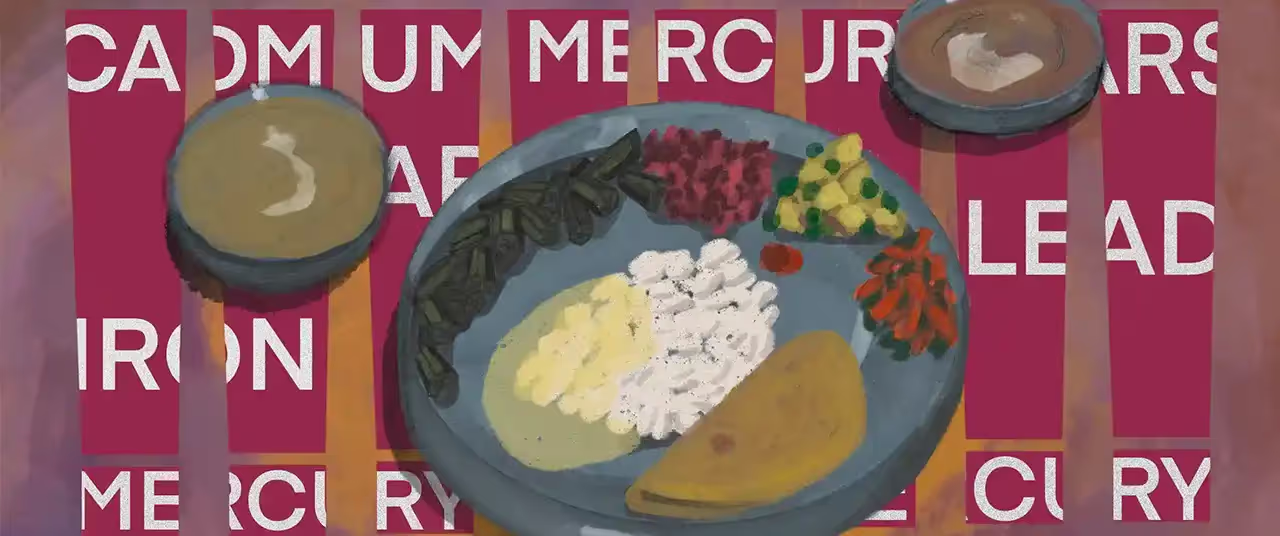
Here’s a story: you’ve been eating too much junk and soon your clothes start feeling a bit tighter, each step you take down the road makes you puff and pant a little bit more, and finally your doctor reminds you of all the negative impacts these foods might have on your health. You decide to act, stick to a plan to cut down on junk, start cooking on your own, very careful of the calories you’re taking in. Two months down the lane, you see that you are starting to fit back in your clothes.
A story with a happy climax, ain’t it? Well, not so much.
While switching to veggies, cooking on your own, and keeping a check on the calories you consume are all good, most people tend to overlook some crucial questions: how are these so-called ‘healthy’ vegetables farmed? What are the inputs that are used to cultivate these veggies? And what are the impacts on consuming these ‘healthy’ foods?
In pursuit of answers to these pressing questions, numerous studies were undertaken. Their discoveries shed light on the presence of heavy metals in food production.
In a study conducted by the Environment Management and Policy Research Institute (EMPRI) by visiting 20 spots including high-end supermarkets, local markets, organic stores, and Hopcoms, it was found that the levels of cadmium, iron, and lead in our veggies are far above the permissible limit.
In a different study, a group of agriculture scientists from Odisha University of Agriculture and Technology (OUAT), SOA University, and Birsa Agricultural University discovered that rice, pulses, and veggies around Narasinghpur block in Cuttack were packing higher levels of cadmium, lead, mercury, and arsenic than recommended.
Similar results were also observed in a study by National Environmental Engineering Research Institute (NEERI), which showed that the vegetables sold in Delhi and grown along the Yamuna floodplains had high doses of lead.
This calls for a deeper understanding of what goes into our foods and how they are farmed.
For the EMPRI study, the researchers took a close look at 10 veggies including brinjal, tomato, capsicum, etc. to see if they were carrying any heavy metals.
Turns out, some of these veggies were breaking the iron limit, pegged at 425.5 mg/kg. For example, beans from the organic shops had 810.20 mg/kg of iron! Coriander and spinach weren't far behind. Even the onions from Hopcoms had more iron than expected, with 592.18 mg/kg.
And it wasn't just iron causing trouble. Cadmium levels were supposed to be low, like 0.2 mg/kg. But brinjal from a supermarket in BTM Layout in Bengaluru had a whopping 52.30 mg/kg of cadmium! Coriander, spinach, and carrot weren't far off either.
The study also revealed a higher concentration of heavy metals in leafy vegetables. This appears to be linked to the increased transpiration rate of leafy greens. Transpiration is the process by which plants release water vapor through their leaves.
Given that the majority of Bengaluru's vegetables originate from neighboring districts such as Kolar, Chikkaballapur, and Bengaluru Rural, there has been a heightened focus on the project that pumps secondary-treated sewage water to these areas.
When farmers use wastewater, they're inadvertently loading up their crops with heavy metals. It's like the veggies are soaking up all the toxins from that water, leading to higher concentrations of heavy metals.
The NGT had also registered a suo motu case after news reports came out regarding heavy metal contaminated food in Bengaluru.
Before we discuss the harmful effects of these heavy metals, let us understand what they are.
Heavy metals are dense metals with high atomic weights or numbers. They include common elements like iron, copper, gold, and aluminum. While some heavy metals are essential for life, others can be harmful when they enter the environment through industrial activities.
Cadmium, notorious for its adverse effects on the liver and lungs, can also compromise the immune system. While the body typically eliminates cadmium ingested through food, elevated levels can accumulate in the kidneys, leading to impaired function.
Excessive consumption of lead can result in severe health issues, including neurological damage.
Although iron is essential in moderate amounts, excessive intake can lead to complications such as anemia. Furthermore, high doses of iron may interfere with the absorption of other vital nutrients like zinc and increase the risk of liver cancer and heart disease.
Cleaning vegetables thoroughly with portable water removes external metal contamination. Soaking them in a 2% salt solution and washing again aids in eliminating contaminants.
Cooking vegetables with ample water helps leach out internal metal traces. Consuming antioxidant-rich fruits and vegetables like gooseberries, oranges, lemons, strawberries, tomatoes, and blueberries counteracts metal contamination effects by reducing free radicals.
Blanching fruits before juicing and vegetables before adding to salads reduces heavy metal presence.
And beyond all, knowing more about your food, what goes into cultivating them, where it was cultivated, and switching to trustable organic brands could hold the key to a healthier future.
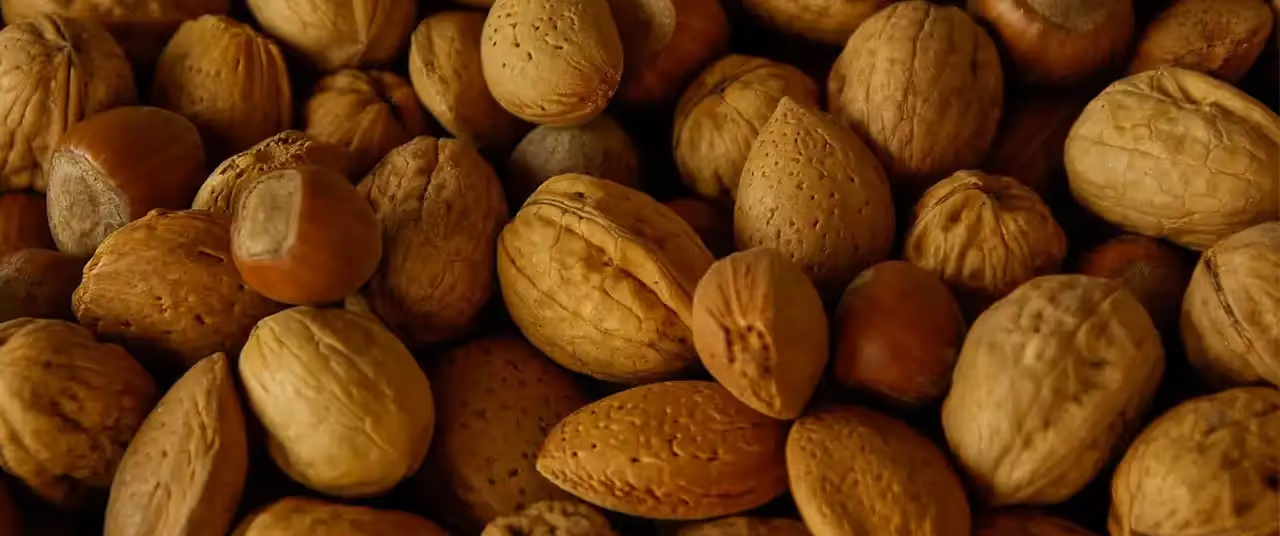
The latin word “makros” (meaning large) and “nutriens” (to nourish) make up the word macronutrients, and it’s not because the nutrients themselves are large!
The reason they are called macronutrients, is because they are the nutrients required by our body in high quantities in order to be able to function properly. They perform many functions such as maintaining the body and cell structure, and providing energy.
Today, we’ll talk about macronutrients and why we need them.
Macronutrients are a class of organic compounds that include fats, carbohydrates, and proteins. Even fiber and water are considered to be macronutrients. While they are required in large amounts by our body, they are also required in specific quantities.
Each macronutrient plays a different role in our body. Fats are needed for creating cell walls, are an important source of energy, and insulates your body from the outside world.
Carbohydrates provide fuel for your body, and an estimated 45% to 65% of your energy needs for day-to-day activities come from carbohydrates. However, they can also cause spikes in blood sugar level.
Proteins are important for tissue structure, making hormones, regulating metabolism and plays a role in the transport system.
So we can see that all of these are important, to the functioning of life itself, and are fundamental to many processes. In fact, all animals and plants have some macronutrient requirements to be able to function properly, though their needs may differ from ours.
We find macronutrients in all food - although it’s important to remember that it can also be present in unhealthy quantities in some foods. Colloquially, we call these “junk” or “unhealthy” foods. Foods such as ice creams and cakes may be high in carbohydrates (in the form of sugars) and fats, while very low in protein, whereas snacks such as chips might contain high amounts of fats and sodium, which affect the heart.
Ideally, we should try to get about 20-35% of our daily calories from fats. There are different types of fats, however, such as monounsaturated fats, polyunsaturated fats, saturated fats and trans fats. It is important to do your own research and read more about these topics to stay informed, but in general monounsaturated fats and polyunsaturated fats are considered to be “healthy” fats. Too much saturated and trans fats can cause health issues including but not limited to high cholesterol, which in turn can lead to strokes, heart attacks and vascular dementia.
Some sources of healthy fats are:
Monounsaturated fats: Olive oil, peanut butter, almonds, cashews, hazelnuts, peanuts and pistachios.
Polyunsaturated fats: Salmon, mackerel, walnuts, sesame seeds and sunflower seeds.

Carbohydrates are sugars, and they are not bad for our health in moderation. They are classified into 4 main groups - monosaccharides, disaccharides, oligosaccharides, and polysaccharides. The classification depends mostly on the structure, as shown in fig.2.
A lot of staples serve as primary sources of carbohydrates- for example, wheat, rice, corn and all grains. Dairy products are also a good source of carbohydrates.
Carbohydrates make up the bulk of our calorie intake, and ideally we would hope that around 55% of our energy needs are met by carbohydrates, although this proportion might vary slightly from 40% to 65%.
Foods rich in carbohydrates in our daily life include breads, pasta, noodles, legumes like dried beans, sugary items such as candy, desserts, cakes, and cookies, as well as starchy vegetables like potatoes, corn, and peas.

Proteins, or amino acids, are one of the fundamental building blocks of life. They make up much of the structural and functional components of the cell, which is why they are found everywhere. While proteins can be found in all living things, they are present in different forms and proportions as to what we need. The general amount of protein in your diet depends, and varies from about 10% to 35%, but in general, is slightly lower than the amount of carbohydrates consumed. There are two general classes of proteins when talking about nutrition, essential amino acids and nonessential amino acids. The main difference is that essential amino acids must be supplied to the body through its diet, since they cannot be made by the body directly. Nonessential amino acids on the other hand, can be made by our body, thus the need for dietary supply is lesser.
Some examples of foods rich in protein include meats such as poultry (chicken, turkey, duck etc.), fish, dairy, eggs and legumes (lentils, peanuts, peanut butter, green peas, and so on).
Now that we know what the different macronutrients are, we can think about what we eat on a daily basis by qualifying them into these categories. It is important to note that no food is a superfood - no single source of food will give us all of the different categories of macronutrients, but it is important to maintain a balanced diet and keep in mind that a doctor might be able to help and recommend a specific diet if there are issues.
While not mentioned explicitly, water and fiber are also important macronutrients, so remember to drink water!

Have you ever wondered about the invisible cycle that sustains life on Earth? It's a delicate dance between the atmosphere, living beings, and the soil beneath our feet. Every breath we take, every tree that sways in the wind, every creature that burrows underground – they're all part of a complex choreography, with carbon as the leading player.
Carbon is sequestered in the soil through biological processes. The sequestration of carbon is a continuous process: plants photosynthesize and capture carbon from the atmosphere, but they also respire – a process almost every living being undergoes, in which carbon dioxide is a byproduct. But what does all this mean? Is carbon sequestering in the soil a good thing or a bad thing?
Carbon is present everywhere on our planet. According to the Deep Carbon Observatory (DCO), the Earth contains about 1.85 billion billion tonnes of carbon, with only 0.02% present in its crust. It's not an infinite resource, and carbon needs to be recycled and stored, much like the water cycle – there is also a carbon cycle. For decades, research has emphasized the importance of soil in agriculture and organic farming, stressing the need to naturally replenish minerals like carbon, nitrogen, and other essential micronutrients. However, this article focuses on the carbon cycle's significance in the soil ecosystem.

We all know carbon is essential to life – a major building block in our bodies, forming compounds like proteins, fats, carbohydrates, and energy stores. But how does it move through the environment? We cannot directly extract carbon from the air, so we need sources to trap it – carbon sinks.
A carbon sink absorbs more carbon from the atmosphere than it releases. By this definition, plants, soil, and the ocean are all carbon sinks. The opposite, a carbon source (like cars, planes, and boats burning carbon), releases more carbon into the atmosphere than it absorbs. This isn't necessarily harmful – carbon sources are essential for completing the cycle. However, human activities' scale could lead to drastic changes like global warming and disruption of pre-existing cycles.
When plants and animals die, organisms like fungi break them down and decompose them into their constituent minerals. These varied organisms use processes to break down cells and digest them externally, leaving carbon ready in organic forms to dissolve into the soil (Fig.1).

The carbon cycle keeps carbon cycling through the atmosphere. Any living organisms have only "borrowed" from this cycle and will eventually become part of other organisms. Life leads to more life. In the soil context, fossil fuels are essentially carbon (hydrocarbon) reserves that can be utilized as energy stores. They represent carbon stored from organisms that died hundreds of millions of years ago, preserved by being buried in soil or underwater.
More readily available carbon sources for living organisms include wood, grasses and most plants. Since plants are sinks, they store carbon, which gets released into the soil as SOCs (Soil Organic Carbon). Humus – dead and decaying matter – is crucial because it stores carbon and other essential minerals. When these minerals are passed on to cows, humans, and other plants, they break them down and respire, a process that produces carbon dioxide as a byproduct. This atmospheric carbon dioxide is then exhaled into the atmosphere, and the cycle repeats.
According to the Global Forest Resources Assessment 2020, about 45% of carbon in forests is stored mostly in the SOM (Soil Organic Matter) and in living biomass (Fig.2). Only a small fraction is stored in dead wood and litter, meaning it's constantly being used by plants and soil organisms. Plants take in this carbon as SOCs. In agricultural areas, SOCs have been found to be lower than in natural ecosystems, as agriculture leads to the release of 50 to 100 Gigatons of carbon into the atmosphere. This is largely due to decreased plant roots and increased soil erosion. However, studies show that plants growing in higher CO2 concentrations will fix more carbon through photosynthesis, thus producing greater biomass.
Increased atmospheric CO2 also leads to global warming, reducing soil water availability and limiting photosynthesis. The increased temperature also accelerates SOM decomposition, releasing more carbon from the soil into the atmosphere, creating a feedback loop where higher temperatures lead to more SOM decomposition.
Without soil's carbon sequestration, we would have much higher atmospheric CO2 levels, making it vital to protect soil and forests – not just the number of plants and animals, but also their diversity, which plays a role in how much carbon is stored in the soil. When we plant crops, we create a debt.
Soil is vital to our survival. Research shows we can even try using agricultural land as a carbon sink by planting perennial crops with deeper roots that help the soil store more carbon.
Soil can't hold on to carbon indefinitely, but it can keep it for some time in rotation – forests can grow more, develop more niches for plants, and develop whole ecosystems by increasing the amount of trapped biomass.


Our body is made up of many different compounds. We need vitamins and minerals to function, some in large amounts and some in small. The reason we might need them varies, and in the case of micronutrients, we need them in small quantities mostly because our body cannot normally produce them by itself.
The vitamins and minerals needed by our body to function in day-to-day activities are called micronutrients. They are needed in small amounts, however their presence is critical to the functioning of many systems in our body.
For example, in times when pirates used to sail the seas, scurvy was a prevalent disease in them, (and, in fact, in many sailors who stayed far from land) because of the lack of vitamin C in their diet. Scurvy showed symptoms after a month, including sailor’s teeth falling out, joint swelling up, and delirium. This is because the collagen in their body could not be replaced, which is a protein that is essential for our body structure - around 30% of our body is made of collagen. Another interesting thing to note is that all of our old scars would start opening up if we had scurvy, because the collagen holding them together would degrade. Thankfully in the modern world, we have many sources of vitamin C, so scurvy is very rare. Symptoms only begin to show after a month, so drink some lime juice or eat some oranges!
They are classed into two categories - vitamins and minerals. Vitamins are the organic compounds that are produced by plants, animals or microorganisms which can be broken down by our body. Minerals, on the other hand, are inorganic substances, cannot be broken down further, and usually are present in the soil or water.
Now that we know what micronutrients are, we can discuss some of them and why they are important to us.
The answer is simple! To keep our body working optimally, we need to include them in our diet. They serve a few important functions in our body. A few examples are vitamin B6, vitamin C, vitamin E, magnesium, and zinc which all play an important role in the functioning of the immune system, although in multivitamins, might exceed the daily recommended dosage.
Vitamin A helps to form healthy skin and maintain our teeth, also helping out our musculo-skeletal system. It is commonly called retinol, since it makes up the majority of the pigment in the eye. Deficiency of vitamin A can cause night blindness in people.
Vitamin D is a fat-soluble vitamin that has been shown to keep the calcium and electrolyte level in our muscles stable, so as to not cause involuntary muscle spasms. It can also be synthesized or created by our own body using sunlight!
For a long time, the existence of vitamins and minerals were debated. Using the example of scurvy, it was discovered that hexuronic acid (vitamin C) deficiency was causing scurvy only in 1753 by James Lind, in his book “A Treatise of the Scurvy”. In fact, when the British figured out that vitamin C deficiency causes scurvy, they started storing citrus fruits on board. The American sailors, not believing that vitamin C deficiency caused scurvy, called them “limeys”.
Vitamin A was discovered in the year 1913 by the English biochemist Frederick Gowland Hopkins, and was the first vitamin to be discovered. He won a Nobel Prize in 1929 for this discovery. After it was discovered, more scientists began to observe these compounds present in organisms, that were neither fat nor protein, but were needed to sustain a certain quality of life - that were only required in small quantities. These compounds came to be known as micronutrients, and the discover of many vitamins and their functions in our body has helped to better nutrition throughout the world and prevent deficiency diseases such as beri-beri (caused by vitamin B1 deficiency), pellagra (caused by vitamin B3 deficiency) and scurvy (caused by vitamin C deficiency).
Through centuries of trial and error, we have figured out the workings of the micronutrients in our body and although we know the cure for deficiency diseases, they continue to be common in many developing parts of the world.
Please try another keyword to match the results